
Family history often begins with a single person. In this case it began with my grandfather, George Kenny.
Born in Marylebone Workhouse in December 1893, he was admitted to the Foundling Hospital and would grow up never knowing his mother. For many years that seemed to be the story. Who was she? Why had she given him up? What had happened to her afterwards?
The answer led not to one woman, but to a family of women.
The Rodwell Sisters
The story begins in Aston Clinton, Buckinghamshire, where Robert Rodwell worked as a shoemaker, he was married to Eliza Harris – she went on to live into her 80s and became the family matriarch after Robert died in 1876. Their five daughters and one son (the youngest) came of age in a rapidly changing Victorian world. Some remained close to home. Others left for London in search of opportunity.
The eldest, Isabella, married and eventually returned to Aston Clinton, where she raised a family of her own and remained connected to the local shoe trade. Sarah and Susannah both appear in London in 1871 working as nurses at the Evelina Hospital for Sick Children. Sarah would later become a milliner in Bournemouth. Susannah married a farmer and horse dealer. The youngest sister, Eliza Comfort, built a successful dressmaking business.
Among them was Alice Ann Rodwell.
Alice Leaves for London
Like her sisters, Alice left Buckinghamshire for London and entered nursing. In 1871 she was working at the Evelina Hospital in Southwark. Three years later she gave birth to a daughter, Lilly, at Queen Charlotte’s Hospital. The father was James Jerome Morgan, a medical student who would later qualify as a doctor. The couple never married.
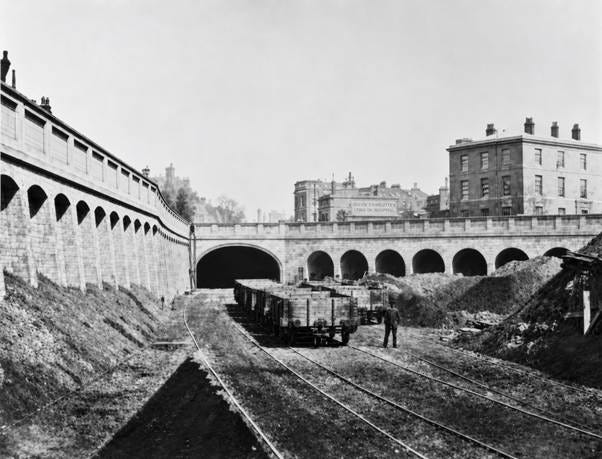
Queen Charlotte’s Hospital was rebuilt in 1857 at its Marylebone Road site. The Metropolitan Railway cutting in front of it was under construction in 1862. Lilly Morgan was born there in 1874.
For Victorian society, the most important fact about Alice was that she was an unmarried mother.
For a modern historian, the more interesting question is how she survived.
Alice continued to work as a nurse. By 1881 she was employed in Kent, while seven-year-old Lilly was living in Aston Clinton with her grandmother Eliza.
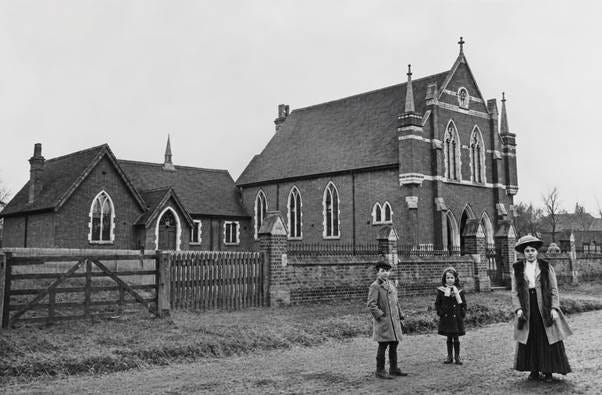
Aston Clinton School, Buckinghamshire, c.1900 - 1910. Likely to have been Lilly Morgan’s childhood school. It stood at the heart of the village where she was raised by her grandmother (circa mid-1870s to mid-1880s) when she was aged 10. .
It was not an ideal arrangement, but it was one that many working women would have recognised. Earning a living and raising a child alone were not easily combined.
Then tragedy intervened.
In November 1882 Alice died at Aston Clinton aged just thirty-three. Her death certificate records “General Paralysis” of two years’ duration. The precise nature of her illness remains uncertain, but it appears that she endured a prolonged decline before returning home. Her sister Isabella was present when she died and registered the death.
Lilly was only eight years old.
An Orphan in Aston Clinton
At this point it would be easy to imagine a Victorian orphan abandoned to fate. Yet that is not what happened.
Instead, Lilly was absorbed into a network of female relatives. She spent time with her grandmother, with her aunts, and within the households they had created. Looking back through census returns and family records, what emerges is not a story of institutional care but of women supporting one another as circumstances changed.
The Rodwell sisters had taken different paths through Victorian life, but they remained connected.
The arrangement was not always smooth.
History Repeats Itself
By 1893 nineteen-year-old Lilly found herself in a position disturbingly similar to that of her mother almost twenty years earlier. She gave birth to a son outside marriage. The child was born in Marylebone Workhouse and was later admitted to the Foundling Hospital.
The Foundling Hospital papers preserve Lilly's own account of those weeks. She recalled that Edward Anthony Holloway, the Bournemouth hairdresser who had fathered her child, “he said he would marry me” she declared! Living with an aunt in London, she knew the arrangement could not last. "She will only keep me another fortnight," Lilly told the investigator. Hoping to find work as a housemaid but unable to support a baby alone, the Foundling Hospital offered what must have appeared to be her best chance of securing her son's future. For the first time in the records, Lilly is no longer simply a name on a birth certificate; we hear her own voice.
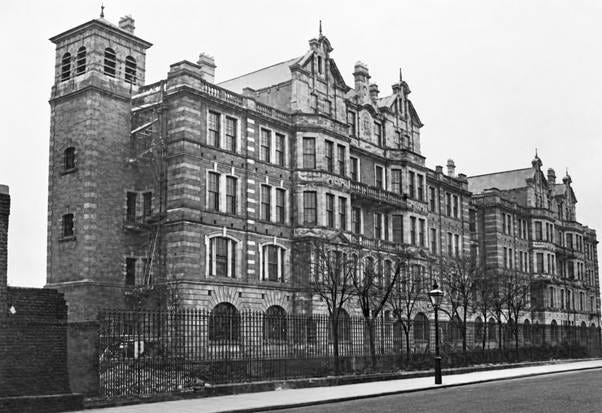
Marylebone Workhouse circa 1900. Lilly was sent here for the midwifery support from her sister’s house to give birth. She had time to register the birth as Edward. Young Edward was then taken in by the Foundling Hospital and renamed George Kenny.
The Inspector’s Verdict
A Victorian inspector investigating the case was not impressed by the Rodwell family. He viewed some of the decisions made by Lilly’s relatives with suspicion and criticised the way she had moved between households. From his perspective, this looked like a family problem.
The inspector’s report emphasised the limits of family support available to Lilly. Whether this reflected the full reality of family relationships is harder to determine. The same women who appeared reluctant to support a young mother and child had previously cared for Lilly after the death of her own mother and remained part of her life for many years.
Yet another interpretation is possible.
By 1893 these women had already lived through widowhood, illness, poverty and bereavement. They had cared for an orphaned child. They had supported a sister through a fatal illness. They had established businesses, households and careers of their own.
Seen from that perspective, the Rodwell sisters appear less like Dickensian caricatures and more like practical Victorian women making difficult decisions in difficult circumstances. It is possible that the Founding Hospital Inspector painted the uncaring family that way to support the retention of young Edward at the Hospital.
Whether those decisions were always right is impossible to know.
What is certain is that they endured.
The inspector saw a family under scrutiny. More than a century later, what emerges instead is a family held together by women.
Lilly Carries On
By the turn of the twentieth century Lilly had come full circle. In 1901 she was back in Aston Clinton, living with her elderly grandmother Eliza Rodwell. The woman who had taken in a motherless child almost twenty years earlier was now nearing the end of her own life. It seems likely that Lilly had returned, at least in part, to help care for the grandmother who had once cared for her.
Eliza died in 1901 after a long life that had seen her widowed, her daughters scattered between Buckinghamshire and London, and one granddaughter raised through difficult circumstances. Within months of her grandmother’s death, Lilly’s own life entered a new phase.
In 1902 she married Frederick Preece, a dressmaker’s clerk. Unlike James Jerome Morgan, the man who had fathered Lilly, and unlike the father of her first child (Edward Holloway), Frederick stayed. Just as her mother had before her, she once more became pregnant outside marriage—but this time she married the father. Their daughter Dorothy was born later that year and the family settled in Walthamstow in East London.
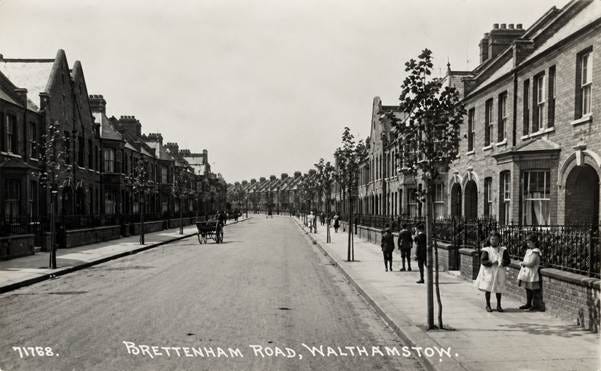
Brettenham Road, Walthamstow, c.1910. By the early twentieth century Lilly Morgan had married Frederick Preece and settled in East London. They lived at number 93, their daughter Dorothy grew up in streets much like this one.
Yet tragedy was never far away. In 1917 Frederick died aged only forty-six, leaving Lilly a widow. Once again, she found herself facing uncertainty, but this time she was not the child being supported by others. She was the mother at the centre of the family. Lilly remained in Walthamstow for the rest of her life, sharing a home with Dorothy and her husband. When she died in 1950, aged seventy-five, she had survived the loss of her mother, grandmother, son and husband.
A Family Held Together by Women
I began searching for the identity of one woman. Instead, I found a family of women. My grandfather’s story began in a workhouse and a Foundling Hospital. But before it became his story, it was theirs. The Rodwell women endured bereavement, poverty, illness, social stigma and loss. They adapted, supported one another when they could, and carried on when they had to. Lilly Morgan, once the child who needed rescuing, eventually became one of the women carrying others forward. George Kenny spent his life without knowing the identity of his mother. More than a century later, the records he never saw reveal not just one missing woman, but a family of women whose lives shaped his own.
Eliza Harris (1830s–1901)
↓
Alice Ann Rodwell (1849–1882)
↓
Lilly Morgan (1874–1950)
↓ ↓
George Kenny (1893-1981) Dorothy Preece (1902–1986)
No posts
Comments
Nothing yet. Say the first thing.
Sign in to join the conversation.