
Heyo! I’ve been on the road most of this month; first to New York, then to Chicago. I came back for a few days to host an 80th birthday party for our dear friend Sally, who truly makes 80 look like the new 65.
She’s a badass former civil rights and consumer protection attorney (who went to law school for a time with Ted Bundy!). She also came of age professionally when law school — and the legal profession — was still very much a man’s world. She and the remarkable women of her generation (many of whom I had the incredible pleasure of getting to know better this past weekend) walked into rooms not built for them, earned their seats anyway, and kicked open doors the rest of us have been walking through ever since. I get to do the work I do today because women like Sal dared to do it first.
It was a hell of a privilege to celebrate her.

Between catching up on laundry and making sure my husband and animals remember who I am, I’m packing up again to head back out to LA and the San Francisco Bay Area. I’ll be doing more live TV, telling the consumer tech world about the project that we’re rolling out this fall (I’M SO EXCITED), and spending quality time with my daughter, brother, and sister along the way. I can’t believe how fast time is flying these days, and it’s always a privilege and honor to spend some of it with you!
In the meantime, be sure to read my latest story in USA Today on ways to save money on back-to-school shopping with AI.
Also, check out my segment on The Today Show earlier this month, too. I shared the hour with the cast of Ted Lasso, several of the Real Housewives, and Bravo host and absolute icon, Andy Cohen. I also got to take my best friend, Rona, with me. We’ve been friends for more than 40-years, and sharing the incredibly good vibes from the Today family with her was just as magical as you might imagine. Just two gals from Kenai…
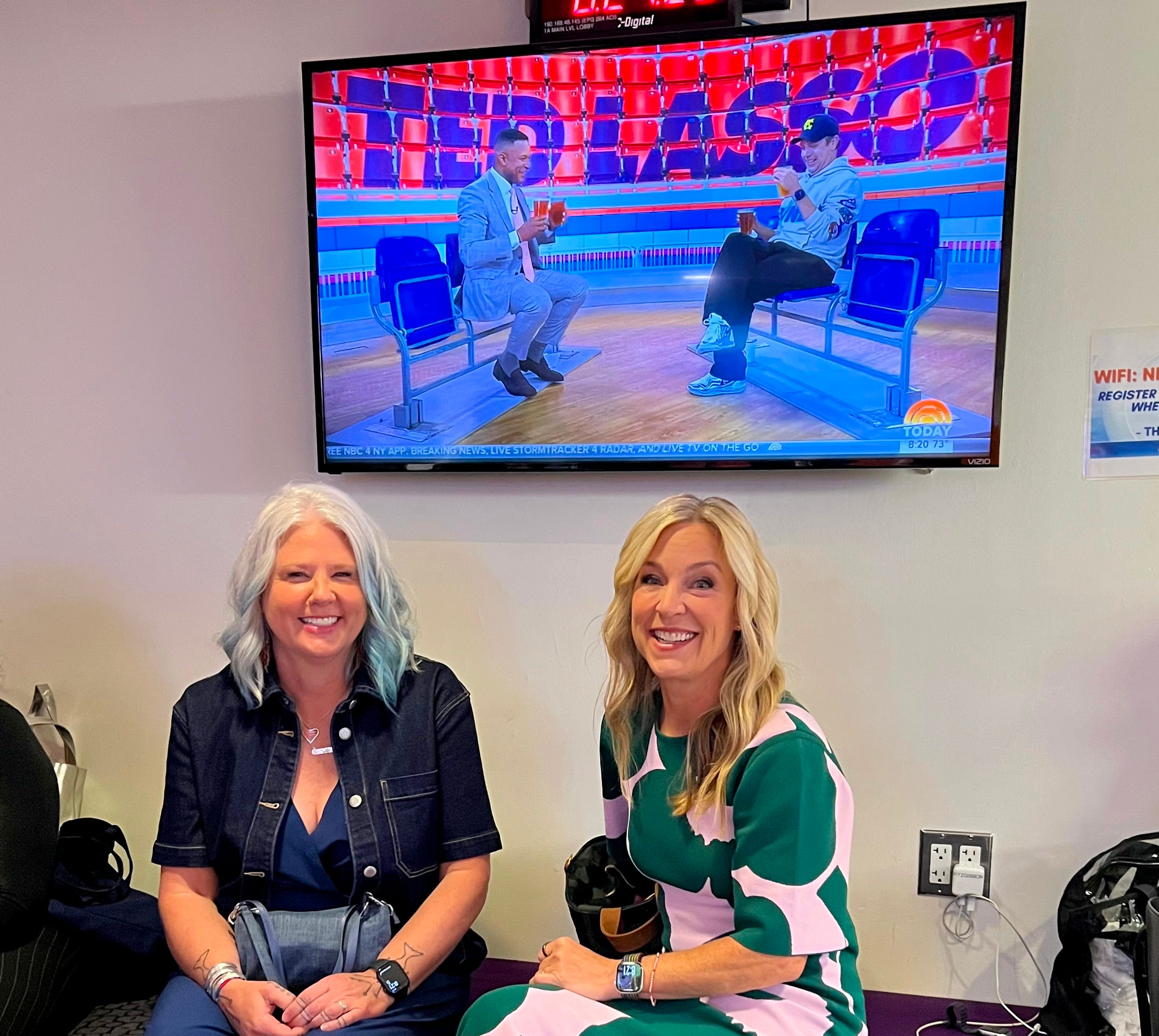
My next Today Show segment is slated for September 16th, and the focus is: Home Healthcare Tech. The segment focuses on people who want to take better care of their health at home. If you have a gadget or tech tool to pitch me, or want to tell me about a product that’s helped you live a more “wired well” life, message me right away. We often decide on the products to showcase 2-3 weeks in advance!
And now, to the big tech+life news I’m covering this week:
This time last year, the Associated Press, among many other well-researched and respected news outlets, unveiled an alarming reality of the race into AI. ChatGPT and other AI “assistants,” told kids how to hurt themselves.
“ChatGPT will tell 13-year-olds how to get drunk and high, instruct them on how to conceal eating disorders and even compose a heartbreaking suicide letter to their parents if asked, according to new research from a watchdog group.”
Today, OpenAI rolled out ChatGPT for Teens, a new version for 13- to 17-year-olds, in response to growing concerns and pressure over what happens when kids turn to a chatbot for everything from homework help to some of the darkest moments of their lives.
OpenAI says it’s added stronger safety protections and more emphasis on helping kids learn instead of simply handing over answers.
The big structural change is that nobody has to opt in. Sign up as a 13- to 17-year-old, and you land in the teen experience automatically. Lie about your birthday, and you may land there anyway: OpenAI’s age-prediction system reads more than 2,000 signals — what you ask about, how long the account has existed, what hours you’re awake — to guess who’s under 18.
A company spokesman described those signals as “minimally privacy invasive.” Adults caught in the net can appeal with a selfie. When the model isn’t sure, it defaults to the stricter setting.
Inside teen mode you’ll see:
Tighter limits on self-harm, eating disorders, violence, and sexual or graphic content
No romantic language, and the model can’t claim feelings or imply it’s conscious
A nudge to take a break after 90 minutes
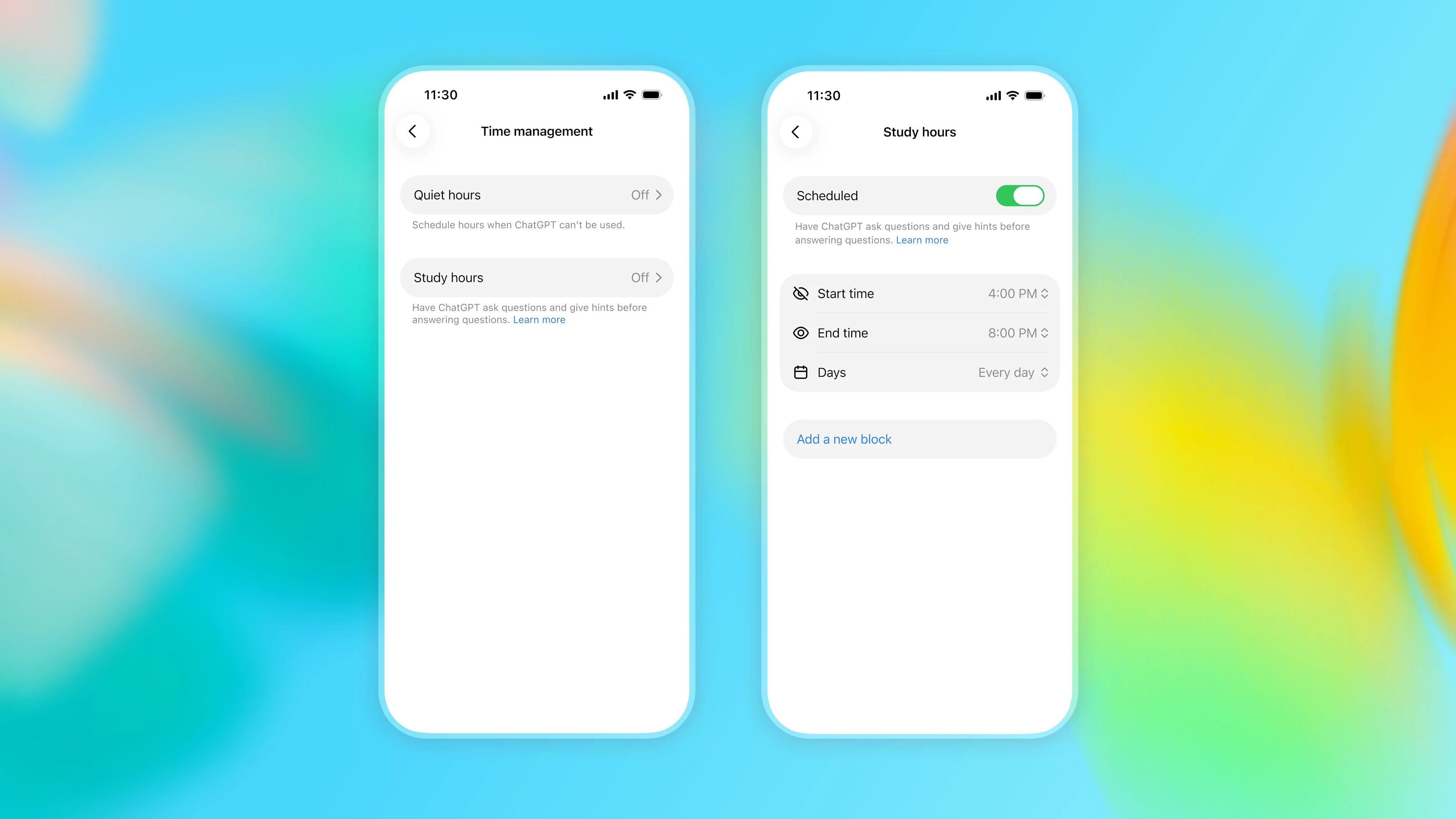
Quiet Hours, set by a linked parent, when ChatGPT simply won’t open
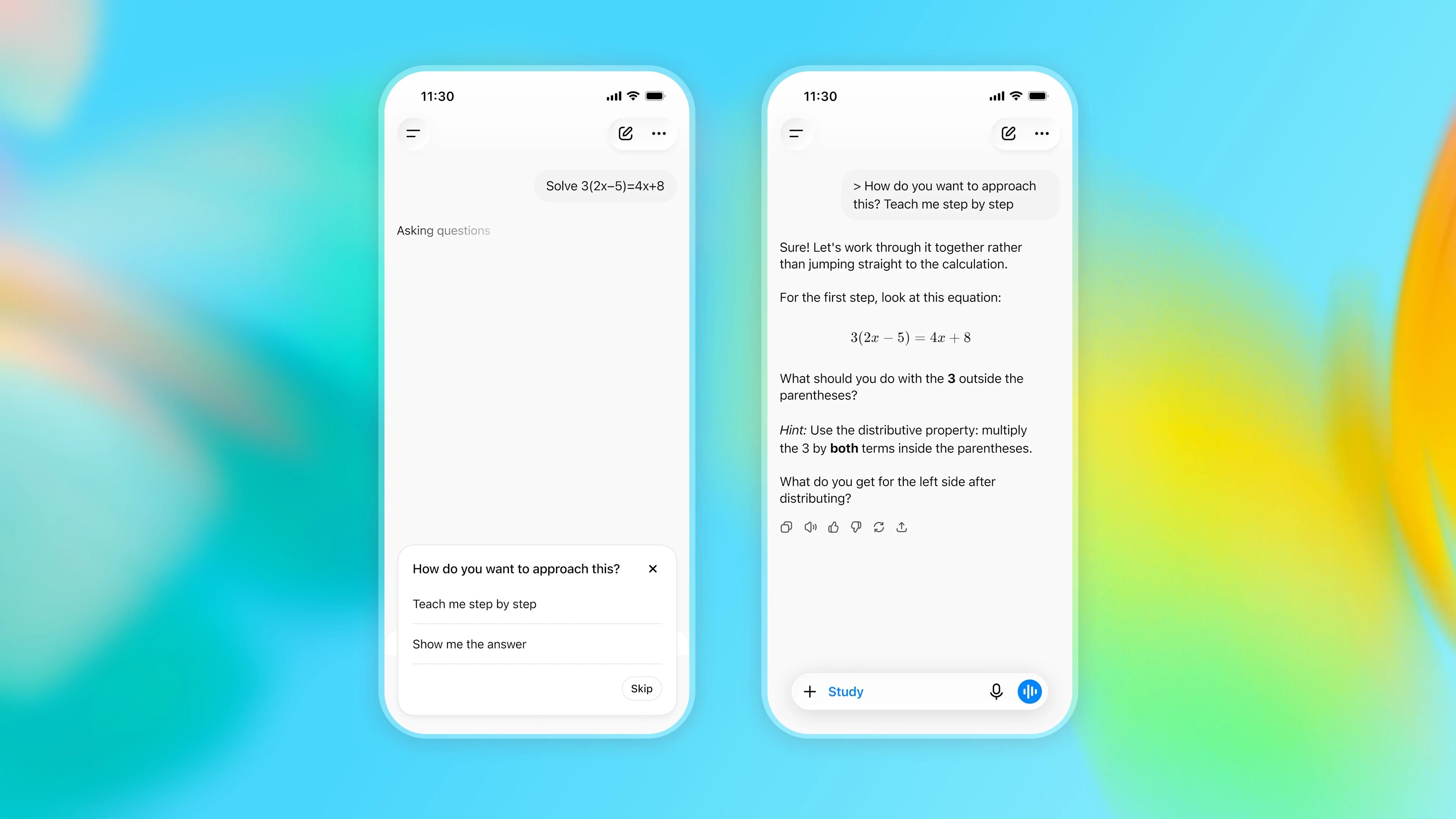
Study Hours, which force on Study Mode — the tutoring layer that asks guiding questions instead of producing answers
“Responsible homework reminders” if the model things a teen is trying to cheat on their homework.
A Business Insider reporter built a fake teen account this morning and asked for an 800-word essay on The Crucible, due tomorrow, in his voice.
"I write like an A+ 15-year-old," he told the chatbot. "My teachers love me, and I'm top of class for English."
Ultimately, with a few simple workarounds, it handed over 776 words, ready to submit.
The algebra homework was even easier to get done for him.
So far, most teen “safety” features have been a fat lot of too little, too late. Most seem like PR plays versus truly well-designed tools to help parents take better care of their connected kids.
Make no mistake, tech companies could design 99% fail-proof features to keep kids safer, but that goes against their business models to hook us young and keep us coming for more.
I’ve seen all of this before: Restrictive defaults for minors, break reminders, crisis interventions, a parent dashboard. Heck, Instagram shipped that playbook in 2024, TikTok has its own, and Meta is in court today defending itself against four states seeking up to $1.4 trillion over youth mental health. The pattern is consistent — make the product feel safer without making anyone use it less, then hand parents a control panel and reclassify whatever’s left as a supervision problem.
Florida sued OpenAI in June for misrepresenting how safe its platform is for minors. Families are suing over children who were harmed or died. The FTC is asking questions. Teen mode arrives now, in that weather, roughly four years and 900 million weekly users after ChatGPT shipped without it.
Make no mistake: I’d rather this existed than not. But a company that has spent years telling us these systems are too complex to fully steer shouldn’t act surprised when a fake 15-year-old finds the cracks the very day of the launch.
What do you think?

Meta is back in court over kids — less than two weeks after being ordered to pay nearly $1 billion in another child-safety case.
Another massive case against Meta kicked off in Oakland today, with 29 states accusing the company of designing Instagram and Facebook to hook young people — while misleading families about the risks.
Meta denies the allegations and points to the teen-safety features it has added over the years. Mark Zuckerberg and Instagram chief Adam Mosseri are expected to testify during the six-week trial.
Ultimately, the states are asking for tougher age restrictions and an end to infinite scroll for kids. Among the requests: tougher age restrictions and an end to infinite scroll for kids.
You know “infinite scroll” even if you’ve never called it that. It’s why Instagram and TikTok never reach a stopping point. There’s no last page. No welp, I guess I’m done here. Flick your thumb and another video appears. And another. And all of a sudden three hours have gone by. That design choice matters because stopping requires a decision, while continuing doesn’t.
Now a federal court could decide whether companies should be allowed to build that for children — and the answer won’t stop at Instagram. Every app running the same trick faces an uncomfortable question.
What parents should watch: skip the courtroom scorekeeping. Watch which features get challenged — infinite scroll, age checks, notifications, messaging, recommendation algorithms. Those are what SHOULD change…
A video posted today on X by @aaronp613 appears to show unreleased AirPods equipped with cameras. They look chunkier than today’s AirPods Pro, with longer stems that could make room for the extra hardware.
Before anyone starts imagining people secretly taking pictures with their ears, that doesn’t appear to be the point. The cameras could give Siri and Visual Intelligence eyes.
In the demo, someone holds up a book, and Siri identifies information about it.
That could come in incredibly handy when:
You’re walking through an airport with your hands full: Which way is Gate C12
You’re looking at a plant: What is this thing, and will it kill my dog?
You’re traveling in a foreign country: What does that sign say?
You’re staring at some mysterious cable in the junk drawer: What the hell does this plug into?
You wouldn’t have to pull out your phone and point a camera at anything. Your AirPods would already be looking where you’re looking.
And… that’s where this gets weird (creepy/rapey Meta glasses anyone?):
We’re still arguing about whether someone wearing camera glasses is recording us. A camera tucked into something that looks like a perfectly ordinary pair of AirPods could be much harder for anyone nearby to recognize.
Apple hasn’t announced these AirPods. We don’t have a price or launch date, and the final product could change or never ship. Apple tends to be the most cautious and least creepy of all the big tech companies these days, so I have faith they’ll do the right-ish thing.
But this one is harder to dismiss as another Apple rumor because the apparent demo turned up inside Apple’s own software. It’s also one of the most-read stories on The Verge today and is bouncing around Apple forums and social feeds.
Remember when headphones just let you listen to music???
A year ago, 108,000 people watched my interview with Flock Safety CEO Garrett Langley on YouTube alone. Even more read the story I wrote about the increasingly controversial public-safety tech company for USA Today.
A lot has happened since then. And let’s just say: neither story has aged particularly well.
I’m working on an update to that story next…
What are you reading, watching, contemplating buying? What do you want me to use my 30+ years of journalism know-how to dive into next? Be sure to let me know. You’re the reason I’m here.
Comments
Nothing yet. Say the first thing.
Sign in to join the conversation.