
As I’ve mentioned, my book is due on August 15th! I haven’t left New York—or the library—at all this summer, but for those of you off adventuring somewhere (or exploring closer to home), I’m resurfacing a favorite post about travel notes!

Last Summer, I visited friends in Bilbao, Spain. During solo day trips, I clutched my phone like a lifeline, following that little blue dot on my maps app along the winding cobblestone streets of Pamplona and San Sebastián. 1
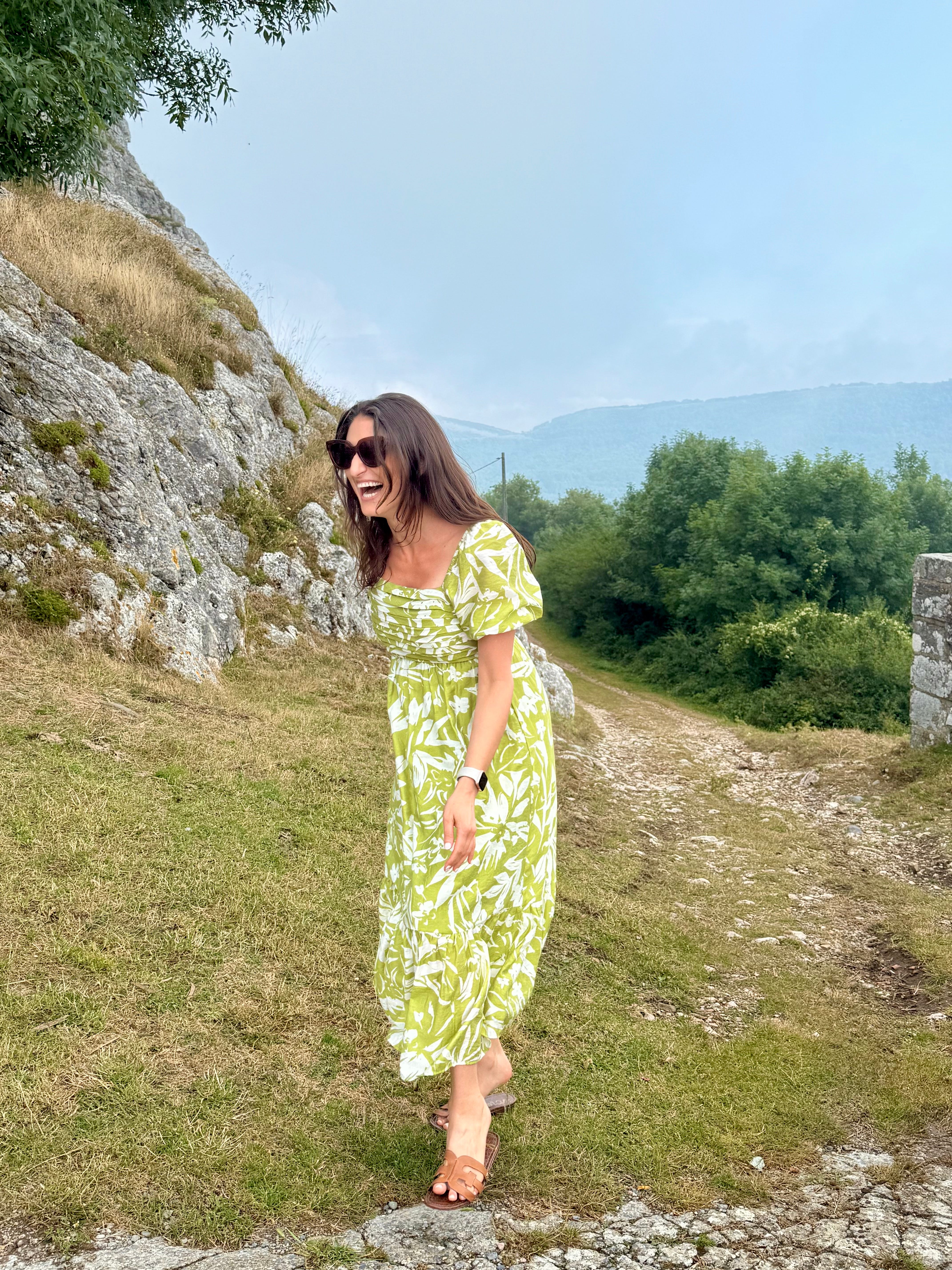
Later, I wondered: how much did I actually see? How much time did I spend looking at my phone compared to the time I spent looking at my surroundings?
As is my habit, I reflected on history: Two hundred years ago, travelers had no little blue dots. Instead, they had early guidebooks, popularized in the late 1700s and early 1800s.
These early guides frustrated many writers. With their noses stuck in books, travelers often missed the very sights they wanted to see. The point was to “have seen” a thing—not to actually see it, as the poet-philosopher Samuel Taylor Coleridge remarked.
While nineteenth-century travelers had maps and guides, they were mostly left to their own devices (pun intended). And there’s a lot we could borrow from their pre-digital travelogue note-taking tactics. Here are three of my favorites:
While visiting famous museums and monuments is incredible, I’ve often found that my favorite memories develop when I explore without a specific destination. It’s in those moments that I stumble upon a little concert in an alleyway, a cafe filled with books, a little garden only locals know about.
Give yourself an afternoon to explore without an itinerary. What secret things will you stumble upon? Take a little notebook and keep a list of your discoveries as though you were creating your own travel guide.
Bonus tip: make your own map before you head out. Or, you could make a map as you go, filled with all the small wonders you happen upon.
I’m thinking of the notes Coleridge kept while hiking in his own backyard as well as the map he drew for himself:
Put yourself in the position of a historian and decide what information you would include if you were writing a history of the region.
As you go to museums and have conversations with locals, keep track of historical events that you find fascinating. Keep a running list of dates, important figures and new words you’ve learned.
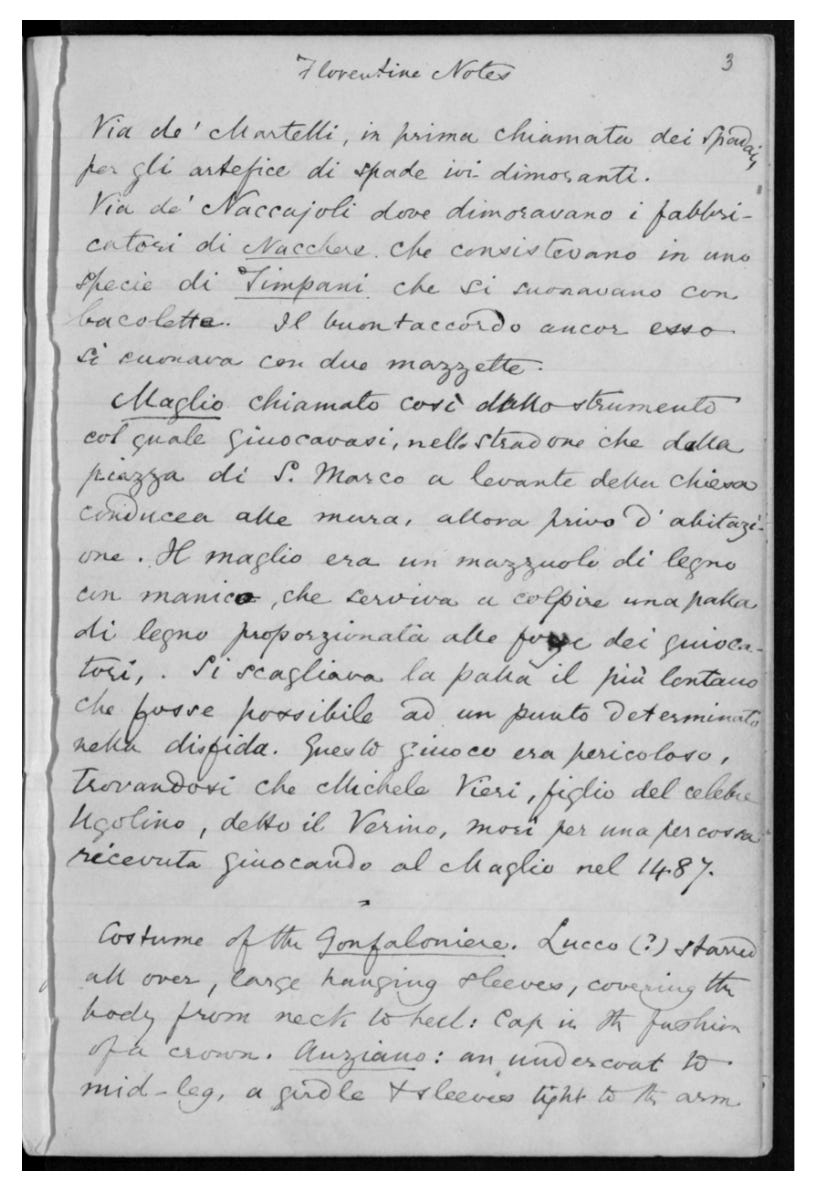
This is something that George Eliot did while traveling in Florence. She turned all of this historical detail into her novel Romola. She begins her “Florentine Notebook” with a list of books she wants to find in the Magliabecchian Library (now called the Uffizi Library).2

This library (pictured above) is probably where Eliot wrote out many of her notes, like the following page titled “Florentine Notes”.
On his first trip to France, the physicist Michael Faraday found himself alone with nothing to do. To pass the time, he took out his diary and listed all the differences he could think of between France and his native England. For example, given that he was traveling in winter, he noted that while the British used coal for their fires, the French used wood. And then he filled the entire page with a catalog of little differences.
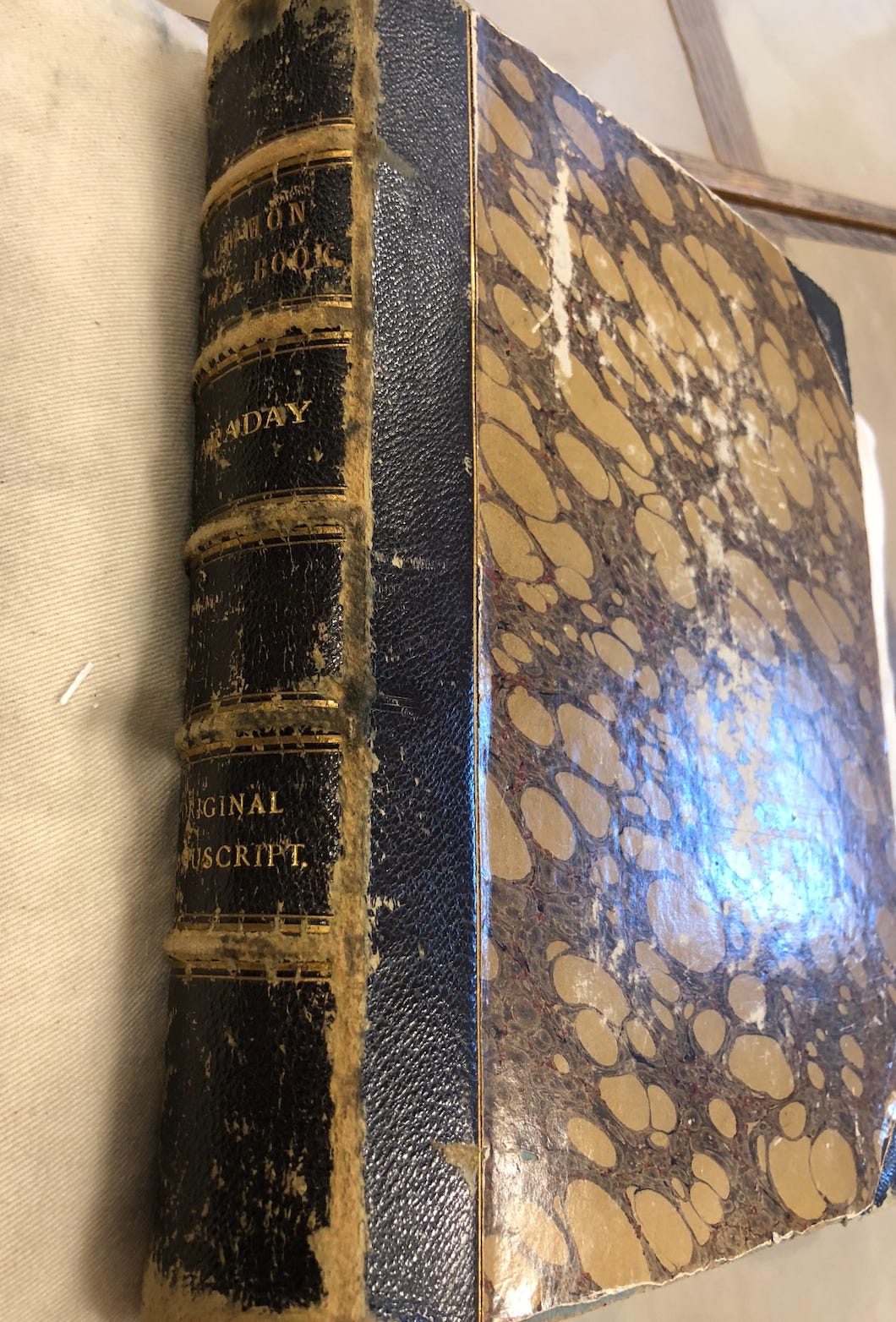
We tend to process differences implicitly, so why not list all of them in your notebook?
Whether you’re traveling or exploring your own locale, I hope you take some time to look away from your phone. I, for one, am always glad when I do.

Do you have a practice of taking notes while traveling? I’d love to hear about it in the comments!
Noted is fueled by you. Your ❤️’s and comments inspire me. As always, I would love to know your thoughts.
Yours in note-taking,

Travel doesn’t need to take you somewhere far. Just somewhere unfamiliar. You don’t need to get on a plane to leave your usual daily routines. Living in a place as international as NYC, visiting a different neighborhood often feels like flying across the world.
In a letter, Eliot writes:
…we trot out, visit a church or two, or a picture gallery, look over bookstalls, and poke into the curiosities of old Florence. Then we go to the Magliabecchian Library (a sort of British Museum) open to the public (and a very small public cares to enter) where with great facility we get what books we desire, and read them in peace and comfort. You should see the Mutter turning over the old books with love. (Letter to Charles Lee Lewes, 17 May 1861: Letters 3: 414)
Quoted in Thompson, Andrew. “George Eliot’s Florentine Notes: An Edition of the Notebook Held at the British Library, London.” George Eliot - George Henry Lewes Studies, vol. 70, no. 1, 2018, pp. 1–86.
If you’d like to learn more about Eliot’s notebooks in general, I can think of no better guide than Professor Ruth Abbott, who just published a chapter on them in the new Oxford Handbook of George Eliot.
Comments
Nothing yet. Say the first thing.
Sign in to join the conversation.