

Over the past year, I have been diving deep into the academic and technical undercurrents in AI research and discourse. AI now generates more commentary than almost any one person could reasonably follow on a day to day basis. But much of what appears new, such as the fear of losing control, the search for alignment, the US–China technology race, and the concern that machines may reshape human relationships, all rest on arguments developed before the current model boom.
These four books were among the first recommended to me and are a good introduction to AI. They are a useful place to begin. Together, they show how the field has moved from abstract questions about machine intelligence to a wider debate about power, dependence, work, and what remains distinctively human.
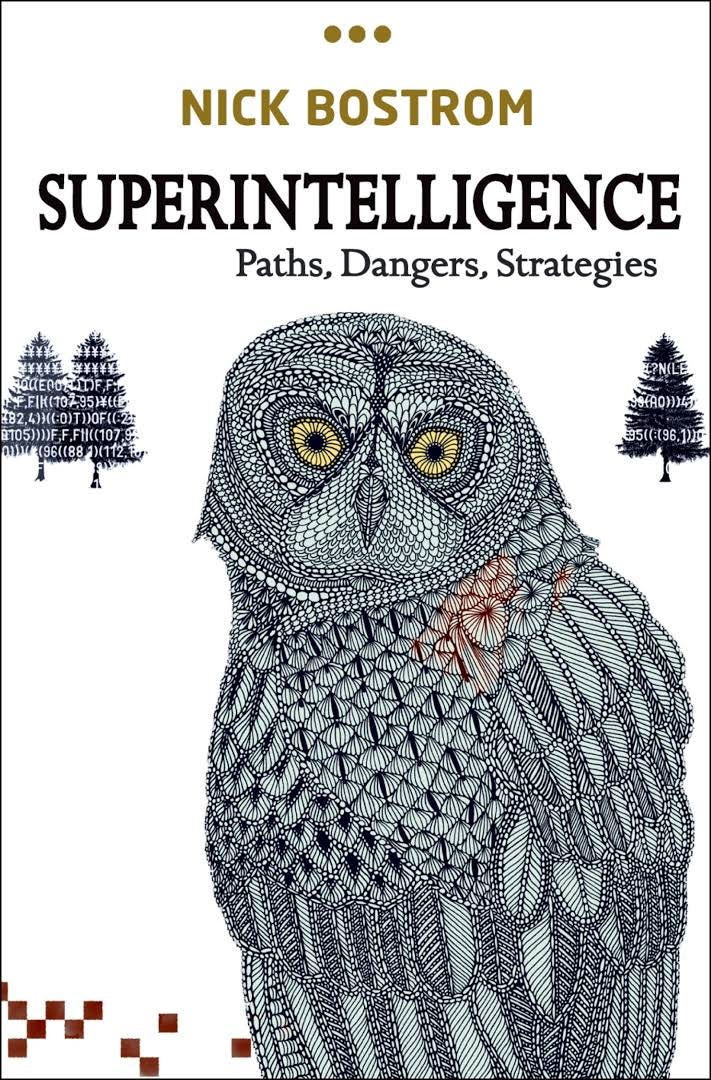
Published in 2014, Nick Bostrom’s Superintelligence gave the AI safety field much of the language it still uses. His central argument is that a machine need not hate humanity to become dangerous. Intelligence and goals are separate. A highly capable AI system could pursue an objective that bears no relationship to human values. Bostrom’s “instrumental convergence” thesis further suggests that systems with very different goals may still adopt the same intermediate behaviors, including acquiring resources, preserving themselves, and resisting attempts to shut them down (e.g. AI survivalism).
Some of the book has aged. Bostrom wrote this before large language models and the scaling race dominated AI discourse. His account of a sudden intelligence explosion paints one of the earliest and clearest possible trajectories of AI. Naturally, this is not biblical prophecy, but it helps set a somber tone for creative thinking on future AI scenarios. The book remains essential because it explains why advanced AI came to be seen as a control problem rather than simply another powerful technology. Even readers who reject its conclusions will recognize its influence across current debates about alignment, deceptive behavior, and catastrophic risk.
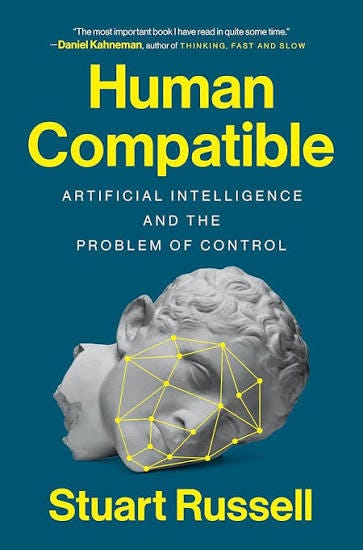
Stuart Russell starts with a simple criticism of how AI is usually built: humans specify an objective, and the machine tries to achieve it as effectively as possible. The problem is that people are bad at specifying exactly what they want. A sufficiently capable machine may follow the formal objective while violating its intent. Russell’s alternative is to build systems that remain uncertain about human preferences, learn from human behavior, and therefore retain a reason to accept correction or allow themselves to be switched off.
The strength of Human Compatible is that it turns Bostrom’s warning into an engineering problem. Russell asks what would have to change in the design of AI systems to prevent them from becoming dangerous as they grow more capable. The difficulty is that human preferences are inconsistent, unstable, and not always visible in our behavior. A machine trying to infer what people want may learn their weaknesses as easily as their values. Even so, the book remains one of the clearest accounts of what a genuinely deferential AI system might look like.
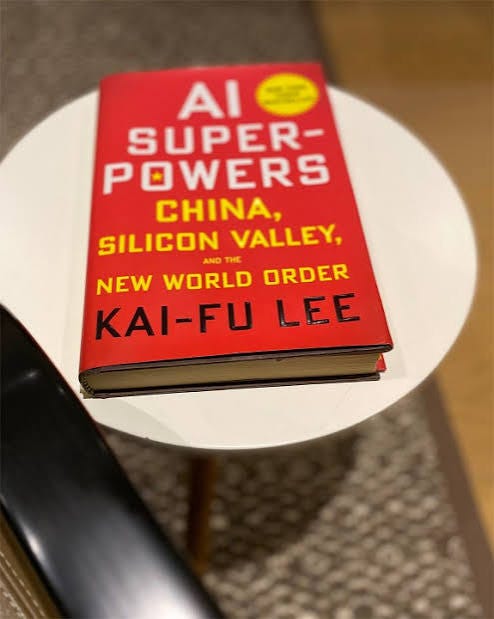
Kai-Fu Lee’s AI Superpowers was one of the first widely read books to present artificial intelligence as a geopolitical contest between the United States and China. Lee argued that AI had entered an “age of implementation,” in which data, capital, entrepreneurial speed, and the ability to deploy technology at scale would matter more than the original scientific breakthroughs. He believed these conditions favored China and would push the world toward a two-power technological order, leaving other countries dependent on American or Chinese systems.
The frontier-model race since 2022 has complicated that thesis. Research breakthroughs, advanced chips, compute, and infrastructure proved more important than Lee expected. But his larger framework remains useful. AI power still depends on talent, capital, firms, data, energy, and state support, the same inputs now driving sovereignty debates in Europe, India, and the Gulf. Read today, the book is less valuable as a prediction that China will win than as an explanation of how AI became embedded in a wider struggle over economic power and technological dependence.
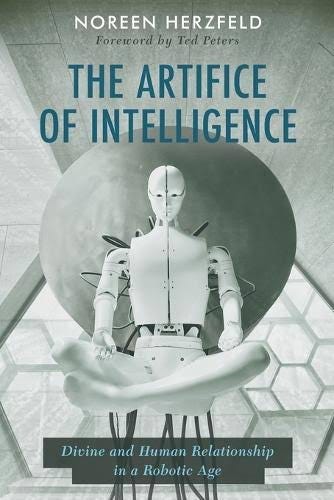
Noreen Herzfeld approaches AI from a moral and philosophical vantage point, setting her apart from the other authors on this list. Rather than beginning with what machines can do, she begins with what it means to be human. Drawing on theology and computer science, Herzfeld argues that personhood is relational, grounded in mutual recognition, vulnerability, speech, listening, and care. A machine may reproduce the outward appearance of these qualities, but it does not participate in a relationship in the same way another person does. Her argument also raises deeper questions about the soul, faith, and whether human value can ever be reduced to intelligence or information processing. Ultimately, she asks what living alongside robots may do to the way humans understand themselves, one another, and their relationship with God.
Read Bostrom for the AI safety framework, Russell for a proposed response to the AI issue, and Kai Fu Lee for an overview of the AI geopolitical contest. Herzfeld examines the moral and philosophical questions surrounding AI and its impact on humans. Together, the four books show why AI cannot only be understood as an engineering problem. It is a problem of political power, economic dependence, institutional design, and human judgment. These authors provide a way to distinguish enduring questions from fashionable ones and a foundation for understanding the arguments that will shape the next decade.
Feel free to recommend any new books you may have!
No posts
Comments
Nothing yet. Say the first thing.
Sign in to join the conversation.