
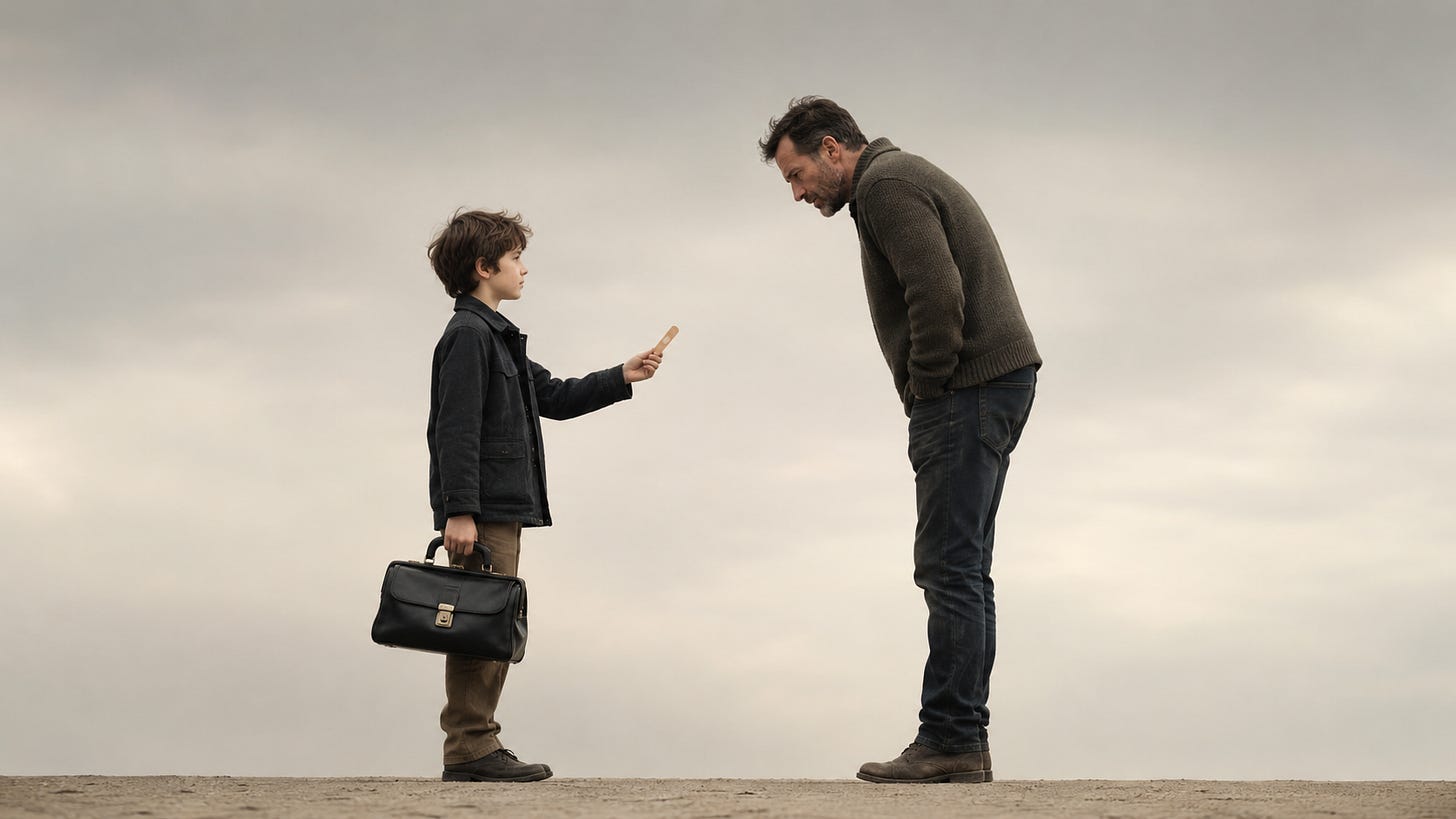
We ask the question casually.
How are the kids?
Are they happy? Healthy? Safe? Thriving?
But perhaps there is another question beneath it:
How are they living in relationship with other people?
How do they respond when someone disappoints them, challenges them, or activates something painful inside them?
This is not an essay about how to fix estrangement.
It is a reflection on what healing asks of us after a wound has been named—and on the relational capacities that can be lost when protection becomes the only goal.
Not every relationship should be restored. But every conversation about healing should leave room for responsibility, discernment, and the possibility of repair.
Thanks for reading WTF? Where's the Family?! This post is public so feel free to share it.
Before encouraging someone to uncover every wound and reinterpret every relationship through the lens of harm, we should ask:
What will they be able to do with what they uncover?
Naming an injury does not teach someone how to regulate the feelings attached to it. Insight does not automatically create the capacity to tolerate discomfort, hold complexity, or remain connected when another person disappoints us.
Uncovering the wound is not the same as learning how to live with what is there.
Therapy can be lifesaving. But it is possible to understand every wound and remain organized around being wounded.
Eventually, the question must move beyond:
What happened to me?
It must also become:
What am I going to do with what happened to me?
Another person’s behavior may be insensitive, disappointing, or genuinely harmful. Accountability still matters.
But when someone activates something inside us, that reaction also tells us something about ourselves.
It may reveal an old fear of rejection, a wound around abandonment, or a belief that disagreement means we are unloved.
While writing Now You See Me, Now You Don’t, I revisited my own family of origin, and feelings of abandonment surfaced.
Those feelings did not begin with my daughter’s estrangement, although the estrangement touched them deeply.
Recognizing that did not excuse anyone else’s choices or make the present loss less real. It helped me understand that some of what was being activated belonged to an older story.
The person in front of us may have touched the wound. They did not necessarily create all of it, and they cannot be solely responsible for healing it.
Healing also rests on a basic premise:
You are worthy before anyone agrees with you.
You are worthy before the apology arrives.
You are worthy before your parent understands.
You are worthy before your child validates your version of events.
Worthiness does not mean we never feel hurt. It means that another person’s imperfect behavior does not determine our value.
From that place, I can say I am hurt without collapsing into worthlessness.
I can disagree without disappearing.
I can set a boundary without turning another person into a villain.
I do not need to control someone else’s response in order to know my value.
In adult-child estrangement, there are no longer children learning how to navigate disagreement and repair. They are adults deciding how relationships will—or will not—continue.
Whatever they may once have been taught, some essential relational capacities are often no longer being lived within the estrangement:
The ability to distinguish discomfort from danger.
To tolerate imperfection.
To remain curious when one interpretation may not be the only one.
To recognize that feeling activated does not automatically make another person unsafe.
To reconsider, apologize, and participate in repair.
To set a boundary without making silence or permanent exclusion the only response.
Some relationships are truly abusive or unsafe, and distance may be necessary.
But when cutoff becomes the primary response to conflict, disappointment, or unresolved pain, something essential has been lost.
That is part of the grief.
Parents are not only grieving the absence of their adult children. They are grieving the loss of the very processes through which relationships survive human imperfection:
Conversation.
Perspective.
Accountability.
Forgiveness.
Repair.
So perhaps the question is not only:
How are the kids?
Perhaps it is:
How did ending the relationship become more imaginable than working through what happened inside it?
Understanding a wound matters. But understanding is not the same as healing.
Ask yourself:
What belongs to the present, and what may belong to an older story?
Am I asking someone to take responsibility for what they did—or for everything their behavior awakened in me?
From: If you activate me, you are responsible for making me feel safe again.
To: Your behavior may deserve accountability, and my internal response still belongs to me.
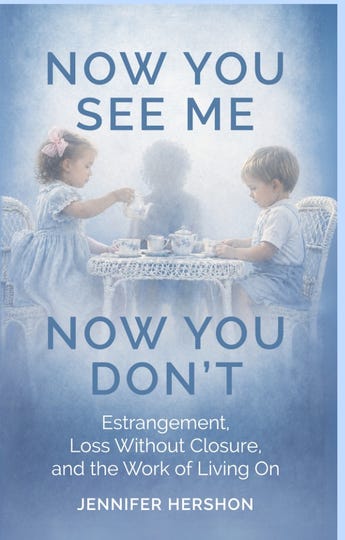
Now You See Me, Now You Don’t: Estrangement, Loss Without Closure, and the Work of Living On is available on Amazon https://www.amazon.com/Now-You-See-Dont-Estrangement/dp/B0H4X8J4WL/ref=sr_1_1?
This memoir is not a reconciliation script or a book about blame. It is a mother’s story of ambiguous loss, survival, and the slow work of reclaiming a life after estrangement.
If this article speaks to you, the book may offer deeper companionship for the road you are walking.
Disclaimer: This article reflects the author’s personal experience and perspective and is intended for educational and reflective purposes only. It is not therapy or mental health treatment. Estrangement circumstances vary, and distance may be necessary in relationships involving abuse, coercion, danger, or ongoing harm.
No posts
Comments
Nothing yet. Say the first thing.
Sign in to join the conversation.