
Ukraine has a special place in my heart, and it started with a book. Tuk-Tuk to the Road: Two Girls, Three Wheels, 12,500 Miles was the inspiration for the first trip, with the authors traversing Central Asia, Russia and Ukraine in - yes - a tuk-tuk1. While our method of travel was more conventional, for my friend and I, Ukraine did not disappoint. This was 2007, it was after independence from the Soviet Union, yet before the Maidan Revolution of 2013, and Ukraine was in a state of flux. Statues of Lenin were still standing, our hotel still had Soviet-style floor attendants and - irrationally - I worried about eating mushrooms in case they contained higher levels of radiation from the Chernobyl disaster of 1986. I was five months’ pregnant.
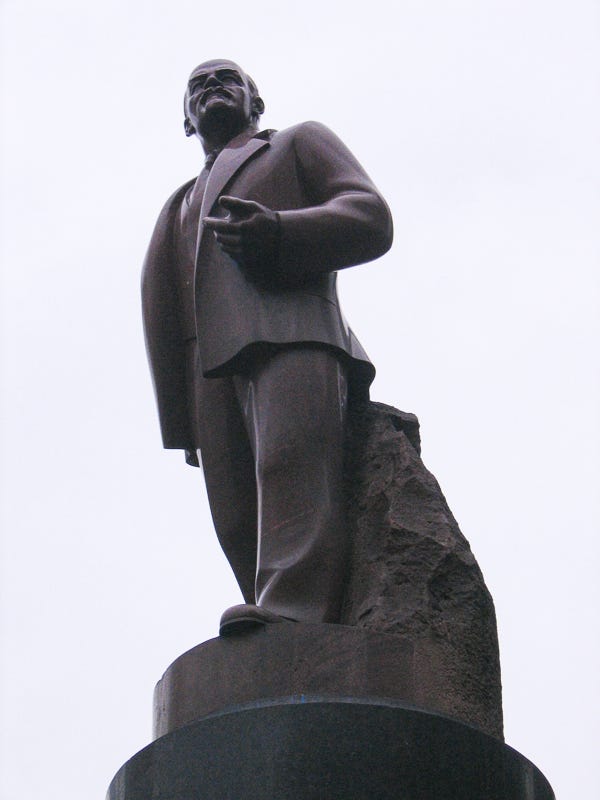
Vladimir Ilyich outside Kyiv’s main market hall
Many years later, my company started to work with a systems integrator - or software production firm - that had most technical staff based in Ukraine. I travelled there on a number of occasions and, over time, some of the team were directly sub-contracted to ours. As is normal with teams all over the world, we developed that special kind of relationship that’s bound by a shared corporate experience, by working against deadlines, by understanding each others’ weaknesses but - moreso - our strengths. When President Putin ordered the invasion of Ukraine in February 2022, it wasn’t for me a culmination of US-led NATO expansion versus the East, or Good vs Evil, but “Are my colleagues safe?”
They were, they still are - albeit traumatised in various ways - and now Ukraine remains a place that’s deeply personal to me. It feels fitting for the next interview, then, to chat to Anna Bowles. Anna is a British author and editor who spends around a third of each year volunteering near the frontlines in the eastern part of the country. Like me, Anna had a close friend living in Kyiv and wanted to get more involved after an organisation with which they were involved - Freefilmers - evolved into a humanitarian support NGO after the start of the war. Initially based in Mariupol, and then Zaporizhzhia, the organisation started to deliver aid to deoccupied regions and, by 2023, Anna had joined them. This is when she started to blog about the experience, a practice she continues now.
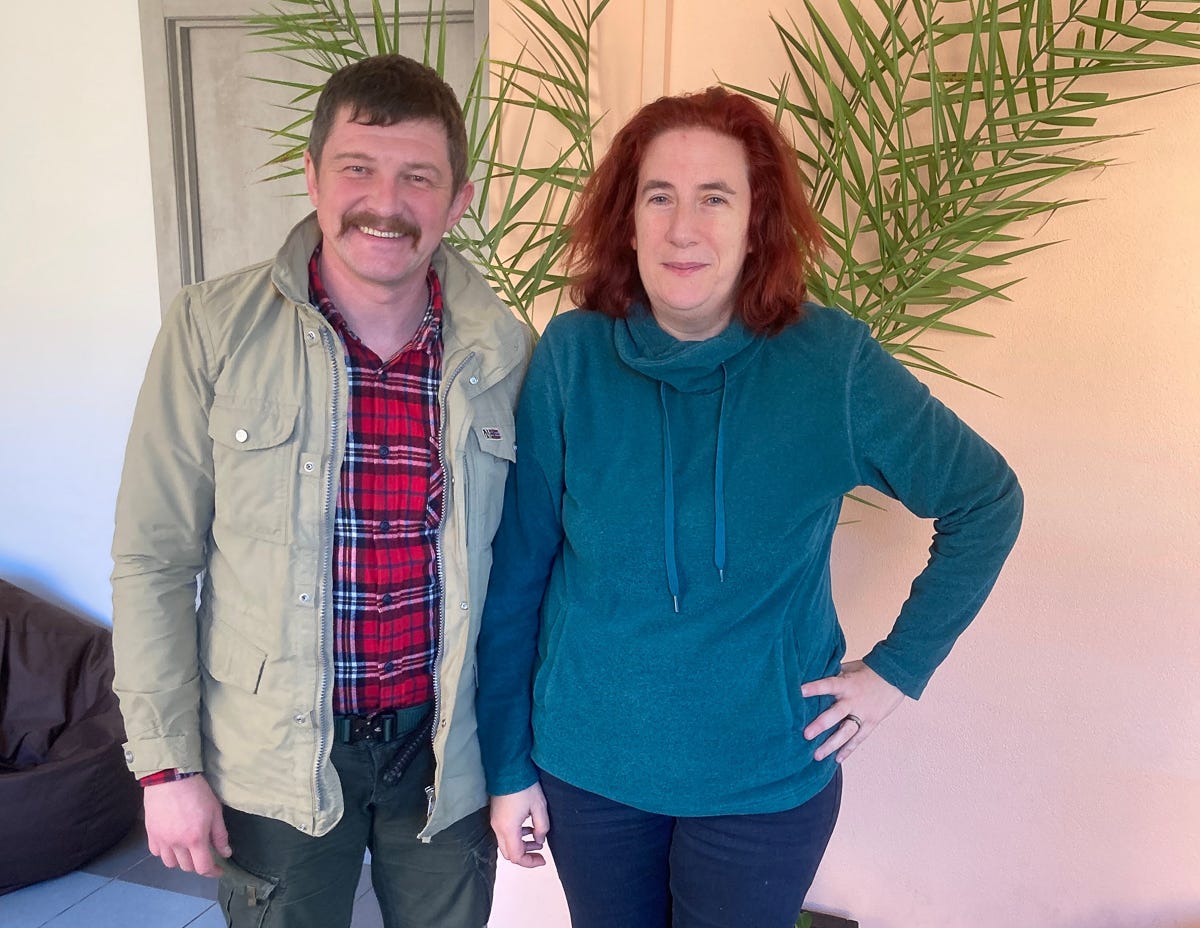
Anna meeting one of many Ukrainian support teams around the region
What’s powerful about Anna’s writing is that it speaks authentically about the wartime Ukrainian experience. Dissociated by distance and through publication editorial bias, it can be difficult to really understand the realities of life, but Anna cuts through all of this. A fluent Russian speaker - most people in Ukraine are fluent in both Russian and Ukrainian - it means she communicates with local people to get a grasp of what’s really going on. This doesn’t just mean in terms of the “theatre of war” itself - though obviously this plays a huge part of everyday fears and concerns - but also in terms of matters less dramatic but equally pressing. She says:
“Although I still do hands-on volunteering when I can, the blog has become my main focus, occupying what I think is a unique niche. It has over 570 subscribers, and I write in depth, for Anglophone readers who are seriously interested in Ukraine beyond the headlines. My biggest aim is to channel donations towards where they are most needed, and with this in mind I try to seek out tiny Ukrainian volunteer groups and connect them with potential donors.
I’ve spent significant periods of time in Kharkiv, Kramatorsk, Dnipro, Kyiv and Zaporizhzhia, and I was just in Mykolaiv for the first time, with plans to return in autumn. As my aim is to build up a picture of the battered eastern and southern parts of the country for people back home, moving around is essential.”
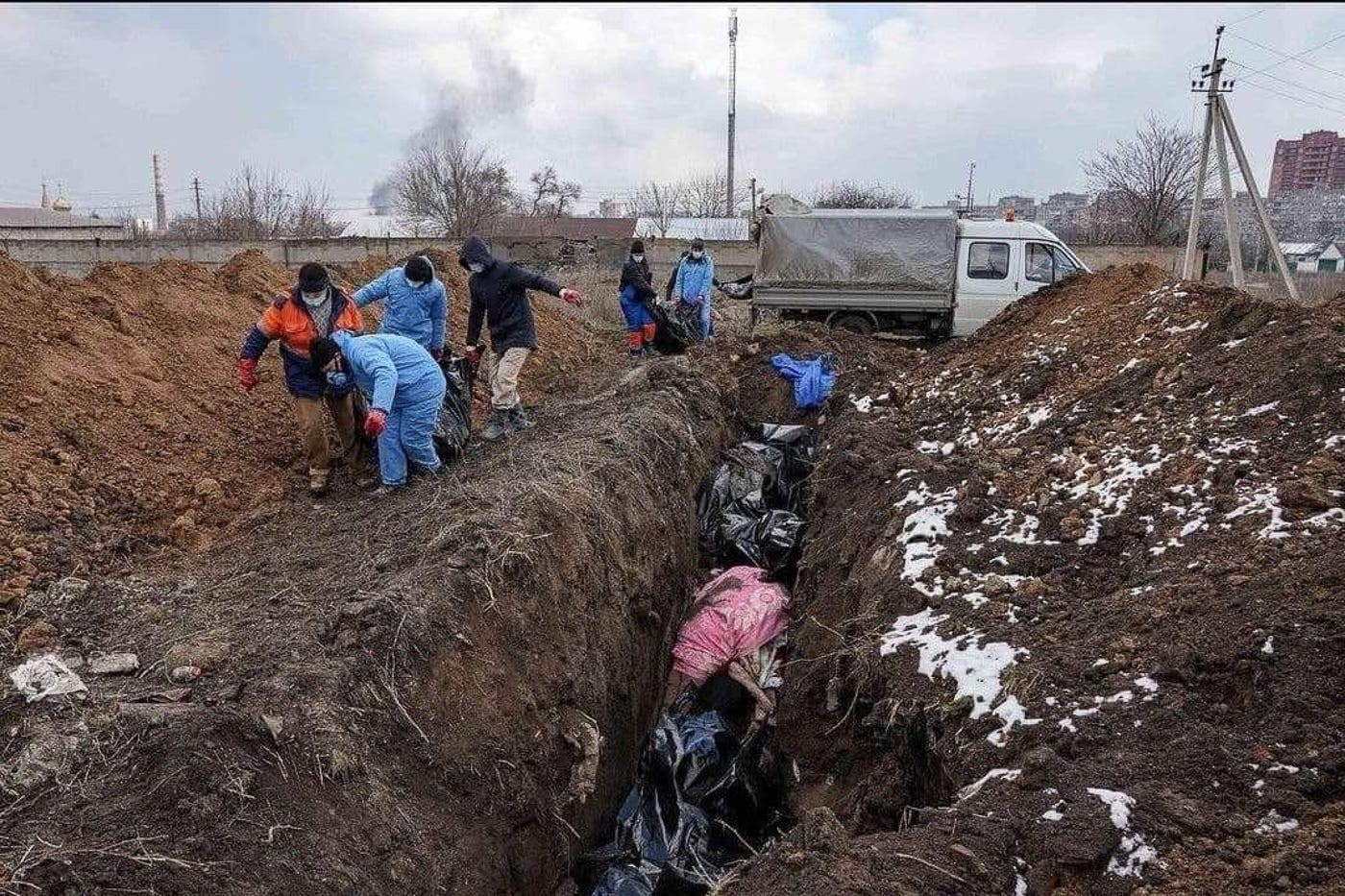
Mass graves are dug near Mariupol
I ask Anna what she thinks of the media coverage that we see here in the UK and elsewhere in Western media. Does it represent the reality of what is happening?
“I think what we are shown is generally accurate but it’s only a partial picture. Media coverage naturally focuses on the dramatic destruction. You don’t see the large amounts of Ukraine that are still, in fact, standing. Not everywhere is Bakhmut, though not for lack of effort on the Russians’ part.
The media also does a good job of conveying the population’s mix of exhaustion and determination, in the form of the interviews with and pictures of the general public that often accompany those reports.
What the reports can’t convey is the extent to which mundane daily life and wartime peril inevitably co-exist. For example, last night Kharkiv was bombarded by 20 shahed drones, which in this part of town meant half a dozen explosions between about 4 and 5.30am. They were strong enough to blow my window open - the catch is dodgy anyway - and wake up most of the elderly people. So they’re all tired and taking extra naps today, but everyone was still excited to have pancakes for breakfast!”
I ask about the people still in the region. Maybe it’s a naïve question, but I have a notion that those who are or were able have moved elsewhere, or are perhaps fighting at the front. Having read Amra Abadžić-Lowe’s account of the siege of Sarajevo, from 1994 to 1999, it was clear that while Sarajevans mostly managed to stay free of serious illness during that time, but after the siege ended their immune systems started to give up2.
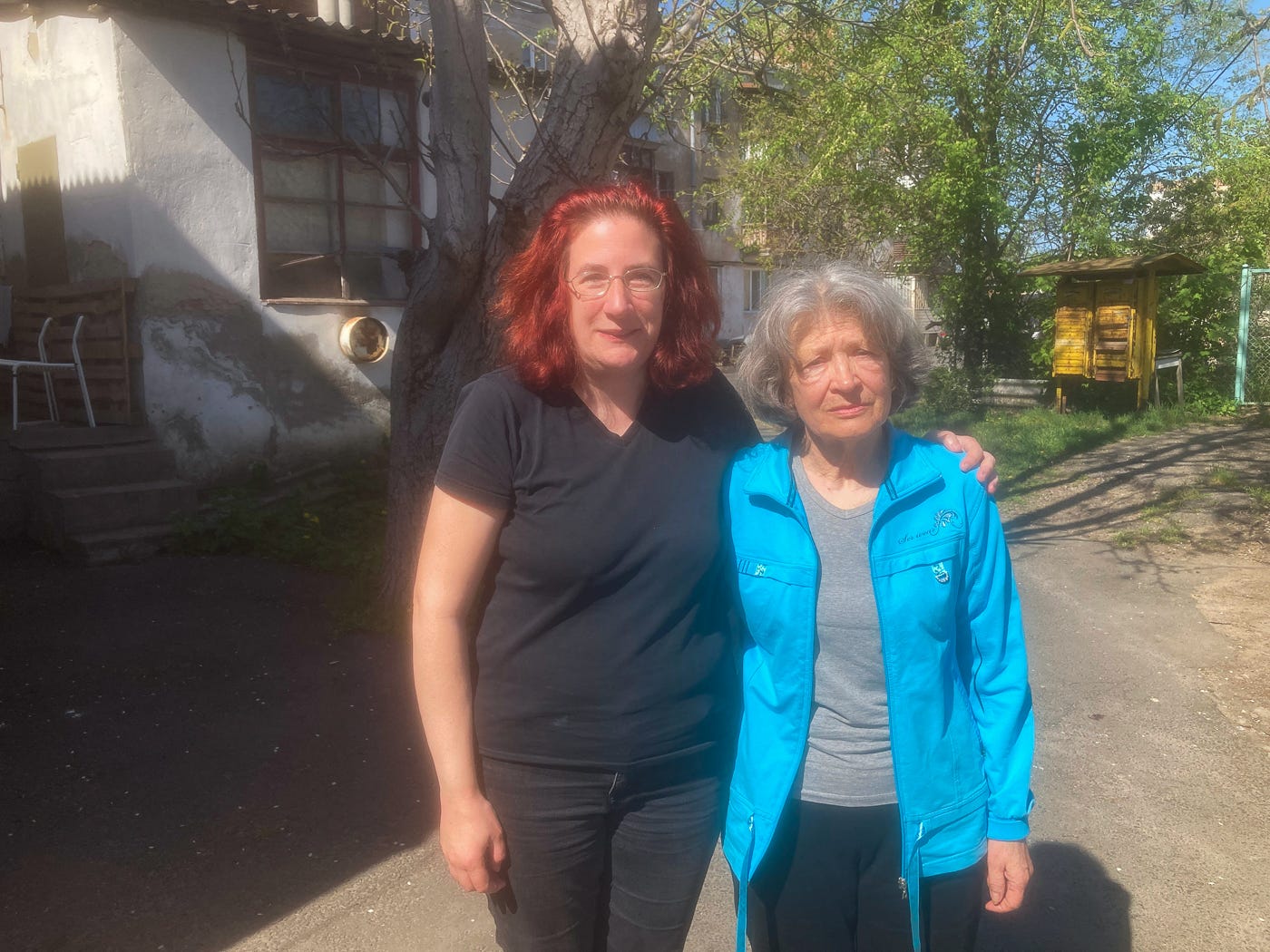
Anna with an older lady. In this image you see the exhaustion in the lady’s face
“Society generally consists of relatively young and fit people or it wouldn’t function. Elderly people are disproportionately represented, though, and the further east you go the more noticeable this becomes. A lot of mobile young Ukrainians have moved west but stayed in the country.
Everyone ran on adrenaline for a year or so and then started to crash. Then they picked themselves up again and kept going. A lot of people describe themselves as having burnt out a long time ago, but are still managing to function somehow. That’s obviously going to have long-term health implications.
There was more energy and willpower for active defiance in the first year of the war. Now there is exhaustion combined with the knowledge that submission to Russia is not an option for anyone who wants to live without the constant threat of being dragged off to a cellar and tortured, at best.”
This seems like an appropriate juncture to ask about social changes in Ukraine, and life under constant warfare. As most of us are aware, the Russians’ war effort doesn’t stop at trying to eliminate soldiers and other military personnel. It is very much an attack on civilian society.
“Coming and going multiple times has produced a kind of snapshot effect. What’s been most noticeable is the nature of the militarisation of society.
I say ‘nature of’ rather than ‘increase in’ deliberately. In Kyiv in July 2022 there were still hedgehogs (welded knots of steel bars used to block roads) piled all around, as if just waiting to be used again, and closed shops, and a jumpy armed National Guard guy deciding whether or not to let me off the train into Kyiv station (fortunately he did). Nine months later in Zaporizhzhia in March 2023 there was a significant number of manned checkpoints within the city and a heavily armed police presence. Driving from Zaporizhzhia up to Kharkiv we – myself and two Ukrainians in a rather clapped-out Ukrainian car – got stopped at about a dozen checkpoints.
Then in the course of the past two years, more and more of the checkpoints have been abandoned, as enemy infiltrators are no longer the concern they were back when the front line was a chaotic and porous jumble, and as much manpower as possible is focused on the fighting. The hedgehogs have been tidied away from the streets. Instead, military recruitment ads are everywhere, simply because soldiers keep getting killed and the Ukrainian army needs more of them to keep holding back the Russians.
You don’t generally see the weaponry. But certainly the nature of incoming has changed. For cities away from the front line, the main threat until autumn 2022 was ‘just’ missiles. Then long-range drones began to be used in large numbers. That means, amongst other things, sleep deprivation in Kyiv as air defence chases the wretched things around the sky all night.
Glide bombs – Soviet era ‘dumb’ bombs with satnav newly attached – began to be used in spring 2024. Their range is limited but they can get to Kharkiv, Kramatorsk, Zaporizhzhia and other cities near but not on the front line.
I’ve been lucky in that nothing terrible has happened to me personally, and I haven’t lost any close friends. I sometimes volunteer at a home for elderly people in Kharkiv – I’m there now – and the worst thing is constantly hearing the question, “Why? Why are they doing this?” from people who’ve lost everything, and having no answer. One resident who had lost his wife and one of his children simply wasted away, until one night he crawled under his bed and died.
In terms of animals, there are a lot of abandoned animals in rural areas where the locals have fled or been killed. There are stories of people having to shoot livestock en masse rather than leaving them to starve or dogs eating other animals that are left wandering.”
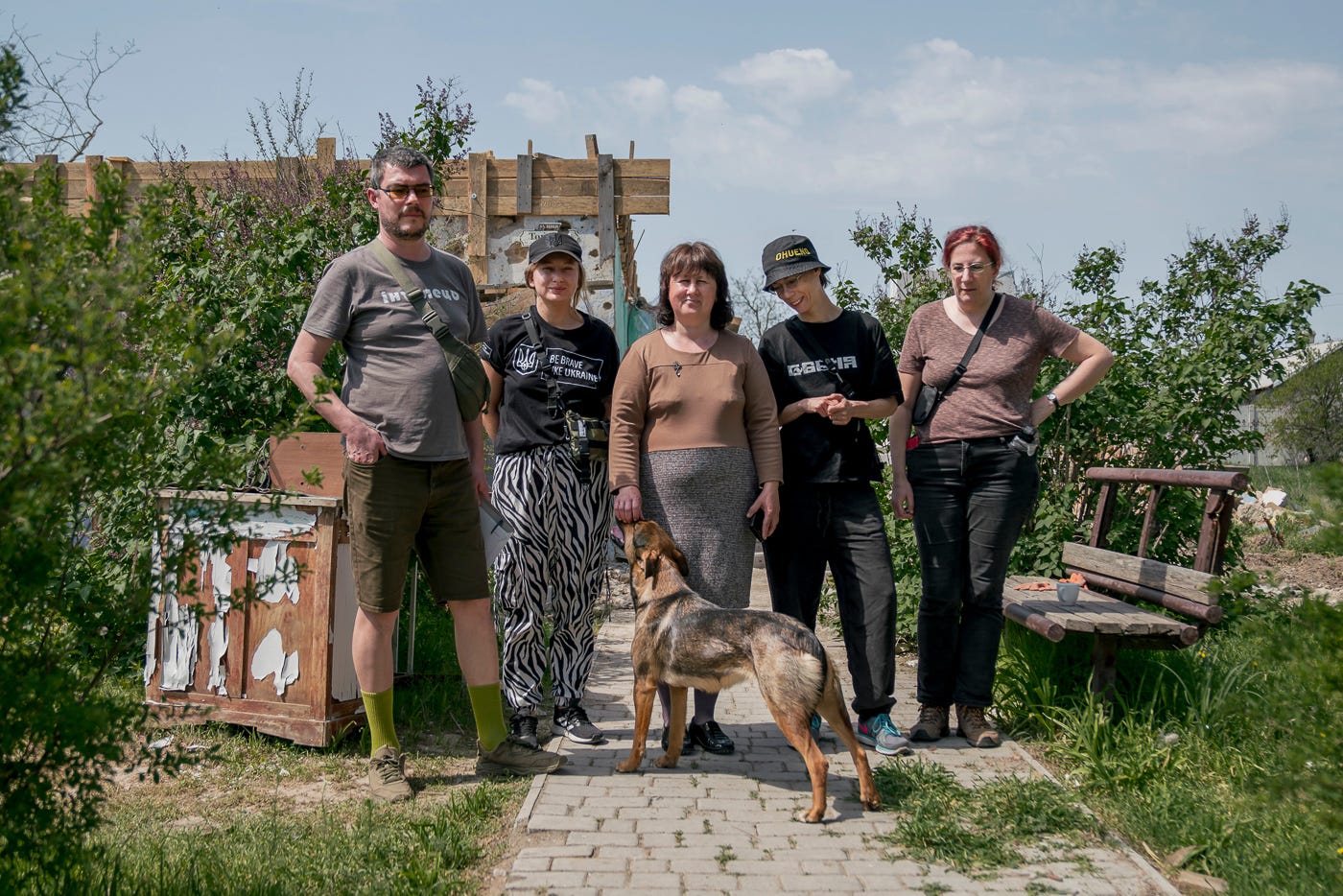
A lucky dog surrounded by affection
Politics is of course an inescapable companion of war, and 2025 has seen an increase in global volatility, irrespective of where you sit on the political spectrum. The inauguration of President Trump in January has brought a number of questions to the fore, and also developments such as the cancellation of many USAID programmes across the world. President Zelenskiy has incited Mr Trump and Mr Vance’s wrath, with claims that he’s illegally holding on to power without a mandate from the people. I’m curious as to how these developments have been viewed in Ukraine.
“Most Ukrainians aren’t living on humanitarian aid, so what we normally mean by living standards isn’t affected. However, the cancellation of USAID is a kick in the teeth to the poorest. For example, in early March I spoke to a Ukrainian NGO called This Is Our Right, who had been allocated a $300,000 grant from USAID. They had been intending to use the money to supply items like hygiene kits, mattresses, towels and firewood to people living near the front lines. That had to be cancelled. There are hundreds of similar stories.
What’s surprised me is the absence of almost all the major NGOs from the places where they are most needed. The awareness of how much money is being effectively thrown away on/by the major orgs, and how much good it could do if it were donated to on-the- ground operations, is heartbreaking and infuriating for every serious volunteer in the country.
If you donate to any non-Ukrainian organisation, please take a few minutes to read my article on aid. It could make the difference between your money disappearing into a black hole or being used effectively.
In terms of Zelenskiy himself, most educated Ukrainians have reservations about him but see him as the least worst option because he provides continuity and international recognisability. The big criticism is corruption: this accusation is often used by Russia and pro- Russian actors to smear Ukraine in various ways, but is also a genuine problem, as in any post-Soviet country. The way Zelenskiy came to power – via a TV show – meant that he appointed his mates to political positions because he simply didn’t know anyone else. The general perception is that he should do more about corruption. What that would entail, I’m not sure, though. I only perceive Ukrainian politics through the prism of war news.”
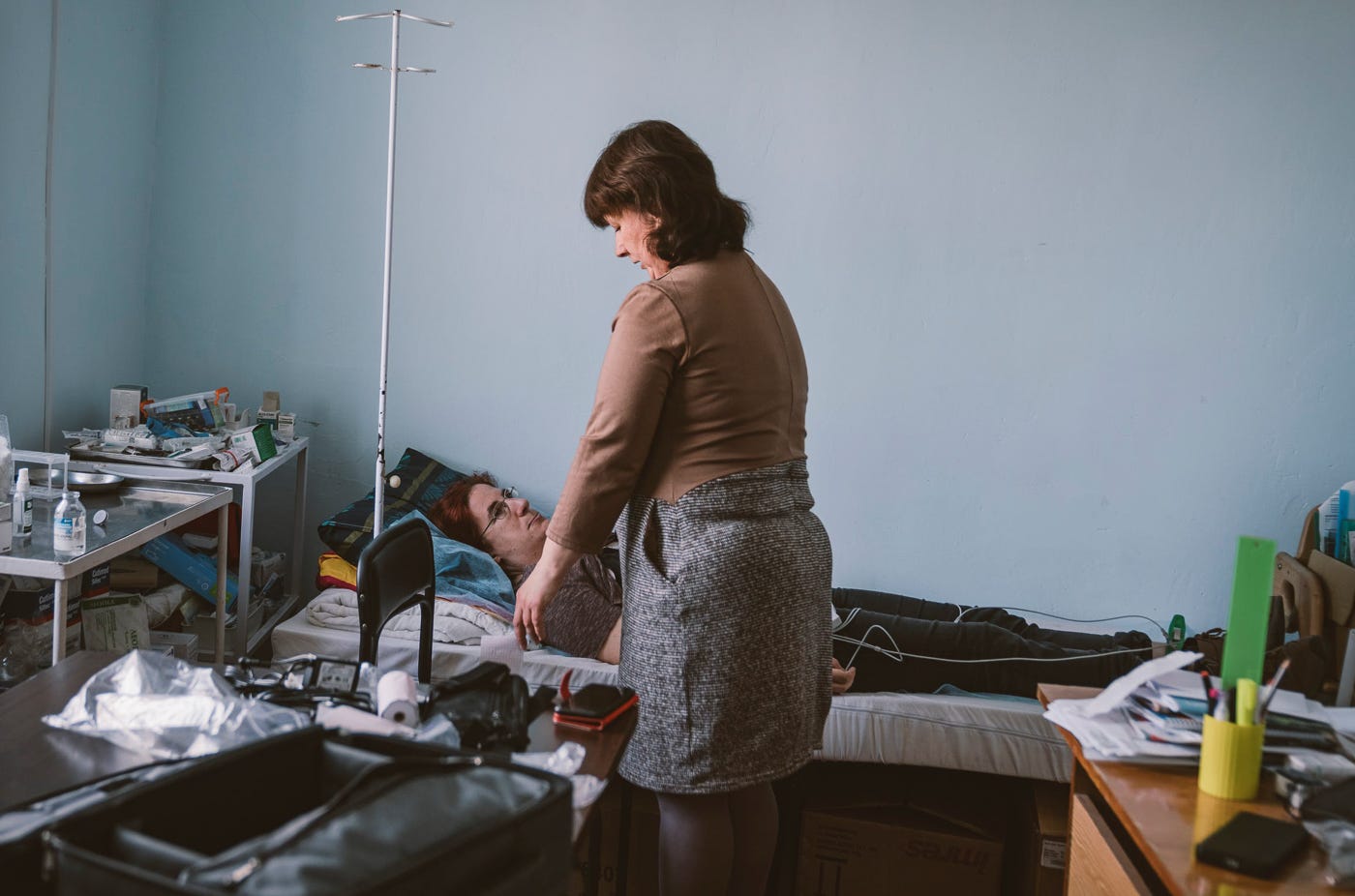
Anna is the ‘guinea pig’ for testing medical equipment newly arrived
Inevitably we need to get to the bit where I ask how people like us can help. Anna is keen to stress that financial donations are the best way to improve life next to the frontlines, but that these are better going straight to the organisations that can distribute them most effectively. Maybe, like me, you’re not in a position to offer financial help - but there could be other ways in which you can support the work going on.
“I am self-funding and self-sustaining, so my work itself doesn’t need support, but the people and organisations I meet and write about do. Money is always what is most needed, because almost everything can be bought within Ukraine.
Financially, you can take out a paid subscription to my blog for £50 a year. I have to pay tax on that money, but after tax every penny goes to Ukrainian grassroots causes. Even taking out a free subscription helps, as it boosts the blog’s visibility.
Getting the right types of aid to the right places is one of the biggest challenges. The best thing to do, in second place after donating financially, is to identify a small, if possible Ukrainian-run charity in your own country that transports aid to Ukraine and ask what they are sending. They will be meeting specific needs and know precise requirements. In the UK, try British Ukrainian Aid.
Foreign donors often send clothes, but these tend to build up in mountains in Kyiv and Lviv warehouses. There is a need for clothes in the east, where newly displaced people often arrive in places like Kramatorsk, but only donate them if you're responding to a specific appeal from an organisation that knows where to direct them.
Lots of disposable items such as hygiene kits and baby food are available in the big cities but in short supply in rural areas and de-occupied territories. It can also be difficult to work to earn money as some farmers' fields are still mined, for example. So it's worth sending baby supplies and adult hygiene items in from abroad if there's a bulk supplier.
Almost everyone in the West has an old mobile phone, laptop or tablet hidden away in their drawers. If donated to Ukraine, these transform recipients' lives, as they allow people to work or keep in contact with friends and relatives at the front or abroad. DM me if you have a gadget to donate, though check first that the postage from your country doesn't cost more than the item itself.”
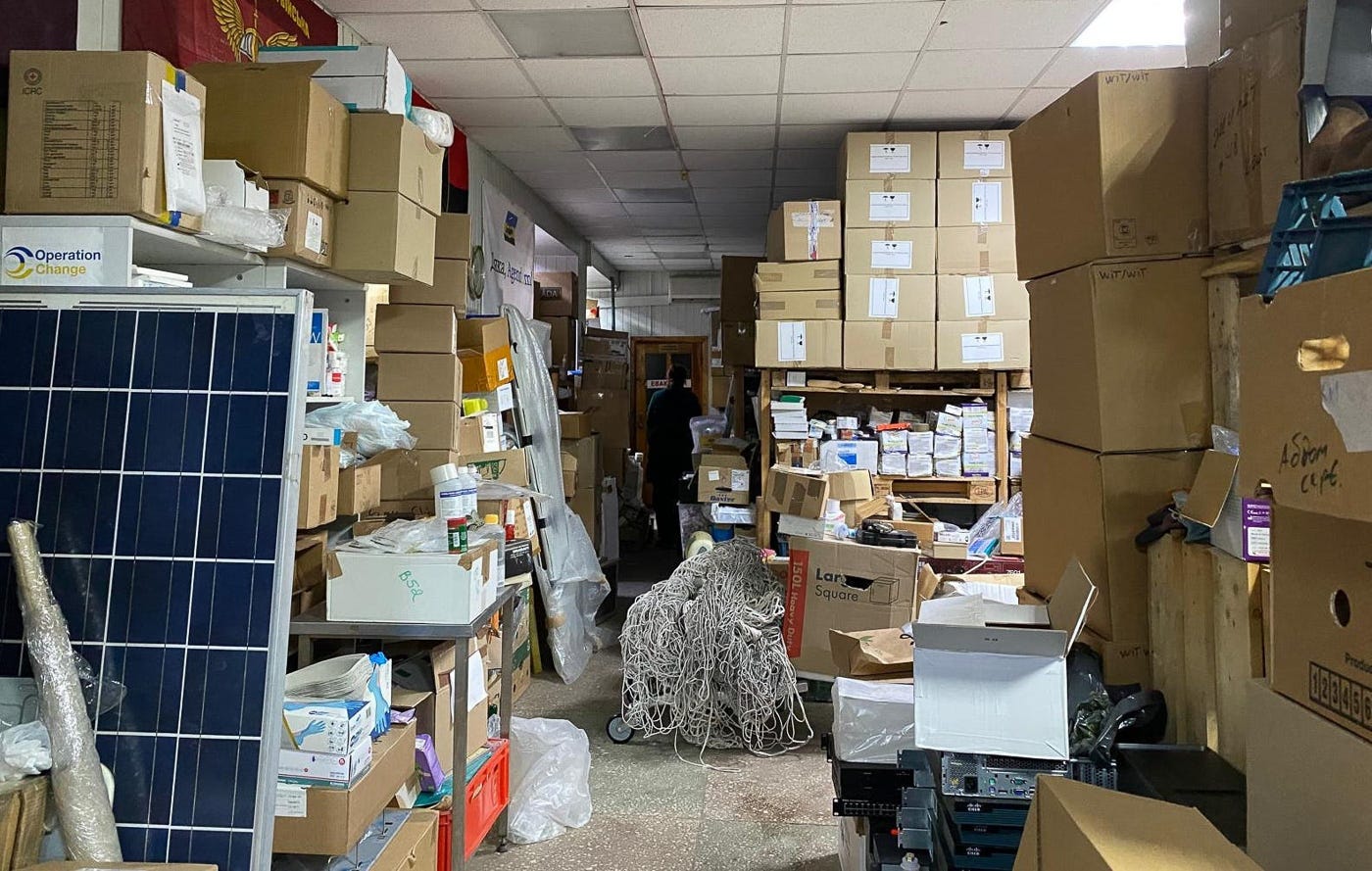
Aid waiting to be distributed in a makeshift warehouse
Thanks to Anna for making the time to talk to me. Please do subscribe to her Substack, and support in any way that you can.
If you’d like to support me, too (!), please consider Buying Me a Bus Fare. It helps to make me go a long way.
https://www.abebooks.co.uk/Tuk-Tuk-Road-Two-Girls-Three-Wheels/30887722107/bd
https://www.amazon.nl/-/en/Amra-Abadzic-ebook/dp/B0BNW58JT6
No posts
Comments
Nothing yet. Say the first thing.
Sign in to join the conversation.