
Anyone interested in urbex - the shorthand for looking around abandoned structures - will know about Tskaltubo. It’s a spa resort in the eponymous Georgian town and, while the current buildings were constructed in a glorious Soviet style during the glorious Soviet years, people had long before that been “taking the waters” here. The springs have geothermal properties, attracting locals and visitors for various therapeutic treatments. While initially this was viewed as something of a folk remedy, later scientific analysis showed that the water contains elevated levels of radon and carbon and do, in fact, have curative properties.
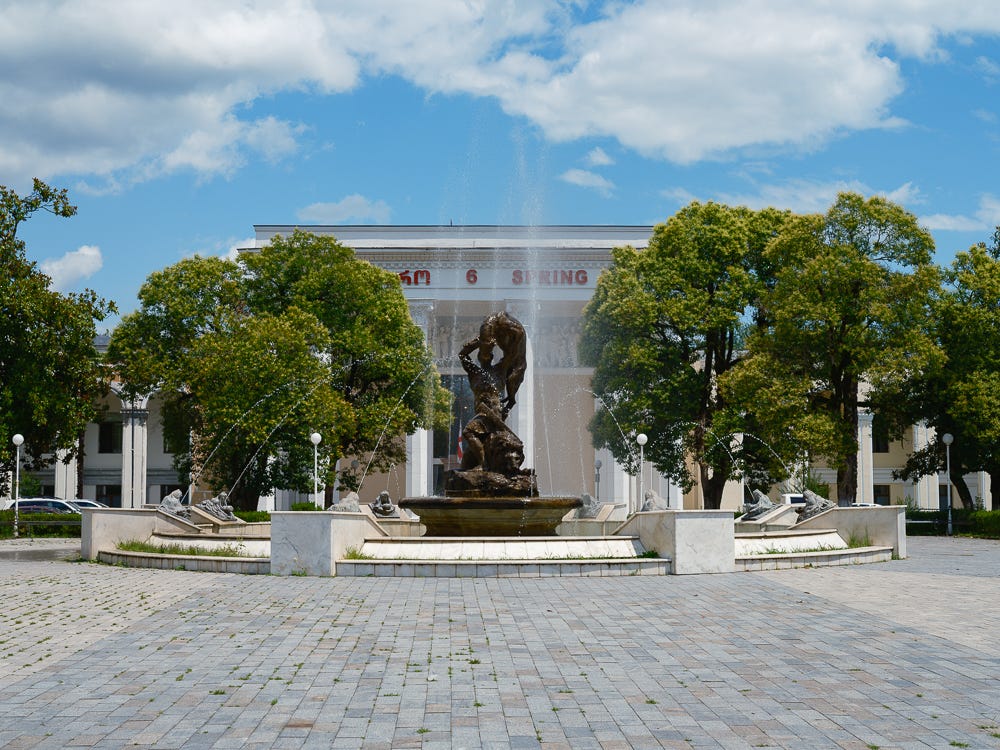
The one remaining sanatorium that is in operation. The fountain represents Georgia’s national poet, Shota Rustaveli and his famous work The Knight in the Panther’s Skin
According to John Steinbeck in his 1948 A Russian Journal, Russians have long regarded Georgia as a place of bounty and goodness.
“Wherever we had been in Russia, in Moscow, in the Ukraine, in Stalingrad, the magical name of Georgia came up constantly. People who had never been there, and who possibly never could go there, spoke of Georgia with a kind of longing and a great admiration. … Indeed, we began to believe that most Russians hope that if they live very good and virtuous lives, they will go not to heaven, but to Georgia, when they die.”
Perhaps, then, it was a natural decision to build a most grandiose series of sanatoria in Tskaltubo, a brainchild of the Stalin era and overseen by the most infamous Georgian to live. Dozens of different spa houses were constructed, and in time there were direct rail links from all across the 15 republics of the USSR. While the architecture of the complex is magnificent, workers suffering from various ailments – from mental to physical – would be sent here by their doctors or workplaces for treatment, issued free vouchers for several weeks’ stay. Clearly the party apparatchiks would have more luxurious accommodation or private spas, but anyone could come. Stalin himself was said to have visited on a number of occasions. These days, Tskaltubo is home to wild pigs, stray dogs and - incongruously - cows.
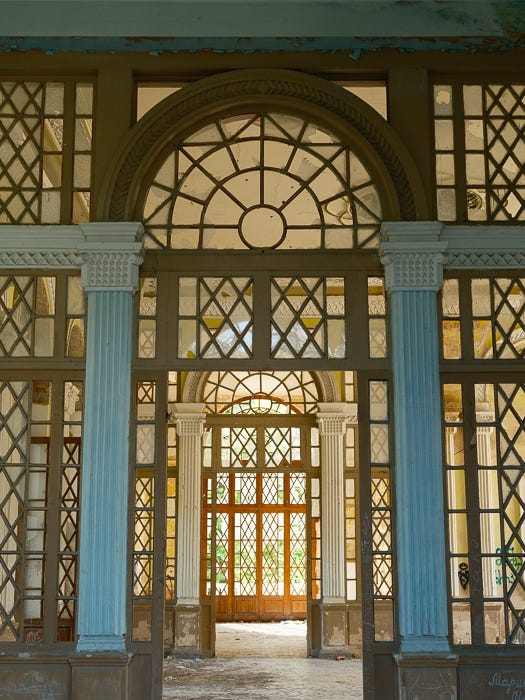
The railway station, still magnificent but no more. The tracks now play host to wild pigs.
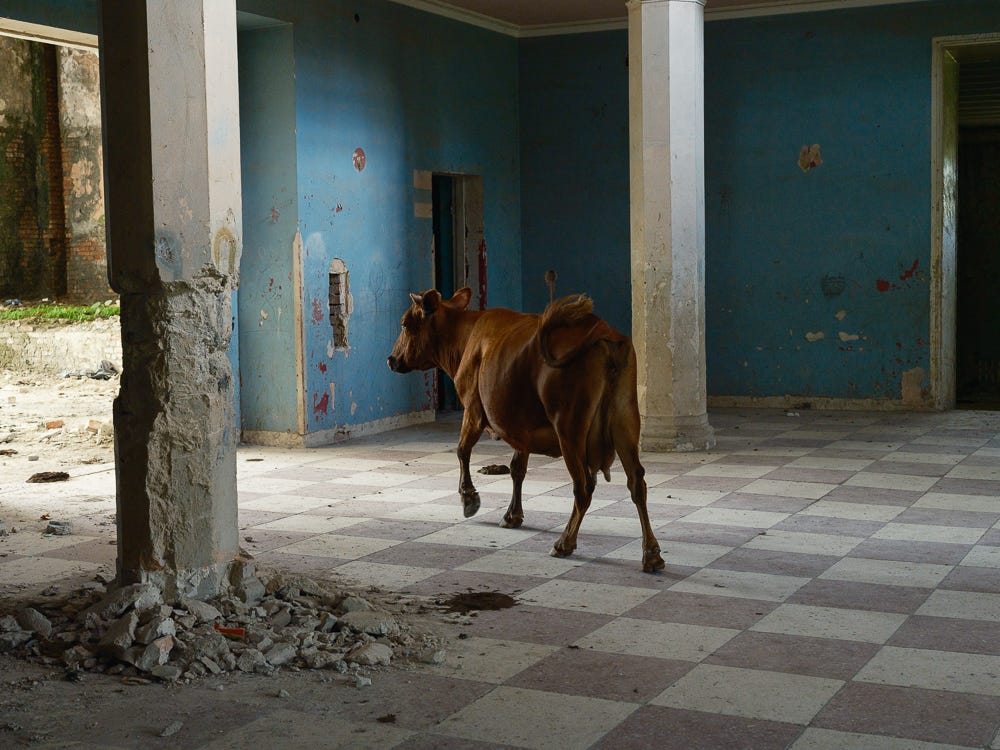
A cow is surprised by our presence
Tskaltubo’s modern history reflects the modern history of Georgia. Georgia announced its independence from the imploding Soviet Union in 1991, and almost immediately faced a series of civil battles across the re-emergent country. Some regions such as what English-speaking countries call South Ossetia wanted loyalty with Russia, in part because the region of North Ossetia is in Russian territory. The same was true of Abkhazia. Under President Gamsakhurdia, police forces were deployed to quell the separatists, which in turn brought willing assistance from Moscow. Some clumsy political decisions by Gamsakhurdia followed, notably around who could be counted as Georgian or not, and violence escalated across the country. As Tony Anderson points out in his book Bread and Ashes, this type of conflict is typical of post-colonial societies. The authoritarian gloves come off, and bottled-up frustrations, suppressed identities erupt to the fore. Ethnic Georgians fled Ossetia and Abkhazia, and the abandoned Tskaltubo complex became home to (some of) these IDPs or internally displaced persons. There’s an irony in Georgians taking shelter from Russian military might in a former Soviet show destination.
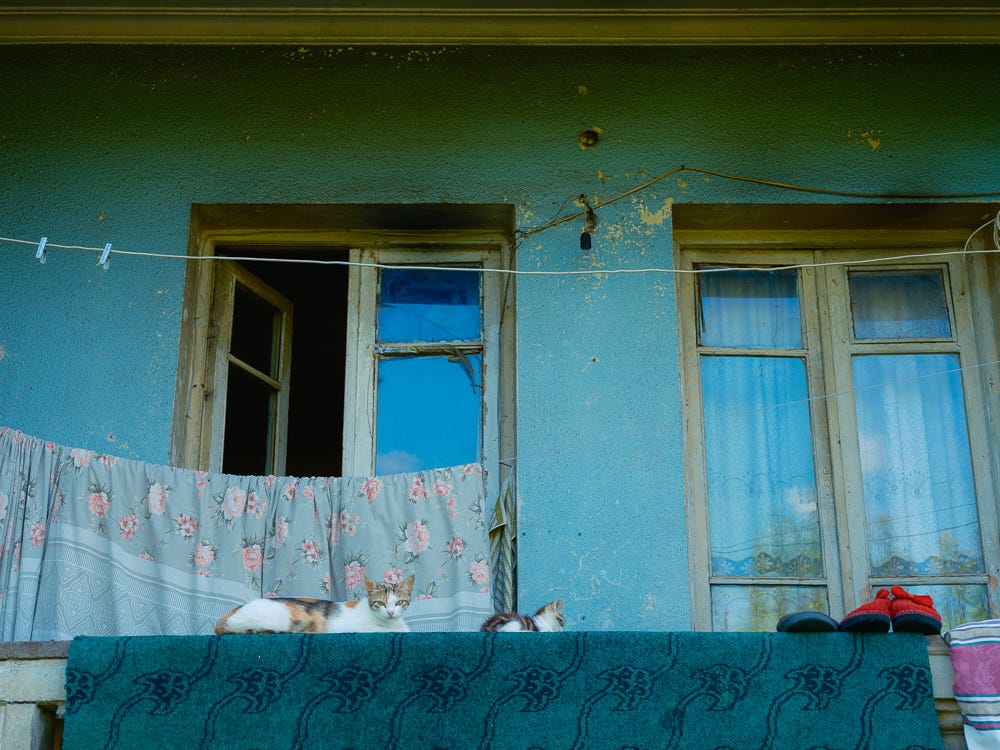
“Home is where the heart is”. Cats and slippers mark the dwelling of an IDP.
35 years on, the sanatoria have largely deteriorated. One is still operational, and you can choose from a variety of treatments – though they don’t come with a Communist-era pricing model. The others have started to decay, and natural life is beginning to reclaim the buildings. While the majority of Abkhazian refugees has now gone, rehoused in apartments elsewhere, some remain. My guide told me that these IDPs simply cannot afford to move. Apartments are not given for free of course, and need furnishing. With minimal state support – refugees are given something like a dollar a month by the government – moving on is easier for the working-age population, but for the elderly or infirm it’s not a viable option. While Russia has not formally annexed South Ossetia or Abhkazia, their military is still there, thwarting any Georgian ambitions to join NATO under the disputed territories clause.
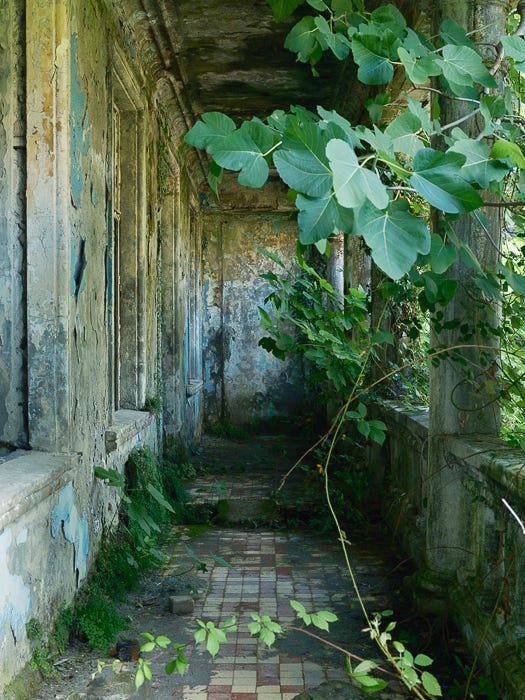
Nature reclaims part of the Medea sanatorium, one of the most grand that is still open
Increasingly these sanatoria have started to be bought by private corporations, and are now less accessible to the casual visitor than before. Though acquired, fenced off and guarded, no work appears to be taking place to restore the buildings to their former glory. There’s meant to be a sale clause in place that, if the properties are not renovated in a certain time frame, they’ll be returned to the government. For now though, Georgians on national service are deployed to watch those that are still open to the public, the micro-economy of the remaining IDPs continues – there are shops and services that have developed over the years – and the once-colourful and ornate buildings continue to crumble, a testament to a past that talks to a still-uncertain future.
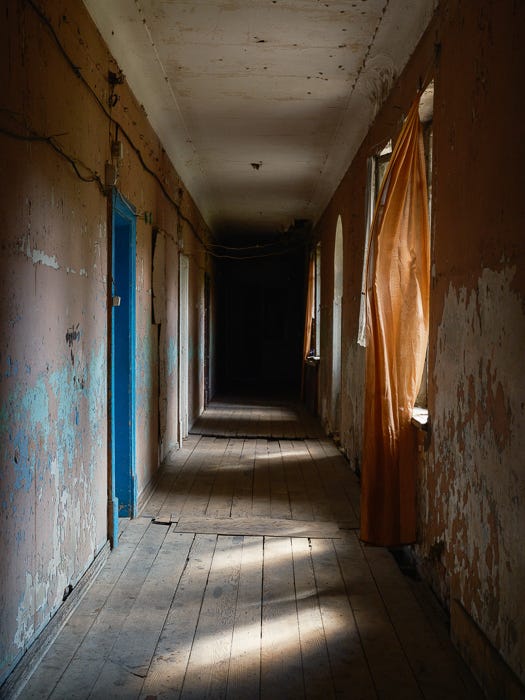
A corridor that serves IDP homes
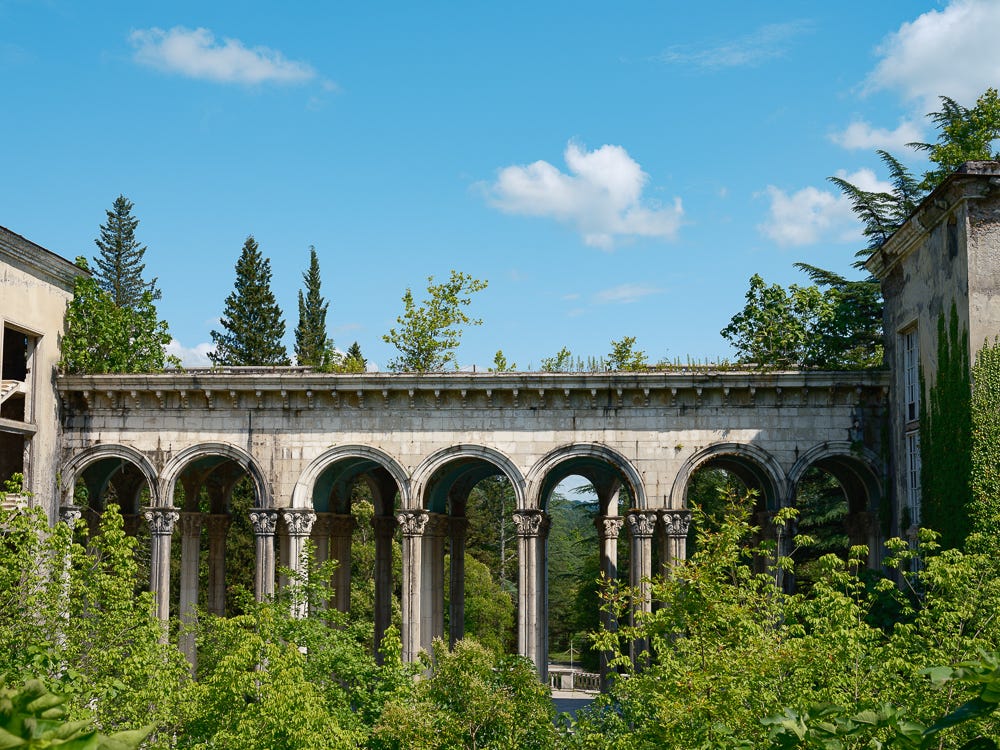
Medea’s famous arches. Newly married couples come to be photographed here
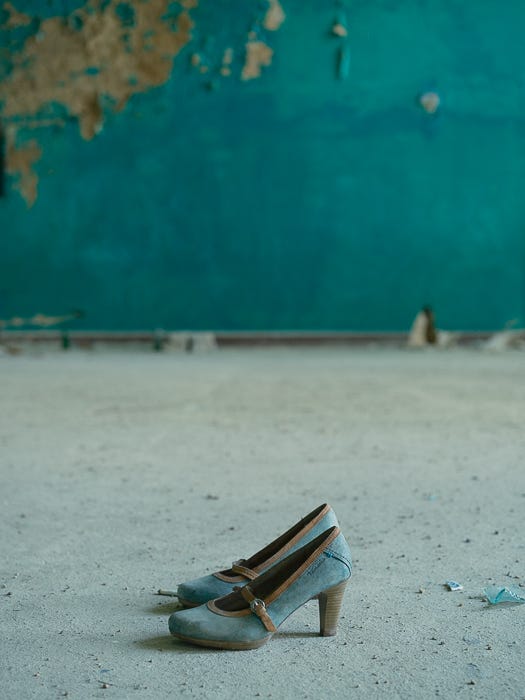
Matching shoes and walls
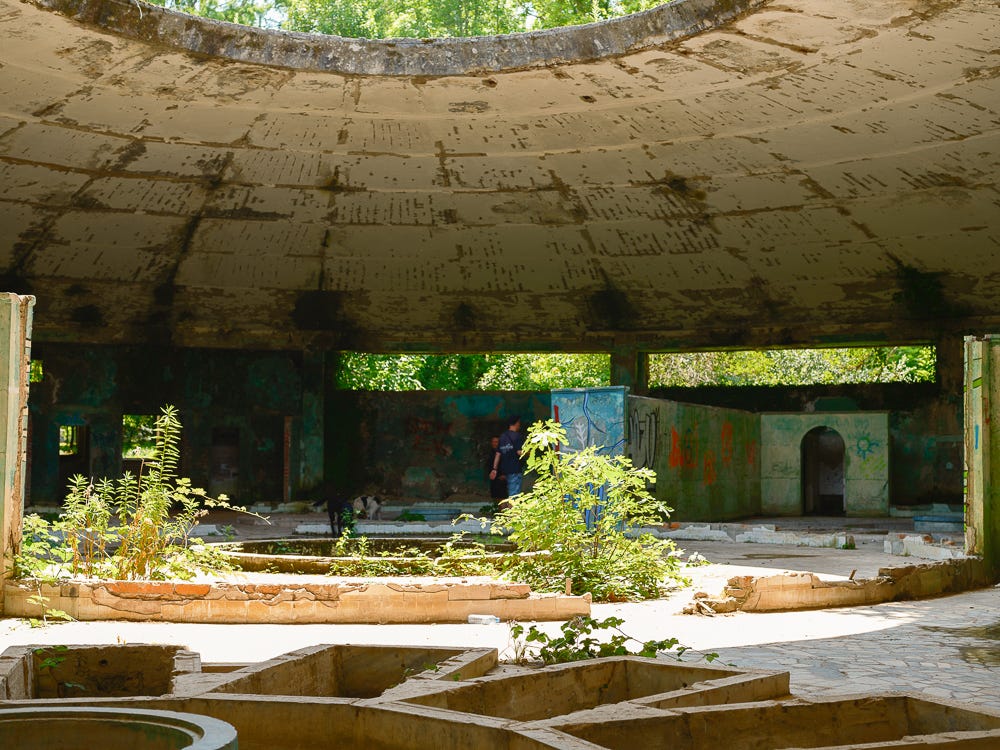
One of the original bath houses. Multiple jacuzzis encircle the perimeter of the circular building
If you like what you read, please do Buy Me a Bus Fare if you are able. The places I go, buses are nearly always very good value!
No posts
Comments
Nothing yet. Say the first thing.
Sign in to join the conversation.