
You probably won’t be able to see all of this article if reading by email because I’m including lots of photos. Click in to see the full lot!
I’ve always been a bit of a Cornwall snob. It’s not that I didn’t appreciate the scenery, but there’s always been something jarring about it. I like novelty and adventure, yet the only unpredictability about this south-westerly British county is the weather. Every year wealthy Londoners pack up their Audis and Range Rovers and head off to the narrow country lanes, clotting the transport arteries more than the fabled Cornish clotted cream.
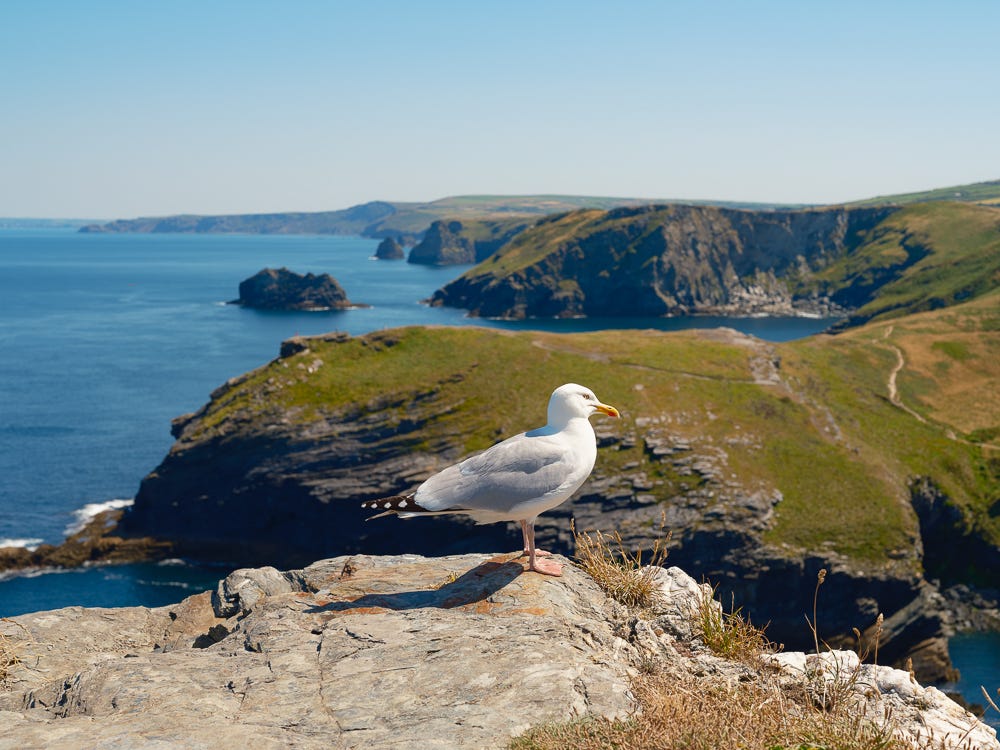
A seagull looks out from Tintagel Castle. Is it the same one that stole my ice-cream?
This family trip, though, has been different. Something has changed. We’ve boogie-boarded in Constantine Bay, explored the castle and caves of Tintagel – reportedly home to the legend of King Arthur, achieved the impossible with a teenage interest in the Eden Project and – most miraculously of all – have been blessed with searingly hot sunshine. Pottering around rock pools and swimming take on new meaning when hypothermia isn’t a real possibility. Scoops of decadent Cornish ice-cream are a just reward for lying on a baking beach for a few hours. And, of course, it’s not the school holidays.
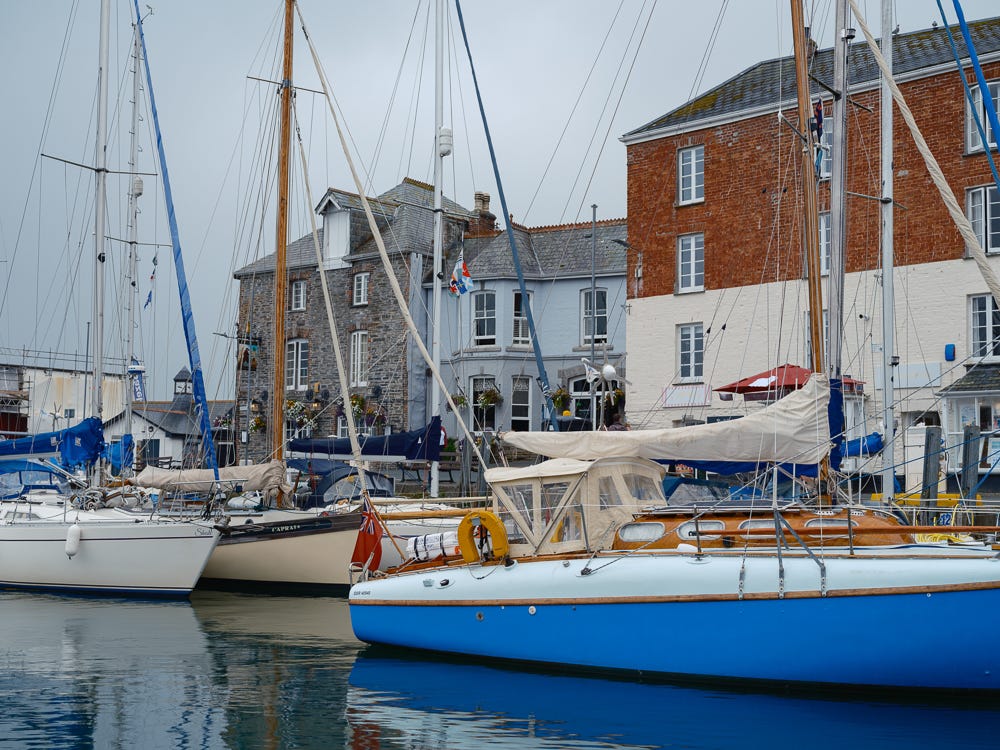
Padstow Harbour at the start of my walk
Cooler days call for more strenuous efforts, so I set off along the coastal path that links Padstow – home to Rick Stein and his various fish emporia1 – with Watergate Bay. It’s an easy enough route, not too taxing on the contours, but taking on some stunning coastline. It’s just the sort of place that makes you dream of walking the entire coast of the British Isles. Fellow walkers nod to you and say hullo, in that terribly British way that we have. Thoughts wash through my mind like the waves on the shore. I think about immigration and how tensions might be alleviated with a strict set of instructions to all newcomers to affably nod and say hullo whenever the occasion demands.
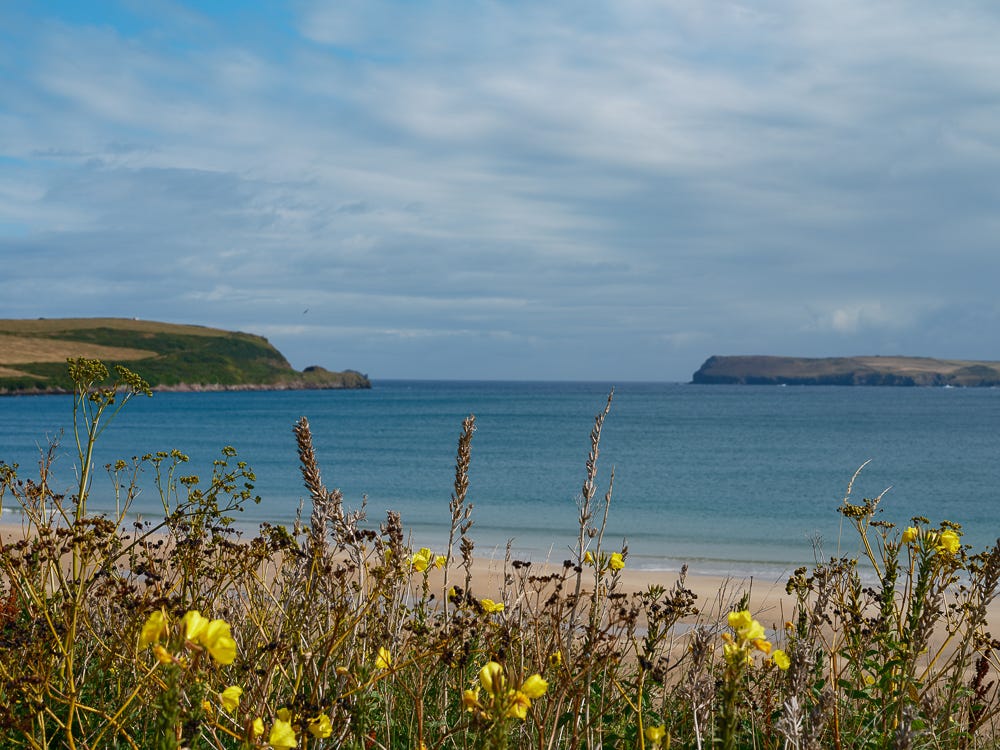
Evening primroses complement the colour of the sea
The walk starts with a wander a short hop from the coastline itself, cutting through scrub and through farmers’ fields. Evening primrose sprouts in clumps, enjoying the refreshing morning mizzle after days of scorching weather. Red admirals flutter; later as the path progresses I spot cabbage whites, and corn-blue butterflies whose names I don’t know. I pass a war memorial to those local men lost in global battle, and darkly wonder if new names may soon be added. This section of the walk could be almost anywhere in England, with overhanging trees and gladed corridors. The Cornish touch is stiles made from slate, reflecting the past mining industry that helped to make Cornwall – and the humble Cornish pasty – famous2.
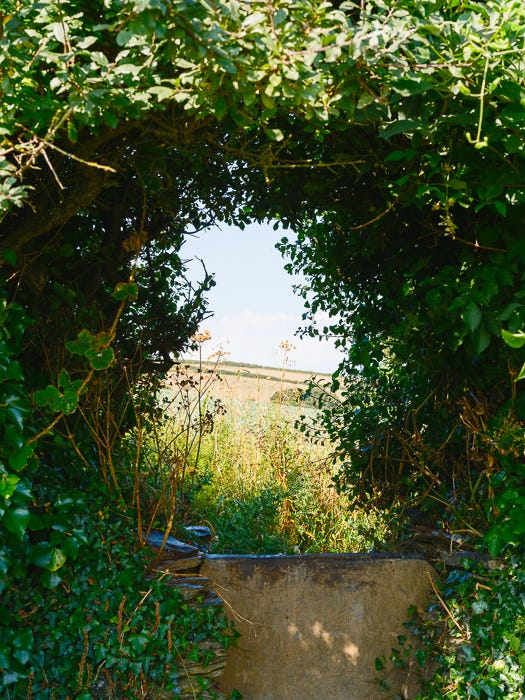
A slate stile gives access into the next field
Beginning to consider my toilet options here where the dog walkers have ebbed away, I emerge onto a road, and take the next section of the path. There’s a Rest-a-While tea house, but only for those who don’t need the loo, as they have no facilities – a sign prominently proclaims. And besides, it’s closed. Walking alone is freedom for your thoughts and the tune for English Country Garden comes unbidden into my head3. Long after the ants have been suffocated, it hasn’t left.
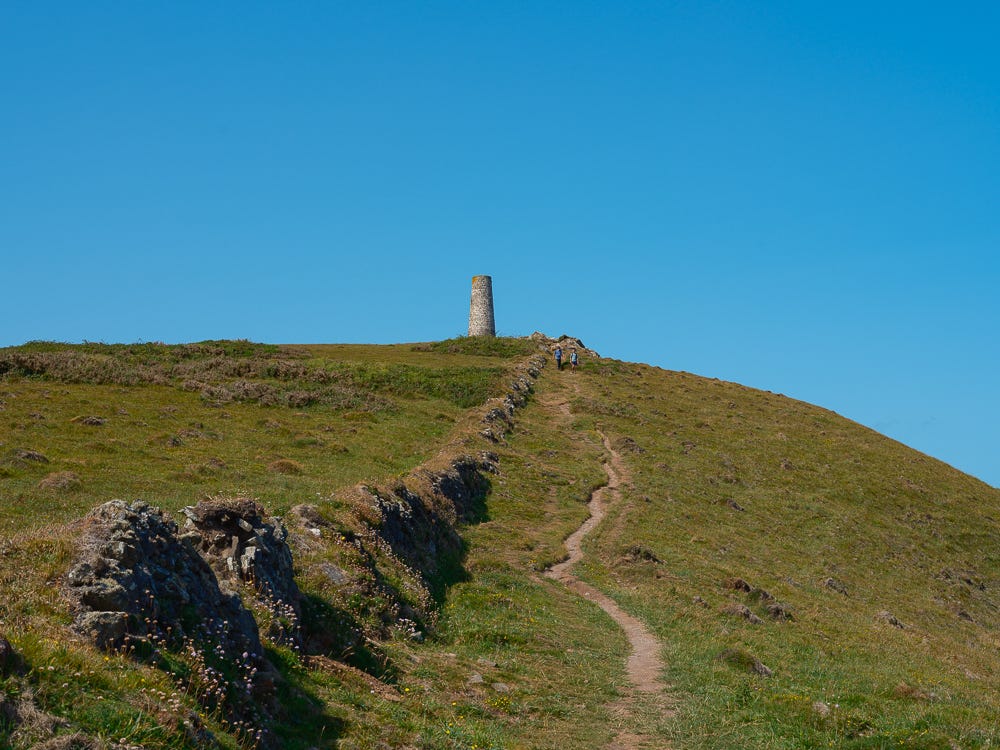
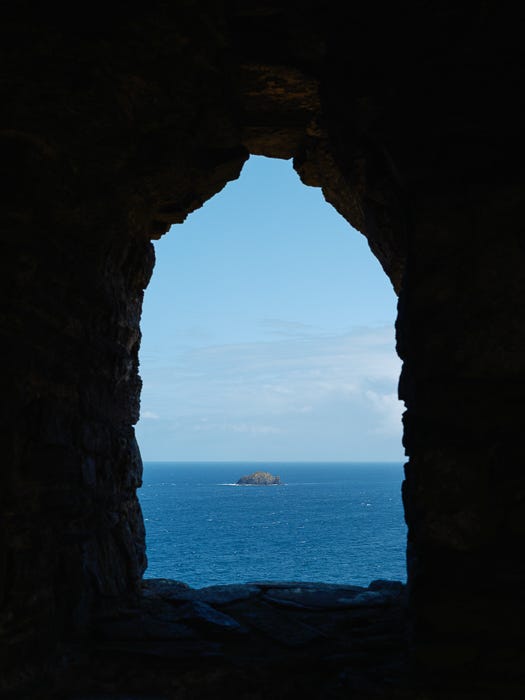
Trevone Tower
A bit of a climb and I reach a stone tower, looking out over steep cliffs and blue seas that look calm but aren’t. The bluster whips past and through my ears; despite the emergent sun it’s definitely windy old weather. I assume the tower to be an old lighthouse, the kind where fires would be lit to avert oncoming vessels. It’s stone, and has windows formed in the side. I’m wrong. It turns out that this is actually an old windmill at Trevone Head, so the bluster can’t be a new phenomenon.
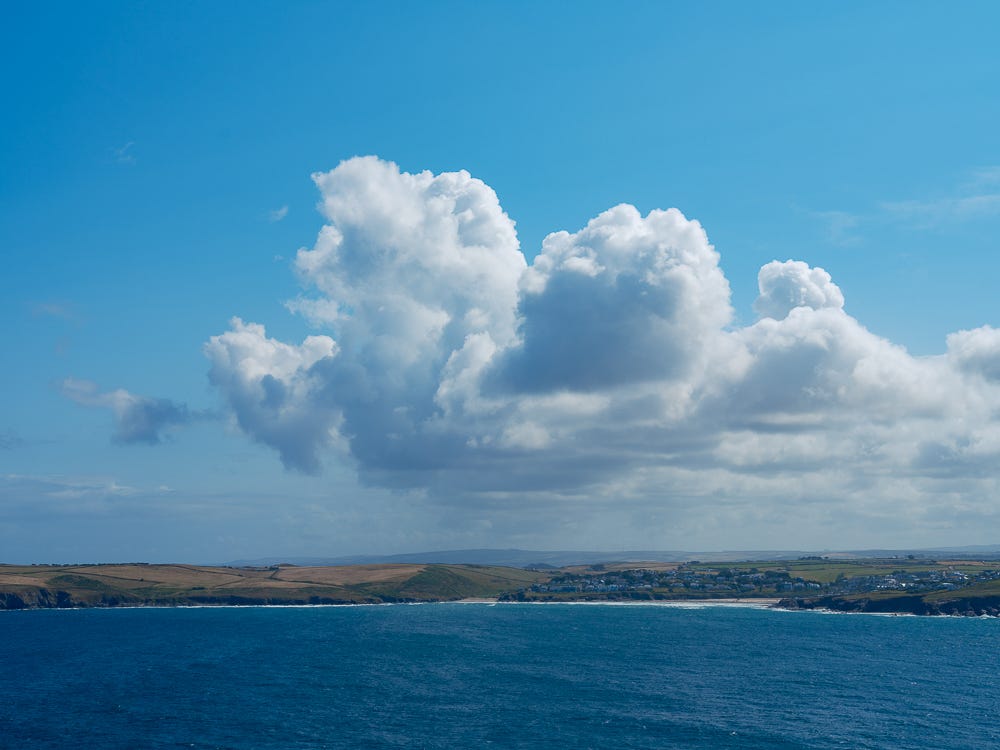
Trevone views
Pretty much every place name in Cornwall seems to start with the prefix Tre-. It comes from the almost-extinct Cornish language, of Celtic root, and means something akin to “homestead”. So Trevone means “home by the river”. It’s not a river here but a sea, of course. Other popular Cornish place names include the prefix Pol-, which means “pool”. Think Polzeath, Polperro. Pen- denotes a hilly place, a most unsuitable home for those pirates of Penzance.
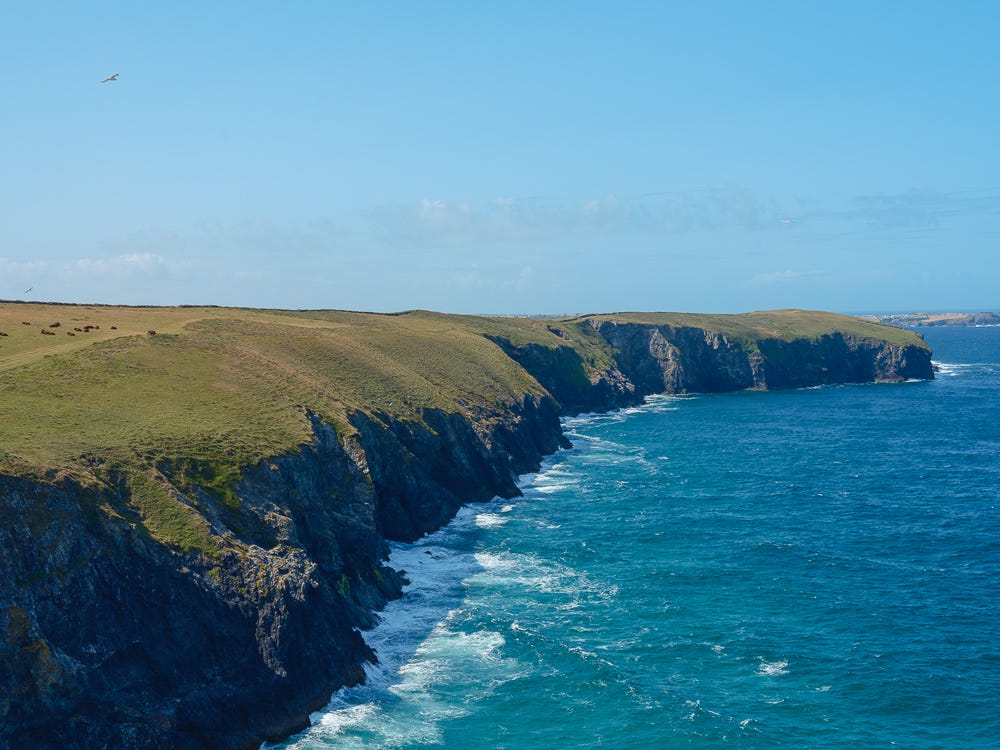
Part of the coastline from Hawker’s Cove to Trevone Bay
From the tower there’s a gorgeous cliff section of the walk. Signs extort dog owners – and there are many in these here parts – to keep their hounds on leashes, for livestock abide here. Aside from the bluster of the day, I’m wary of going too near the edge of the cliffs. Britain’s coastal cliffs are notably prone to erosion and occasional collapse; it often makes my belly do a little flip-flop to see Instagramati influencers perch on an outcrop to get that all-amazing shot for the grid. Here the livestock have also left their own special warning: “Go near here and it could be a slip too far”.
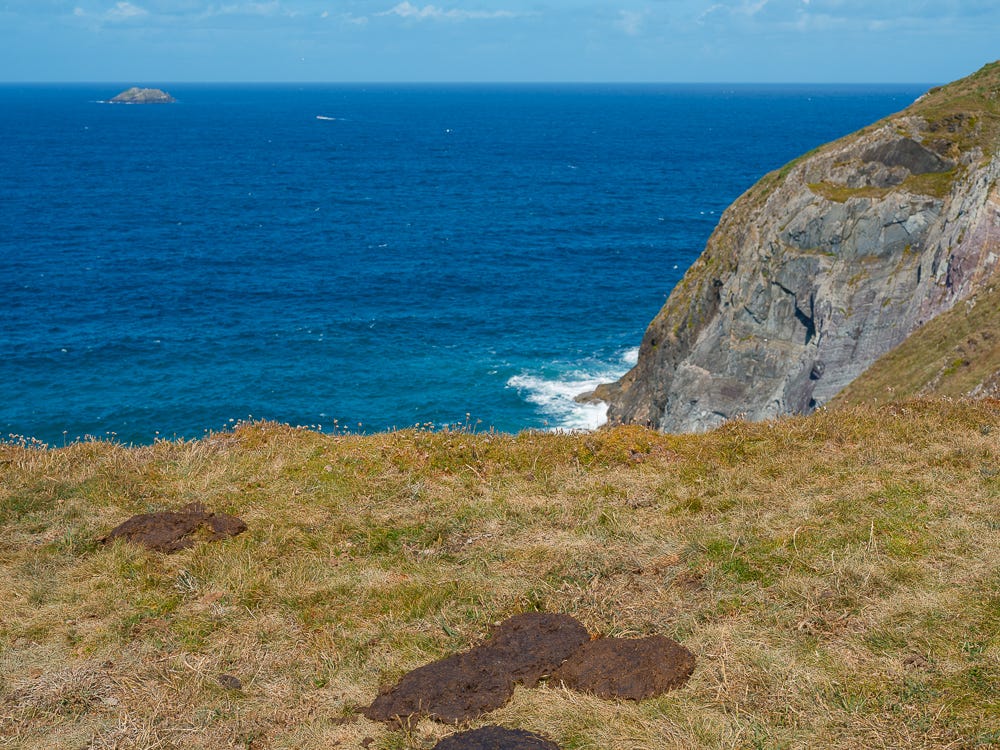
It’s a slippery slope
The cows, those magnificent chestnut cows, are heeding their own advice. Though oddly close to the edge of the tops, most of them are sensibly sitting down in the wind.
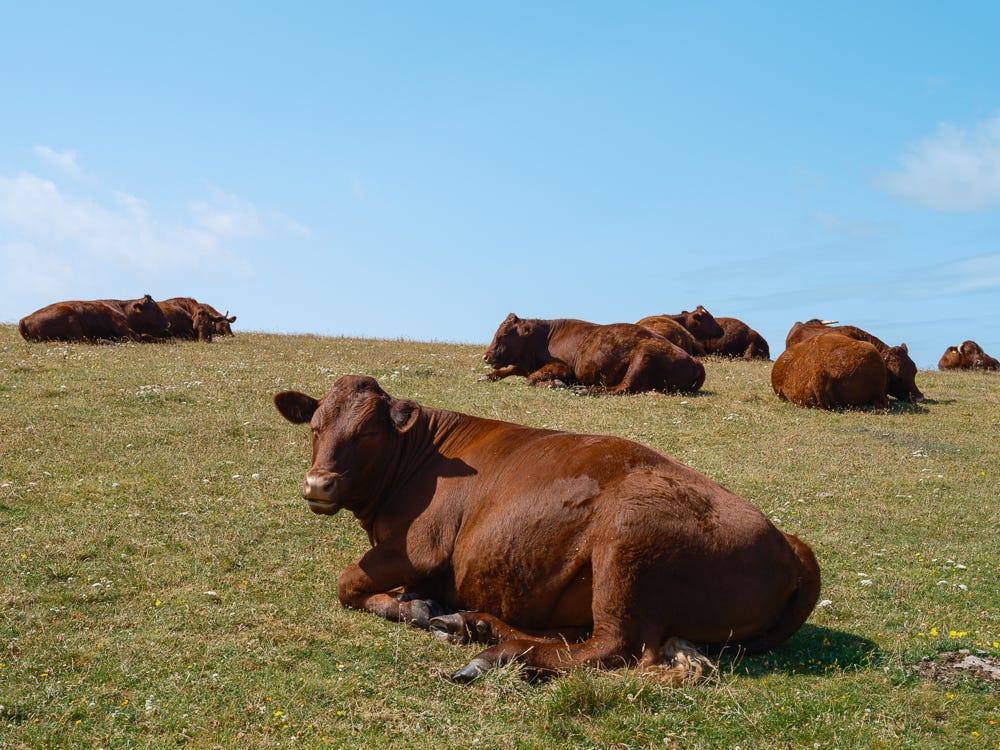
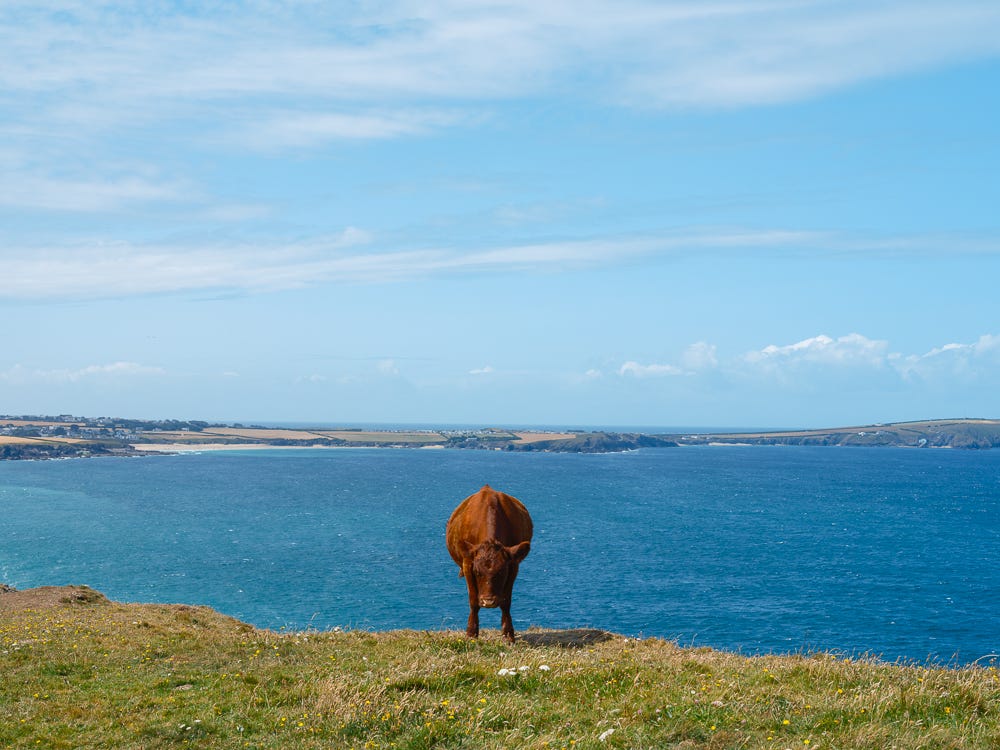
Where clotted cream originates in Cornwall
Arrival at Trevone Bay marks the finish of the hearty-hullo-in-earnest section. Rather peckish by now – I’ve been going maybe three hours – I opt for a nutritionally sound double scoop of ice-cream option (waffle cone), and slurp at it while watching families enjoy themselves on the beach below. British beaches are perfect places, really. Large and often flat, with multiple rockpools in which small kids can dabble around with “fishing nets” and from which they can fetch buckets of water to help construct the ubiquitous sand castles. Colourful wind breaks reflect our colourful weather. Families bring almost anything to the beach, sometimes it seems almost the contents of their entire house. And beware the castle kicker: there’s always a malicious little sod who puts stones in the middle.
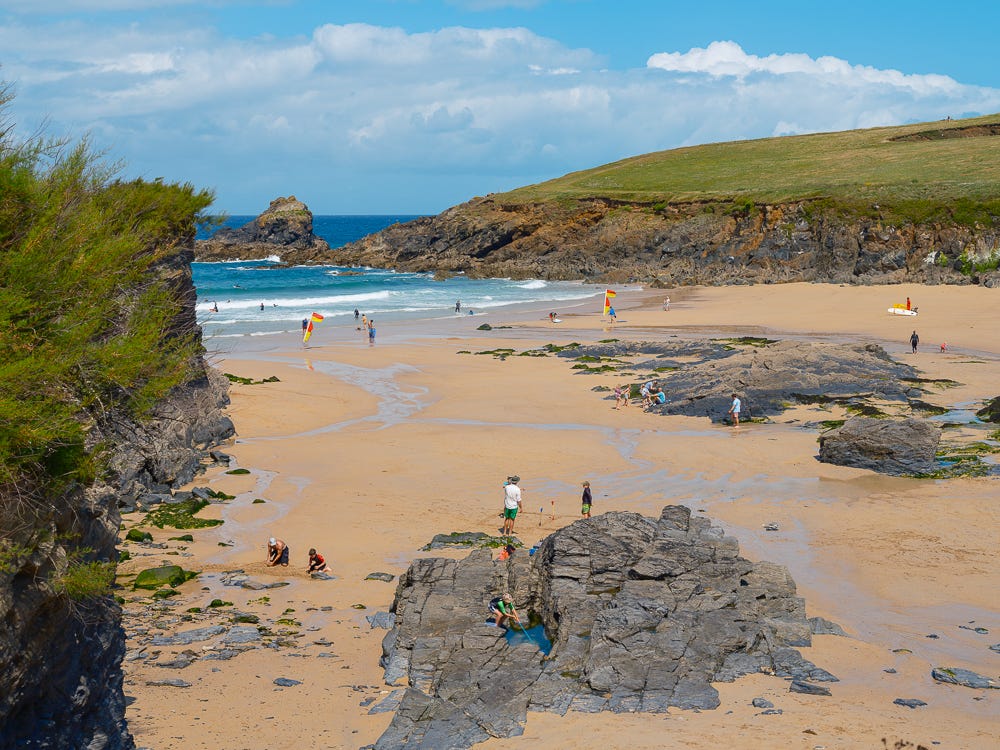
The sandy part of Trevone Bay
Yes, Trevone Bay marks the start of the holidaymaker section of the walk. There’s a sandy bit and a rocky bit. For my money the rocky bit is much more interesting, breaking up the sheer ‘monotony’ of ochre sand-blue sky combinations. I do what you are never supposed to do and stray off the path, enjoying a potter over the slatey stone at low tide. The patterns in the rock are incredible, like the wind has blown hard over them for centuries, and finding a sea pool is a delight.
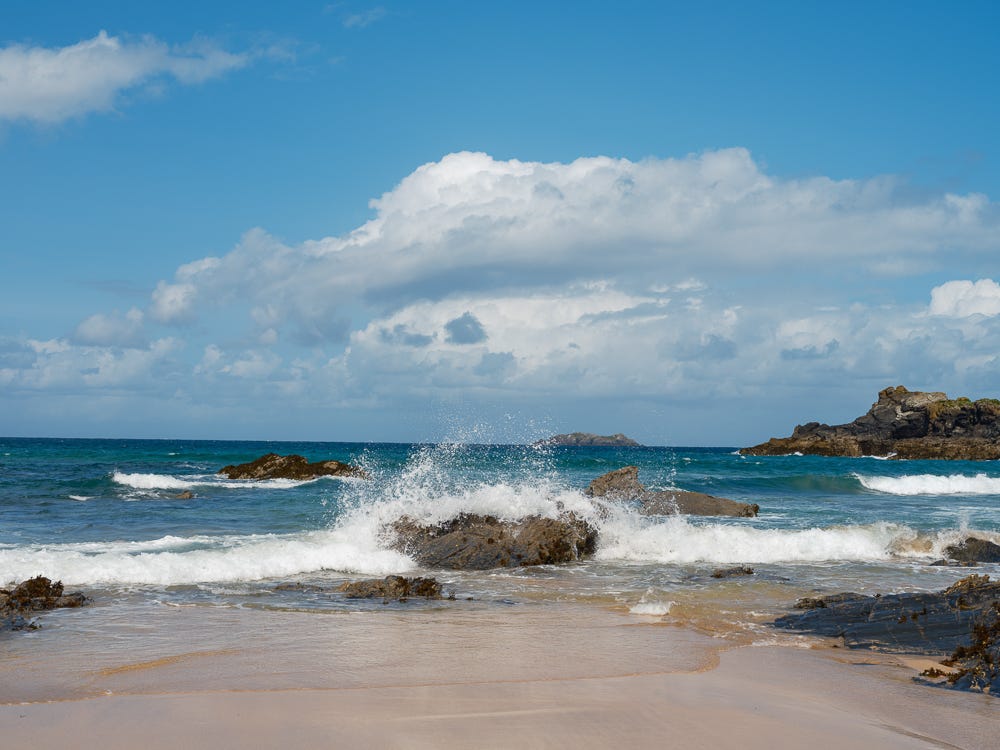
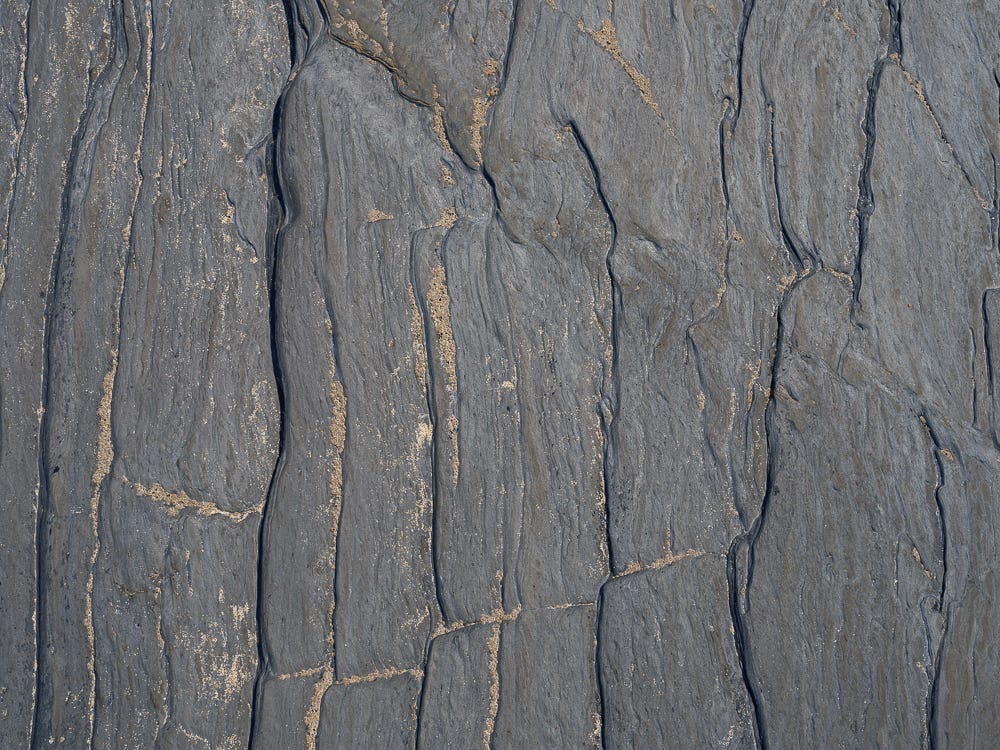
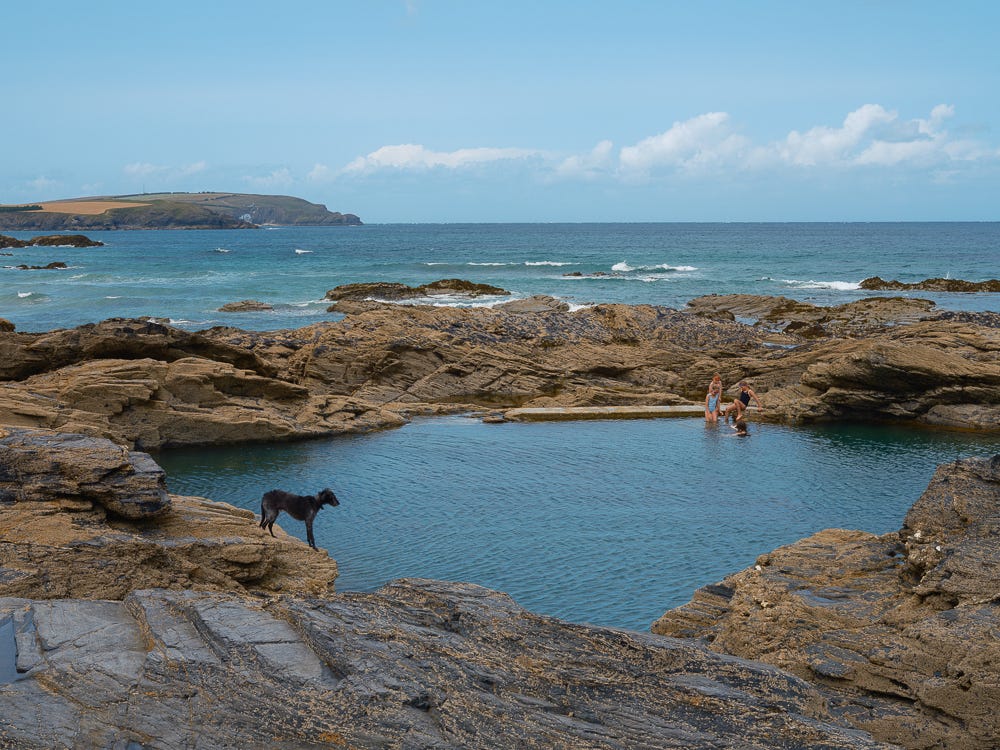
The rocky part of Trevone Bay, and the sea pool
Another hour, another headland, and I find myself in Harlyn Bay. At first I think it is Constantine Bay, because it’s as enormous, and congratulate myself on completing the walk in such short order. By the time I realise it’s actually not Constantine, I push on past the learn-to-surf schools and around another headland to Mother Ivey’s Bay. There are numerous touching spectacles along the way. A couple of dog memorial spots, where sad owners paint mini-gravestones for their beloved pets who have departed, a memorial bench dedicated to the humans who most liked to sit on it and admire the view.
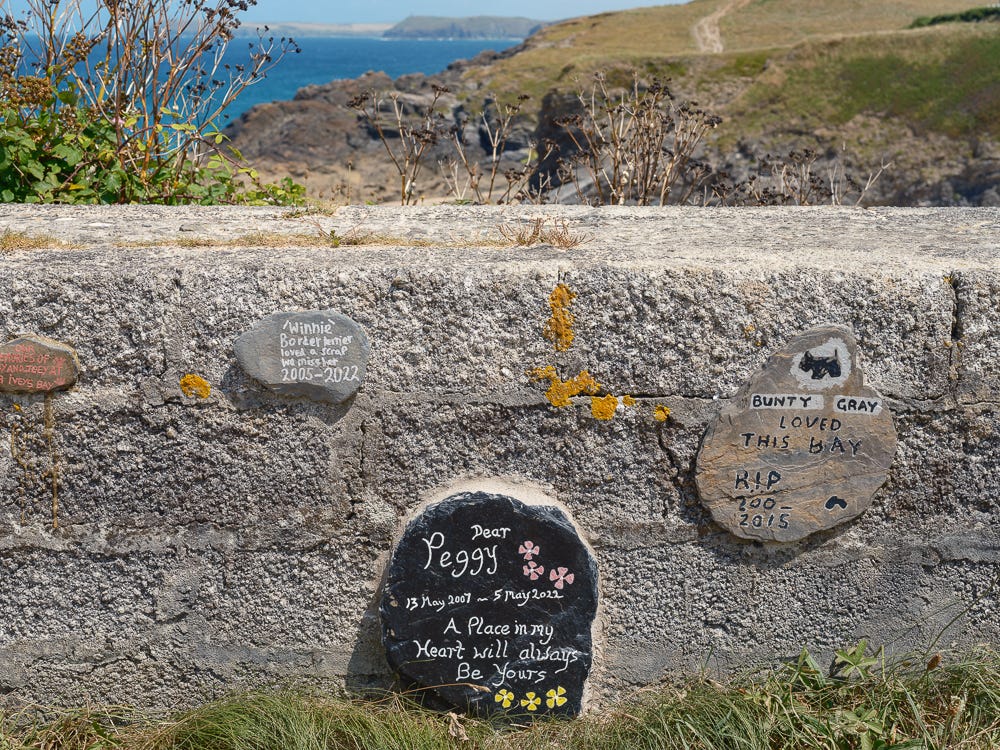
Mother Ivey Bay’s pet cemetery
I pass the Lifeboat Station, and Grace Darling pops across my brain4. I go the wrong way, and whilst coming back on myself overhear a group of female friends talk loudly about matters menstrual, in the frank way that only country walks or pubs can create. When they see me they are embarrassed; I laugh with them and the moment of shame passes into solidarity. By now I’m on my final headland, and am ready for the finish. A lone kitesurfer greets my descent into Boobies Bay. There’s a red flag flying and the beach is almost deserted.
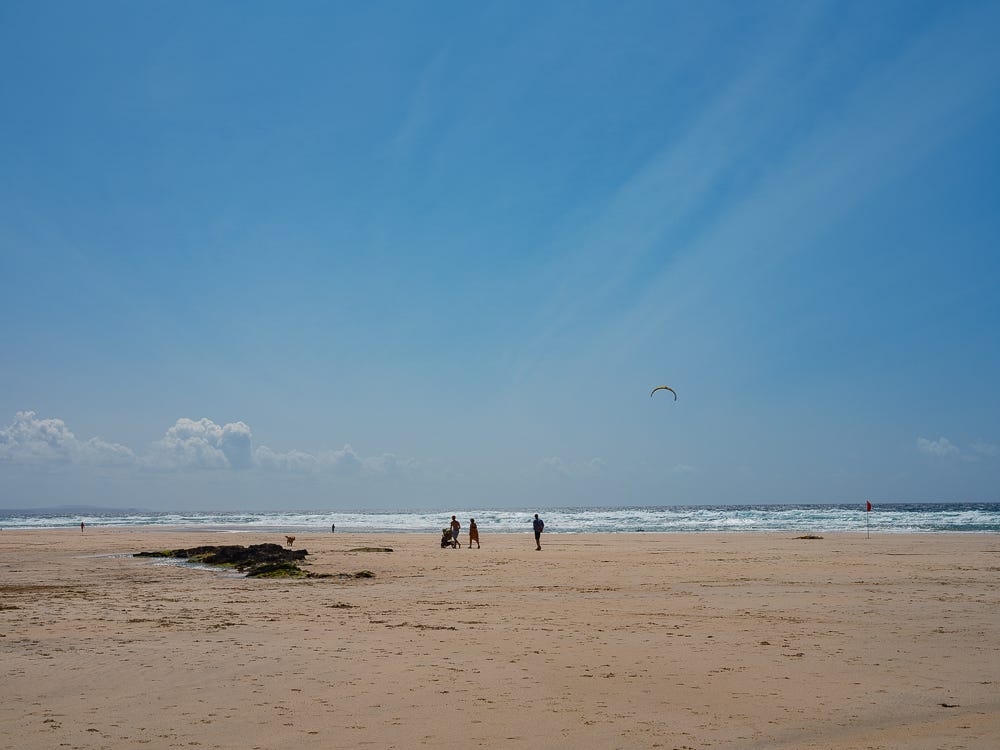
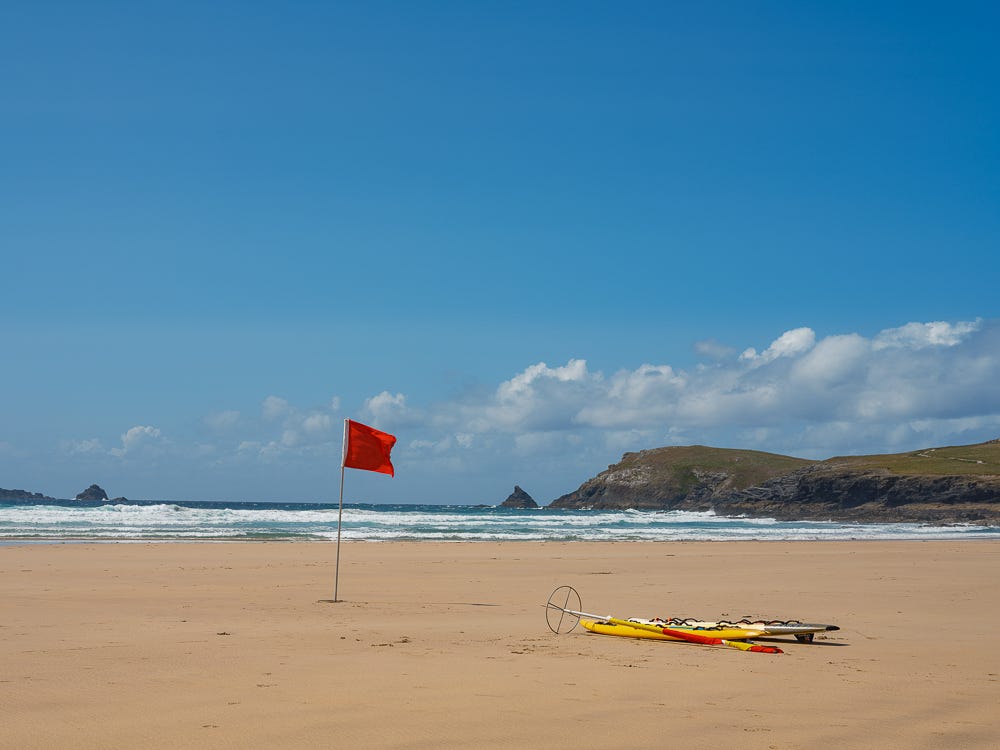
Boobies Bay
By the time I’ve clambered around the mussel-laden rocks to Constantine, I’m filled with a sense of achievement, elation at being in the open air all day, tiredness – but moreover a new-found love of Cornwall. So, about that UK coastal walk? I’m up for it if you are.
Let’s make this mawkish plea Cornish and, this time, create a Buy Me a Cornish Pasty link.
A British chef with various restaurants in Padstow
Cornish pasties were traditionally made to take down the mines to eat for lunch. The thick crusts would be held by grime-laden hands while the rest of the pasty was demolished
A tune commonly adapted by schoolchildren with slightly vulgar lyrics:
Grace Darling was a 22 year-old lighthouse keeper’s daughter who rowed out one stormy night in 1838 to rescue 9 passengers from a capsized vessel, near Farne in Northumberland. Despite her many awards for bravery, she died a few years’ later from tuberculosis.
No posts
Comments
Nothing yet. Say the first thing.
Sign in to join the conversation.