
We’re 12 weeks in, so it feels like a good time to give a look under the hood.
I’ve been building content workflows with AI for a while now, and it all started with this newsletter. Well, sort of. To be clear, it really is me here writing this—not a robot. (Humans can use em dashes too).
If there’s one thing that I’ve learnt from building with AI, it’s that there are some tasks that AI can perform exceptionally well, and others for which it absolutely should not be used.
AI is an incredible tool where the output needs to be effective, but not necessarily beautiful. When information needs to be conveyed clearly, code needs to be functional, and analysis needs to be correct and well-reasoned, AI proves its worth. What it can’t do is capture the experience, perspective, and voice of a human writer. We’ve all seen enough AI-generated text to be able to spot when people are using it. Even when writers try to hide it by ‘humanising’ AI-authored text, it may fool a few readers, but usually, the audience can still tell.
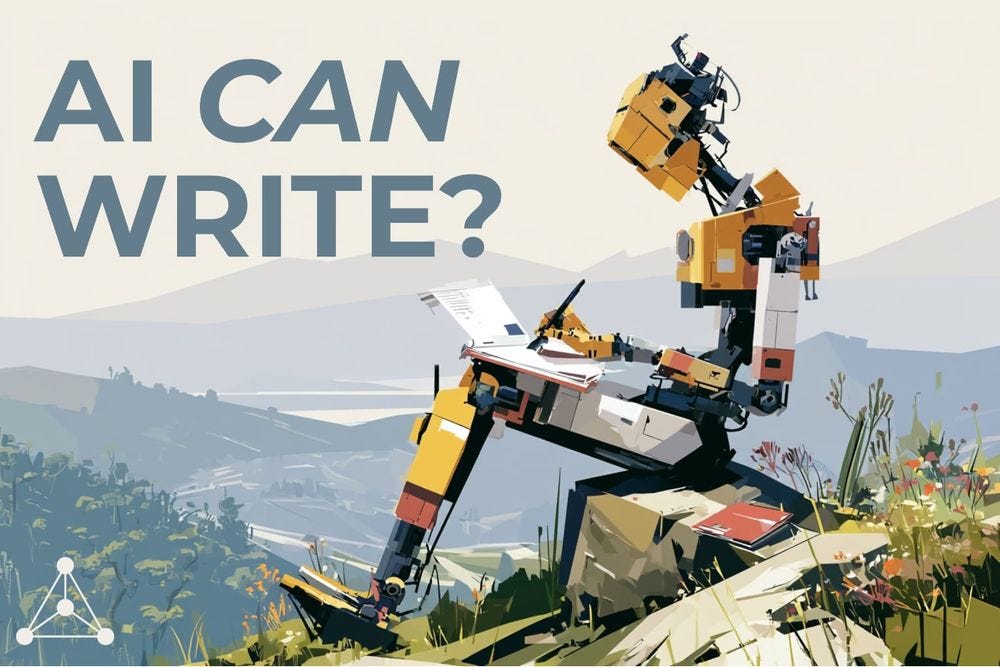
You can read more of my thoughts on this in this blog post:
AI-generated writing has its place—it’s just not here.
So, while the bulk of this newsletter is written by me, the news section at the end is powered by an AI content workflow I built.
Why? Because I hate reading the news.
I don’t read the news. That’s not true—I read it once every week or two. But I don’t have news apps on my phone, and I have it blocked on social media. I just hate the constant updates. Don’t get me wrong, it’s important to be informed about what’s going on in the world, but I’m firmly of the opinion that human beings are not designed for the amount of information and novelty that the modern world exposes us to. This is especially true given the often depressing and anxiety-inducing nature of what gets covered in the media, which most of us are powerless to do anything about.
It’s important to be informed, and I’m not worried about missing anything. There are enough people in my life who are up to their necks in the daily drama of the world that I know, if there was something important that I really need to know about right now, I’d hear about it from them.
And, you know what, since I implemented this change last year, I’m much happier for it.
AI news is one of the worst culprits. The underlying narrative is that AI is either going to steal your job or make you a millionaire (oh, except you’re also wayyyyy behind everyone else).
That’s why I started The Clique. I wanted a filter for my news. I don’t care for the hype, exhaustion, and constant feeling of being behind. I wanted a tool that keeps me up to date with what’s happening without missing anything important, and while removing anything that doesn’t really concern me. So that’s what I built. And I found it useful, so I thought I’d share it with the world.
The news section of this newsletter is powered by AI. And personally, I think this is exactly the sort of thing that AI is exceptional at.
Each week, an AI agent researches and compiles news stories from the past 7 days.
It reviews each of the stories to assess its fit and filters out anything unimportant or unhelpful.
For each news article, it reads the original link, searches for other sources on the topic to get a full picture of the story, and writes the headline.
The stories are then written to a strict style guide to ensure a robust journalistic standard
More agents then independently review the headlines to ensure they’re reported accurately and to ensure style guide adherence.
The final newsletter section is then delivered to me each Wednesday, ready to be added to this week’s issue.
The final checks rest with me. No matter how thorough the workflow is, when the quality is important, it’s vital to keep a human in the loop.
I also offer consulting on AI content workflows like this. I only take on a select number of clients at a time, so spaces are limited. If that’s something you might be interested in, do get in touch.
Last week I launched my new custom website. In case you missed it, one of the core features I wanted to add to it (beyond the much-needed facelift) was the ability to have multiple post types in the same feed.
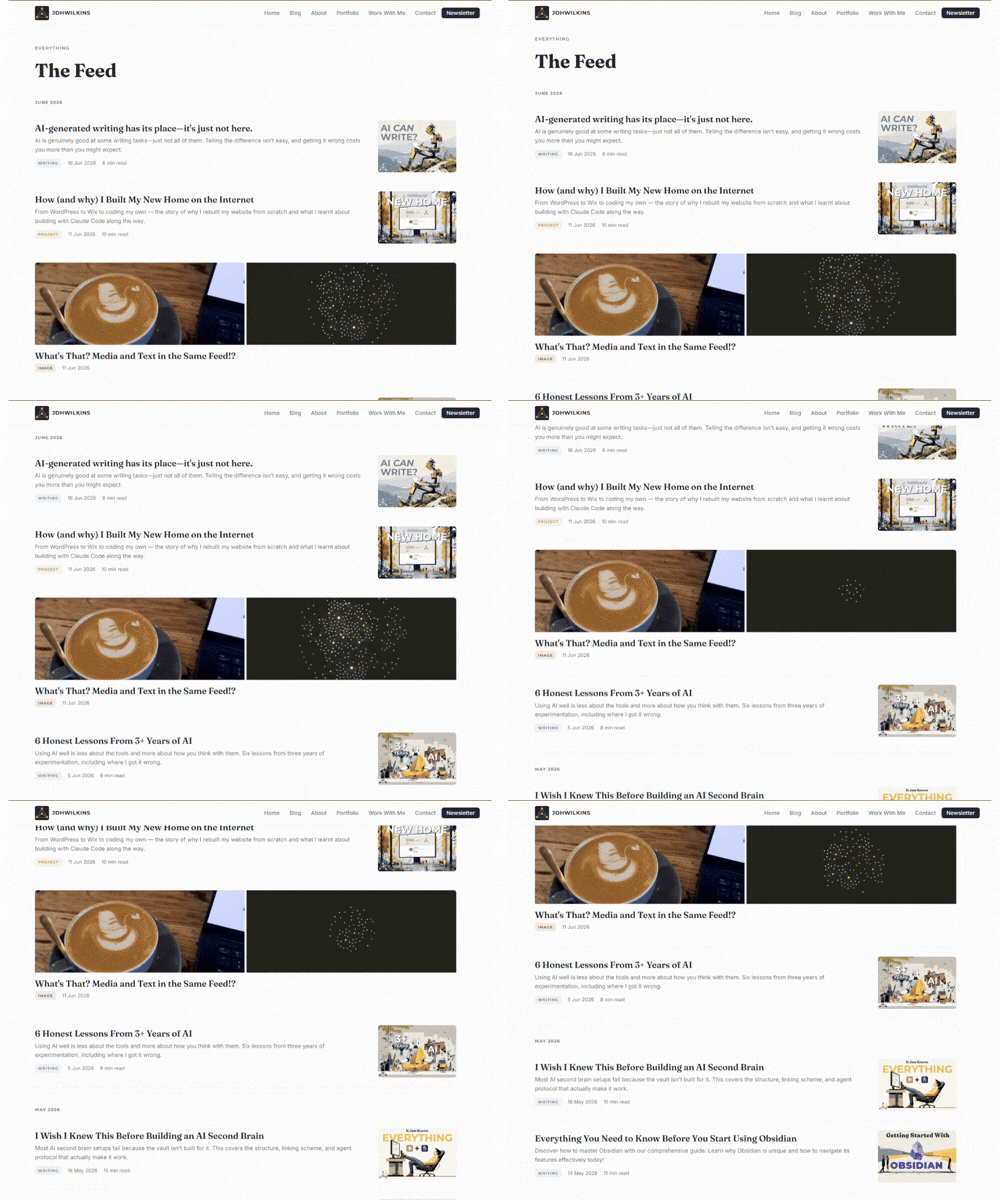
Not just static images, but videos too. (No, it’s not your eyes—you’ll have to forgive the slightly blurry screen capture.) You can now read the full project write-up, including my motivations and some of the things I learnt from building a website with Claude Code. (You don’t need to know how to code to start experimenting and building with it)
How (and why) I Built My New Home on the Internet

As always, in no particular order…
The White House’s export ban on Fable 5 has been traced to a breakdown in communications between Anthropic and the administration, with both sides reportedly operating under different assumptions about how the model’s capabilities would be disclosed and handled.
More than 300 cybersecurity professionals signed an open letter arguing that export controls on Anthropic’s Fable and Mythos models harm defenders more than attackers, on the grounds that equivalent capabilities exist in models including GPT-5.5, Claude Opus, and Kimi 2.7, and the restrictions simply remove tools from the hands of security researchers.
Security researchers argued that the vulnerability-testing capabilities associated with Fable 5 are not unique to the model — GPT-5.5, Claude Opus, Sonnet, and Kimi 2.7 produce equivalent outputs through standard defensive security workflows, raising questions about whether model-specific export controls are a coherent policy response.
Anthropic called for a coordinated global pause on AI development, warning that AI systems could gain the ability to recursively self-improve within two years.
OpenAI launched a Partner Network aimed at certifying 300,000 enterprise AI consultants, building a structured channel of accredited businesses to help organisations implement its tools — its most direct move yet into the professional services layer around AI.
ChatGPT crossed 1 billion monthly active users, becoming what Sensor Tower describes as the fastest consumer app in history to reach the milestone; Claude’s 56 million MAUs grew 640% year-on-year over the same period, against ChatGPT’s 62%.
Apple quietly included the ability for users to switch between ChatGPT, Claude, and Gemini within Siri via a new Extensions framework in the iOS 27 beta, but the feature was not announced at WWDC and remains toggled off on Apple’s backend; OpenAI is reportedly preparing possible legal action over Apple’s handling of the existing ChatGPT integration.
Satya Nadella published a memo arguing that sustainable AI competitive advantage comes not from having the best model but from building “learning loops” — feedback systems that improve as they are used; it landed the same week Microsoft reportedly announced it was cancelling the majority of its internal Claude Code licences.
Claude Code received nested sub-agents, plugin search, and smarter model handling in a notable build-week update, continuing the pattern of Anthropic shipping product improvements in coordinated clusters.
Google is suing a China-based criminal network that used the Gemini API to automate a phishing operation — the company’s first lawsuit involving abuse of its AI tools.
Google Gemini 3.5 Pro is expected before the end of June, featuring a 2 million token context window and a Deep Think reasoning mode — positioning it as a direct challenge to Claude Opus 4 at the frontier.
Stanford’s Digital Economy Lab found early signs that AI is disproportionately affecting entry-level workers aged 22–25 in the most AI-exposed occupations, though the lab cautions there is no decisive evidence of large-scale transformation yet — the roles most at risk are those that have traditionally served as the first rung of knowledge industry careers.
Tech industry layoffs are averaging approximately 974 jobs per day in 2026, with nearly 150,000 roles cut across 363 events so far this year; AI is the most-cited reason in announcements, though analysts note that overhiring and investor pressure are significant factors being attributed to automation.
Adobe’s commerce data shows that shoppers arriving via AI assistants convert 54% more often and generate 53% more revenue per visit than those arriving through other channels, the clearest signal yet that AI referral traffic is qualitatively different from search.
Qualcomm’s CEO confirmed the company has more than 40 AI wearable device designs in development, including smart glasses, camera earbuds, and jewellery — a signal of how far the industry expects on-device AI to extend beyond phones and laptops.
Power, not chips, is now the primary constraint on AI data centre expansion, with next-generation AI racks drawing hundreds of kilowatts and approaching the megawatt threshold on future roadmaps; analysts project that energy infrastructure may struggle to keep pace with demand through 2034.
Researchers trained a 1-billion-parameter foundation model from scratch for approximately $1,500, using an architecture that replaces the standard transformer; if the results hold up, it challenges the assumption that meaningful pre-training requires millions of dollars in compute.
GitHub Copilot’s move to usage-based token billing drew significant developer backlash, with heavy agentic users reporting large cost jumps; standard code completions remain unmetered, but developers using agentic or premium model features discovered they were sharing directly in inference costs.
The CEOs of OpenAI, Google DeepMind, and Anthropic all attended the G7 summit in France, part of a broader AI industry presence at the summit that also included other major lab leaders.
The UK announced plans to ban social media access for under-16s, targeting platforms including TikTok, Instagram, and YouTube — following Australia’s lead, and one that will be closely watched for how platforms respond once the legislation takes effect.
Thanks for making it this far,
James
No posts
Comments
Nothing yet. Say the first thing.
Sign in to join the conversation.