

It has been a big week for launches, though I suspect mine will not be making the financial headlines.
I mentioned in the last issue that I’ve been building a new website… well, here it is:
It’s part of the slight change in direction of my content. I’m trying to move away from the sort of informational guides and tutorials I used to write and instead offer more insight into the projects I’m working on and everything I’m learning from them. I think I have far more to offer in documenting the process than in research alone.
With the new site, I’ve introduced different content types so you’ll now see essays, projects, media galleries and short-form text notes all within the same feed. I’ve also made an effort to find more ways to resurface old content. Perhaps this is more for myself than anyone else, but I enjoy looking back at old projects and seeing how my perspective and writing have changed over time. You’ll see a brand new ‘on this day’ section, random posts from the archive, and an explore-by-year feature.
This is the first time I’ve coded my personal website myself. Over the past 2 years, I’ve switched hosting providers a couple of times, but both of them used a drag-and-drop website builder. As great as they are for beginners, I started finding it a little restrictive, and I couldn’t build some of the features and tools I was trying to. They also didn’t integrate well with AI. In the past, I couldn’t have asked Claude to go and build me a new landing page or redesign some elements for me. The integrations just weren’t available. However, when you’re writing the code yourself, AI integrates seamlessly.
Believe it or not, I rarely use Claude Code to actually write code, so the site build was a fun experiment. I’m sure there are a lot of people who code with AI all the time, and so none of what I’m about to say will be a surprise. But here are some of my takeaways from the process:
I have a background in coding but have never really dabbled in web development. I wouldn’t use Claude to write code that I’m not confident I could write myself, at least not in a high-stakes environment. My time on this project was focused on designing and building the front end of the site. The backend, database, and security were handled elsewhere. That’s not a risk I’d want to take on without the specialist knowledge to know what could go wrong and what to do about it.
Since most of my time was spent on design and building the user interface, screenshots were the most useful way to communicate problems back to Claude to fix them. It proved much more effective than trying to describe the issue with words alone.
The integration with GitHub makes managing and version controlling my codebase a breeze. I’d definitely recommend trying it if you haven’t already.
I worked in cycles of reviewing the site, listing a batch of things to fix, then having Claude tackle them all in one go. Grouping all of your fixes together rather than asking for changes one-by-one is a more economical approach in terms of maximising your usage quota.
You really don’t need to know how to code to experiment with something like this. I would just be cautious to deploy anything live to the world without consulting someone who knows more about it than you do first.
Do let me know your thoughts on the site. It’s still in its early days, so I’m sure there are a few things left to tweak and bugs left to fix.
I was also feeling a little sentimental this week. Looking back at my experience with AI, it turns out my first ChatGPT conversation was over three years ago now! I’m not exactly sure what my first conversation was; I remember thinking it was really important to keep my chats clear and organised when I first started, so I’m pretty sure I deleted the old ones at first. Unsurprisingly, that didn’t last long. My first recorded ChatGPT conversation was on March 31st 2023, just 4 months after ChatGPT launched. So this must have been GPT 3.5(!?)
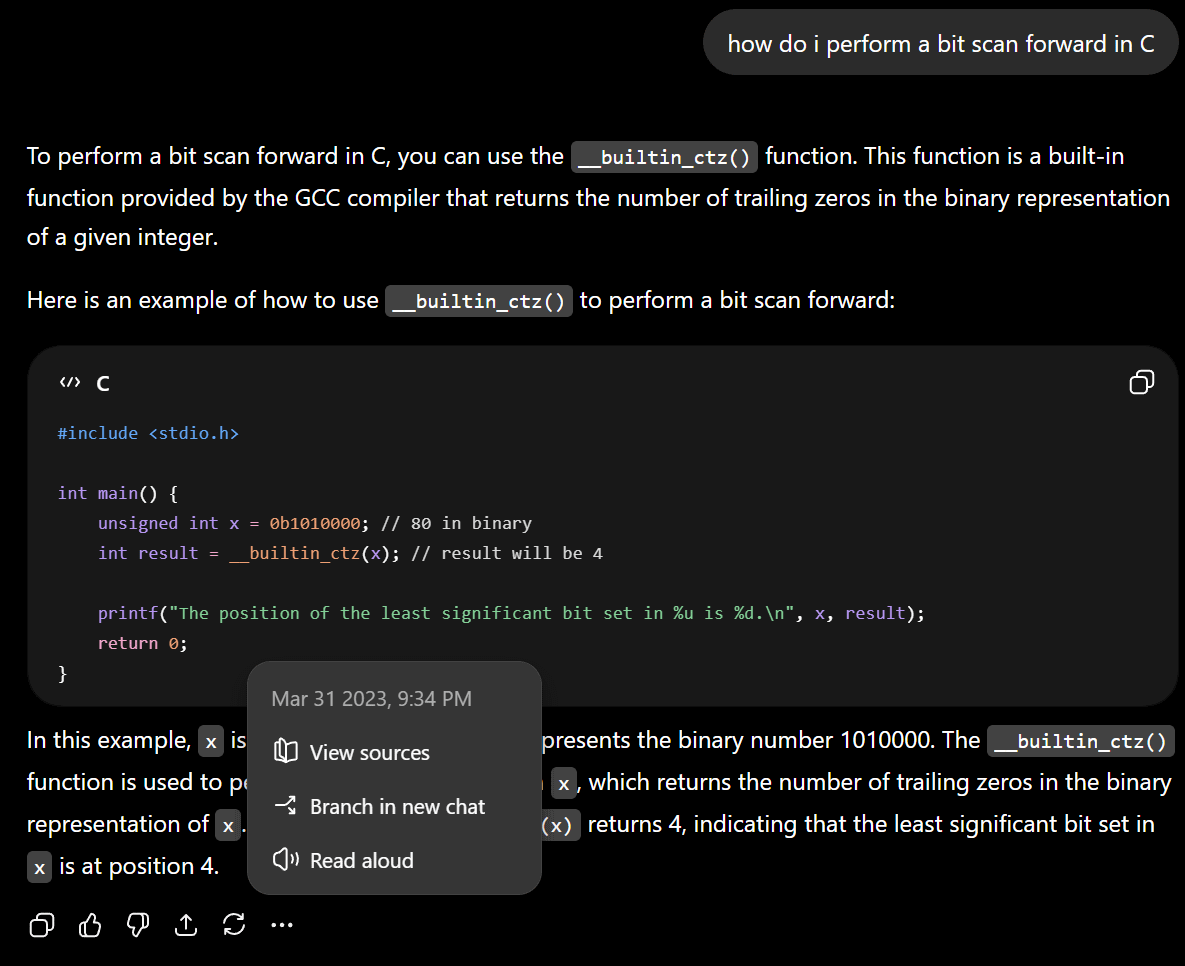
I reflected on everything I’ve learnt from my experience with AI in a blog post published this week. Some tasks can be completed very effectively with AI, and others, not so much. Deciding when to and when not to use AI for something is itself a skill worth learning.
You can read the full post here.
The lost-in-the-middle effect is a documented bias in AI models. They recall information from the start and end of a long input far more reliably than the middle. Fitting something inside the context window and having it read with consistent care and equal accuracy are not the same thing.
It is worth understanding how this affects the way you prompt, especially if you are regularly feeding in long contracts, reports or research documents. I have written about the phenomenon and what to do about it in this post.
Anyway, on with the news.
Anthropic has filed a confidential S-1 with the SEC, taking its first formal step towards a public listing
Claude wrote more than 80% of the code merged into Anthropic’s own codebase in May, with engineers now shipping eight times as much as in 2024
Anthropic says a coordinated global slowdown on advanced AI development would likely be beneficial as models begin accelerating their own progress
OpenAI has submitted a confidential S-1 filing for a public listing that could value the company at close to $1 trillion
OpenAI’s new plan promises every person on Earth a personal AI and an automated AI researcher that could handle a significant fraction of the company’s own science by 2028
OpenAI is merging ChatGPT, its coding tool and its browser into a single desktop superapp after its chief of applications said product fragmentation was holding the company back
ChatGPT’s new Dreaming V3 memory system nearly doubles factual recall accuracy by automatically synthesising what it knows about you from your full conversation history
OpenAI’s new Codex Sites feature lets users build and publish hosted web apps from a text prompt, though access is currently limited to paying business subscribers
Apple’s redesigned Siri can now read your screen and act across multiple apps at once
iOS 27 delivers faster app launches, a redesigned Liquid Glass interface and a rebuilt Spotlight search across iPhone and iPad
Apple’s WWDC 2026 was dominated by a redesigned Siri powered by Google’s Gemini AI, with screen awareness and cross-app actions, though it will be unavailable in the EU at launch
Meta’s new AI business agent can handle sales conversations on WhatsApp and close deals, but escalates to human staff when queries get complex
Banks are cutting junior analyst intakes by as much as two-thirds as AI takes over entry-level work, even as they recruit from those same cohorts for AI roles
UK regulators have ordered Google to let publishers opt out of AI Overviews without losing their standard search rankings, a world-first conduct order
The Pentagon has placed Alibaba, Baidu and BYD on its military-linked companies list, restricting US contracts and signalling possible future trade restrictions
The UK government has committed £1.1 billion to sovereign AI infrastructure, including a national supercomputer planned to open at Edinburgh in 2030
Microsoft’s Build 2026 conference added agent-ready features to Windows and unveiled compact hardware capable of running large AI models locally
Suno has raised $400 million at a $5.4 billion valuation as Sony and Universal Music Group allege 61,000 copyrighted songs were used to train its AI
TSMC’s chief executive warns chip manufacturing capacity will fall short of AI computing demand for years, though prices will remain stable
Bots now account for more than half of all web requests according to Cloudflare data, driven by AI tools rather than traditional scrapers and crossing the threshold a year earlier than expected
Waymo robotaxis drive nearly half their miles empty and cut urban congestion no more than standard ride-hailing, according to new research
Thanks for reading. Stay curious,
James
No posts
Comments
Nothing yet. Say the first thing.
Sign in to join the conversation.