
I have touched on the design influences of the show, the characters, the world, the music, and the ideas behind it. But I have neglected to explain anything about the behind-the-scenes of animation, an oversight I shall now remedy!
I used to think animation was just drawings moving to tell a story. It isn’t. It’s acting, performed by people who never appear on screen.
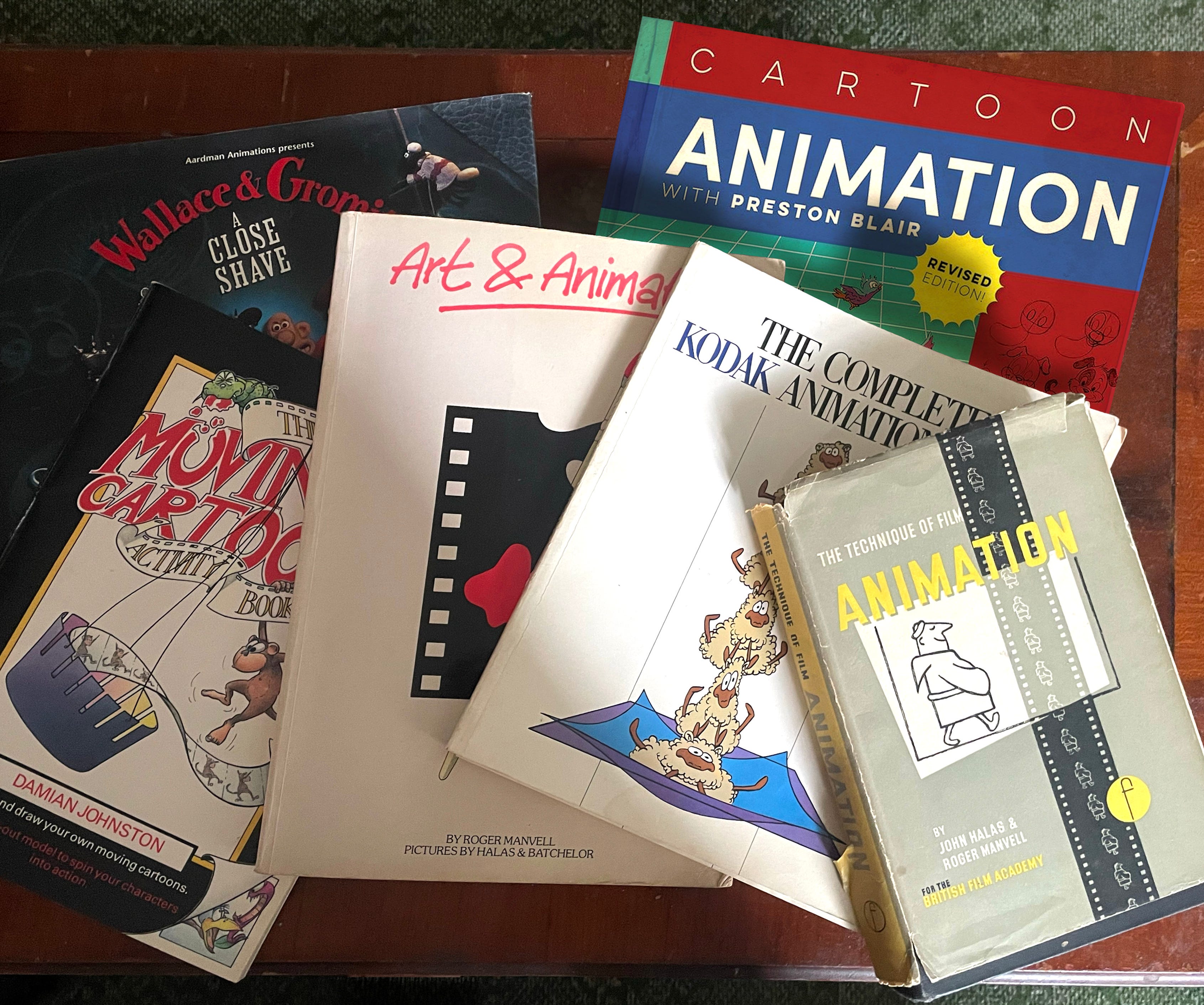
I had a few animation books, and I always loved shows that went behind the scenes. My local library, a grey, concrete block, hardly a natural home for books, provided a few more. The internet and DVD bonus features weren't on the horizon yet, so you made do with whatever you could find.
There wasn’t much of it around when I was young, but I lapped up every scrap. The odd show here and there. Channel 4, during the school holidays, would sometimes show an American series about Hollywood special effects, shot on what looked like a stolen CCTV camera1. But the main event was Rolf’s Cartoon Time. It was the first time I could put a name to geniuses like Chuck Jones and Tex Avery. It really opened my eyes as I got to see how the cake was made.
Then, like too many presenters from that era, it turned out Rolf was a proper wrong’un.2
Which does rather kill the nostalgia. You're halfway through a fond memory, this cheerful Australian bloke painting enormous murals with a decorating brush, singing songs about marsupials, and then History taps you on the shoulder and murmurs, "Yes, well. Unfortunately."3
Someone may do serious evil and yet still leave something worthwhile behind. The good won’t cancel the harm, but the harm can’t wipe out the good. Both facts stand side by side.
As Ted Gioia observes in his essay When Bad People Make Good Art
“Wagner created art that was wiser than Wagner himself.”
The miracle is not that flawed people make flawed things. The miracle is that flawed people sometimes make things better than themselves.
The appeal of these behind-the-scenes of animation hasn’t aged well but fortunately today we have others options for learning.
Once the voice is recorded, the actor’s tone, rhythm, comedy and emotion have to carry everything, since we don’t have their physical presence on screen.
Then comes the storyboard: every shot, every angle, every visual decision. We time everything out in what’s called an “animatic”, which is like a filmed storyboard set to the soundtrack. That goes to the animator. And then something slightly odd happens.
The animator acts.
Animators tend to be, introverts who would rather spend fourteen hours in the dark with a tablet than be in the spotlight. And yet here they are, performing. really getting inside the mind of the character, It’s not performance for attention, but performance for legibility.
Imagine an animator hanging off the side of his desk pretending to fight a Space-badger. In a normal job, Erika from HR would be called in to intervene. In animation, she never finds out.
You can see me talking abut it on “The Christian Reeve” podcast.
Imagine Jazz Cow has lost his keys. To animate him convincingly, you have to step inside his mind, what does he want, what does he feel, how does he move? The animator thinks like an actor, translating psychology into a visual performance the audience can instantly read and feel.
Or look at the wonderfully subtle animation of Roger in One Hundred and One Dalmatians by Milt Kahl, he doesn’t just move, he seems genuinely alive he has understood the why. He doesn’t just mechanically move around on the chair, the little pause as he looks out of the window and thinks before he picks up the pipe, the stretch not rushed. The character isn’t moving. He’s thinking. All just paper and pencil!
Animation isn’t moving drawings. It’s deciding, beat by beat, what a character is thinking, and convincing the audience to believe it.
These days there are tons of resources that can help you understand animation. What they don’t prepare you for is the shock of realising your childhood heroes are more complicated than you once thought.4
I’m often asked for practical animation resources, so I may also put together a dedicated post for that. In the meantime, Aaron Blaise’s Acting for Animation feels like the practical companion to everything I’ve just described.
If all of this has made you curious about what’s really happening behind the curtain, you’re in luck. In the next post, I’ll dig into more parts of the animation process.
I’m confused about what this was called. I’m pretty sure David Frost presented it, but the closest contender was ‘Movie Magic’, which wasn’t presented by Frost, so was this the Mandela Effect. If anyone else remembers this let me know!
https://en.wikipedia.org/wiki/Rolf_Harris#Sexual_offences
For American readers, the equivalent shock would be discovering that Bob Ross was secretly running an international cartel for black-market exotic lizards. Actually, no, that would somehow make Bob Ross more lovable. This was horrific.
If you need help with that kind of revelation, try the Bible or Shakespeare or pretty much anything classic and you’ll soon see how a complicated lot humans are.
Comments
Nothing yet. Say the first thing.
Sign in to join the conversation.