
To keep you in the loop on Jazz Cows’ progress, there’s not a lot I can report, but I am having some positive meetings, but it sometimes feels like pushing a rock uphill. Which is an Animated sitcom, that’s not a bug, it’s a feature. It rolls back, every episode, into the same sofa, the same jazz club, the same half-resolved argument. The characters don’t escape it.
I watched a thoughtful YouTube piece by James Cary. He’s a sitcom writer who brings those writing skills to Jazz Cow and also runs The Situation Room, where he dissects how sitcoms really work.
At this point, I fear this post won’t be far from being like one of those irritating “reaction video” people who talk over the original and add nothing of value. So watch the whole thing, and if something I add is useful to that, see it as a bonus.
James identifies three Hallmarks of sitcom: place, family and conflict.
Jazz Cow works because it does those things, it traps characters in place, has a core cast, and uses that friction to generate comedy, something modern life is steadily losing.
I’ve touched on this before. Jazz Cow is rooted in a very specific place. It connects, oddly, to David Goodhart’s idea of “Somewheres” and “Anywheres.” Somewheres are stay in the same streets, same people, same recurring humiliations. Anywheres are mobile; as long as there’s WiFi, they can be anywhere.
This framework is used to explain political divides, but a better question is: who’s funnier?
For sitcoms, Anywheres are a problem. If a character can grab their laptop and runaway to Lisbon, there’s no story. But Somewheres are stuck, then everything has to happen in the same constrained space.
Jazz Cow works because they are rooted in a place1. The rock keeps rolling back. Every time.
James once drew a chart showing how Jazz Cow’s characters are basically a family tree. I should dig it out at some point.
I should confess a personal weakness: I am, by most reasonable definitions, pathologically sociable. I tend to treat strangers as friends who simply haven’t been introduced properly yet.2 Which is where Jazz Cow becomes slightly dangerous for someone like me. Its world is rich enough that you can get distracted by a swarm of bit-part characters. And people in Jazz are funny as this this clip demonstrates.3
So Jazz Cow does what good sitcoms must do: it stays anchored to the band.
Bit characters still matter. Bugs Bunny debuted in a Daffy Duck cartoon, Count Duckula spun off from Danger Mouse. Interesting words do Expand.
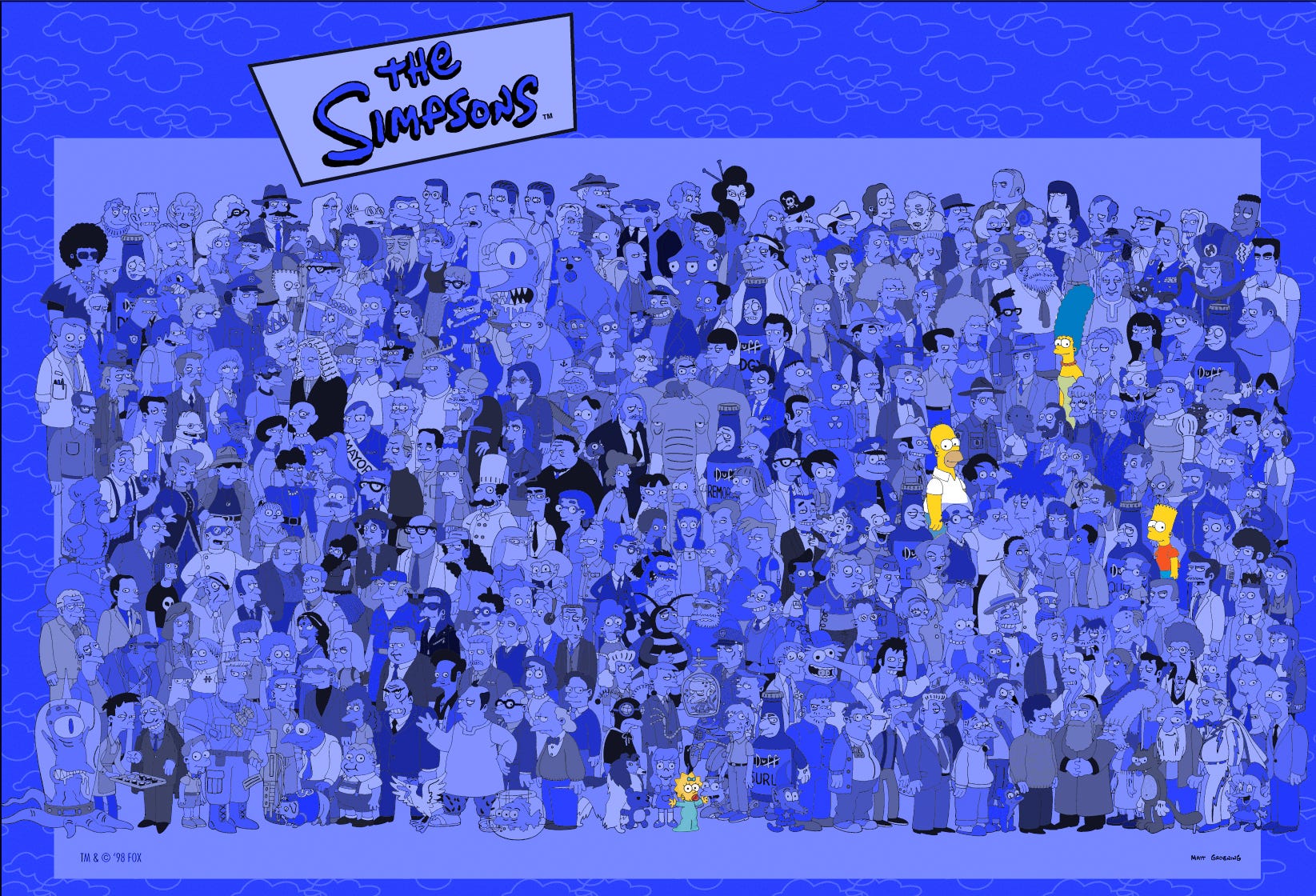
The Simpsons does this perfectly. Total sprawl, cameos, endless eccentrics, but always returning to Homer and his immediate world. Expansion is allowed, but centre is never lost.
Jazz Cow needs that same discipline: characters may orbit, but the band remains home.
Anywhere can avoid conflict and quietly disappear. Friendships become optional subscriptions.
For somewheres it’s unavoidable as people are interdependent. It reminds me of something a Cartoon Network exec once said at the Annecy Animation Festival: “All cartoons are sibling rivalry.”
The “Somewheres”, fumble through the mess left behind and still show up to the gig on Friday because there is, quite simply, nowhere else to go. Jazz Cow’s band sticks together through a shared mission: spreading the gospel of Jazz while fending off technocrats.
This is also how real bands work.
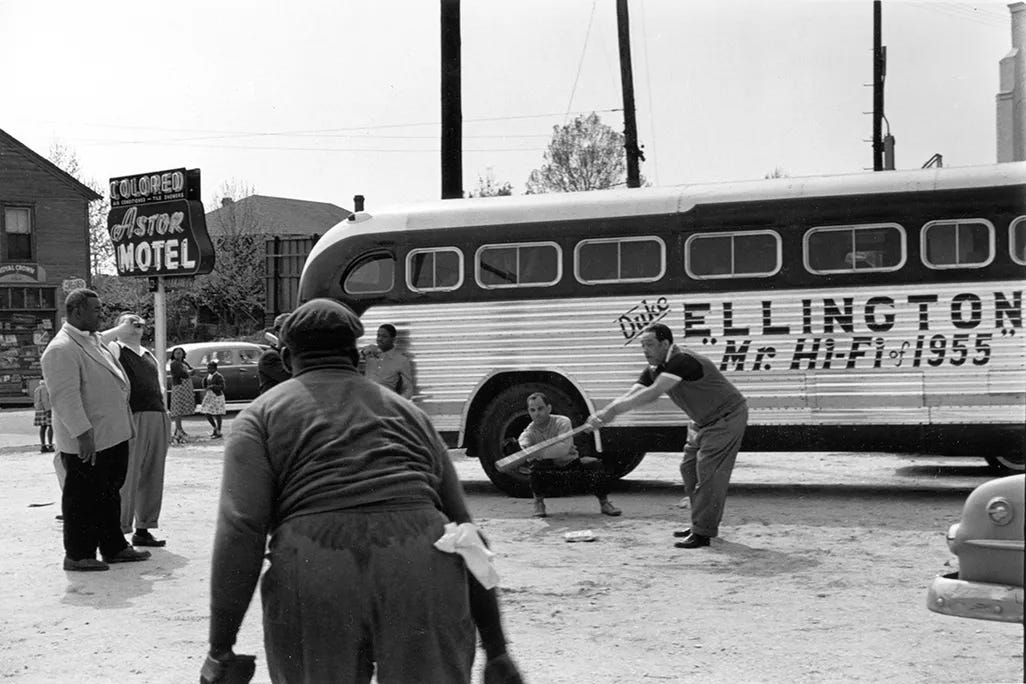
Duke Ellington’s orchestra, for example, was famously tight-knit, he acted like a father. One musician I spoke to, who once played with Ellington, described him as extraordinary at guiding players away from drugs and making sure they were fed.
Without it, you don’t get a band. You get casual workers passing through each other’s lives.
Jazz Cow understands that instinctively.
We’ve spent so long pruning our social circles that we’ve forgotten how to actually live with people. We call it “protecting our energy,” but that’s just a posh way of saying we can’t be bothered with anyone who’s a bit of a faff. Dr Popp would be chuffed.
In The Village Effect, Susan Pinker explores remote Sardinian villages where people regularly reach a ripe old age. Their secret? It seems that real human contact does more for your health than a trendy health drink. She contrasts it with George Burns’ joke that
Happiness is a loving family located in a completely different city. It’s the ‘American Dream’
If the goal is living longer, we might need to trade polished independence for something messier: interdependence. Yes, even enduring your neighbour’s bagpipe practice. That’s basically the entry fee.
Comfort is a creative dead end. When people are stuck together, they have to figure things out—through the chaos.
That’s why the real frontier isn’t found with tech bros optimising our friends, it’s proximity. Think Village Vanguard, (or in Jazz Cows case Connie Snots) tables slightly too close, no escape routes, everyone participating.
If we lose our ability to put up with our fellow Homosapiens, we will end up forgetting how to enjoy the chaos on TV because we’ve spent too long fleeing from it in real life. That would be a disaster—particularly if immortality turns out not to depend on supping from the well of eternal youth or clever technological fixes, but instead, as Pinker implies, on the ancient virtue of putting up with irritating people.
On a different note you can here me on Robert Mitchell’s Podcast from last week. Thanks again.
Many musicians spend much of their lives touring, but still return home in the end. That may be why so many jazz standards focus on the idea of “home.”
As a child I had a Pink Panther VHS with a scene where a parade of tiny creatures pours out of a dinosaur’s mouth. My response was to pause it, draw every character, and think about their backstories. So I guess my affliction goes back a few years.
In 1992, United Future Organization used a George Crater sample in “Loud Minority,” which stuck with me. For sample enthusiasts, the track itself is based on a Frank Foster original featuring Dee Dee Bridgewater, sounding quite different from what you might expect.
Comments
Nothing yet. Say the first thing.
Sign in to join the conversation.