
Last time I wrote a little about what goes on behind the scenes of animation.
I hoped to give you a little update on how Jazz Cow is moving forward. Paid animation work has been keeping me busy recently, which, to be clear, I'm not complaining about, but it has slowed me down.
I’ll continue my focus on what animation looks like in 2026. Despite what certain big-tech evangelists claim, there still isn't a big red button labelled "Animate". No button to press and have a film spat out which feels alive, where you actually care what happens to the characters. (And if there is, it spits out horrors like Critterz).1
But how does it work today? Are animators still drawing twenty-four pictures for every second of film, on thousands of sheets of paper?
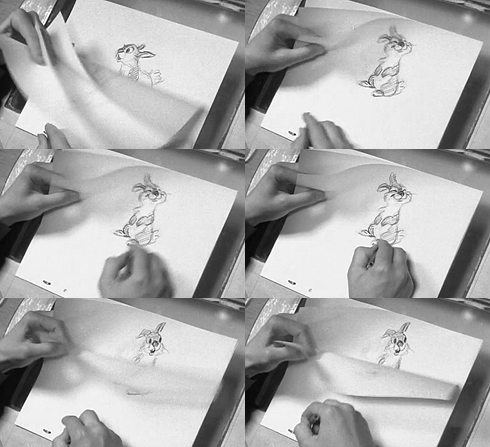
These days, it's much more common to draw directly into a computer. And for a show like Jazz Cow, our team wouldn't be drawing every frame, but it's still a load of work.
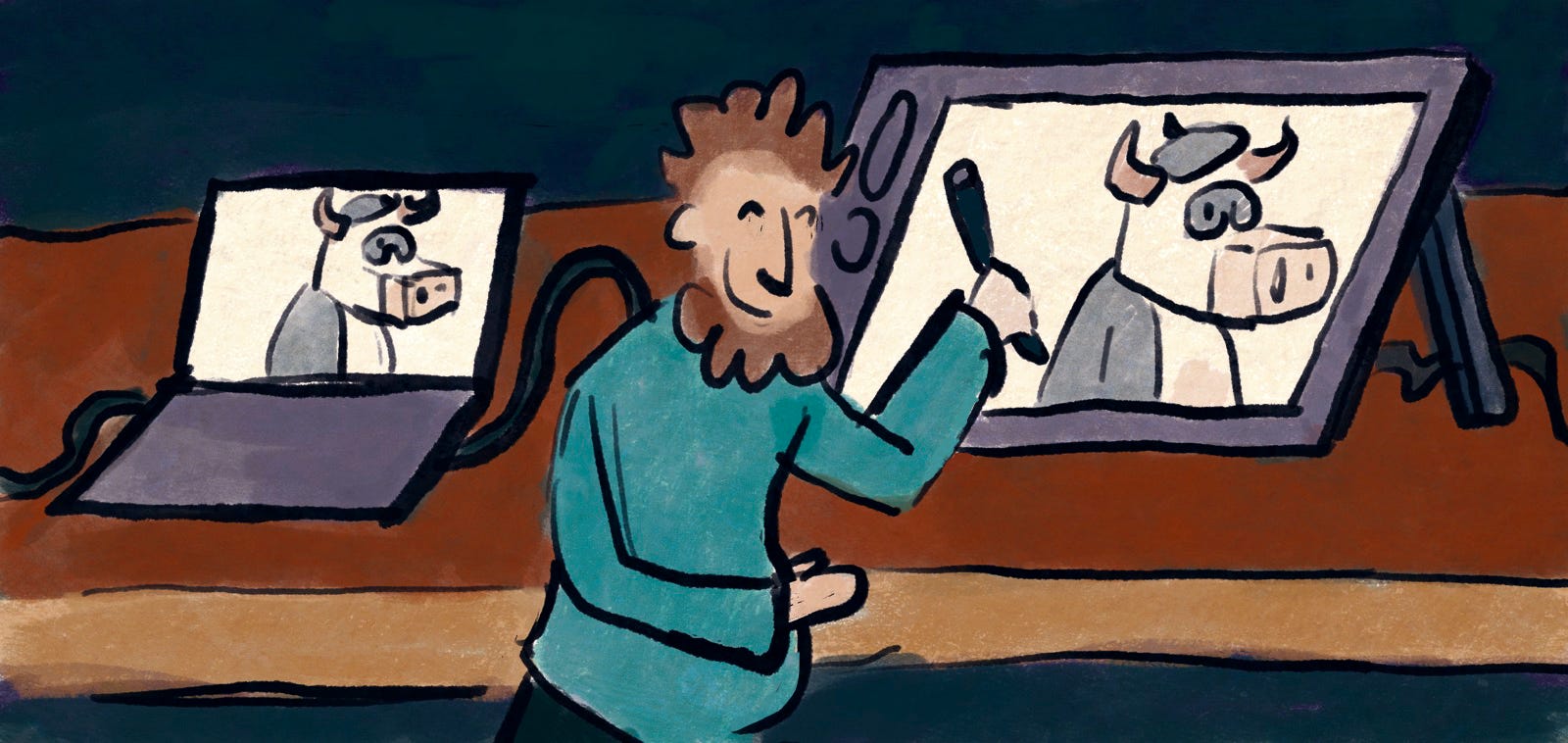
For Jazz Cow, we’ll use “2d rigging”, which is how most animated shows are made. “Rigging” might sound a bit technical, but hang with me a bit longer.
This basically means building a digital puppet, a skeleton of reusable parts. Your beloved cartoon hero reduced to a pile of spare limbs in a digital Tupperware box, waiting to be assembled like flat-pack IKEA furniture.
Ah, yes, I must move Jazz Cow’s leg slot ‘B’ to recreate the emotional struggles of being a cow in a human world.
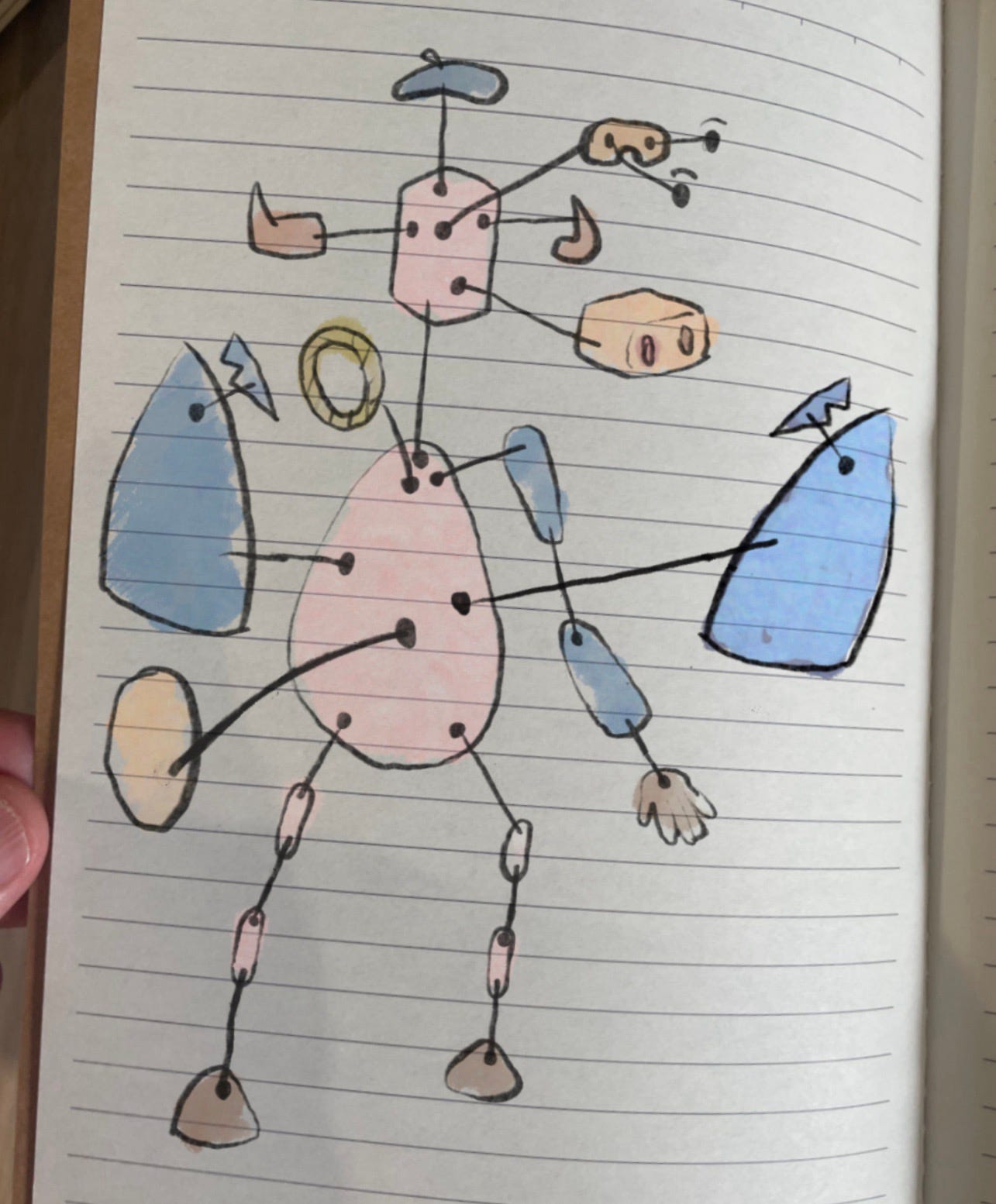
So we’re not redrawing every frame on paper, but we still draw far more than you’d think.
Often, young people ask what software I use, as if that is the key; it’s really not. Extraordinary animation has been made with nothing more than a pencil and paper. Software merely helps you work faster. (I may talk about the actual software one day, but for today it would be a distraction)
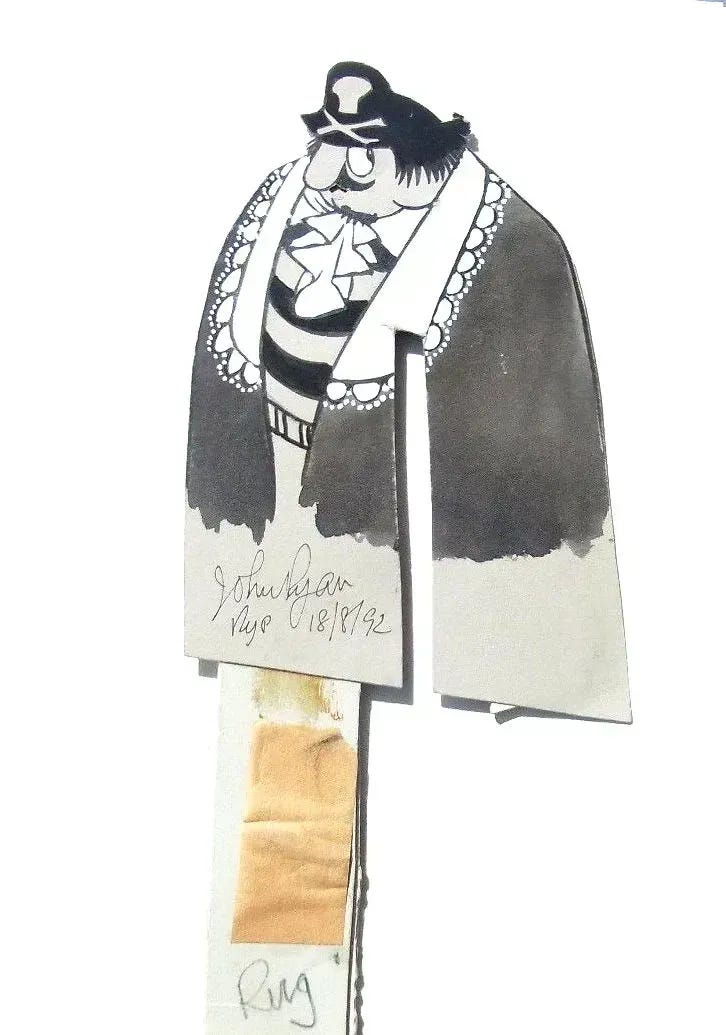
It not so far from Cut-out animation, isn’t new, you have Show like Mr Benn which Jon (Animated) over at animated has done a great post on. This 1950s a cardboard Captain Pugwash with little slots for movable arms.
It goes right back to the first surviving animated feature, The Adventures of Prince Achmed. To be brutally honest, I find the whole film a bit lifeless and dull, I freely recognise that it was a staggering amount of work and a major historical achievement, which probably just means I am a bit of an uncultured philistine.
But the idea goes back even further. Toy theatres, where entire tragedies unfolded on a stage the size of a shoebox2 . These shows are full of life and really exciting to watch. If you ever get the chance to see one performed, go. You will not regret it.
What’s changed isn’t the idea. It’s that we can now make everything less mechanical and more life-like, much bit closer in feel to traditional animation. It's commonly used on most 2d animated shows today. So yes, the software helps with this. But it’s not smart; it has roughly the emotional intelligence of a confused Silicon Valley tech bro standing in a farmyard for the first time. It does not know the cow is sad. Or the panic of discovering your keyboard player has broken his hand 20 mins before the show.
You can build the fanciest digital puppet, and it will lie there, dead, until some vitamin-D-deficient animator leans over it and breathes their own private griefs and joys into its little digital limbs.
Which is, appropriately, exactly what the word animatio
n has always meant: from the Latin anima — soul, breath, life itself.
And when it works — when it actually works — you stop seeing the drawings at all. You stop seeing hinges, or slots, or rigging, or whichever expensive program did the tedious bits. You just see Jazz Cow, hunting for his keys like it’s the single most urgent crisis in the known universe.
Which, of course, it is.
It still cost $30 million, and it looked like that! So the producers’ dream that AI will make everything really cheap is just that, a dream!
Which is basically a huge screen for those who are used to watching vertical films on their phones
Comments
Nothing yet. Say the first thing.
Sign in to join the conversation.