
Advance Auto Parts AAP 0.00%↑ reported a decline in Do-It-Yourself (DIY) sales in Q2 2026 due to constrained household budgets and mild weather.
But sales in the Company’s Do-It-For-Me (DIFM) Pro channel comped positive on a low single digit basis during the quarter.
One element that contributed to Advance Auto’s strong Pro channel performance?
Its growing number of Big Box Market Hub stores.
Market Hubs are ~36,000 square feet—or 5x the size of a standard Advance Auto store—and carry over 80,000 product SKUs.
They serve as both retail stores and mini-distribution centers that deliver auto parts on a same day basis to ~90 area Advance Auto satellite stores as well as to Pro channel customers like collision centers and repair garages.
Advance Auto Parts operates just 38 Market Hubs out of its 4,300 total stores.
However Advance Auto announced plans to increase the number of 2026 Market Hub openings to between 15 and 20 which will comprise over 1/2 of all of its new stores.
Advance Auto is leaning into Market Hubs for additional near-term new store growth and hopes to operate at least 60 Market Hubs by the middle of next year.
The majority of Market Hubs are located in 2nd generation, Big Box suites that were previously vacated by other retailers.
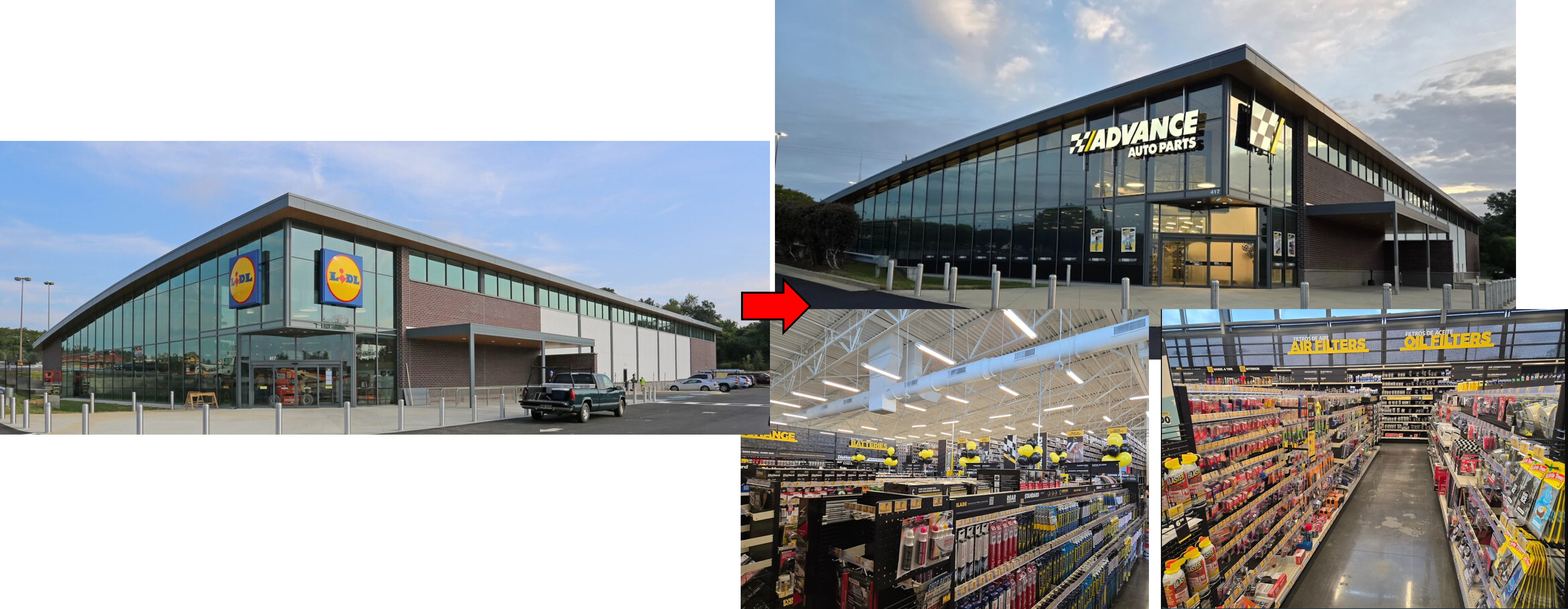
Like the newest Advance Auto Parts Market Hub that opened last month in North Augusta, South Carolina.
It is located in a ~36,000 square foot Lidl grocery store that was built in 2017 but vacated by the German grocer in 2023.
A New Store Concept
Advance Auto introduced the Market Hub store concept just a few years ago.
Rather than seek out new sites, however, Advance Auto instead turned to some of its own underutilized real estate to repurpose as Market Hubs:
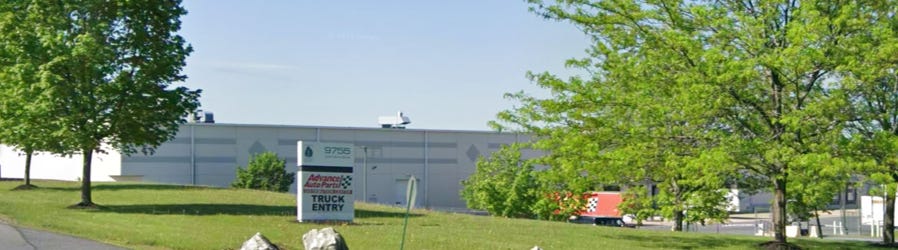
The small distribution centers (DCs) that it had inherited from its purchase of Carquest Auto Parts in 2014.
Advance Auto had operated parallel supply chain networks for many years after the Carquest acquisition.
However the repurpose of the Carquest DCs as Market Hubs both consolidated the two networks and accelerated the speed of part delivery times to customers.
This setup makes it far more likely that a part is both in stock and can be delivered quickly to an area customer.
Especially to a Pro channel customer like a collision center or repair garage.
Market Hubs have sped up both service times and part availability throughout the Advance Auto store network and it is showing up in performance:
Company executives have noted that its stores in areas with a Market Hub have generated a comparable sales uplift of ~100 bps over others in its network.
Additionally the effectiveness of Market Hubs has led Advance Auto Parts to reduce to just 16 U.S. distribution centers as compared to the 40 in service as of 2023.
The New Market Hub Real Estate
Advance Auto has retrofitted ~30 former Carquest DCs as Market Hubs over the past two years but is now in need of other real estate to grow the concept.
So where will the Company find sites for these Market Hubs?
Some may be developed via new “greenfield” construction.
But most others will be in 2nd generation Big Box real estate that was once home to other retailers.
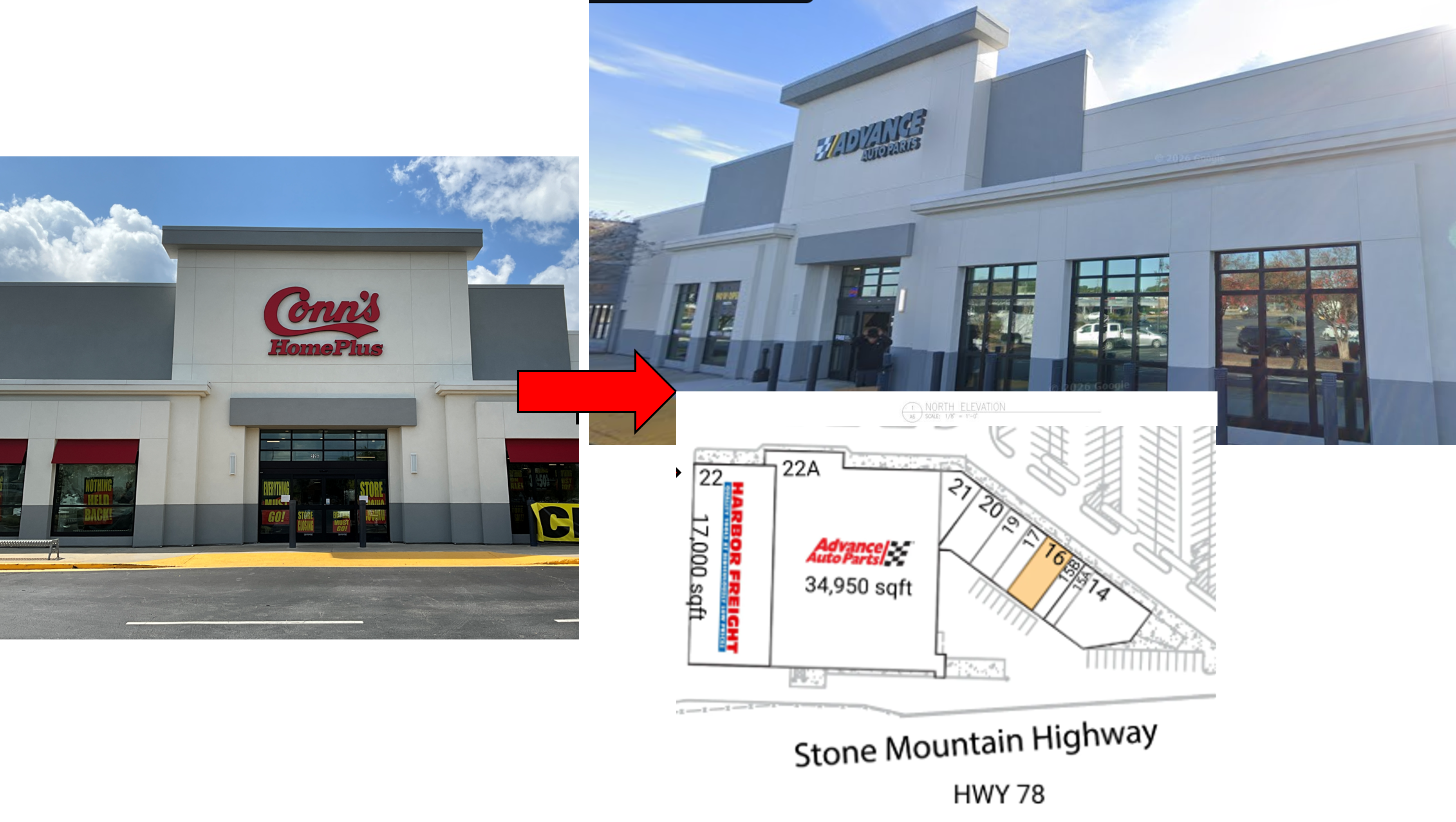
For instance An Advance Auto Parts Market Hubs opened last Fall in a ~35,000 square foot former Conn’s Home Plus store in Stone Mountain, GA.
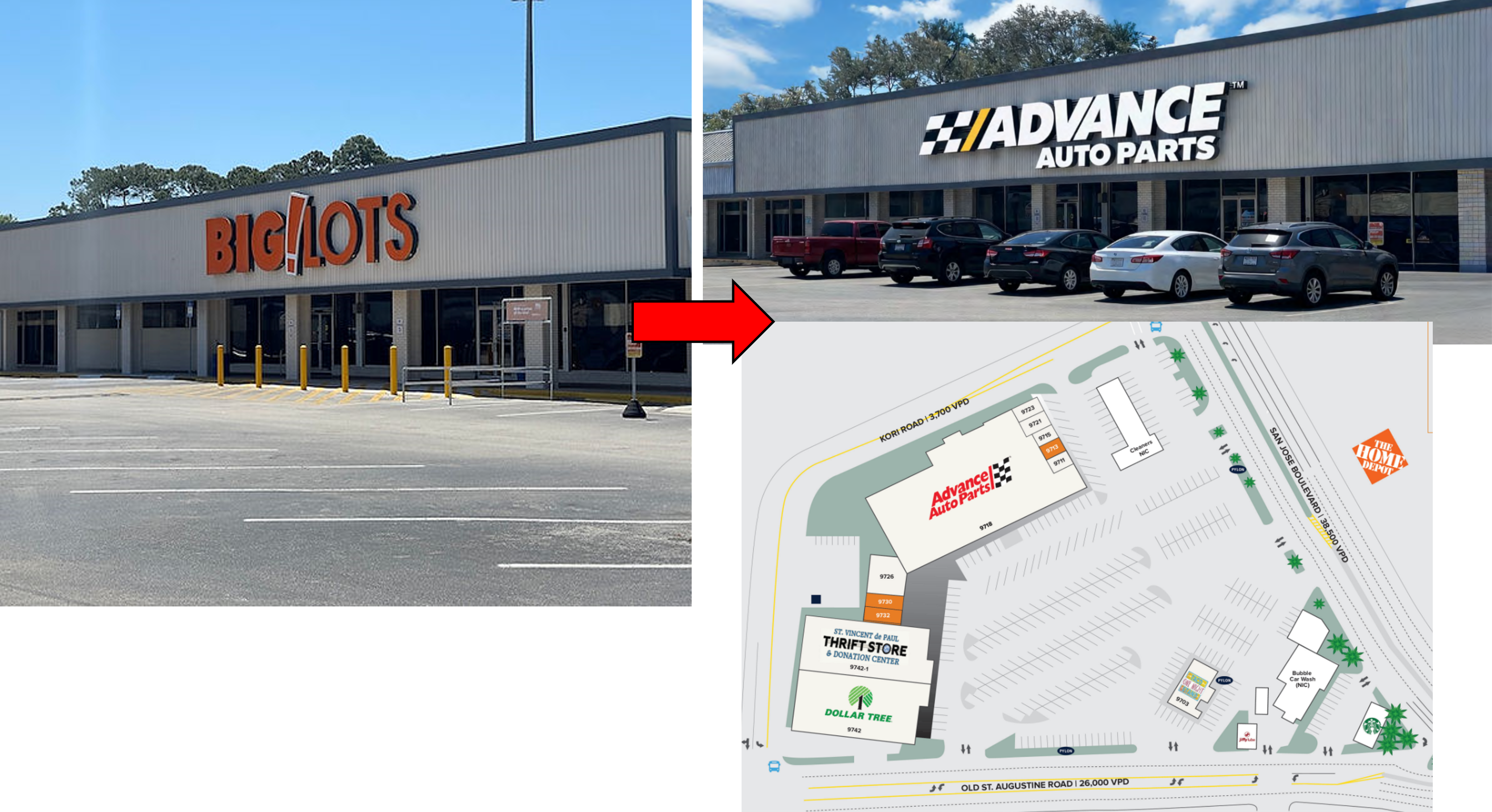
A new Market Hub is also set to open later this year in a ~32,000 square foot former Big Lots suite in North Jacksonville, FL.
Utilizing repurposed real estate is a low cost way to develop Market Hubs.
Advance Auto CFO Ryan Grimsland has noted that the average cost for the Company to open a new Market Hub store is ~$2 MM.
But that amount varies on whether the new store was developed via ground-up construction or in repurposed, 2nd generation space.
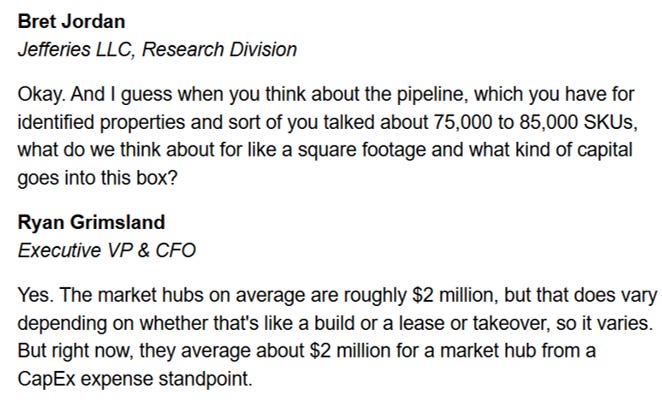
Opening a Market Hub in repurposed space provides Advance Auto with more than just a cheaper buildout cost.
That is because rental rates for 2nd generation space are far less than for new construction properties.
This makes Market Hubs in repurposed space more profitable since they not only require less initial capital but also lower rent payments for the lease duration.
Another benefit of 2nd generation space is a quicker timeline to open.
Market Hubs in repurposed space can open in roughly 1/2 the time—or less—than it would take to complete new ground up construction.
Advance Auto hopes that the speed and efficiency from the reuse of existing buildings will help it meet its 60 store Market Hub target by the middle of 2027.
The Biggest Source of Near-Term Growth
Market Hubs are likely going to comprise over 1|2 of new Advance Auto openings over at least the next 2 years.
But because of their large size—at more than 5x the size of a standard store—will likely make up the vast majority of the Company’s square footage growth.
Plus Advance Auto may very well increase its long-term Market Hub target.
After all AutoZone, a key competitor—particularly in the Pro channel segment—is targeting 300 of its comparable “Mega Hub” stores at full buildout.
The outsized role that Market Hubs play in generating sales from Advance Auto’s most lucrative customers make the Company’s ability to execute on these new store openings perhaps its most important near-term operating initiative.
A Customer Service Differentiator
Advance Auto President and CEO Shane O’Kelly notes that the Company’s Pro customers, in particular, have become accustomed to the wider part availability and faster service time provided by Market Hubs.
This is important as Advance Auto anticipates that sales to Pro customers—which include professional installers like collision repair shops—is expected to outpace sales through the “do-it-yourself” retail channel in the coming quarters.
O’Kelly has “consistently heard from Pro customers about the positive impact of the Market Hubs. I’ve also heard it from our independents. If you think about how we would manage this situation in the past, you’d be dependent on the DC, and that’s an expensive pick and a much more time-consuming route to get it to a customer. Often, you don’t end up within a time window that they consider to be acceptable. I’m particularly excited by the next chapter of what we do with our Market Hubs. They increase time to serve.”
The Future Real Estate Plan For Market Hubs
Advance Auto wants future Market Hubs to fulfill demand from ~50 satellite stores in its network rather than the ~90 they serve at present.
This means many more Market Hubs may be needed to provide a consistent level of part availability, service and distribution through its entire network.
So where specifically might Advance Auto source the real estate that it needs to add these additional Market Hubs?
Well the recent bankruptcies of retailers like Conn’s HomePlus, Big Lots and Joann Stores have freed up over 2,000 Big Box sites throughout the country that may be suitable for repurpose as Market Hubs.
Advance Auto has already converted some of these spaces into Market Hubs.
But these sites are in high demand among growing Big Box retailers and may not be available for long.
Advance Auto may need to take a more aggressive approach to secure future sites.
Like by closely monitoring mass store closing events and retail bankruptcies.
Or even bidding to acquire existing store leases in future bankruptcy auctions.
Perhaps the most interesting real estate option may be to co-locate with some of its larger Pro customers in multi-use buildings.
These properties could include a variety of automotive uses under one roof such as dealerships, collision centers, tire service and, of course, auto parts retailers.
After all what better way to increase part availability, accelerate delivery time and reduce costs than by operating in a “one stop” shop for automotive needs.
This would require even larger real estate than standard Big Box retail suites.
Like, perhaps, former “ultra” Big Box buildings.
For instance Autofit, a wholesale auto parts supplier, opened in a 140,000 square foot former Sam’s Club building in San Antonio, Texas.

The AutoFit property in San Antonio is one of at least a half dozen conversions of former Sam’s Club buildings to an automotive use.
The hybrid background of a Sam’s Club building—part retail and part warehouse—may be an intriguing option for an even larger version of a Market Hub.
Or one that co-locates with other automotive uses.
Most former Sam’s Clubs are freestanding buildings with high ceilings, open floor plans, and grade level doors which can work well for auto parts retail.
Plus they are located in major retail corridors and close to Advance Auto customers, often on large land parcels with plenty of parking, good access and signage.
Many Sam’s Clubs had even offered tire sales and auto service—and thus are already a “known” destination for automotive uses.
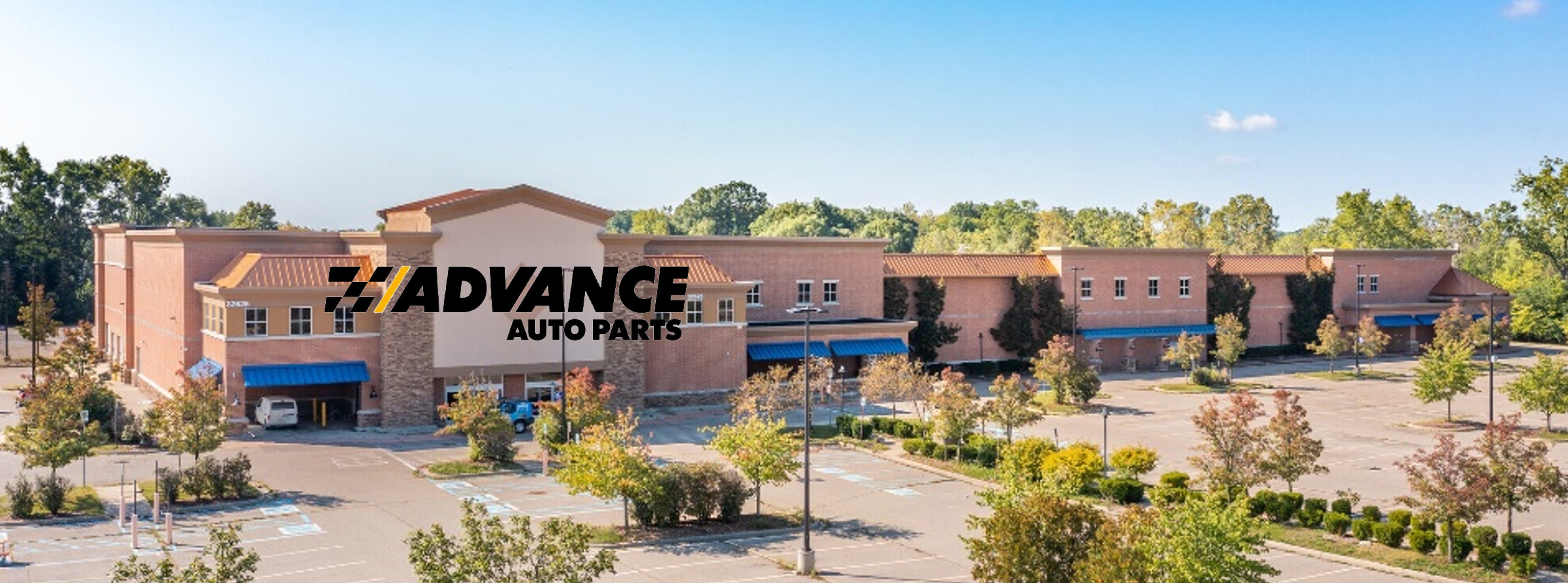
So Advance Auto may want to think bigger when it comes to sourcing the real estate for future Market Hub stores.
Of course 100,000+ square foot Market Hubs may require another type classification.
Perhaps they can be known as “Super” Market Hubs.
No posts
Comments
Nothing yet. Say the first thing.
Sign in to join the conversation.