
Welcome to the first installment of a new 12-part series here on Learning Environment - The Substack. Over the following months, I’ll be diving into the core themes and frameworks of my book, Learning Environment: Inspirational Actions, Approaches, and Stories from the Science Classroom.
Why now? Why this series (and book)?
At times, the educational landscape can feel bleak, making it easy to pile onto the bandwagon of bad news and critiquing commentary of a system worthy of scrutiny. And while there are certainly many things within our education systems to point to and to blame, the crux of the issue is that, as many students (and some teachers) might say, “we just ain’t feeling it.”
To help solve the student engagement problems playing out across the country in the U.S. (particularly at the high school level), I wrote Learning Environment, yes, to bring attention to some of the issues making education (and in particular public education) difficult, but also, as Marcus Luther aptly points out in this post about student burnout, write a book (and Substack) about things that did go right in my classroom in the hope that they serve as a model and source of inspiration for other educators looking to similar things in their own respective classrooms, school buildings, or organizations.
…there is a vacuum when it comes to sharing what is good about our classrooms and schools—and most importantly, our students. When the good gets left out of the story, it creates the conditions for attacks on public education to seize the narrative. I believe the best way to push back is to be vocal about what is working and the good within the work that is happening right now.
- Marcus Luther, When Students Say They're Burnt Out - 3/11/2026
So yes, I wrote Learning Environment to critique a system that I want (that needs) to do a lot better for kids, but also to give the profession I love actionable ideas and approaches that could be immediately put into practice within a story-driven narrative that was easy and enjoyable to read.
In this first post, I encourage educators to find a way to bring their own passions into the classroom to both engage their students and nourish their teacher soul. To do so, we’ll begin by visiting the childhood spark that sent me on the path that one day saw me teaching environmental science in the most urban of places - New York City.
“One of my earliest memories of interacting with nature is of catching frogs in the stream that ran through the woods at the bottom of a steeply pitched slope in my backyard and corralling them into a child-sized hard-plastic blue swimming pool in my driveway. Placing the frogs into the pool alongside the miniature boats and other floating accoutrements I had arranged for their enjoyment, I would entertain myself and my newfound amphibious friends for days on end until I woke up in the middle of one particularly core-memory-inducing night with the realization that I was not the natural world’s friend but its captor. I determinedly made my way to my slumbering parents’ bedroom and, much to their displeasure, demanded that we release the amphibians—immediately. The entirety of this experience anchored my connection to nature and seeded my desire to help conserve and protect it.”
— Learning Environment, page 32
Early in my career, I felt the immense weight of “teaching a cornucopia of content a mile wide and an inch deep.” (quotes in this section are from L.E.)
Or, in other words, teaching to the test.
As many teachers will attest, standardized testing can create a top-down learning environment that sucks the joy out of the classroom and causes us to lose sight of my view of education’s true purpose: “the cultivation of lifelong learners and an informed and engaged citizenry.”
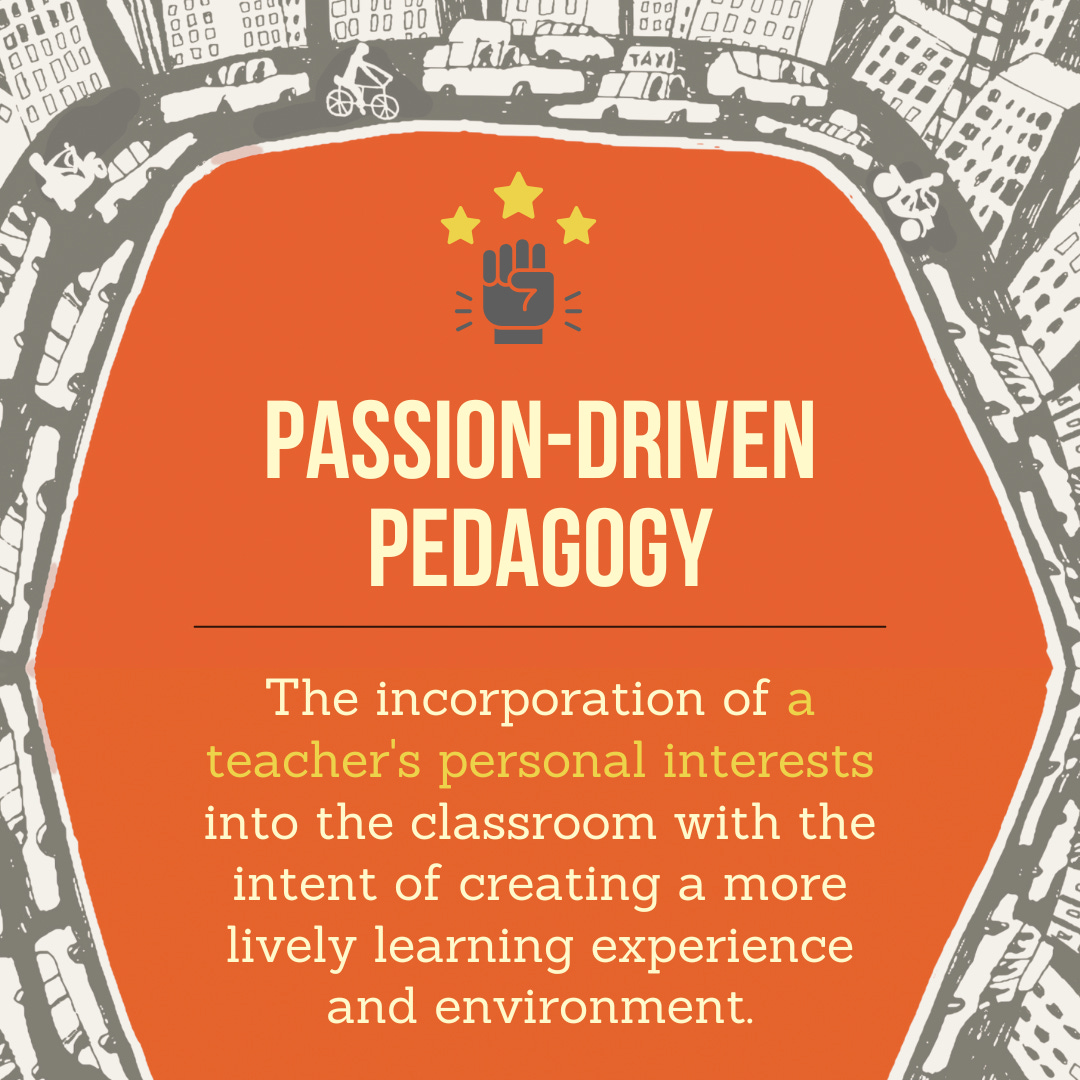
One antidote is Passion-Driven Pedagogy.
In Learning Environment, I argue that this approach encourages educators to find the space and courage to bring what they are most interested in into their classroom. For me, one example of this meant teaching about the history and science of New York City’s water supply and waterways—topics that allowed me to share my own love of nature alongside my students.
I found that when I taught my passions, not only did I help my students learn content and acquire various skills, but I also had the potential to create a rewarding cycle of joy that kept all of us fulfilled.
Start Small: The Passion Audit
You don’t need to overhaul your entire curriculum to bring your spark into the classroom. Instead, start by identifying a single connection between your personal interests and your instructional goals:
Identify A Spark: Take a moment to reflect on a personal hobby, an educational interest, or even a childhood dream that fills your soul. Share it with your students, weave it into a single lesson. Reflect and react to the response. Build upon success.
Audit Your Standards: Look at your upcoming unit and find one standard that is pedagogically adjacent to a personal interest. Bring it to the forefront of your teaching.
Share The Passion: Be vulnerable with your students and tell them the story of why you care or are passionate about a topic. You might be surprised to learn that sharing not only excites you but also resonates with your class—helping build relationships and buy-in for what may come.
Ready to let passion drive your pedagogy and build momentum in your own teaching practice? Whether you are an individual teacher looking for a spark or a school or organizational leader seeking to re-energize your staff, I am here to support you.
Fox EduConsulting offers tailored support for those looking to implement passion-driven approaches in their own contexts. Let’s Dream, Collaborate, and Create together to turn your envisioned learning environment into a reality.
Coming Up Next: Now that we’ve identified the teacher spark, how do we translate that into daily engagement? In my next post (in this series, released twice a month), “The Hook & The Circle,” we’ll explore specific routines that help students put down their phones and pick up a conversation.

Comments
Nothing yet. Say the first thing.
Sign in to join the conversation.