
Welcome back to the second installment of the actions, approaches, and stories from Learning Environment.
In my first post of this twelve-part series, I laid out the argument for why educators should embrace passion-driven pedagogy, or the inclusion of their own interests into the curriculum.
However, it may come as no surprise that teaching with passion to fully engage students in the learning process is not enough, and over-emphasizing your own interests as an educator can even be counterproductive to the content and skills you are trying to teach in the classroom.
To supplement passion-driven pedagogy and address recent calls (and legislation) to reduce reliance on and the ubiquity of screens and ed-tech in the classroom, additional approaches are needed, especially for creating a learning environment rich with student engagement and dialogue.
Some methods I consistently used in the classroom to accomplish both were incorporating learning hooks, mystery pieces, and visible thinking routines.
I take the plastic laminate sheet I had prepared for my class out of its protective binder—the audible ‘click’ of its three rings snapping open and then closed. . . I flick the projector switch to ‘on’ immediately illuminating and magnifying the selected lines onto the makeshift projector screen. . . These days, when the daily notes appear, I hear my students’ now familiar audible sighs and groans. . . It has become apparent that something in my pedagogy must change.
— Learning Environment, pages 1, 2
In a business-as-usual or ‘sit-and-get’ classroom (like the one I had during my early years and as depicted in the excerpt above), thinking and learning are often private, invisible acts, and students passively absorb content while feeling disillusioned with their learning environment.
Over time, as I improved as an educator, I found that one way to break the cycle of the passive classroom was by employing Visible Thinking Routines.
Making thinking visible begins with something I refer to in Learning Environment as The Hook.
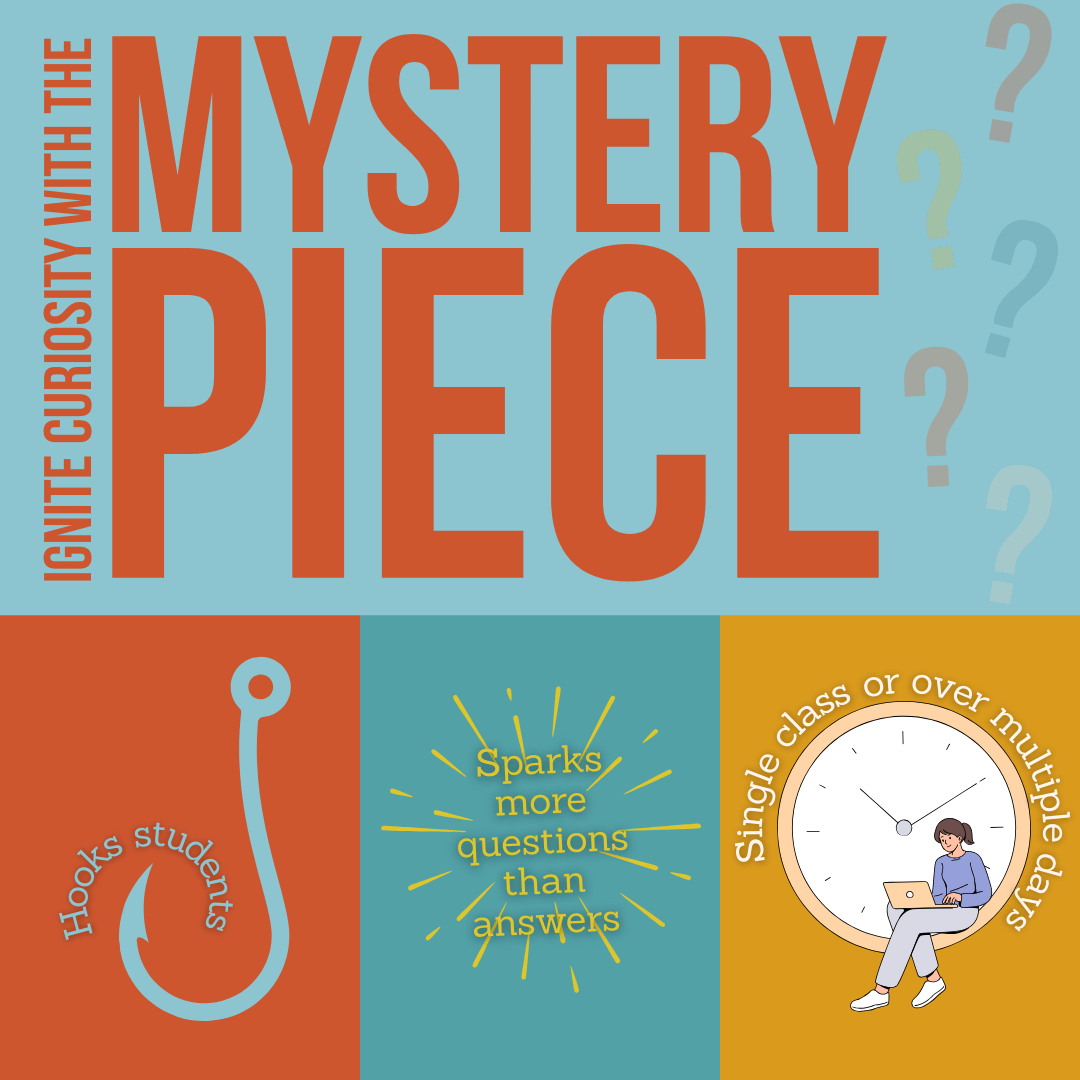
A hook is more anticipatory than a bellringer “do now” activity. It is instead designed as a “mystery piece” (such as a jar of murky river water or an unexplained photograph) and shared to pique curiosity and elicit more questions than answers. Once the hook was set, I would then move into another visible thinking and discussion-based activity—the Socratic Circle.
During Socratic Circles, I would arrange the classroom into two concentric circles—an inner circle for dialogue and an outer “gallery” for active listening—signaling a shift from a teacher-centered classroom to one that encouraged student voice and agency.
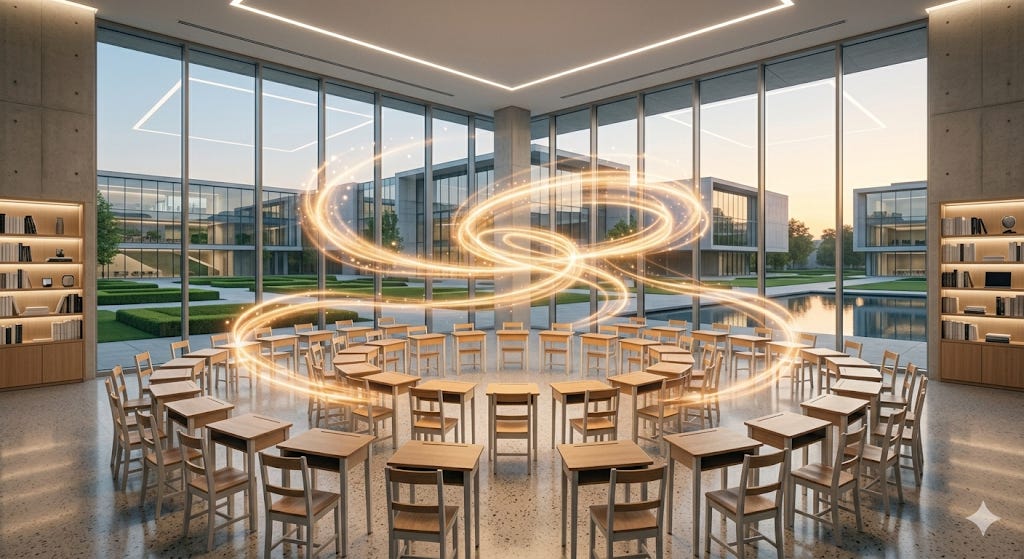
During Socratic Circles, I would witness the hierarchy (and hegemony) of traditional classroom dynamics evaporate and revel in the respectful discourse created by this visible thinking routine.
Yes, See-Think-Wonder has been around the block, but it remains one of my favorite visible thinking routines for hooking students into a lesson, project, or unit.
See: Present an intriguing image, object, or artifact and ask students to state their observations.
Say: “What do you see?”
Think: Ask what the image or object, etc., makes them think based solely on those observations.
Say: “What do your observations make you think?”
Wonder: Ask what new questions their observations and thoughts have raised.
Say: “What do your observations and thoughts make you wonder or want to know more about?”
For additional ideas and thinking routines, visit Harvard Project Zero

Reading Day: Dedicate at least one full class period to reading and annotating an ‘anchor text’ before ‘discussion day’ to ensure everyone is prepared.
One-Sentence Summaries: Have students write a one-sentence summary for every few paragraphs read to help them process complex text and have a resource to draw upon during the Circle.
Inclusive Grouping: Pull struggling readers into a small group to read the text aloud together—they will feel more confident participating in the Circle later.
Score the Circle: To increase rigor and student engagement, consider grading students not on how many times they speak, but on the quality of their contributions.
Check out this free resource from my classroom that shows how I gave feedback and graded students during our Socratic Circles.
Other Socratic Circle Support
For more support conducting a Socratic Circle in your classroom, see the Appendix in Learning Environment, or pick up a copy of Matt Copeland’s Socratic Circles
The Impact of Visible Thinking and Discussion Routines: Visible thinking routines and discussion protocols transform a passive classroom into an active learning environment.
They motivate students to draw on their existing schema, background knowledge, and personal experiences—fostering an inclusive space where all students have equal opportunities to engage.
Are your classroom routines feeling stagnant? Students disengaged, checked out, or hiding behind a screen? Why not try incorporating intentional mystery-piece hooks, visible thinking routines, or Socratic Circles into your school or classroom?
My work at Fox EduConsulting focuses on helping schools and organizations transition from passive instruction to active, visible-thinking cultures. Whether it’s coaching you (or your staff) on thinking routines or Socratic protocols, let’s work together to make the invisible… visible.
Coming Up Next: Now that we have explored our passions and have some routines to hook students into learning, it’s time to step outside.
In post 3, “Shifting the Gaze,” we’ll explore how a Street Tree Census (or other local activity) can turn a sidewalk into a one-block laboratory.

Buy Learning Environment Today
Dr. Jared Fox, is an education expert and the founder of Fox EduConsulting. Through his consulting practice, Jared helps schools and organizations craft authentic, engaging, and comprehensive learning environments - with a specialty working at the intersection of science, the environment, and social justice.
Comments
Nothing yet. Say the first thing.
Sign in to join the conversation.