
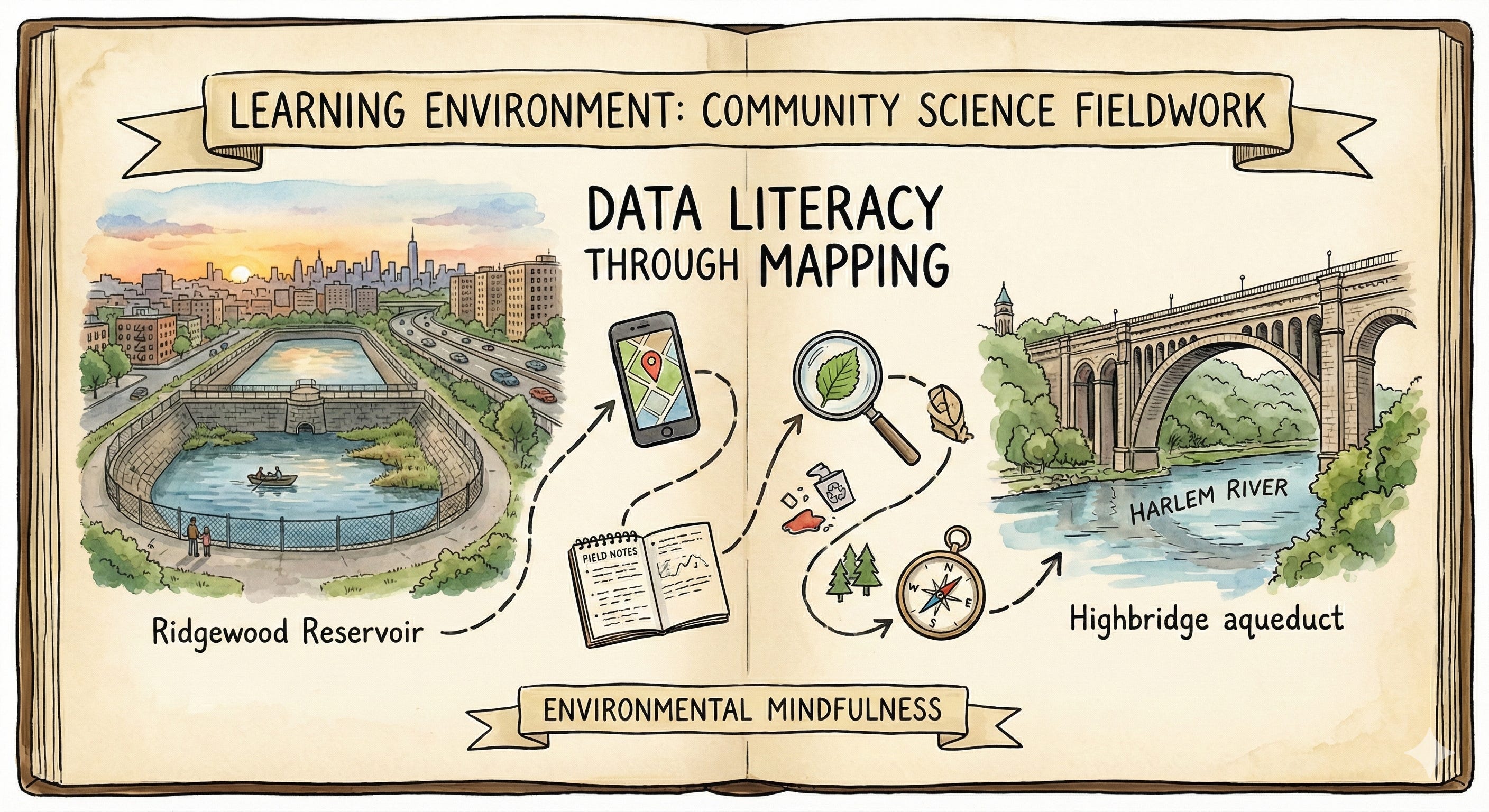
There is a specific kind of magic that happens when a student realizes their neighborhood isn’t just a place where they live—but a living, breathing laboratory.
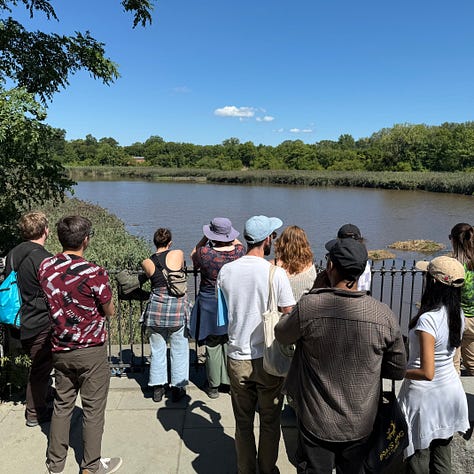
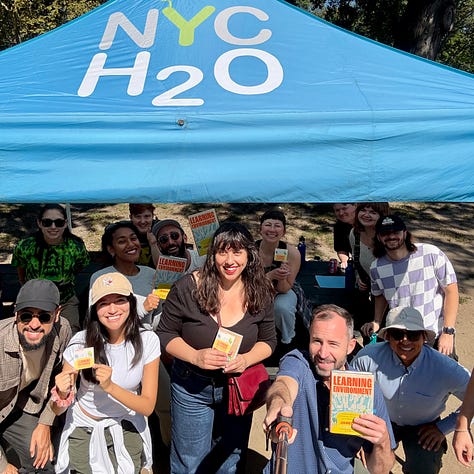
I felt that magic this past August as I traversed the edge of the Ridgewood Reservoir on the border of Brooklyn and Queens for Learning Environment’s launch. Looking out over that reservoir with my long-time partners at NYC H2O, I was struck by the full circle symmetry of it all.
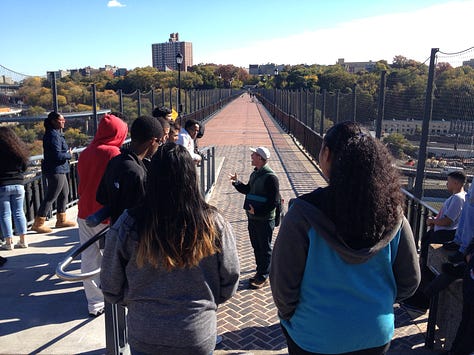
NYC H2O was with me in Washington Heights when I was trying to figure out how to get my environmental science students to the Highbridge in a single class period, and here they were again, hosting me as I shared Learning Environment with the world.
That’s why I’m super excited to share that a piece of our collective work is officially out in the wild. My latest article, co-authored with Kevin Barrett, “Data Literacy through Mapping: Lessons from an Informal Science Partnership,” was just published in NSTA’s Connected Science Learning.
Data, in this context, becomes a form of environmental mindfulness.
In the article, we highlight NYC H2O’s EcoMappers program, which I helped support as an education consultant. Our collaboration was a chance to take the learning-by-doing fieldwork philosophies I mixed together for nearly two decades in the classroom and bake them into a data-centric framework that any teacher (or organization) can examine and learn from.
The focus of our paper was NSTA’s data science guiding principles.
Oftentimes, when we talk about data literacy in education, it can sound boring—like we’re asking kids to stare at spreadsheets until their eyes cross (unfortunately, I’ve gone there). However, in my work with NYC H2O and in the article I co-authored with Kevin, data collection and literacy were viewed as the active ingredients that turned a walk around the school block into community science fieldwork and stewardship action.
In Learning Environment, I write about the need to “shift the gaze,” or to pull our eyes away from the screen and our daily routine and toward the “mystery pieces” of our city, like the soaring canopy of London plane trees or the hidden innards of a sewer’s storm drains.
Interestingly, and perhaps quite paradoxically, EcoMappers uses ArcGIS Field Maps on a smartphone to do exactly that.
During EcoMappers, students used a GPS-enabled device to mark litter, compacted soil, or a clogged catch basin. And when they do so, they engage with data in a way that not only makes them more data science-literate but also brings an often-overlooked yet essential urban system into focus.
In this manner, they start to see the concrete under their feet not as souless slab of gray, but as an impermeable participant in the urban water cycle.
Data, in this context, becomes a form of environmental mindfulness.
Many educators can attest to the “pedagogical paralysis” that sets in when they’re faced with high-tech tools or complex mapping software (and little time or training to implement it in their unique classroom contexts). But by building an intermediary, or Third Space, between the classroom and a student’s lived experience, where informal experts and classroom teachers work side by side, NYC H2O’s EcoMappers provided the framework and support necessary to help students (and teachers) make new meaning and connections to the world around them.
Collecting, interpreting, and sharing data in this manner gave students a seat at the table. And by the end of the EcoMappers program, students had created digital one-pagers to advocate for the resolution of evidence-backed issues they had identified on the blocks around their school—preparing them to take their findings to community boards or to propose litter cleanups and new green infrastructure in their neighborhood.
Because, as my work both in and out of the classroom has taught me, when students have data to back up their voices, they transform from disconnected teens and passive observers into burgeoning community scientists.
Ready for a closer look at EcoMappers? You can read the full article in NSTA’s Connected Science Learning at this link (free for NSTA members) (or message me if the paywall is an issue)
The article “Data Literacy through Mapping: Lessons from an Informal Science Partnership” was co-authored by Kevin Barrett and me (Jared Fox) and is featured in NSTA’s Connected Science Learning, Feb 2026.
My book, “Learning Environment: Inspirational Actions, Approaches, and Stories from the Science Classroom,” is available now at Word Up Books and at bookstores everywhere.
Comments
Nothing yet. Say the first thing.
Sign in to join the conversation.