
I think it’s time to take a breather, and look at the overall labour market dynamics in Japan, before diving back in to look at another industry in detail.
The number of people employed by industry sector in Japan currently looks like this:
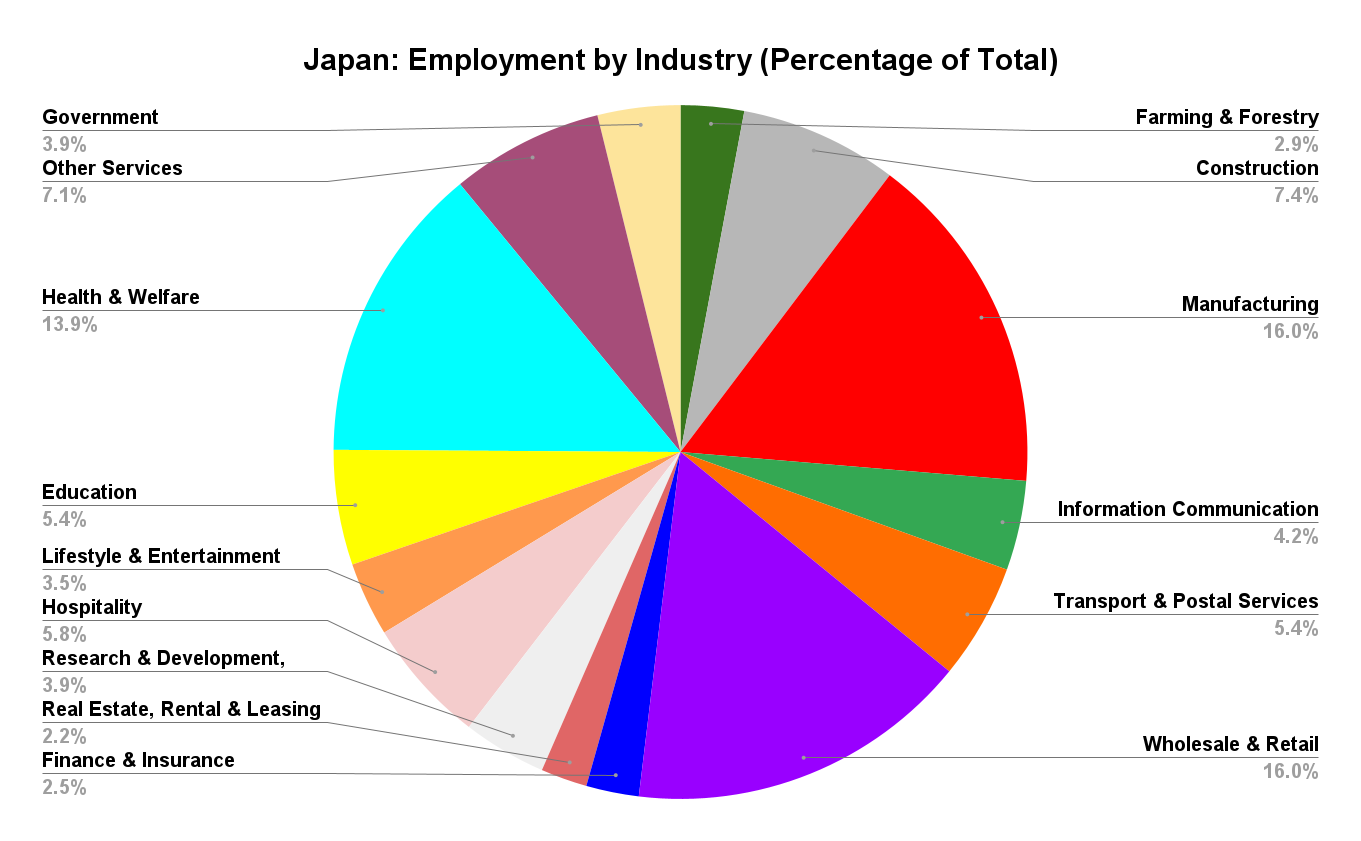
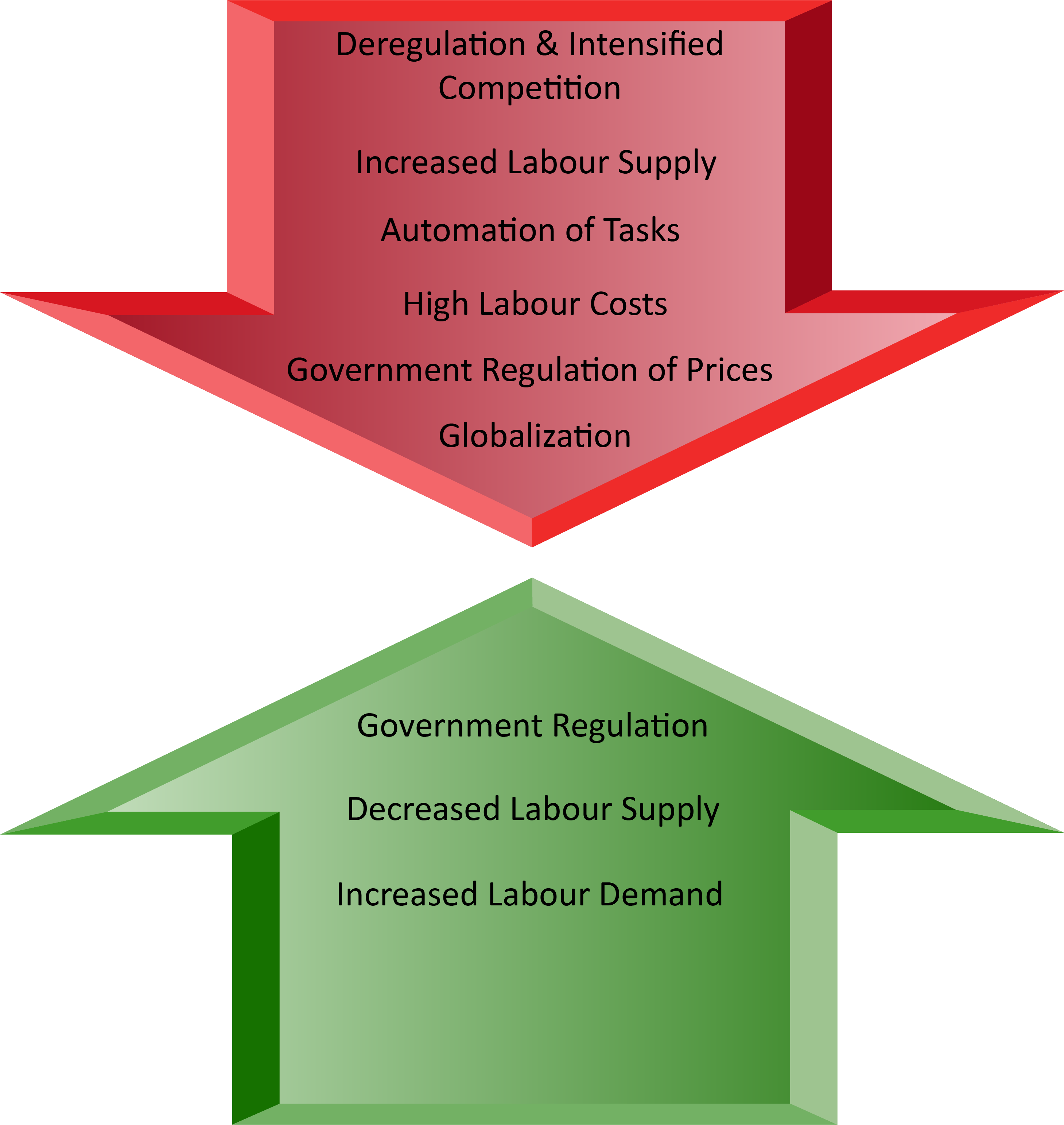
Three big sectors account for nearly half of Japanese employment: Manufacturing, Wholesale and Retail, and Health and Welfare. We’ve already had a look at the upward and downward pressures on wages in the Health & Welfare sector, and the Transport & Postal Services sector with bus drivers’ wages. Summarized, the pressures on wages across the Japanese economy look like this:
Now, let’s have a look at which (select) jobs have had the best and worst real wage growth rates over the 21 years to 2022:
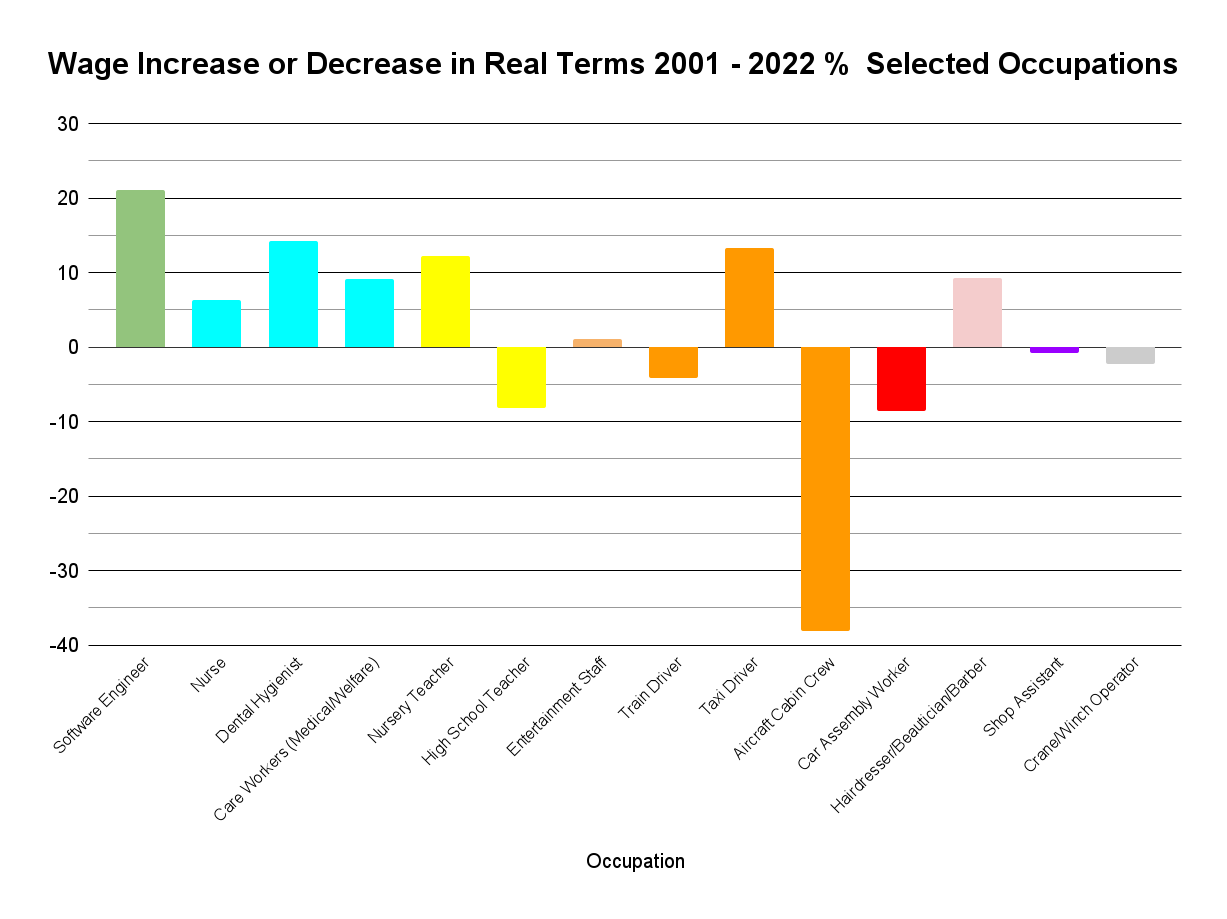
Software engineers come out on top, with increased labour demand, coupled with little government regulation of prices and low labour costs (software can be distributed to almost anyone for virtually nothing) driving wages up.
The health and welfare sector comes out pretty well, with high labour demand straining against the limits of government-regulated charges for health and welfare services. Dentistry has less fee regulation compared to other areas of health.
High demand for nursery teachers as more women work after marriage, combined with the low labour supply of young women who typically work in this sector has pushed up wages here. But for high school teachers, government-mandated salaries have led to a drop on real wages.
As discussed before, train drivers’ wages have been pushed down in similar ways to bus drivers. Train fares are government-regulated, and haven’t risen much in years. Taxi drivers on the other hand, work in a highly-regulated industry which Uber couldn’t break into. Their wages were already low to begin with, so couldn’t drop much further.
An increased supply of car assembly workers from countries such as Brazil in the early 2000s combined with automation helped to lower wages for this job.
Increased automation and the shift to online shopping dented wage growth for shop staff.
Here are the same real wage growth rates for jobs again, this time in ascending order:
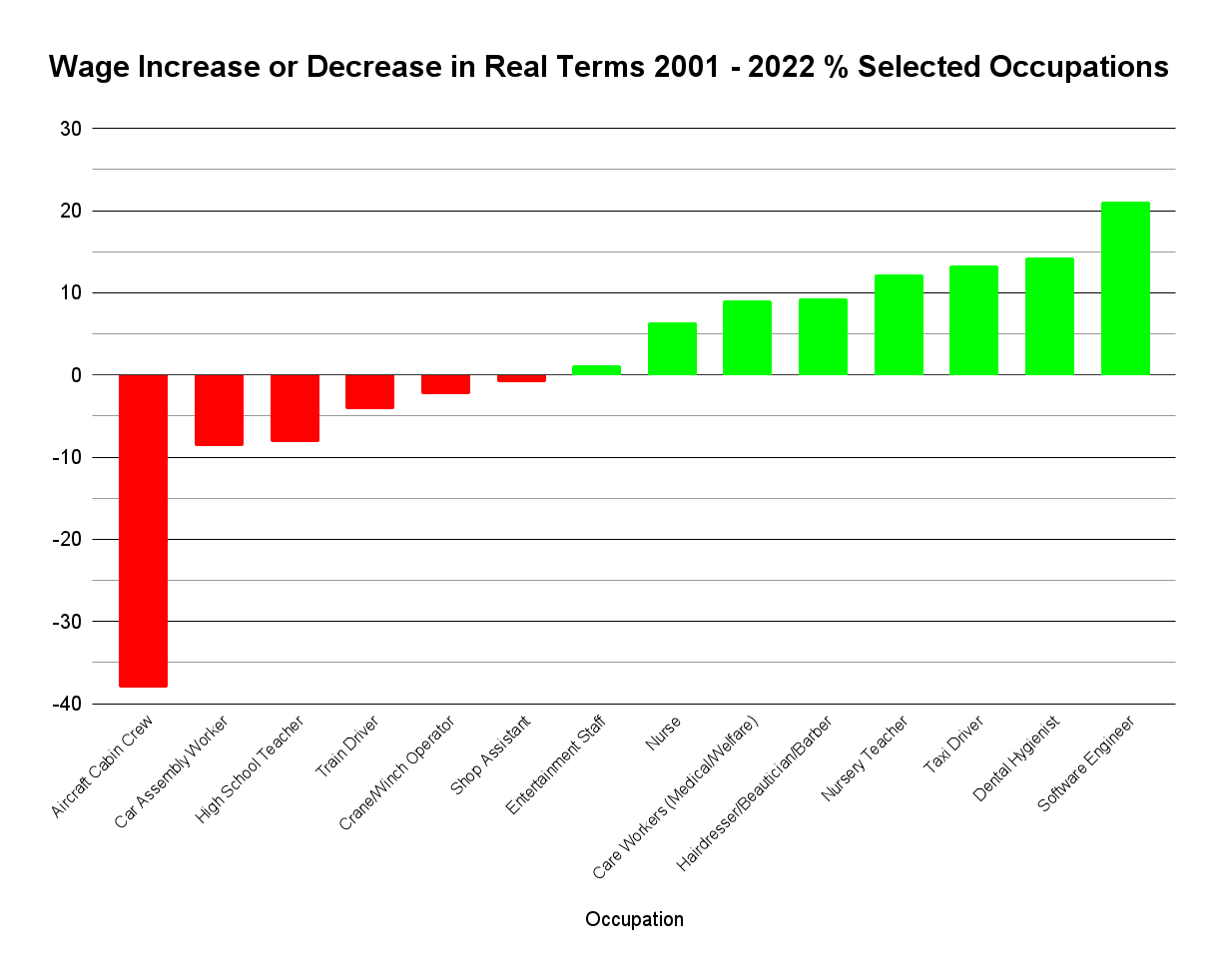
Right at the bottom of the list are aircraft cabin crew, with a stonking 38 percent drop in real wages over the last twenty years. In the early 2000s, this was still considered a high class job for women (and it’s still nearly all women) in Japan, with high wages to match. The rise of Low Cost Carriers and increased competition crushed those wages.
So the job with the the fastest growing salary in Japan? Actually, it’s not software engineer, but airline pilot. Increased competition and high barriers to entry to become a pilot have pushed up wages for them by 26.45 percent in real terms between 2001 and 2022.
Comments
Nothing yet. Say the first thing.
Sign in to join the conversation.