
Last week, we saw how bus drivers’ wages were flattened during the early 2000s as deregulation and intense competition coupled with an aging workforce caused companies to lower wages for older workers.
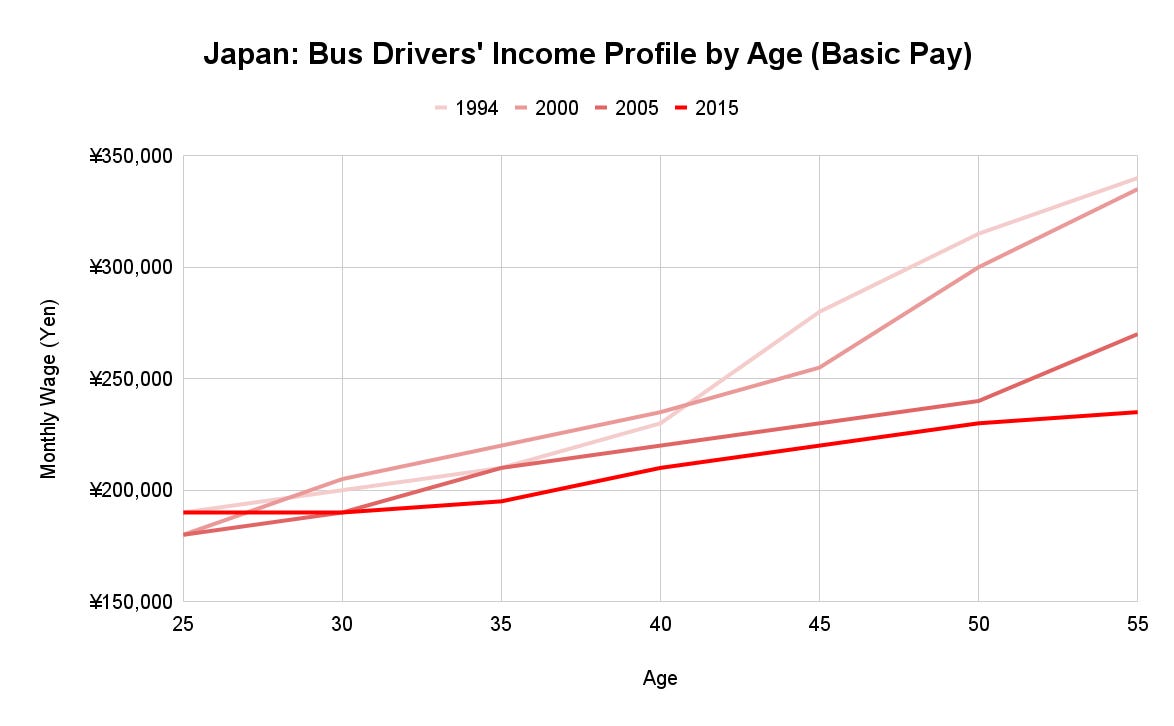
This wasn’t the only industry to have it’s income profile by age flattened:
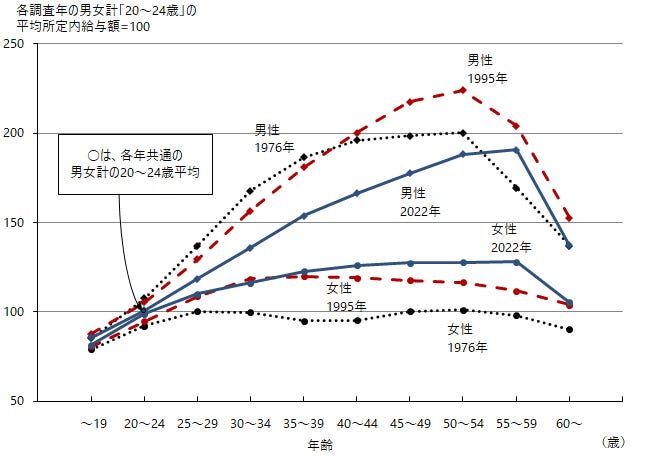
This happened over the whole economy. The composition effects of more women entering the workforce would have helped to flatten the profile anyway (the three lower lines on the graph above are for women), despite their wage profile actually steepening over the years from 1976 to 2022. But even taking this into account, the income profile for men (the top three lines on the graph above) fell after 1995. Part of the reason for this will be the increased use of none seishain regular workers. They rose from 20 percent of the workforce in 1990 to 36.6 percent by 2022 (MHLW survey data). None seishain workers (even the men) have a much flatter wage profile as shown below:
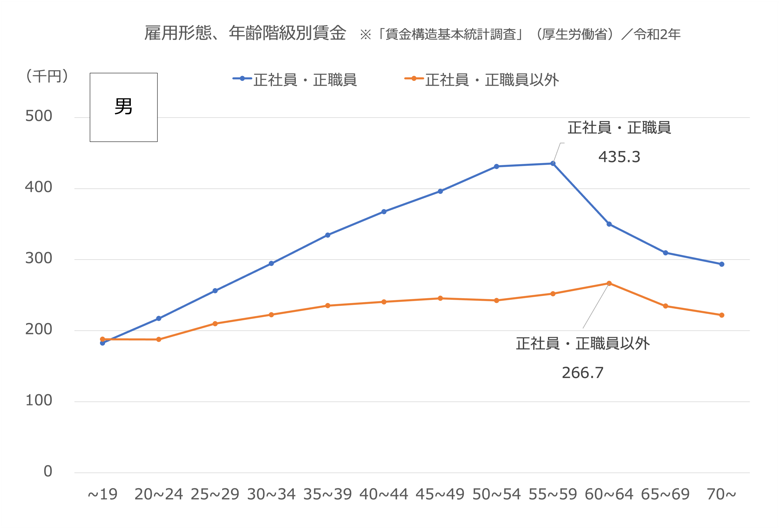
As the population has aged, it has become more and more important for companies to control their labour costs by limiting pay for older workers. At the other end of the scale though, there is some good news for younger workers:
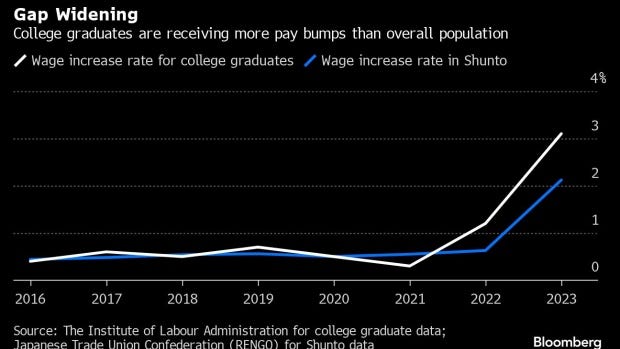
Wages seem to be being pushed up by a scarcity of graduates according to this Bloomberg article: Japanese Firms Boosting Pay for Young Workers is Good News for BOJ This could lead to further levelling of the wage profile as wages for younger workers get pushed up, but those for older workers get pushed down.
Comments
Nothing yet. Say the first thing.
Sign in to join the conversation.