
As I returned to Japan from my visit to the UK, my phone reconnected to the Japanese network and my social media feeds instantly came alive with adverts for driving jobs. From April of this year, overtime will be restricted to an average of 80 hours a month for driving jobs, and firms are clearly panicking about having enough drivers to cover their schedules. This seems like an ideal time to look at bus drivers’ pay.
But, before we get into bus drivers’ pay, a quick aside into real wages and real earnings.
I suddenly had an alarming feeling that my graph of real earnings below:
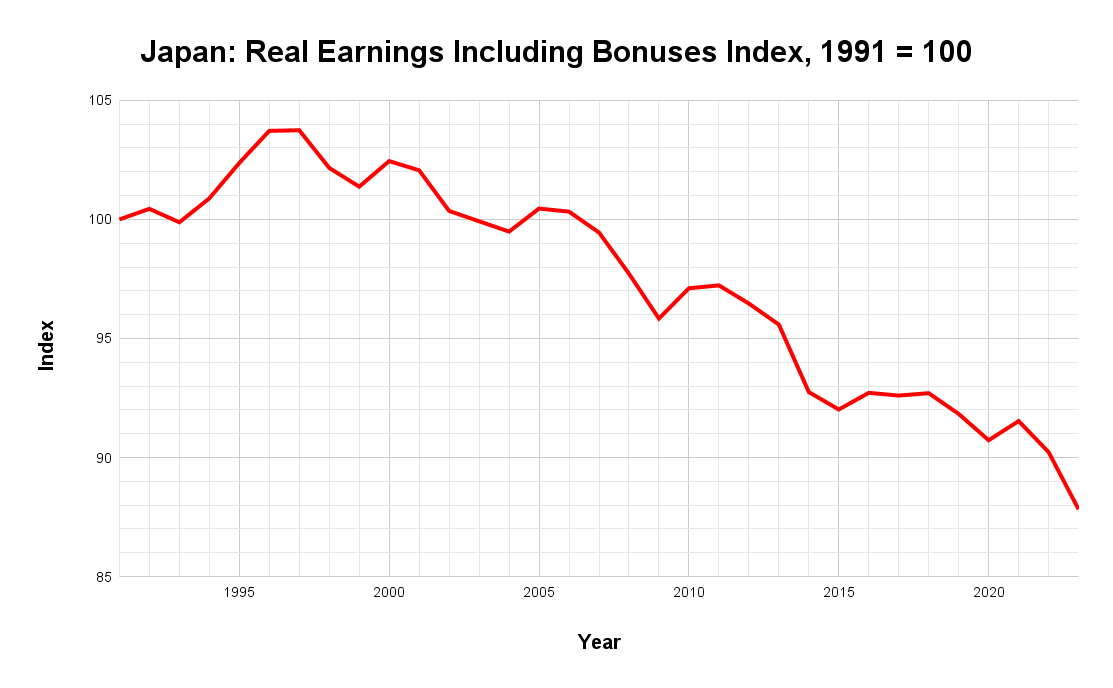
was being unduly influenced by the effect of falling pension payouts:
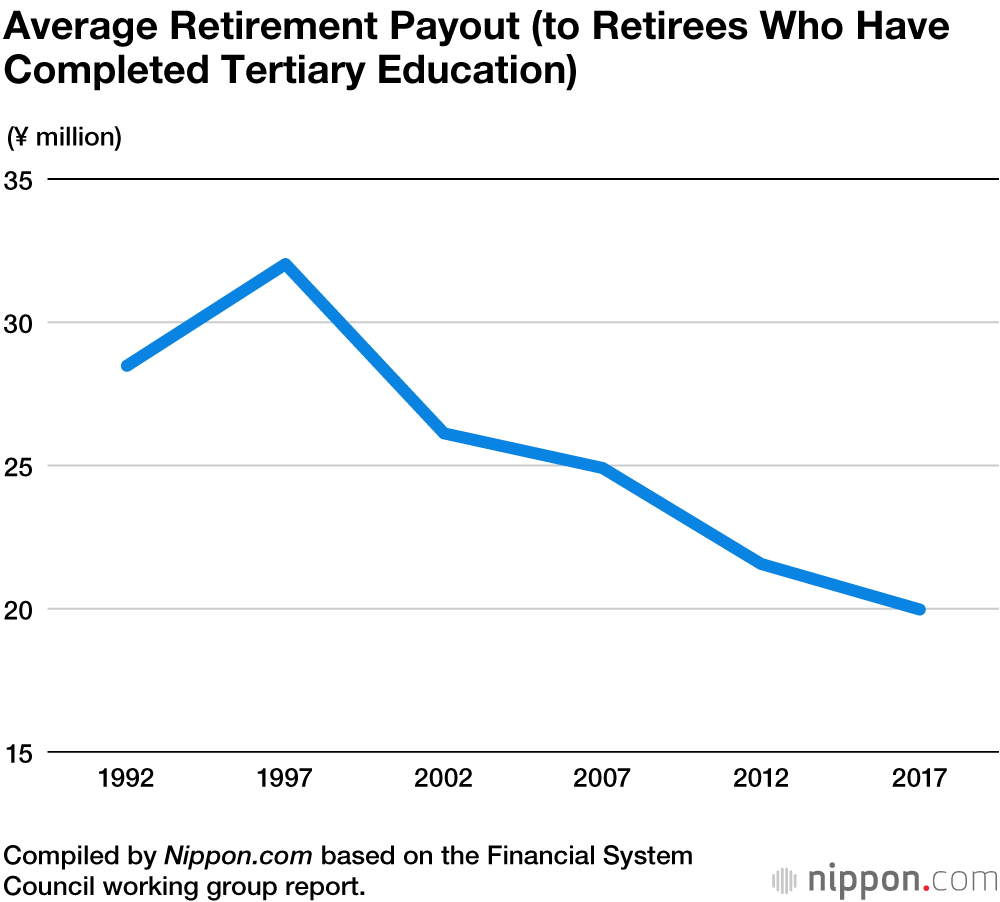
from this article on nippon.com, especially as it had a neat peak in 1997. Tradingeconomics.com doesn’t make it very clear whether pension payouts are included in its calculation of real earnings, but the MHLW statistics it’s based on don’t seem to. Generally, real earnings shouldn’t include pension payouts.
The panic was caused by a graph I saw showing real wages flatlining rather than falling since 1997. But a research paper here, showed a graph that looks very similar to mine, and explained the government jiggery-pokery that may have led to the less brutal-looking statistics:
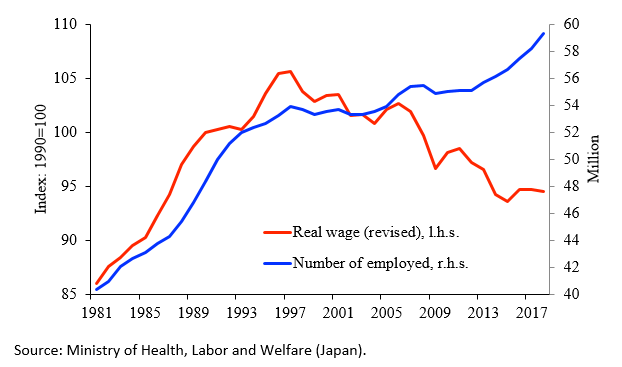
Changing the index year can also be used to make the statistics look more flattering.
Anyway, back to the bus drivers. In 2000, the Japanese government passed an act that deregulated the bus industry. There followed an increase in the number private bus companies from around 3,500 companies in 2000, to around 4,500 by 2012. The number of bus drivers increased from around 39,000 to 49,000 over the same period. At the same time, the number of people holding the Large Vehicle Grade 2 Licence (which includes truck drivers) fell from 1.2 million to around 1 million. An increased demand for drivers and a falling supply of drivers should lead to increased pay, right?
Wrong. Average pay fell from around 270 thousand yen a month to around 230 thousand yen a month (source: Private Bus Companies Association General Survey).
What happened? A look at the pay by age profile over the years helps to clarify things:
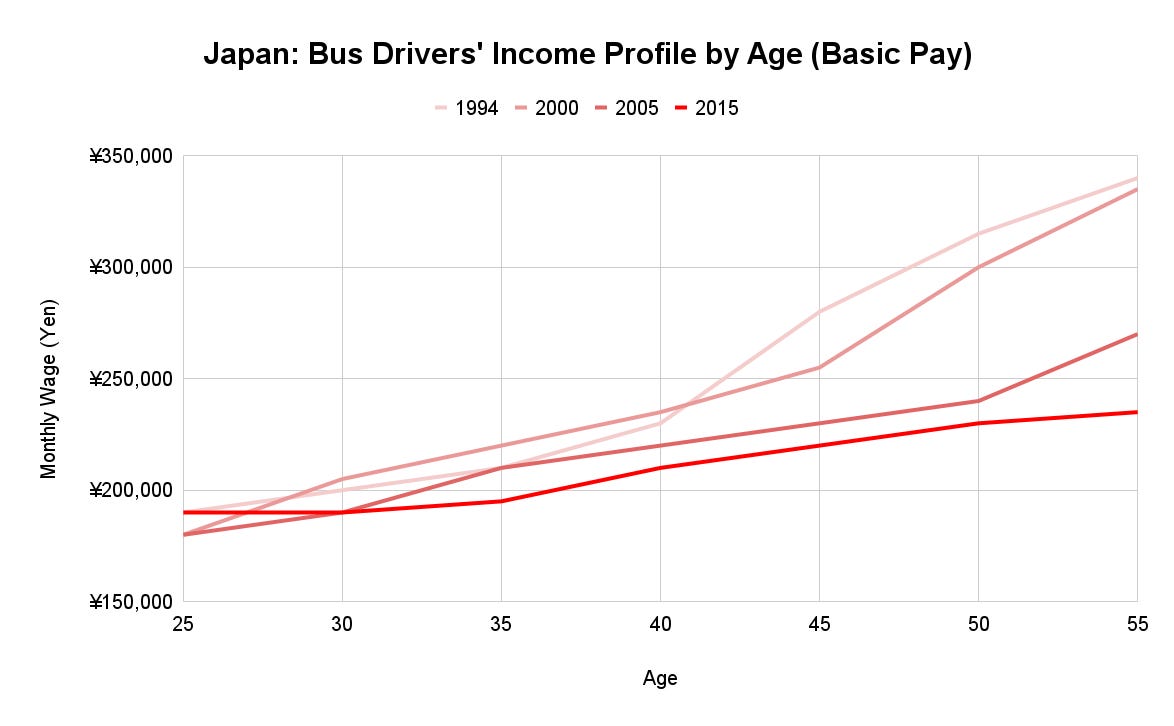
The pay profile was flattened. Older drivers received much less pay. Previously, they had been paid on a similar salary scale to train drivers, where experience is highly valued and worth paying considerably more for. Although bus drivers aquire experience and skills, they don’t accumulate as rapidly or as deeply as train drivers, and so the new private bus companies could pay them less. Presumably it was difficult for bus drivers to change industries, so not many left the industry and they had to take the wages they were offered.
Bus drivers are generally old — the average age is currently around 55. To keep costs down, pay for older drivers has had to be cut. Pay for bus drivers hasn’t improved much since 2015. Essentially flatlining and then falling during the COVID emergency as the number of hours worked fell.
With the intense competition following deregulation, revenues for bus companies fell, from 470 yen per passenger kilometre in 1997 to around 400 yen per passenger kilometre in 2014. Labour costs make up nearly 60 percent of the cost per passenger kilometre:
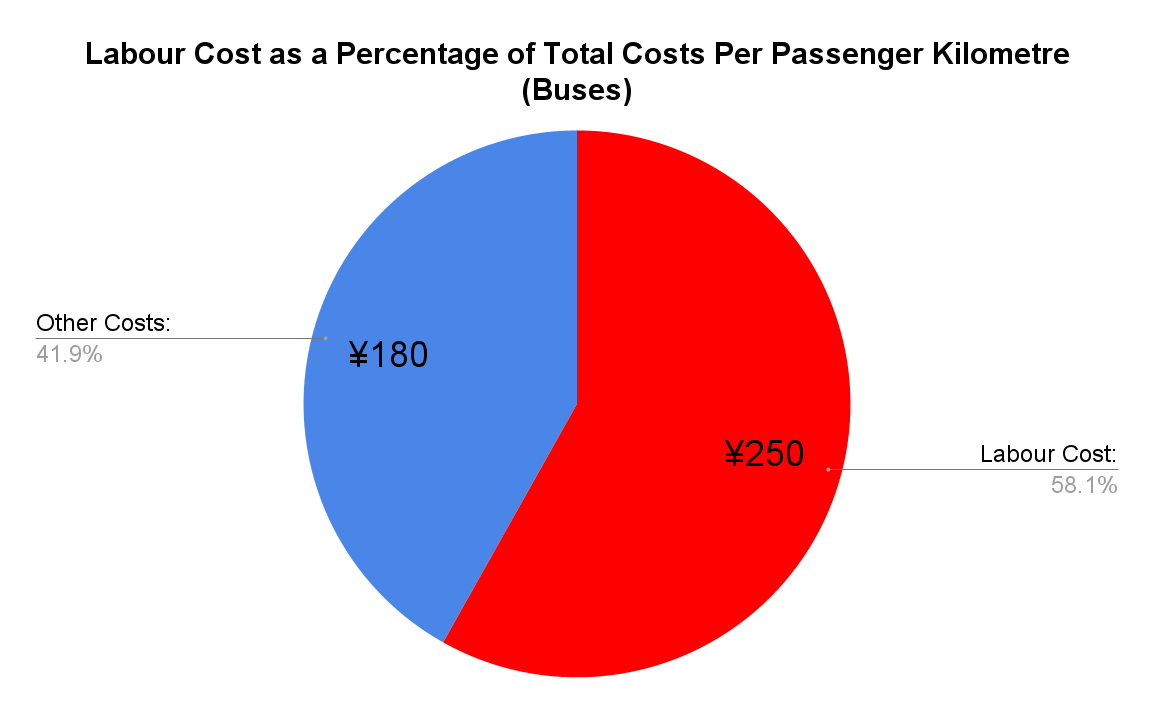
Which means that if the bus companies want to raise wages, they will have to raise prices significantly too. It currently costs about 7,000 yen to take an overnight bus from Kobe to Tokyo. If drivers’ pay were increased by 5 percent a year, this would mean a 3 percent increase in prices per year, leading (due to compounding) to a price of about 11,000 yen by 2040. At that point, it wouldn’t be much cheaper (assuming shinkanesen prices don’t increase much) than taking the shinkansen to Tokyo. The shinkansen is much faster, more comfortable and you don’t arrive feeling absolutely cream-crackered* as you do on an overnight bus.
It’s unlikely then that prices will be able to increase much, so wages won’t be able to increase much either. Something will have to give, probably a reduction in the number of routes and frequency of services.
*cream-crackered = knackered = very tired
Comments
Nothing yet. Say the first thing.
Sign in to join the conversation.