
The Big Short and No Other Choice can be read as 2 parts of a larger story. In one, men in suits and boardrooms make decisions with little but cold calculation in their hearts, and these decisions lead to mass job losses. In No Other Choice, we see a man on the receiving end of these actions. Not directly; The Big Short chronicles the 2008 financial crisis, whereas No Other Choice follows a Korean man losing his job to a merger in the 2020s. In isolation, the observation that one film shows how job losses can occur and the other shows its consequences isn’t all that interesting. But what’s more interesting is observing how in both scenarios, the beneficiaries of violence and Capitalistic competition firmly believe that they commit their evil deeds out of necessity. That they had ‘No Other Choice’.
Even after its dumbed down explanations, I still can’t fully understand the economics of The Big Short, but I think I understand enough to make my point. When a select group of Wall Street traders start to learn that the US housing market is at best deluded, at worst fraudulent, and either way doomed to collapse, they buy contracts which essentially bet against the housing market. Therefore, when the housing market does eventually collapse, they are the few people with cause to celebrate amongst apocalyptic scenes that feel more like something from a zombie movie. As the world crumbles around them, they win countless, life altering millions of dollars. Their prospering comes directly from others’ suffering.
No Other Choice begins with Man-Su living an idyllic life with his wife, 2 children and 2 dogs, cooking eel in a serene, parodically beautiful house, the Sun bathing him and his family. But soon after this he loses his job and spends a fruitless 13 months trying to find a new one. In his desperation, he plots to not only kill the person with the job he wants, but the other potential candidates who would make up his competition. In order for Man-Su to get a job, to keep his house and dogs and pay for his daughter’s violin classes, he must kill 3 other men.
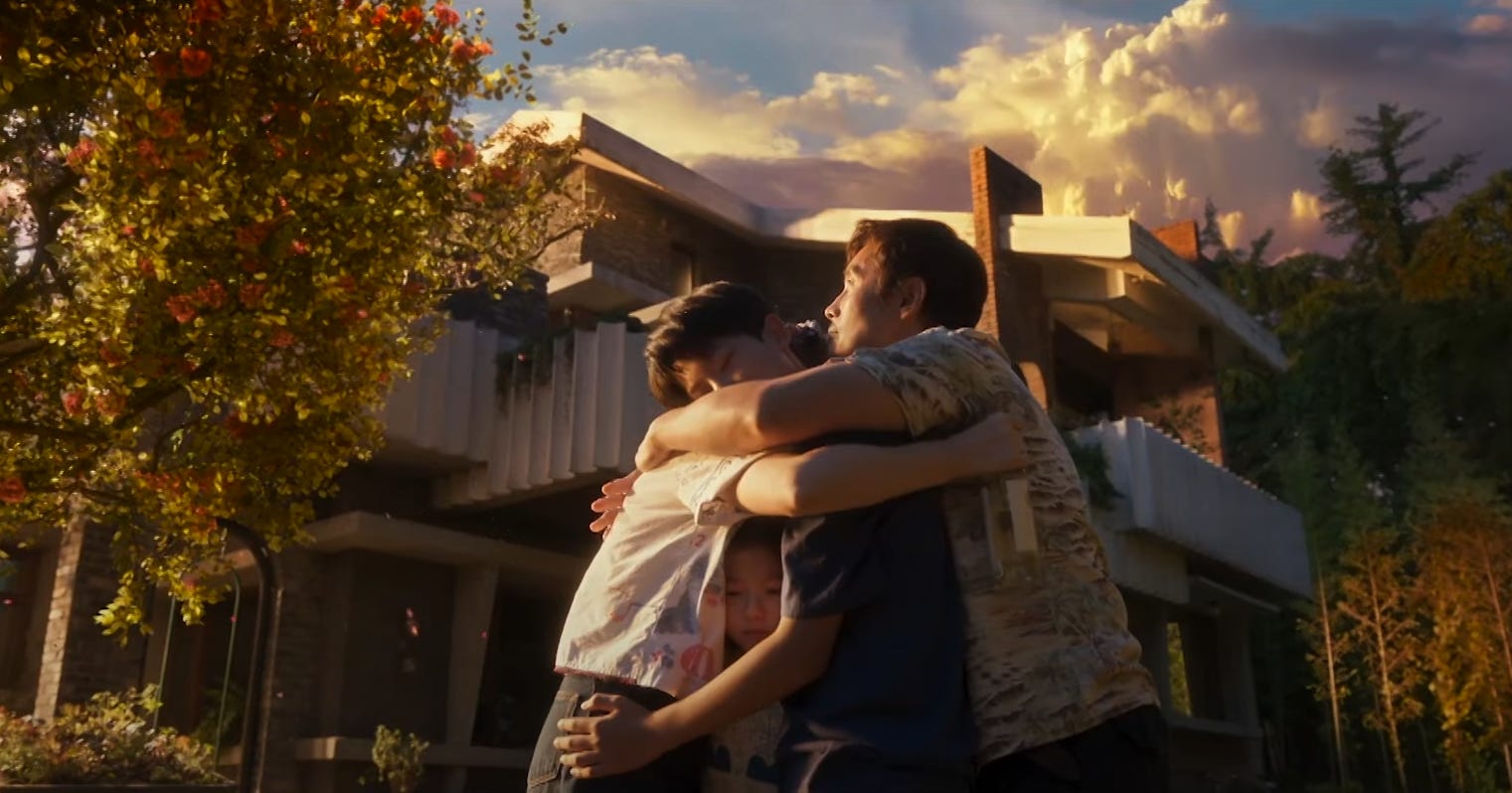
In both cases, our main characters are directly benefiting from the suffering and death of others. In the case of No Other Choice this is obvious and direct, as he murders his opposition. It could be easier to ignore or forget about the horrible violence inflicted by the 2008 financial crisis, but The Big Short ensures that we can’t.
I wrote just last week about the ideas of abstract and direct violence, and the violent effect that unemployment can have, but luckily The Big Short provides this explanation for me. In one of the film’s most sobering scenes, young traders John and Finn have just secured a massive deal and are dancing in celebration, much to the disgust of their friend and mentor Ben. He reminds them, with venom in his voice, that they are betting on the collapse of the American economy, and that their victory would lead to mass unemployment and homelessness. He tells them that for every 1% rise in unemployment, 40,000 people die.
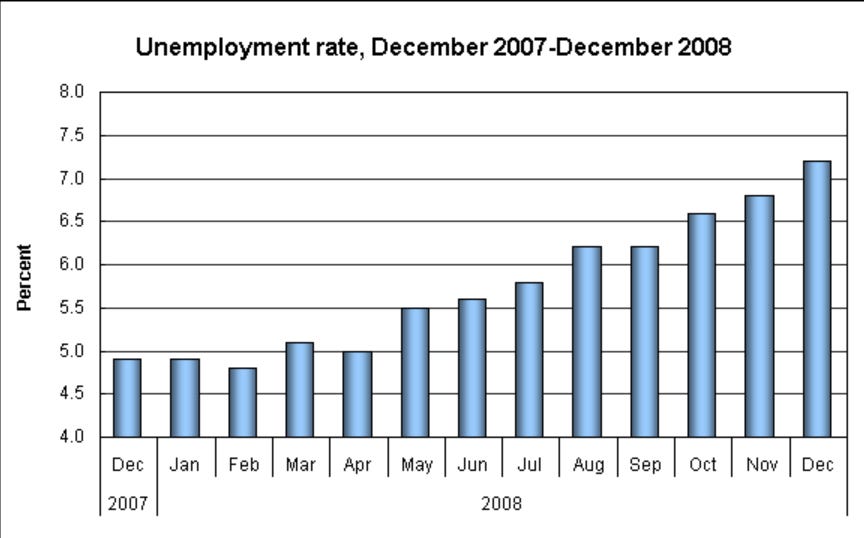
That’s just a number, but the film also directly shows us the effect of the crash on regular people. Early in the film we visit the home of a man who’s landlord hasn’t been paying their mortgage, despite him paying his rent. He’s already shocked to hear this, and the stakes of his situation are driven home when the camera pans down to his son, who looks tiny in a high angle next to his father. Later, after the crash, we see this man again, now seemingly living out of his car. We see bags of all the belongings he could fit piled onto a roof rack. Shots from inside his car showing him kissing his son and daughter demonstrate how restricted his world now is, homeless through no fault of his own. This man and his family put a face to the statistics. From December 2007 to December 2008, unemployment in the US rose by 2.3%, which according to Ben’s maths would mean about 93,000 dead.[1] And as a viewer, you can’t help but wonder if this man and his family make up any of that 93,000.
As I mentioned, the consequences of Man-Su’s actions in No Other Choice are more directly obvious, but the film still ensures that we feel them. All of Man-Su’s murders have their elements of tragedy, but the one that sticks out is his second, Si-Jo. When Man-Su arrives to scout him out, he sees not just Si-Jo now working in a shoe shop, but his daughter as well. He struggles to balance his new job with caring for his daughter, forking out some money for her to visit her friends.
Through most of this interaction, we see Man-Su’s face in the foreground, listening to what’s happening, and it’s pretty clear he’s thinking about his own daughter. He later finds common ground with Si-Jo, as they share their love for the paper industry. Unlike his first incredibly abrasive victim Bummo, Si-Jo is played with an undeniable likeability and charm by Cha Seung-Won, and his frantic attempts to make money and provide for his daughter create a clear parallel to Man-Su’s own life. We’re heavily directed to sympathise with Si-Jo, and his murder is one of the most dramatic, emotional scenes of the film. As he dies, you can’t help but imagine his daughter’s reaction to her missing father.
So with these huge stakes that the films make a significant effort to remind us of, how do the main characters justify their terrible actions? Well, for the answer in both films, you only have to look to the title of No Other Choice.
Both films deal in fairly morally ambiguous territory when it comes to judging their main characters. Both go to lengths to show us their negative effects, but present characters who see no alternative. In The Big Short, some of our main characters simply don’t care. But Mark Baum, played by Steve Carell, is the only one to actually see his actions as morally righteous. My understanding based on the film is that regardless of what Baum does or doesn’t do, the outcome will still be the same, so unlike Man-Su he doesn’t directly contribute to anyone’s suffering. But the film refuses to let us feel morally easy about him benefiting so heavily from it.
The first time this is truly hinted at is a more understated scene. Essentially, Baum needs the value of something called CDO to go down. By all rights they should have done, but fraudulent ratings managers are refusing to lower them. Baum berates a ratings manager, calling her childish for trying to skirt responsibility. But she is quick to remind him that there’s only one real reason that he wants the ratings to go down. And that’s because he has a vested financial interest in them doing so. She even calls him a hypocrite.
Due to his moral conscience, Baum initially refuses to pull the trigger and sell his stock positions after the crash. Sat alone on a rooftop amidst the apocalyptic scenes of employees clearing out their now barren offices, Baum tells his friends that if they sell, they’ll be just like the rest of them. Right now he sits literally above everyone else, as his friends beg him over the phone to sell and join those below him. Eventually, he realises that the banks will be bailed out, and it will be ‘immigrants and poor people’ that will pay the price of the crash, not those responsible. And it’s in this moment of complete nihilism that he sells and makes $1 billion. The final shot of Baum makes him tiny against the American cityscape. His decision to sell is one made from a sense of helplessness against the wider machinations of Capitalism. If everything is broken and corrupt, then he may as well benefit from the suffering that causes.
![The Big Short Film Locations - [www.onthesetofnewyork.com]](https://substackcdn.com/image/fetch/$s_!eaNs!,f_auto,q_auto:good,fl_progressive:steep/https%3A%2F%2Fsubstack-post-media.s3.amazonaws.com%2Fpublic%2Fimages%2F6528d4df-0082-46f8-888a-6ae1857f8982_565x235.jpeg "The Big Short Film Locations - [www.onthesetofnewyork.com]")
Arguably, Man-Su’s position is essentially the same. Although he does directly contribute to the deaths of his victims, his actions can be seen as the logical extension of the Capitalist competition he’s already in with these men. They all want the same job , and will all suffer in some way if they don’t get it. Every effort one makes to get the job comes directly at the cost of the other. So in Man-Su’s desperate mind, murder becomes the logical extension of this competition.
Repeatedly, Man-Su and his competitors use the phrase ‘No Other Choice to justify their actions. But the most striking use of it comes when used by his higher ups. Both when he’s fired at the beginning, and when his eventual employers tell him that they’ve replaced most of their workforce with robots, they tell him that there was ‘no other choice’. And it’s these moments that stand out the most, because they make us realise that the statement is a lie. Not just for them, but also for Man-Su.
Yes, Man-Su suffers because of his unemployment. But his suffering is only relative. Throughout the film, he still lives in a huge, gorgeous house, with a plentiful garden and immaculate interior design. They may have to sell this house, but doing so wouldn’t be a grand tragedy, it would be giving up a luxury to become a more regular family.
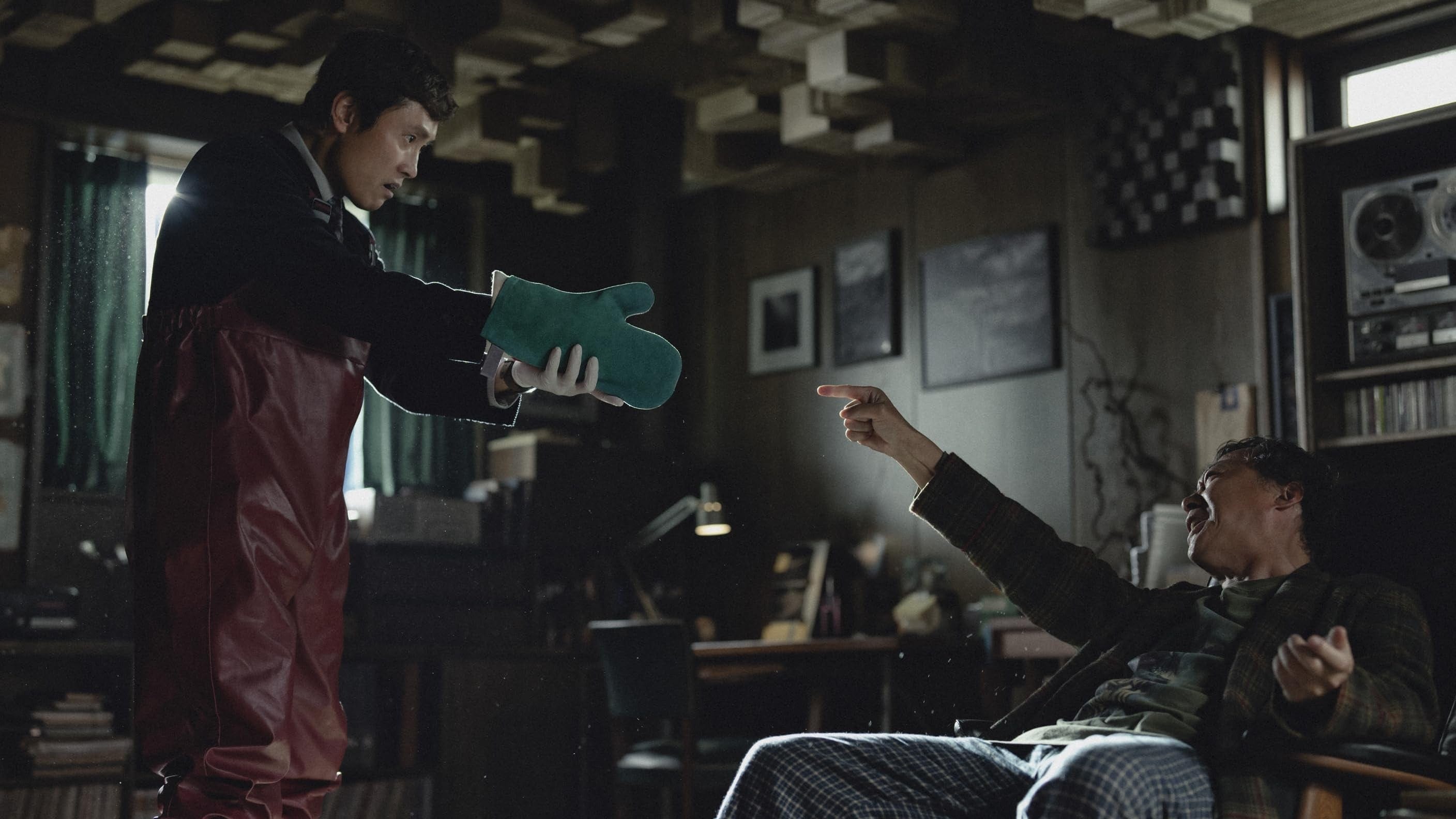
Just like Mark Baum, Man-Su is exposed as a hypocrite when faced with his first victim. After eavesdropping on Bummo and his wife, he learns that the unemployed Bummo refuses to become café owner, despite a generous offer from his father in-law, because he’s too obsessed with returning to the paper business. In one of the film’s most ludicrous scenes, Man-Su screams this fact down at Bummo while music blasts in the background. He screams to sell the house, work at a retail store, give up his pride and just earn some money. These are all things he refuses to do, things that he would rather turn to murder than do. Whilst Man-Su is a victim of Capitalistic competition, his claim that there is ‘no other choice’ is a false and ridiculous one, and nothing more than a way to feel better about himself.
If this is true for Man-Su, it is absolutely undeniable for Mark Baum. We don’t see his home, but we know for sure that he is a multi-millionaire. However nice and cushy of a life Man-Su refuses to give up, Baum’s is infinitely better. For all his claims to be better than everyone else, his participation in the crash is completely voluntary. He could retire on the spot and never have to benefit from another’s suffering in this way. But instead, he gets involved. He sells, and in his own words, becomes just like the rest of them.
It would be easy to suggest that these films are both simply about the horrible machinations of hyper competitive Capitalism, and how it forces people to be cruel. But whilst that is part of the story, it would be too kind to our protagonists. Because these are also films about hypocritical men who use this environment as an excuse to seek profit and self-benefit. And whilst, especially in Man-Su’s case, we can sympathise, I don’t believe either film wishes us to excuse these actions, or absolve their protagonists of responsibility.
[1] U.S. Bureau of Labor Statistics Unemployment in December 2008 : The Economics Daily : U.S. Bureau of Labor Statistics
No posts
Comments
Nothing yet. Say the first thing.
Sign in to join the conversation.