
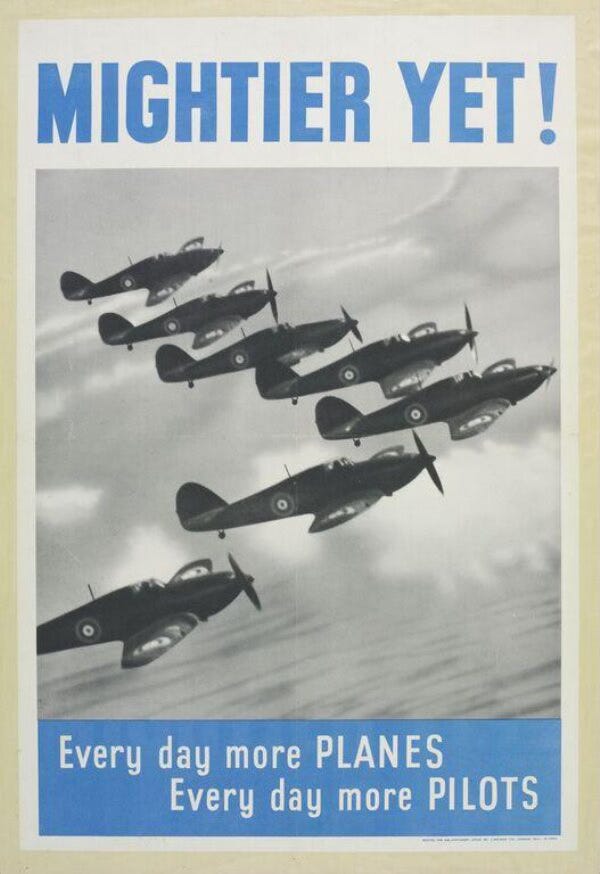
One of the many frustrating aspects of the British government’s ongoing unwillingness to commit to any dramatic or meaningful rearmament, despite the very obvious threats the UK faces and the urgent need for the country to defend itself, is the repeated trope, ‘we can’t afford it.’ The notion that major rearmament has to spell financial doom is ridiculous. Big business loves investing in defence but so too do small and medium sized enterprises – SMEs - many of whom are crying out for the kind of boost a major commitment to defence spending would offer.
This is how it works: the government initially borrows money, but at super long-term, low-interest rates, and reinvests this in defence. Yes, this initially means extra debt, but debt is only a problem if the economy is stagnating and there’s no means of reducing it, which is the situation the UK finds itself in at the moment. So, take the loan. This boosts growth, gets factories and businesses running, which in turn provides jobs and then more jobs as the growth impacts on an ever-wider proportion of the employment market. Enterprise and investment are suddenly encouraged. This in turns reduces the welfare burden because it gets people working, while at the same time bringing in more tax – income tax, VAT, corporation tax and so on. So, one very sizeable drain on government money is reduced while the amount flowing back into the treasury increases. And by the way, working and being part of a worthy, unifying national purpose is a terrific panacea for those suffering from low self-esteem and bouts of the blues. Individual self-worth is vital for the greater health of a nation, while, obviously, the converse is also true.
Investment during economic downturns is known as counter-cyclical economics and was first given this term by the great British economist, John Maynard Keynes. He in turn drew his economic theories from the analogue study of history, which showed, conclusively, that there are repeat patterns in the way markets and economies flow. This is because humans haven’t changed very much and our response to the economic ebbs and flows is generally the same: we embrace growth with optimism, hope, and a renewed sense of vigour and drive, and downturns with dissatisfaction, despondency and ennui. Think about it: we all have a spring in the step when there’s cash in the bank account and we gloomily retreat when we’re skint. This doesn’t require either an economics degree or a deep understanding of human psychology. And if anyone wants proof of this theory, just look at history. The past, after all, is there to help and only a fool would ignore it.
There is a reason why the German company, Rheinmetall has had such a growth in its stock value in recent times and ditto Krupp. The German government has done exactly as outlined above, investing over 100 million euros in defence and killing two birds with one stone: making Germany safer and boosting the flagging economy. And it was ever thus. Britain in the 1930s, for example, has traditionally been accused of both appeasing Hitler and failing to rearm. The Prime Minister most certainly did everything he could to avoid sending Britain to war in 1938 but the idea that Britain was not preparing for war at that time is nonsense. Appeasement and rearmament when hand-in-hand, with government and private business working together to play a critical part in the country’s preparations.
The British back then, with their global fleets and world trade, had always been wedded to the idea that war was really a battle of supplies, and so it always is the moment the opportunity for a swift, tactical and overwhelming victory passes. All manner of metals and raw materials were needed to fight a war, and not one country in the world had an abundance of all, not even America and the USSR, despite their vast size and geographical range.
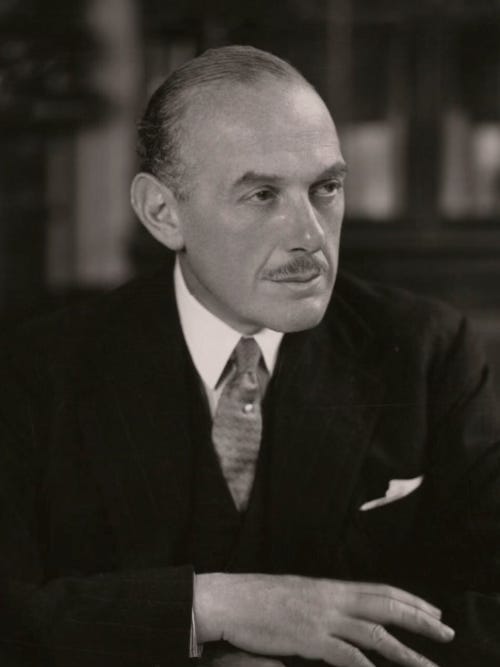
Amongst those raw materials, for example, were metals and not just iron ore, and in Britain, few people in the 1930s understood the myriad and truly international world of metals better than Oliver Lyttelton, a man who was to play a major role in Britain’s war effort but who has been rather forgotten these days. Having survived four years of the last war fighting with the Grenadier Guards and winning a DSO and MC in the process, he had made it home and gone on to forge a highly successful business career. By 1939, he was chairman of the British Metal Corporation, who were, in essence metal merchants, and who under his leadership had become the biggest metal company in the UK. They had further consolidated their position by striking a number of affiliations with continental partners, which had enabled Lyttelton to become a director of the Germany metals firms, Metallgesellschaft and Nordeutsche Raffinerie. This had given him an invaluable picture of the German metal trade, and the importance of non-ferrous metals in any future war. He had learned, for example, that back in 1914, just a few months into the war, the directors of Metallgesellschaft, had been approached by the German General Staff because they were already running out of copper and needed help in finding more. Copper, tin, lead and zinc, were all needed - copper and zinc especially - in times of war, yet Lyttelton understood that the trade in non-ferrous metals was truly international, because no country on the planet was self-sufficient in all.
It was with this in mind, with the tale of the German Staff in 1914 lodged in his mind, that in the spring of 1939 Lyttelton had begun a plan to buy up as much of these all-important metals as possible. As he was well aware, many of the leading mining companies around the world would be worrying about the uncertainty war might bring - would they still be able to ship their metals? Would existing buyers continue to do so? He had already been approached by the Ministry of Supply to become the Controller of Non-Ferrous Metals should it come to war, and so back in March, with the Germans walking into Czechoslovakia, had approached Noranda in Canada, Broken Hill in Australia and others, and begun negotiating. What he was proposing was assured purchases, no matter whether they had the shipping or not, in return for guaranteed quantities at a low price.
Much to his immense frustration, he was unable to galvanise the Ministry of Supply into buying these metals right away, even though he knew Germany had been stockpiling copper – it is not just today that governments could be cumbersome and slow to make decisions. So, although he had personally secured small stocks of nickel, it was not until the outbreak of war that Lyttelton was finally made Controller of Non-Ferrous Metals and given carte blanche to start purchasing. He hoped it would not be already too late. Lyttelton, like most others in Britain, was expecting a German offensive almost immediately; and like others, was hoping the enemy would delay any action for as long as possible.
In the autumn of 1939, Lyttelton was forty-six, and the epitome of the debonair and cultivated Englishman, with his lean features, slicked-back hair and trim moustache. From an aristocratic background, he had been educated at Eton and Trinity College, Cambridge, and had an exemplary war record. Indeed, the war had taught him much: the extremes under which the human body and mind can be placed, the awfulness of the slaughter, the importance of never, ever, giving in. He had been temporarily blinded by gas, had been nearly broken, but somehow had kept going so that when peace finally came, he was amongst an elite of his generation who had fought for almost the entire war and was still standing.
During the war, he had also got to know and befriended a number of key people, from Winston Churchill and Anthony Eden to soldiers now generals in the army. In the intervening years, he had travelled widely, learned everything he could about both modern business and the world of metals and developed an outstanding and international web of contacts, as well as finding time to get married and raise a family. Intelligent, worldly, and imbued with a razor-sharp business acumen, he was one of the key civilians from the business world from which Britain would greatly benefit now that war had come.
And with war declared, and with Lyttelton now Controller of Non-Ferrous Metals, the British Metal Corporation was taken over by the Government and sent to new offices out of London in Rugby in the Midlands. Once installed at Rugby, Lyttelton and his hundred or so staff worked at ‘white heat’ and six weeks later, despite frustrating and unnecessary amounts of red tape from the Treasury, they had secured Britain’s projected requirements. This had been done in precisely the manner Lyttelton had envisaged. The total sum was a staggering £250 million but had come at a fraction of the price per ton for which these metals had been purchased in the previous war.
The pre-war purchase of non-ferrous metals was just one area in which Britain was rapidly preparing for war. Another was air power, which the British viewed as key to future conflict. It also involved far less combatants at the coal-face than the millions of troops dug into trenches that had been such a feature of the previous war. Britain was determined to use ‘steel not flesh’ in any future conflict as far as possible, harnessing technology, science, industry and global reach to reduce the number of young men flung into the firing line. Air power seemed one of the most important means of achieving this.
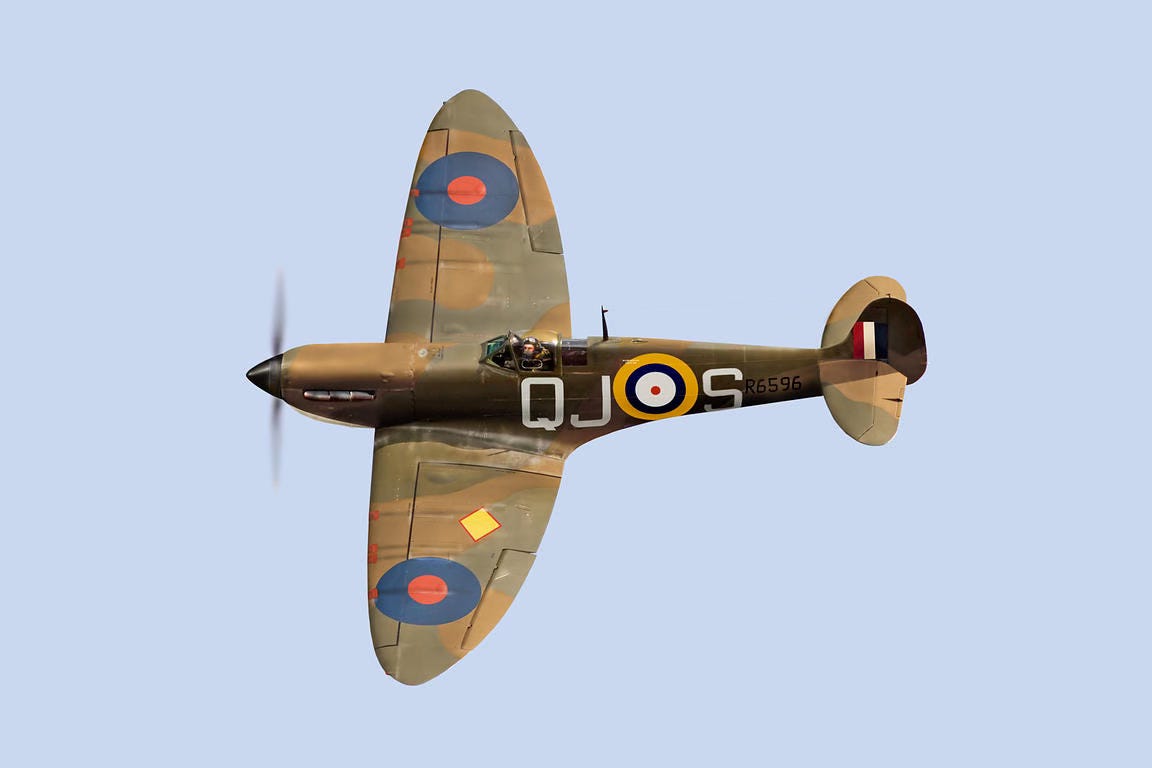
This in turn meant new, modern aircraft and not least state-of-the-art fighter planes to defend Britain’s skies against the expected hordes of enemy bombers that were bound to appear. The contract for a new, modern fighter had been won by Hawker in 1934 but the Air Ministry had had the foresight to issue a second, entirely unique contract to Supermarine for what became the Spitfire. Supermarine, however, was a small company, bought out by the much larger Vickers Aviation in 1928 but which for the next decade had been left largely to its own devices. Only in 1938, with the urgent need to rapidly increase production of the new Spitfire, did Vickers bring it more tightly under the reorganized Vickers-Armstrongs (Aircraft) Ltd.
Already by 1935, Vickers-Armstrongs, which also made a range of other armaments from tanks to machine-guns to warships, was the third-highest manufacturing employer in the UK, after Unilever and ICI. It also remained an entirely private British engineering conglomerate throughout the war until finally being nationalised in the 1960s; it was consumed by what is now BAE. None the less, the British government had the foresight to work hand-in-glove with British industry and even from the early 1930s when Britain was the largest exporter of armaments in the world. This, of course, provided the UK with a huge advantage when it suddenly needed to dramatically improve its own defences; much of the required infrastructure was already there. Much, but nothing like enough. Anticipating the need for massively increased production, the government initiated the shadow factory programme in 1935, when Neville Chamberlain had been Chancellor of the Exchequer. This, it is worth underlining, was at a time when national debt was 135% of GDP; we’re currently at around 93%.
By early 1939, when conscription was brought back but still months before the outbreak of war, new modern factories were already making arms with increased vigour. Sixteen new ordnance factories had been authorised in March 1939 at a time when the United States had just six in the entire country. A further twenty-nine were given the green light in December. Planned spending on arms for 1939/40 was £580 million, approximately half of all government expenditure at that time. More guns, more aircraft, more ships – more war materiel until the world was rid of Hitler and the Nazis. Nor was anyone much complaining. Despite Chamberlain’s concerns about introducing conscription in peacetime, the Munich crisis and the perfidy of Nazi Germany in breaking promises and invading Czechoslovakia in March 1939, persuaded the wider British public that this was an existential threat that needed combating with grim determination. It also helped that the British press was by now completely on board. The ability of the press to manipulate free-thinking democratic populations should never be underestimated.
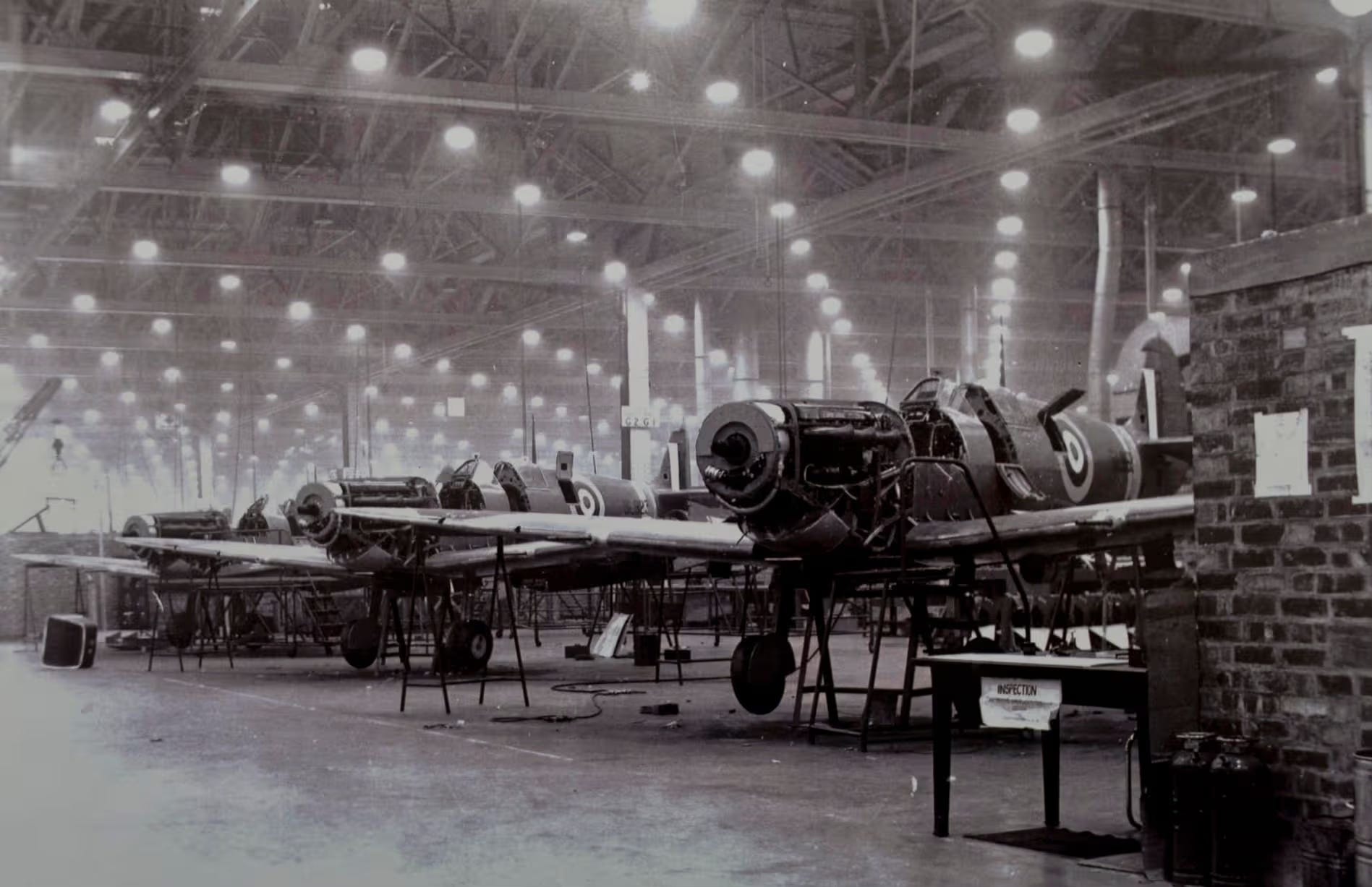
The shadow factories had some teething problems not least because, in time-honoured fashion, the government and civil service had a tendency to give contracts to the wrong people and appointed incompetents to run development projects. So, for example, the automobile magnate, Lord Nuffield, was appointed to oversee the creation of a vast new factory at Castle Bromwich in Birmingham in which it was planned that sixty Spitfires would be rolling off the production line each week by April 1940. Nuffield, the founder of Morris Motors, offered his services and expertise to create the most advanced and dynamic aircraft factory in Britain, claiming he could build four times as many aircraft at his new plant than any other in the UK.
Despite reservations about handing over such a vital undertaking to Nuffield, a known anti-Semite with pro-fascist tendencies, he was still given the task in the kind of circumstances familiar with some of the dodgiest contracts issued by the government during the recent pandemic. The decision proved a fiasco. Although work began in 1938, costs ballooned as designs and layout plans kept changing. By May 1940, not one Spitfire had been built at Castle Bromwich. While plenty of other shadow factories were working very efficiently by this time, it took the creation of the Ministry of Aircraft Production and the appointment of Lord Max Beaverbrook, the Canadian press baron, as the first minister that same month of May 1940 to turn things around. Beaverbrook sacked Nuffield and put his own men in charge. By the war’s end, Castle Bromwich had produced half all the Spitfires produced.
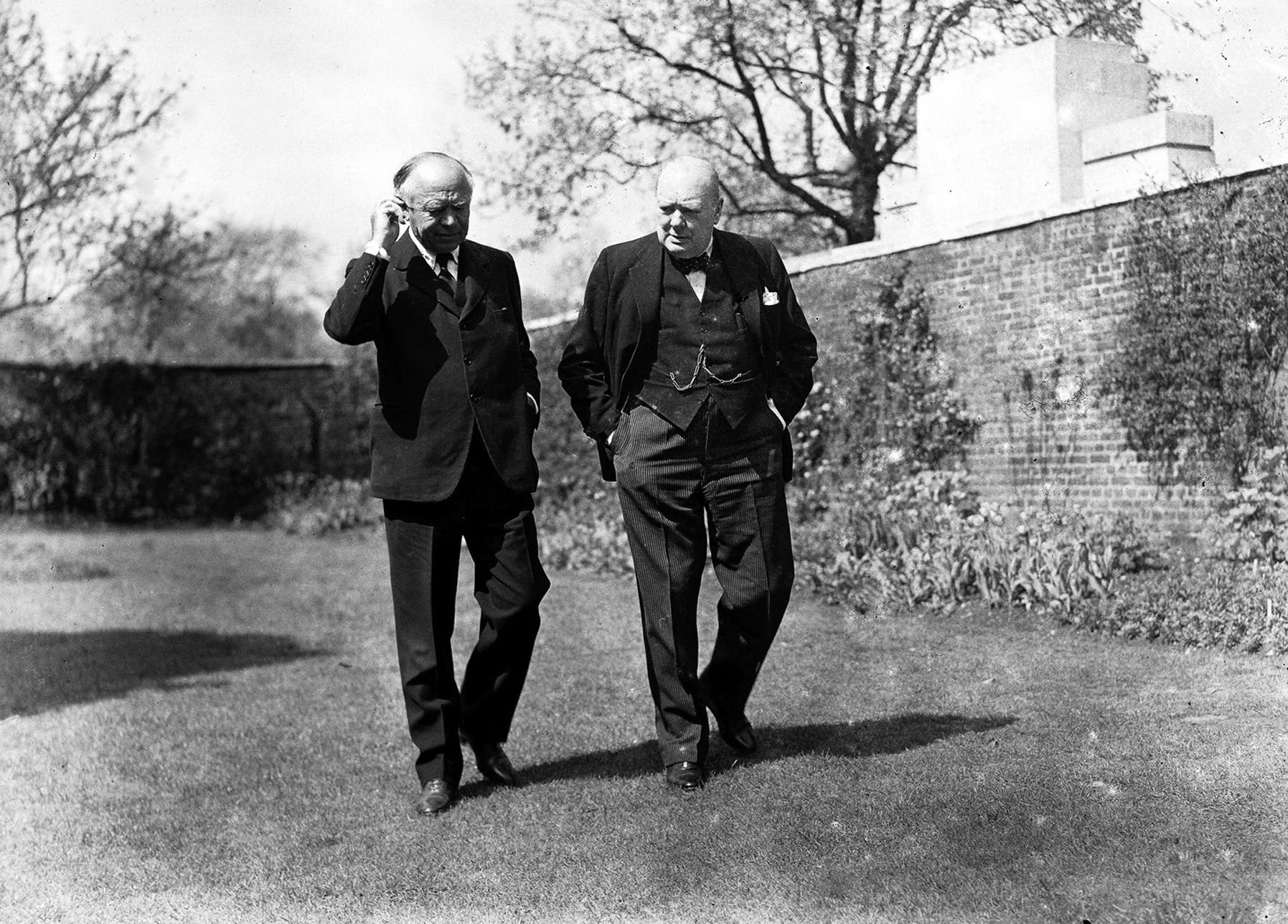
Beaverbrook was a fascinating case of how to harness sound business practices to the task of war production, just as, incidentally, also proved the case during the Covid pandemic. Although he knew a lot about newspapers and the press and very little about aircraft, he brought his no-nonsense business acumen to the task of aircraft production at a vital moment. Key to his approach was streamlining with no more faffing about, no quangos, no buck-passing, and no prevarication through reams of red tape and officialdom. Beaverbrook didn’t like committees. In his office he had two notices. One said, ‘Committees take the punch out of war,’ while the second read, ‘Organisation is the enemy of improvisation.’ The buck stopped with him; he liked to be informed and then he made his decision. Scientists, businessmen, industrialists – men he respected and trusted – were all brought in and given loose job titles. ‘They are all captains of industry,’ Beaverbrook explained, ‘and industry is like theology. If you know one faith, you can grasp the meaning of another.’ There was little hierarchy and he used his force of personality and closeness to the new Prime Minister, Winston Churchill, to cut through red tape. Bottlenecks were solved not by sending letters but by making phone calls, or, if that didn’t solve it, sending one of his team to head to the trouble and sorting it out on the spot.
In a matter of weeks, aircraft production had risen exponentially; so too had the processing of damaged aircraft. Supply chains had been quickened, wastage got rid of, and a new sense of fire and purpose put into the workforce, who were expected to work, collectively, 24-7, but were rewarded for doing so. By the end of June 1940, aircraft production had increased to 300 per week, while by the same time 250 aircraft had been repaired and sent back to squadrons. Within a month, Beaverbrook had increased aircraft production by 62%, new engines by 33% and repaired aircraft by a staggering 186%. Germany produced more aircraft in the years 1934-1938, but there was parity in 1939 and by 1940, Britain had eclipsed Germany, a trend that would continue throughout the war. Overall, Britain built 132,500 aircraft during the war, around 50,000 more than Germany. It was an astonishing turn-around but played to an essential truism: that Britain had the means, capacity, workforce and motivation to do what was needed. That potential had simply needed unlocking.
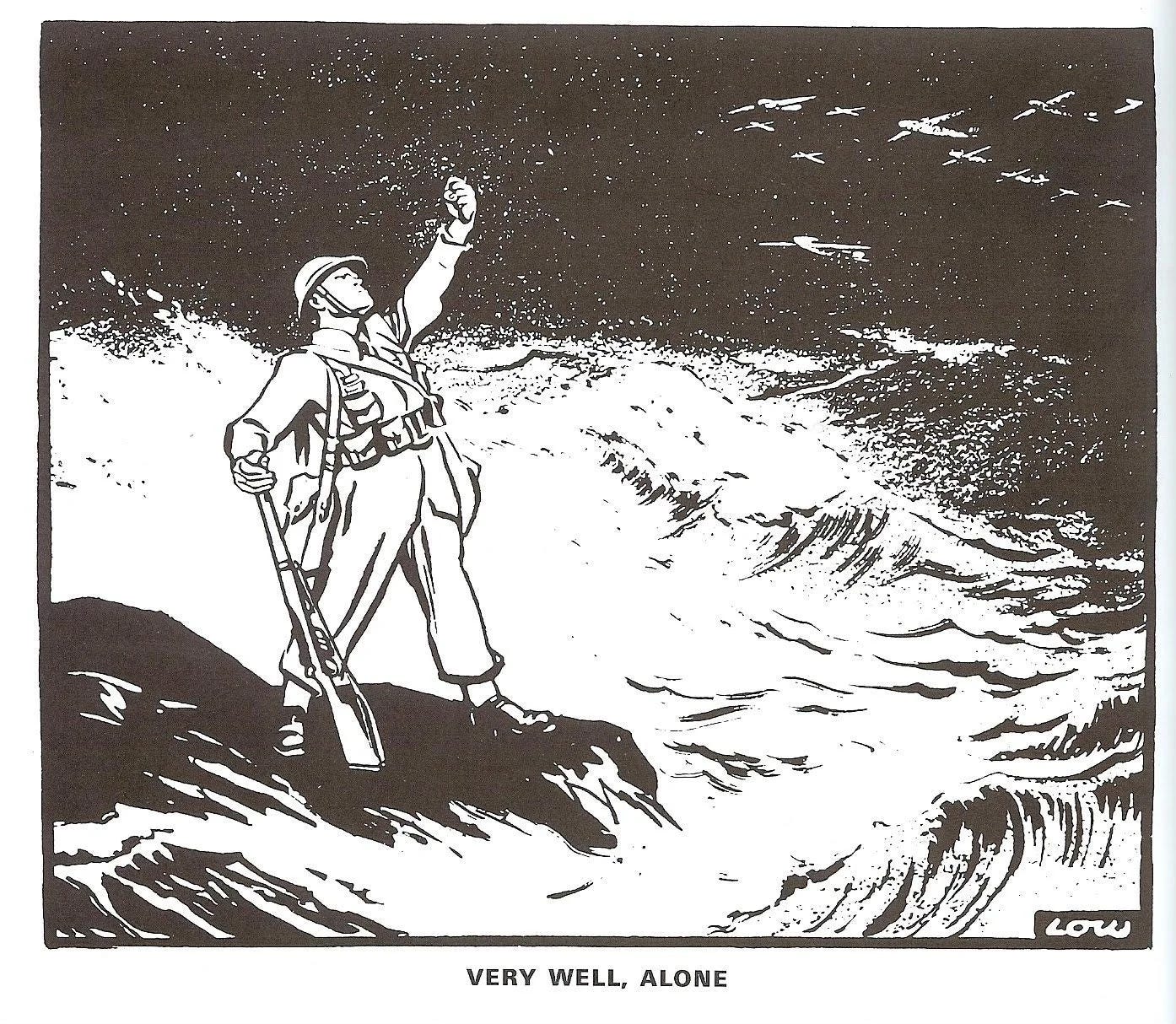
Britain was fighting on alone in Europe following the fall of France and did continue to fight alone alongside its dominion nations and empire right up until the end of 1941, albeit with brief forays on the Allied side from Yugoslavia and Greece. That it was able to do so and continue to play a major and decisive role right to the very end of the war was in no small part down to its preparation before war broke out. The British Government worked in tandem with private businesses, making the most of its global reach, immense shipping assets and a labour force still reeling from the Great Depression of the first part of the decade. As Britain proved in the late 1930s, being in a state of economic stagnation actually helped kick-start meaningful and dynamic rearmament because the labour force – in fact, the entire nation – was primed for the kind of single-minded purpose and possibilities for jobs such expansion offered.
The war production problems facing the British government before and during the war were immense. Before the war, armaments production had to sit alongside civilian production and the rate at which the former superseded the latter was not an easy matter to resolve. There was also, as now, a shortage of skilled labour, which then had to be both recruited and trained. The fall of France in June 1940 meant that Britain no longer had an ally with a large army; so much of Britain’s war production strategy had lain with aircraft but this now had to be amended to factor in the creation of a sizeable army too. Yet, Britain met that challenge and not only saved democracy in the UK but helped defeat its enemies and secure liberty and freedom throughout much of the western world.
The lessons are, I hope, all too obvious. Britain needs to act now. A year ago, during the 80th anniversary commemorations for the end of the Second World War in Europe, I interviewed the Prime Minister along with my great friend and podcast partner, Al Murray. The first thing Sir Keir Starmer told us was that defending the people of Britain was the number one responsibility of the Prime Minister. Yes – absolutely. Since then, very little has happened. Defence spending has not increased, there have been no dramatic defence projects, no rallying cry to motivate the nation nor any sign at all that the long-winded and cumbersome procurement process has been overhauled. The cables that flow from this country into the North Sea and which handle 99% of our daily data, financial and otherwise, remain largely unprotected. It’s not good enough.
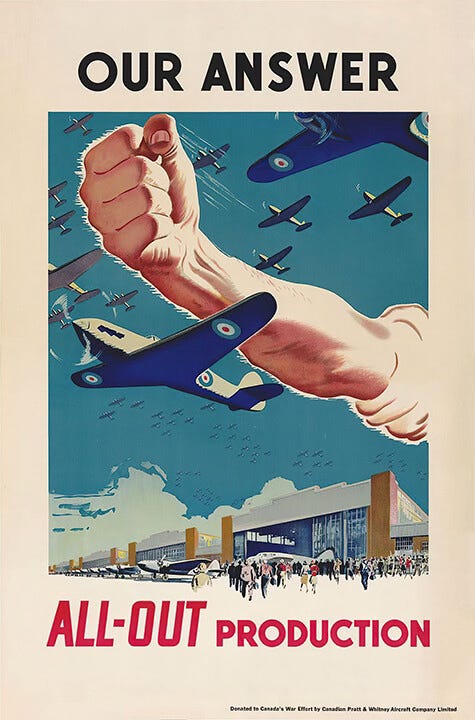
Chamberlain and the Conservative government of the second half of the 1930s have been routinely condemned ever since for not reacting to the threat of Nazism and fascism soon and for only slowly waking up to rearmament. Should those cables be cut or we find ourselves on the receiving end of a strike by our enemies how will history judge this government and the ones that preceded it? Very, very badly. The way to ensure our enemies are not emboldened is to have a strong defence ourselves. Deterrence is the best safeguard of peace.
Why are we being so complacent? There is a lack of enterprise at present. A lack of vision. Frankly, a lack of anyone able to sell anything like an enlightened and hopeful vision. People are tired of the Westminster elites because they all say the same thing, no matter which party is in government and all are defined by an apparent inability to sell a dynamic message of hope and inspiration. The current dire state of the UK’s defences are not remotely unsolvable. Rather, there are clear solutions that can and should aid economic growth. Many of the current issues – an unsustainably bloated welfare, lack of defence, appalling youth unemployment, a deep suspicion of a cumbersome and ineffective civil service – especially in the Treasury and MOD - and a general malaise that appears to be playing into the hands of political extremes, can all be solved by a focussed drive towards one primary aim: to make Britain safe from its enemies. If the government won’t instigate this, perhaps private industry will have to lead and humiliate them into action instead.
No posts
Comments
Nothing yet. Say the first thing.
Sign in to join the conversation.