
England’s World Cup defeat showed how quickly an elite coach’s judgment becomes a public verdict. Research suggests that the best pressure decisions are built through pattern recognition, preparation and collective intelligence, but even experts remain vulnerable to fear, bias and hindsight.
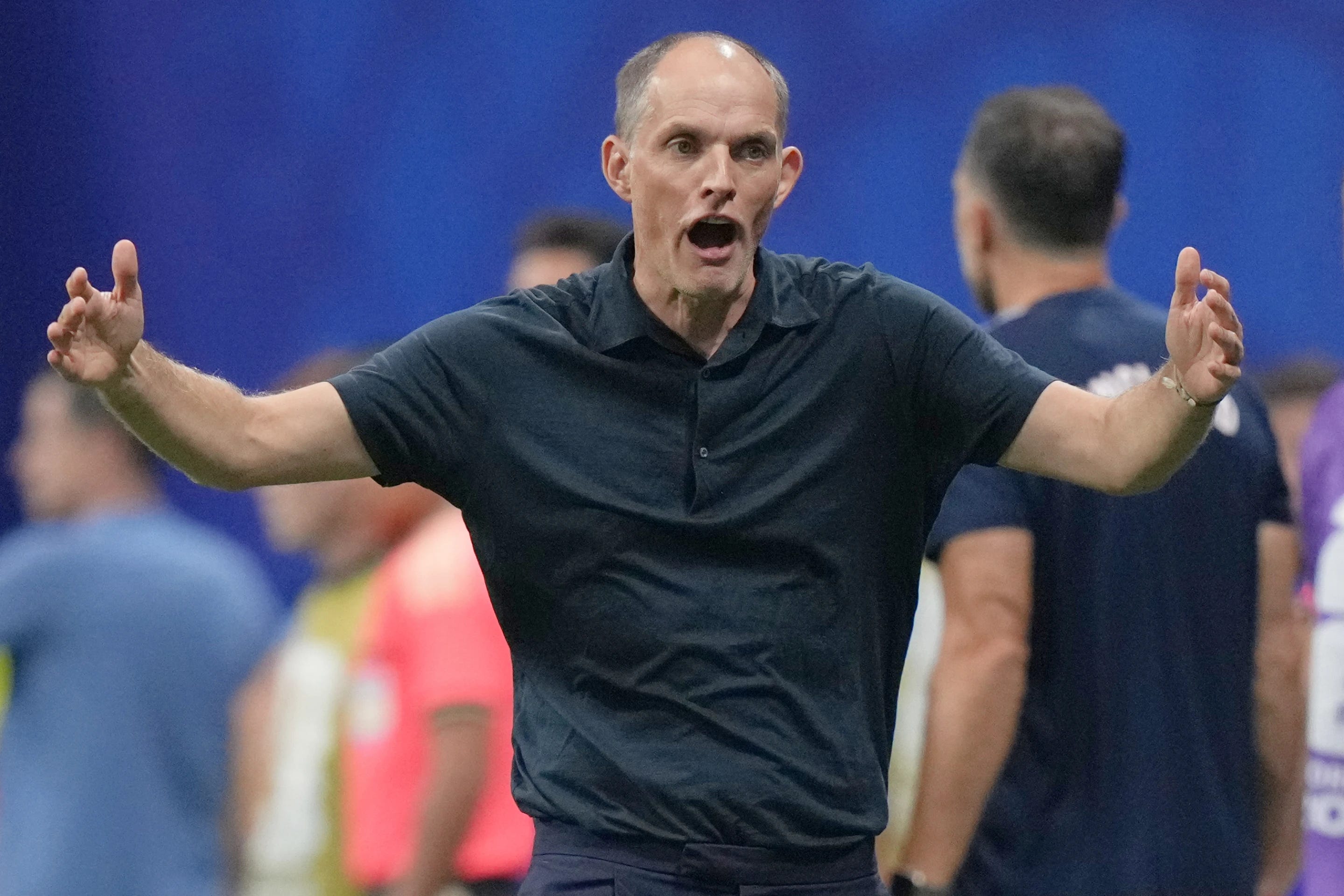
By the time Spain lifted the World Cup on Sunday night, England’s semi-final defeat to Argentina had already been converted into a simple story.
England had led 1–0. Thomas Tuchel had made defensive changes. Argentina had taken control and scored twice. The manager had become too cautious at precisely the moment courage was required.
It is an emotionally persuasive account. It may even be correct. But it benefits from one enormous advantage that Tuchel did not possess when he made the decisions: knowledge of what happened next.
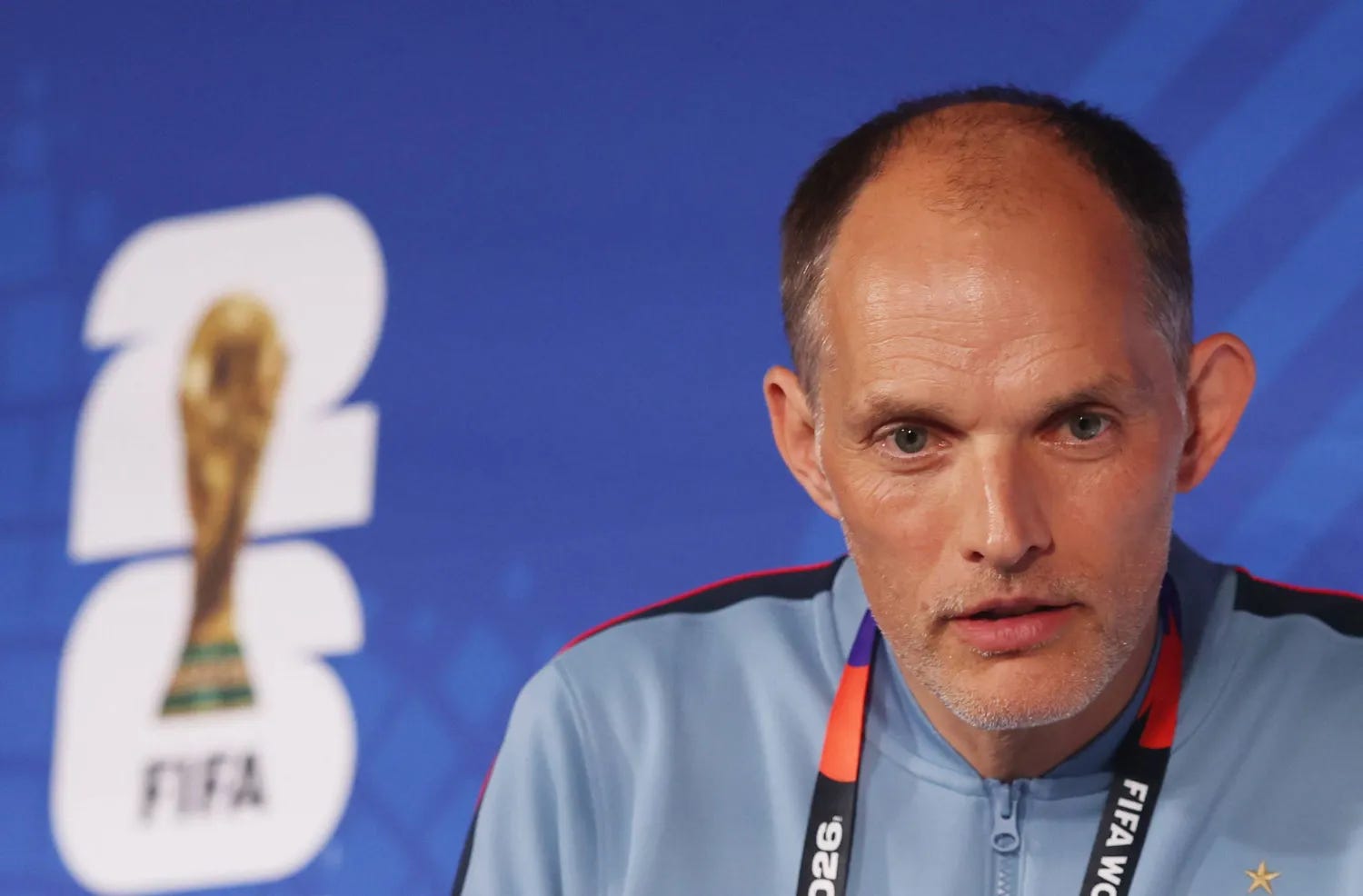
After the defeat, Tuchel said he had acted by “trusting my instinct, my intuition, my experience.” He insisted he did not regret intervening when he felt England had become too passive.
His defence raises a more interesting question than whether one substitution was right or wrong.
How do elite coaches actually make decisions when time is disappearing, information is incomplete and millions of people will judge the choice by its outcome?
The popular answer is that great coaches remain calm and trust their gut. The research suggests something more complicated.
Elite coaches do not escape pressure. They build systems that help them operate inside it.
Suppose England had survived the final minutes and reached the World Cup final.
The same tactical changes might have been described as disciplined game management. Tuchel’s experience would have been praised. His willingness to sacrifice aesthetics for the result might have been presented as the ruthlessness England had previously lacked.
Because Argentina scored twice, those decisions became evidence of cowardice.
Psychologists call this outcome bias: the tendency to evaluate the quality of a decision according to how it turned out, rather than according to the information available when it was made. In the foundational experiments by Jonathan Baron and John Hershey, people rated otherwise identical decisions differently when told that one produced a good outcome and the other produced a bad one.
Football intensifies this bias because the outcome is immediate, emotional and public. Every substitution produces a counterfactual team containing the player who stayed on, the attacker who might have entered or the formation the manager might have retained. None of those alternatives can be replayed under identical conditions.
Tuchel was right about one thing: nobody knows what a different substitution would have produced.
But that does not mean every decision is equally defensible. Uncertainty should prevent simplistic judgment, not eliminate accountability.
The correct question is not merely, “Did it work?”
It is: Given what the coach knew at that moment, was the reasoning sound?
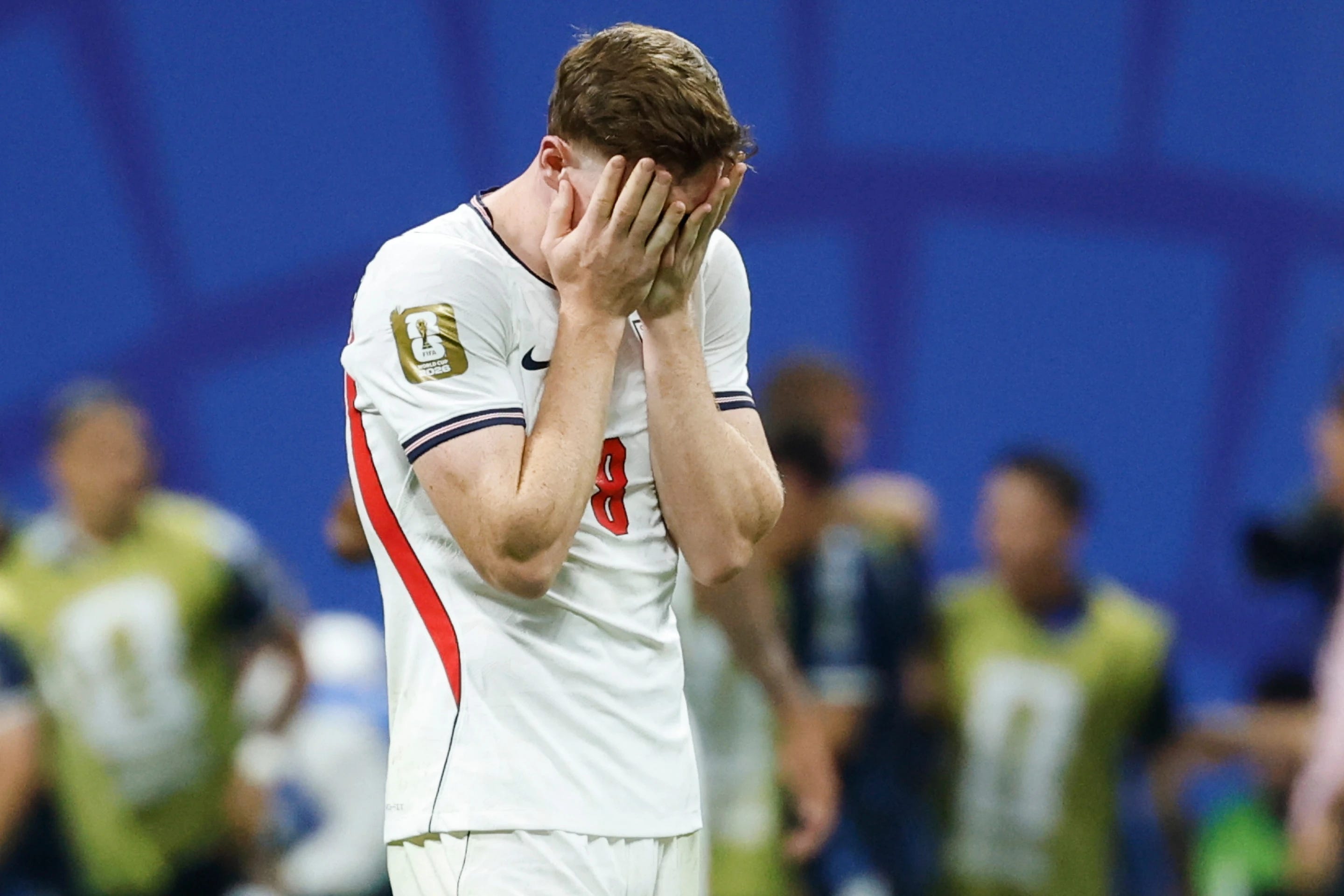
Pressure is often treated as an emotional state. In practice, it is also an information problem.
A coach in a World Cup semi-final must simultaneously interpret the opponent’s structure, the physical condition of his players, the score, the remaining time, the referee, the emotional state of the team and the likely consequences of every intervention.
Anxiety competes for the same finite attention required to process those signals.
Attentional Control Theory, developed by Michael Eysenck and colleagues, proposes that anxiety weakens efficient goal-directed attention and increases the influence of stimulus-driven attention. Put simply, the mind becomes more vulnerable to whatever appears most threatening or immediately noticeable.
For a coach protecting a lead, that might mean seeing every opposition attack as evidence that greater defensive protection is required. For a coach chasing a game, it might mean reacting to the scoreboard while overlooking the structural reasons the team is failing to create chances.
The pressure is not contained inside the manager.
A study involving interviews with 12 world-class coaches found that coaches experienced significant psychological reactions to stress and believed their negative responses could be projected onto their athletes. Detailed planning and preparation were among the coping strategies they described.
That projection can happen through body language, hurried instructions, emotional volatility or sudden changes that communicate fear to the team.
The coach therefore has two jobs under pressure. The first is to interpret the match. The second is to prevent his own reaction from becoming another problem the players must manage.
The image of the elite coach calmly calculating every possible option is largely fictional.
In fast-moving environments, experts frequently do not compare a long list of alternatives. They recognise a pattern.
Gary Klein’s research into naturalistic decision-making, originally developed through work with professionals such as fireground commanders, led to the Recognition-Primed Decision model. An expert notices familiar cues, identifies a plausible response and mentally simulates whether it is likely to work. If it appears workable, the expert acts rather than searching indefinitely for an optimal alternative.
A review of naturalistic decision-making in sport describes three broad processes. In a familiar situation, an expert may quickly match the pattern with an appropriate response. In a less familiar situation, the expert must diagnose what is different. In other cases, the expert mentally evaluates a proposed action before committing to it.
Recent research has applied this directly to football coaching.
A study of 11 high-level coaches examined how they responded to scenarios including a sending-off and chasing a game. Under intense time pressure, such as a red card, the coaches relied more heavily on existing mental models and schemas. When time pressure was lower, they gathered more information from the match before choosing an action.
This is what experienced intuition often is: not magic, but compressed analysis.
A novice sees 22 players moving at once. An elite coach may see a familiar overload, a broken pressing trigger, an isolated full-back or a midfield player who can no longer cover the required space.
Expertise reduces the apparent complexity of the situation by separating meaningful cues from noise.
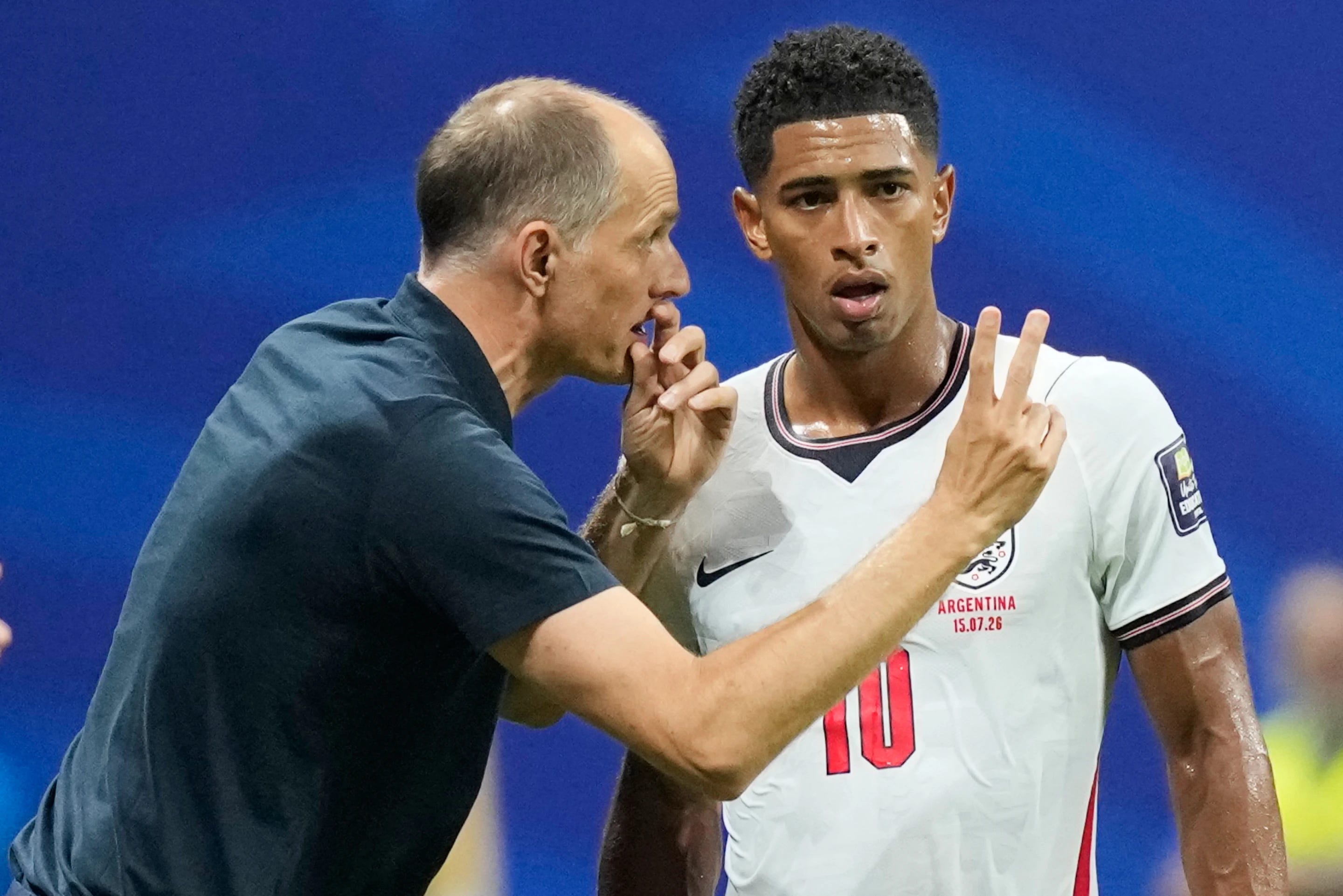
But intuition is not automatically reliable because it belongs to an expert.
Daniel Kahneman and Gary Klein, scholars associated with very different views of intuitive judgment, agreed on two essential conditions for genuine intuitive expertise.
The environment must contain patterns that are sufficiently regular to be learned. And the decision-maker must have substantial practice accompanied by reasonably accurate feedback.
Football provides some of those conditions. Coaches repeatedly encounter familiar game states, tactical structures and player behaviours.
It also contains noise.
A coach may make a structurally intelligent change that fails because of an individual error, a deflection or a moment of exceptional opposition skill. Conversely, a poor tactical intervention can be rescued by a brilliant finish.
The feedback is fast, but it is not always clean.
Elite coaches are selected through relentless competition. They are highly experienced, heavily incentivised and supported by more data than any previous generation.
They can still make systematically conservative decisions.
Economist David Romer demonstrated this using the NFL. His study examined fourth-down choices and found clear, statistically significant departures from the decisions that would maximise teams’ chances of winning.
One situation was especially striking. On fourth-and-goal from the opponent’s two-yard line early in the game, Romer estimated that attempting a touchdown rather than kicking could increase the probability of winning by approximately three percentage points. Yet the teams in his sample kicked on all nine occasions.
American football is not association football, and Romer’s precise calculations cannot be imported into a World Cup semi-final. The broader lesson does transfer: elite decision-makers can favour conventional, defensible choices even when more aggressive decisions offer greater expected value.
Why?
Because coaches are not judged symmetrically.
When a manager takes an unusual risk and loses, the decision itself becomes the story. When the manager follows convention and loses, the players, execution or circumstances may absorb more of the blame.
This creates a dangerous incentive: minimise the chance of looking irresponsible rather than maximise the chance of winning.
It would be too easy to declare that this explains Tuchel’s decisions. England had travelled extensively, played extra time in oppressive conditions and appeared to be tiring. Greater protection may have been a rational response to the information available.
But elite coaches should ask themselves an uncomfortable question:
Am I responding to the match, or am I responding to the anticipated criticism if an aggressive choice fails?
The two can feel identical in the moment.
Preparation does not tell a coach exactly what will happen. It reduces the number of decisions that must be invented from nothing.
A team can prepare for playing with 10 men. It can define what happens if it leads with 15 minutes remaining, if the opponent changes shape or if a key player is unable to fulfil his defensive role.
These preparations resemble what psychologists call implementation intentions: if–then plans that link a recognisable situation to a preselected response.
A meta-analysis of 94 independent tests found that forming implementation intentions improved goal attainment by helping people initiate action and protect their plans against competing demands.
In coaching terms:
If the opponent moves its winger inside, then our full-back passes responsibility to the holding midfielder.
If we lose a central defender, then we move immediately into the rehearsed 4-4-1 structure.
If our press stops producing regains and begins exposing midfield, then we drop to the predetermined line.
If a player’s physical output falls below the role’s requirement, then the replacement is already prepared.
The purpose is not to make the coach rigid. It is to preserve cognitive capacity for the genuinely novel parts of the problem.
There is also evidence that pressure itself can be trained.
In experiments involving expert basketball and darts performers, Raôul Oudejans and Jeroen Pijpers found that athletes who practised while experiencing anxiety were subsequently better able to maintain performance under anxious conditions.
Those studies concern performers executing physical skills, not head coaches making tactical decisions. The underlying principle is nevertheless useful: practising the technical task without reproducing any of its emotional demands may leave the person underprepared for the environment in which it matters.
For a coaching team, pressure training could include:
timed tactical scenarios;
deliberately incomplete or conflicting information;
simulations involving injuries or dismissals;
staff disagreement under a fixed decision deadline;
hostile scorelines and changing game states;
rehearsing concise communication when the original plan has failed.
Teams spend enormous time preparing players for match pressure. They should also prepare the people who must make decisions for them.
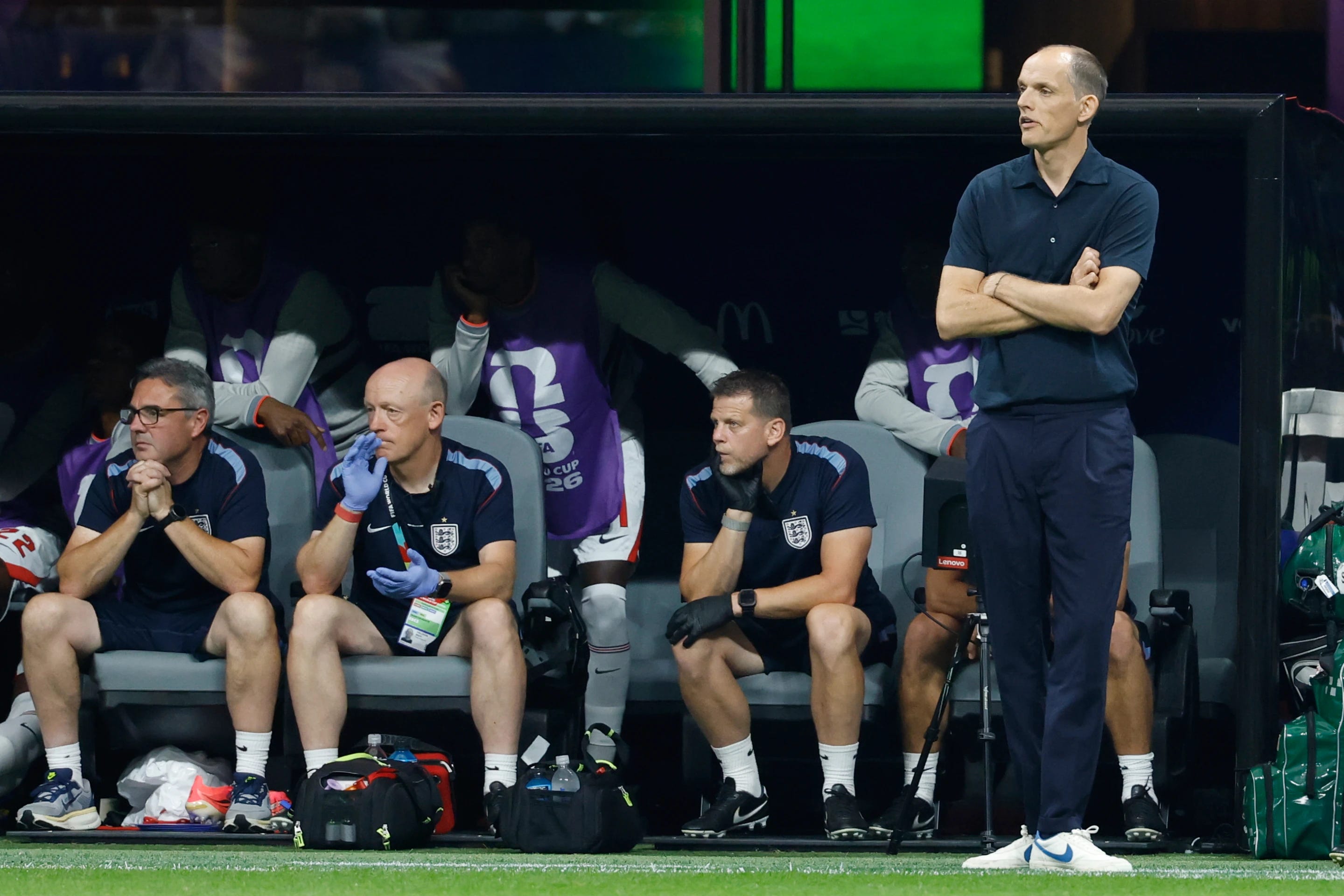
The cultural image of coaching remains centred on the lone genius: the manager sees something nobody else sees and changes the game.
Modern elite coaching is increasingly a distributed decision system.
Assistant coaches, analysts, medical staff and performance specialists observe different parts of the same match. One may monitor the opponent’s build-up. Another watches the team’s defensive distances. Medical staff assess whether a player is physically capable of continuing. Analysts determine whether an apparent pattern is persistent or merely memorable.
The head coach’s advantage should not be that he possesses every relevant piece of information. It should be that he has designed a system capable of surfacing the most important information at the correct time.
That requires more than agreeable assistants.
A high-quality decision team needs role clarity, concise communication and permission to challenge the dominant interpretation. It may need someone explicitly tasked with asking:
What evidence contradicts our diagnosis?
Is the problem structural, physical or emotional?
Are we reacting to one dramatic incident or a repeated pattern?
What will the opponent do if we make this change?
What evidence would cause us to reverse it?
The recent study of high-level football coaches found that coaches integrated information from multiple sources to construct their mental models of the match. It also acknowledged how little direct research still exists on coaches’ cognition during live competition.
That limitation matters. Confident claims about exactly how great managers think often rest more on retrospective interviews and mythology than direct observation.
The strongest conclusion available is not that elite coaches use one superior decision style. It is that they can switch modes: recognising familiar patterns quickly, gathering information when time permits and escalating to deeper analysis when the situation is genuinely novel.
After defeat, coaches face two opposite dangers.
The first is to rewrite the decision as obviously foolish because the outcome was painful.
The second is to defend the decision so completely that reflection becomes impossible.
A high-quality review separates four things:
The diagnosis: What did we believe was happening?
The decision: What response did we choose, and why?
The execution: Did the team carry out the instruction effectively?
The outcome: What happened, including events outside our control?
A good process can produce a bad outcome. A bad process can produce a victory.
Elite organisations must learn from both.
For Tuchel and England, the serious questions are not whether social media approved of the substitutions or whether a different formation can now be imagined.
They are whether England correctly diagnosed the growing pressure, whether the changes addressed its causes, whether the players understood their altered responsibilities and whether the coaching team had defined the conditions under which it would regain attacking ambition.
“No regrets” can be a healthy refusal to indulge counterfactual theatre.
It cannot become immunity from examination.
Executives are fond of borrowing sporting language. They should be careful about borrowing sporting intuition.
Elite coaches operate in an environment with repeated situations, visible competitors and relatively rapid feedback. Many business decisions, including senior hiring, market entry, brand positioning and transformation strategy, have slower, noisier and more ambiguous outcomes.
A football coach may encounter variations of the same pressing structure hundreds of times. A chief executive may oversee only a handful of acquisitions in an entire career.
The transferable lesson is therefore not “trust your gut.”
It is to build the conditions that make judgment better:
define likely scenarios in advance;
identify the cues that matter;
establish if–then responses where appropriate;
distinguish reversible from irreversible decisions;
create genuine challenge around the decision-maker;
rehearse under realistic pressure;
record expectations before the outcome is known;
review the reasoning separately from the result.
I write this as a lifelong England supporter. I love my country, and every tournament, however painfully it ends, becomes another shared memory and another roller coaster of emotion.
Watching England beat Mexico 3–2 at the Azteca after a 2am kick-off will remain one of my golden memories of this World Cup. That is why the defeat to Argentina hurt so much. It is also why the decisions made that night deserve more than the easy certainty of hindsight.
England’s defeat will remain painful because international football offers so few opportunities to correct the record.
But that scarcity is precisely why the judgment must go deeper than “the substitutions failed.”
The defining skill of an elite coach is not predicting the future with certainty. It is acting intelligently before the future becomes available, then learning honestly once it does.
Great coaches do not eliminate uncertainty under pressure. They prepare themselves, their staff and their teams to make better decisions without that luxury.
Baron, J., and Hershey, J. C. (1988). “Outcome Bias in Decision Evaluation.” Journal of Personality and Social Psychology, 54(4), 569–579.
Eysenck, M. W., Derakshan, N., Santos, R., and Calvo, M. G. (2007). “Anxiety and Cognitive Performance: Attentional Control Theory.” Emotion, 7(2), 336–353.
Olusoga, P., Butt, J., Maynard, I., and Hays, K. (2010). “Stress and Coping: A Study of World Class Coaches.” Journal of Applied Sport Psychology, 22(3), 274–293.
Klein, G. (2015). “A Naturalistic Decision Making Perspective on Studying Intuitive Decision Making.” Journal of Applied Research in Memory and Cognition, 4(3), 164–168.
Bossard, C., Kérivel, T., Dugény, S., Bagot, P., Fontaine, T., and Kermarrec, G. (2022). “Naturalistic Decision-Making in Sport.” Frontiers in Psychology, 13, 936140.
Elstak, I., Salmon, P., and McLean, S. (2026). “Naturalistic Decision-Making of Football Coaches.” International Journal of Sports Science & Coaching, 21(3), 1311–1323.
Kahneman, D., and Klein, G. (2009). “Conditions for Intuitive Expertise: A Failure to Disagree.” American Psychologist, 64(6), 515–526.
Romer, D. (2006). “Do Firms Maximize? Evidence from Professional Football.” Journal of Political Economy, 114(2), 340–365.
Gollwitzer, P. M., and Sheeran, P. (2006). “Implementation Intentions and Goal Achievement: A Meta-Analysis of Effects and Processes.” Advances in Experimental Social Psychology, 38, 69–119.
Oudejans, R. R. D., and Pijpers, J. R. (2009). “Training With Anxiety Has a Positive Effect on Expert Perceptual-Motor Performance Under Pressure.” Quarterly Journal of Experimental Psychology, 62(8), 1631–1647.
Reuters (18 July 2026). “England Manager Tuchel Has No Regrets Over Semi-Final Decisions.”
England Football (6 July 2026). “Mexico 2–3 England: FIFA World Cup Match Centre.”
Comments
Nothing yet. Say the first thing.
Sign in to join the conversation.