
DoorDash published something recently that the design community hasn’t stopped talking about.
Designers shipping production code. Learning Swift. Pushing features directly into the app.
And everyone’s asking the same question: do I need to learn to code now too?
I want to offer you a different question entirely.
Because I read the same article.
And I don’t think code is the point.
Do you think shipping the thing is more important than knowing what to ship?
Sit with that for a second.
Because here’s what nobody’s talking about:
AI hasn’t just made building faster. It’s made shipping the wrong thing faster too.
When building was slow and expensive, bad decisions had a natural speed limit. You’d catch the mistake somewhere in the process. Now? You can build, ship, and scale the wrong thing in a week. AI is so accessible that the cost of a bad decision has never been higher, and it compounds faster than ever.
Shipping the wrong thing, or shipping many of them without clarity, burns more resource than it ever did before.
But knowing what to build?
That’s an entirely different conversation.
That’s the skill that sits at the front of every decision, before a single line of code gets written, before a single frame gets designed. It’s product sense. It’s judgment. It’s knowing which bet is worth making for this business, right now.
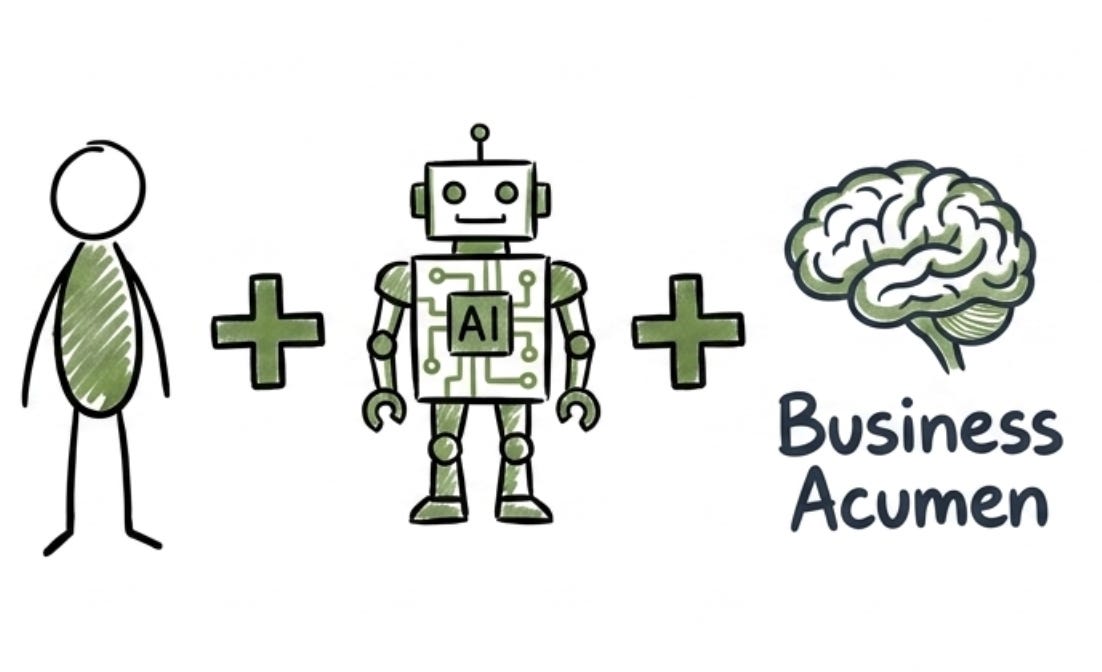
Everyone’s racing to learn the next AI tool. New titles every quarter.
“Design engineer.”
”Creative technologist.”
”Product builder.”
If you see through the noise👀…
the people thriving right now, not freaking out, aren’t the ones building fastest.
They’re the ones who can walk into a room and explain:
what to build, what it’s worth, and why it had to be this.
Here’s where the industry is actually heading:
The roles are shifting right in front of our eyes:
💼 PM → to build
🎨 Designer → to decide
⚙️ Engineer → to evaluate
🚀 Founders → to make it happen
The question isn’t what’s your title? anymore.
It’s “can you own the full decision cycle?”.
So what did Ruolan actually build?👀
She didn’t learn Swift to replace engineers.
She learned it to close the gap between her design intent and what actually shipped. To see the full chain. To develop the judgment that only comes from following a decision all the way through.
That’s the blueprint. Not the code.
The judgment.
And here’s the part I want you to sit with:
AI can now do most of the building. The execution, the code, the iterations, all of it is increasingly within reach without deep technical expertise.
So if the building is being handled, what’s left for you?
The decision about what to build in the first place. Whether it’s the right call for this business. Whether the output in front of you is actually worth shipping.
That judgment is yours to own.
AI can guide you through developing it, step by step.
Same title. Often the same years of experience.
One is worried about their job. One is getting promoted.
The difference isn’t talent. It’s which skills they’ve invested in.
The designer who built their identity around making things — producing screens, generating options, building specs — is watching AI absorb that work in real time. The craft was real. The years were real. But the market value of that execution is dropping fast.
The designer who built their identity around knowing what to make and why it matters is being unlocked. AI handles the velocity. They handle the direction. 🎯
The skills that compound in this era:
Strategic framing: knowing which problem is worth solving before anyone asks
Business fluency: connecting design decisions to outcomes the business is measured on
Output judgment: knowing when the thing in front of you is actually right, regardless of how it was made
None of these are taught in design school. Almost nobody is teaching them anywhere.
But they’re learnable. And with AI as your guide, it’s more accessible than you might think.
I’ve been bugged by this for a while. And I know a lot of you feel the same way.
Simon Hilton (Executive AI Leader @MYOB) and I are running a free 45-minute session on exactly this, with open Q&A:
🥁 FREE LIGHTIN’n SESH: What to Build and Why: The Only Skill That Survives AI
In this session we’ll cover:
Why business acumen compounds while tool skills commoditise
How to identify what’s actually worth building before you build it
The skill stack that lets you scale yourself regardless of your title
Behind-the-scenes processes we use to cut through the noise
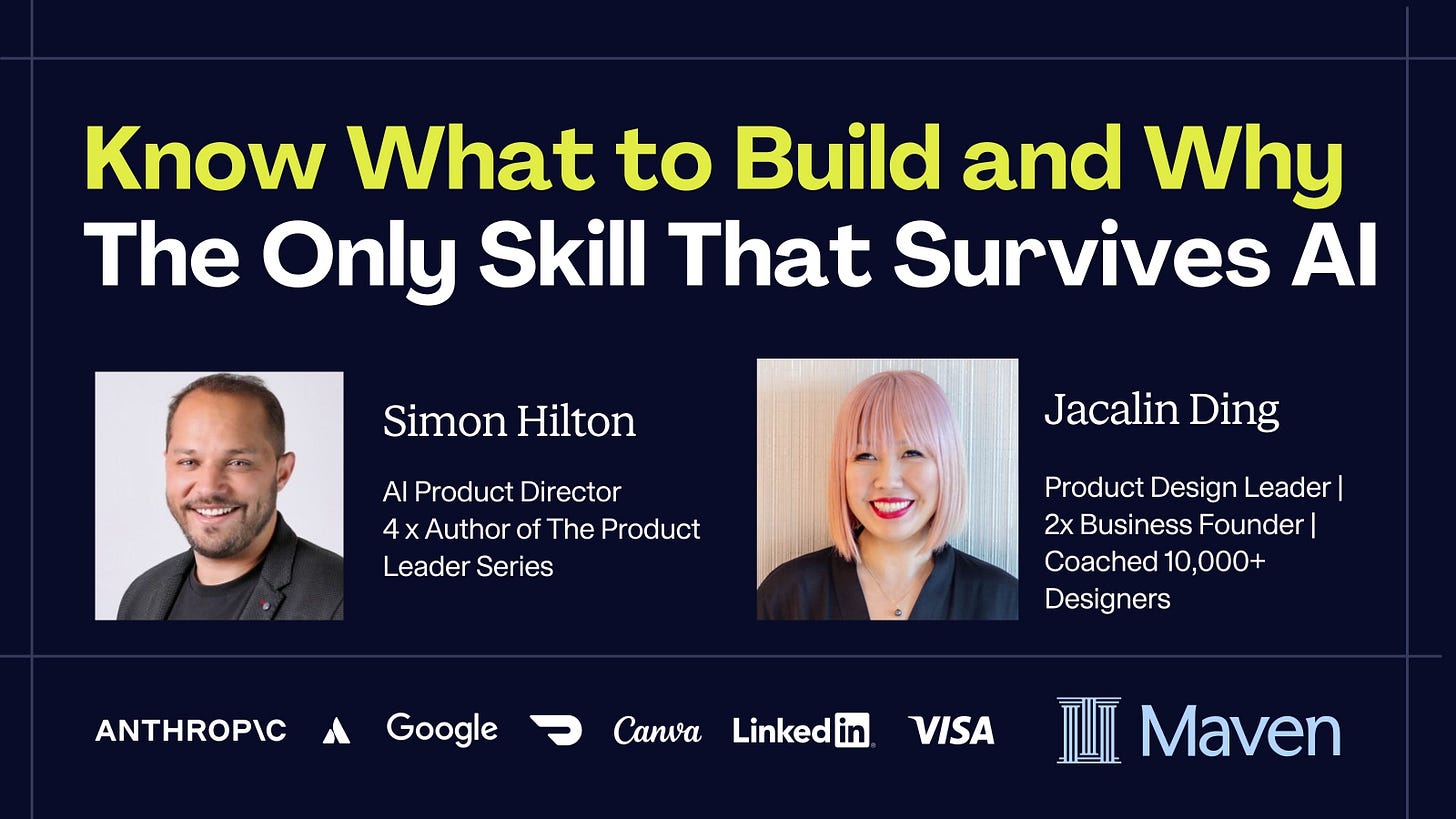
Can’t make it live? Add your email and we’ll send you the recording.
Bring a friend who needs to hear this.
See you there.
Jac
Source: DoorDash Design — Darren Delaye & Ruolan Xia — https://medium.com/design-doordash/how-designers-at-doordash-are-becoming-builders-c08386315b92

🥁 How can I help you:
–
Future-Proof your design career by building Business Acumen and Product Sense:
AI-Powered Strategic Design Accelerator (4 weeks)
Top 7th Design Course on Maven
Take $100 Off: DoYourThing
—
NEW - Claude Code AI - Product & Design Velocity (2 weeks)
Build faster. Decide smarter. Ship with intent.
From finding the right opportunity to an on-brand product to defending your decisions under real pressure.
collaboration with Simon Hilton (AI Product Executive @MYOB)
50% Kick Off Cohort Code: 50BETA
No posts
Comments
Nothing yet. Say the first thing.
Sign in to join the conversation.