
Milan often meets you while your hand is still wrapped around the handle of a suitcase.
You arrive beneath the enormous roof of Centrale, find the board for Varenna, and buy an espresso because the next train leaves in twelve minutes. Perhaps you notice the stone, the noise, the people moving with alarming purpose.
Perhaps you do not.
Lake Como is waiting, and Milan has been assigned its usual role: airport, railway junction, useful inconvenience.
Before Milan has done anything wrong, the itinerary has already decided what kind of place it is.
This is how the Milan apology tour begins.
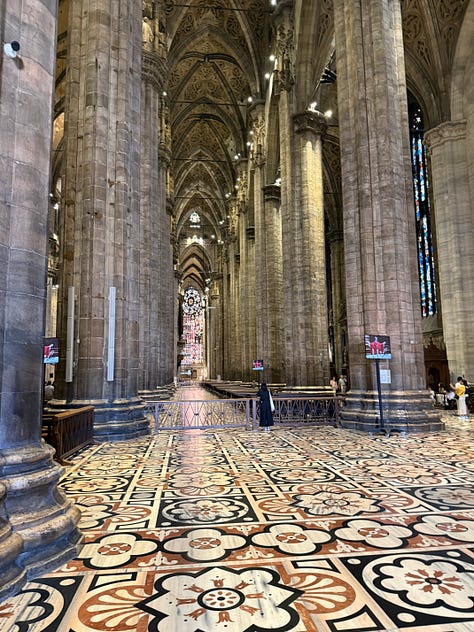
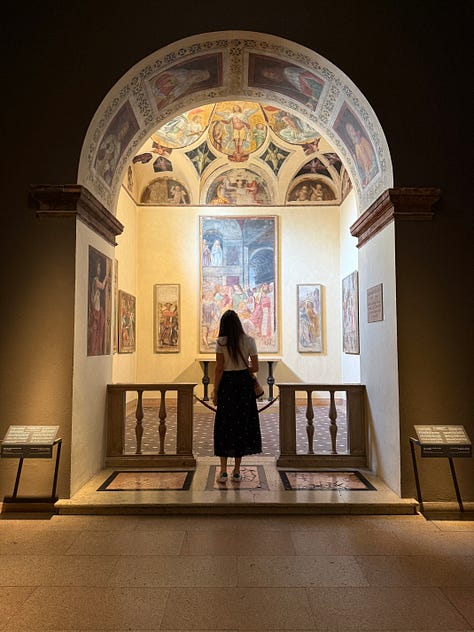
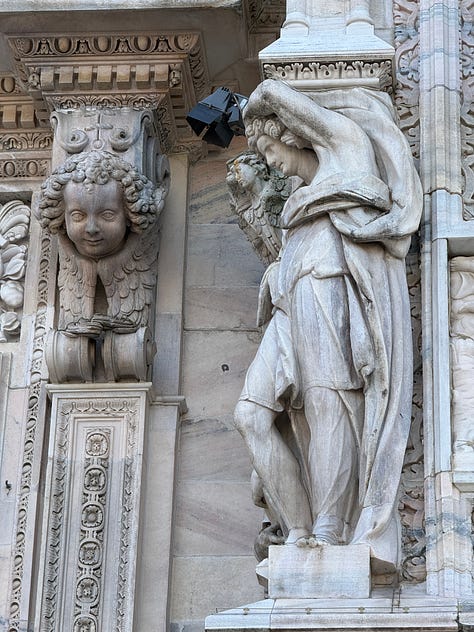
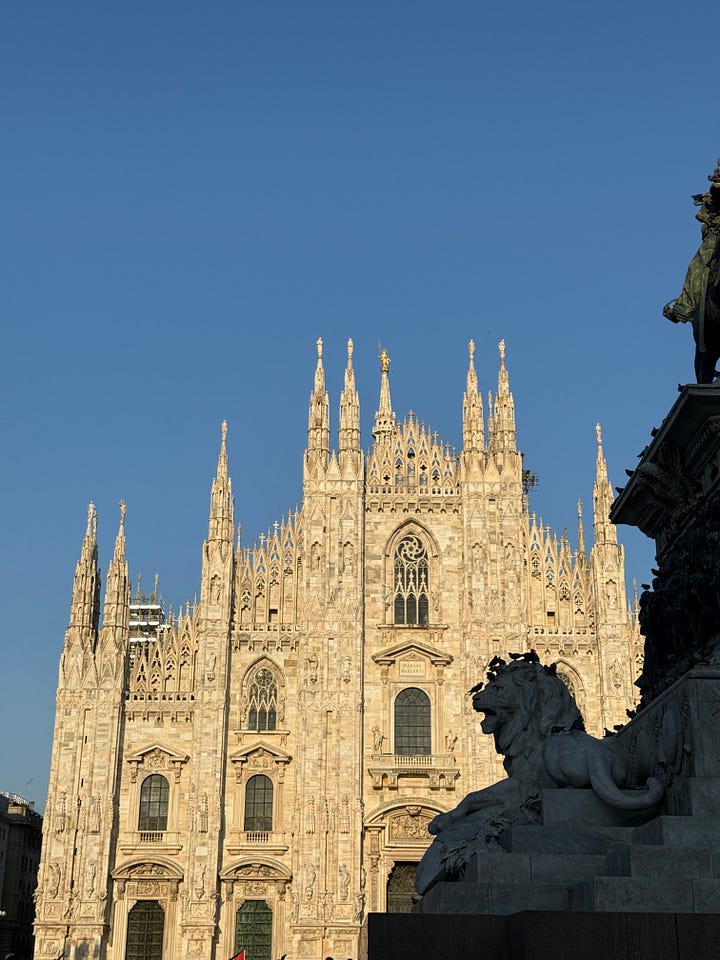
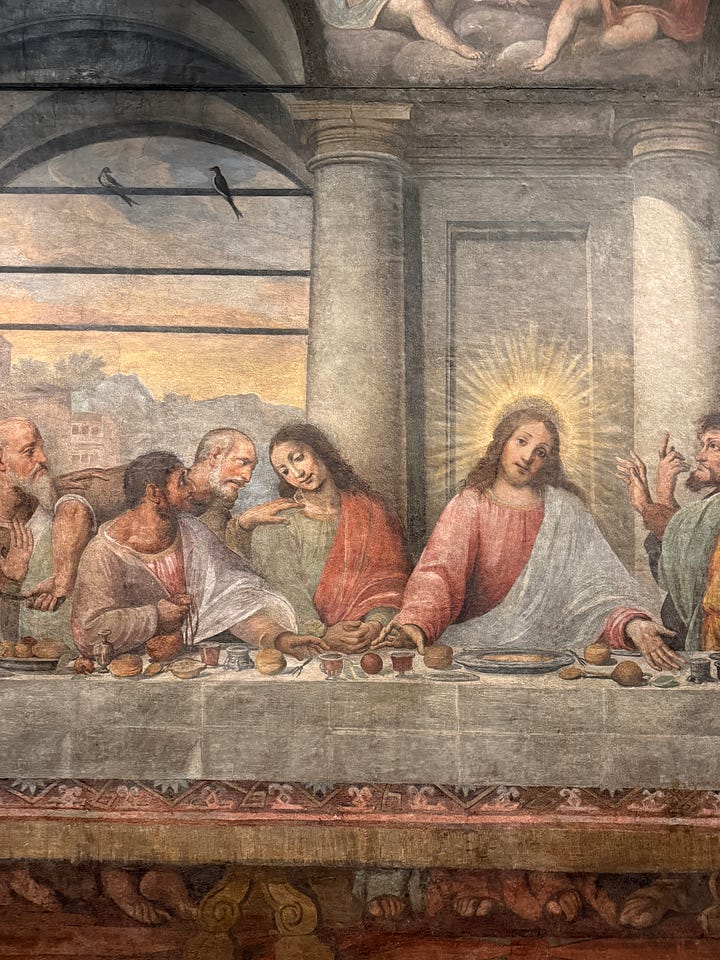
First, we accuse the city of being gray, expensive, businesslike and insufficiently Italian. Then we grant it one jet-lagged afternoon to appeal.
We climb the Duomo, find a leafy courtyard, drink something orange beside a bowl of crisps and announce, with genuine surprise, that Milan has a soul after all.
Changing your mind is a lovely thing.
The problem is that the test remains untouched.
Milan has been acquitted only because it produced enough church stone, attractive drinks and old façades to resemble the Italy we had already approved.
Milan is not underrated. It is miscategorized.
We have been trained to recognize Italy through a particular set of signs: a warm piazza, laundry between shutters, church bells, faded stucco, a waiter who seems offended by our coffee order.
Milan contains all of these things. It simply does not arrange them into one continuous performance.
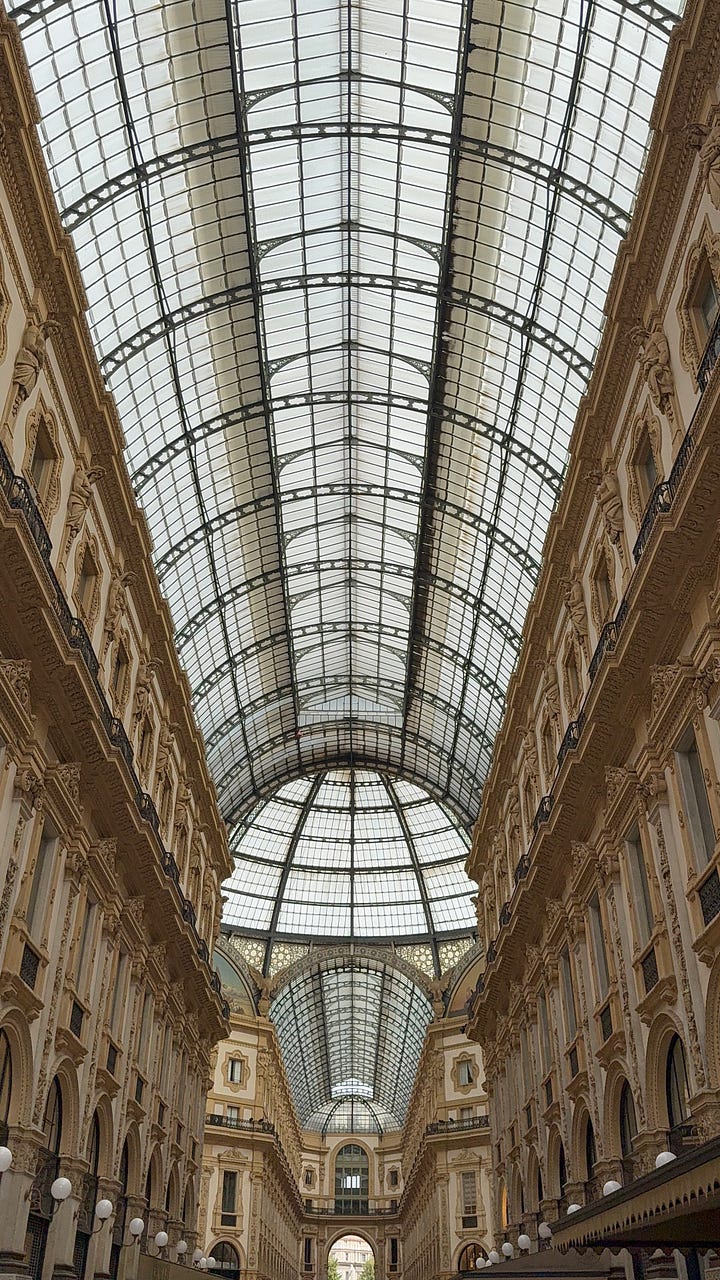
Walk through the city and the centuries keep interrupting one another.
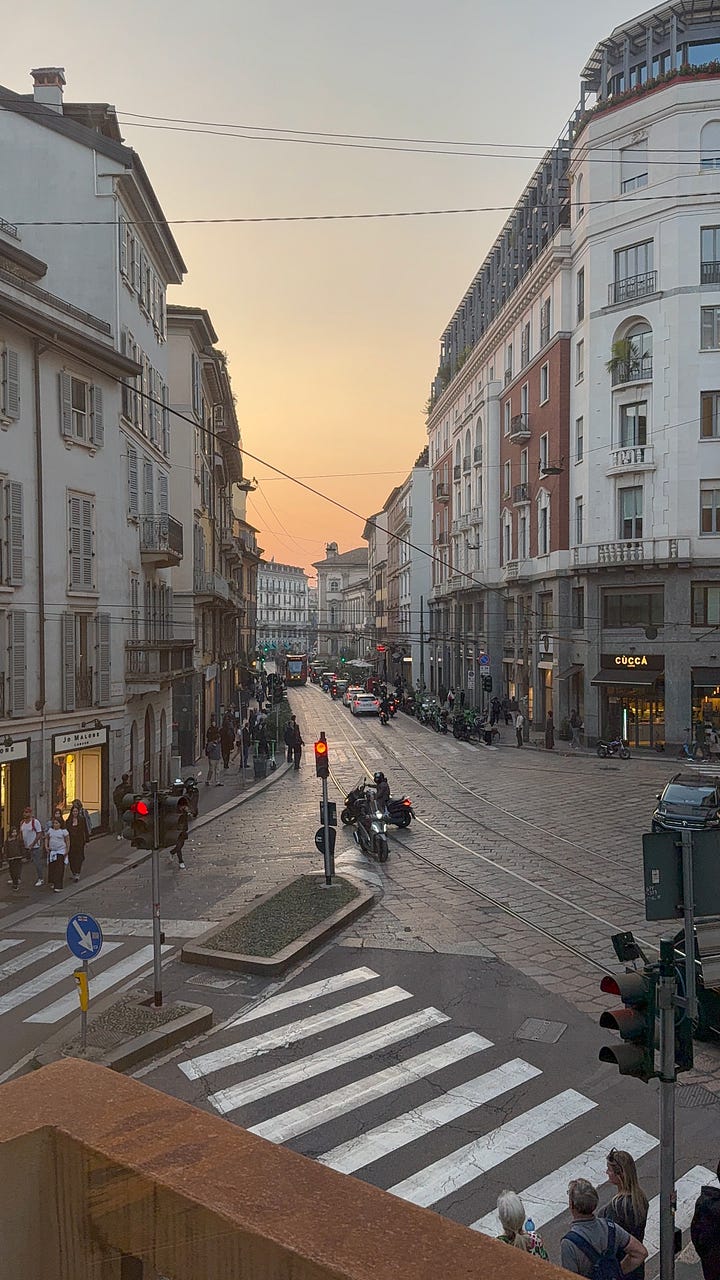
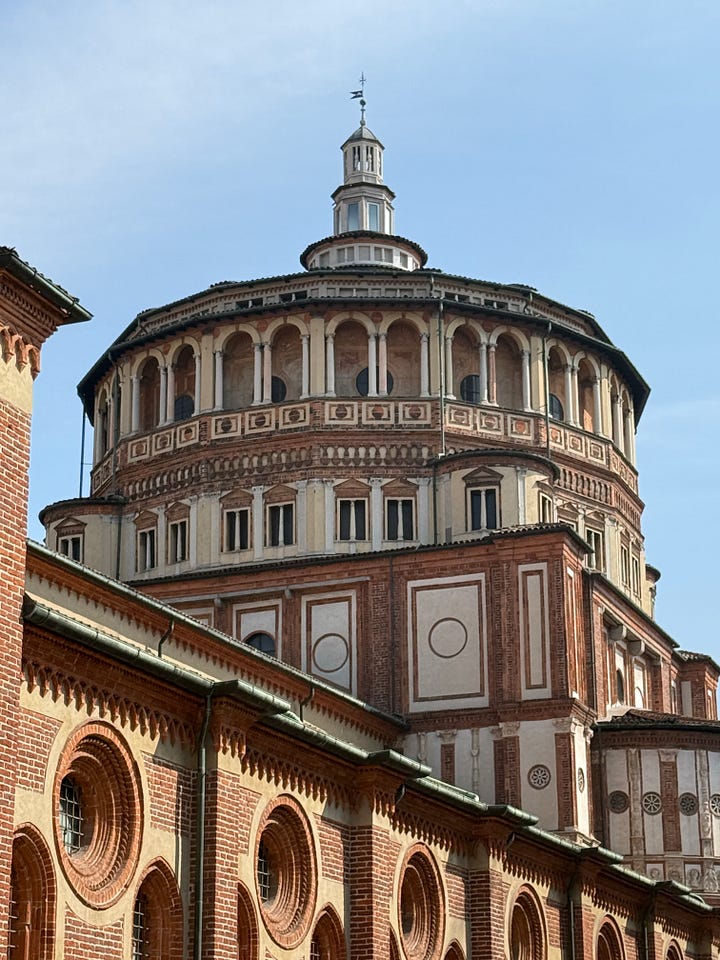
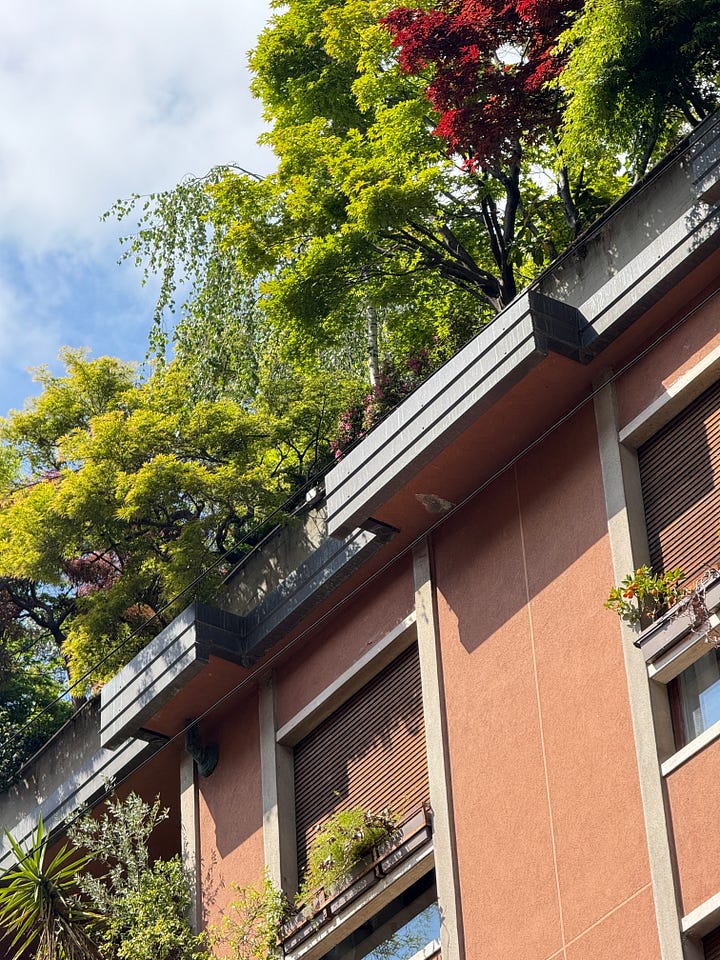
A Renaissance church appears beside a severe postwar building. A tram passes a neoclassical façade. A glass tower rises at the end of a street lined with balconies and bicycles.
Milan’s seams show.
Those seams are not evidence that the city has no history. They are evidence that history kept happening to it.
Milan was an imperial capital, a medieval power and a Renaissance court. It was also heavily bombed during the Second World War, rebuilt during Italy’s economic boom and dramatically reshaped by factories, offices, transport and the arrival of workers from other parts of the country.
The concrete is not covering the story.
The concrete is part of the story.
Visitors who interpret Milan’s reconstruction as an absence of history are often reading the consequence of history as its absence.
This may also explain why Milan rewards a slightly different kind of attention.
Ride the red M1 metro line and look at the station names repeated in clean lettering, the red handrail, the hierarchy of signs that tells you where to go before you have time to feel lost.
The system created by Franco Albini, Franca Helg, Bob Noorda and Antonio Piva received the Compasso d’Oro in 1964.
This is Milanese design at its most honest: not an expensive lamp waiting in a showroom, but public information helping a tired person find the correct train.
Some cities place their beauty in the middle of the square.
Milan often places it just after a threshold.
You enter Santa Maria presso San Satiro and discover that the deep choir behind the altar is an illusion built into almost no space at all.
You step into Casa Boschi di Stefano and find modern Italian art hanging inside the rooms of a former home.
You pass through the gate of an old industrial complex and enter HangarBicocca, where contemporary art now occupies the scale once reserved for machinery.
These places are not secret.
They are simply not shouting.
Milan makes the most sense at about 6:30 in the evening.
Office doors open. Trams fill. Cups begin to gather on metal tables. Friends stand outside bars in clothes that look effortless but almost certainly were not.
The city shifts from work to pleasure without pretending the two belong to separate worlds.
That is why “too businesslike” has always felt like a strange complaint.
A city does not lack soul because people go there to work. In Milan, work helped shape the architecture, the publishing houses, the design culture, the transport system and even the social rhythm of aperitivo.
Sometimes work is the story.
And the people moving through that story are not an interruption to some purer version of Italy.
Milan has long been a city of arrivals: first from the countryside and the south, then from across Europe and the wider world. Sarpi, Porta Venezia and Via Padova are not colorful side trips from the “real” city.
They are part of the city’s present tense.
Calling Milan insufficiently Italian often means excluding modern, urban and migrant Italy from the definition of Italy.
None of this requires us to make Milan innocent.
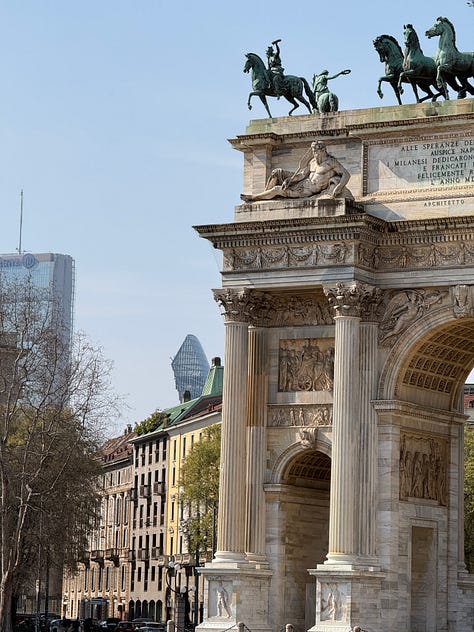
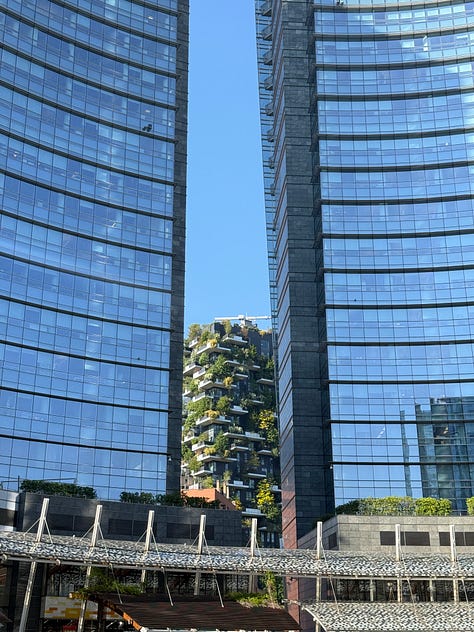
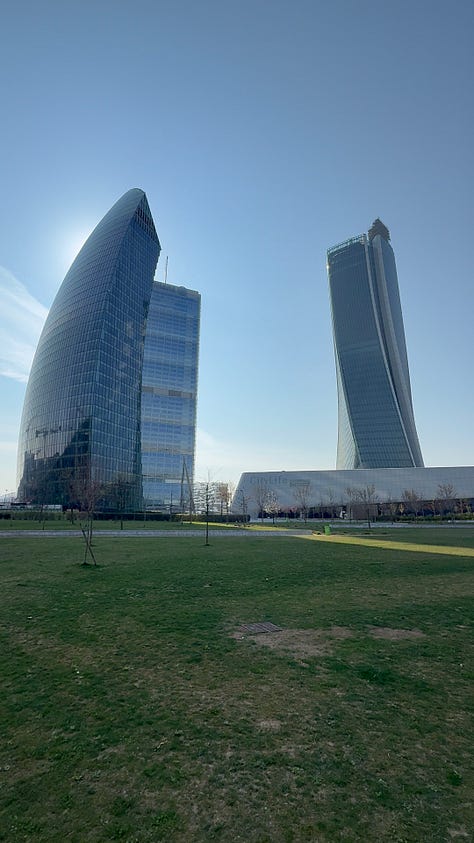
It is expensive. It can be impatient. The air can feel heavy. Redevelopment creates beautiful new spaces while making it harder for many people to afford a life nearby.
Some streets seem to contain nothing but polished shop windows and people walking faster than you would prefer on holiday.
Milan does not deserve better because it is flawless. Cities are not flawless.
It deserves better because the charges against it are so often lazy ones.
So here is the only practical advice in this essay:
Do not give Milan your transfer day.
Give it one full waking day and let that day reach the evening.
Ride the metro. Walk without racing toward a reservation. Open one door that does not look especially promising. Stay long enough to hear the glasses being set out for aperitivo and the trams scraping around the corner.
Then decide.
You may still prefer Rome’s theatrical ruins, Florence’s stone certainty or Venice’s impossible light.
You do not have to fall in love with Milan. Not every city must become your favorite.
But judge the city you are actually in, not the Florence it refused to become.
Milan does not need another conversion story.
It does not need to be acquitted.
It needs to be seen before the suitcase is back in your hand.
Buon viaggio,
Maria
📍Rome
No posts
Comments
Nothing yet. Say the first thing.
Sign in to join the conversation.