
You have already paid for the room.
The host still wants to see everyone’s ID and asks for another payment for the city.
You have already bought the train ticket.
There is still a machine on the platform that apparently wants something from you.
You order the same espresso as the person beside you and somehow pay more because you sat down.
Then you stop for petrol and your banking app announces a €100 transaction when you bought €32 of fuel.
By lunchtime, Italy can feel less like a country than a sequence of small financial ambushes.
Most of these moments have a perfectly legitimate explanation.
But, and this is the important part, “that’s just how Italy works” is not permission for a business to invent its own rules.
The useful skill is learning to tell the difference.
In general, normal Italian procedures leave a trail: a posted tariff, a line on the menu, a municipal rate, a ticket rule, a receipt, an identifiable operator or a temporary bank authorisation.
If nobody can explain where the charge came from, that is when I start asking questions.
Being asked for identification at an Italian hotel, B&B or holiday rental is normal.
Accommodation providers have a legal obligation to identify the people staying with them and transmit specific guest information to the public-security authorities through the Alloggiati Web system.
That is why the property may need the details of every guest, not just the person who made the reservation.
But there is an important distinction here.
The law requires the property to identify you and collect specific information from your document.
It does not require the hotel or host to keep a photocopy, photograph or full scan of your passport.
The information required for guest registration includes details such as your name, birth information, citizenship, document type and number and issuing authority. A full image of your passport, and all the extra information it contains, is not itself an Alloggiati Web requirement.
And that matters because once you send a passport photograph to someone’s phone, WhatsApp account or hotel system, you have very little practical control over where that image is stored, backed up or forwarded.
Italy’s privacy authority has specifically warned accommodation providers about unnecessary collection and retention of guest identity-document copies, including the risks created by photographing documents on phones or collecting them through messaging services.
So if a host tells me:
“Italian law requires you to send me a passport photo on WhatsApp.”
I would push back.
Italian law requires them to register you.
It does not require you to put a passport photograph into their phone.
The property can inspect your identification and enter the required information.
Personally, I prefer the more privacy-protective approach: if the necessary information can be collected without creating a full copy, and in most cases it can, since the host is already required to verify your identity in person when handing over the keys, do not create one.
A promise to delete a passport image later is not quite the same protection as never handing over the copy in the first place.
The simple rule:
Show your ID? Normal.
Provide the required details? Normal.
Leave behind a passport copy for the property to keep? Not required by Italian guest-registration law.
Welcome to the imposta di soggiorno.
The tourist or accommodation tax is a municipal charge, separate from the hotel room itself.
So when Booking.com, Expedia or the hotel says your accommodation is “paid in full,” that does not necessarily mean the local tourist tax has already been collected.
Depending on the city, accommodation type and booking arrangement, the property may collect it separately at check-in or check-out.
That alone is not suspicious.
What I would expect is a clear calculation: which municipal tariff applies, how many people are being charged, how many nights are taxable and whether the platform has already collected any part of it.
And I would expect a receipt.
I would question an unexplained round-number charge, duplicate collection or the claim that the tax has to be paid “off the books.”
Also: there is no nationwide Italian rule saying tourist tax must always be paid in cash.
“Paid in full” may mean the room is paid in full. The city has its own bill.
This is where oversimplified Italy advice gets people into trouble.
You will often hear:
“Don’t worry about coperto. It’s normal in Italy.”
Sometimes it is.
But Italy does not have one restaurant rule for the entire country.
Coperto usually refers to a cover or place-setting charge.
Servizio is a service component.
Pane is bread.
Mancia is a voluntary tip.
They are not interchangeable.
And regional rules matter.
In Lazio, including Rome, a separate coperto charge is prohibited. That means a Roman restaurant cannot simply add coperto to your bill and defend it with “this is Italy.”
Elsewhere, a disclosed cover or service charge may be perfectly legitimate.
The important word is disclosed.
A charge shown on the menu before you order is one thing.
A mysterious line that appears only after dinner is another.
So I would never teach travellers to automatically challenge every coperto.
But I also would not teach them to automatically accept one.
Check what the charge is called, whether it was disclosed and where in Italy you are.
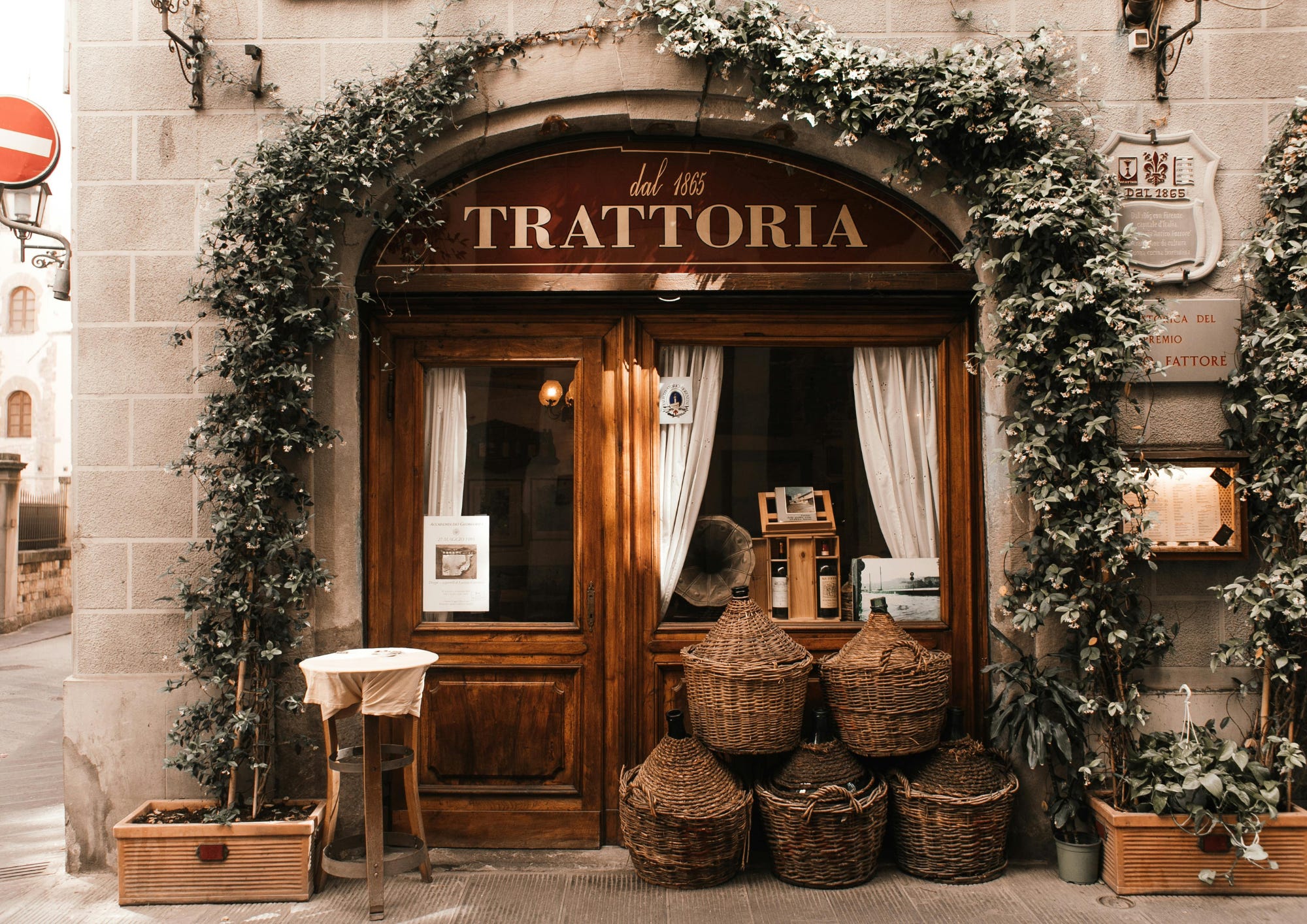
Because sometimes you did not buy a more expensive espresso.
You bought the chair.
Many Italian bars distinguish between al banco, drinking at the counter, and al tavolo, sitting at a table with service.
The same coffee may therefore have two different prices.
This can feel outrageous if you watched someone at the bar pay €1-something and then received a much larger bill on a famous piazza.
But a published table-service tariff is not a scam simply because the counter price is cheaper.
The question is whether the price was available before you ordered.
If you want the classic quick Italian coffee, order and drink it at the bar.
If you want to sit for half an hour overlooking a major square, check the table menu first.
Because on some Italian transport systems, buying the ticket and activating the ticket are separate actions.
The trick is not to memorise a universal rule like “all Italian train tickets need stamping.”
They do not.
Traditional paper Trenitalia regional tickets generally still need to be validated before travel.
Current digital Trenitalia regional tickets work differently: they activate automatically at the scheduled departure time, so the old manual digital check-in advice you may still see online is outdated.
Then city buses, trams, metros and ferries introduce their own rules.
A paper ticket may need validation.
An app ticket may need activation.
A contactless system may require you to tap correctly.
So before travelling, ask one question:
What does this specific ticket require?
And if a validator genuinely is broken, do not simply board and hope to explain later. Photograph the problem and speak to staff or the driver as soon as possible.
Because an official taxi meter can legitimately begin with an initial charge.
Cities set their own taxi tariffs, and these can include starting charges plus authorised supplements for things such as nights, holidays or radio dispatch.
Some routes may instead have an official fixed fare.
That means a meter showing a few euros before you have travelled anywhere is not automatically evidence of a scam.
The red flag is different:
A driver refusing to use the meter when no official fixed fare applies.
An unexplained “tourist price.”
A supplement nobody can identify on the published tariff.
If something feels wrong, ask for an identifiable receipt.
A meter starting above zero can be official. A fare that never reaches the meter is a different problem.
Because you may actually be paying for a beach club.
A stabilimento balneare or lido sells services: umbrellas, loungers, changing facilities, showers and managed space.
Those services can cost money.
But the shoreline itself is not a private attraction.
Italian concession rules protect access and transit to reach the battigia, the shoreline at the water’s edge, including access for bathing.
That does not mean you can occupy a lido’s lounger or use its facilities without paying.
It means the distinction is:
Access to the shoreline: free.
Beach-club equipment and services: paid.
Or, put more simply:
The chair can cost money. The sea cannot.
Probably not.
At unattended petrol stations, paying by card can trigger a temporary preauthorisation before the machine knows how much fuel you are going to take.
Your banking app may therefore show €99, €100, €101 or another round figure temporarily reserved against your card.
The final transaction should reflect the fuel you actually bought. How quickly the remaining hold disappears can depend on your bank.
Before panicking, check whether the €100 is pending or actually settled.
There is another petrol-station surprise worth knowing.
Self means you pump the fuel yourself.
Servito means an attendant serves you.
The price per litre may be higher in the servito lane.
That is not necessarily an attendant adding an unofficial tip. You may simply have chosen a different published service level.
The €100 is usually a ceiling, not the bill.
I would look for the paper trail before starting an argument.
The menu.
The tariff board.
The municipal tax calculation.
The ticket instructions.
The taxi number.
The receipt.
The word pending in my banking app.
Then I would ask a specific question:
“Which tariff is this?”
“Is this an official fixed fare?”
“Can I have a receipt?”
“Why do you need a passport copy rather than the required details?”
Specific questions are much harder to dismiss with “this is how we do things in Italy.”
I would not accept a hidden restaurant charge simply because I am a tourist.
I would not accept an improvised off-meter taxi fare.
I would not hand over a passport image for a property to keep because someone claims Italian law requires the copy.
And I would not automatically accept “cash only because this is Italy.”
Italian businesses are generally required to accept electronic payments unless there is a genuine technical problem. A real connection failure happens.
A permanently “broken” card machine is not an Italian cultural tradition.
Before deciding something is a scam, or deciding you simply have to accept it, ask:
Was the price or rule disclosed before I used the service?
Is the charge itemised?
Does it correspond to a municipality, transport operator or published tariff?
Can I get a receipt or identify the business or operator?
Is the amount on my card actually settled, or only temporarily authorised?
Most legitimate Italian procedures survive those questions.
That is the distinction I want you to remember.
Unfamiliar is not evidence of fraud.
But “normal in Italy” is not a blank cheque.
Save this for the moment your host asks for four passports, your paper train ticket encounters a validation machine, or your bank announces a €100 petrol transaction you definitely did not make.
And if you like practical Italy advice that explains not just what to do but why things work the way they do, subscribe. I publish one useful Italy guide like this every Tuesday.
Paid subscribers also get The Italy Briefing twice a month, with transport notes, museum updates, weather outlooks, events, scams and the changes I would personally make to an itinerary.
Rules and procedures last checked August 13, 2026. Municipal tariffs, transport products and local regulations can change, so verify operator-specific details before travel.
No posts
Comments
Nothing yet. Say the first thing.
Sign in to join the conversation.