
A friend recently convinced me to start watching Big Brother and determined I would enjoy it “from my way of liking to observe people.” I trust her TV taste with my life, so I thought I would give it a try.
When we sat down on her couch to kick off the season, I had no idea what to expect and barely understood how the game worked while watching, despite how much research I had done and my friends taking the time to break it down for me.
But I was intrigued.
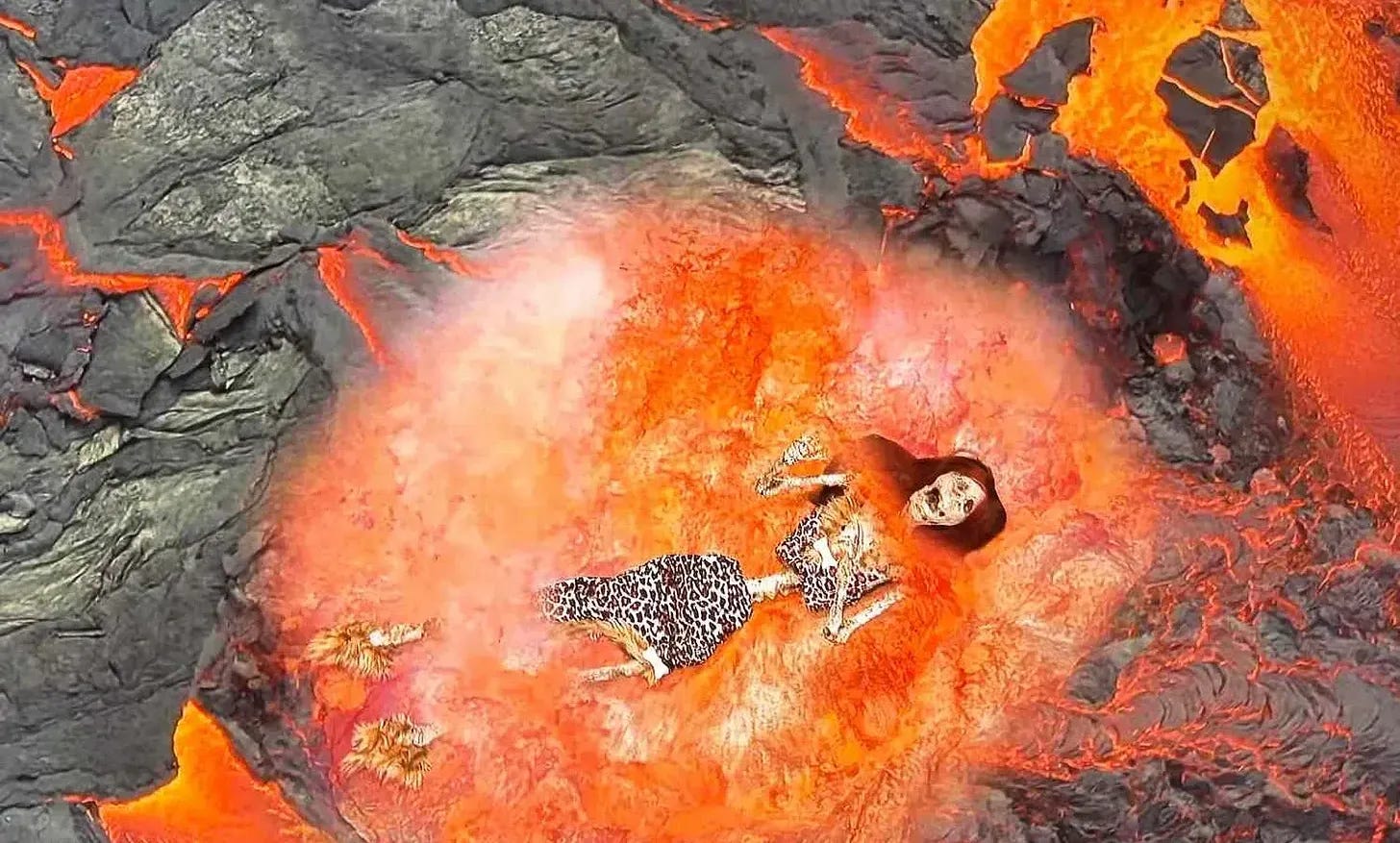
What do you mean Rachel Reilly got chased by a dinosaur, got pushed into a volcano and became a skeleton in cavewoman clothing? What IS this show?
But even though I was extremely confused, I was also locked in. An escape-room-like house with a time travel theme, campy costumes and competitions, some of my favorite Survivor 50 players and the promise of a different kind of social experiment where there are cameras on the players 24/7? Count me in.
With each passing day, I’ve become more and more invested in Big Brother 28.
It’s the first show I’ve ever watched where the gameplay goes well beyond the curated episodes — and where you don’t actually have to take the story the editors weave together as fact.
Every episode, every live-feed moment has made me more and more fascinated by just how different this show is as a behavioral study and societal reflection from anything else I’ve ever seen before — and just how much it feels like a reflection of the world we live in.
When I say I want to dive-headfirst into something, I want to learn all of it and between the 24/7 live-feeds, recap podcasts and people who are tuning in and reporting out at every hour of the day, there’s so much to immerse yourself in.
And it was important to me to truly wrap my head around it before I started to unpack it. But over a month, 17 episodes, many live-feed tune-ins and recaps later, I’m ready to take the leap.
For those of you that may not know, the term Big Brother comes from George Orwell’s dystopian book 1984. In the story, Big Brother represents the authoritarian dictator of the story’s totalitarian state that is constantly surveilling its citizens.
You don’t ever see him, but you know he’s always there.
“BIG BROTHER IS WATCHING YOU.”
The show doesn’t just take its name from 1984, but also its omnipresent nature. The houseguests are being monitored 24/7 with 112 cameras and 113 microphones, and as fans, we can watch (almost) everything they do, not just what the editors want us to see.
In my deep-dives on Survivor 50, I wrote about how what we see is a result of the carefully crafted narratives that the producers and editors want us to see and how their storytelling can directly influence how we perceive the players and the game.
On most reality shows, the reality we see is a direct result of what they want us to see.
Gaze Theory explores the power dynamics between the people looking and being looked at and how that shapes our understandings.
In reality TV, part of how that shows up is in the editing process, where producers and editors are manipulating what we see and how it is positioned when the footage is culled down to the length of an episode.
My friends had warned me that just watching the three weekly episodes CBS releases wasn’t going to be nearly enough to understand the game. In fact, it would lead to me not knowing what was going on most of the time and not having the full picture to wrap my head around the game.
And my goodness, were they right.
It feels like so much — if not most — of the gameplay happens on the feeds. And if you aren’t caught up, things that take place during the episodes are seemingly random.
When did these people partner up? How did the dynamic shift this much? How did we get here?
There are so many important discussions and interactions. Scheming, plotting, begging, blindsiding. Backstories. Explanations. Motivations.
Most reality TV constructs narratives and characters from real people and flattens them for ease and convenience. And we are meant to take what we see as objective footage and as fact. A kind of shared agreement between the creators and viewers.
Spontaneous Trait Inference is a psychological process where we subconsciously infer traits about another person based on very limited awareness or insight.
Reality TV often intensifies this process through its quick cuts, condensed storytelling and out-of-context framing and editing.
Our brains latch onto this simplified process of understanding and we find ourselves unknowingly being pushed toward or adopting a flattened perception of the people we’re watching on TV.
But Big Brother gives us a chance to challenge that process. To actually see these players and their gameplay in all of its complexity — if we choose to do so.
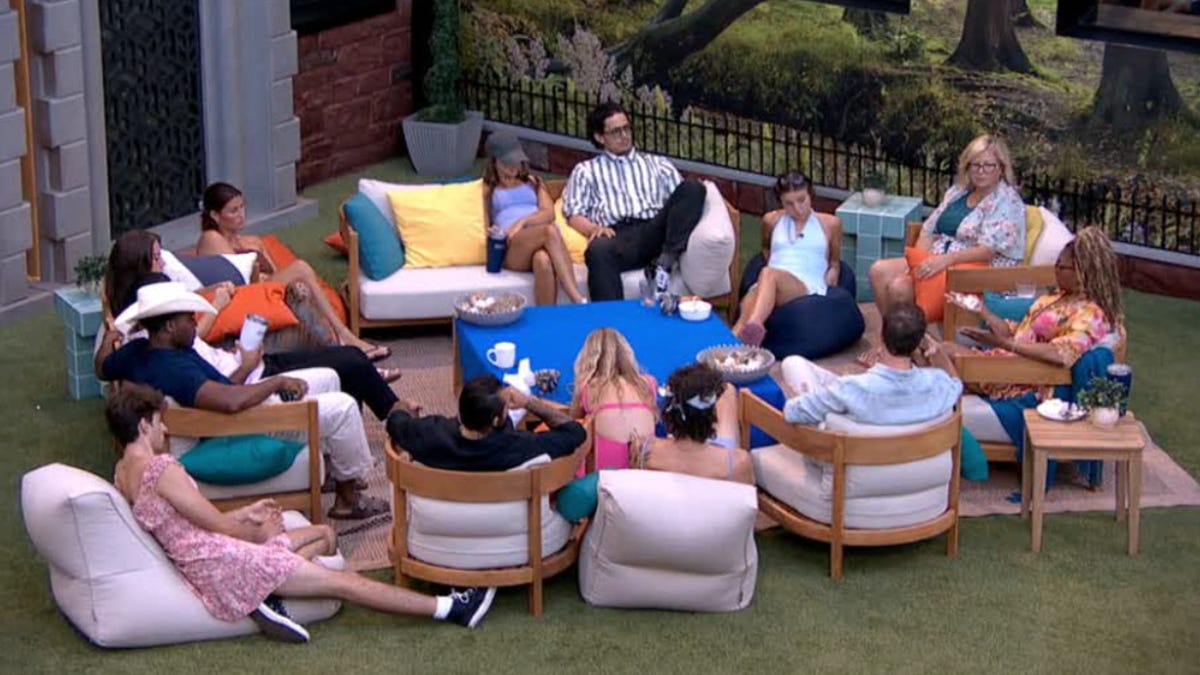
To be honest, I personally also feel more invested in the houseguests, their social game and the show at large by engaging with the feeds (and the fanbase).
I feel as though I’m actually going through a process of getting to know them — and the circumstances they find themselves in — in a much deeper way, closer to how we actually learn about someone in real life.
And it’s helping me get clearer on who I’m rooting for, who I’m rooting against, and where it might be fun to sprinkle in a bit more chaos with my vote. I feel so much more informed than I do when I typically watch reality TV.
I am an extremely skeptical person and spend so much time trying to deep-dive into the shows and movies I watch and get answers that more often than not I will never find.
I attribute this skepticism to a concept that I learned in my very first class in my Psychology major at UCLA:
Naive realism: our tendency to believe that we perceive the world as objective reality rather than a subjective (often subconscious) interpretation of it and that everyone else is experiencing things the same way.
Or as my professor put it, we go through the world thinking that every situation is being recorded with a camcorder and everyone is watching the same exact footage (it was 2011).
Because of this subconscious belief, we often take the things we’re seeing as fact and objective, forgetting how many factors are actually shaping the reality TV process. And then we begin to feel that anyone who is interpreting it differently is just wrong.
Unless, that is, you’re like me and think deeply about everything. But that’s why we’re here, isn’t it?
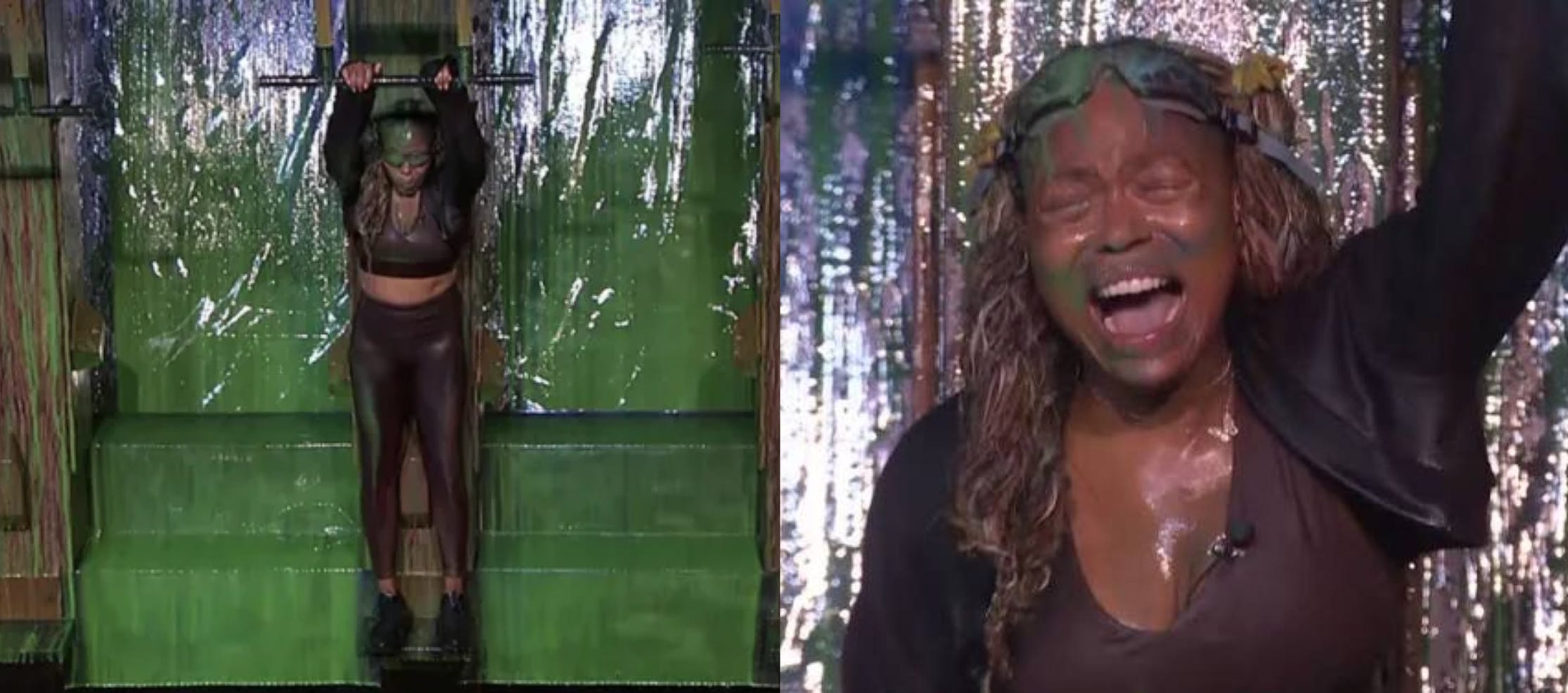
On a personal level, watching LaLa win the Wall Comp after an hour of waiting and an hour and a half of rooting for her (and against Kamu) felt so much more satisfying than if I had watched the significantly cut-down version in the episode.
But first, before we go on, I ask that you take a moment to appreciate this again with me:
(I feel like LaLa’s win video should be like the Tom Holland Umbrella video rule where we have to engage whenever we see it)
I also find it fascinating (and hilarious) how some of the players use the feeds — and this knowledge that we’re always watching them — to their advantage in the game.
It’s like they have their own little spaces to campaign and make a case to the audience both for their gameplay and to get us to vote for them to have a chance at the advantages in the BB Time Capsule.
Yes, the producers still cut the feeds at their whim, but the houseguests have significantly more time and opportunity to tell us who they are — and break free of the “traditional” reality TV stereotypes.
There’s now some amount of responsibility put on the players themselves if they don’t want to get “the villain edit.”
Traditionally in Gaze Theory, the power is held by the person looking (in this case the producers/editors and us as the audience), but Big Brother gives the houseguests a chance to flip the script and take back some of the power themselves.
James Wong argues that with Big Brother, unlike many other reality shows, there is a bidirectional power dynamic that challenges the traditionally understood analysis of surveillance, which says the people being watched are passive victims.
Instead, here, they are active participants in the process where the fact that they are always being watched can also be used to benefit them and their game.
The format of Big Brother actually allows the houseguests to have some amount of individual agency in how they are perceived by the public. They don’t have to rely on getting a “good edit” and instead have consistent opportunities to tell their own stories.
They can — to an extent — manipulate how we perceive them to a degree that is much higher than in most other reality shows.
Dee is constantly talking to us and letting us into the inner workings of her game. LaLa lets us in on the secret that she’s just been “playing dumb” after Chuk tries to call her out as HoH. Melody has constructed an entire bit where she has imaginary conversations on a fake phone to both explain herself and try to win us over.
And Kamu showed the extent of his true colors during the Tea Party — something we may not have seen if there weren’t agency and accountability because of the live-feeds.
(I wonder if they ever regret this choice)
Challenging our own subconscious processes ourselves can be taxing enough, but knowing that a majority of fans only watch the episodes and don’t have the context can make it all feel even more difficult.
The live-feeds add layers to the houseguests that other fans may never see.
However, there’s one more tool that is also so interesting to watch being used by the players, the fans and the show itself: social media conversation.
The gaps left by only watching the episodes are often filled by what people decide to post online about Big Brother — and which of these posts the algorithms feed each viewer.
Selective exposure theory is the idea that people’s opinions and interests lead them to be exposed to things that they already have an affinity toward and filter out opposing or different ideas that might be mentally uncomfortable.
And in the modern world, this isn’t just a subconscious process that we are engaging in — it’s also something that is happening to us.
Social media algorithms have become more and more hyperpersonalized and fragmented over time. The Big Brother clips and commentary that I get in my feed will be very different than what my friend sees or what you might see.
They, too, are watching us constantly like Big Brother and intensify the extent to which selective exposure theory applies to us.
Knowing this, the houseguests can intentionally try to manufacture “clippable” moments on the live-feeds in hopes that people like it enough to spread it around and elevate the narrative they’re trying to sell to us.
We as the fans can cut together footage that tells a positive story of our favorites and a negative story of the people we want out.
And the Big Brother accounts can selectively post whatever they want to draw our attention to at the time, reinforcing the narratives of the edit.
Erving Goffman talks about the idea of impression management, the conscious and subconscious processes we use to influence how people perceive us and our actions.
How this manifests often depends on the audience and context in which it is taking place.
What makes Big Brother so interesting to me is just how many layers there are in their impression management — all happening simultaneously and influencing each other.
The houseguests perform and present themselves the way they want to be perceived.
The producers and editors curate a specific narrative for each episode and drive us toward a certain perception.
The houseguests use the live-feeds to reinforce their own impressions and add layers to the edited versions.
Big Brother Unlocked discusses and brings attention to certain aspects of the game and the houseguests
The fans that just watch the episodes have a selective understanding of what’s happening and who they are
The fans that are dedicated to the live-feeds clip and post moments and context they find important to the game
The casual fans are served social media posts that may influence their understandings, especially if it brings to light brand-new information
And this all happens constantly over and over and over again.
There’s so much information to process that sometimes it can be difficult to parse through what is actually going on.
But at least here, we have the option.
What makes Big Brother so special to me (other than how delightfully camp it is), is that we don’t actually have to take what we see at face value.
We actually have the opportunity to find more answers than I’ve ever been able to with any other reality show. It gives everyone involved more agency in the process of creating and understanding impressions, perceptions and the overall “reality” of what’s happening.
But more access doesn’t always mean more truth.
It doesn’t necessarily get us to an objective reality, but it does give us the ability to find more information that might get us closer.
In True Story: What Reality TV Says About Us, sociologist Danielle J. Lindemann talks about reality TV as a “funhouse mirror” that reveals and reflects how much our own realities are also socially constructed.
She says it shows us ourselves in “caricatured or amplified form” and this exaggerated format reveals some of the worst parts of society — and the best parts of our creativity.
In a moment in time where we too have more surveillance on us than ever — through our technology, institutions and each other — it also feels more important than ever that we can challenge our own process. That we don’t accept everything we see as fact — and take the time to get to the bottom of the truth ourselves.
The irony, of course, is that having access to more information doesn’t necessarily mean we’ll find it. But it does give us more space to challenge what we’re seeing and keep trying.
When George Orwell wrote 1984, it was meant to serve as a sort of warning against totalitarianism and how often the people in power control the perception of our own reality, of what is considered to be the “truth.”
Over 70 years later, it feels like his warning still applies. For Big Brother. And for all of us.
Perhaps we need to take what happens in reality TV a little more seriously. Stare into the funhouse mirror of our own society and try to figure out what’s real and what is just an illusion. Learn from the houseguests, become active participants in the process, unpack what we’re seeing and finally flip the script.
The goal doesn’t necessarily have to be uncovering all of the truth — in this world that feels seemingly impossible — but instead to remember that we’re never getting the entire story. And that we should interrogate what we see, seek out more information and take back some of our own agency in the process.
We might not have live-feeds or 112 cameras to look at, but we do have an abundance of other resources and people to help us decipher things along the way.
And we have the knowledge that what we’re seeing in front of us — and around us — isn’t a perfect, objective recording. It’s the result of a million little factors that come together to shape the narrative.
And that, in itself, is the first step.
No posts
Comments
Nothing yet. Say the first thing.
Sign in to join the conversation.