
I am, admittedly, afraid of everything. Between being incredibly easily startled and having a way-too-vivid imagination, scary movies and I don’t always mix very well (unless it’s psychological, then I’m all in).
When I used to have to work on horror movies at Paramount Pictures, I would bring a giant scarf into the theater and peek out from behind it to get enough information to market the movie, but to not give myself nightmares.
But I love reading about them.
Why? Because horror as a genre is revolutionary. It’s so much more than jump-scares and gore.
It is actually one of the most significant ways in which filmmakers can securely push boundaries, uncover deep-rooted issues and fears — and put a mirror up to the darkest parts of society and of ourselves.
Horror movies can externalize both external and internal fears that we face in our own lives and lets us experience fear on our own terms. And this type of storytelling can then help us process trauma, difficult emotions and begin to find release and relief.
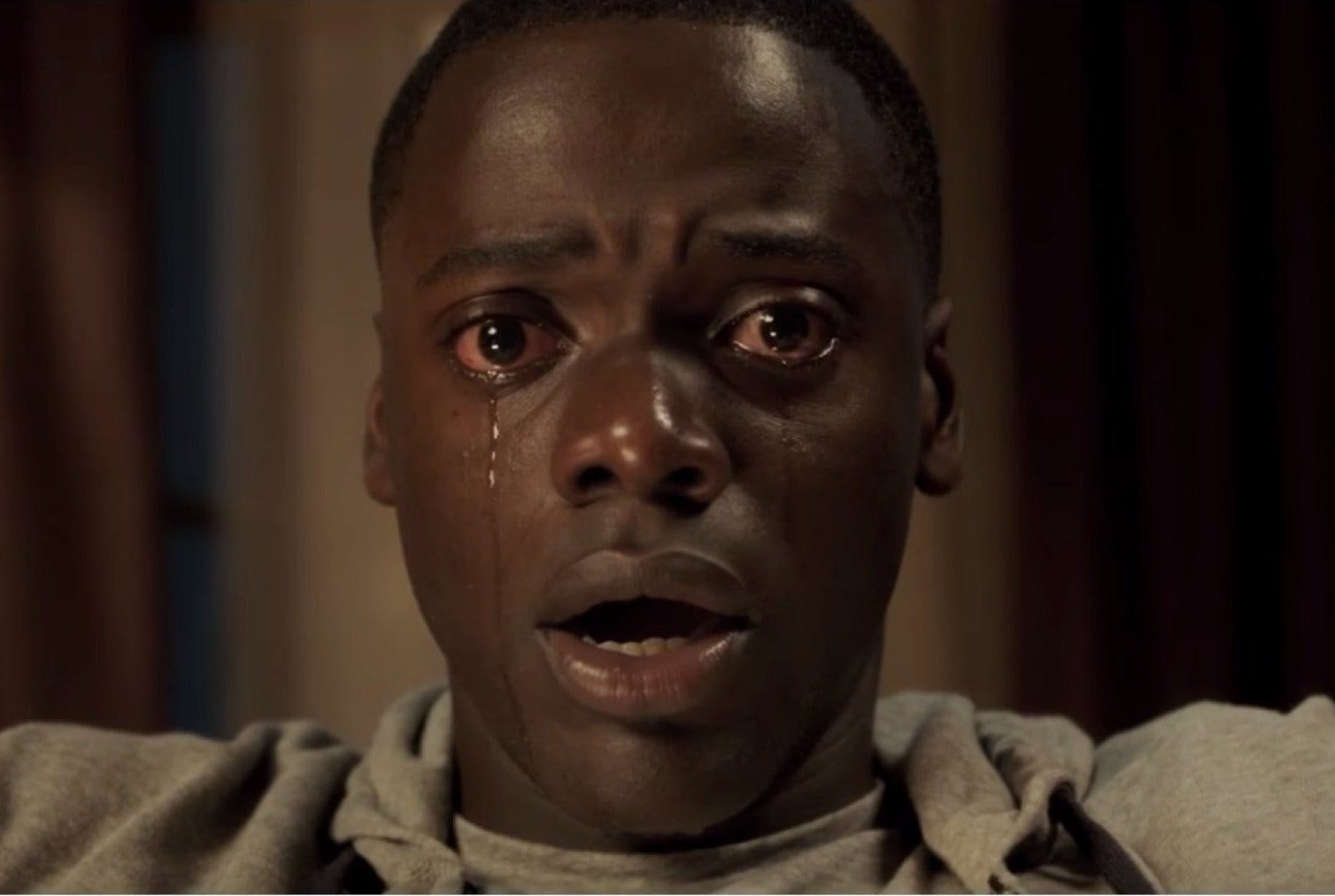
From Stephen King’s unsettling stories that dig deep into depths of the human psyche to movies like Candyman, Get Out and Sinners that explore the revolting realities of racism to the countless movies that confront capitalism, corporate greed and class inequity (s/o to Dawn of the Dead),
Horror movies create a safe space for us to face the monsters within us and the evil that lurks around every corner around us. A container in which we get to have a sense of choice and control.
The monsters we see aren’t just the horrifying creatures taking shape on our screens, but are also the ones also haunting us in reality. While we are yanked into the darkness, these movies actually bring our real-world problems into the light.
And the best part is that, most of the time, we don’t even realize it’s happening.
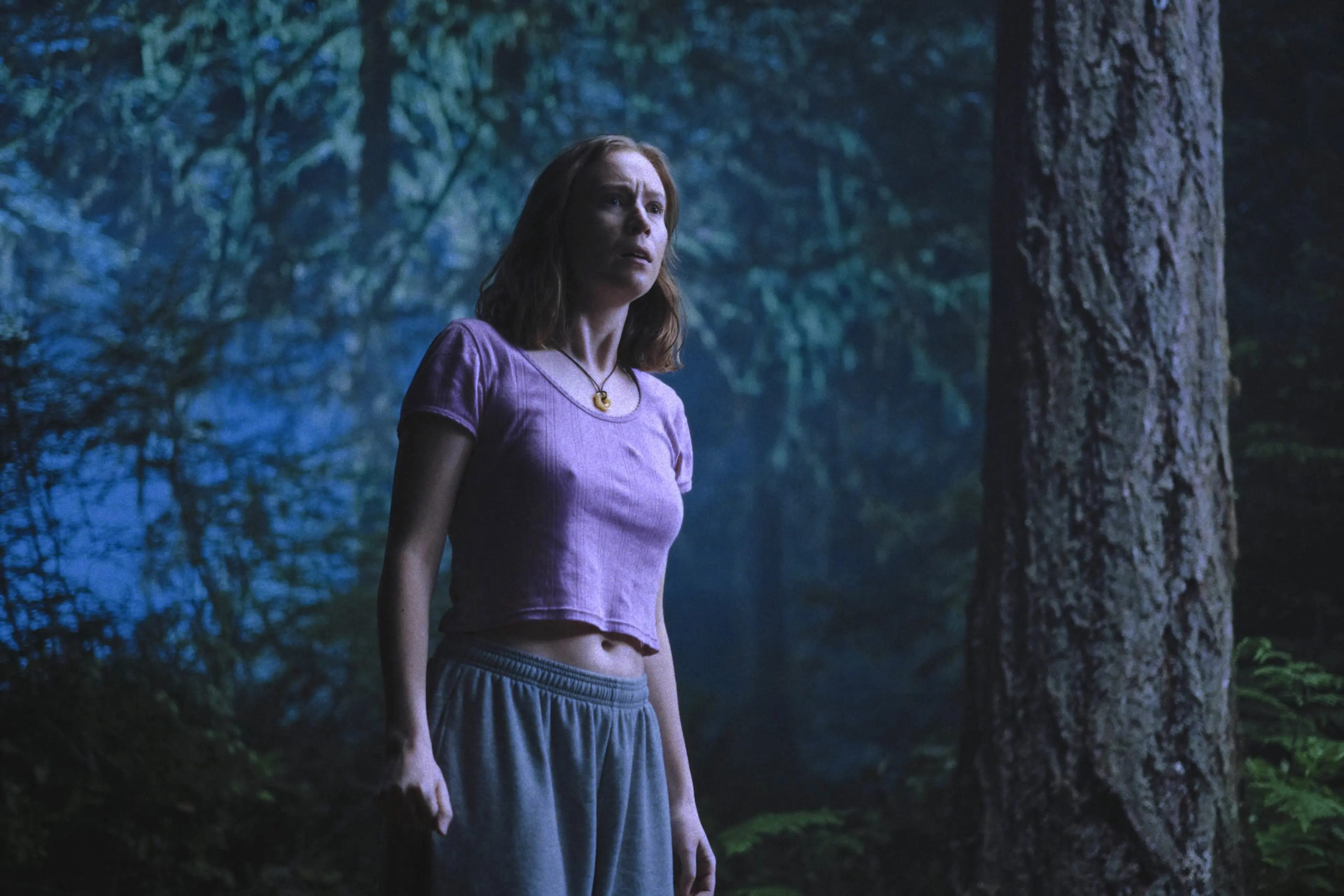
I’ve always known this to be true, especially after working on so many horror movies, but the strong desire to really deep-dive into the impact of the genre came after I watched Teenage Sex and Death at Camp Miasma.
It made me really think: why do so many people seek out things that scare them?
I had to google how scary this movie was before deciding to go to the theater, but so many other people willingly opt into the experience the second a new one comes out.
So naturally, I had to dive in.
Quick Summary
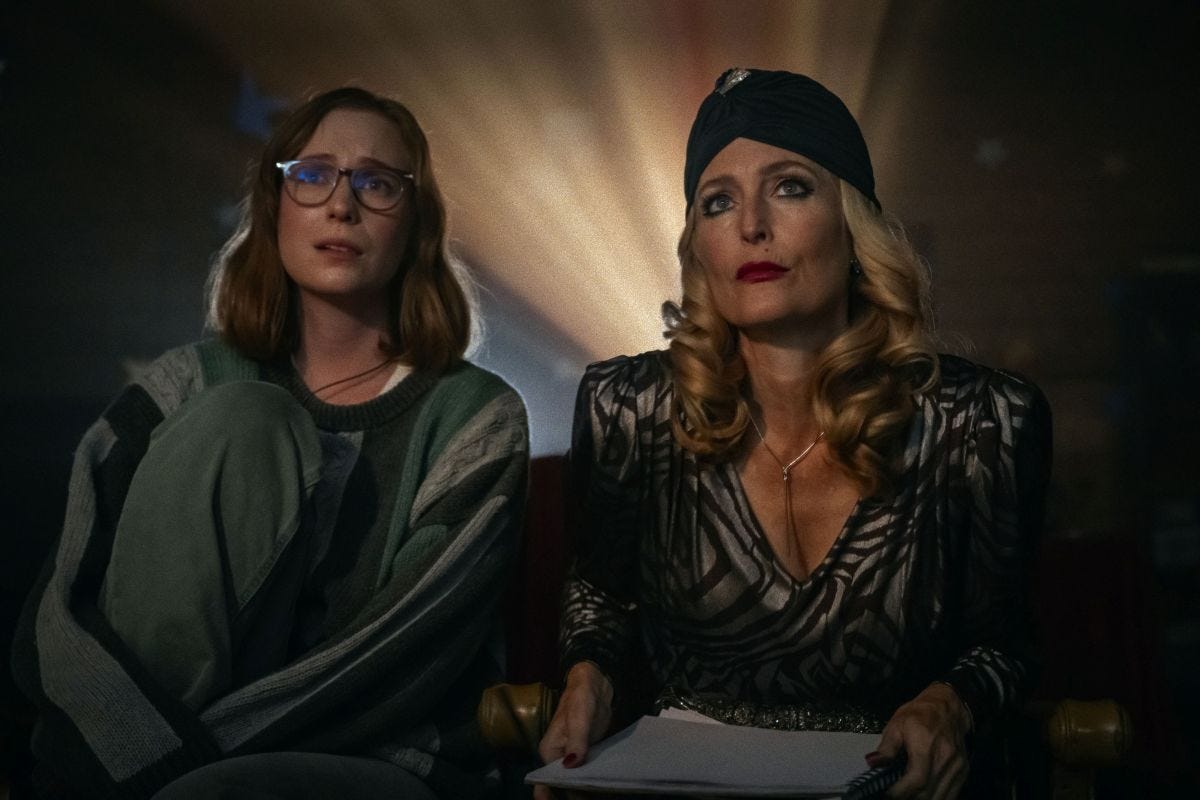
After her initial success, a queer indie filmmaker, Kris (Hannah Einbinder), is tasked with reviving an old cult-favorite slasher franchise called Camp Miasma in a way that works for the modern-day environment. As part of her research, she tracks down Billy (Gillian Anderson) the “final girl” from the first film who is living at the abandoned campground where they shot the movie. As they get acquainted, the lines blur between creative partners and romance and reality and the movie.
In Camp Miasma, Writer/director Jane Schoenbrun managed to make a campy, psychological slasher-esq movie that both satirizes the most problematic parts of the genre and honors what makes it so impactful.
While at face value the movie can be seen as either a slasher film or a horror-satire (similar to the Scary Movie Franchise), it actually manages to straddle an interesting tonal line of campy satire, psychological thriller, psychosexual romance, and fantastical slasher (almost like a different take on Tarantino movies).
It’s also just a lot of fun, but I digress.
The reason that this movie in particular sparked this desire is because it often isn’t subtle with its social commentary and psychological processing.
It drags many of our present-day problems into the spotlight and puts them up on the screen for all to see. But still manages to do it in a light-hearted, quippy way.
“Monsters in movies are us, always us, one way or the other. They’re us with hats on. The zombies in George Romero’s movies are us. They’re hungry.
Monsters are us, the dangerous parts of us. The part that wants to destroy; the part of us with the reptile brain. The part of us that’s vicious and cruel. We express these in our stories as these monsters out there.” - John Carpenter
Rather than show through the story the undercurrents of things like performative allyship as movies like Get Out might do, it tells us exactly what is going on through sharp one-liners and witty banter. Instead of simply demonstrating the toxicity of parasocial relationships as films like Misery might, it throws it right in our faces.
It quite literally names and describes the problematic “final girl” trope:
The “Final Girl” is typically the last character alive in a slasher movie that confronts the evil/killer. They are typically portrayed as morally and sexually “pure,” sensible and cautious, and the embodiment of how women “should be” in femininity.
All of this is why she survives over everyone else, sometimes herself and sometimes by being saved.
The “final girl” is interesting because her survival is often tied to her being able to embody the type of woman that — society in the time it was made — deems worthy of being saved. Soft. Sensible. Traditional. Cautious. Restrained.
Some film theory argues that the “final girl” archetype came about to cater to the male gaze so that the audience, including men, find reason to root for her in the end. Her demeanor goes from sheer terror as the damsel-in-distress type to empowered survivalist.
We see this in everything from Halloween to Texas Chainsaw Massacre — reflections of society’s deepest fears around gender, power and identity at the time.
She is often celebrated because she is the one that survives. But what if seemingly surviving the horror doesn’t mean you’ve actually freed yourself from it?
While we celebrate the “final girl’s” triumph at the end, we rarely think about what got her there — and what happens after she confronts the killer.
Her journey is often one of deep trauma, paralyzing fear and being the victim over and over again. And then, backed into a corner, her survival instincts kick in and victory is hers.
But that’s typically all we get. Because her story usually disappears quickly after.
In Camp Miasma, we see Billy and Kris directly discuss and confront the long-lasting distress playing this character caused. For Billy, her experience on the set of Camp Miasma trapped her horror-fueled trauma for the rest of her life.
The abandoned campground of her younger years becomes her permanent home. The monster from the movies consumes her every waking moment.
And the lines between what’s real and what is fiction continue to blur until we simply can’t tell the difference anymore.
Billy didn’t choose her horror. It was thrust upon her. Her character forced her to become something she’s not — to embody her demons instead of confronting them — and took away any feeling of control she had over her body and her life.
So she watches the film that traumatizes her over and over, releasing bits and pieces of the hold it has on her with each replay — and shows us why we might seek out horror for ourselves.
But the movie goes well beyond that. Jane Schoenbrun also uses it to show how beneficial slasher and horror films can be and have been to so many of us over time.
Horror/slasher movies can actually help us face our own fears, move through and release difficult emotions and discover new mechanisms for stress management in a safe, consequence-free environment.
In these types of movies, it tends to be fairly clear who is the villain and the hero. What is good vs evil. Right vs. wrong. Unlike in the real world where there’s a lot more gray.
Studies show that watching horror/slasher movies can actually build psychological resilience in the real world. Researchers say that it is a “controlled way to experience fear” and that, in turn, can help us develop better coping mechanisms in our own lives.
When we watch these movies, we automatically shift into a space of high alert, a survival mode of sorts as if we too are the ones experiencing the horror.
In Jane’s case, they wanted to reflect the tumultuous process of settling into your identity and body and all the fear that comes with overcoming transgender, queer and sexual trauma.
And here’s the thing: our bodies can’t always immediately tell the difference between real danger and the threat we’re watching on screen and respond to directly to what we’re seeing, even when we know that we are physically safe.
And that’s exactly why it works.
Psychologists like Dr. Jonny Dudley have studied why this might be beneficial.
They discuss how watching horror movies can trigger our brain’s fight-or-flight response, spiking our adrenaline and causing our body to react with things like an increased heart rate and hyper-vigilance.
It’s as if — just for a moment — we too are the ones running away from the killer.
In Camp Miasma, it’s especially interesting because the lines between the film and reality are intentionally blurred, as if to demonstrate this process in real time.
When our brains eventually may catch up and realize that we aren’t actually in danger, there is a potential spike in dopamine and endorphins with the rush of relief.
The release of both beneficial hormones and of pent-up, harmful feelings and fears can come together to help us move through our trauma and build a higher tolerance for stress in the future.
As it turns out, watching horror movies can actually build psychological resilience for some people.
Catharsis theory discusses how the process of purging repressed emotions can lessen our psychological distress and facilitate processing and progress.
Because, at first, it feels so similar to what we actually experience, when the same feelings show up in our own lives, these fears and our responses can feel more manageable than we originally thought.
I’ve begun to understand why people choose fear (couldn’t be me) and why others — like me — can’t seem to bear it.
In my research on this, I learned that there are three important factors for these things to actually take place, which also gave me an explanation for why personally these same things don’t seem to happen to me.
The ability for our brains and bodies to:
Quickly discern between real physical vs perceived physical danger
Detach ourselves from fictional reality
Maintain confidence in our own abilities to survive
There are two major things I’ve realized that make it incredibly difficult for my brain and body to detach quickly from what I’m watching on screen.
Rejection Sensitivity Dysphoria (RSD) is an intense emotional pain — sometimes physically manifested — caused by real or perceived rejection, criticism or fear.
So even the perception of pain feels very real in my body.
Hyperphantasia is a cognitive trait of having extremely vivid mental imagery that looks and feels close to real life.
For me personally, this combination makes it feel like the horror I’m watching is also the terror I’m experiencing in real life. And, whereas many other people get a release, the fear stays with me for long after I leave the theater or turn off the TV.
As it turns out, the exact mechanisms that make horror cathartic for some are exactly what makes much of it completely unbearable for me.
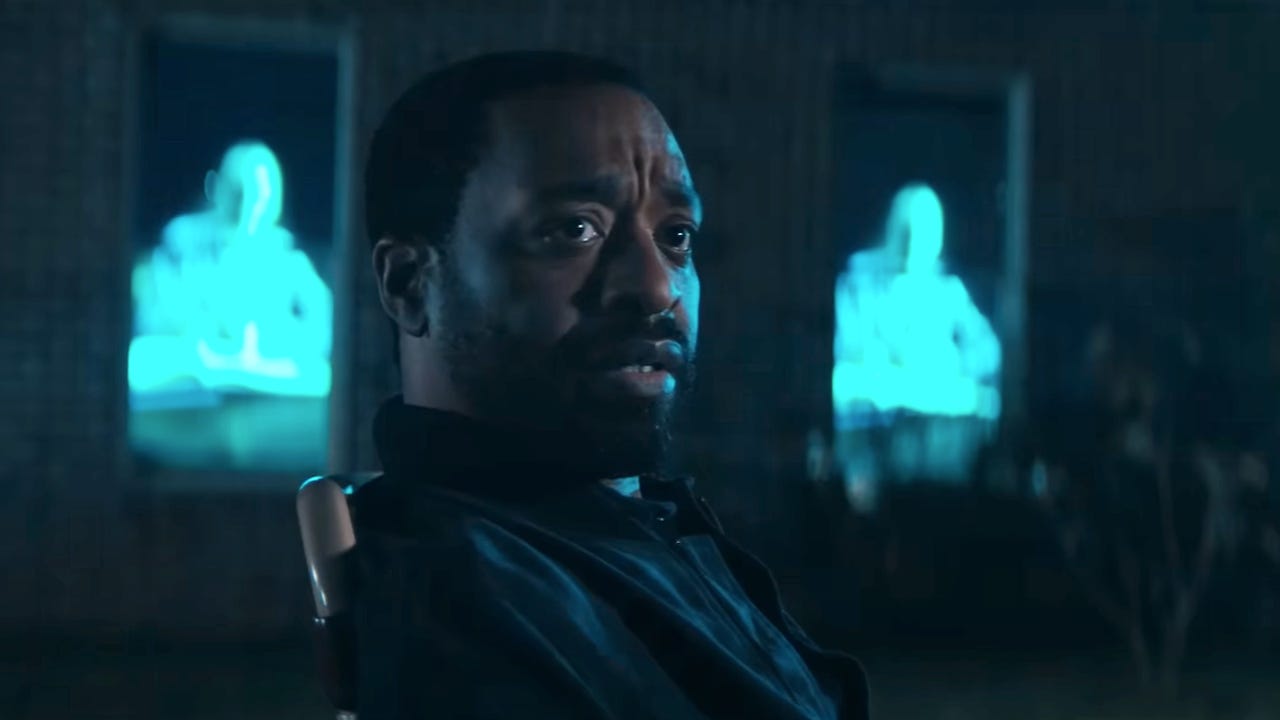
Throughout Camp Miasma, we watch both Billy and Kris begin to reclaim their own narratives and take back agency from the things that have haunted them their entire lives.
They watch the old beloved cult-classic film over and over again and find themselves reliving and revisiting both the story itself and their evolving relationship to it.
Especially when a horror movie reflects some version of our own reality, they can be a tool in helping us consciously and subconsciously process trauma.
So much of the overwhelm in our trauma responses can come from a loss of control and research shows that horror movies can provide an opportunity to relive the fear and terror of our trauma and develop a new relationship with it.
In our actual lives, when we are in the middle of our suffering, there is often a feeling of helplessness, especially when it’s something that is beyond our personal control. You can’t hit pause or turn down the volume or shut it off (no matter how badly we wish we could).
But with movies, we get to have control of the remote.
“If it gets too real, you can always turn it off.” - Camp Miasma
The fact that we do actually have some power over how we engage with it can help us take back some agency in our own lives.
For Kris, it was watching the movie that led to her queer awakening. For Billy, it was re-experiencing the traumatic filming process.
Movies like Carrie and The Invisible Man can provide catharsis for some survivors of abuse. Get Out and Sinners can externalize the crushing weight of experiencing and witnessing racism, injustice and exploitation. The Purge franchise, The Witch and Midsommar can liberate some of the shame around suffocating and oppressive environments that once controlled us.
And many, many movies can help us process grief.
“[Horror films] are our collective nightmares, the conditions under which a dream becomes a nightmare are that the repressed wish is, from the point of view of consciousness, so terrible that it must be repudiated as loathsome, and that it is so strong and powerful as to constitute a serious threat.” - Robin Wood
For me, that was The Life of Chuck, a Stephen King adaptation that confronts the profound and horrifying experience of facing our own mortality told through the story of a man dying from the same brain cancer that tortured and took my dad.
It managed to physicalize the torture that he endured with his rapidly declining mental and physical health — and the deep pain of facing our own mortality.
My friends thought I was crazy for going to watch it knowing what it was about, but for me it was a way to heal a small part of me that didn’t know how to put the unfairness and impossible terror of it all into words.
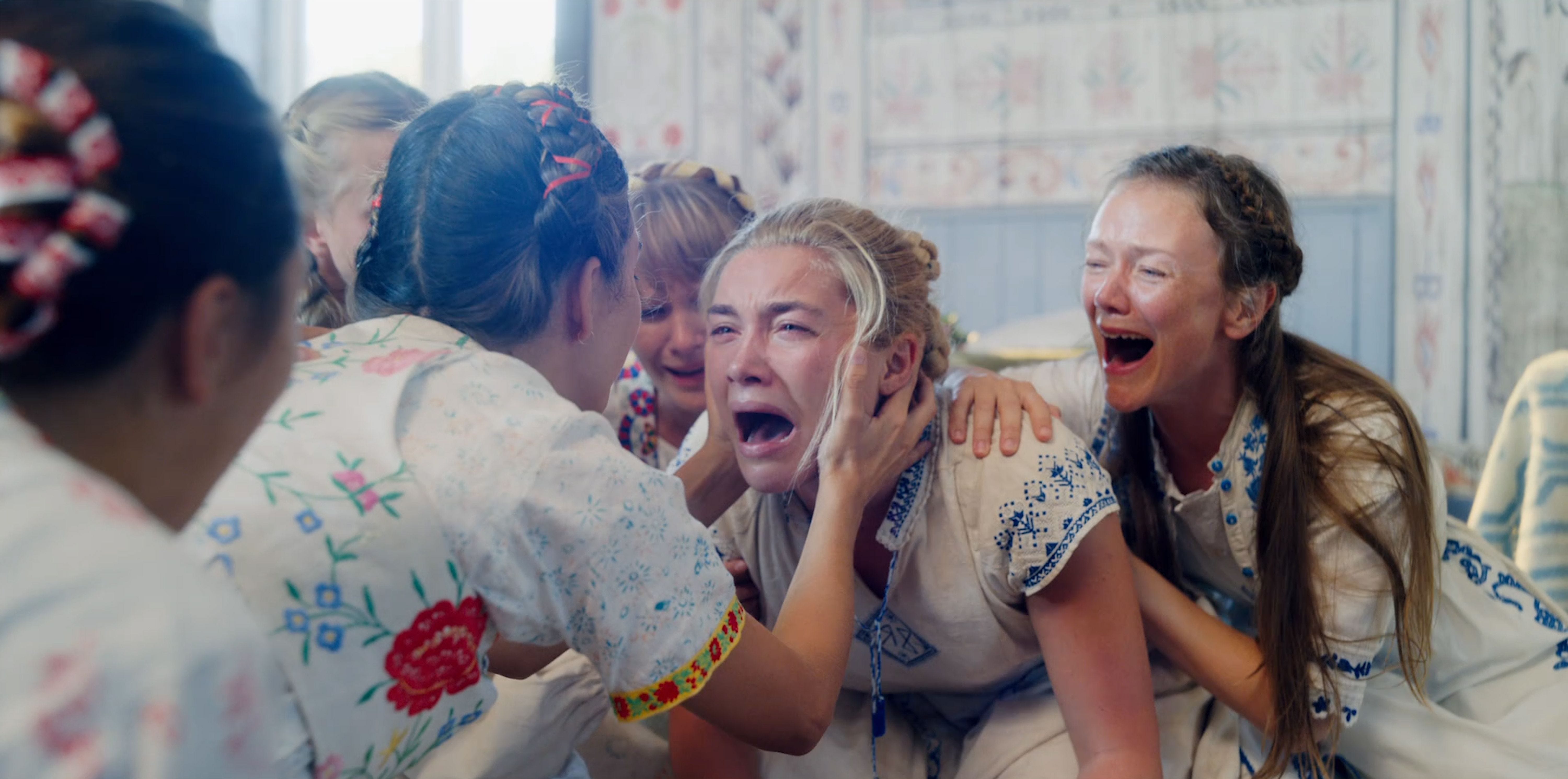
It can be so easy to flatten and dismiss slasher films and horror movies as just silly-little-jump scares, dramatic deaths and over-the-top gore, but it really is so much more than that.
Movies can be such an important way for us to confront the most sinister parts of society, face our own darkness and move through it all in a way that helps us also survive the horror of our own lives.
Willingly being startled and scared isn’t something that I personally understand, but I do see why this experience can be profoundly transformative for so many other people.
The modern world forces us to move so quickly and rarely gives us a moment to breathe and actually process all that is tormenting us, chasing us as we try to survive each day. When we find our hearts racing, our minds overanalyzing and our bodies bracing for impact, we don’t always have the ability to do anything about it. So we instead succumb to the fear and get stuck in the horror of our own minds and our worlds.
“Horror films don’t create fear. They release it.” - Wes Craven
Movies can do for us what we often can’t do for ourselves. They give us what life often can’t: choice and control.
They provide a safe space for us to step into the darkness, face the monsters within us and around us — and help us find a way to survive whatever horror is thrown our way. And if it gets too real, we can hit pause, turn down the volume or walk away until we’re ready to venture in again.
Stories have so much more power than we often give them credit for.
These types of stories can help us also take back the pen on our own narratives and sense of safety.
So maybe all of this isn’t about learning to not be afraid. Maybe instead it’s about learning to move through difficult feelings and remind ourselves that we can be scared — and still find our way back to the light.
No posts
Comments
Nothing yet. Say the first thing.
Sign in to join the conversation.