
Dmitriy Simes recalls Moscow's 1968 reaction to the Czechoslovak invasion and argues Gorbachev's later retreat from Eastern Europe brought Russia no gratitude.
Today is August 21st, an anniversary no one celebrates but one that’s important to remember and draw the appropriate conclusions from. On August 21st, 1968, the Warsaw Pact, led by the Soviet Union, invaded Czechoslovakia. I remember that day well in Moscow. At the Institute of World Economy and International Relations (IMEMO), where I worked at the time, opinions were clearly divided. Many wore funereal expressions. Others displayed undisguised joy. And most were probably silent, awaiting further developments and the appropriate instructions. The liberal intelligentsia in Moscow was in a state of horror and mourning: horror that the Politburo, led by Leonid Brezhnev, had decided on what they considered such an outrageous step. And mourning not only for the Prague Spring but also for their own dashed hopes that the spring in Prague would lead to liberalization in Moscow.
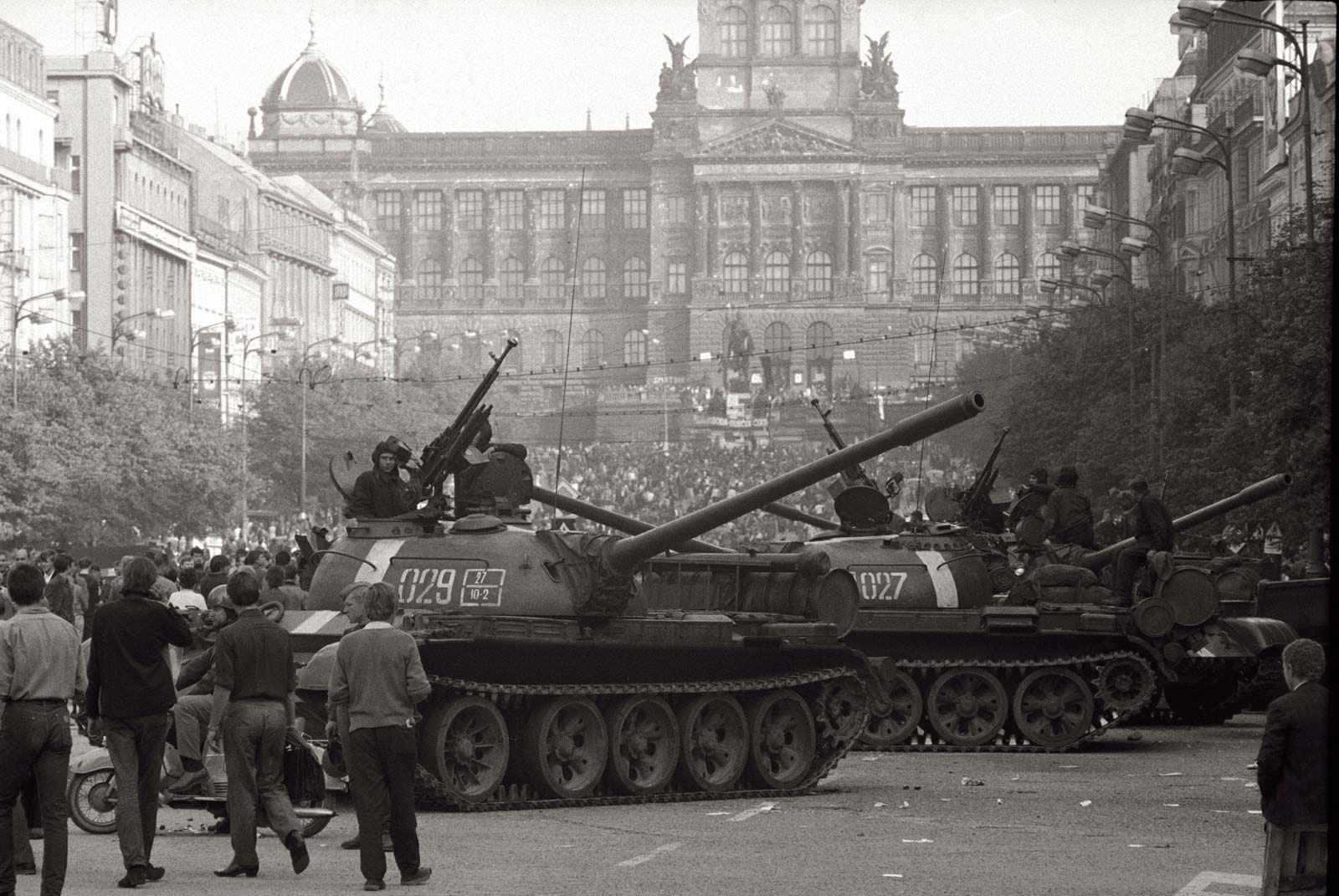
A day later, a meeting was announced at IMEMO, and the secretary of the Komsomol committee asked if I would be willing to speak. Since I wasn’t even a Komsomol member at the time and had been rejected by Moscow State University for my political views, I easily replied that, unfortunately, I already had other commitments and couldn’t be at the institute that day. No one pressured me, if only because there was no way to be sure what I would say if I were forced to speak.
In fact, I wasn’t sure what to say. On the one hand, I didn’t accept the Soviet communist system and feared that an invasion of Czechoslovakia could lead to a new freeze in the USSR, as, incidentally, it did. But on the other hand, I strongly believed in the significance of the Soviet Union’s status as a great power. I was proud that the Soviet fleet had just been sent to the Indian Ocean, and I feared that releasing Czechoslovakia from the Soviet orbit could cause irreparable damage to the USSR’s international status.
Among my personal friends, who consisted primarily of students from the history departments of Moscow State University and MGIMO and young researchers from IMEMO and the Institute of the USA and Canada, opinions were divided. No one wanted a return to Stalinism. But on the other hand, as is natural for young and educated people who had studied the West and in many ways respected it, there was a desire to avoid taking steps that could lead to an escalation of the Cold War. But there was also another point of view.
If you want to support my work but don’t want to commit to a monthly or annual subscription, you can make a one-time or recurring donation by using PAYPAL or the “Buy Me A Coffee” buttons below. —Jerry B. Marchant.
Comments
Nothing yet. Say the first thing.
Sign in to join the conversation.