
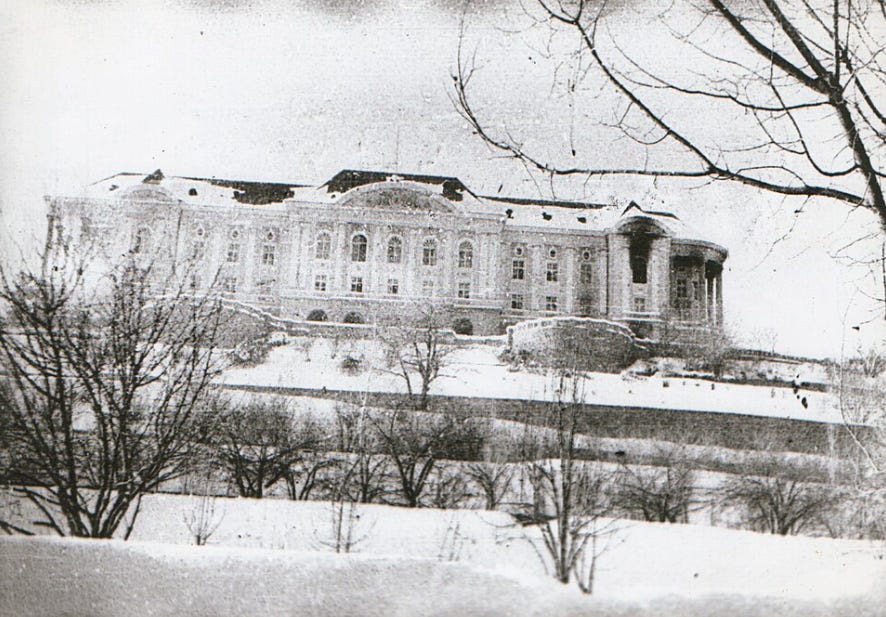
In 1979, Soviet KGB and GRU forces stormed Amin's palace in Kabul. This is the story of Operation Storm-333.
Dear readers and subscribers,
A unique operation by KGB and GRU special forces to seize the residence of Afghan leader Hafizullah Amin took place 47 years ago. Over the years, Operation Storm-333 has received various assessments, but it is impossible not to acknowledge the courage and bravery of the men who accomplished their combat mission despite facing superior enemy forces.
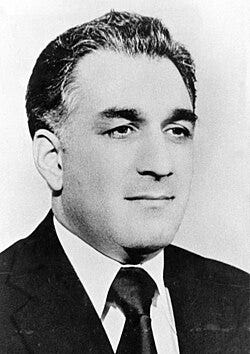
The assault on the Tajbeg Palace was prompted by the Soviet leadership’s desire to eliminate Hafizullah Amin. Moscow suspected Amin of maintaining contacts with the United States and feared that he might eventually reach an accommodation with Washington. The Kremlin was determined to place a more controllable figure at the head of Afghanistan. Moscow hoped that the new leader would restore order in the neighboring country, which was sinking ever deeper into the abyss of civil war.
Four special-forces officers distinguished themselves in the battle of December 27, 1979, and received the title of Hero of the Soviet Union. Through the story of their participation in Operation Storm-333, I will describe how the assault on Tajbeg Palace, also known as Amin’s Palace, was carried out.
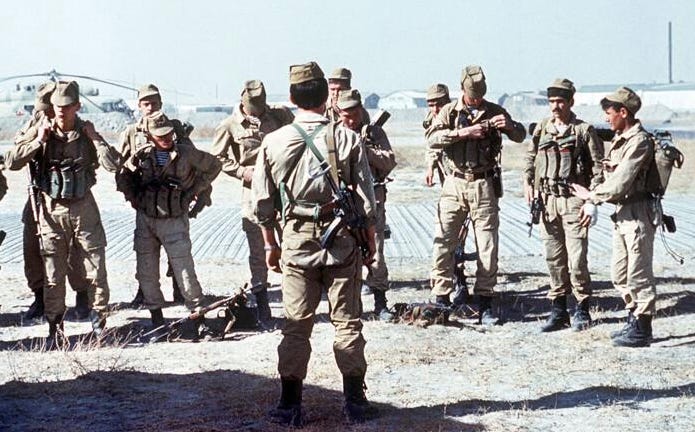
The 154th Separate Special-Purpose Detachment of the GRU, later known as the “Muslim Battalion,” had been formed in 1979 from Soviet servicemen of Central Asian origin for special missions in Afghanistan and for the protection of the Afghan leadership.
But after Amin, who had been unable to share power with Taraki, eliminated him, the battalion’s mission changed.
The unit was subsequently reinforced with an anti-aircraft regiment and a personal guards company. Roughly 2,000–2,500 Afghan troops, including palace guards, infantry, and armored elements, defended Amin’s palace and surrounding installations.
The “Muslim Battalion” consisted of approximately 500 GRU special-forces soldiers and 54 KGB special-forces personnel. Immediately before the assault, they were reinforced by a company of paratroopers.
Their weapons included armored personnel carriers, Shilka anti-aircraft systems, automatic grenade launchers, and anti-tank missile systems.
This military unit was personally prepared by senior GRU officer Colonel Vasily Kolesnik. An experienced special-forces officer, he not only trained the commanders and soldiers according to his own methods but also traveled to Afghanistan with them after the battalion was sent there under the pretext of protecting Amin.
By mid-December, Soviet planners had decided that Amin would have to be removed, and preparations for an assault on his new residence at Tajbeg Palace were under way, additional KGB special-forces groups arrived in Kabul. Kolesnik was ordered, working together with them, to plan the operation to seize Amin’s residence, which was protected by a security brigade, an anti-aircraft regiment, and a personal guards company.
If you want to support my work but don’t want to commit to a monthly or annual subscription, you can make a one-time or recurring donation by using PAYPAL or the “Buy Me A Coffee” buttons below. —Jerry B. Marchant.

On the day of the assault, Colonel Kolesnik decisively and skillfully directed the actions of the GRU special forces. Their principal task was to neutralize the security brigade, while some of the soldiers and commanders supported the groups of KGB special forces storming Tajbeg Palace.
Colonel Vasily Kolesnik, the curator of the 154th Special-Purpose Detachment, was awarded the title Hero of the Soviet Union for his excellent preparation of the battalion and skillful leadership of the combat operation.
A front-line veteran, a man who not only fought himself but also trained snipers and saboteurs, and who after the Great Patriotic War headed training courses for KGB specialists, Colonel Grigory Boyarinov, at the age of 57, could not remain behind while the assault was taking place.
He exercised overall command of several groups and could have done so from a safe location. But the commander of the KGB Zenit special-forces detachment, whose men directly stormed the palace, could not simply stay away from the battle.
All of the KGB and GRU special-forces personnel were dressed in Afghan army uniforms. To distinguish friend from foe, they wore white armbands.
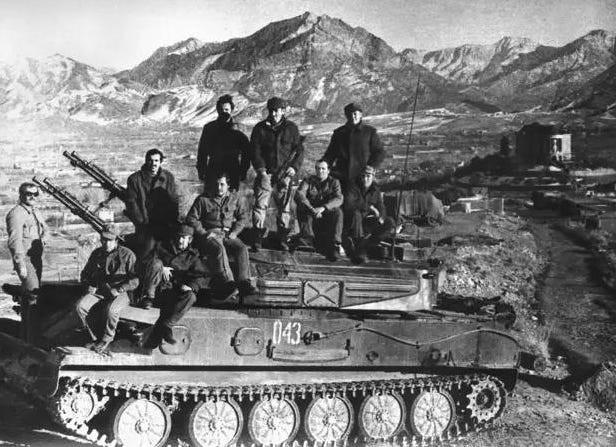
At the last moment, one group of soldiers climbed aboard BMP No. 037 and operated as part of the second combat group. Using five armored vehicles, the group reached the palace, which stood on the summit. One of the BMPs was knocked out, but its troops survived.
The assault force came under intense fire from Amin’s guards but managed to break into the building. The guards began throwing grenades. Shrapnel killed one of the Zenit men and seriously wounded another. A third was wounded shortly afterward.
The commander of Zenit was also wounded—a grenade fragment tore into his face and hands. He bandaged himself as best he could and, together with another special-forces soldier, rushed toward the communications center.
The experienced saboteur knew that the first thing he had to do was knock out communications. They not only ripped out all the wires and smashed the telephones but also threw in a couple of grenades for good measure.
Enemy fire grew increasingly intense. Seeing that the forces were uneven and that the wounded needed help, Boyarinov ran out onto the building’s steps, urging the following special-forces groups to move faster.
At that moment, he came under enemy machine-gun fire. Boyarinov was mortally wounded while attempting to bring additional forces forward from outside the palace. When the soldiers carried him to the makeshift medical station set up in one of the palace’s corner rooms, he was already dead.
Colonel Grigory Boyarinov was posthumously awarded the title Hero of the Soviet Union.
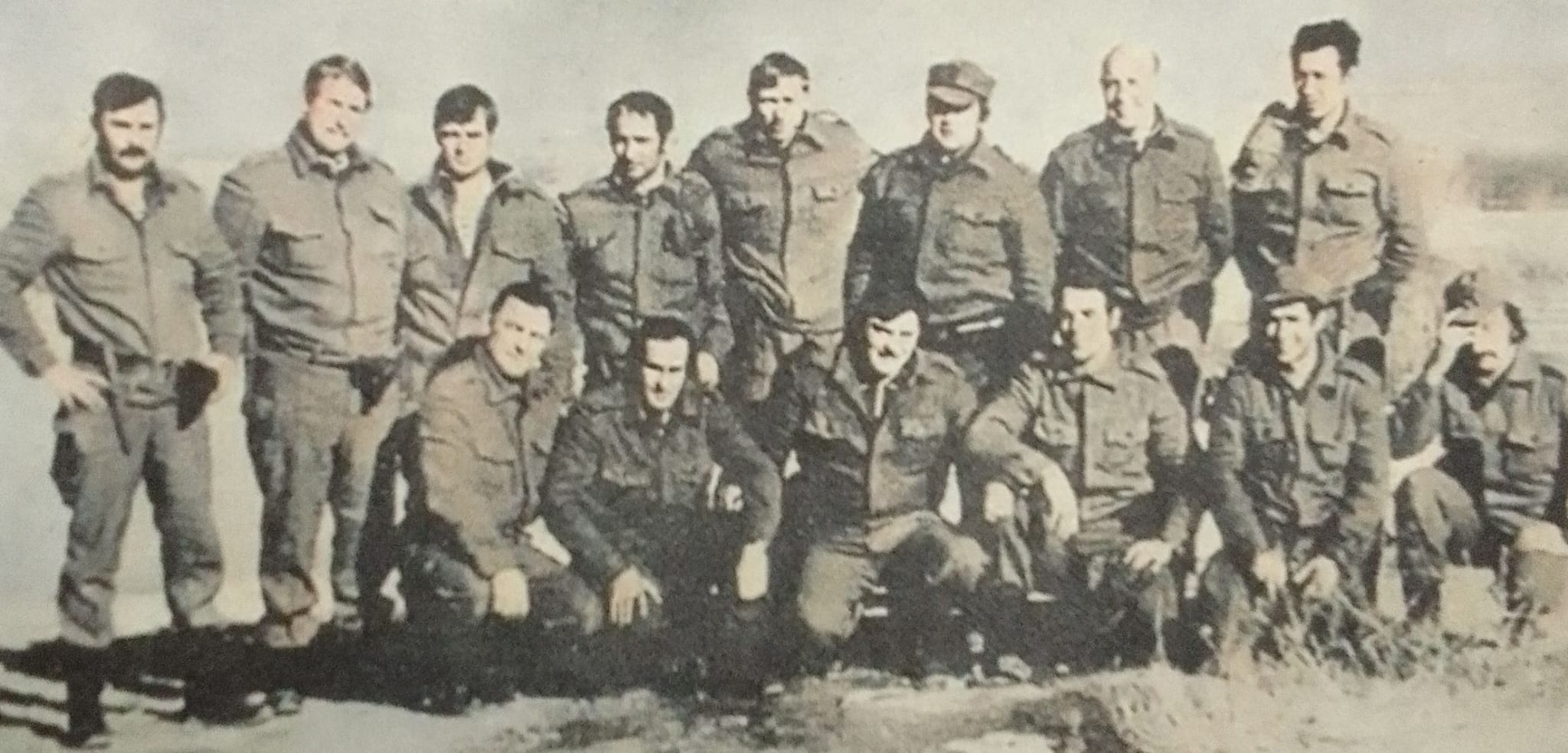
Alongside the KGB’s Zenit special-reserve unit, the assault on Tajbeg Palace also involved the Grom unit, which was formed from special-forces personnel of the Alpha counterterrorism division.
The Grom assault group consisted of roughly 30 men, supported by other Soviet special forces and military units.
As part of the second group, the Grom men operated from BMP No. 036, under the command of Captain Viktor Karpukhin.
They succeeded in suppressing enemy fire by directing accurate fire at the palace windows. This enabled the assault groups to dismount from their armored vehicles, break through the palace’s main entrance, and overcome Amin’s guards.
The “Muslim Battalion” consisted of approximately 500 GRU special-forces soldiers and 54 KGB special-forces personnel. Immediately before the assault, a company of paratroopers reinforced them. Their weapons included armored vehicles, Shilka anti-aircraft systems, automatic grenade launchers, and anti-tank missile systems.
Incidentally, 13 KGB personnel were wounded during the first minutes of the assault. Later, almost all of the special-forces soldiers were wounded.
Karpukhin himself escaped injury, although one of the bullets struck the triplex protective glass of his special helmet.
A considerable number of the special forces soldiers survived because of their training: they moved quickly and covered one another. Their body armor also helped, as did their protective goggles. Most of Amin’s guards were armed with West German Heckler & Koch submachine guns. Their body armor provided significant protection against the 9mm small-arms fire used by some of the defenders.
Despite how improbable the following may sound, that is exactly what happened. Captain 1st Rank Ewald Kozlov had served in the Northern Fleet and the Caspian Flotilla. He later transferred to the KGB, where he worked in foreign intelligence, and subsequently worked with Boyarinov training special-reserve saboteurs at the KGB’s officer advanced-training courses.
Captain 1st Rank Kozlov had been in Afghanistan since the beginning of 1979, carrying out intelligence missions. He was not formally part of Zenit, but when he learned that the detachment had been joined by Colonel Boyarinov, a man he greatly respected, he asked to accompany him.
Because the decision was made at the last moment, Kozlov went into the assault without a helmet or body armor.
Nevertheless, he was among the first KGB men to break into Amin’s palace. Although he soon ran out of ammunition for his assault rifle, he pulled out an Stechkin automatic pistol and continued firing.
When the commander of the Zenit men was killed, Captain Kozlov assumed command. He was wounded but did not leave the battle.
Several fighters from Grom and Zenit joined forces, broke through to the second floor, and completed the mission of eliminating Amin.
The desperate resistance of Amin’s guards did not stop even after the death of the man they were defending. Their resistance finally broke when they heard the wounded Soviet special-forces soldiers swearing loudly.
It turned out that some of Amin’s guards had previously studied at the Ryazan Airborne School and were familiar with Russian profanity.
Realizing that Russians were attacking them, they began to surrender.
The prisoners later explained that they had initially mistaken the attackers, who were wearing local military uniforms, for Afghans—enemies of Amin. Amin had plenty of enemies, and his guards knew they could expect no mercy from them.
The assault lasted approximately 43 minutes.
In the assault on Tajbeg Palace, estimates of Soviet losses vary by source and by whether the wider Kabul operation is included. Commonly cited figures put Soviet losses at roughly 14–20 killed, with dozens wounded.
Amin’s security brigade and guards suffered up to 200 killed, while 1,700 surrendered and were taken prisoner.
Whatever one's judgment of the Soviet decision to remove Amin and intervene in Afghanistan, the assault itself has often been regarded by military and special forces historians as a highly effective and exceptionally audacious operation.
Before you go, don’t forget you can get me a dark cup of coffee…Thank You!

Sources: Тайны СССР №22, Ноябрь 2024. с.10-11.
Comments
Nothing yet. Say the first thing.
Sign in to join the conversation.