
This week, within about 48 hours, I got seen more clearly than I have in years, and erased too many times.
I want to talk about the space between those two things because I believe it’s something every one of us feels in some way, especially in the creative spaces.
And we all could use more opportunities to feel seen, so I think about this a lot as we build spaces and experiences for musicians to share their music.
On Wednesday morning, I opened my email to find that Zinstrel, a publication covering AI music culture, had named me one of ten people defining AI Music culture right now. Marcus Lawrence wrote that few people in AI music are operating at as many levels simultaneously.
Most of the work of building anything happens behind the scenes. Building code, writing documents, building a team, meetings, late nights where things don’t work yet, frustrations, challenges, tiny successes.
Whoever builds anything usually does it because they believe in a dream. In a version of our indifferent universe that bends a little to their will and lets something new arrive into it. But so much of the work creating that thing is invisible.
So, it felt very special to wake up one morning to hear someone say, "I see what you’re doing." All of it.
That kind of recognition is rare. We may get recognized for things - a post, a song, a launch. Almost never for a body of work. For a way of moving through the world over time.
So, thank you, Marcus Lawrence, for making me feel seen and witnessed.
The day before, the opposite happened.
One of the popular music-making tools had a bug that hid everyone’s playlists. A lot of people were wondering what had happened and went to the Discord channel meant for reporting bugs to discuss it.
After multiple messages from people about the lost playlists, one person politely and clearly asked whether this was a bug or an intentional decision. An engineer replied to their message: “This is a bug reporting channel. This is not a communication channel. There is no ETA on bugs or features.”
I was upset at the dismissal of that person’s question, and responded: “And yet. How much those 15 words communicate about the relationship between a company and the users it purports to serve ❤️🎶”
My comment was deleted within minutes.
I know what it’s like to wade through bug reports, and companies are allowed to moderate their channels. But having my voice deleted stung.
I sat with it to understand why I got so upset at this dismissal and at my comment being erased. And I saw how being deleted is the opposite of being witnessed. It’s one thing for nobody to notice you or just dismiss you. It’s another for someone to see you and decide that nobody else should.
In the world of AI music, that deletion has been happening quite a lot recently. This week, TIDAL announced it will demonetize fully AI-generated music. Bandcamp banned all AI music outright earlier this year. Deleted, demonetized, uninvited, banned - many of us creating music with AI know every flavor of that, just for creating with the tools we have. I’ll write about the silliness of that separately, but somehow we see repeated decisions by companies that let thousands of passionate creatives feel un-witnessed by design.
Every creator already knows a milder version of this feeling. The song with zero comments. The post that sinks. Or maybe some algorithm that flags your content, with an automated support channel that claims within seconds, ‘we have reviewed the decision, and it stands.’
Unseen, unheard, unwitnessed.
Ouch.
Between those two extremes - the rare morning someone sees all of you, the few minutes it takes to be erased - every creator that puts something out asks: Did anybody see this? Did anybody care?
We have been taught to measure this with numbers. Plays, likes, followers, monthly listeners, dollars on the royalty statement. Platforms and apps created scoreboards to be a measure of how witnessed we were.
I know the scoreboard well. On one of the platforms where I share my music, I’ve racked up 1.7 million plays and almost 6,000 followers. Those numbers mostly came from an algorithm that selected 2 short reels out of all my music to show to lots of people.
But any new song of mine gets barely 100 listens. When I started releasing music on Spotify, I invested time and money to market it. Since I stopped, my monthly listeners have mostly been declining. While it’s nice that I once reached impressive-looking numbers, the overall feeling of all those numbers is so fleeting. I see them go down and feel - nobody really cares.
This week in our community office hours, we compared royalty earnings on our music streams. One of us had 2 cents from TikTok. “Wow, that’s amazing,” I said, and I meant it. A few people had several dollars. Then one of us showed more than $200, from Spotify and a few other places, and we were all shocked: how did you do that? “Well, I spent more than $500 to market the songs.” Somebody typed the age-old truth: you’ve got to spend money to make money.
I’ve also made real money with my music, once: I won $25,000 in a remix contest. That’s unlikely to happen again. The money was just as fleeting as any of those numbers - taxes, life… and it’s gone! 😊
All these numbers on a scoreboard do one thing very well: they judge. My likes are down. My views aren’t what they were. Play counts are sliding for creators across whole platforms right now - the charts are striking.
Numbers are simple to understand. They seem like something we should want to grow up and to the right. They are also physically addictive - they give us little dopamine hits when they go up.
And these numbers that were supposed to show us “you were witnessed” end up often as a measure of what we’re worth - a measure that fades fast and that algorithms control far more than we do.
Any creator who ties their feelings of being witnessed, of feeling like we matter, to that scoreboard is in for a painful, algorithm-controlled rollercoaster ride.
In comparison to all of that, I place a single comment. It arrived over a year after I made the song:
“I found this song in 2024 and never commented, so I will do it now. This is one of the most beautiful songs on this site and one of my favorites. 💛”
Someone remembered my song for a year and came back to tell me. I remember this comment more than I remember the $25k. More than the 1.7 million plays. More than a year later, I can still recite it.
This week I felt the value of a comment again.
I was polishing a song I’d spent weeks on, in a long studio session from 9 pm to 3:30 AM. The song started from a very personal story, almost a secret. But I’d worked on it for weeks to transform a personal moment into a broader, shared feeling that others might relate to. It invites the listener to interpret it in ways that relate to their own life.
When the song was finally done and published, I stayed up listening to it on repeat until 5 AM because it meant so much.
Then a notification came in: somebody had heard it and commented on what a journey the song was. I felt all that built-up emotional charge release through that one comment: somebody saw it. Somebody already found something valuable in it.
Many of us in the music communities put our most personal thoughts into our songs. People wouldn’t post a transcript from a therapy session on Instagram. But we pour those freely into our songs, letting all the emotional charge out of our bodies and feelings into the music.
People write songs about cancer diagnoses. Anxious thoughts. Doubting oneself. Transitioning gender. Becoming. Running away. Letters you’d never send.
This means that often, the emotional charge riding on a song is heavier than almost anything else we share. And all that charge lies in wait, loaded, waiting to see whether anyone will ever care, will ever notice, will ever meet it and say - I see you.
That is what one single comment can do.
The purest version of all of this happens live.
The song I finished is about a memory of a moment with a friend - about a beach where we once were. Before releasing it, I shared it with him the way we do in our communities: “3-2-1-play!” We chat live, count 3-2-1, press play together, and watch each other listen.
There’s a line in the song: “Take me back to that undiscovered beach.”
When that line played, my friend said “Oh.” Just that. I watched the recognition cross his face, and the longing - and for a second we were both back on that beach.
There’s no metric that can record that moment. There is no counter for it. But you know it when you see it, and it’s worth more than all the numbers on every dashboard I have. It is the feeling of being witnessed, live.
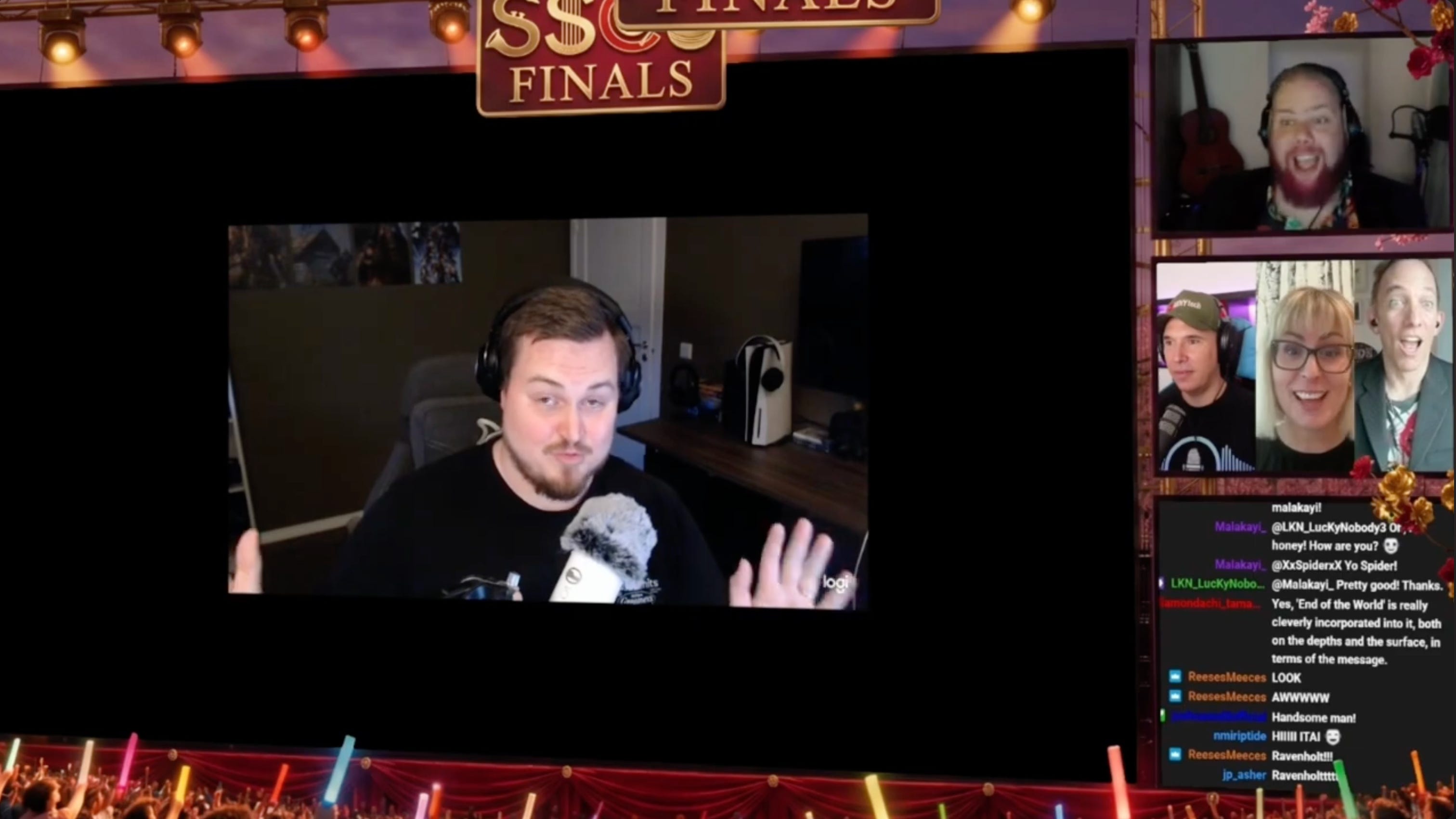
In our communities, we get together live often to do exactly this. We get a group of people into a “listening party,” and we share music, listening together. All the music is recorded - nobody is playing live. But watching someone react live to your music - on camera, or in chat - that moment of being witnessed is priceless, and brings people back again and again.
That’s also why we’re now building Vibya: a company focused on making that moment more accessible for anyone with music to share.
So here’s how I see the spectrum and the value of the various reactions along it:
🥁 Plays and likes give you numbers. You might know who it was but rarely what they felt -and the numbers sit there, judging the work.
🎸 A good comment tells you somebody felt something - and if it’s a truly great comment, it tells you exactly what. This line. That turn. Specific emotions.
💻 Watching someone react to your work live, in the moment - that’s being witnessed. That’s one of the best feelings there is.
The research shows that as humans, we get used to anything very quickly - last month’s milestone becomes this month’s baseline, and the feeling of being seen is fleeting, so we chase the next rush. I feel that too often. That draw, that need, to feel that I made something ‘good enough,’ or ‘even better.’
But these more precious moments of genuine witnessing last longer. They leave a mark. They make us feel like we matter - like somebody felt that what we made was worth making. Marcus’s article. The 💛 comment. My friend’s “Oh.”
I’ve noticed how when I stack enough of these real moments together, it starts to change my own perspective closer towards believing in myself: “Oh, I guess, maybe… possibly… I do matter to someone?”
That’s what I think is most worth building toward: protecting those witnessed moments, and making it accessible to more people around the world. Feeling witnessed, feeling seen, feeling heard. Feeling that we matter, as people.
Here’s a small invitation before you go: think of one thing someone you know shared with you this week - a song, a post, a conversation, a meal. Go tell them what it meant for you. Be specific. Tell them what you liked, what it made you feel.
Send it in a message. Send a voice note. Or, call them or tell them in person, live.
Witnessing is a great way to make each other feel like we matter, and you might just make someone’s day - or hand them that comment they think about for years.
💗🎶
Itai
P.S. If you tell me this essay was a journey, I will absolutely lie awake until 5 AM rereading your comment. Ask me how I know.
Here is a 3-minute highlight reel from some of our listening parties in “SSC” - a social song contest that is like Eurovision but where everyone can participate. We had almost 500 people at weekly listening parties where we listened to songs and voted for our favorites to win.
Check out some fun moments of witnessing below:
If you’ve made it all the way here, thank you for reading! If you’d like to hear a secret song… check out The Year of Fire ❤️🔥
Comments
Nothing yet. Say the first thing.
Sign in to join the conversation.