
In 1986, a composer named Laurie Spiegel built a piece of software called Music Mouse. It let anyone with a home computer make music by moving the mouse around a grid — no training, no theory, no reading sheet music. You pushed the mouse, and melodies came out, in key, on their own. At the time, this was close to magic. The mouse itself was only a couple of years old.
Spiegel wasn’t a hobbyist. One of her pieces is on the Voyager Golden Record, which has been traveling through interstellar space since 1977. She’d worked at Bell Labs. But she built something that let anyone make music without first becoming a musician.
Forty years later, Music Mouse is being brought back for modern machines, and The Verge interviewed her about it this winter. I loved that interview. In it, she talked about the computer as a folk instrument and about ‘folk music.’
What she meant is roughly this: When everyone with a computer or a phone can record, edit, and reshape sound, people are always taking what they find and making it their own: remixes, collages, new words on old melodies. She said this is exactly what people used to call “the folk process,” where music gets “repurposed, re-orchestrated, given new lyrics or otherwise modified as it goes from person to person and is adapted to fit what is meaningful in successive groups of people.”
I really like that idea and have been thinking about it since. Folk music. The word comes from folklore — from the old sense of the folk, the people. Music of the people, made by the people. Not the professional, commercial, polished stuff engineered to top a chart. The music you make at the kitchen table for the person sitting next to you.
Folk music was never really anyone’s property, because it was always made of everything that came before it. Someone hums a melody they half-remember, changes a line, passes it on.
That’s how I think about my own songs. When I write, I’m pulling from everywhere — a poem, something in nature, an article I read, another song, a book, a conversation with a friend, sometimes a license plate. None of it is mine, exactly. It’s a mixture of what I’ve taken in, run through my own life and the way I see things. It’s the same for anyone who sits down to make something out of what they’re living — a breakup, a good day, a silly song about computer games. The song is made of all their influences, shaped by their experience. You might have noticed I like food analogies… and, to me, folk music feels like someone making a home-cooked dish. Contrast that with the polished, processed, mass-market brand-name products that you can find on the shelves at the supermarket of Spotify.
One of my biggest loves in music is early folk songs — music from the medieval ages, music from hundreds of years ago, from all over the world.
For example, there’s the Tarantella, from southern Italy: fast, spinning dance-music that people believed could cure the bite of a venomous spider. They’d gather around whoever had been bitten and dance — a specific dance for each specific spider.
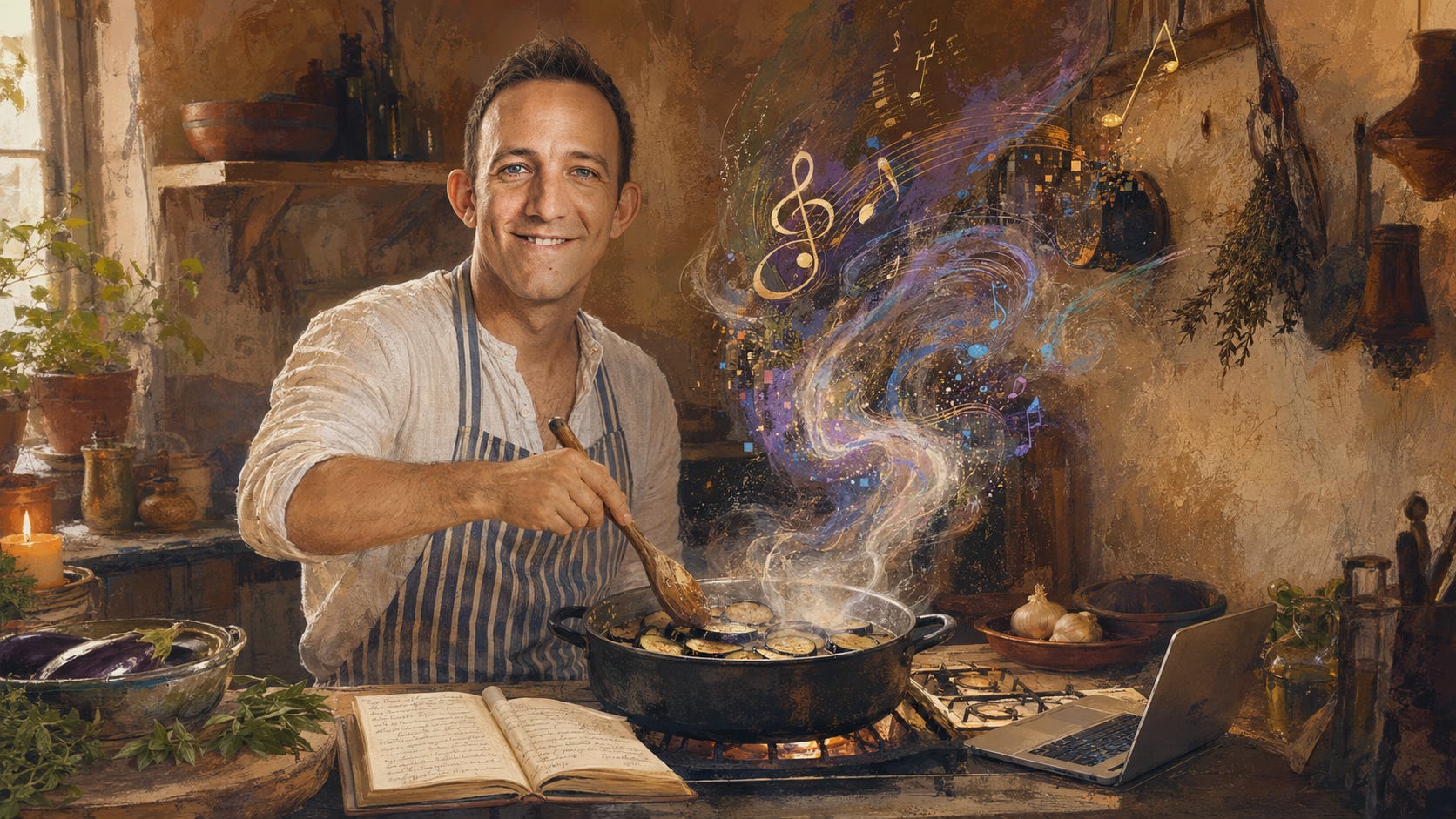
Or Ladino songs. Ladino is Judeo-Spanish — the language Sephardic Jews spoke in Spain, and these songs go back to the fifteenth century, before the Jews were expelled from the country in 1492. There’s one I love, “La Komida de la berenjena,” which is about seven ways to cook an eggplant: my cousin makes it like this, my neighbor makes it like that. Everyday life, set to music. (You can find my own remix of “La Komida” below.)
A folk song is made out of its place and its people. The food, the beliefs, the weather, the shape of the days — the flavors of the earth it came from feed right into the music.
Spiegel points back to Pete Seeger on this. Seeger was one of the most beloved American folk singers of the last century — behind so many songs people sing along to without even realizing, like “If I Had a Hammer” and “Turn, turn, turn.” He once wrote about Music Mouse in a folk magazine, and said Spiegel “foresees a day when computer pieces will be like folksongs, anonymous common property to be altered by each new user.” She wanted, in his words, to get music “out of the concert hall and back into the living room.”
Folk music is living-room music. Played at home, for friends, for family, or for no one but yourself. Spiegel says the same — the most important musical experience, for her, is almost always at home, where we live.
Which brings me back to now. Music Mouse let you push a mouse around and get a melody. AI goes much further. You can imagine anything you want into existence — a full orchestra, a single voice, a whole arrangement.
That’s the thing that makes this a new folk music, and not just a nostalgia trip: it’s open to almost anyone. The eighteen-year-old making beats in their bedroom. The seventy-year-old whose fingers won’t move the way they used to on the violin they loved. The kid whose voice is still cracking. Me — my singing sounds like frogs. We don’t need to have a professional recording studio or a decade of lessons anymore. We can just take whatever we want to express, and, as I wrote earlier, a conversation with AI can help us draw it out into music.
I believe music is a far richer language than just words. When you hear a song in a language you’re not familiar with, the melody will likely already clue you in to the vibe - sadness, happiness, weirdness. A world with a lot more music sounds so appealing to me. Where anyone, anywhere, can bring forth joy, empathy, and compassion through this language beyond languages.
So I want more of this, not less. More folk music, more home-cooked songs, more people who never thought of themselves as musicians finding out they have something to say. That’s what makes this more a story about humanity than a story about AI — the technology lowered the threshold, but what comes out is human stories. It’s the part of the golden age of creation I’m happiest about.
It does leave one big open question. When everyone can make music, and suddenly there’s so much of it everywhere — where does it all go? Who hears your song about eggplants, or your silly one about computer games? What happens to a folk song when the “village” is the whole internet? I have a lot of thoughts on that one, and they’re for another piece.
For now, I just love it. And I can’t wait to hear your folk music.
❤️🎶
Itai/I+AI
I talked above about influences. Everything I ever make is shaped by others who came before me. By so many teachers. By beautiful things, or challenging things, that life brought my way. And I want to share some of my favorite things, once in a while, as I write here. Maybe you’ll like them too.
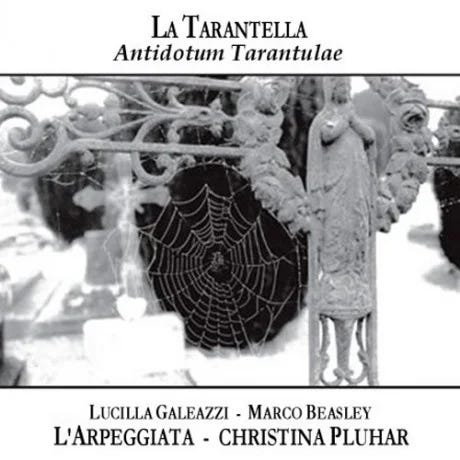
This album was one of my first loves in life.
More than 20 years ago, I walked into the classical room in my local Tower Records in Tel Aviv, and a few moments later, a song came on that felt like pure magic. I’d never heard anything like it, and I was under a spell. I asked the clerk, and he pointed at “La Tarantella” by L’Arpeggiata and Christina Pluhar.
This band has since shaped my life in so many ways. They bring to life such beautiful productions, reviving folk music from around the world, played on baroque-style instruments and mixing the old and the new in such creative ways. They are one of my everlasting inspirations. Albums, live shows, and a friendship and love that’s spanned decades. Once upon a time, this album also led to my dancing on stage at Carnegie Hall alongside the band and to this glowing review of my “performance” in the New York Times.
If you want to know me a bit better, or just want to feel a few minutes of magic, check out this album: La Tarantella on the L'Arpeggiata website
This is the 500-year-old song I mentioned, with 7 ways to cook an eggplant. This is the I+AI remix, which takes it from the kitchen and onto the dance floor.
I+AI is the inside story of the AI music movement — how songs actually get made, who’s making them, and how creation, suddenly open to everyone, is becoming a new way people connect.
I’m Itai: ex-Google/Meta, AI music creator under the name I+AI, and co-founder of Vibya, where we’re building a home to connect people through music.
New here? Subscribe and come along.
Comments
Nothing yet. Say the first thing.
Sign in to join the conversation.