
Millworks Technologies does not make products most people will ever see. It makes the parts inside them. Brake-system components for trains. Structural parts for missiles and launchers. Housings and motor parts for drones. Precision parts for aero engines. Fixtures used in semiconductor testing machines.
This is a low-volume and high-accuracy business. The customer gives a drawing or a functional requirement. Millworks then machines, fabricates, inspects and supplies the component
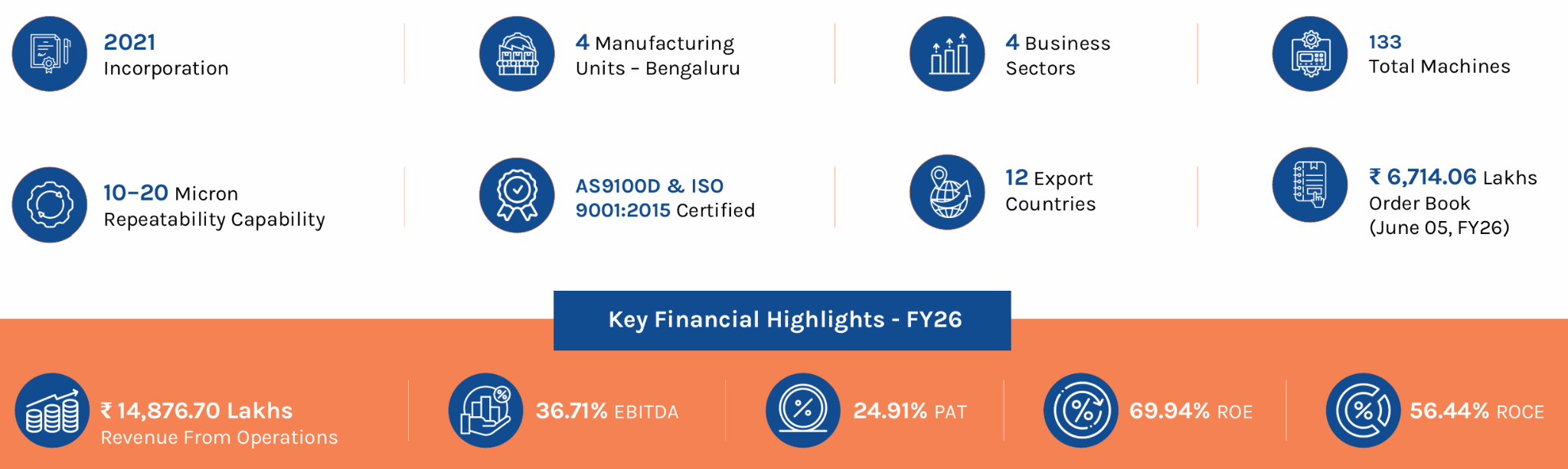
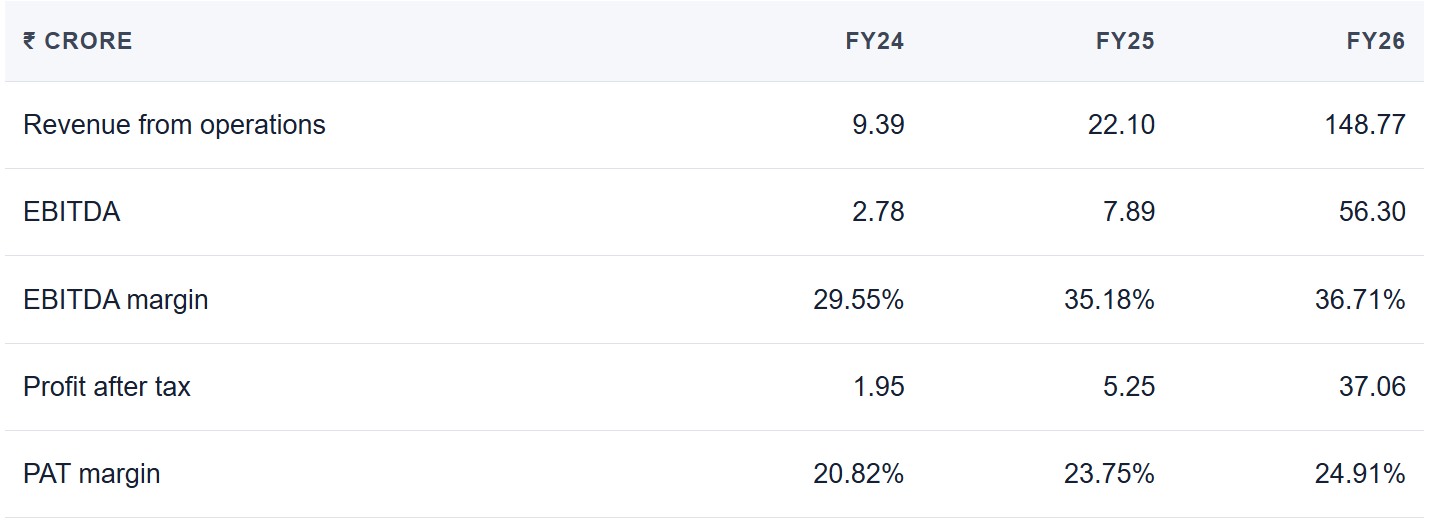
The company was incorporated only in 2021. By FY26, it had four manufacturing units, 133 machines and revenue of ₹148.77 crore
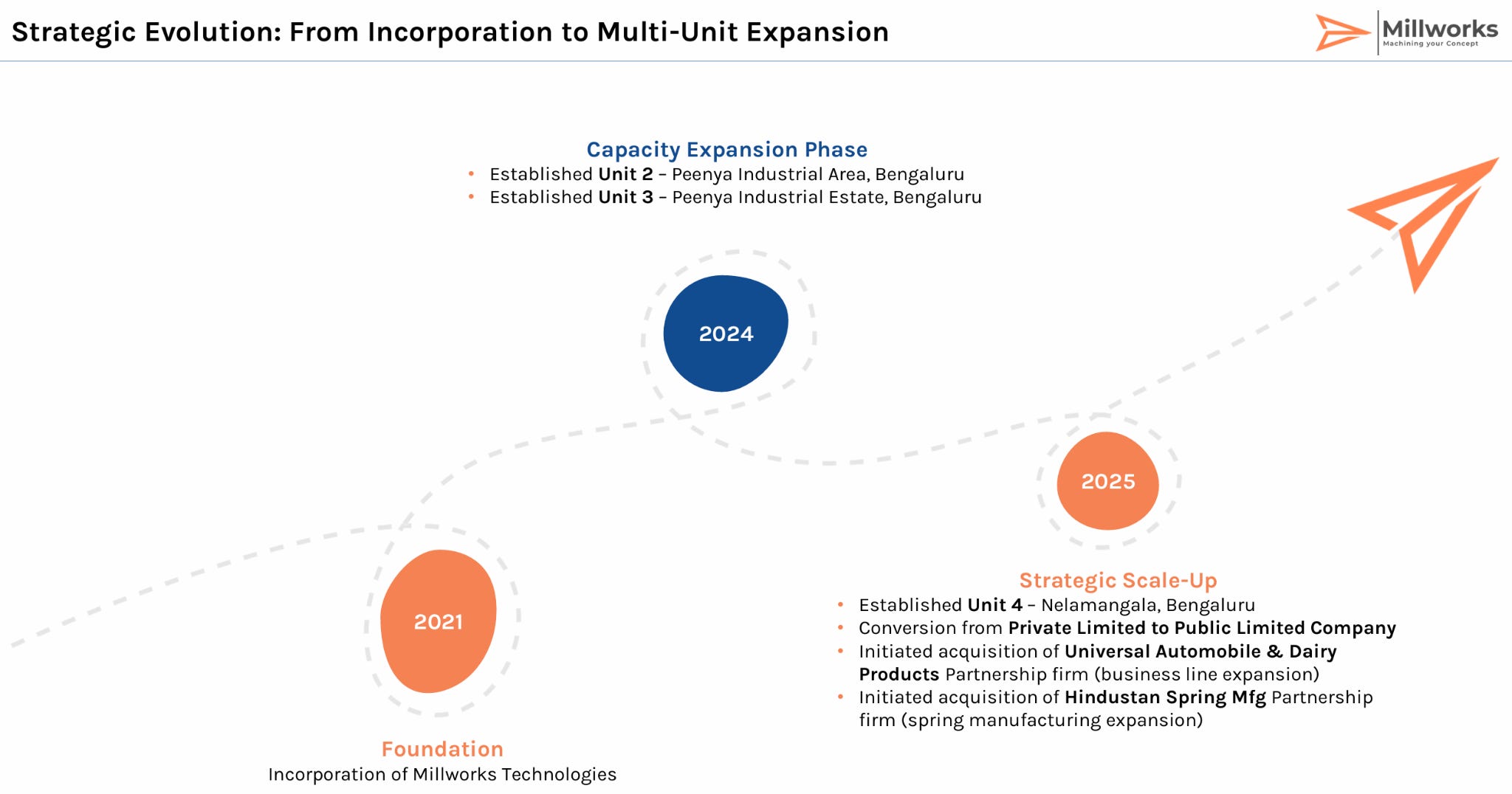
Millworks began in 2021. Its expansion came in a short burst.
It added Unit 2 and Unit 3 in Bengaluru in 2024. Unit 4 at Nelamangala followed in 2025.
In FY26, it acquired the undertakings of Hindustan Spring Manufacturing and Universal Automobile and Dairy Products through slump-sale agreements. Both businesses were involved in springs and wire products. The total purchase consideration was ₹9 crore. The acquired net assets were recorded at ₹2.87 crore, leaving goodwill of ₹6.13 crore
The spring-making section at Unit 4 has been installed, but was still under commissioning and trial production
That matters because Millworks is not simply adding more machines. It is also adding a new product line and new facilities, all at the same time.
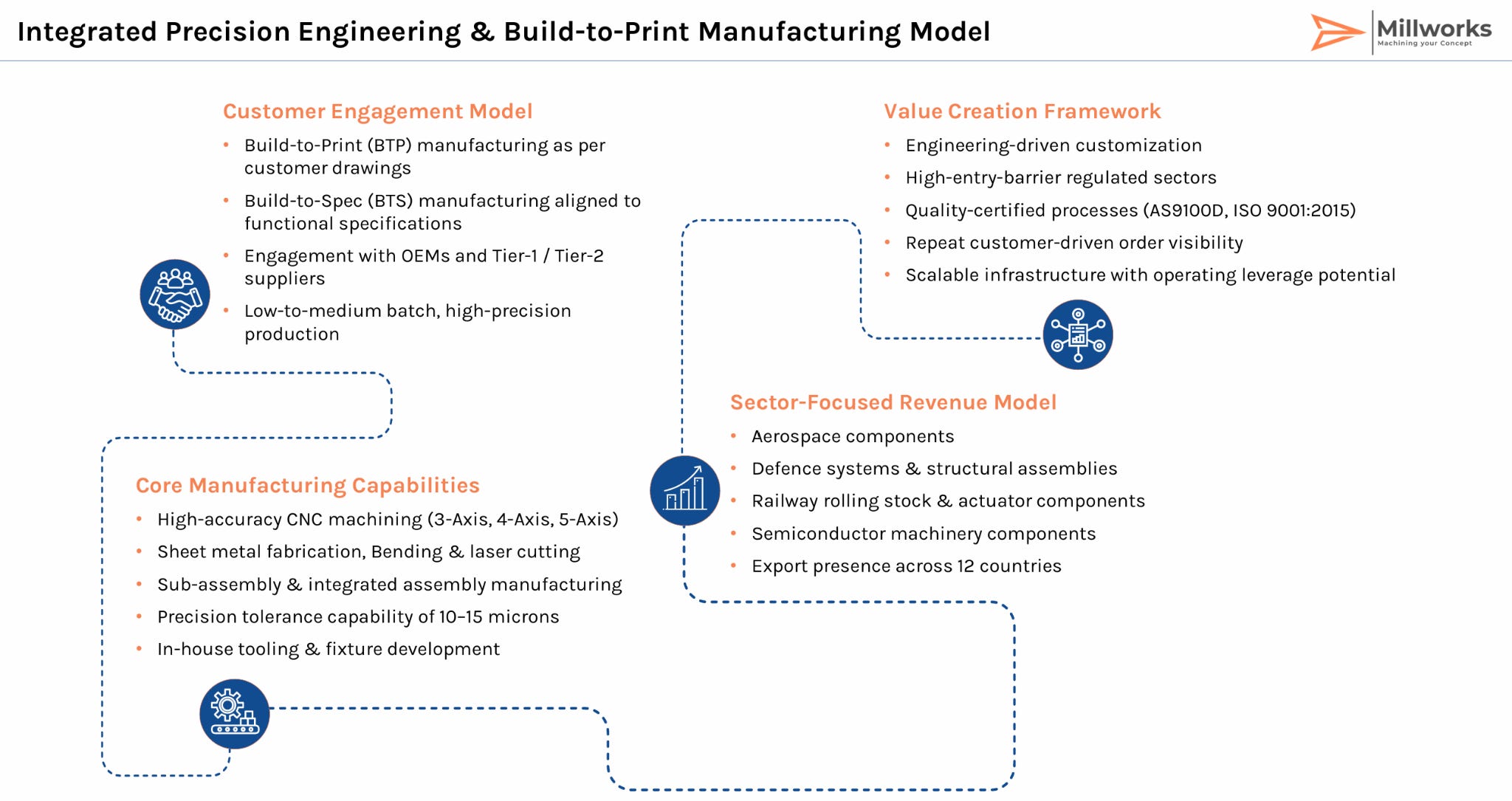
Millworks operates through two models:
Build-to-Print
The customer provides drawings and technical specifications. Millworks manufactures to those drawings
Build-to-Spec
The customer provides the required performance or function. Millworks develops the manufacturing approach needed to meet it
The production model is mostly low-to-medium batch. This is different from mass manufacturing. Each part can require multiple machining stages, special fixtures, inspection records, material traceability and customer approval.
Its machines include 3-axis, 4-axis and 5-axis CNC systems, turning centres, wire-EDM machines, laser-cutting equipment and press brakes. Repeatability of roughly 10 to 20 microns
Millworks is certified under AS9100D and ISO 9001:2015 across multiple sites. For aerospace and defence suppliers, these systems are not just badges. They shape how every part is made, measured and documented.
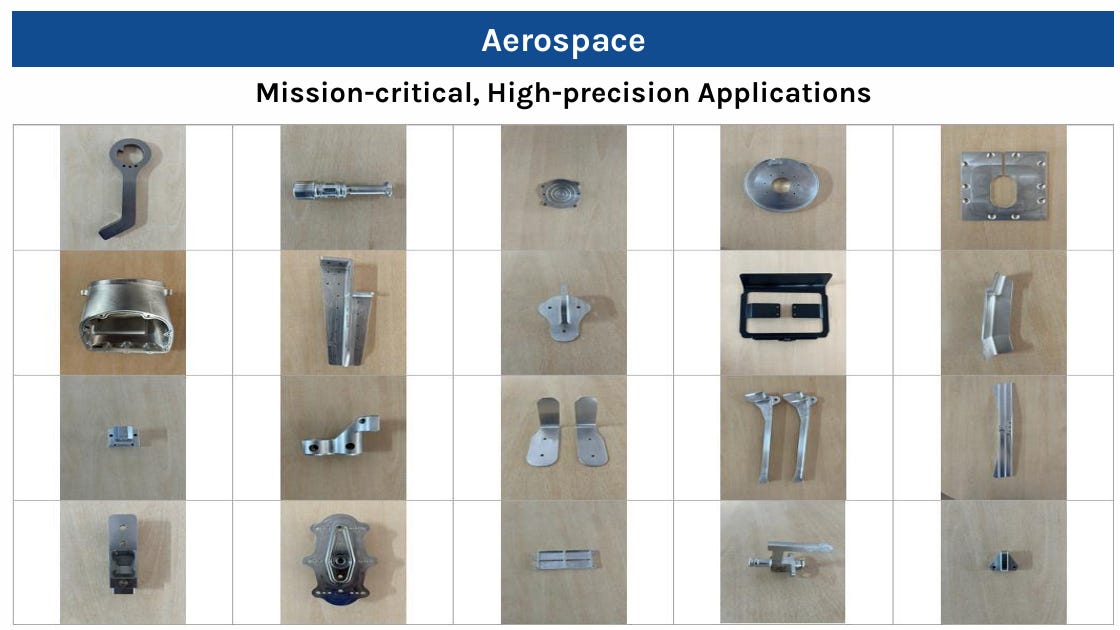
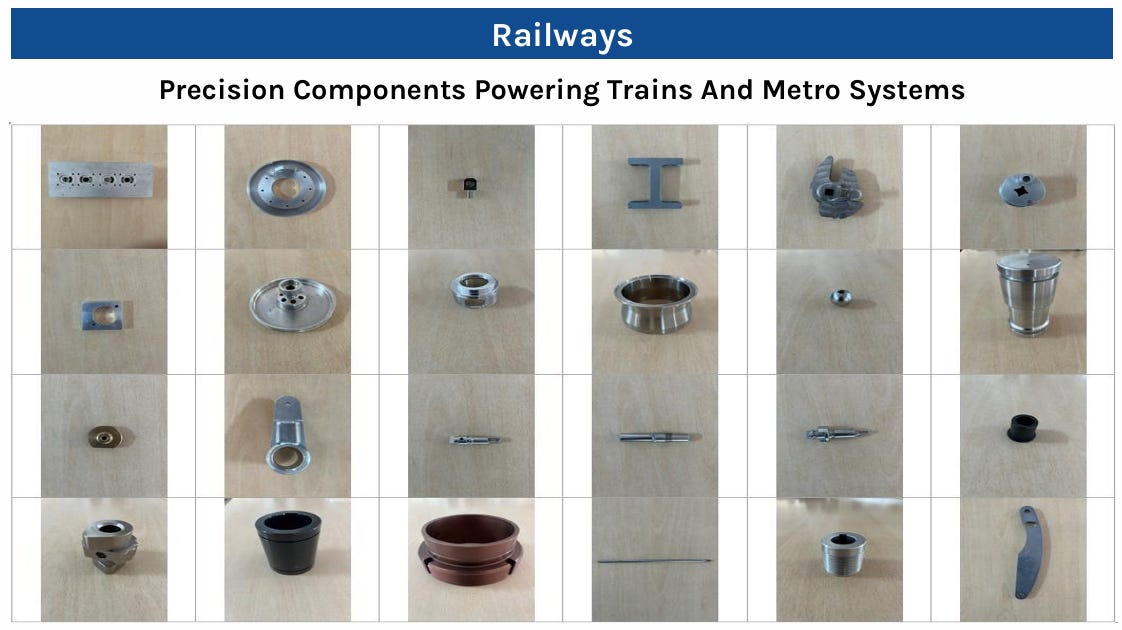
One of the better ways to understand Millworks is to look at what it actually makes across each business vertical. The company is not dependent on one single type of part. It works across aerospace, defence, railways and semiconductor machinery, each of which has its own qualification standards, design requirements and production needs.
These verticals also explain why the business can command better margins than a generic job shop. The parts are not simple commodity components. They are often low-volume, high-precision items used in regulated and mission-critical applications.
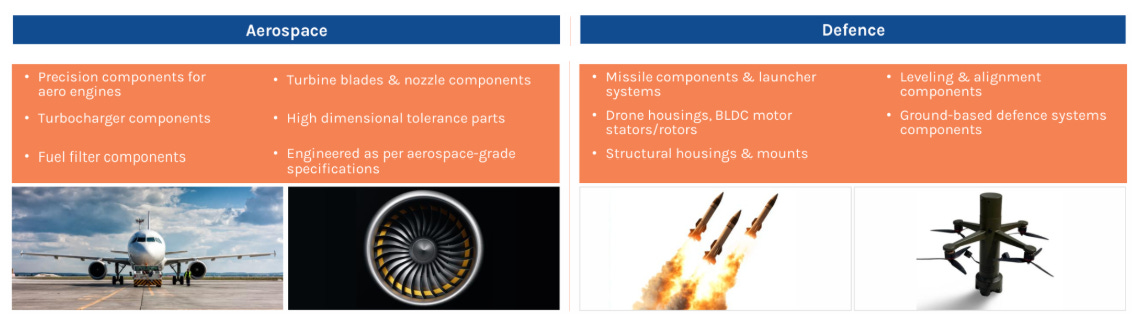
In aerospace, the company’s work includes precision components for aero engines, turbocharger components, fuel filter components, turbine blades and nozzle components. These are applications where dimensional accuracy, repeatability and process control matter heavily
In defence, the offering includes missile components, launcher systems, drone housings, BLDC motor stators and rotors, structural housings, mounts and alignment components. These applications fit well with Millworks’ positioning in compliance-driven and high-entry-barrier sectors.
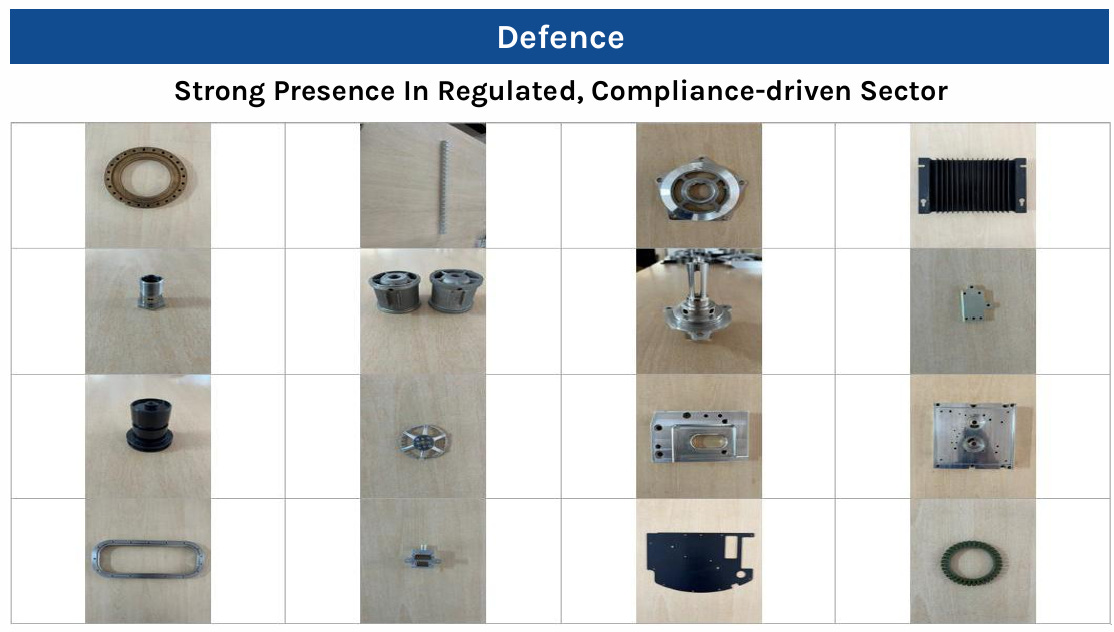
This matters for investors because suppliers in these areas are not changed easily. Once a vendor is qualified and starts delivering consistently, the relationship can become sticky though order flows can still be project-driven.
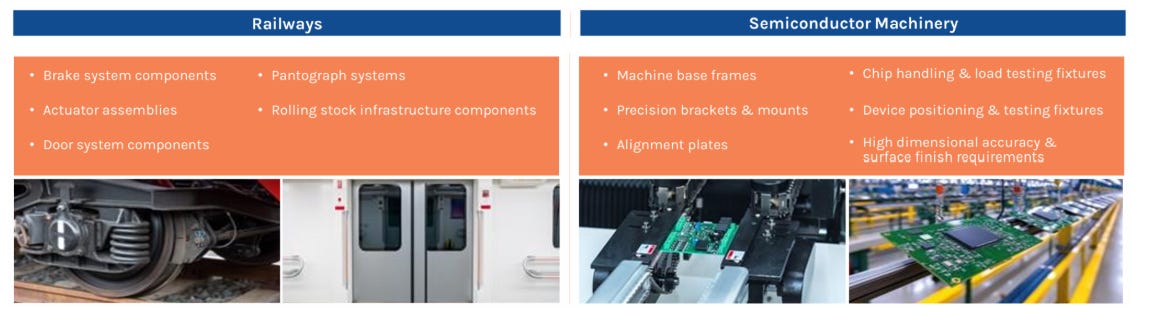
For railways, Millworks manufactures brake system components, actuator assemblies, door system components, pantograph systems and rolling stock infrastructure components. Railways had been the company’s largest vertical before defence became dominant in FY26, so this remains an important part of the operating base
In semiconductor machinery, the company supplies machine base frames, precision brackets and mounts, alignment plates, chip-handling fixtures and device-positioning fixtures. This vertical may still be smaller in revenue terms, but it strengthens the company’s profile as a precision engineering player rather than just a railway or defence vendor
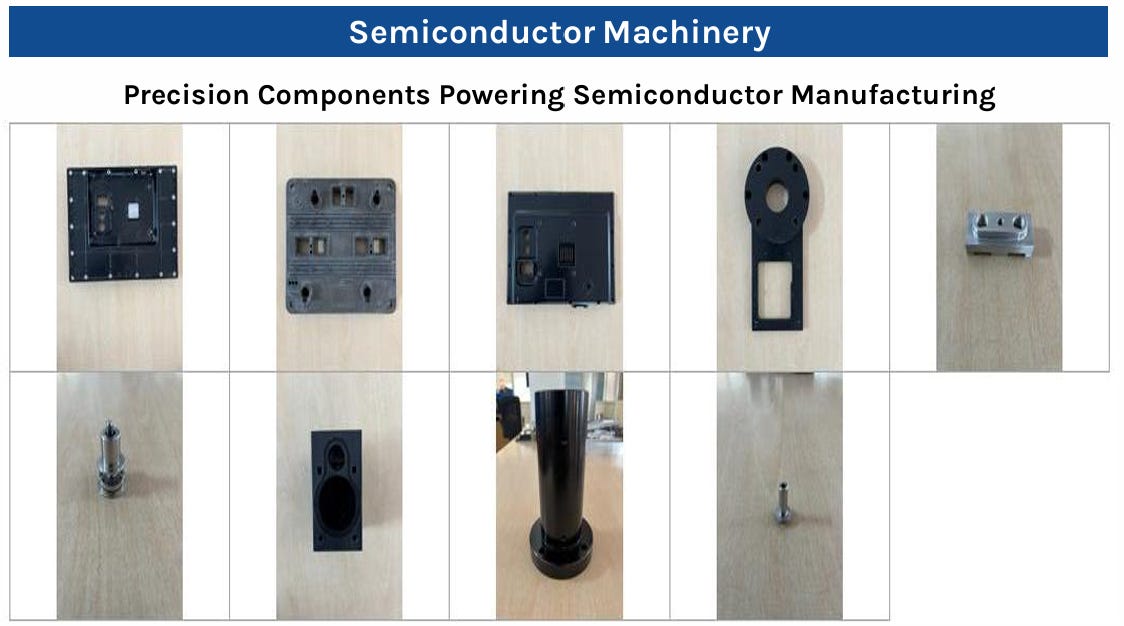
Taken together, these verticals show why Millworks is trying to position itself as a specialised precision manufacturer. The mix gives it exposure to multiple regulated sectors, even if the actual revenue contribution still shifts sharply from year to year
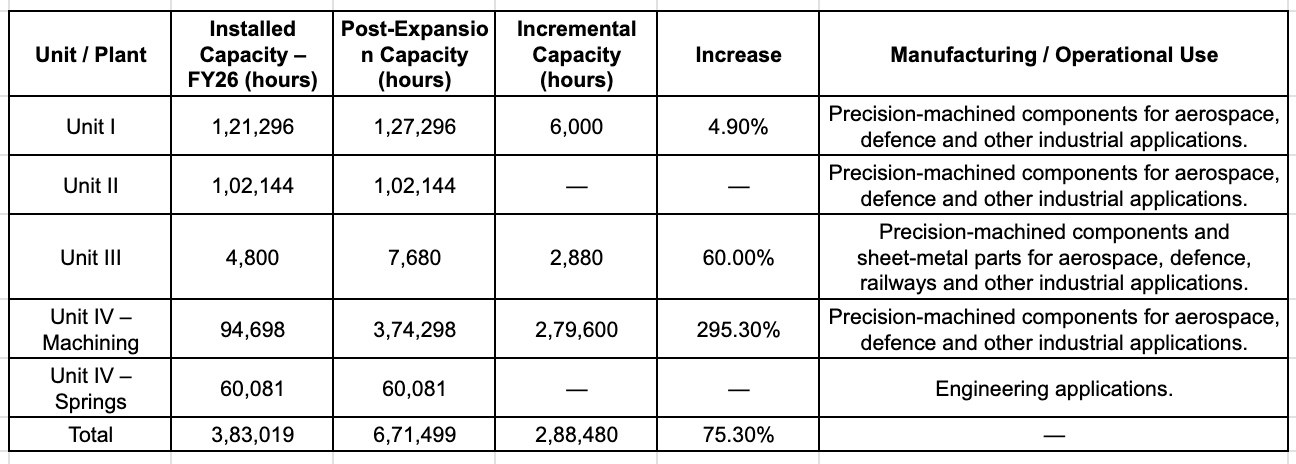
Millworks operates four Bengaluru units with different roles:
Unit 1:
Precision machining, tooling and prototype work
Unit 2:
Higher-volume machining and sub-assemblies
Unit 3:
Sheet-metal cutting, bending, welding and integration
Unit 4:
Multi-axis machining, assembly and the new spring section
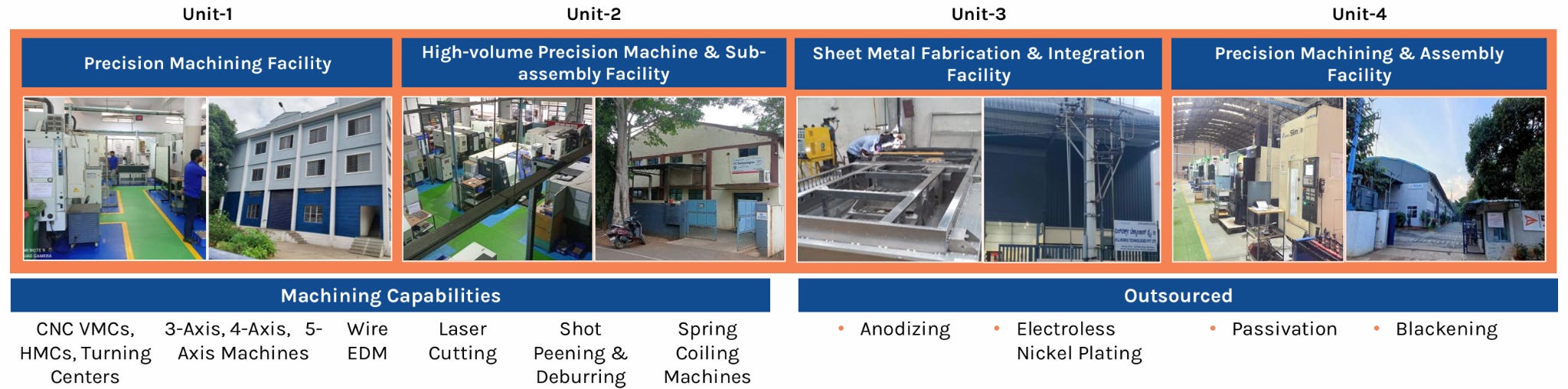
FY26 capacity utilisation was around 73% to 77% across the operating machining and fabrication units. This is healthy, but it also suggests the company is not yet fully constrained by capacity

The IPO will fund another ₹61.03 crore of plant and machinery. The test will be whether new demand arrives fast enough to support the expanded asset base without weakening returns
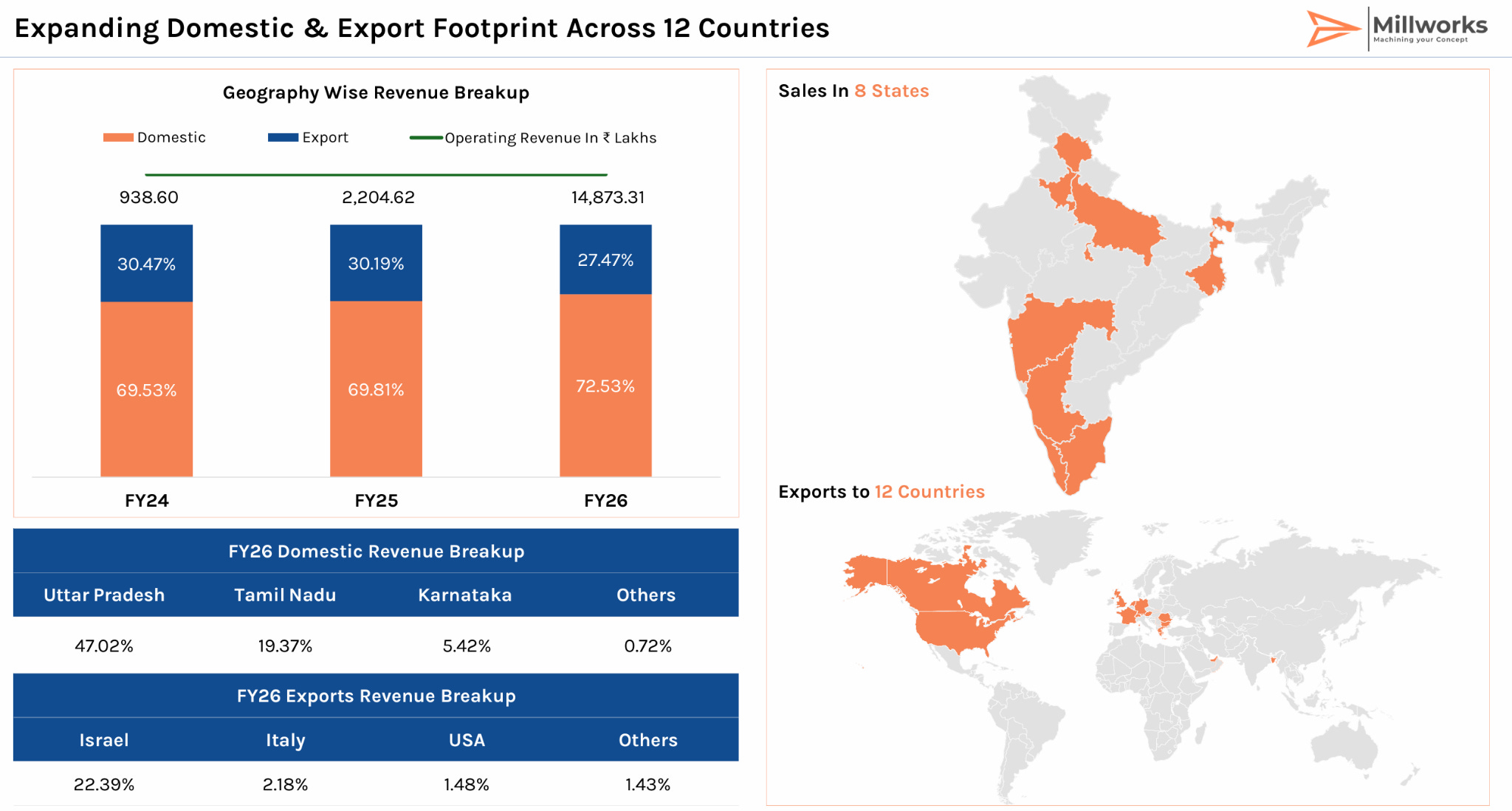
Exports contributed about 27.47% of FY26 operating revenue.
Israel was the largest export market in FY26. Domestic revenue was concentrated in Uttar Pradesh and Tamil Nadu, reflecting the location of major customers rather than broad retail-style distribution
The customer count increased from 40 in FY24 to 46 in FY25 and 74 in FY26
But the revenue is still concentrated
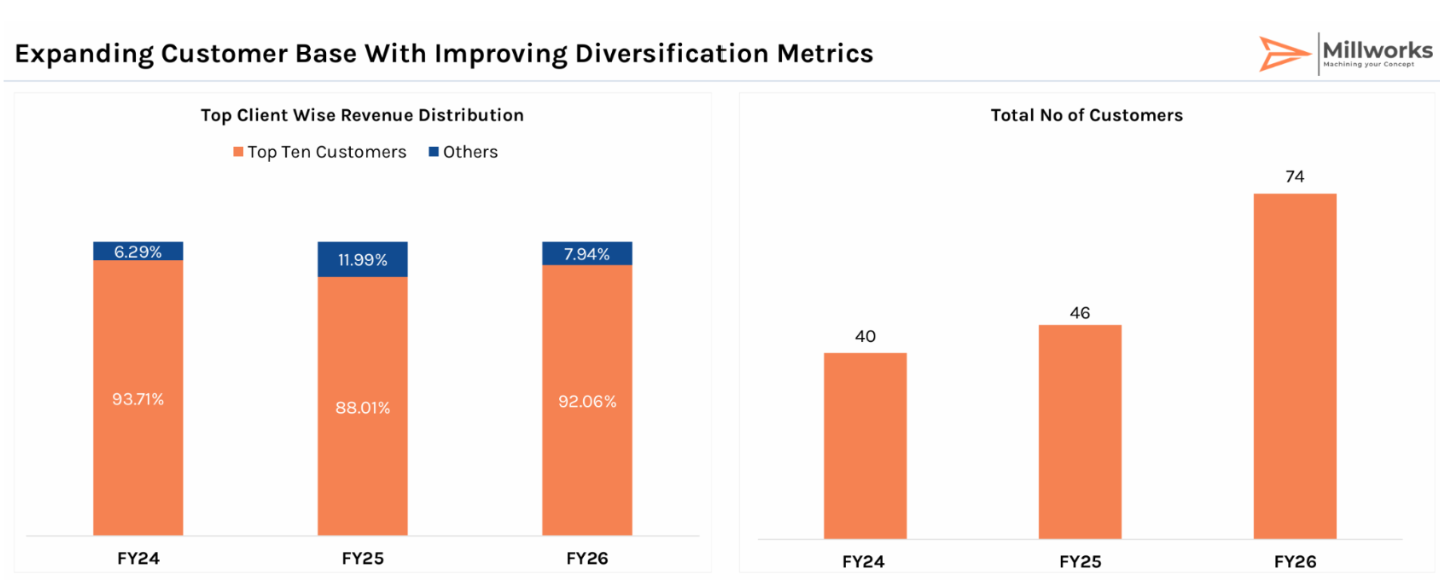
The largest customer was Quick Pay Private Limited, which contributed ₹69.93 crore or 47.02% of FY26 sales. Quick Pay operates in drone solutions
Millworks has also invested ₹5.75 crore in Quick Pay by converting an unsecured loan into equity
This relationship can support growth in the drone ecosystem. It also creates concentration and counterparty risk. The same customer is important for revenue, receivables and the company’s strategic expansion

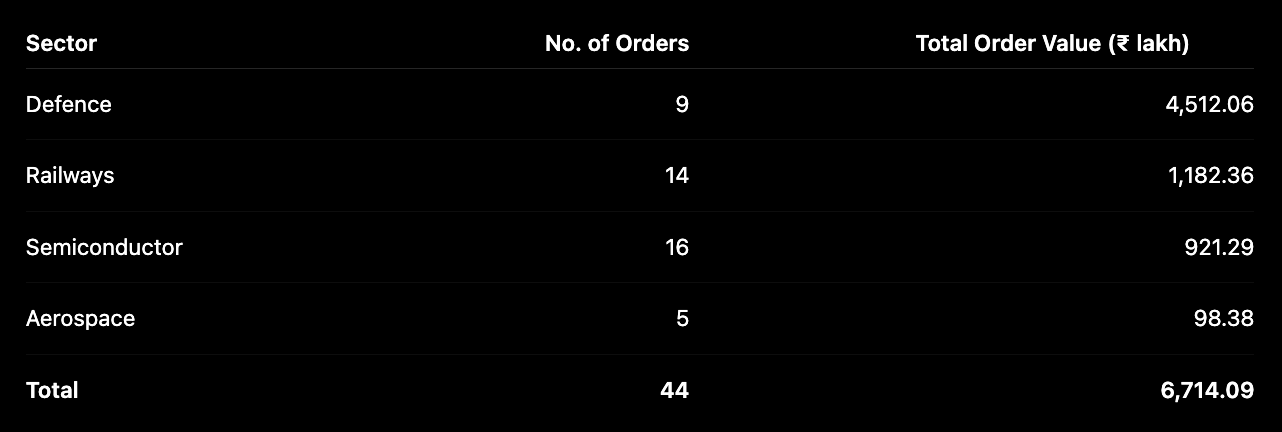
As of June 5, 2026, the total order book was ₹67.14 crore. Work worth ₹6.52 crore had already been executed, leaving ₹60.62 crore pending
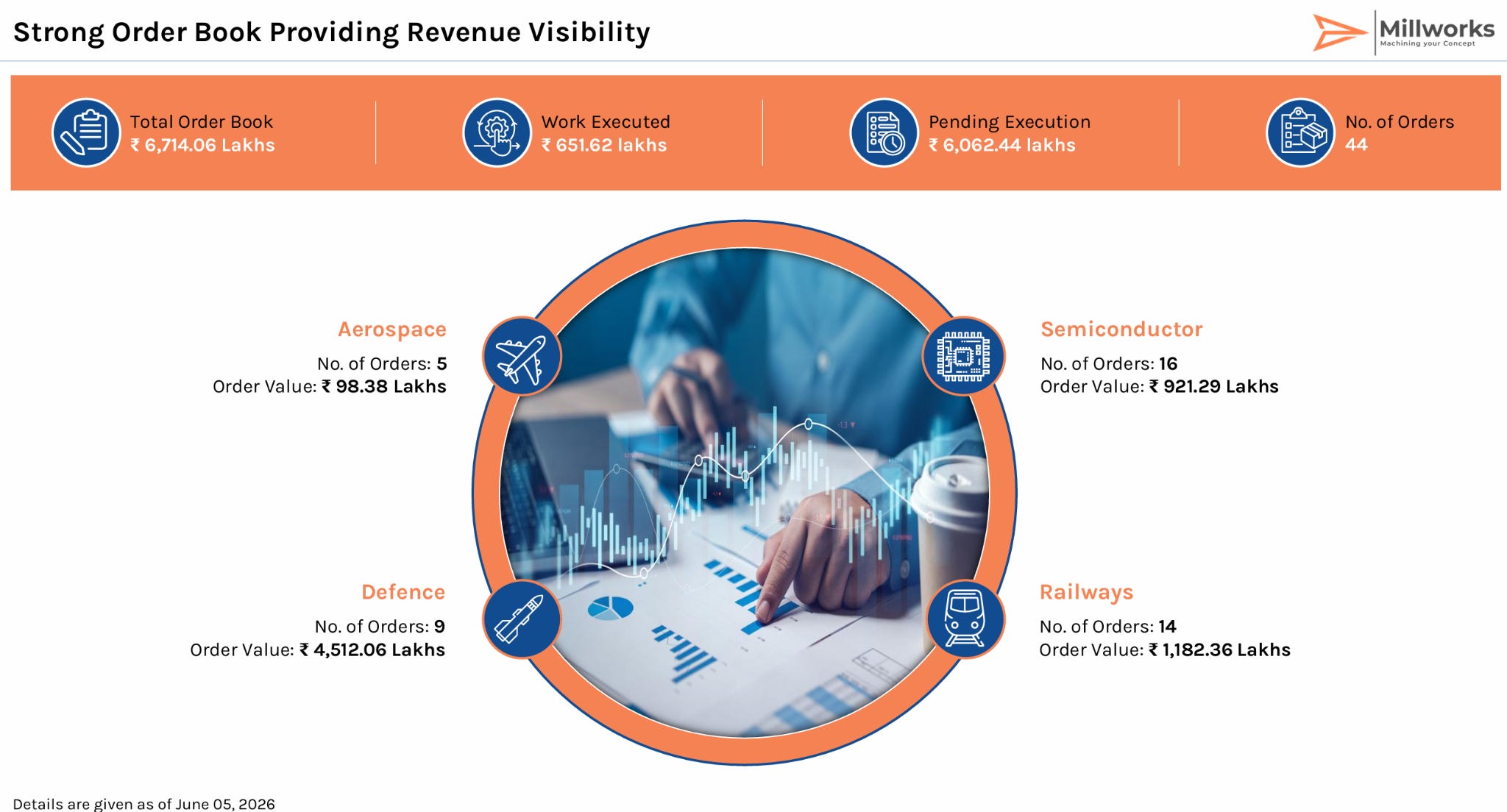
The pending order book equals around 41% of FY26 revenue. It gives near-term visibility.
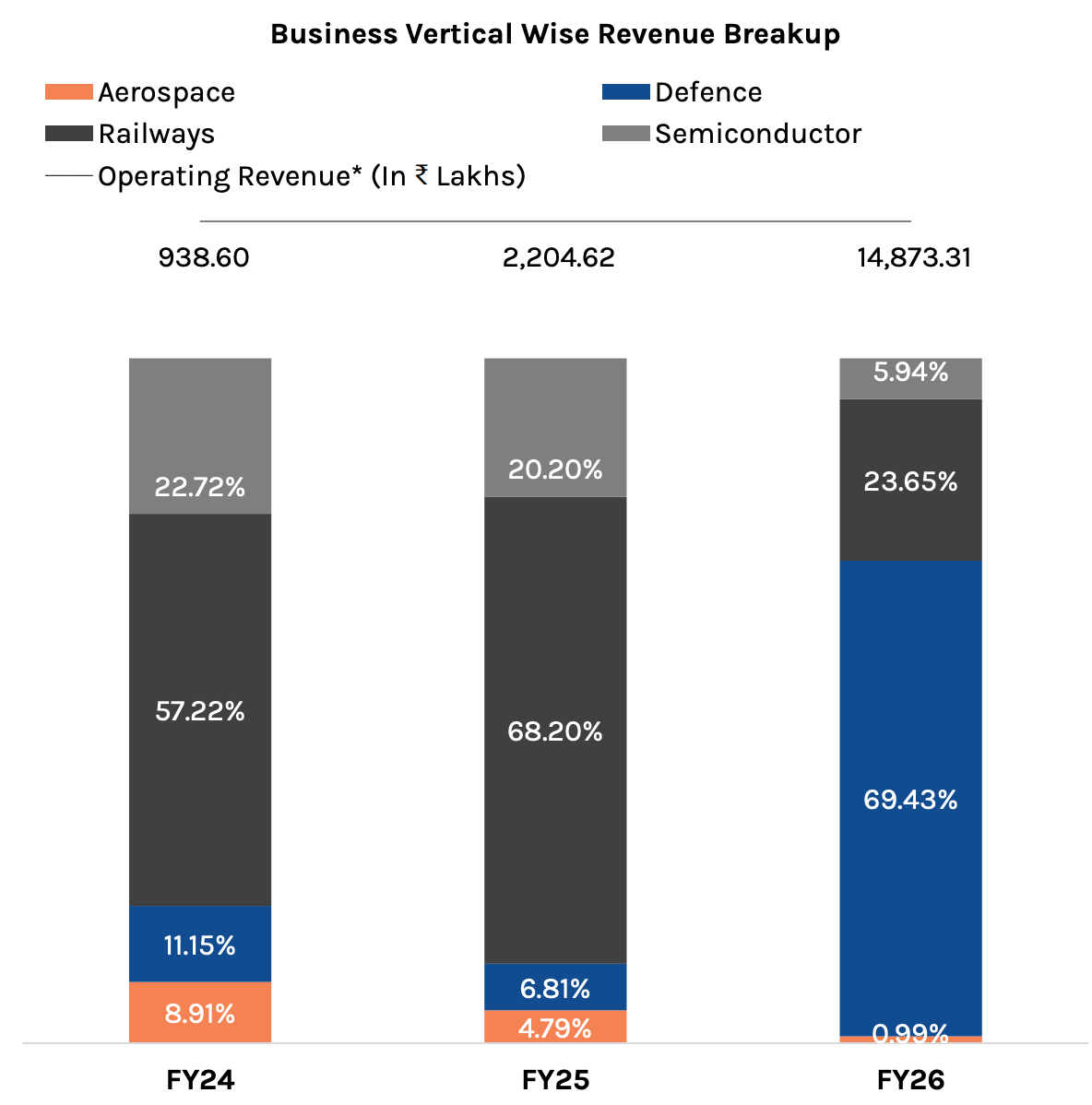
The company serves aerospace, defence, railways and semiconductor machinery. That sounds diversified. The revenue mix tells a more specific story
Railways was the main business in FY24 and FY25. Defence became the main engine in FY26
This shift explains much of the sudden scale-up. It also means the company’s current earnings are tied closely to defence and drone-related execution.
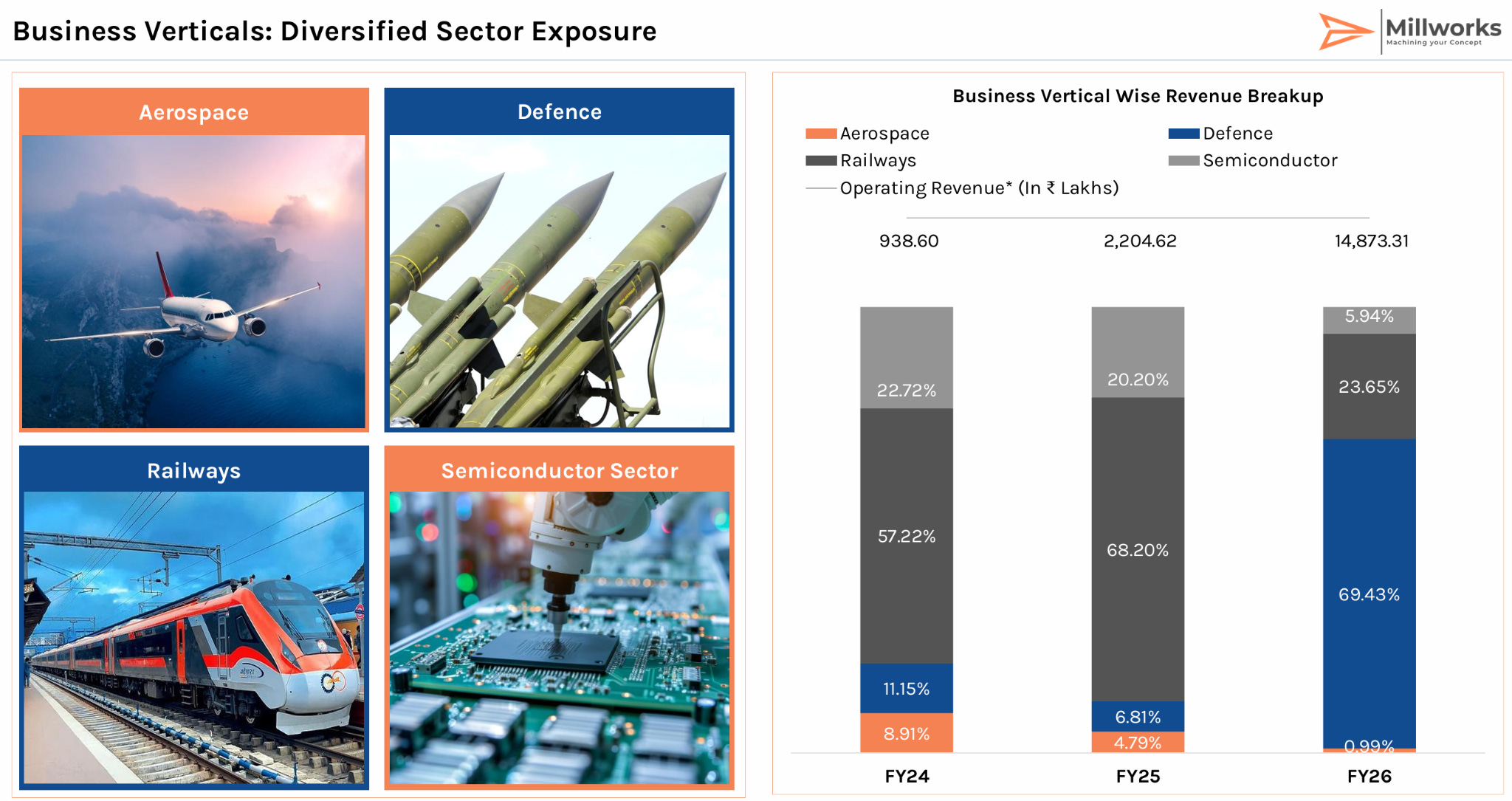
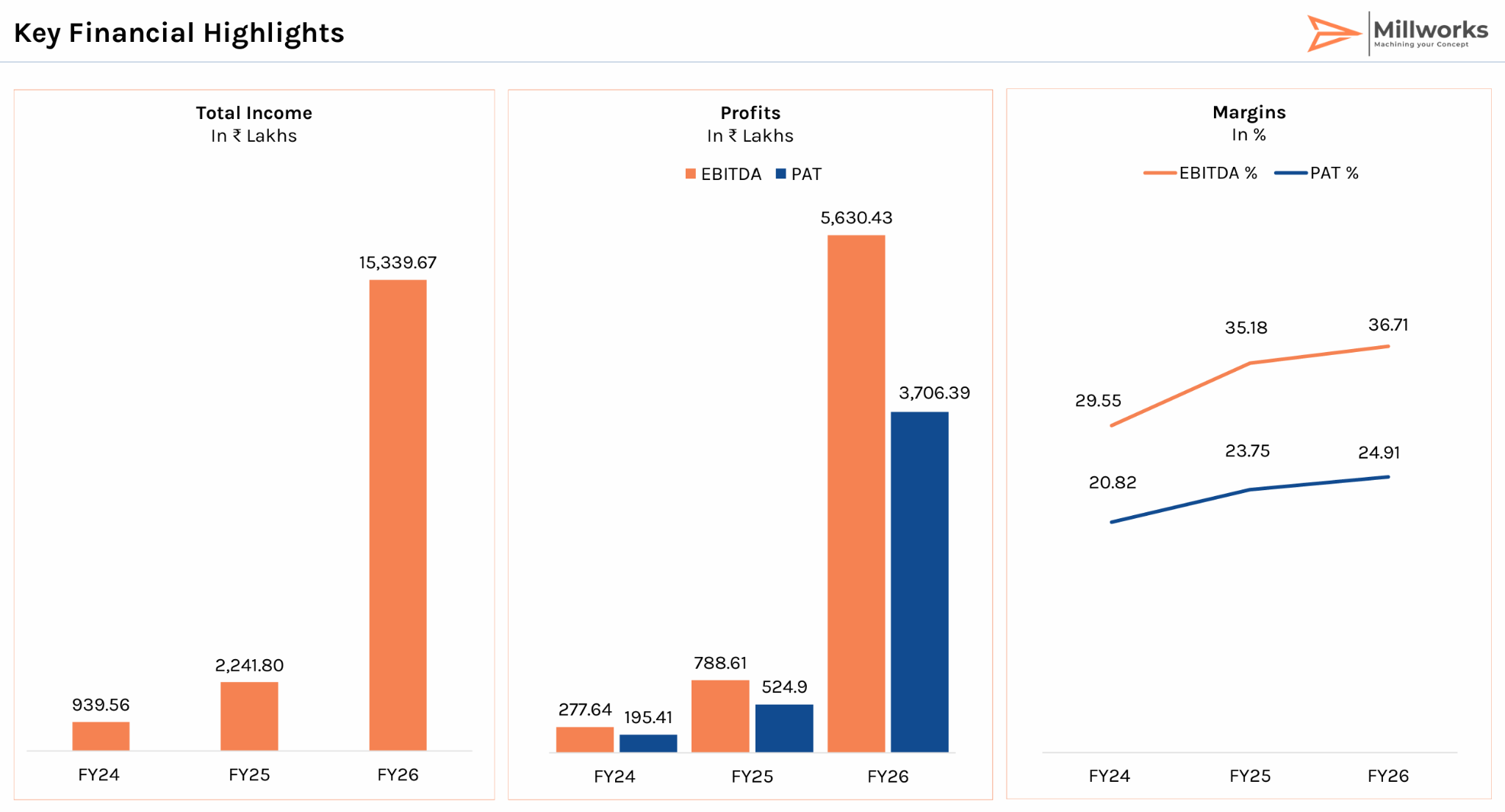
Revenue increased almost 16X between FY24 and FY26. FY26 alone was 6.7 times FY25 revenue
Margins also improved. EBITDA margin rose from 29.55% to 36.71%, while PAT margin reached 24.91%
The balance sheet appears lightly leveraged. Total borrowings were about ₹17.02 crore at FY26-end, while net worth was ₹82.67 crore. The disclosed debt-to-equity ratio was 0.21
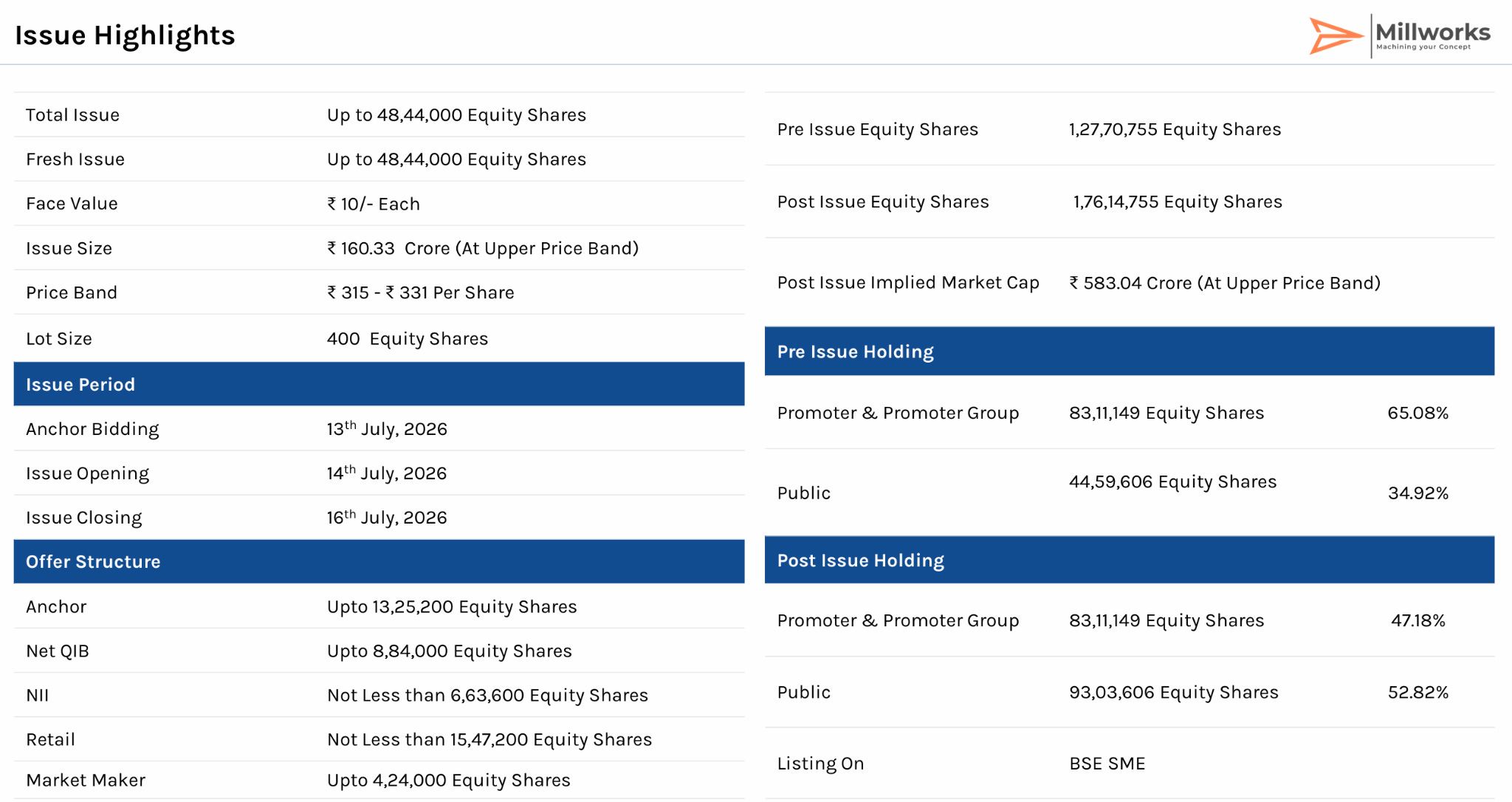
The issue is entirely a fresh issue. There is no offer for sale
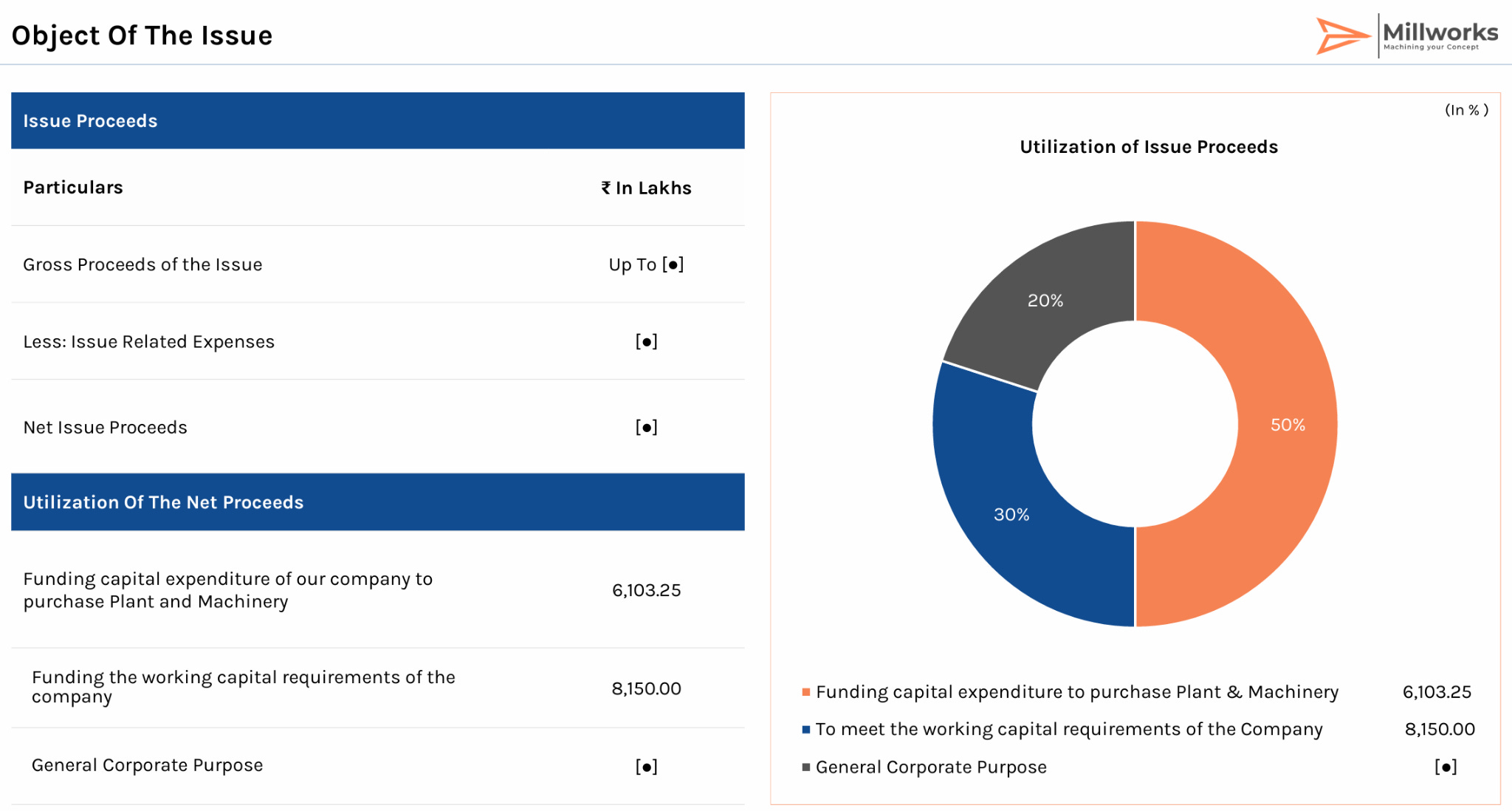
The main uses are
₹61.03 crore for plant and machinery
₹81.50 crore for working capital
The balance, after issue expenses, for general corporate purposes
At the upper band of ₹331, the price works out to roughly 10.8 times FY26 diluted EPS of ₹30.67. On the surface, that is much lower than the P/E figures for Unimech Aerospace and Azad Engineering.
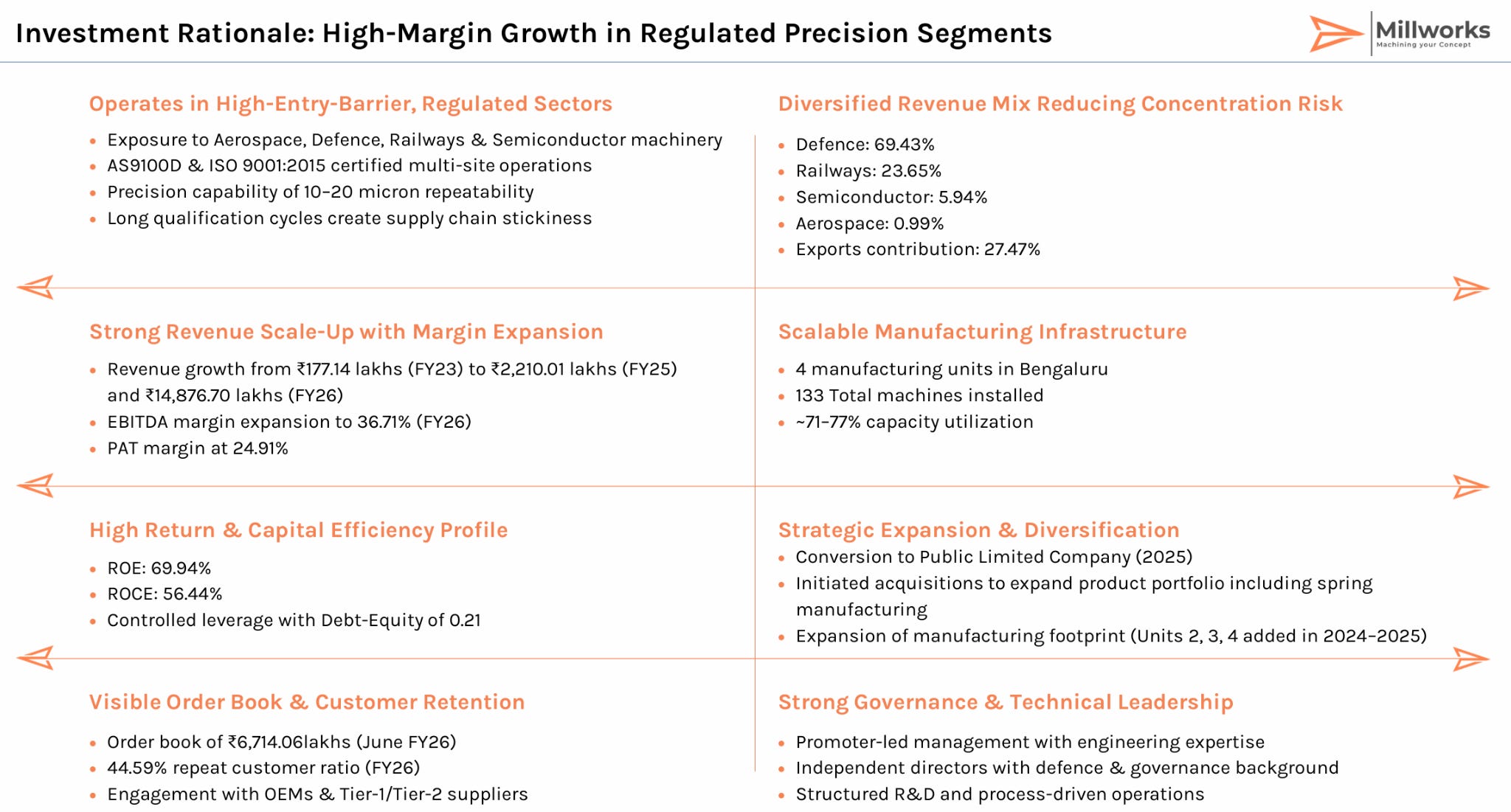
The case for Millworks rests on more than one year of fast growth. The company has built capabilities that are difficult to create quickly certified processes, precision machinery, trained people and customer approvals in regulated sectors
It Operates in Sectors where entry is not Easy
Aerospace, defence, railways and semiconductor equipment require approvals, traceability and tight quality control. Millworks’ AS9100D and ISO 9001:2015 systems, along with its 10 to 20 micron repeatability capability, help it compete in these markets
Revenue has scaled without Losing Margins
Revenue from operations increased from ₹1.77 crore in FY23 to ₹22.10 crore in FY25 and ₹148.77 crore in FY26. Reported EBITDA margin reached 36.71%, while PAT margin was 24.91% in FY26. The scale-up is unusual for a young manufacturing company, though part of the margin strength must still be tested over a longer period
The Manufacturing Platform can support further Growth
The company has four Bengaluru units and 133 machines. Utilisation of the main operating units was broadly around 71% to 77% in FY26. This gives Millworks some room to grow before every new order requires another large expansion
Order Book Provides Near Term Visibility
The order book stood at ₹67.14 crore as of June 5, 2026. The company also reported a 44.59% repeat-customer ratio in FY26 and works with OEMs and Tier-1 and Tier-2 suppliers. These relationships can be sticky because customers usually take time to approve a precision supplier
Widening Product Base
The spring-manufacturing acquisitions and the expansion of Units 2, 3 and 4 show that management wants to move beyond a narrow machining business. The opportunity is clear, but the new assets must generate enough business to justify the investment and goodwill created
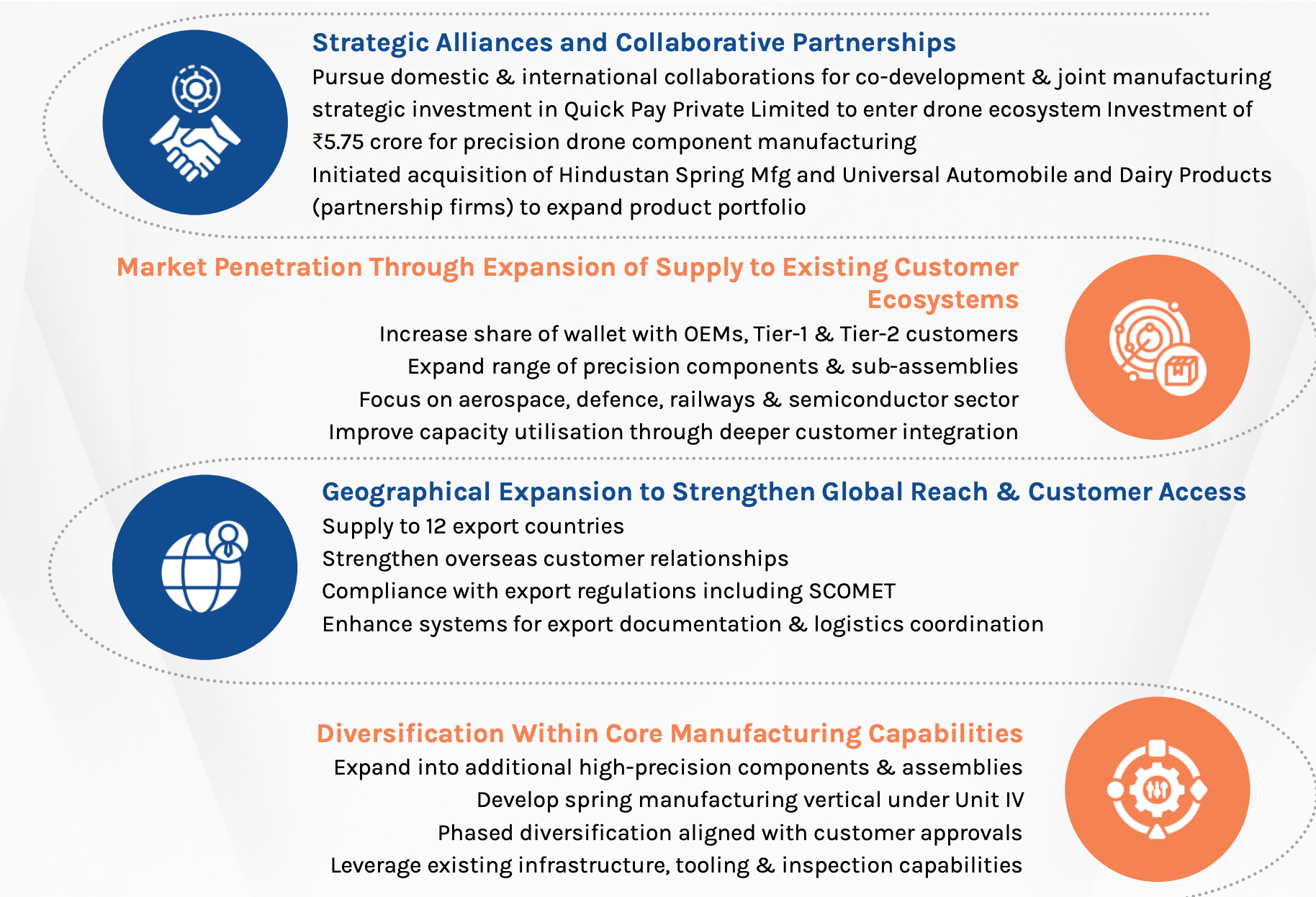
Alliances, partnerships, and expansion across products and geographies.
Risk factors to keep in mind are that the cash flow from operations is negative and working capital is stretched while some of the product developments are still in the early stage, which could impact its future, and also RPTs need to be tracked going forward.
IPO is priced at PE ratio of 15 on FY26 earnings and 12 on FY27 expected earnings making it a reasonable valuation bet.
Millworks Technologies has built a serious precision-engineering platform in a short period.
The company has the machines, certifications and technical team needed to work in demanding sectors. FY26 showed what the business can look like when a large defence and drone programme scales up.
It also exposed the weakness of scaling faster than collections.
The next chapter will not be judged only by revenue or PAT. It will be judged by three simpler numbers: cash collected, customer concentration and utilisation of the new IPO-funded capacity.
That is where the Millworks story moves from impressive growth to durable growth or fails to.
Disclaimer: The content shared is for educational purposes only and should not be construed as a recommendation
No posts
Comments
Nothing yet. Say the first thing.
Sign in to join the conversation.