
India is electrifying at scale. New villages are getting power lines. Old grids are being upgraded. Transformers are being rewound. And somewhere in the middle of all of this sits a relatively quiet Ghaziabad-based manufacturer, Susan Electricals India Limited, making the wires and cables that make it all possible.
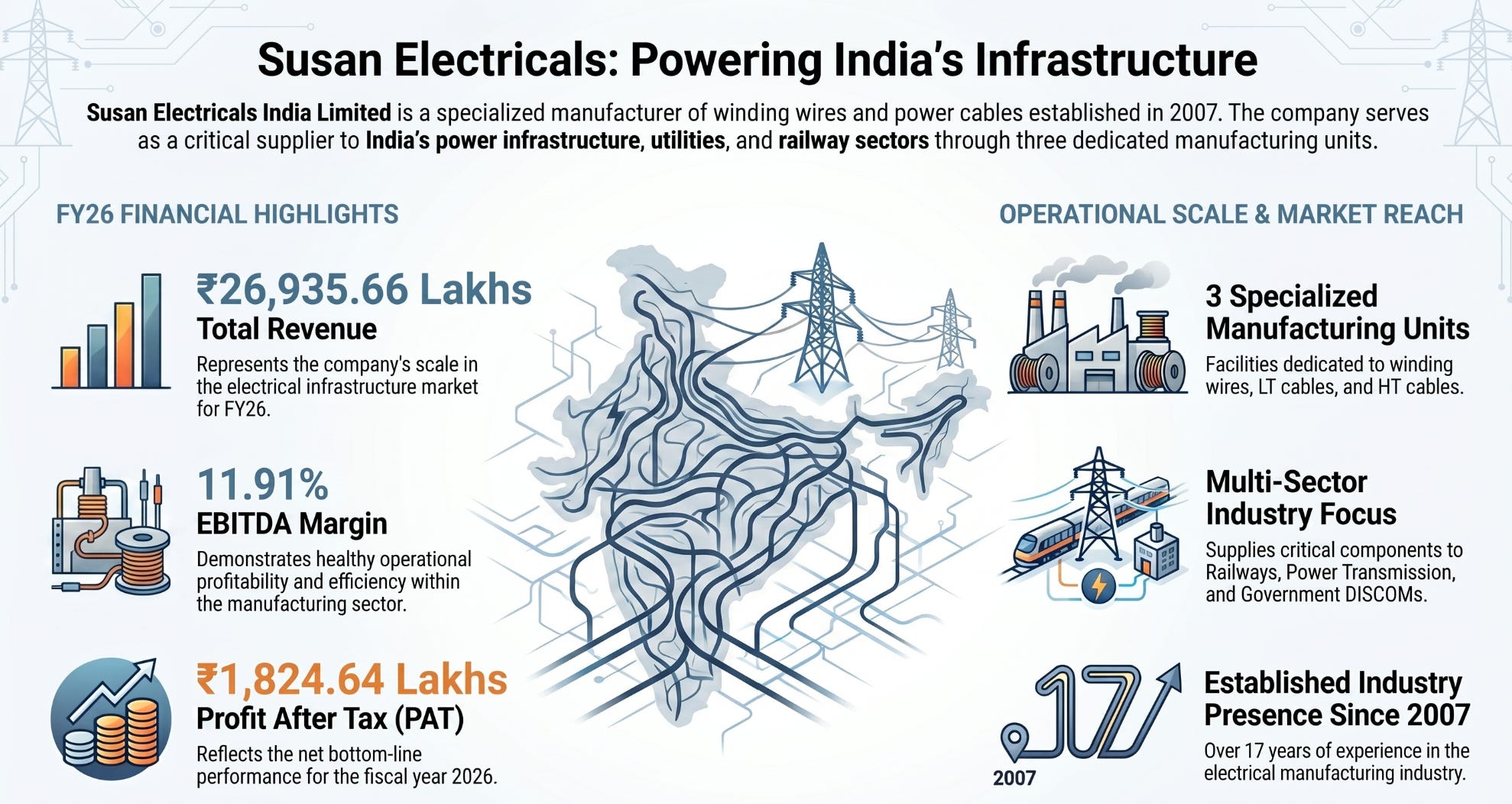
The company has filed for IPO with BSE SME and is looking to raise roughly ₹70 crore from the public. The IPO opens 11 June 2026 and closes 15 June 2026.
Before you look at the price, it helps to understand what you are actually buying.
Founded in 2007, Susan Electricals manufactures across three broad categories:
Winding Wires & Strips: used inside transformers, motors and generators.(Current revenue contributor - low margin, high volumes)
LT and HT Cables: low and high tension cables for residential, industrial and railway use (Future growth drivers - high margin, high moat)
Aluminium Conductors and MVCC: for overhead transmission and distribution lines (Future growth drivers - high margin, high moat)
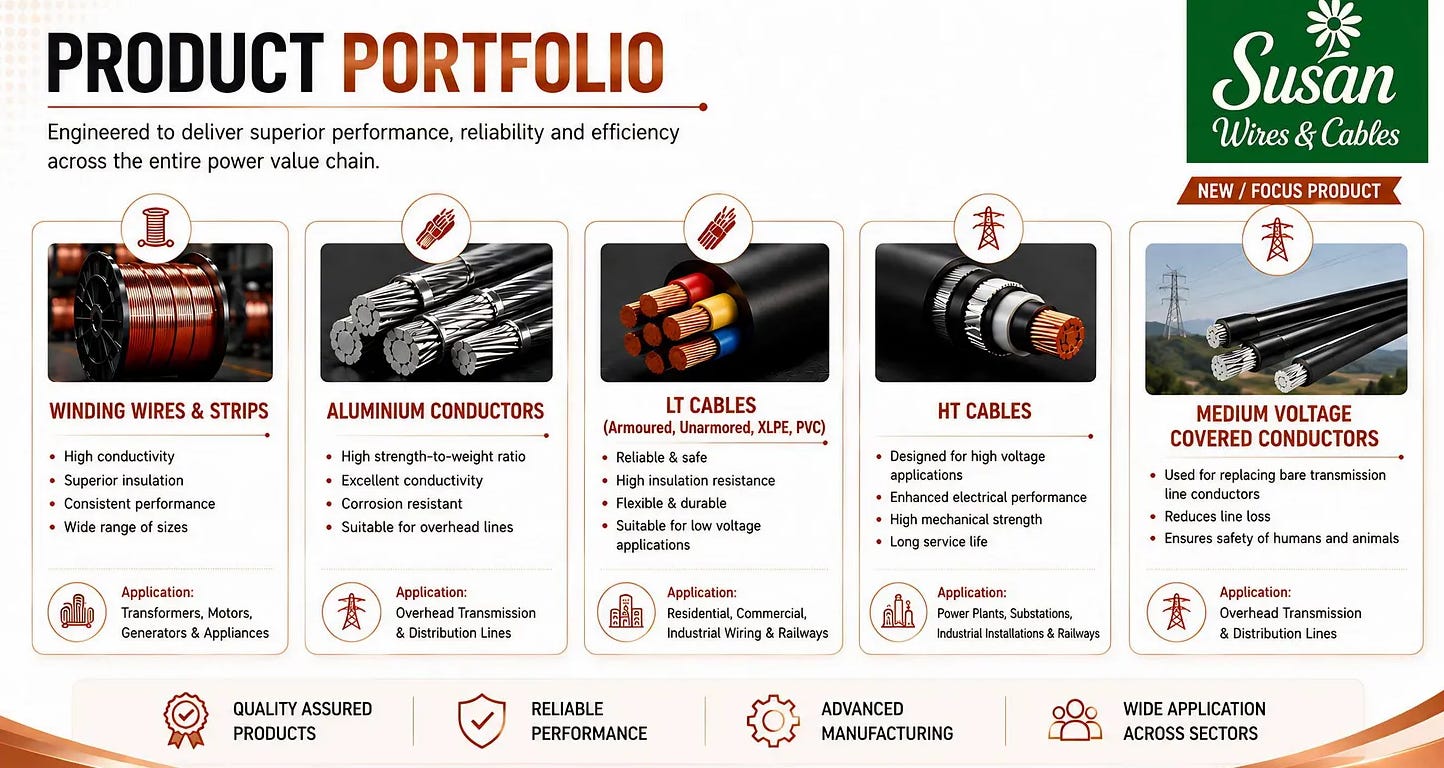
The company operates three manufacturing units, all in the Sahibabad–Ghaziabad industrial belt in Uttar Pradesh. Each unit is dedicated to a specific product line.
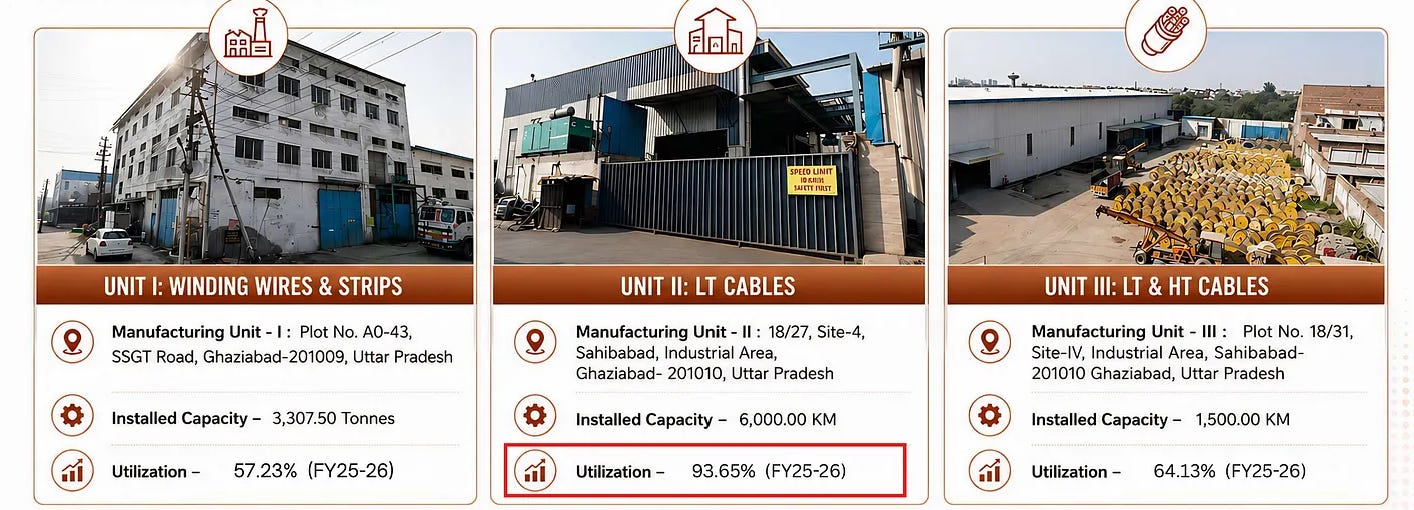
Unit II is running at over 93% utilization. That is a meaningful signal; when a plant is that full, you either turn away orders or you expand. The company is choosing to expand.
The big strategic move here is the 60% capacity expansion of Unit III, the LT and HT cable facility at Plot No. 18/31, Sahibabad.
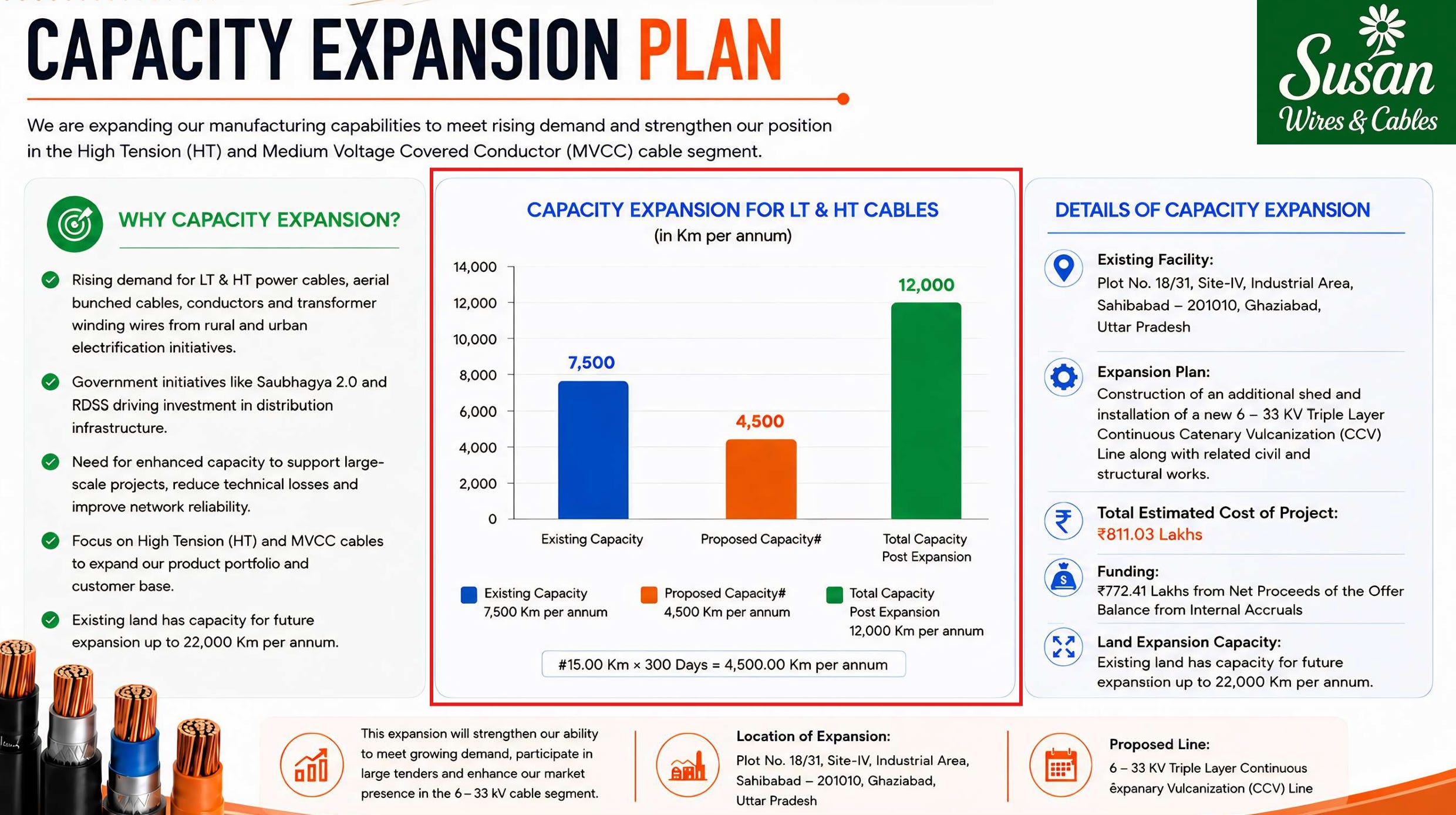
The plan is to add 4,500 KM of annual capacity through a new 6–33 KV Triple Layer Continuous Catenary Vulcanisation (CCV) line. Post expansion, total capacity at this unit goes from 7,500 KM to 12,000 KM per annum. And the existing land can theoretically support up to 22,000 KM in the future, so this is not a one-shot expansion.
Total estimated cost of the project: ₹811.03 lakhs, of which ₹772.41 lakhs comes from IPO proceeds. The rest from internal accruals.
Out of the total net proceeds:
₹1,029.49 lakhs → capital expenditure for manufacturing expansion
₹3,300.00 lakhs → working capital
Remainder → general corporate purposes
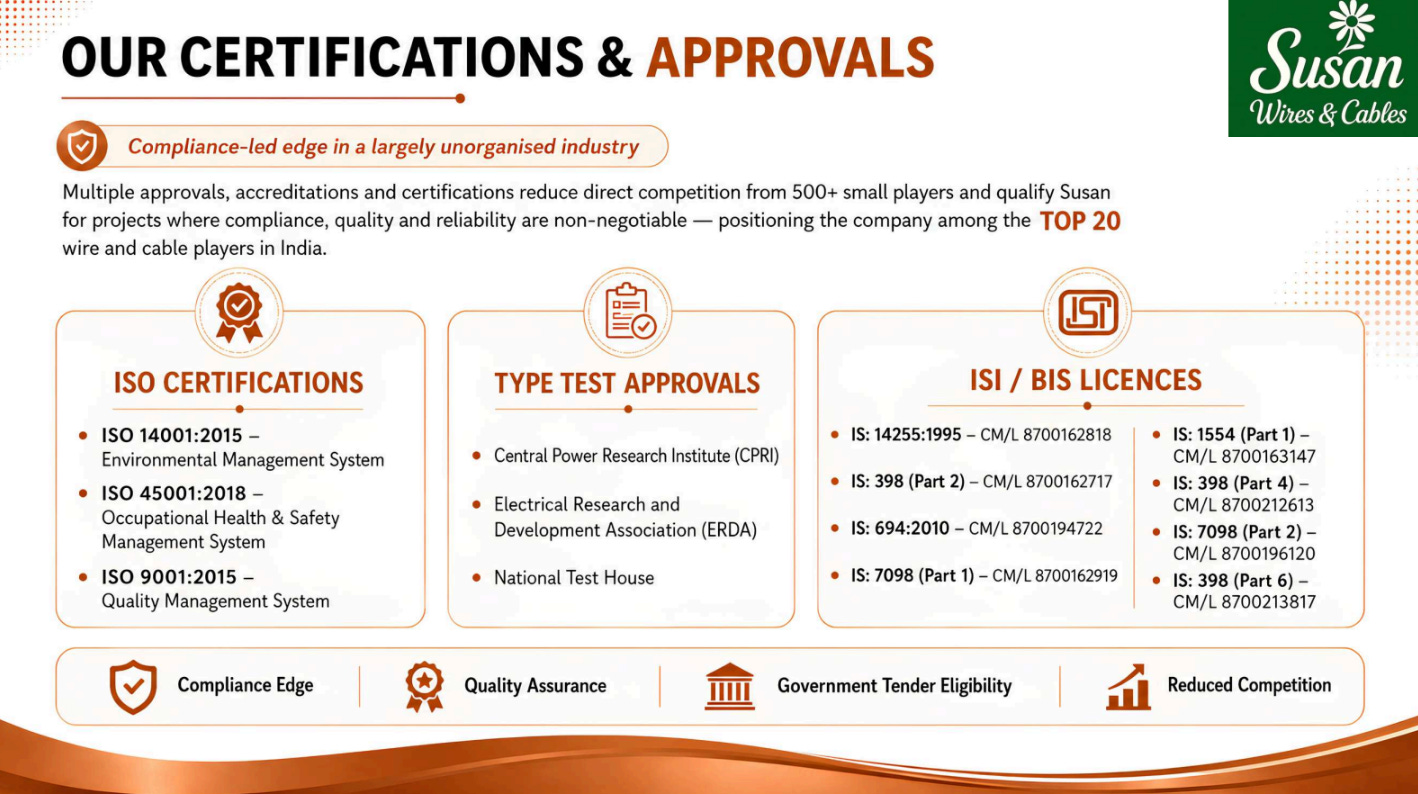
Because HT cables and Medium Voltage Covered Conductors (MVCC) are not easy to manufacture. They require type test approvals, BIS licences and specific machinery. That complexity is exactly what keeps smaller players out and what makes Susan's certifications valuable. Now Susan has multiple approvals and certifications, which puts them into top 20 wire and cable players, ironing out competition from small and unorganised players
The financial trajectory over three years is hard to ignore.
Revenue has grown nearly 2.6x in two years. More importantly, margins have expanded sharply. The EBITDA margin went from 3.5% to nearly 12%. PAT is up more than 24x in absolute terms over FY24 to FY26.
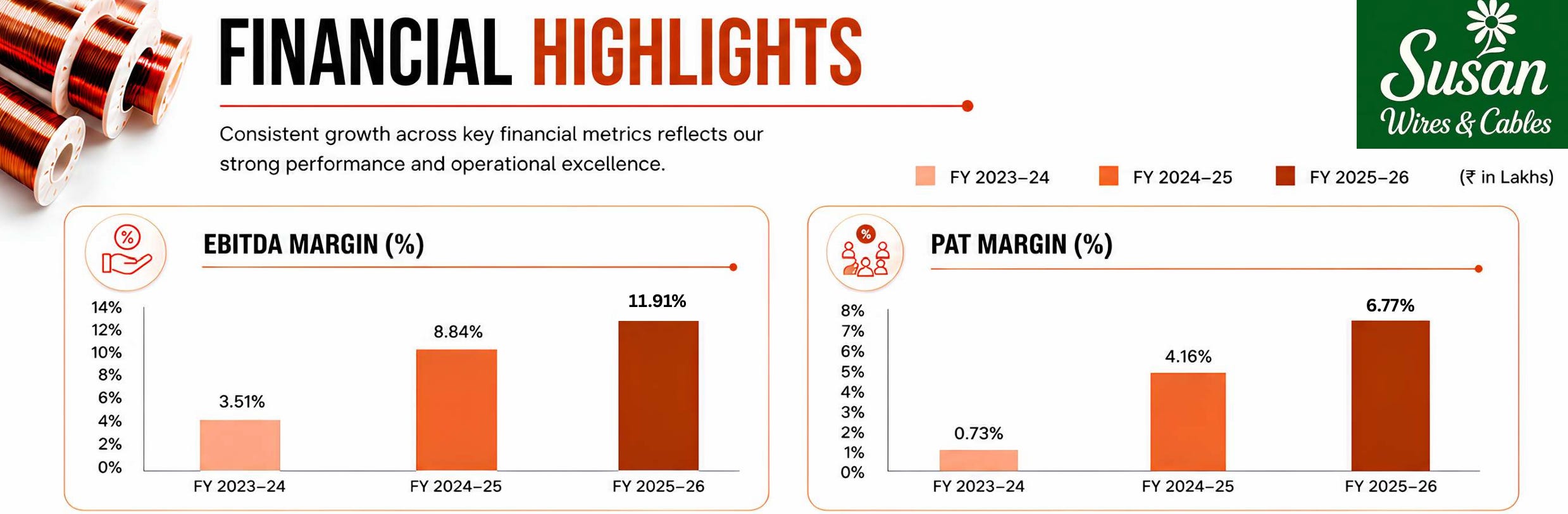
The RoE of 64.64% in FY26 stands out. Even accounting for a relatively small equity base, these return ratios suggest the business is operationally efficient and scaling well.

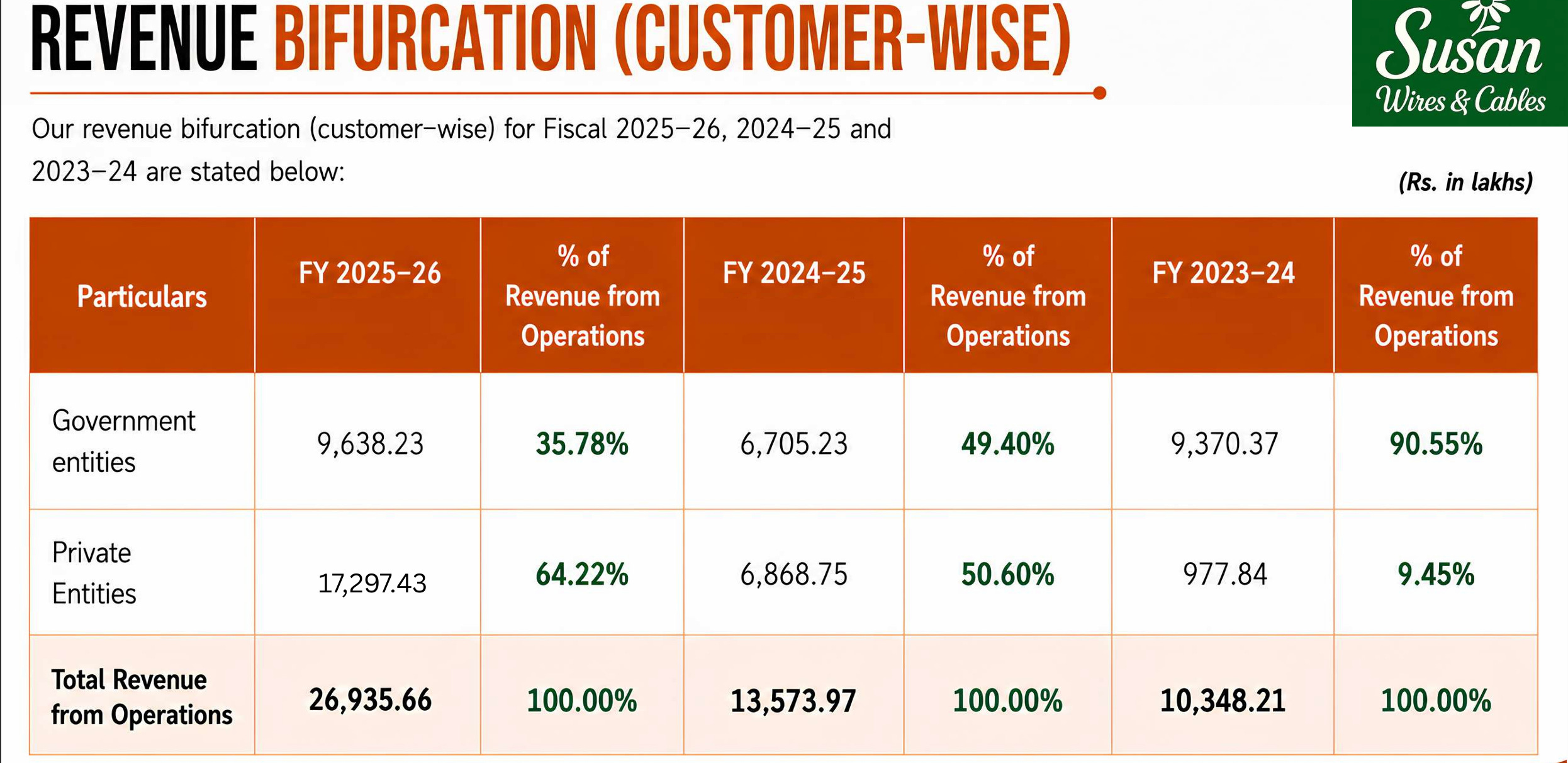
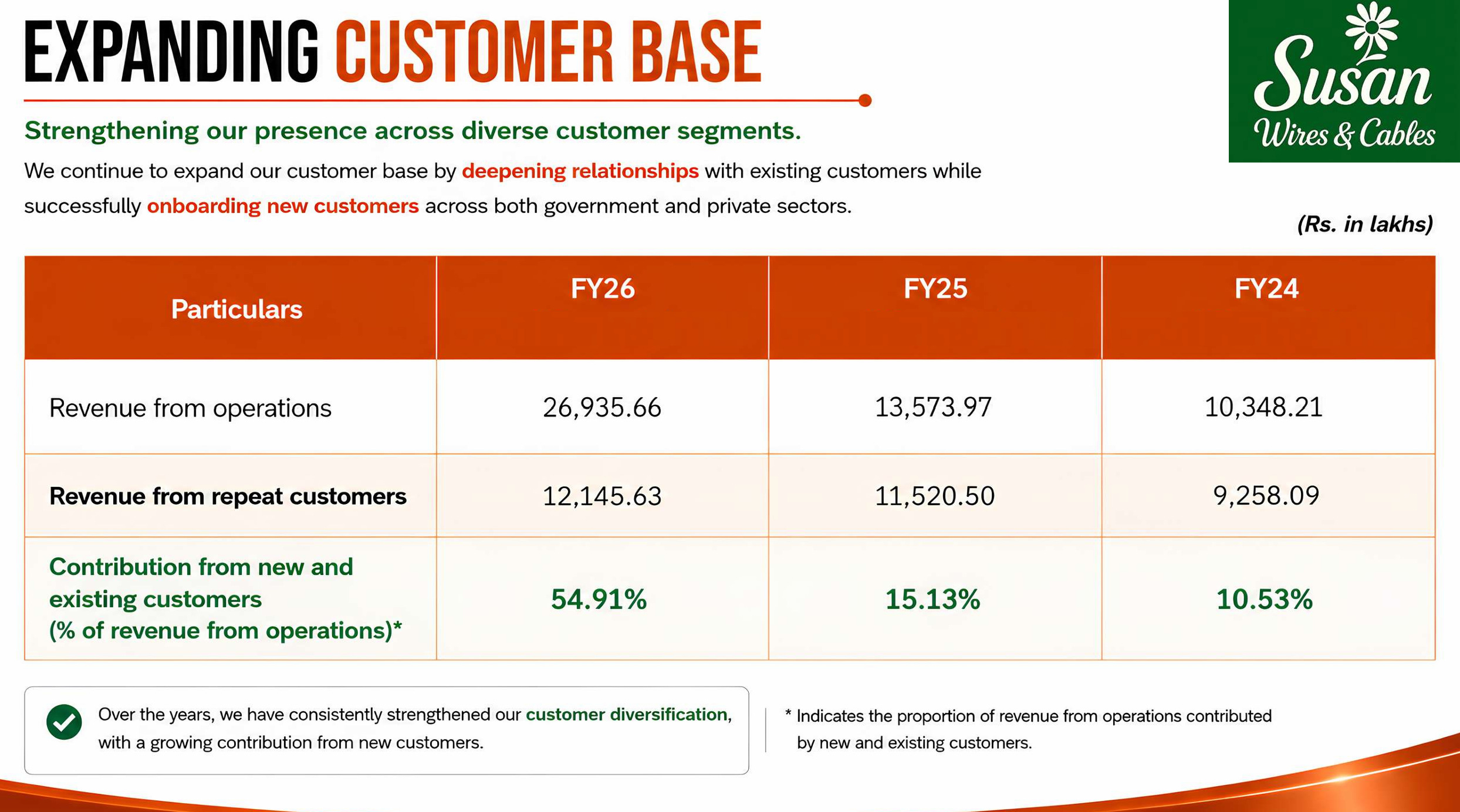
One thing worth noting: revenue from private entities jumped from just 9.45% of total revenue in FY24 to 64.22% in FY26. This diversification away from pure government dependency is significant it signals commercial traction and reduced concentration risk.
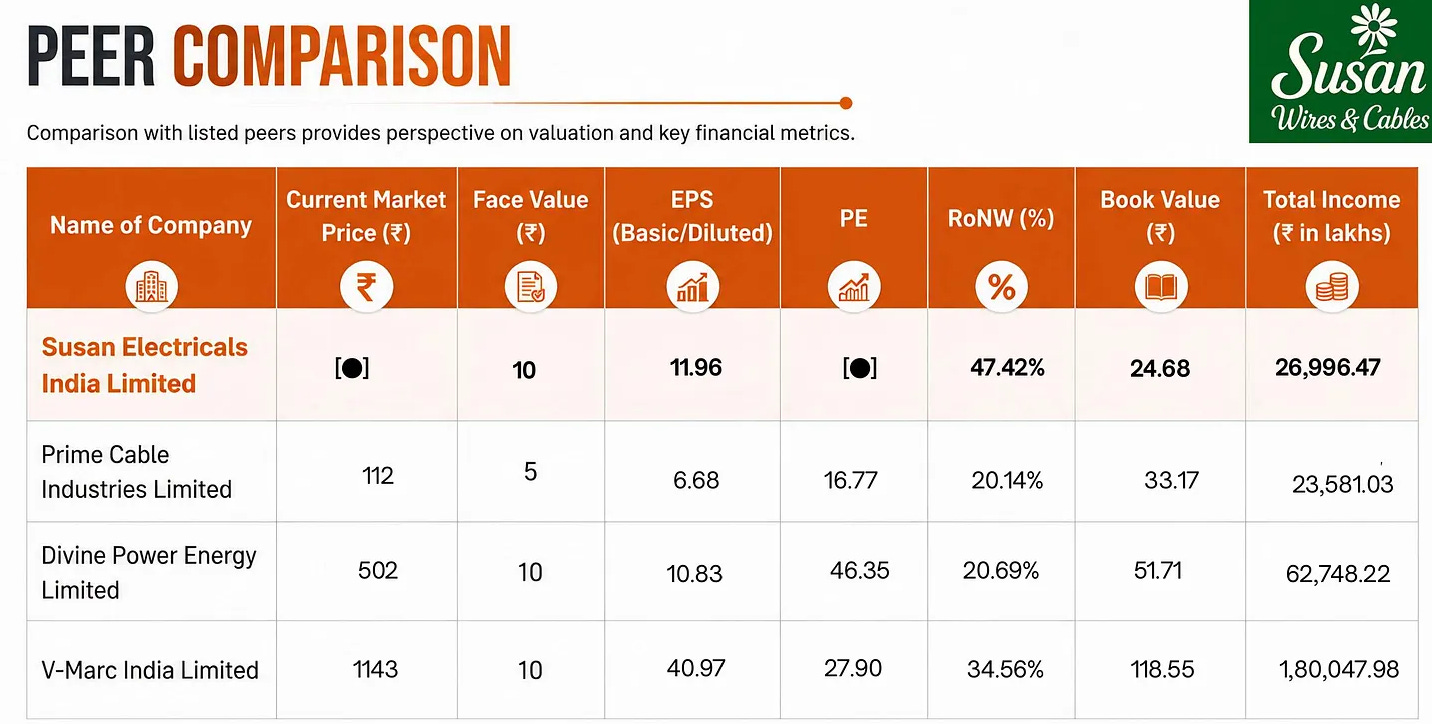
Susan is one of the few players in its size bracket to offer winding wires, LT cables, and HT cables under the same roof. Against its BSE SME peers:
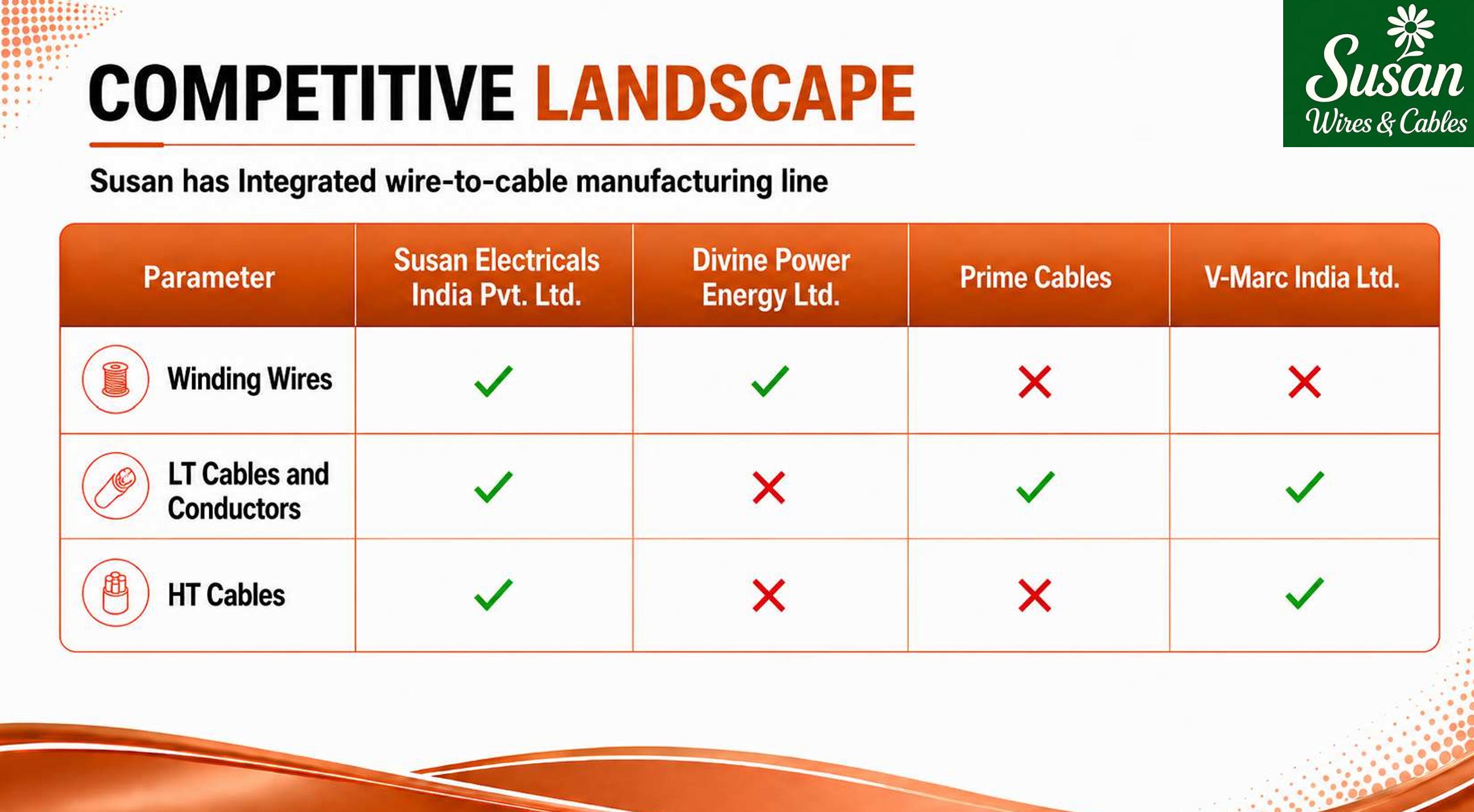
The integrated wire-to-cable manufacturing line means the company can serve a broader range of tenders and customers without depending on a single product category.
On certifications, the company holds ISO 9001 (Quality), ISO 14001 (Environment), and ISO 45001 (Safety) alongside BIS/ISI licences across multiple IS standards and type test approvals from CPRI, ERDA, and the National Test House. In a sector with 500+ small, unorganised players, these certifications matter they are often prerequisites for government tenders
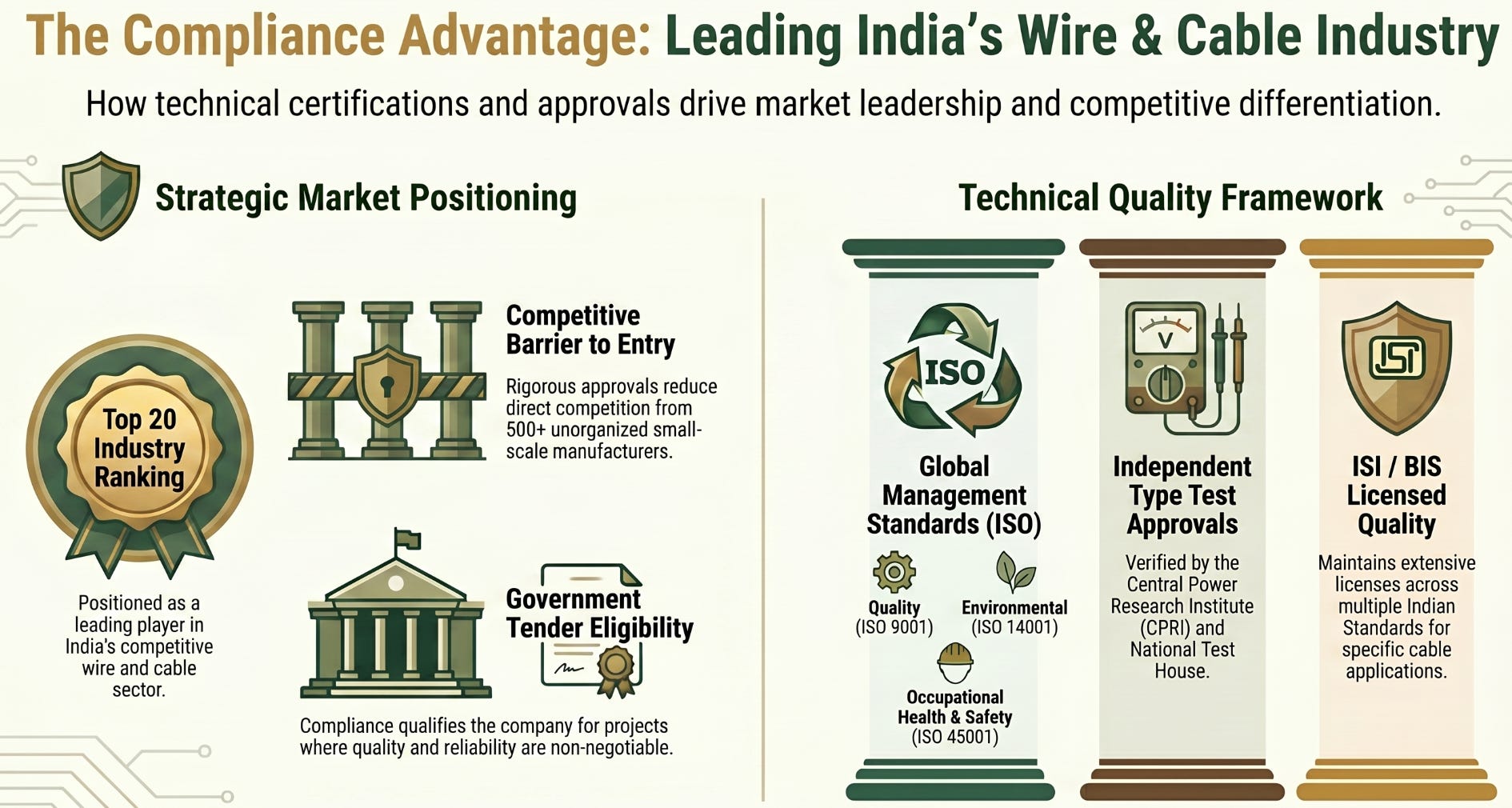
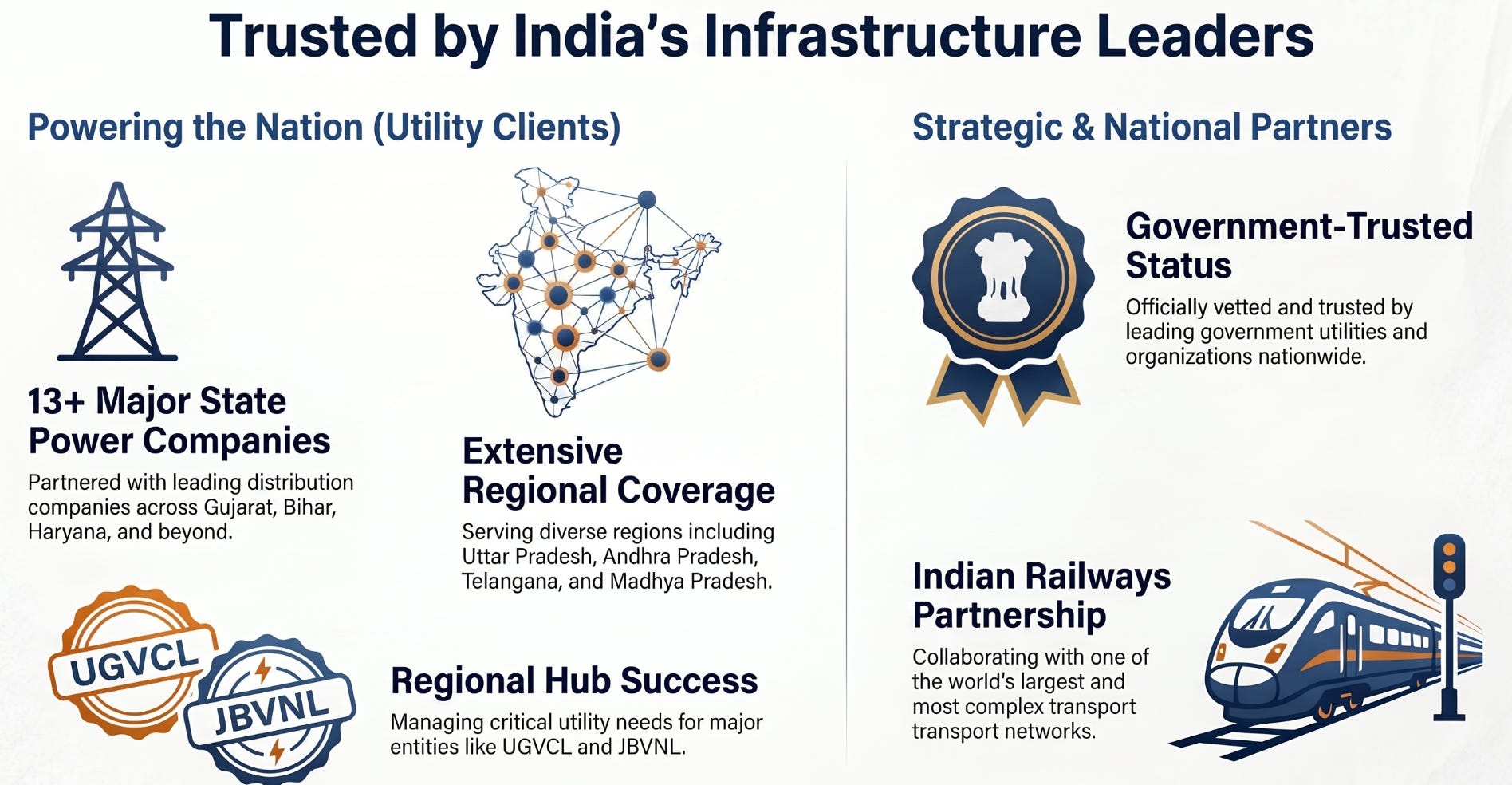
The client list reads like a who’s who of Indian power distribution:
UGVCL (Uttar Gujarat Vij Company)
Jharkhand Bijli Vitran Nigam
Eastern Power Distribution Company of Andhra Pradesh
Multiple UP Discoms (Madhyanchal, Dakhinanchal, Purvanchal, Pachimanchal)
South Bihar Power Distribution Company
Jaipur Vidyut Vitran Nigam
Indian Railways
Montecarlo (EPC company)
Revenue from repeat customers stood at ₹12,145.63 lakhs in FY26 about 45% of total revenues showing stickiness with existing clients even as the company onboards new ones.
At the upper price band of ₹127, the EPS (basic/diluted) is ₹11.96, giving an implied PE of approximately 10.6x on FY26 earnings.
On a straight PE basis, Susan is entering at a discount to all three listed peers and with a significantly higher RoNW of 47.42%. The business generates more return on equity than any of its listed comparables, yet is being offered at the lowest multiple.
That said, this is an SME IPO and should be evaluated with that lens liquidity will be lower, discovery takes time, and one should assess the quality of growth sustainability rather than just headline multiples.
This is not a story about a one-year government order cycle. The demand for wires and cables in India is structural, driven by multiple forces playing out simultaneously.
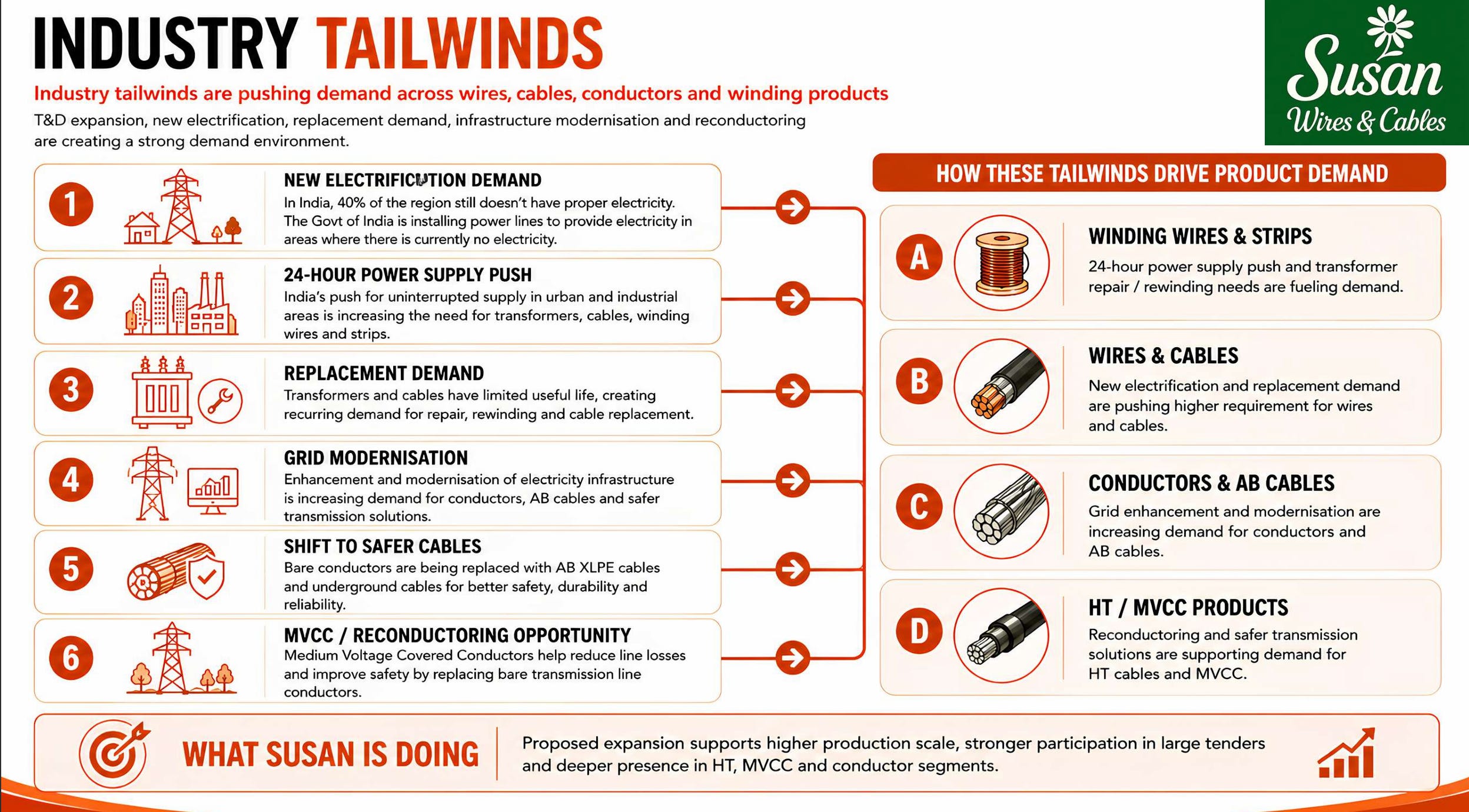
1. New Electrification: About 40% of India’s regions still lack reliable electricity access. The government is actively laying new power lines. Every kilometre of new line needs conductors, cables, and wires.
2. Replacement Demand: Transformers and cables wear out. They have a finite life. Once that life is done, they need to be replaced or rewound which needs fresh winding wires. This is a recurring, annuity-like demand that does not disappear.
3. Grid Modernisation: India’s old grid infrastructure is being upgraded. Programmes like RDSS (Revamped Distribution Sector Scheme) and Saubhagya 2.0 are pumping investment into distribution infrastructure. That directly benefits companies supplying LT and HT cables.
4. Shift to Safer Cables: Bare conductors are being systematically replaced by insulated alternatives AB cables, XLPE cables, underground cables. This is a structural shift driven by safety mandates and energy efficiency goals.
5. MVCC / Reconductoring: Medium Voltage Covered Conductors reduce line losses and improve safety by replacing bare transmission conductors. Susan launched its MVCC product in 2025 and is already supplying to government utilities. This is a relatively new product in India with significant runway.
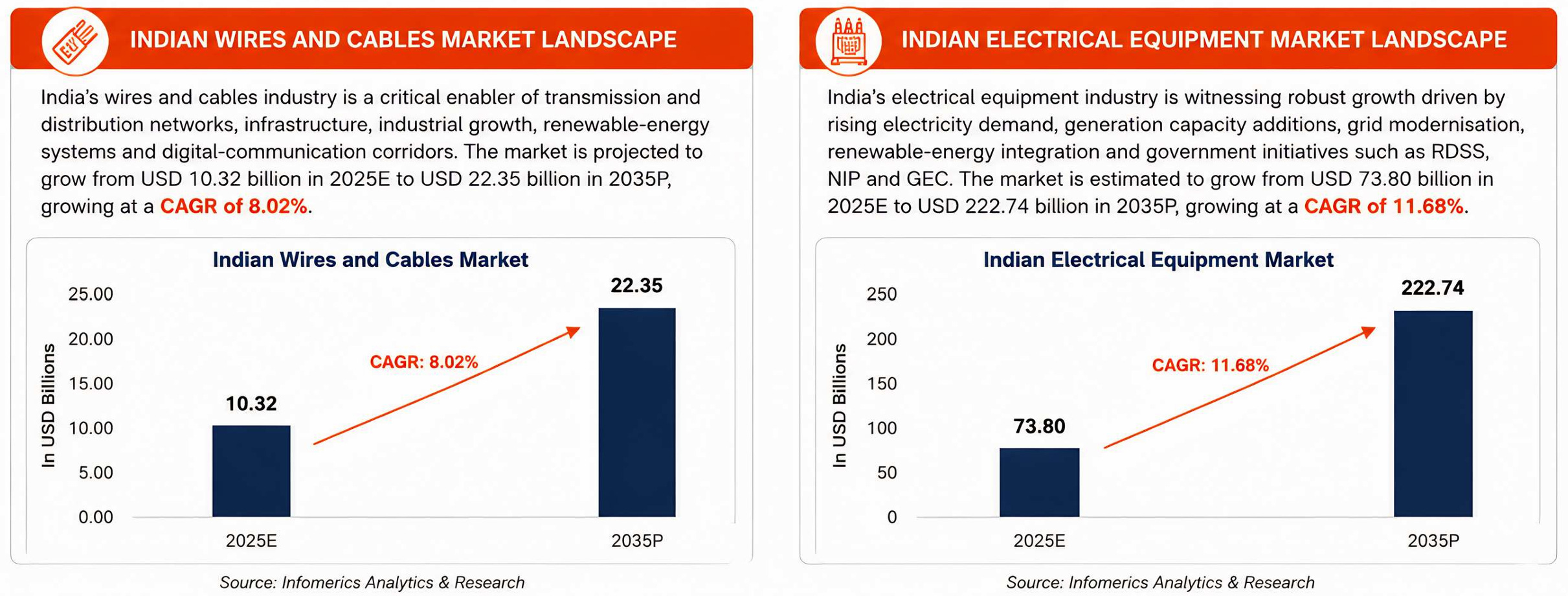
The Indian wires and cables market is projected to grow from USD 10.32 billion (2025E) to USD 22.35 billion (2035P), a CAGR of 8.02%. The broader electrical equipment market is expected to grow even faster at 11.68% CAGR from USD 73.80 billion to USD 222.74 billion over the same period.
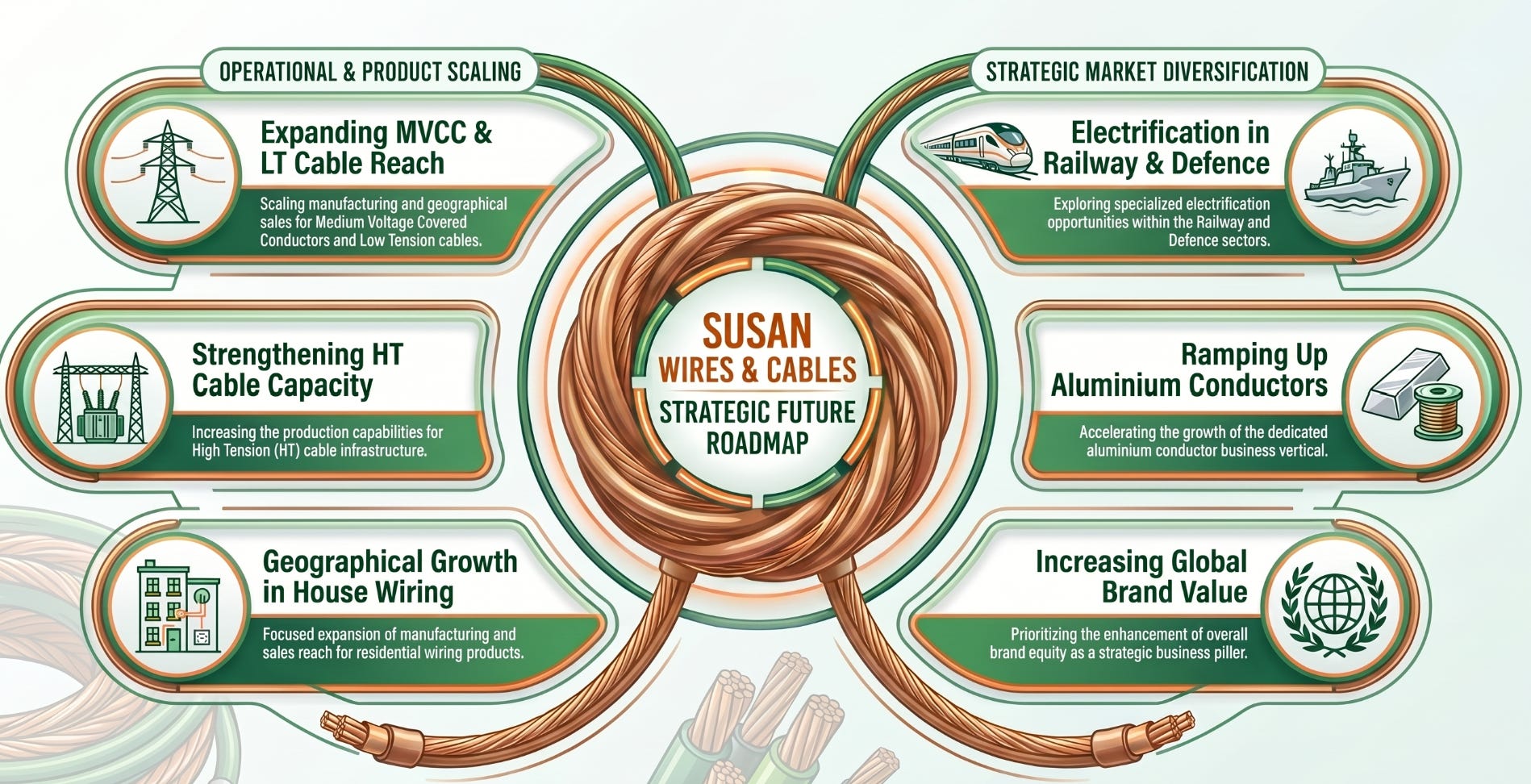
The company’s stated priorities post-IPO:
Expand manufacturing and geographic sales of MVCC (the newest, highest-growth product)
Strengthen HT cable capacity
Scale LT cable distribution into new states
Ramp up aluminium conductor business
Explore Railway and Defence electrification opportunities
Expand into House Wiring as a new segment
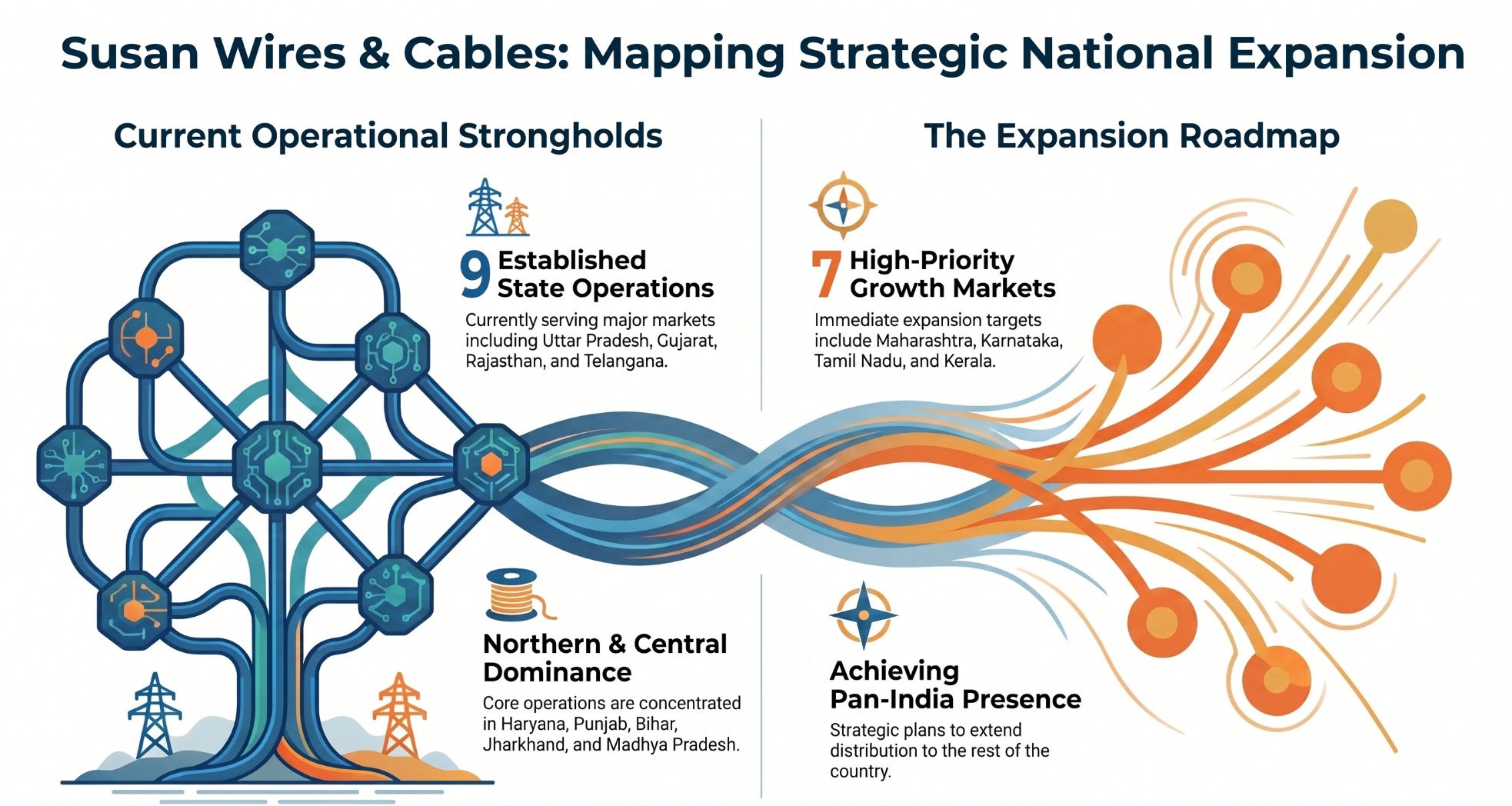
Geographically, the company currently operates across nine states: UP, Telangana, Rajasthan, MP, Jharkhand, Bihar, Haryana, Punjab, and Gujarat. It is targeting Kerala, Tamil Nadu, Karnataka, Maharashtra, Andhra Pradesh, Chhattisgarh, and Uttarakhand next.
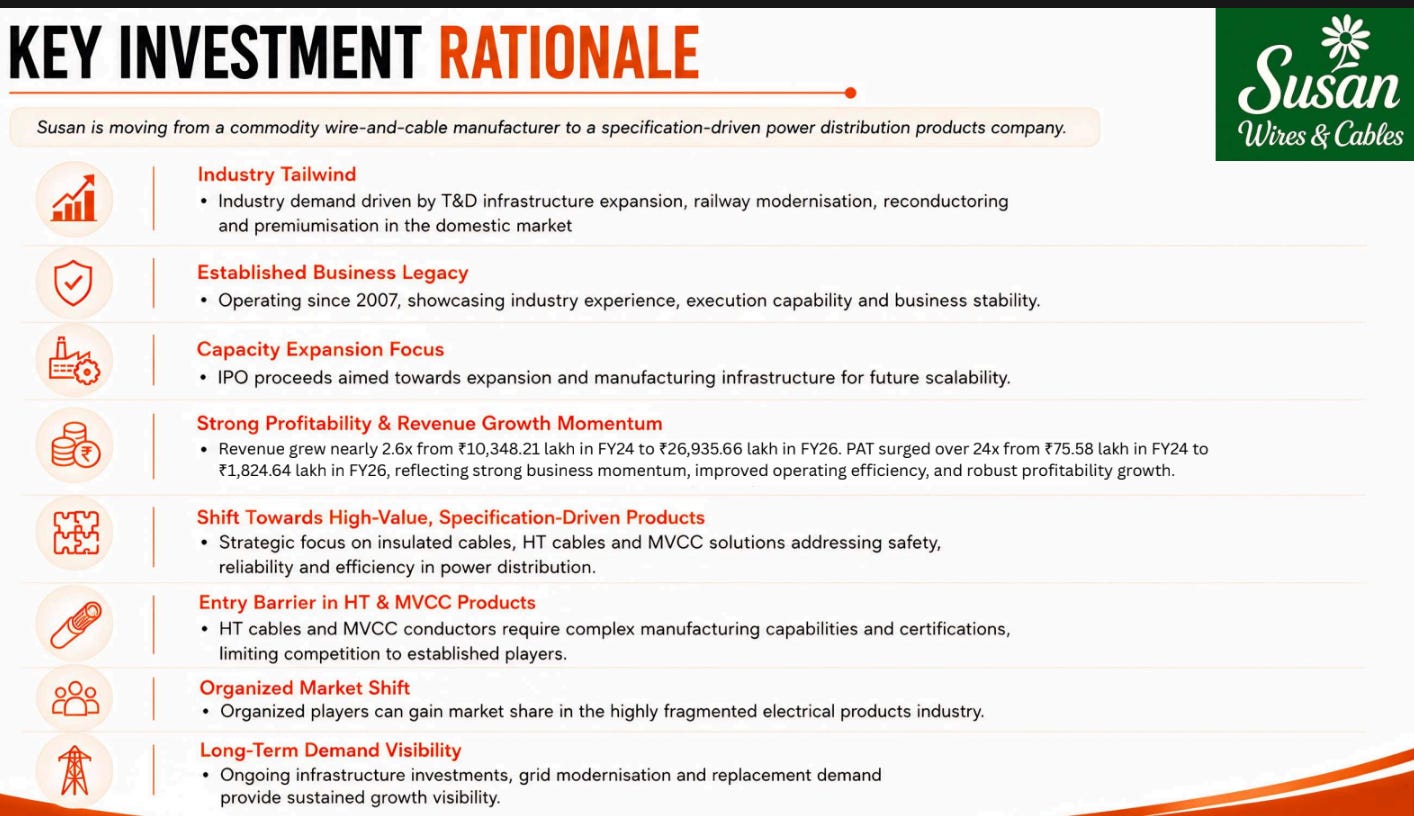
Susan Electricals is a small but operationally strong company sitting at the right intersection, an industry with structural demand tailwinds, a product mix shifting towards higher-value specifications and a financial profile that has improved meaningfully over three years.
The IPO is primarily a growth financing exercise the proceeds go into capex and working capital to support scale. At roughly 10x trailing earnings, the entry valuation looks reasonable relative to peers, especially given the return ratios.
What to watch after listing: utilisation rates at Unit III post-expansion, margin trajectory as the product mix shifts towards HT and MVCC, and the pace of geographic expansion into new states. If the company executes on the capacity build-out and maintains the margin discipline it has shown in FY26, the story has legs. If working capital bloats or execution slips, the financial ratios will reflect it quickly.
India’s wires-and-cables boom is real. Whether Susan can ride it well is the question that the next two to three years will answer.
Disclaimer: The content shared is for educational purposes only and should not be construed as a recommendation.
No posts
Comments
Nothing yet. Say the first thing.
Sign in to join the conversation.