
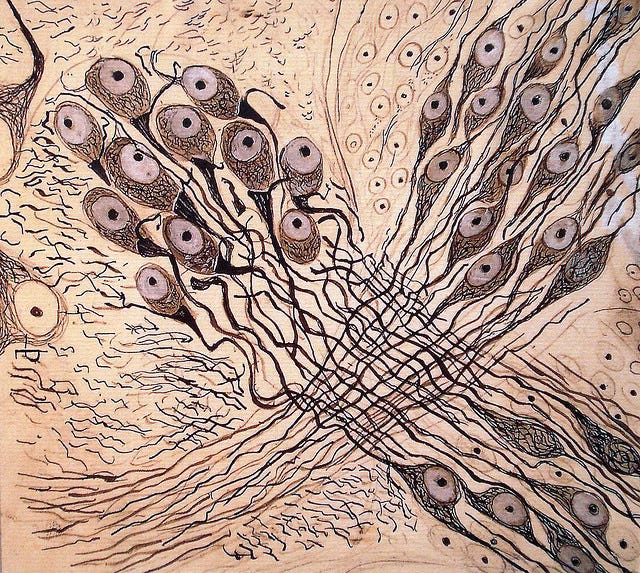
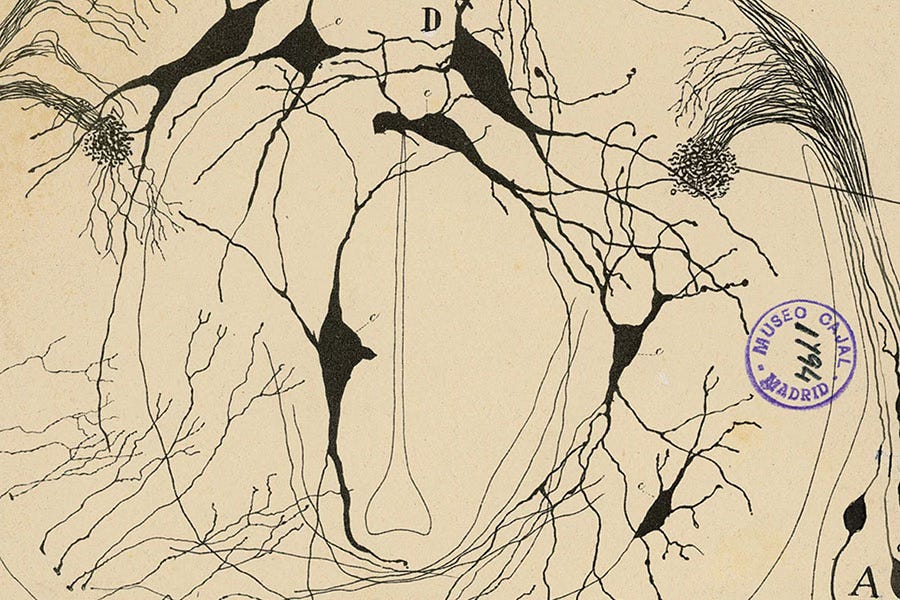
These sketches were not done by an artist, but by the scientist who discovered neurons. Ramon y Cajal won a Nobel Prize in Medicine and is often mentioned in children’s books on famous people. The books present him as an artist and a rebel, which suggests that rebellion and art are the path to a Nobel. This is a huge misrepresentation of Cajal’s life, and also bad advice for kids.
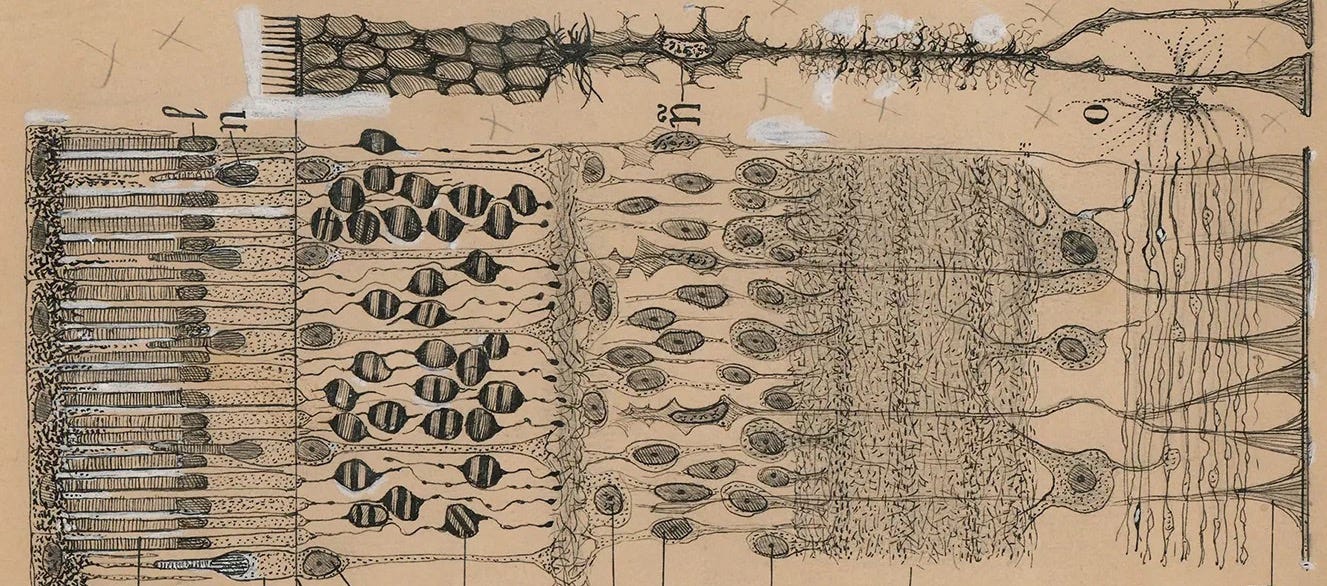
Fortunately, Cajal wrote his own book of career advice: Advice for a Young Investigator. (The original Spanish title is Reglas y consejos sobre investigación científica). You may not want advice from a person born in 1852, but the human brain has not changed. Cajal’s insights can help you build the all-important skill of managing your brain.
After I read it, I wondered how Cajal learned to manage his own brain. Fortunately, he wrote an autobiography as well. It’s full of horrific events that we would call “trauma.” Therapists would give him a high “adverse experiences” score. But the facts of his life show that adversity builds strengths. People do not benefit from believing they are traumatized and need to be saved by art and rebellion. People benefit from knowing how strengths build from unique individual experience.
I love to learn about the childhood experiences of famous people because you always see how it wired their later life. Cajal’s earliest memory is tangling the threads on his grandfather’s weaving loom. This would have gotten a bad reaction since the loom was central to the family’s income. So it’s amazing to know that untangling the neurons of the brain was his award-winning accomplishment. At the time, scientists believed that the brain was one big tangle. Cajal’s great discovery was that neurons are separate cells with synapses between them, and this is what his sketches were meant to show.
You can call it a coincidence that his breakthrough fit the pattern of a childhood experience, but every biography holds the same pattern. For example, the longitude clock was invented by a man who had smallpox at age six, and spent months in bed with nothing to play with but a watch. John Harrison said he took the watch apart and put it back together over and over. Decades later, King George III offered a prize to anyone who could invent a clock that worked on long ocean voyages. John Harrison sat down and made that clock, which made modern navigation possible. And he made it out of wood, after learning carpentry from his father as a child.
You may have heard that Bill Gates started hanging out in a computer lab at age twelve. This fact is usually spun to suggest that he was a child of “privilege.” But twelve-year-old Thomas Edison was sent to work at age twelve to help support his family. He was seated all day on a train to monitor the telegraph, and he starting making improvements in the telegraph to pass the time. The Beatles were playing guitar for hours a day by their mid-teens, and famous explorers like Christopher Columbus and Captain Cook were already living on ships at that age.
Experiences before age eight are most important for our brain’s foundational wiring. What happened to Bill Gates before age eight? His autobiography reports that he played cards with his grandmother a lot, and she was very determined to win. He had a lot of time to observe what she did and he figured out how to reproduce it. In his years of peak neuroplasticity, he learned to focus on skill and probability instead of just believing in luck.
You can’t change your childhood, so you may think it’s foolish to focus on it. But the neural highways built in youth are so efficient that we rely on them for life. A young brain has a lot of the road-building material called myelin. When you understand the highways myelinated by your early experience, you can consciously build onto them instead of letting them control you unconsciously.
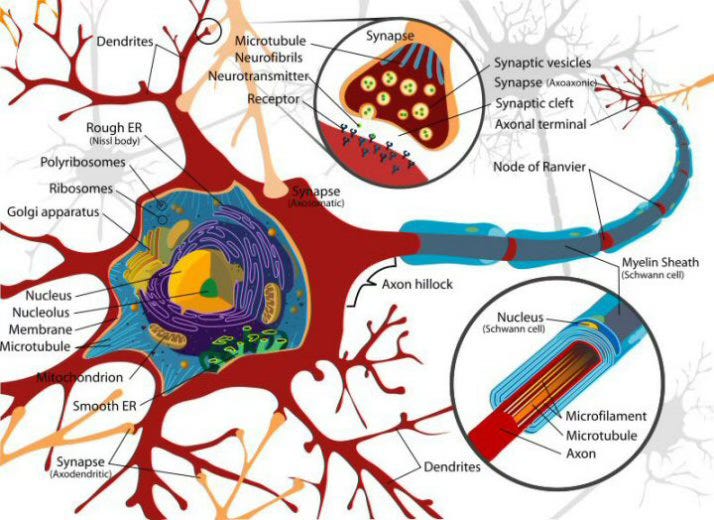
Few people do this because our culture credits genes for the responses that our wiring creates. We shrug our shoulders and blame DNA for both positive and negative traits. Even resilience is chalked up to genes though it’s so easy to see how it’s learned. Cajal’s story shows how resilience get wired by repeated experience.
Cajal started drawing constantly at a young age to calm his nerves. He had good reason to be anxious. His father tortured him sadistically in the name of “discipline.”
He was also enrolled in schools with cruel practices that were common at the time. Cajal illuminates this with an old expression: “Literacy comes through blood.” (La letera con sangue entra.)
To make matters worse, Cajal was often beaten by neighborhood children. He was always the new kid as his family kept moving between impoverished mountain villages.
His father objected to his sketching, and when he persisted, the father destroyed his art supplies and burned his sketches. So Cajal used natural materials and hid his sketches in rocks. Remember this when you’re tempted to call drawing a “talent,” and to see rebellion as an inborn trait.
Cajal saved for months to buy a pencil by doing extra chores for a neighbor. It pains me to think of how today’s children waste school supplies. They also waste a more precious resource: time.
Cajal’s father thought he was wasting time, so the boy was apprenticed to a barber and then a shoemaker. How did he get from village apprentice to neuroscience pioneer?
Online sources say his father was a professor of anatomy, so Cajal seems like a spoiled nepo baby. The deeper story is told in a fabulous book, The Brain In Search of Itself. When Cajal’s father was a teenager, he had a chance to leave his impoverished mountain farm to apprentice with a barber. In those days, barbers were like doctors because they had the tools and the blade-handling skills to “bleed” a person, which was a major medical treatment. The internet calls this a “surgeon,” but it’s important to know that it was seen as a lowly profession for religious reasons as well as the obvious yuck factor.
Cajal’s father did not want to be someone’s assistant forever, so he decided to get his own barber’s license. But he had never gone to school, so he had to teach himself to read between sweeping the floor and wiping up blood. Eventually, he accessed higher education by walking seventy miles to the city of Zaragoza, and then walking a full week to Barcelona. By the time he got a university degree, he had four children who he left in the village for two years with almost nothing to live on. And THAT is how Cajal became a doctor’s son.
When the father returned, he insisted that his sons become doctors. Cajal resisted and did badly in school, so it was a long and winding road. A pivotal point came when Dad brought him to graveyards to dig up bodies for anatomical dissection. Cajal’s drawing skills were suddenly valuable to the old man. Together, they created resources that were useful to the medical community. Cajal eventually wrote a textbook on the nervous system that medical schools used for decades. It was based on his own research as well as his own sketches.
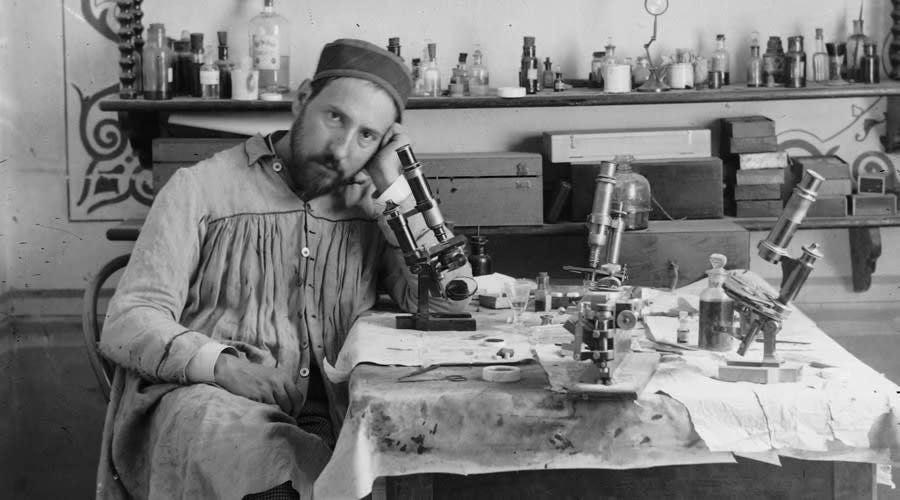
Cajal’s accomplishments came from years hunched over a microscope alone in his lab. He began this habit while recovering from life-threatening illness acquired from military service in the tropics. He spent all of his meager resources on a microscope, and it was the dawn of cell biology so there was wide scope for independent work. Much manual skill was needed to extract and stain of tissue samples. He did this for decades. Ultimately, he discovered that neurons transmit electricity in only one direction, and that electricity must jump across a synapse or gap between neurons in order to flow.
Today we know that the jump is mediated by chemicals like dopamine and serotonin. We know that this shapes our emotions and our perceptions of the world around us. We take this knowledge for granted without recognizing the grueling effort that created it.
Cajal’s career book advises you to work hard, persist through failure, and trust your own judgment. This sounds boring. You might even say he was living out his early training in suffering. But if you look closer at the happy brain chemicals, you can see how they’re stimulated by hard work and independent thinking.
Dopamine is released when you see yourself approaching a reward. You only get a drip, so you have to keep approaching rewards to keep sparking it. But real-world rewards are not within your control, so disappointment often results. That’s why we like to have reliable dopamine stimulators. When you have a goal that you can approach with steps that you control, you have a healthy path to dopamine. Otherwise, you are tempted by whatever fast, easy dopamine stimulators fall into your path. Cajal’s story shows us how dopamine fuels persistent steps toward a goal.
Oxytocin is released when you enjoy the protection of others. We are told that it comes from “belonging,” but following the herd can have harmful consequences. Even herd animals keep their distance because too much following leads to food fights and food that was soiled by others. The mammal brain is designed to weigh the urge for safety in numbers against the benefits of going your own way. Cajal invested energy in social alliances, but he always weighed that against energy invested in steps toward his goals. His book says that lab work benefits from regular contact with the world outside the lab. In this context, it’s amazing to know that his wife gave him twelve children.
Serotonin is released when you feel confident in your own strength. This is not the usual view of serotonin, which links it to “good mood” without a practical motive. Nature doesn’t work that way. It saves happy chemicals to motivate survival action. Confidence in your strength is essential to survival action, especially for the survival of your genes. Natural selection built a brain that continually makes social comparisons and rewards you with serotonin when you see yourself on top. We cannot admit this with our conscious brain because society condemns dominance-seeking behavior. But serotonin feels so good that we keep seeking a one-up position to spark it. Cajal’s books clearly express his mammalian urge for social dominance. He cloaks it with the socially approved concepts of his era, as we cloak ours with new socially approved concepts.
Cajal’s story shows us that hard work and independent thinking can make you happy. Instead of just suffering, you can enjoy the journey, to use a cliche.
But if this were true, why don’t more people do it? And why don’t billions in educational spending get better results?
One reason is that popular culture teaches the opposite. In the movies, science breakthroughs always seem to come from accidents and late-night drinks. Even schools tend to reinforce the idea that good friends and good luck are the key to success. This makes it hard to see how rewards come from hard work and independent thinking.
Instead of just blaming “the culture,” we must remember that our brain is designed to meet immediate needs. It only seeks long-term rewards when we have already linked them to meeting needs. If these links are built at a young age, we have a nice big myelinated path to healthy reward-seeking. Whatever helps you link immediate steps to distant rewards is good career advice. If a person doesn’t link school work to their happy chemicals, their brain will find other happy-chemical stimulators.
No posts
Comments
Nothing yet. Say the first thing.
Sign in to join the conversation.