
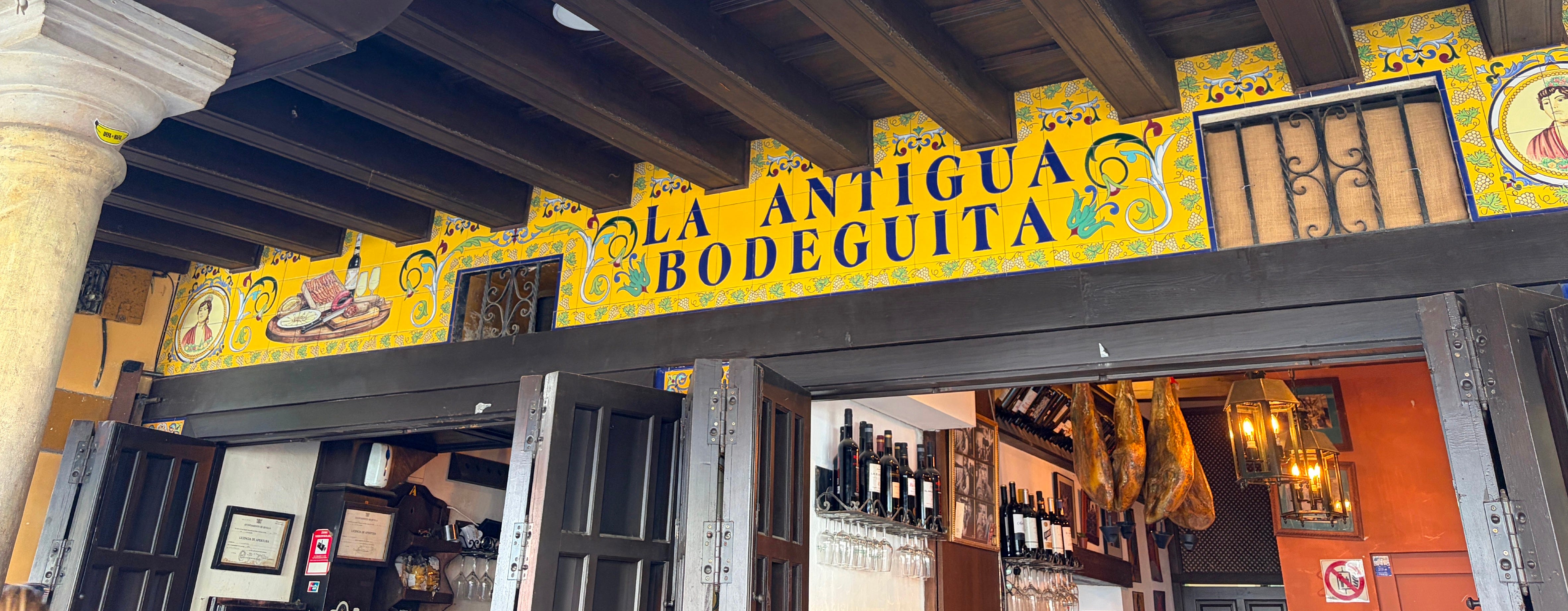
I’m in Seville for the Dopamine Society meeting, and came 3 days early to eat tapas. Suddenly, I see how dopamine drives the quest.
I felt a strong urge to go to this meeting as soon as I heard about it. My first visit to Seville was fabulous, but only 2 days long. That left me with high expectations, which means high dopamine.
The brain releases dopamine when you find a way to meet a need. We don’t “need” beautiful food sculptures served in historic buildings, of course. But our basic needs are met so easily in the modern world that we complicate things to spark more dopamine.
I hit the streets as soon as we arrived, scanning for historic cafes and checking out their tapas lists. This is the job dopamine evolved for. Our ancestors had to forage constantly to survive. They scanned for cues linked to food in their past. Dopamine surged when they found something, but the food was soon eaten, so the quest continued.
Hunger soon drove me to make a choice.
It was a bad choice, alas. One dish came out looking like sliced bologna from the ‘50s despite its exotic name, and the other was a big heap of mayonnaise. The menu called it “saladilla,” but I learned it’s the local word for potato salad. So I got to practice focusing on the positive. “I’m lucky to be here.” I honored the reason for my hasty choice: I’d refused to eat until we arrived. Positive expectations sustained my dopamine.
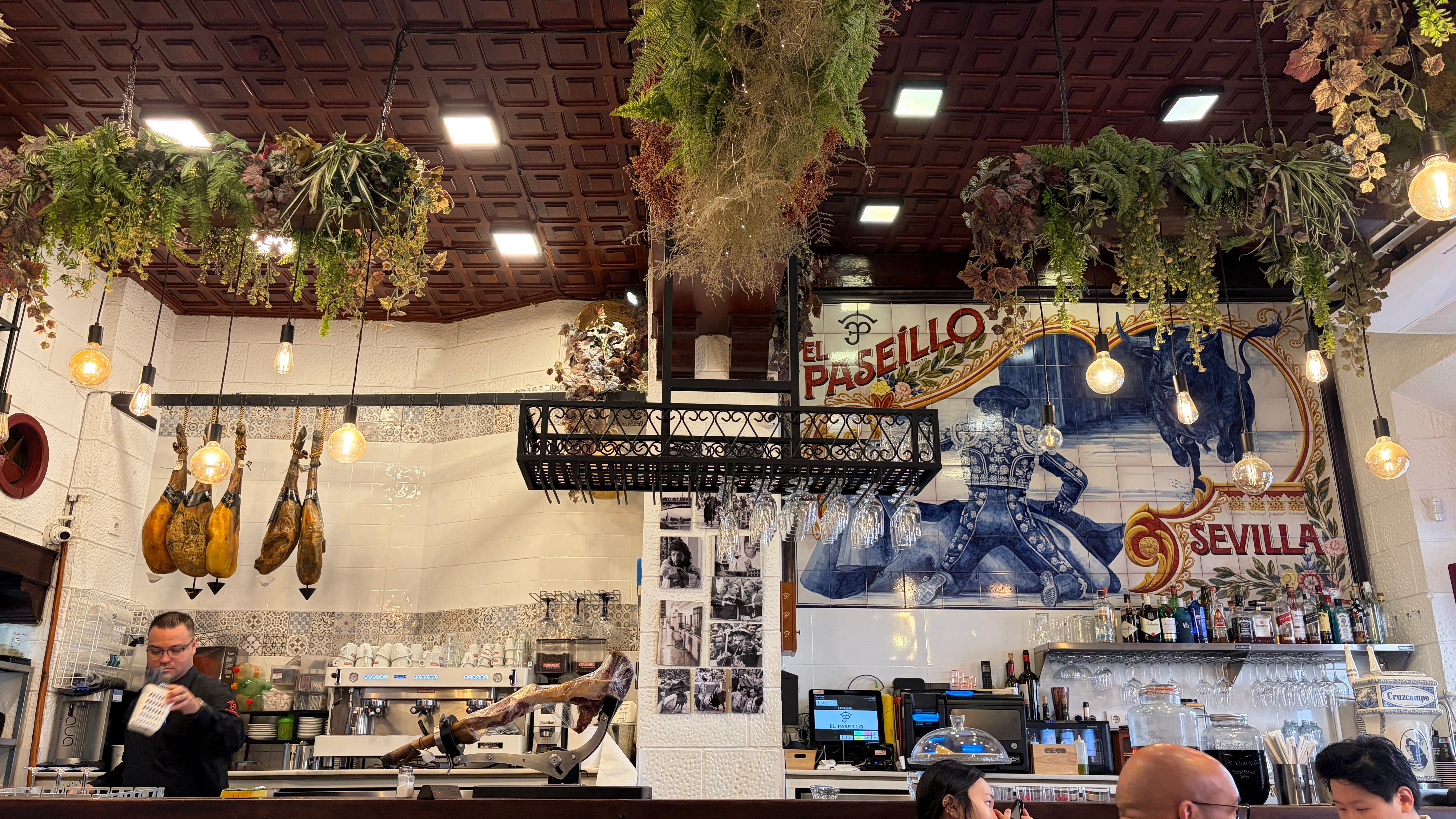
For dinner, I chose the place recommended by friends. It had great food and charm, but something was missing: the sense of discovery. You get less dopamine when you head straight to an address supplied by others. So the next day I went back to the hunter-gatherer method of scanning and inspecting.
The stakes were high. Only four meals were left to sample the long list of dishes that interested me. As the clock ticked, I faced the challenge of optimizing for so many variables. Each cafe seemed to have one of my favorites but not others. An ugly cafe had two. I decided that authentic interiors were the scarcest resource, since I couldn’t cook that at home. Of course, I was not the first person to think this, so the nice places had long lines and touristy food.
Time and energy are the scarcest resource of all. Dopamine evolved to manage the budgeting of time and energy. A hunter-gatherer would starve if they climbed a mountain expecting food and there wasn’t any. Seville multiplies the options geometrically. You can eat standing at the bar, which takes less time but a lot more energy. You can visit many cafes and only order one dish in each, but alcohol consumption is expected.
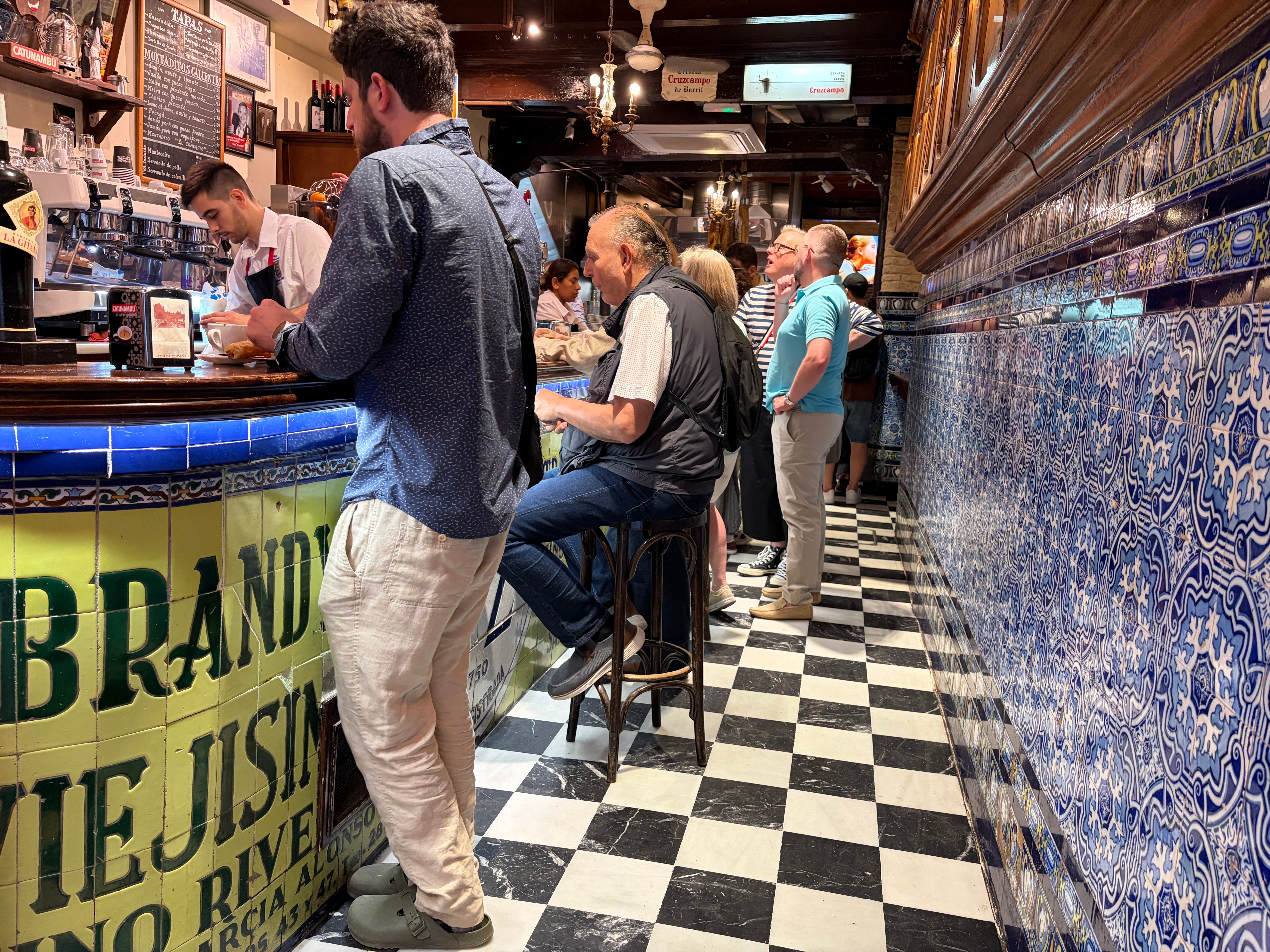
For Day Two lunch, I chose a historic place in the tourist zone, and the food was predictably bad. For dinner, I chose an ugly place and enjoyed an amazingly delicious pork-cheek stew. But the veal cutlet was like leather and arrived cold. More focusing on the positive was called for. At least the prices seemed low, though I was deluding myself by confusing Euros with dollars.
As I faced the last day, I decided to let go and allow serendipity. Dopamine spikes when a reward is more than expected, so lower expectations can lead to more dopamine.
But in my bedtime reading, I yielded to the urge to search on “best tapas in Seville.” Of course there were endless lists, each promising the “best of the best.” One place was mentioned so often that my curiosity got the better of me. “Let’s try,” I told my husband.
He had been leaving most of the decisions to me because he was not from a Mediterranean family. His dopamine was not connected to little food sculptures served in antique rooms. He was happy as long as we visited museums between the tapas.
I started strategizing about how to get into the famous place. The new quest sparked new dopamine. It was too late to get a reservation. Dinner started at 20:00, which was practically bedtime for me. We had an afternoon snack and nap, and arrived at 8pm sharp. There was a crowd in front as people with reservations checked in. I wove my way through to the maitre d’, and announced in my best Spanish that we had no reservation.
I could see the inside of the place now. It was shamelessly modern, which helped me prepare for a “no.” But he immediately offered us the last seats at the bar and led us there. Showing up at 8 sharp had done the trick since it’s socially outré in Spain. I was so happy that even my husband must have felt it through his mirror neurons.
I pored over the menu and “chicken blood with onions” grabbed my attention. I’d never heard of it before, but I love the pan drippings when I cook chicken. What could go wrong?
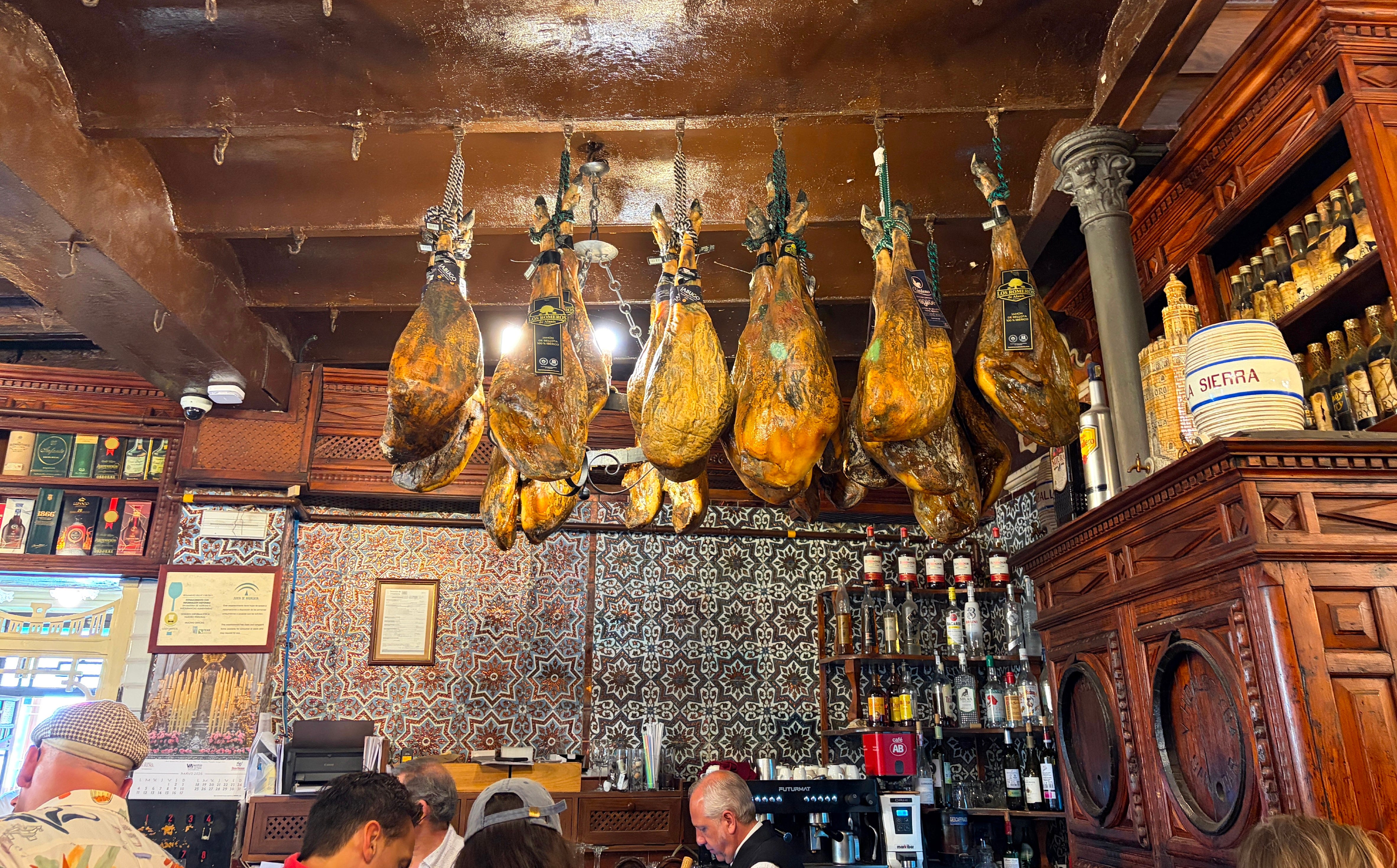
A big pile of brown cubes arrived at the table. It didn’t taste like chicken. It tasted like liver, with hardly any onions. But the cube were artfully arranged in a pyramid on an artistic ceramic dish, and I knew I would have died of curiosity if I hadn’t ordered it.
My husband made a daring choice too, and the smell of his squid ink was making me woozy. I wasn’t very hungry by then anyway, and we still had a farewell breakfast of churros in the morning.
As I finished the meal, I started mourning the end of this adventure. But another wave of dopamine relieved the sadness. I’d sparked it with the thought that “I did it!” I wanted to explore options, and I did. I wanted to make choices, and I did. I wanted to satisfy my curiosity, and I did. My natural foraging mechanism was stimulated in a way that’s hard to do in modern life.
There’s an endless array of choices, but the costs and benefits cannot be predicted with certainty.
When a reward is more than you predict, jackpot dopamine wires it into your brain so you can find it in the future.
When a reward simply matches your prediction, you only get a drip of dopamine. It starts dripping as soon as you begin the quest, so by the time you arrive, the dopamine has already done its job. To spark more, you have to start a new quest.
When a reward is less than you expect, cortisol is released. That tells your cortex to look for threats, and the big human cortex is good at finding what it looks for. So if you don’t know how your brain works, you could fill your life with cortisol in a world of fabulous options.
If you do know how your brain works, you can spark dopamine in healthy ways.
Realistic expectations are the key. Our brain is not designed to have peak feelings all the time. If you expect that, you will be disappointed and cortisol will ruin what could have been good. If you understand the ups and downs of dopamine, you can find healthy ways to stimulate it. Define goals that are relevant to you and keep taking small steps toward them. You only get a drip and it never lasts, but you keep dripping if you keep stepping.
We’re tempted to chase jackpot dopamine because it’s so memorable, but the chase often leads to harm. Instead, you can enjoy dopamine the natural way if you keep designing goals and taking steps.
No posts
Comments
Nothing yet. Say the first thing.
Sign in to join the conversation.