
You wake up one morning in Amsterdam and discover that a single flower bulb, no bigger than an onion, is worth more than a grand canal-side mansion. Not gold. Not diamonds. A tulip bulb that will bloom for exactly one week before its petals fall. Sounds impossible? In January 1637, a Semper Augustus bulb carried an asking price of 10,000 guilders, more than thirty years of a craftsman’s wages. Weeks later, the market was gone.
Welcome back to “When Markets Get Weird”, where we go through the unbelievable but true stories of times when the financial world lost its mind. These aren’t your typical market crashes. These are the moments when the impossible became reality, when men traded paper promises for flowers they had never seen, and when the story that survived turned out to be stranger than the one everybody tells.

Welcome to history’s first recorded financial bubble, an event so extreme that “tulip mania” became shorthand for irrational market madness. But here’s the twist: modern scholars now argue much of what we think we know about tulip mania is propaganda, exaggerated by moralists and repeated by economists who never checked the facts.
The real story? It’s far stranger than the legend.
To understand why the Dutch went mad for tulips, you need to know what made these flowers extraordinary.
Tulips weren’t native to Europe. The first bulbs reached Vienna in 1554, sent from the Ottoman court by an imperial ambassador, and spread from there to Antwerp and Amsterdam. Dutch cultivation began in earnest around 1593, when the botanist Carolus Clusius took up a post at Leiden and planted his collection in the university’s garden. The first Dutch flowering came the following spring.
What made tulips fascinating wasn’t just their vibrant colours. It was their beautiful unpredictability.
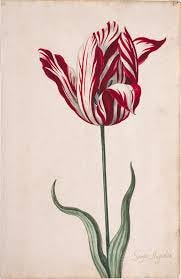
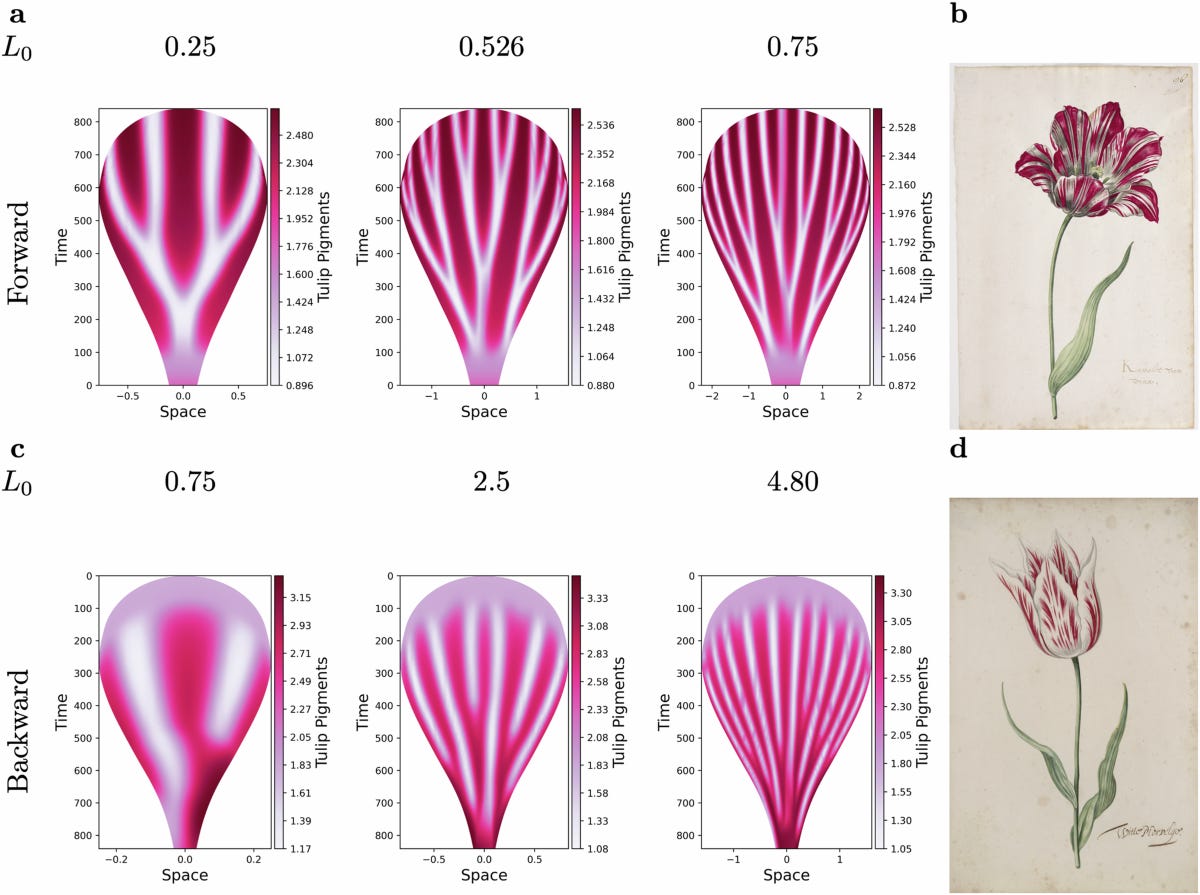
Sometimes, a tulip would “break.” Instead of solid colours, broken tulips produced dramatic striped, flamed, or feathered patterns in contrasting shades. These mesmerising patterns came from the tulip breaking virus, carried by aphids. The virus disrupted pigment production irregularly, creating intricate bars, streaks and flame-like effects.
Nobody could make a tulip break on command. You planted, you waited, and you saw what came up.
The rarest variety, Semper Augustus, carried blood-red flames on white petals. It was a masterpiece of accidental viral art. In 1624 barely a dozen existed, nearly all owned by one Amsterdam grandee who refused to sell at any price. Some historians think that refusal is what lit the fuse.
The tulip mania unfolded during the Dutch Golden Age, a period of extraordinary prosperity. The Dutch East India Company dominated global trade, where a single voyage could return profits of 400 percent. Amsterdam’s merchants grew wealthy from spices, textiles and commodities. From 1600 to 1720, the republic had the highest per capita income in the world.
All that money needed somewhere to go.
The Dutch had already pioneered sophisticated financial markets. They traded shares in joint-stock companies. They used forward contracts for commodities. They even experimented with short selling, banned by edict in 1610 and banned again in 1621, 1630 and 1636, which tells you how well the ban worked.
By the early 1630s, tulips had evolved from botanical curiosities into luxury status symbols. Owning rare varieties demonstrated three things at once: wealth, expertise, and aesthetic sophistication. As historian Anne Goldgar notes, tulips “fit well into a culture of both abundant capital and new cosmopolitanism.”
The stage was set.
Here’s the problem with trading tulips: they bloom for about a week a year, in April or May. The bulbs can only be lifted and moved from June to September, during dormancy. So how do you trade them the rest of the year?
The Dutch invented a solution: the forward contract. They called it windhandel, literally “wind trading,” because the tulips being bought and sold stayed planted underground. You were trading air, promises, future rights to bulbs you couldn’t see or touch.
These weren’t formal contracts overseen by the Exchange. They were private agreements between individuals, some notarised, many written on scraps of paper and exchanged in taverns. Neither side put up margin. No bulbs changed hands during the winter of 1636-37, and no money did either. Nothing would be paid until delivery in the summer.
The system created something revolutionary: year-round liquidity in a seasonal asset. You could speculate on tulips in January even though they wouldn’t bloom until April. You could separate speculation from horticulture entirely.
It also created something dangerous. The entire market ran on the assumption that people would honour a piece of paper that no court had ever agreed to enforce.
The trading happened in “colleges,” informal gatherings in taverns across Holland, with Haarlem the epicentre.
The colleges attracted professional florists who actually grew tulips, wealthy merchants seeking investments, well-off artisans, and a notable concentration of Mennonites, a religious minority with strong commercial networks.
They developed real procedure. Buyers paid a 2.5 percent “wine money” fee on every trade, capped at three guilders. There were rules for bidding, rituals of handshakes and drink that sealed a deal.
But they operated entirely outside official legal structures. This would matter enormously when everything collapsed.
By late 1636, something shifted. Until then, the tulip market had been rare varieties commanding high prices among serious collectors.
Then common, unbroken bulbs started rising. Fast. Soon almost any tulip bulb could fetch hundreds of guilders. The steepest climb came in the first five weeks of 1637, with the most sought-after varieties jumping more than tenfold in a matter of weeks.
The psychology looked like classic bubble dynamics. Growers saw neighbours profiting and jumped in. Each price increase validated the belief that prices would keep rising.
Status competition intensified everything. In a newly wealthy society, rare tulips were social currency. Possessing a Semper Augustus demonstrated you’d made it.
At the market’s peak, prices reached levels that defy logic.
A Semper Augustus carried an asking price of 10,000 guilders. A skilled craftsman earned around 300 guilders a year. That was thirty years of labour for one bulb, and enough, in Mike Dash’s phrase, to buy one of the grandest homes on the most fashionable canal in Amsterdam, coach house and garden included.
The highest price anyone has actually documented is 5,200 guilders, paid for an Admirael van Enkhuizen at an auction in Alkmaar on 5 February 1637. Two Viceroys went for 4,203 and 3,000 guilders the same day.
The strangest number from that auction isn’t the biggest one. A bulb called Admirael Liefkens, weighing a tenth of an ounce, sold for 1,015 guilders. Pound for pound, that made a diseased flower bulb worth roughly 274 times gold.
For everyday scale: a thousand guilders in January 1637 would have bought you a small house in Haarlem.
Charles Mackay’s famous 1841 account went further. He claimed a Viceroy bulb was exchanged for a basket of goods worth 2,500 guilders: wheat, rye, four fat oxen, eight fat pigs, twelve fat sheep, wine, beer, butter, a thousand pounds of cheese, a bed, a suit of clothes and a silver cup.
Enough food to sustain a family for years, plus livestock, alcohol and precious metal, for a single flower bulb.
Hold that image. We’ll come back to it.
Tuesday, 3 February 1637. A routine tulip auction in Haarlem, like dozens that had happened every week for months. The auctioneer offered bulbs. He set an opening price. He waited for bids.
Nobody bid.
He lowered the price. Still nothing. He lowered it again. Nothing. Desperate, he slashed prices to fractions of what similar bulbs had fetched days earlier.
Still nobody bought.
Word spread through the colleges and the flower markets. Buyers had stopped showing up.
Nobody knows exactly why 3 February was the breaking point. Perhaps someone influential refused to honour a contract. Perhaps enough traders realised at once that prices had detached from anything rational. Perhaps buyers simply reached the limit of their nerve at the same moment. The best guess of historians is the least dramatic one: fear of oversupply, and the plain unsustainability of a price rise that had run for five straight weeks.
Whatever the trigger, the psychological shift was absolute.
Thursday, 5 February. The Alkmaar auction went ahead anyway. Organised weeks earlier to raise money for the orphaned children of a tavern keeper, it achieved spectacular prices, raising around 90,000 guilders. It was the last great sale of the mania, and it happened after the mania was already over.
Saturday, 7 February. Thirty-nine florists gathered in Utrecht to elect representatives to a national conference of growers in Amsterdam. Their situation was impossible. Contracts signed at peak prices obligated buyers to pay many times the current market value for bulbs nobody wanted, and there was no legal basis for enforcing any of it.
24 February. The self-regulating guild of Dutch florists proposed a compromise. Contracts written before December 1636 would stand. Anything after could be cancelled by paying 10 percent of the price. The matter went to the Court of Holland, which declined to rule and handed it back to the city councils.
27 April. The States of Holland moved to void the outstanding contracts so fresh deals could be struck once the bulbs came out of the ground in summer.
May. Haarlem, where the trade had been heaviest, finally set its own terms: buyers could walk away for 3.5 percent.
In the end, most contracts were simply never honoured. Bulbs worth thousands in January were worth almost nothing by spring, a fall of roughly 90 percent, and Dutch courts were still untangling tulip disputes two years later.
Here’s where the story gets really interesting.
Mackay painted tulip mania as a society-wide catastrophe. The whole nation gripped, from noblemen to chimney sweeps. Widespread bankruptcies. Ruined speculators drowning themselves in canals. The economy of Holland wrecked.
Mackay didn’t find any of that. He lifted it from a 1797 German history of inventions, which had lifted it from the satirical pamphlets and songs of 1637, written by Calvinist moralists who thought the whole business was a sin against the proper ordering of the world. The moral was the point. The reporting was decorative.
Which brings us back to that basket of goods. Mackay presented it as a trade that happened. Read the original pamphlet, and it looks like something else entirely: a list showing readers what a guilder was worth, not a swap anyone made. Mackay misread it. Everybody since has copied Mackay.
That single misreading is the most quoted fact in the entire episode. It tells you most of what you need to know about how this story reaches us.
The narrative became canonical anyway. Robert Shiller cited it. Behavioural economists referenced it. Finance textbooks repeated it as proof of mass irrationality.
Anne Goldgar went to the archives instead: notarial records, small claims courts, wills, across Amsterdam, Alkmaar, Enkhuizen and above all Haarlem. What she found was smaller and stranger than the legend.
It was tiny. She could identify only 37 people who spent more than 300 guilders on bulbs. The big buyers were, almost without exception, wealthy merchants who could comfortably afford the loss. Not chambermaids. Not chimney sweeps.
Most of the losses were notional. Because no money moved until delivery, anyone who had both bought and sold on paper since the summer of 1636 lost nothing at all. Only those still waiting to be paid were exposed.
Nobody drowned. Goldgar found not a single bankrupt in those years identifiable as someone finished off by tulips. Where tulip traders appear in bankruptcy records, it’s usually as the people buying up somebody else’s failure.
The economy didn’t notice. The bursting of the tulip bubble was followed by a century of Dutch dominance in commerce, finance and manufacturing.
The damage was real, but it was social rather than financial. Reputations broke. Deals struck with handshakes and wine money, between men who knew each other’s families and neighbours and congregations, were simply repudiated. In an economy built on trade and elaborate webs of credit, that mattered enormously.
That’s Goldgar’s argument for why it hurt at all. Not because much money was lost, but because the idea that a flower’s value could triple in a winter and vanish in a week threw the whole concept of value into doubt. A network of assumptions came apart.
And here’s where it gets fascinating. Some economists argue tulip mania wasn’t irrational at all, and one of them has an explanation that should make any modern investor uncomfortable.
From late 1636, the Dutch parliament was weighing a decree that would change what a tulip contract meant, converting forward obligations into something closer to options. On 24 February 1637, that’s exactly what the florists’ guild announced. The buyer would no longer have to buy. He’d merely have to compensate the seller with a small fixed percentage.
Read that with a trader’s eye. A forward contract obliges you to pay the price. An option lets you walk away for a fee. If you know the rule is about to change, the number on your contract stops being a commitment and becomes a strike price. And you will happily write down an absurd one.
Which means prices may have soared from late November not because a crowd went mad, but because the crowd had correctly worked out what was coming.
Strip away the scholarly debates and the lessons that survive aren’t quite the ones on the poster.
Asset valuation is socially constructed. Tulips had genuine value to 17th-century Dutch elites as luxury goods signalling status and expertise. That value was real, and consensual, and untethered from utility. When the consensus shifted, prices collapsed. Sound familiar? Luxury watches, fine art, NFTs, crypto.
Rules make prices. The most persuasive explanation for the spike isn’t psychology. It’s a pending change to what a contract meant. Markets don’t just price assets. They price the legal architecture around them, and they start the moment the rulebook is opened.
Settlement is where the truth lives. Nothing blew up on the way up, because nothing had been paid. The crisis arrived at delivery, when men discovered their counterparty was a handshake and a scrap of paper in a tavern with no court behind it. Every clearing house on earth exists because of this problem.
Narrative outlives evidence. This is the real one. The tulip mania in your head has been wrong for nearly four hundred years, and wrong in a very specific direction, because a group of moralists in 1637 wanted a story about pride and punishment. It turned out to be a better story than the truth.
The core facts remain undisputed. Contracts for tulip bulbs, particularly broken varieties like the Semper Augustus, reached extraordinary prices in the winter of 1636-37 before collapsing with stunning speed. Traders used forward markets to speculate on flowers they’d never seen, in taverns doubling as proto-exchanges. When confidence evaporated, prices fell around 90 percent in weeks.
What’s contested is scale and significance. Society-wide catastrophe demonstrating inherent market irrationality? Or a few hundred well-off merchants in a thinly traded luxury market, correctly pricing an incoming decree, amplified into legend by men with a sermon to sell?
The evidence points hard at the second. Which means the most famous bubble in history may not have been much of a bubble, and the enduring lesson of tulip mania has nothing to do with tulips. In markets where confidence and expectation drive prices, the story people tell can outlive, and outweigh, the facts underneath it.
The Dutch learned this in February 1637. Every generation since has had to relearn it, usually while quoting the wrong version of what happened to the Dutch.
The broken tulips’ flame-patterned petals, those viral accidents that sparked the mania, remain beautiful today in Dutch gardens. But they cost the price of flowers now, not mansions. The market learned its lesson, even if we keep forgetting it.
Thanks for reading Infinyte Possibilities! This post is public so feel free to share it.
Comments
Nothing yet. Say the first thing.
Sign in to join the conversation.