
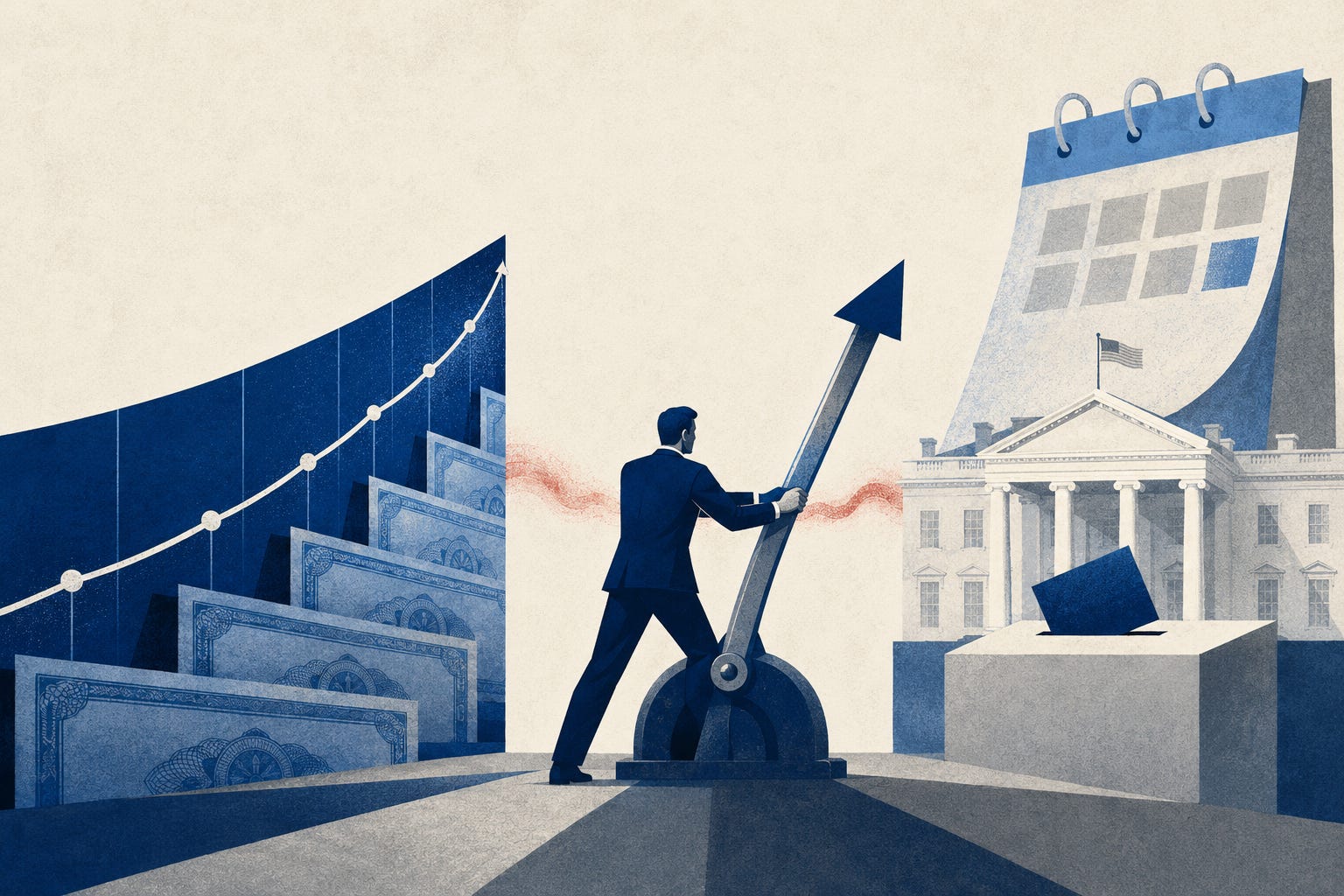
Uncertainty over US monetary policy risks spreading to the other major economies. It appears increasingly likely that the European Central Bank will raise its policy rates again, to 2.5 per cent, at its September meeting
IEP@BU does not express opinions of its own. The opinions expressed in this publication are those of the authors. Any errors or omissions are the responsibility of the author
The new chair of the Federal Reserve, Kevin Warsh, has a problem. He would like to raise interest rates to fight inflation, but not before the midterm elections on November 3. He wants to avoid slapping President Donald Trump on the face, as he appointed him with an explicit mandate to cut rates as soon as possible.
Warsh’s concern is understandable. Although the Federal Reserve is independent, the effectiveness of monetary policy depends on the broader macroeconomic and political environment. Starting a confrontation with the White House is hardly the best way to begin a term at the helm of the US central bank.
Jerome Powell, Warsh’s predecessor, publicly rejected the president’s pressure. Yet he still cut interest rates three times at the end of 2025 and refrained from raising them in 2026, even as inflation climbed from 2.4 per cent in January to 4.2 per cent in May.
In his first public appearance, in mid-June, Warsh announced that rates would remain unchanged. At the same time, he reassured markets that the central bank’s overriding priority was to bring inflation back to 2 per cent.
Investors understood the message: sooner or later, rates would go up. Warsh’s communication strategy, aimed at buying time and encouraging markets to “do the central bank’s work” by pushing up long-term interest rates, seemed to succeed.
Warsh may also have expected, based partly on statements from the administration, that the Iranian conflict would end quickly following the ceasefire agreement reached in mid-June, allowing commodity prices to fall back.
Last Wednesday, the US central bank again decided to keep interest rates unchanged. The decision was not unanimous, however, as three of the Federal Open Market Committee’s 12 voting members supported a hike. This suggested that monetary policy would eventually have to be tightened.
During the press conference, Warsh declined to provide markets with clear guidance on the Fed’s future course, keeping all options open for the coming months.
Concerns have therefore intensified that the Fed is underestimating inflationary risks, as it did four years ago, and that it may not be sufficiently independent to raise rates in the run-up to an election.
Long-term interest rates have continued to rise. Over the past month, yields on 10-year US Treasuries have increased by 30 basis points, approaching 4.9 per cent. That is close to the 10-year high reached during the previous inflationary episode of 2022-23. Yields on 30-year Treasuries have already reached a 20-year high of 5.2 per cent.
The negative effects are beginning to be felt in equity markets, which have been under pressure for several days. Experience shows that the longer an interest rate increase is delayed, the more severe the tightening may have to be to bring inflation back within the stated target. The repercussions for the real economy and corporate balance sheets will be correspondingly more serious.
Warsh’s problem is that the elections are still three months away, a long time for financial markets. The next meetings of the Federal Open Market Committee are scheduled for September 16 and October 28. The second will take place just one week before the elections, making a rate increase at that meeting appear highly unlikely.
Unless the outlook for the conflict in the Middle East changes dramatically, a prospect that seems less likely by the day, inflationary pressures will not subside.
Against this backdrop, the likelihood of a rate increase at the end of the summer, and of an institutional confrontation with the White House, is growing by the day.
The global repercussions are already being felt. European long-term interest rates have risen in parallel with those in the US. Yields on 10-year German government bonds have exceeded 3 per cent, their highest level since 2011. Spreads on Italian and French government debt have started widening again.
Uncertainty over US monetary policy risks spreading to the other major economies. It appears increasingly likely that the European Central Bank will raise its policy rates again, to 2.5 per cent, at its September meeting.
Such a move would reassure markets of the ECB’s determination to fight inflation and avoid being drawn into corner, as the Fed seems to have ended.
Unless the it manages to rapidly get out.
A previous version of this article was published in the Italian daily Il Foglio
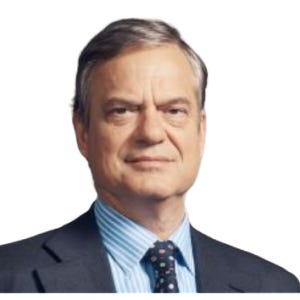
Lorenzo Bini Smaghi holds a degree in Economic Sciences from the Université Catholique de Louvain (Belgium) and a Ph.D in Economic Sciences from the University of Chicago. He has been Chairman of the Board of Directors of Société Générale since 2015. He is an IEP@BU non-resident fellow
Europe is Paying for Putin’s War
·
Jul 17

We are approving tens of billions of pounds in military and financial aid so that Ukraine can fight off the Russian army. At the very same time we are sending Russia billions of pounds that it uses to fund that same army. We arm the victim with one hand and pay the aggressor with the other. It is not a policy. It is a farce
Making EU Inc. Fit for Venture Capital
·
Jul 17

The proposed amendments share a single guiding rationale: that innovative startups (as well as scaleups) need, and should be granted, materially greater contractual freedom than the Proposal currently envisages. The reason is grounded in how high-growth firms are financed
Europe Between Empire and Rules
·
May 27

There are two ways to avoid double standards. One is the Trump way: remove the standards. Trump is not hypocritical because he has no standards. The other is to try to live up to one’s standards and narrow the gap between norms and power

Founded by Bocconi University and Institute Javotte Bocconi, the Institute for European Policymaking @ Bocconi University combines the analytic rigor of a research institute, the policy impact of a think tank, and the facts-based effort of raising public opinion’s awareness about Europe through outreach activities. The Institute, fully interdisciplinary, intends to address the multi-fold obstacles that usually stand between the design of appropriate policies and their adoption, with particular attention to consensus building and effective enforcement.
The Institute’s mission is to conduct, debate, and disseminate high-quality research on the major policy issues facing Europe, and the EU in particular, its Member States and its citizens, in a rapidly changing world.
It is independent of any business or political influence.
Marta Cartabia
President
Sylvie Goulard
Vice-President
Paloma Lopez-Garcia
Director
Silvia Colombo
Deputy Director
Carlo Altomonte
Arnstein Aassve
Valentina Bosetti
Elena Carletti
Daniel Gros
Eleanor Spaventa
Nathalie Tocci
Comments
Nothing yet. Say the first thing.
Sign in to join the conversation.