
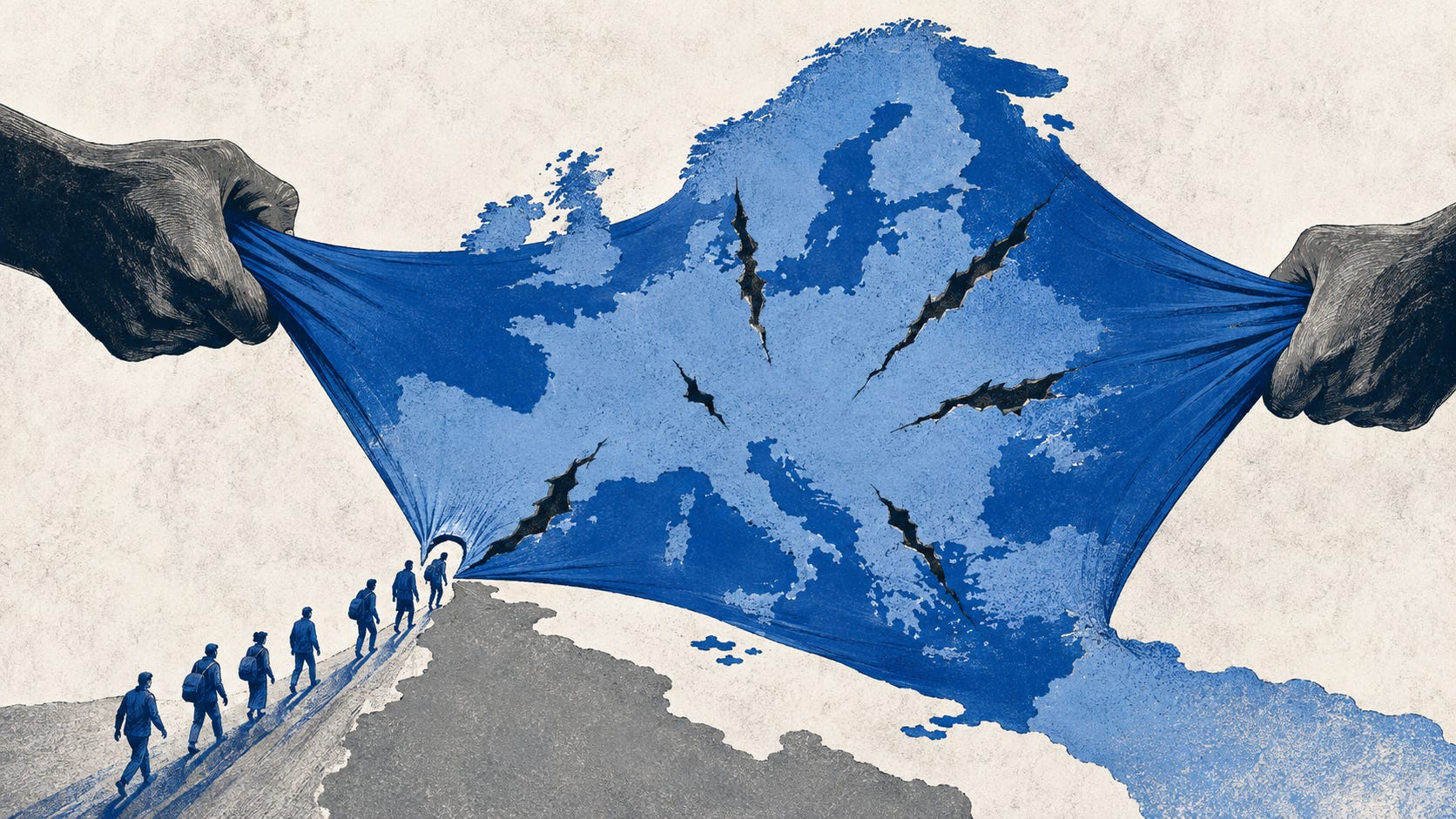
Some even suggest that Morocco, Israel and the US want to pressure Spain into relinquishing Ceuta, opening a corridor into Europe that would bypass Spanish — and therefore European — sovereignty and deal a fatal blow to the EU’s ambitions for strategic autonomy
IEP@BU does not express opinions of its own. The opinions expressed in this publication are those of the authors. Any errors or omissions are the responsibility of the authors
The crisis in Ceuta appears to be a migration crisis. But behind that initial appearance lies the story of a Europe threatened from without — by Moscow and Washington — and from within, by nationalism and extremism and their intrinsic anti-patriotism.
The 60,000 migrants who attempted to enter Europe from Morocco through Ceuta, Spain’s exclave in North Africa, represent a surge in arrivals unseen since the migration crisis of 2015.
The narrative that circulated during the first hours of the Ceuta crisis focused on Spain’s supposedly lax migration policies.
Pedro Sánchez’s government has regularised the status of 500,000 migrants, while the Supreme Court has restricted the authorities’ ability to turn back irregular migrants arriving by sea.
Almost immediately, 20 European governments, beginning with Italy’s, implicitly attacked Madrid rather than expressing solidarity, stressing the need to control the EU’s external borders.
The Italian government went further, suspending Schengen rules with Spain for a month. Its response could hardly have been more different from the solidarity Madrid showed Italy when it experienced a surge in arrivals in 2023.
On the surface, the story seems plausible. Spain’s Socialists have been too liberal towards irregular migration, while other European governments — most of them on the right — have reprimanded Madrid for endangering Europe’s security. But it takes little scrutiny to see how thoroughly this interpretation is steeped in disinformation and political manipulation. It is an ill-informed reading.
It is ill-informed because the regularisation applies only to migrants who have lived in Spain for more than five years and arrived in the country before January 2026.
It is ill-informed because Madrid has never been soft on irregular migration. According to figures from the European border agency Frontex, rightwing-governed Italy recorded twice as many irregular arrivals over the past year as leftwing-governed Spain.
The figures on returns are even more embarrassing for Italy’s rightwing government: Spain carried out 1,366 in 2024, compared with just 60 by Italy. Spain is no soft touch on irregular migration. Virtually all the 60,000 people who arrived in Ceuta have already been returned to Morocco.
The interpretation is also ill-informed because Ceuta, although Spanish and therefore European territory, is in practice outside the Schengen area.
There are strict controls on entry from Ceuta — and Melilla, Spain’s other North African exclave — into the rest of Spain.
It is harder for an irregular migrant to reach the Iberian peninsula from Ceuta than to arrive there directly from Morocco. Officials at Italy’s interior ministry are well aware of this, making Rome’s decision to suspend Schengen rules temporarily for Spain all the more scandalous.
How, then, can we explain a crisis that erupted out of nowhere and was resolved just as quickly? The real story is unfortunately far more enduring than the Ceuta crisis itself. It concerns the internal and external threats facing Europe.
The far right is on the rise across the continent. With elections approaching in France, Italy and Spain in 2027, the threat has never been more tangible. In European countries already governed by the right, Sánchez’s administration is an obvious target. This is all the more true given Spain’s record.
The country leads Europe’s economic growth rankings, thanks in part to migration, while enjoying some of the continent’s lowest energy prices as a result of its rapid expansion of renewable power. Migration and green energy are anathema to the right.
Then there are governments such as Germany’s which, although not far right themselves, shortsightedly chase after it, terrified of being overtaken.
Alongside the internal causes of Europe’s crisis are external ones. The bogus account of the events in Ceuta — an invasion supposedly invited by Madrid’s liberal policies — circulated immediately and spread like wildfire, amplified by social media, particularly Elon Musk’s X, by US President Donald Trump’s statements against Spain and by Russian trolls.
We have already seen the MAGA world and the Kremlin working in concert to divide Europe in the Ukrainian theatre. Ceuta is the sequel.
Morocco encouraged the false account of the crisis, partly because of its close ties with Israel and the Trump administration — which, during Trump’s first presidency, recognised Morocco’s occupation of Western Sahara — and perhaps partly in response to Sánchez’s recent visit to Algeria.
After all, this is not the first time Rabat has used migration as leverage against Madrid, just as Tunisia, Libya and Egypt regularly do against Italy, and Turkey against Greece and the EU as a whole.
Some even suggest that Morocco, Israel and the US want to pressure Spain into relinquishing Ceuta, opening a corridor into Europe that would bypass Spanish — and therefore European — sovereignty and deal a fatal blow to the EU’s ambitions for strategic autonomy.
Spain is reviled not only by Europe’s right but also by Trump and Israeli Prime Minister Benjamin Netanyahu because of its positions on defence, migration, renewable energy and social media — and, in Israel’s case, the Palestinian question.
This is where Europe’s internal threat from the right converges with the external threats emanating from Moscow and Washington. The external objective is to divide and weaken Europe, turning it into territory ripe for conquest.
The most effective means of achieving that goal is to support the rise of Europe’s domestic rightwing forces, which unpatriotically allow themselves to become the useful idiots of other powers’ imperial designs.
A previous version of this article was published by the Italian daily La Stampa

Nathalie Tocci is a senior fellow of the Institute for European Policymaking at Bocconi University. She has been Director of the Istituto Affari Internazionali from 2017 to 2026. She has been Special Advisor to EU High Representatives Federica Mogherini and Josep Borrell. In that capacity, she wrote the European Global Strategy and worked on its implementation. She is also Professor of the Practice at SAIS Europe.
Europe Between Empire and Rules
·
May 27
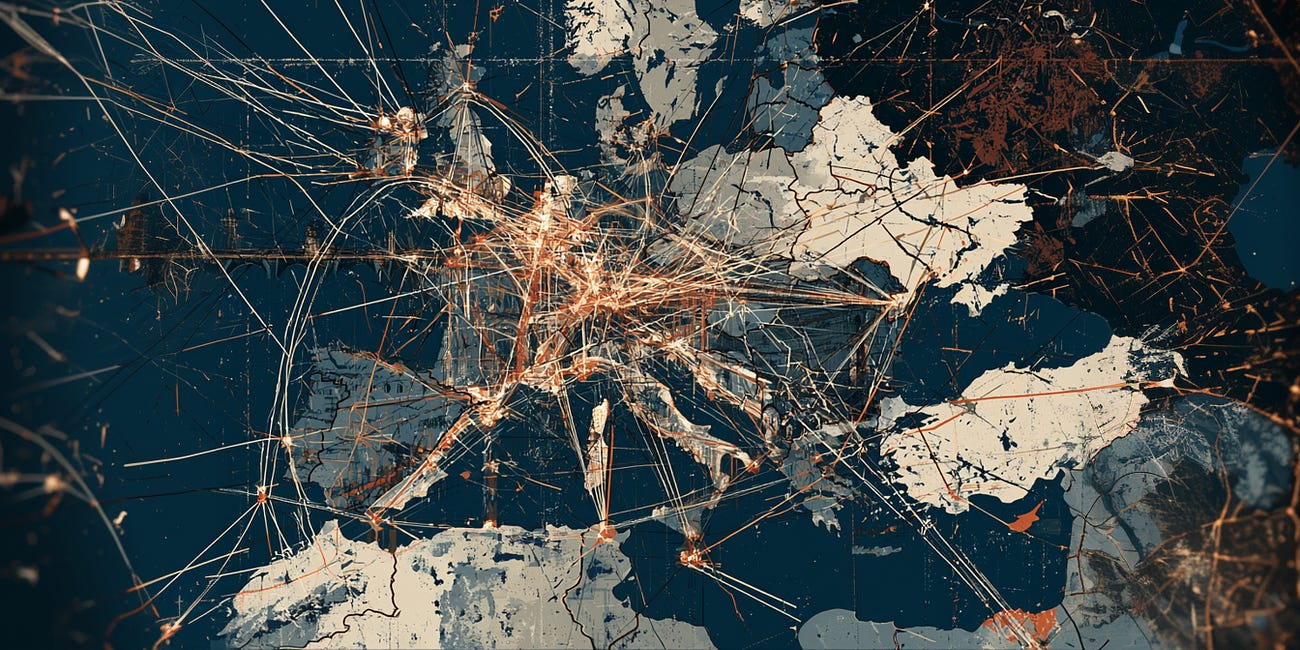
There are two ways to avoid double standards. One is the Trump way: remove the standards. Trump is not hypocritical because he has no standards. The other is to try to live up to one’s standards and narrow the gap between norms and power
Working Paper - Whither Stablecoins?
·
May 18
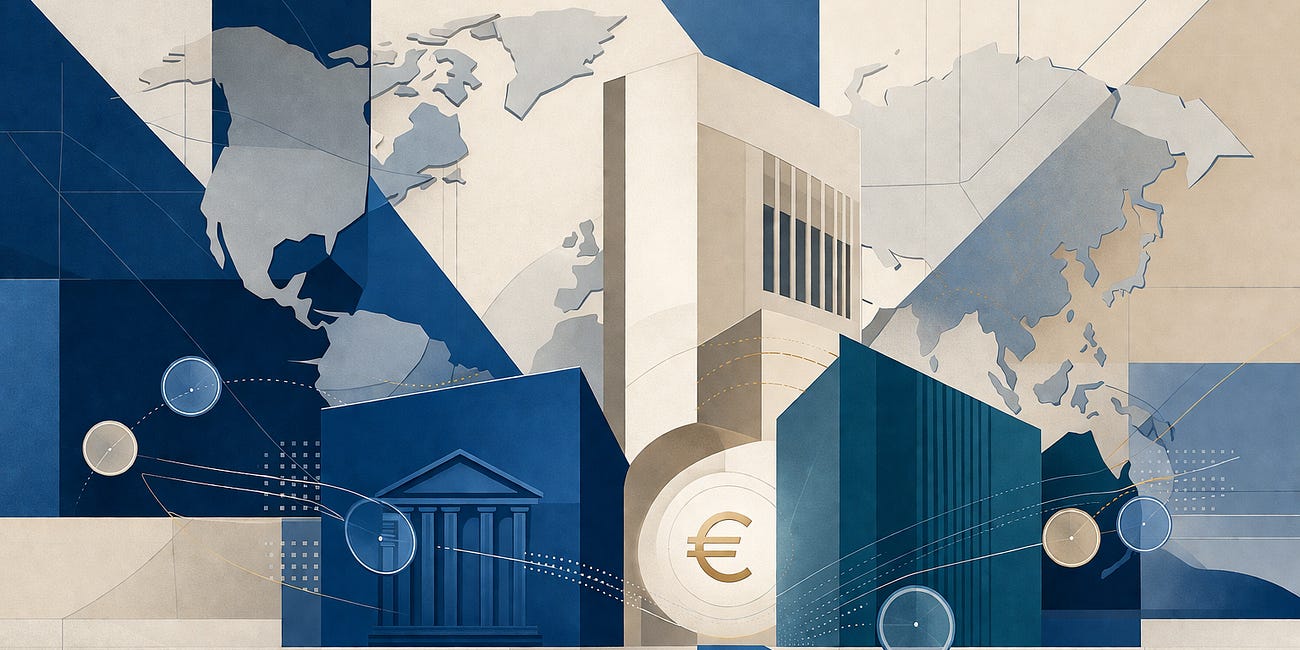
The future of Europe’s payment systems is open and the opportunities are significant. What is needed is pragmatism and a firm focus on Europe’s overriding priorities: strengthening competitiveness and upholding monetary sovereignty. Success on both fronts may also increase the attractiveness of the euro internationally

Founded by Bocconi University and the Institute Javotte Bocconi, the Institute for European Policymaking @ Bocconi University combines the analytic rigor of a research institute, the policy impact of a think tank, and the facts-based effort of raising public opinion’s awareness about Europe through outreach activities.
The Institute, fully interdisciplinary, intends to address the multi-fold obstacles that usually stand between the design of appropriate policies and their adoption, with particular attention to consensus-building and effective enforcement.
The Institute’s mission is to conduct, debate, and disseminate high-quality research on the major policy issues facing Europe, and the EU in particular, its Member States, and its citizens, in a rapidly changing world.
It is independent of any business or political influence.
Marta Cartabia
President
Sylvie Goulard
Vice-President
Paloma Lopez-Garcia
Director
Silvia Colombo
Deputy Director
Carlo Altomonte
Arnstein Aassve
Valentina Bosetti
Elena Carletti
Daniel Gros
Eleanor Spaventa
Nathalie Tocci
Comments
Nothing yet. Say the first thing.
Sign in to join the conversation.