
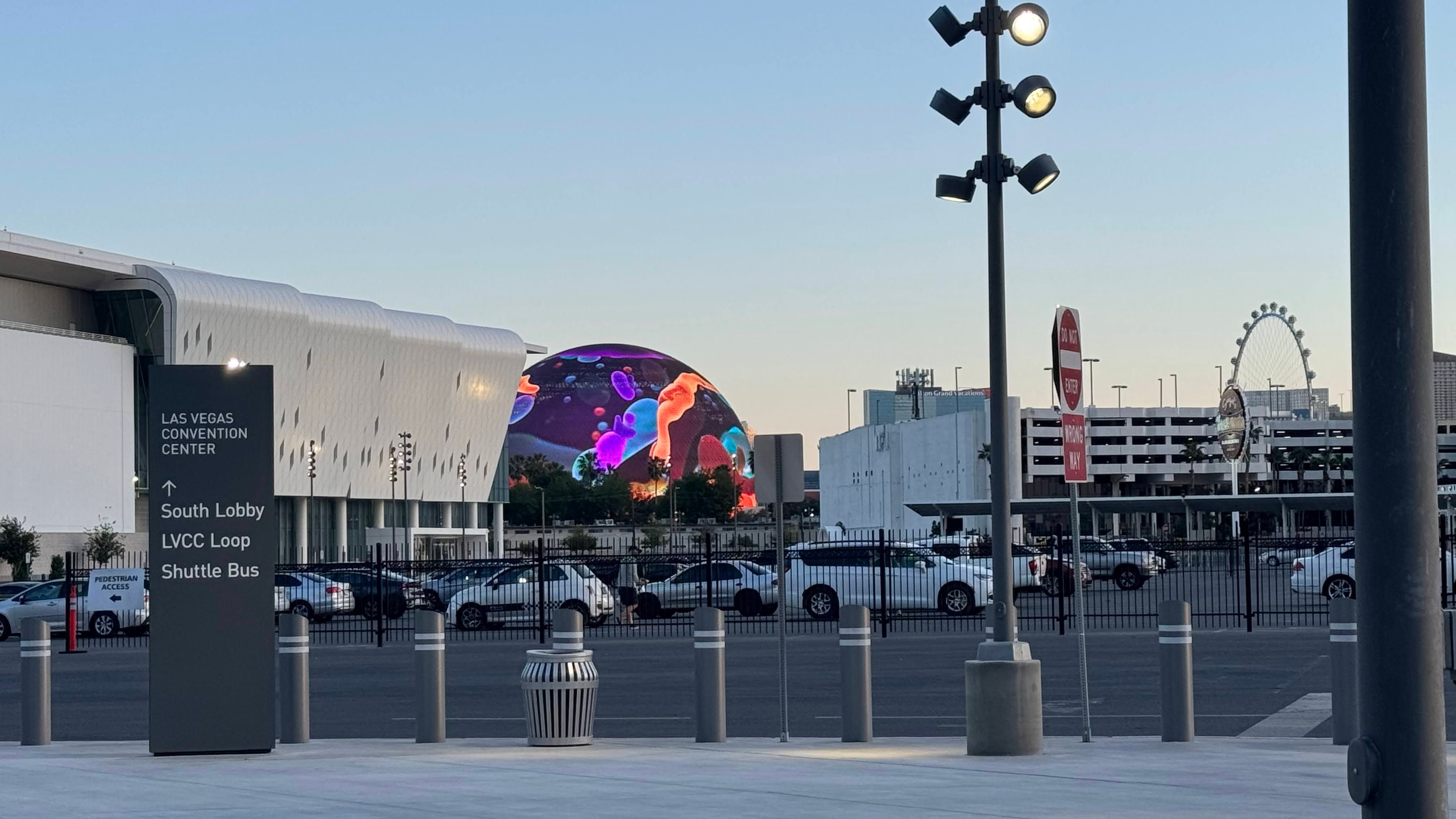
NAB 2026 has just come to an end and with it the obligatory post from the show organisers about how well or not it has done.
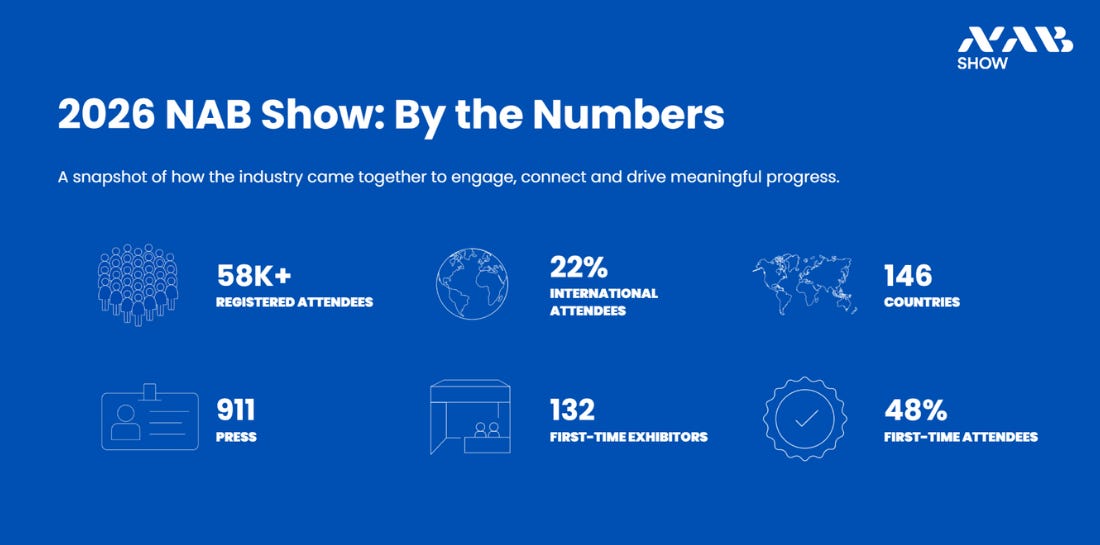
NAB are somewhat pleased that registered attendees has risen this year. I will evaluate this a little as part of my key hypothesis that I present in this newsletter.
All of the shows now make a big marketing push for with their KPIs immediately afterwards,. This because of their need to demonstrate effectiveness in this ever more competitive world. You would have seen summaries like this also for IBC 2025 last September, as well as for may other events.
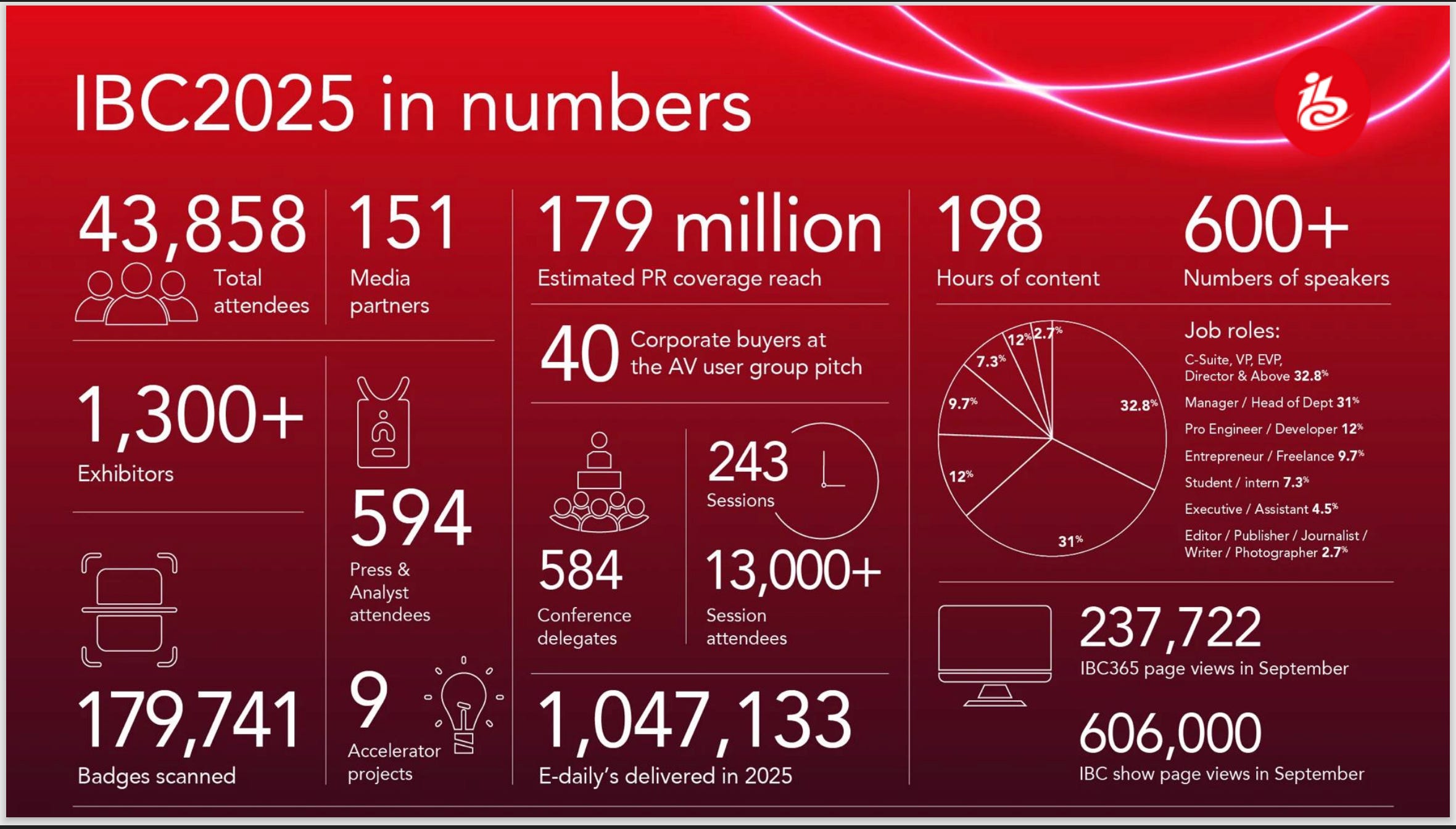
On their own, each year’s KPI summary is useful in the here and now. What can you derive from the data though? Well for one thing, a single year’s data or even a comparison between shows of one year is not enough to generate useful insights about the shows themselves. In addition you would not be able to infer much of an industry perspective from what they represent. For that you need to take the longer term view.
So I did, and here is the key takeaway from the last (almost) 26 years focusing on two key datapoints;
Attendance numbers and trend (as a proxy for the industry scale)
Exhibitor numbers and trend (as a proxy for scale and vibrancy of the industry/market dynamics)
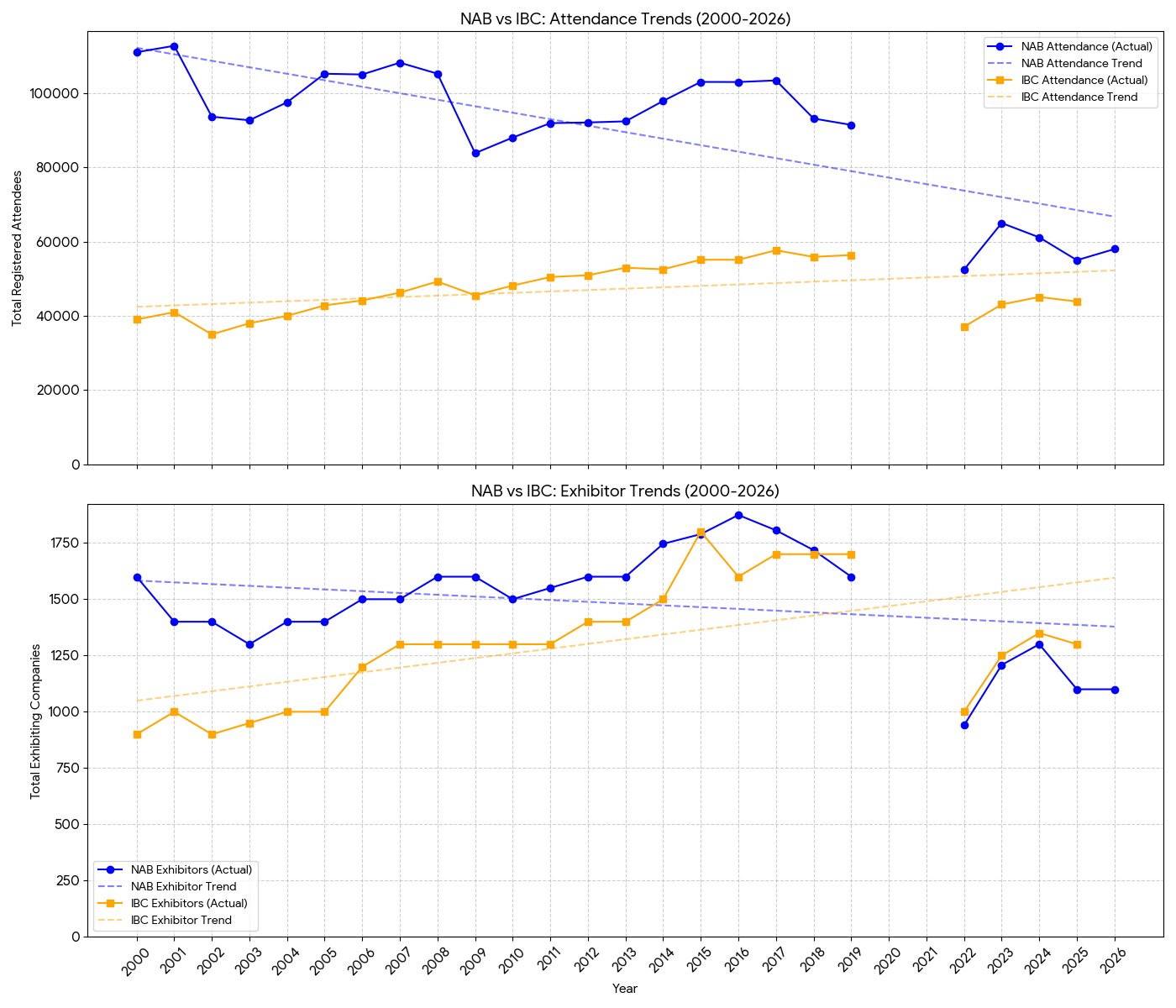
You can clearly see immediately the key data and trends which represent the insights:
The trend in this window on visitor attendance is on its way down for NAB, and still on its way up for IBC - even if there has been a fall for both since Covid.
NAB, once twice the size of IBC in attendance and almost so with regard to exhibitors, is now almost level pegging with IBC
The Covid years have taken their toll, but much more on NAB than it has on IBC (although hold that thought on what the cause of that is).
You can clearly see that the data of the last four years is giving a very different perspective on the key success factors for the shows.
I have a hypothesis that we can use these data points and their trend to reflect on the media technology industry as a whole - from the mass launching of Digital Television, through the transition to HD and onwards into the streaming world that we are moving to today.
Lets set out some key points in the timeline and how you can see world and technology key events.
First we start in 2000. This is right in the middle of the move to Digital TV. It is a highpoint compared to earlier years that I don’t show on the charts. You can however see that 2001 has a fall in it compared to the years either side. This is where attendance bucked a trend - we had a fall, because of Dot Com bust of that time. You can see that it did hurt attendance immediately in the US (as it happened just before NAB 2001) but did not reach Europe properly until after IBC 2001. It shows in the numbers for 2002 and in some respects through to 2004. Europe escaped a lot of it however, as IBC continued to grow until 2008.
In 2008, we had the big worldwide banking crash which to me shows in the attendance and exhibitor numbers. There are differences for NAB (US) and IBC (Rest of the World). NAB flattened for a while and dipped through to 2010 for exhibitor numbers. IBC stayed flat and for longer through to 2011. On the visitor attendance front, there was a blip with quick recovery. Remembering back to that time, I remember that there was a six to nine month pause in new projects, before companies picked themselves up and got back to delivery with differently organised resources and financing. The needs were all about the continued expansion of HD and the move into the ‘Internet’ification of services with deployments of streaming services delivered on the new mobile devices and tablets, hybrid STBs and the first Smart TVs of the time.
Throughout the 2010s we see constant growth on both the US (NAB) and Rest of the World (IBC) numbers. This is all the way through through to a fall in 2016 for IBC. This is also the point for the beginning of a constant fall for NAB. What does this represent? For that we pick out the geopolitics of the time. The world was experiencing its first bout of political uncertainty with the combination of the first Trump presidency, the continuing of the first invasion of Ukraine (the Crimea) and the trials and tribulations of Brexit. I mention that last point because the media technology industry has always had a sizeable block of UK representation. This is also the time that we started the IT’ification of the Broadcast industry. This was the start of the move from being about broadcast to being about media technology and IP based compute processing. This has its own impacts on the nature and type of exhibition space that would be needed in the future, as well as the style change to being more networking and connection based than showing off big lumps of iron.
We then have wilderness years of 2020 and 2021. This is where Covid struck down the exhibition and conference world, a lot of other things, and accelerated much of the moves to online services. It was an accelerator for the adoption of streaming services that in many respects replaced the primary content consumption mediums of most of the world.
The end of 2022 is where we ended the peak TV years. This can be seen in some of the fall off in exhibitors and attendance at NAB. We also cannot forget more instability on the geopolitical front with the expansion/second Ukrainian War, the economic disruption that brought in the US, and smattering of other political wrangles in many countries around the world, as well as the run up to the second Trump presidency in the US.
However with the discontinuity, we have the massive drop for both IBC and NAB, in both attendance and exhibitor numbers for this decade.
Taking exhibitor numbers first, the show a drop for both shows of over 38%. It also corresponded with the end of peak TV and what I remember as a clear drop off of activity in new product delivery, of new projects, developments and innovation - and a huge focus on cutting costs. In fact this was the beginning of a massive period of swinging cuts and firings that may be slower today, but is still taking place.
Interestingly the attendances somewhat recovered through to 2023 for both shows which may be a sign that those people who were cut were still attending these very big and important networking shows?
There is a clear divergence of the last few years compared to the previous years. Attendance is flattening but still falling for NAB (despite this year’s numbers which will be touched on later), and increasing/flattening for IBC. We should put this in context, thare are still more attendees for IBC or NAB than IBC had in the heyday of Digital transition the mid 2000s. The aberration is NAB which I put down to specific structural changes purely in the US.
With regard to NAB’s attendance numbers for this year, it is important to look more broadly. What does the increase in 2026 mean? It looks like a considerable swing up in attendance from US visitors. Despite the international contingent falling back back to 22% from 26%, we have an increase. Where does that come from?
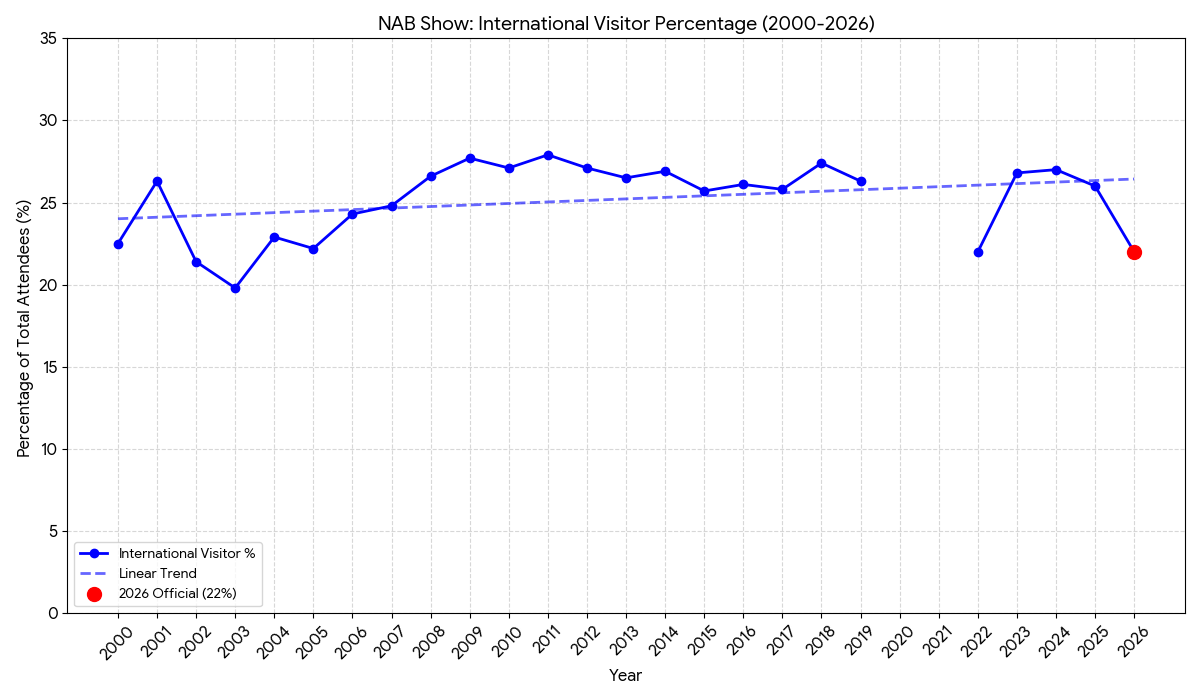
NAB has had to pull off a significant increase during a downturn in the industry as a whole - because in real terms that 22% of visitors is 12,760 international visitors out of the 58,000 this year, and last year that it was 26% of visitors which was 14,300 international visitors out of 55,000 visitors.
Is it plausible and/or reasonable that NAB grew over 1,500 visitors to the new content creator areas to make up the shortfall in international visitors? Possibly. However there is not enough data here either way to be able to verify that.
A common refrain at recent NAB shows, and to a lesser extent for IBC, has been "why does it look so empty compared to when I last came / last year?”.
This can be explained clear reduction in visitors, more for NAB than IBC (this decade being almost half of what NAB had at its peak). I don’t see this as the only reason - the LVCC has changed considerably since 2000, and NAB has also changed how it services the space requirements for the exhibitors.
In 2000, NAB was already over the million square foot size, using a combination of the LVCC and secondary external exhibition space (the Sands Expo centre I believe). Eventually the LVCC has expanded with the addition of the West Hall space. This gives the LVCC space mostly available to NAB in 2026 at over 232,000 square meters. This compares to the RAI’s 116,000 square meters (although I am not sure if that includes the ‘temporary’ Hall 14 space). Is it any wonder that with similar levels of visitors and significantly lower numbers of exhibitors compared to the past (and similar levels to IBC), that NAB will felt empty this year and every year with so much more space available that could take 100,000+ visitors and is actually only serving 58,000. Quite possibly it may be possible in future years to fit NAB into just two halls and still be comfortable.
IBC also is still filling its halls with maintaining the number of exhibitors, at least at similar levels to the early 2010s. This is even with the move from the big iron days to the screen/cloud and software demos that are largely shown today. The data that I have used here does not show any quantification of what those exhibitors represent. Personal experience informs me that the nature and type of exhibitors are changing and turning over quite a lot. The days of permanence from some key companies in certain halls has gone. This is also becoming part of the theme for IBC, with the IBC Ignite programme which promises a lot more startups coming into the show in 2026.
NAB just has a lot of space and a lot of fall off in visitor and exhibitor numbers for those who experienced NAB from 2000 to 2019.
I believe there is correlation and key insights from the NAB and IBC show attendance and exhibitor levels that informs us all about the state of the modern Media Technology industry. It is showing that the US is a declining market that is much more insular and less international than IBC. The reasons are more complex, with implication that consolidation has been significant in the US market. This will also not improve in the transition to IP that will come there. There is a natural tendency for the US market to consolidate, which is not as prevalent as elsewhere in the world.
The rest of the world, as represented by IBC, is not so much of a declining market. Exhibitor levels are being kept higher, but not as high as peak TV was in the early 2010s. This loss is not necessarily in money terms (for that I would have to expand my data sources), but it is in terms of direct employment and engagement.
The overall vendor/media technology company base has fallen after Covid but is resisting the fall further and seems to be entering a stable period without growth. Not a horrible place to be, but evidence needs to be found that they are equally as profitable and can grow as companies have been in the past.
It is also arguable that NAB may be reverting to being seen as a truly only a US event (although in real terms it has been very US centric for all of its life, as you can see from the above international visitor numbers). This will affect future exhibitor numbers as the market stabilises at a lower level than the rest of the world - as informed by comparison of IBC and NAB key numbers.
This analysis has been done to determine if you could infer the state of the Media Tech industry from the visitor and exhibitor numbers from IBC, and for that I believe that there is inference that is valid. I must also share that I have attended IBC since 1998 and NAB from 2017 to 2025 (missing this year out), and that as an individual engineer I volunteer and work with two of the owners of IBC (the Institution of Engineering and Technology and the SCTE - Society of Broadband Engineers). My views and analysis do not necessarily reflect the views of those two organisations, nor the views of the other organisations that are owners, of which I am a member (the IEEE and SMPTE).
I hope you have found this insightful.
No posts
Comments
Nothing yet. Say the first thing.
Sign in to join the conversation.