
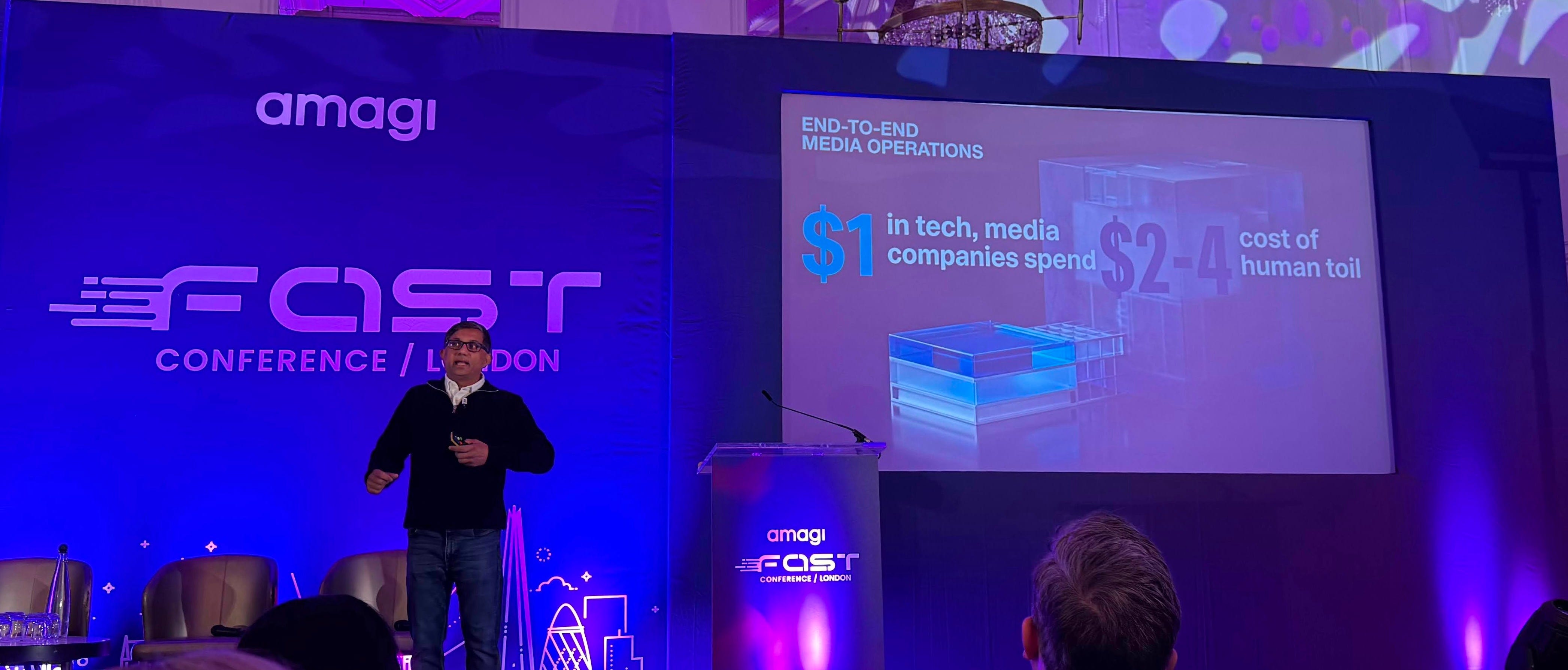
I spent the day on Tuesday 12th May 2026 as guests of Amagi, a software-as-a-service company that connects media companies to their audiences through cloud-native technology. This was at their “London FAST 2026 Event”. This was the latest in a series of FAST conferences that Amagi have run over the last five years.
They were excellent guests and the event attracted key FAST industry people into the De Vere Grand Connaught Rooms for a whole day of presentations and panels picked to represent where FAST was today. It was an event that was produced by Amagi to represent where they saw the industry was with FAST and what their product capabilities were to help those launching FAST services today. Clearly a set of thought pieces, discussion, and with a twist of commercial presentation of their product capabilities in the industry context.
I am not going to report so much on what was said, you will have to wait for the videos of the sessions (which I believe there will be), but I will touch on some key thoughts that were triggered throughout the day and what triggered them.
First a little refresher about the term FAST which is of import - FAST (Free Ad-supported Streaming Television) is a term created by Alan Wolk back in December 2018 to describe a category of streaming service that he felt was missing from the categories that were around that time, that covered a form of streaming television that was offered without the need to pay for a subscription. Already I can remember hearing those experienced in the TV world back then screaming ‘huh’. After all, Free Ad supported television is a standard business model, and changing the distribution medium does not really change that much, particularly when outside of the US there was already plenty of hybrid and streaming platforms provided by a variety of broadcasters - whether public service or not.
Was there a point to this categorisation? Yes in the US which did not really have these sorts of services, with their Free Ad supported broadcasters generally charging for access to streaming. In addition the vast bulk of viewers in the US also accessed these channels via a paid cable or satellite service. All in all it seemed like a category without a need for existence outside of the USA.
Of course that did not stop a number of new services growing beyond those early services that began in the US, growing across the world despite (and I stress despite) the fact that these were not really a new category of business, although they did entice a number of new entrants based on single IPs (content from a single show) or limited new mixed with old. FAST gained a degree of reputation though, for being the place where old content went to die (or be discovered), or where low quality content flourished with some diamonds in the rough to be seen.
It is important at this point that although FAST gained a reputation for as live streaming as channels, it did include ad supported on demand content as well, although that was definitely something that initially was not part of the play.
Did the rest of the world need the category? I don’t think so, but there was nothing bad in the growth of new services that popped up to meet some consumers needs.
Sitting and listening at the conference I could not come away with anything else but that all the people present had some varying understanding of what that nominal form was - with discussion of nuances about the type of viewer, the type of advertiser, the origin of the content, the way that the content was consumed, and even whether it included on demand content or not.
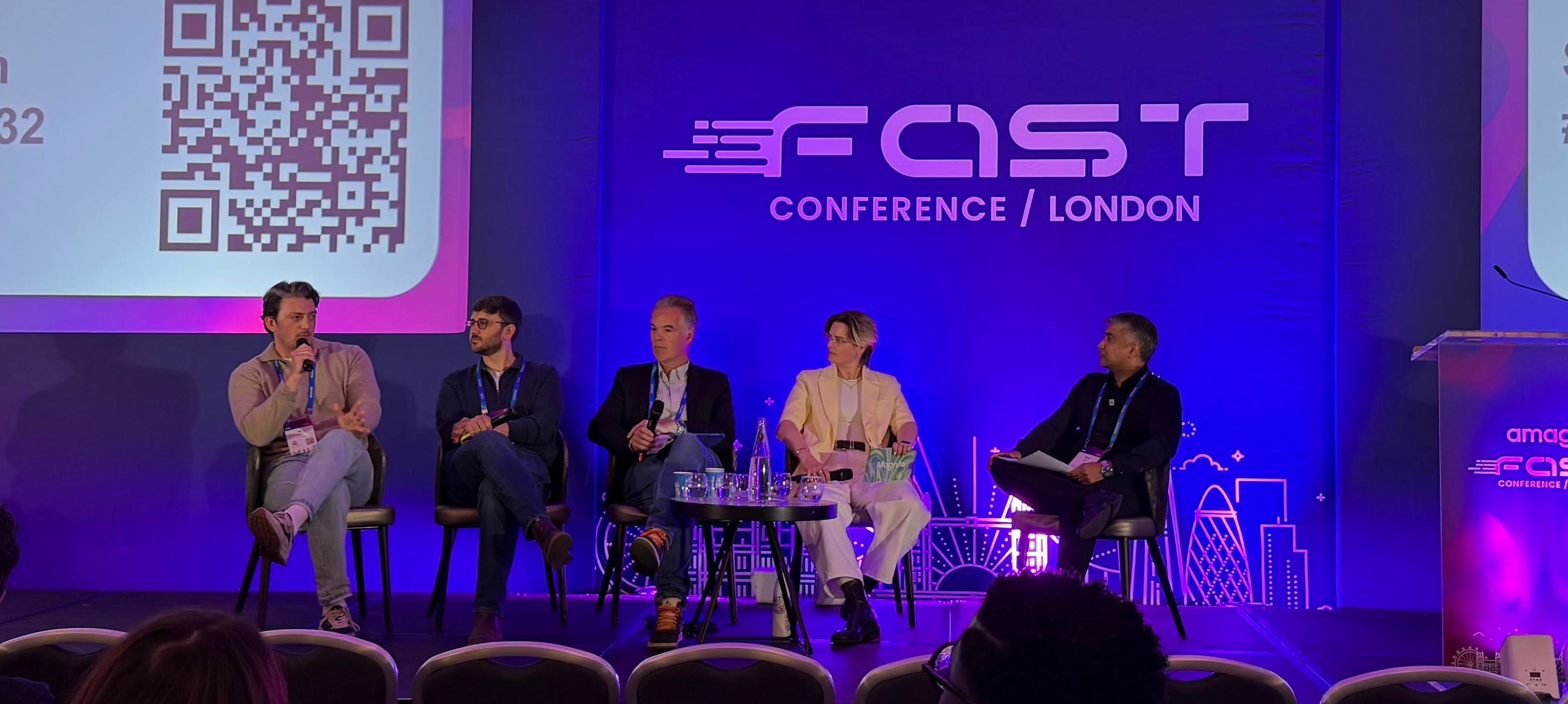
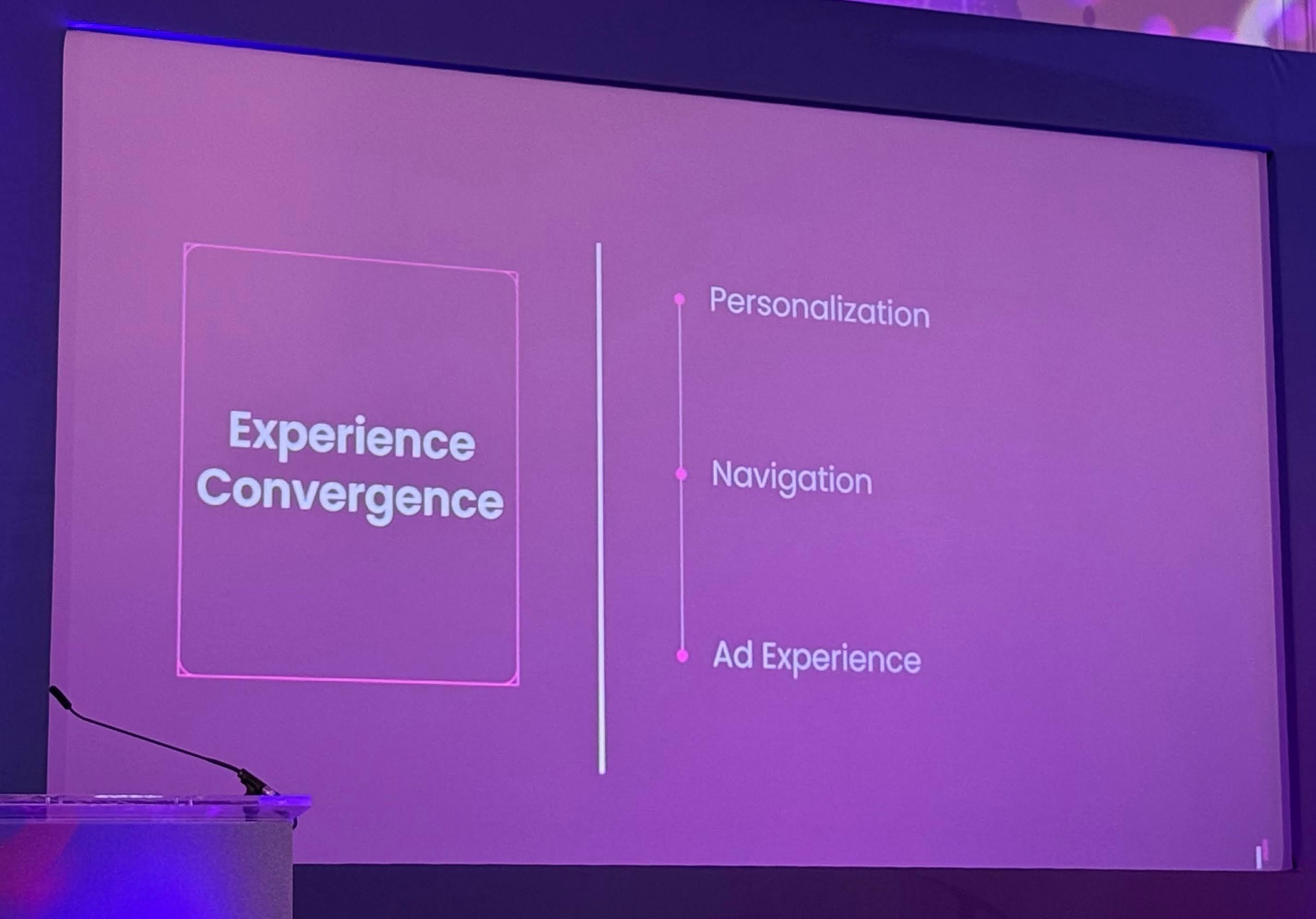
That however is not the important message that Amagi saved to the end, which was a much more important message to take away and much more in line with my immediate reaction to the definition of FAST all that way back in 2018. The issue is that these are converged content propositions, with the newly labelled FASTs existing in the consumer eye as much as all the other content consumed from broadcasters and video on demand providers, on mobile, web, and TV.
The ‘Convergence’ end message is key. The delivery of Television (whether linear or on demand or both) has been on a path of convergence towards a single platform for delivery on whatever medium along with many other forms of entertainment. It is not important whether it is streamed or broadcast, for those providing these services the critical thing is that it should delivered to consumers from a single platform that originates the form of television (linear, on demand, ad supported, pay or all the combinations) to all the distribution mechanisms - whether it is over IPTV, DTT, Cable, Satellite or streamed.
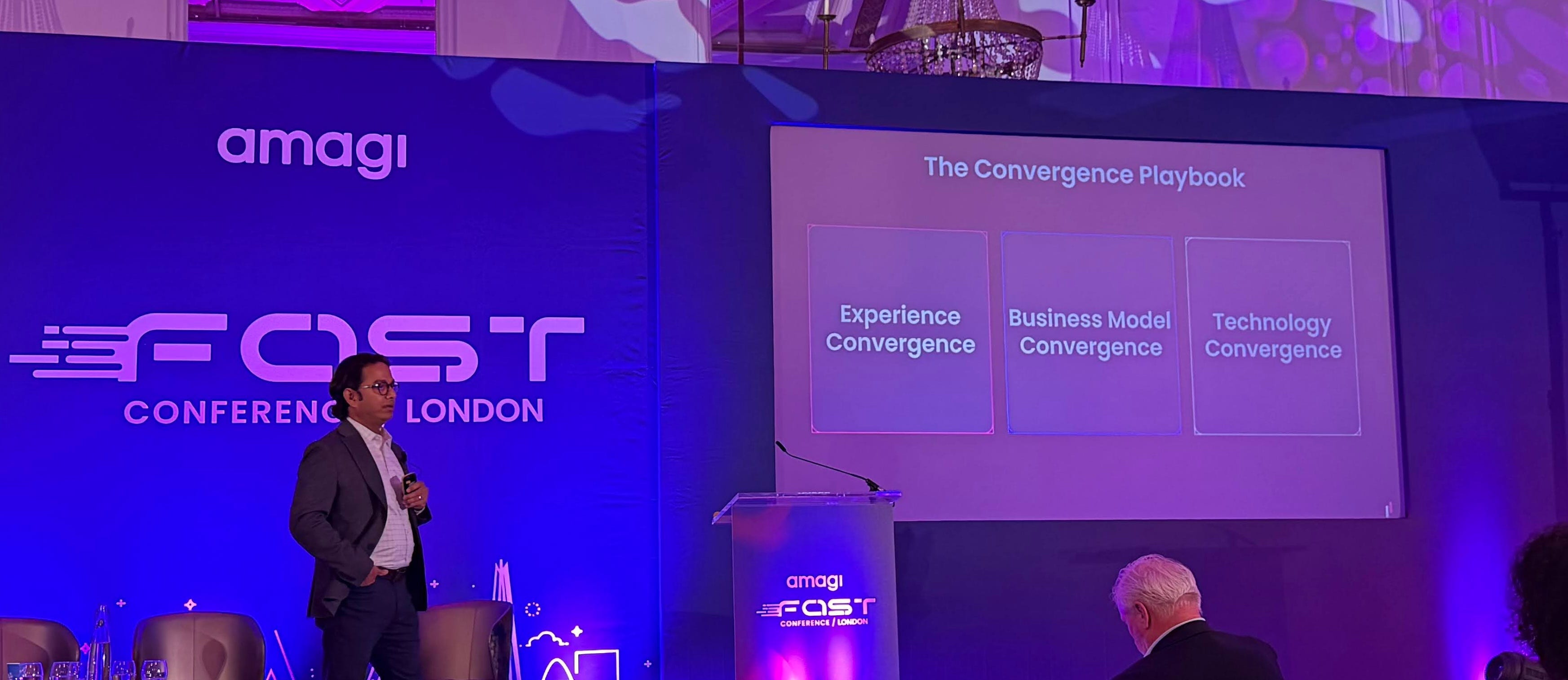
Amagi talked at length about their platform technologies enabling the packaging and delivery of entertainment which should be done as efficiently and effectively as possible, which means a single originating and management platform. The message for many others who may still be working with multiple delivery media and backend platforms, is that the power of a single platform regardless of media is the key point. This aligns with the technology view across the industry as well, which does help a great deal when vendors (including Amagi) are for simplicity of production, packaging and delivery using software enabled cloud/standard server platforms.
Touch once is the mantra - each process step should bring in the multiple sources of content, process once, and distribute to many. This is what I called ‘Content Factory’ back in 2017 in my advisory to companies looking at their aging multi-headed platforms. This phrase reflected not just my thoughts but the coming thoughts of every video platform operator that offered multiple services across many distribution forms.
The term FAST was created to differentiate, but the reality is that from a consumer perspective (and technology perspective) there is no need to differentiate. This is just Free Ad supported TV, whether broadcast or streamed, free at the point of consumption. However we still need to use the label, it is just that we all need to understand that its definition should not be used as a think defining line around what we do.
Much of the rest of the discussion in the conference was also a clear message that FAST (as defined as just the new services) is still predominantly a US thing. The US is portrayed as comprising of 80% of the revenue in FAST, but that ignores the core businesses that are in the Rest of the World which don’t describe themselves as FAST but actually are and have been for years. A relook at the numbers is almost certainly needed.
One thing that was raised and that was where the revenues for ads are actually coming from, and that explains the large US revenues compared to the rest of the world. The US has at its core a political system that is heavily run through money, and the way that money is spent is through advertising and the ‘every 2 years’ election cycle. This is not something that happens generally in the rest of the world.
The ad business though continues to be troubled, and this cannot be ignored. The important takeaway for advertising that impacts ‘FAST’ and every other ad funded business is a comment from Alison Keith (ex Coty / Kraft Heinz / Dentsu Aegis) that I heard at another event run on advertising business models by Comcast and Broadpeak that I attended back in February.
This is that Advertising budgets are a zero sum game. Money spent on one form of advertising is taken away from another - the zero sum in the expression. There is a fixed amount of money in an ad budget (although it can go up and down overall), and that means spending money on one form of advertising means that money spend elsewhere goes down the same amount. This is the world that FAST lives in - and there is no magic money tree, it is all about how well it performs. It is no surprise that one of the biggest discussion points that is endemic is about the relative merits of how different advertising performs and how you can measure it. That last point is a hard question, and the nature of the question has not changed since the first commercial presentation on a radio.
The question does arise though about the experience of the consumer. High levels of advertising per hour and placing advertising through the user interface has a cost that should be well understood. Advertising is both a necessary evil as seen by the consumers as well as an unnecessary one. Putting too many ads into the eye-line of the consumer can significantly detract from the experience, and there is a view that the subscription VOD providers grew in the US out of the desire for consumers to escape the ads.
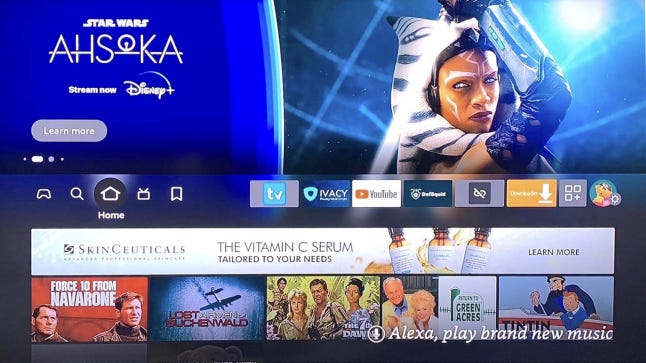
The ads per hour in the US are amongst the largest in the world, with upwards of 15 to 17 minutes per hour at times. At that rate, as I have experienced whilst travelling in the US, I have wanted to find anything else to do with my time. Now with SVODs also using ads to subsidise the subscription revenue, there could be a tendency for the same to happen again with the streaming services.
Luckily (or unluckily) the ad fill rates are still quite low in both SVODs and the Free Ad Supported services, mostly due to services not yet attracting a lot of advertising. The fill rates for many newer services and SVODS are below 5 minutes, well below the fill rates of the traditional broadcasters. This may look like an experience design decision, but it is down to the lack of ad sales. To fund the business those ad rates need to increase, but I would hope an eye on the experience would keep them at the European levels of ads per hour, rather than the ‘enshittification’ approach of approaching the US model.
The Amagi FAST events have been running for several years, but my conclusion is that a clear signal can be sent off the back of the convergence message.
This event should be the last ‘FAST’ event. Not because Amagi will shut the shop up and not run another, but with convergence this is not about FAST any more.
This is about Television.
Whether Ad support or subscription, it does not matter. What matters is the development of the key technologies to continue to improve and enhance the delivery of television to viewers using the most effective and efficient platforms that generate the revenue to keep the wheels of business running smooth.
No posts
Comments
Nothing yet. Say the first thing.
Sign in to join the conversation.