
The standard way to start data analytics is to build a curriculum.
You find a roadmap. It has Excel, SQL, Python, R, Tableau, Power BI, statistics, probability, linear algebra, machine learning, cloud, and Git on it. You start at the top. You promise yourself you’ll apply once you’ve worked through it.
Eleven months later you’re halfway down the list and you haven’t sent a single application.
Here’s what that looks like from the other side.
A hiring manager posts one junior analyst role and gets 400 applications in six days. First pass, she’s giving each resume about nine seconds, and she’s looking for two things: has this person written SQL against a database that wasn’t a tutorial, and can they explain a number to somebody who doesn’t care about the number.
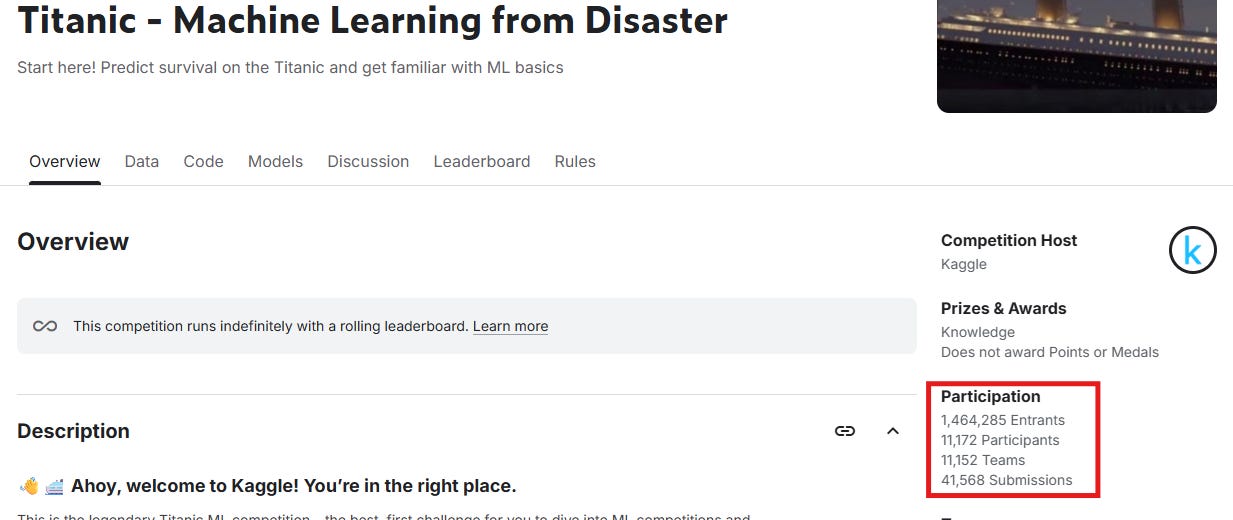
She has seen the Titanic survival predictor at least 15 times this month. She has seen the same COVID dashboard closer to 30. Your machine learning section doesn’t move her, because the role has no machine learning in it and she knows the pipeline was copied
Nothing you learned in months four through eleven changed her decision.
And if you do get through, the interview is three SQL questions, one “walk me through a project,” and one “explain this result to a stakeholder who thinks it’s wrong.” That’s it. That’s the test you spent a year studying for.
The gap isn’t between what you know and what you should know. It’s between what gets taught and what gets tested.
A curriculum is built to be complete. An interview is built to be fast. Almost everything you study to feel prepared gets zero airtime in the 30 minutes that actually decide it.
That’s the whole game. So here’s the 20% I’d keep if I started over.
1. SQL UNTIL IT’S BORING, THEN STOP COLLECTING TOOLS
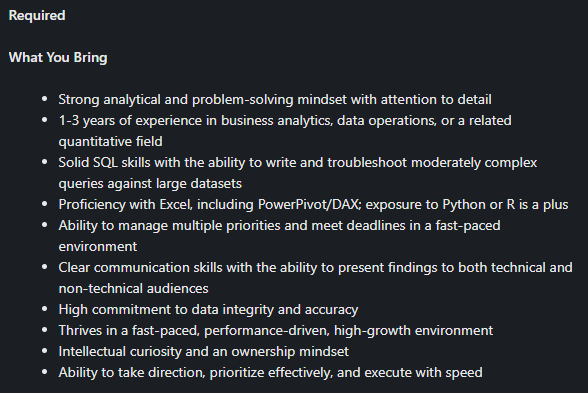
Learn SQL until joins, CTEs, and window functions are muscle memory. That’s the bar for most junior roles and it’s higher than people think, because “I know SQL” usually means “I can write a SELECT with a WHERE.”
Boring means you can write a query that ranks customers by spend within each region, without looking anything up and without going quiet about it on a screen share. Most candidates can’t. That one gap decides more junior interviews than every other item on the roadmap combined.
After that, one spreadsheet tool and one BI tool. Excel or Sheets, because the request will arrive as a spreadsheet whether you like it or not. Then Tableau or Power BI, whichever shows up more in the jobs you’re actually applying to. Learn it over a weekend and move on.
Not both BI tools. The second one takes four hours to pick up later, once you have a job and somebody’s paying you to sit through it. Adding it now buys you a bullet point nobody reads and costs you a month
2. SKIP 90% OF THE STATISTICS
You will not use calculus. You will not use linear algebra. You will not derive anything.
What you’ll use weekly: percent change, the difference between an average and a median, sample size, and the instinct to know whether a spike is a real move or a broken tracking tag.
The statistics that matters in a junior job is mostly the ability to say “that number looks wrong” and then be right. That gets built by staring at messy data, not by working through a probability textbook.
Here’s the version of that you’ll actually run into. Average order value jumps 40% overnight. The finance team is thrilled. You look, and it’s one B2B order of 900 units sitting inside a dataset of consumer purchases. The median didn’t move at all. Catching that in ten minutes is worth more to your team than anything you’d learn in a semester of probability.
Skip the semester. Learn the four things. Come back for the rest if a job ever asks, which it probably won’t for two years.
3. SKIP MACHINE LEARNING ENTIRELY
Every roadmap ends with machine learning because it’s the exciting part. It’s also the part junior analysts never touch.
Your first job is pulling numbers, cleaning them, and explaining to someone in marketing why last week was down. There’s no model in that. There’s a lot of “why do these two tables disagree.”
A random forest on your resume tells a hiring manager you followed a tutorial. A clean, documented query that answers a business question tells her you can handle a Tuesday.
The counterargument is always “but I want to become a data scientist eventually.” Fine. The fastest route there is two years inside a company with access to real data and people who’ll teach you, and you get in the door on SQL and communication, not on a notebook you can’t defend line by line.
4. TWO PROJECTS, BOTH ENDING IN A DECISION
Not eight projects. Two.
What separates a project that works from one that gets scrolled past is whether it ends in a recommendation somebody could act on. “Here’s a dashboard of Airbnb prices in Lisbon” gets scrolled past. “Here are the two neighbourhoods a new host should list in, here’s the nightly rate that breaks even, and here’s what it costs them if I’m wrong” does not.
Pull the data yourself so it’s messy. Write your assumptions down where the reader can see them. Say what you’d check next with another week.
This is the build the 90-day sequence in Analyst Hive walks you through, because the decision-led project is the one piece of a portfolio that survives contact with a real interview:
5. SKIP EVERY CERTIFICATE AFTER THE FIRST
One is fine. It gets you past the “does this person know what a database is” filter and gives you a structure while you’re starting cold.
The second one signals you got nervous and bought something. The fifth signals you’ve been studying for a year and hiding from the application form
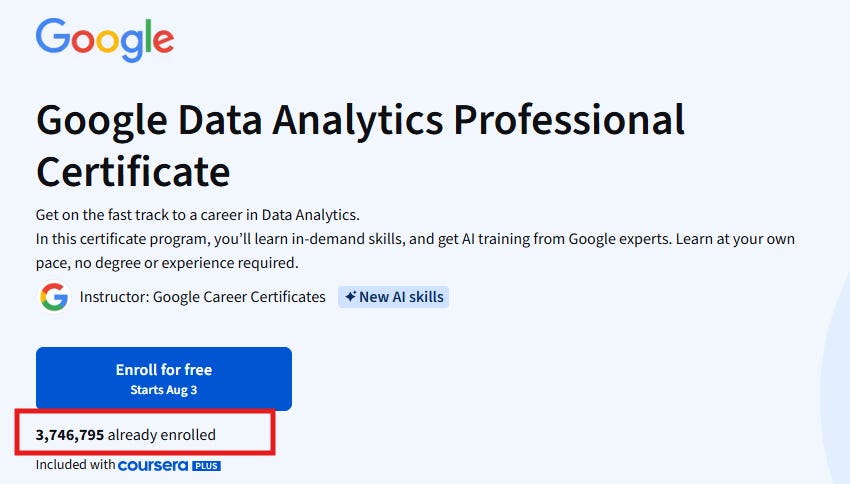
Look at that enrollment number and then ask yourself how it differentiates you from the other 399 applicants. Certificates are the cheapest line on a resume to verify and the least interesting thing to ask about. No hiring manager has ever built an interview question around a Coursera badge.
6. SKIP THE “NOT READY YET” PHASE
This is the expensive one.
Most people spend months four through twelve learning, because applying is uncomfortable and learning feels like progress. Same energy as cleaning the kitchen instead of doing your taxes.
Apply at month three. You’ll be bad at it. That’s the point. Fail four interviews and you’ll learn more about what the job actually tests than any course will teach you, because you’ll hear the real questions in the real order from the people who make the decision.
Then you go back and study the specific thing you fumbled, which takes a week, instead of studying everything, which takes a year.
The rejections are the curriculum. They’re just free, so nobody sells them to you.
None of the 80% is wrong. That’s what makes it dangerous. It’s all real, useful, defensible knowledge that pays off eventually.
It just doesn’t pay off now, and you’re not being judged on eventually.
The curriculum is infinite. The hiring process is 30 minutes. Choosing what to ignore is the first analyst skill you’ll ever use, and it’s the one they’re actually testing.
Analyst Hive is a 90-day sequence built out of the 20%. SQL to the depth that gets used, two portfolio projects built around a decision, the interview answers written out, and an application process that starts in week three instead of month twelve. There’s no machine learning module, no statistics semester, no fifth tool, because none of it gets you the first job. If you’ve been learning for eight months and still haven’t applied to anything, this is the thing that ends that:
Reply and tell me the one thing you’ve sunk the most hours into that has never once come up in an interview. I read every reply, and those answers are usually what I cut next.
P.S. If your first reaction to this was “but what if they ask me about machine learning,” that reaction is the 80% talking. Go count how many junior postings you’ve seen this month that even mention it.
Talk soon,
Ian
No posts
Comments
Nothing yet. Say the first thing.
Sign in to join the conversation.