
Jannik Sinner defeated Alexander Zverev 6/7(7) 7/6(2) 6/3 6/4 to defend his Wimbledon title on Sunday and clinch his fifth major title. It also marks the tenth consecutive victory for Sinner over Zverev.
Much of the punditry coming into the final centred on Zverev’s aggression over the course of the tournament: second serves masquerading at first-serve speeds, the forehand consistently smoked, forward net play taken on. The question was: how well can he do that in a final?
The answer, at least initially, was: pretty damn well.
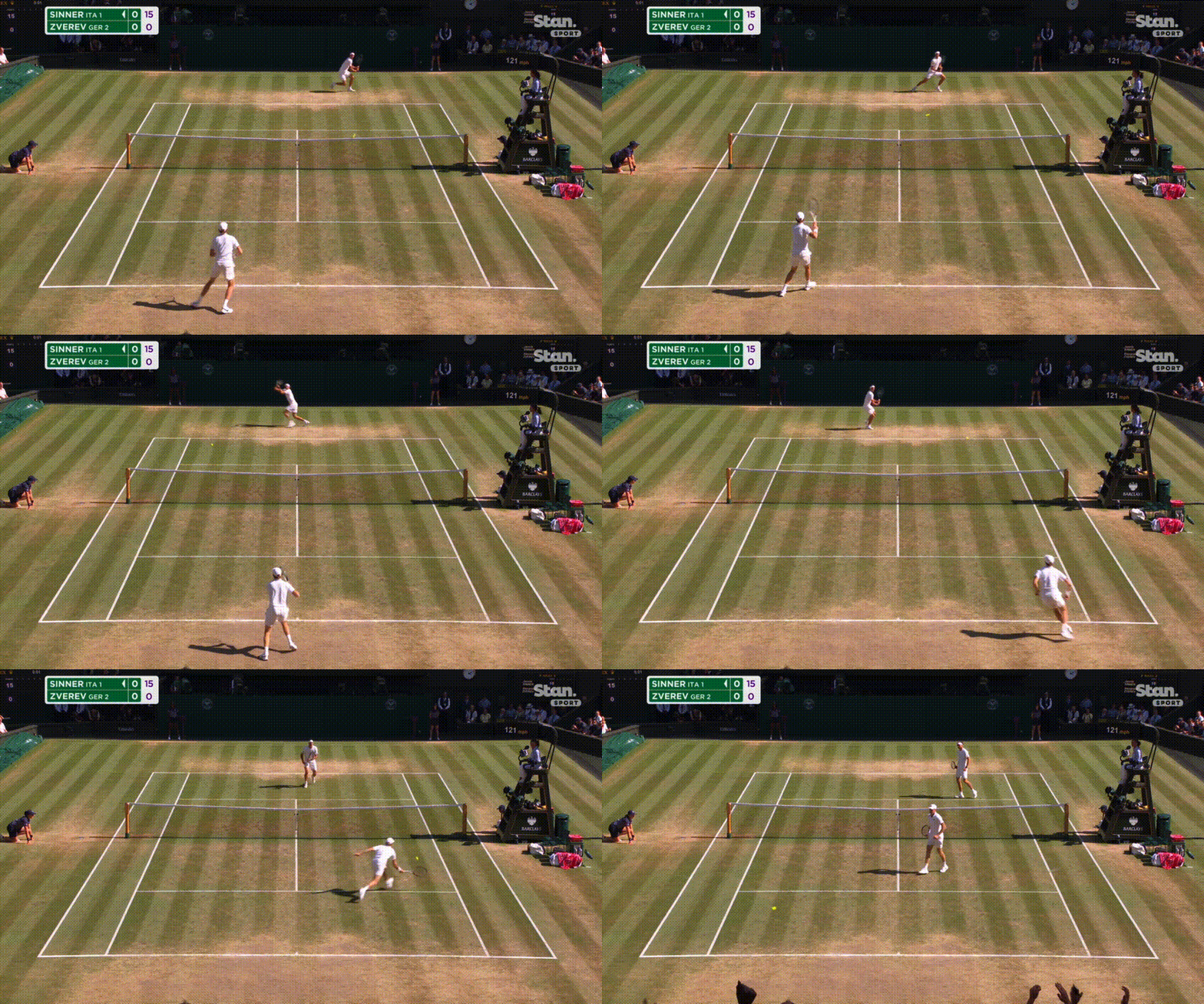
Down the other end, Sinner was experimenting with various return-of-serve depths in a bid to get his teeth into rallies; do that, and he inevitably will turn the match in his favour. But Zverev was playing with the freedom of a long-awaited slam now on the resume, ink barely dry, looking more like Delpo on the +1’s:
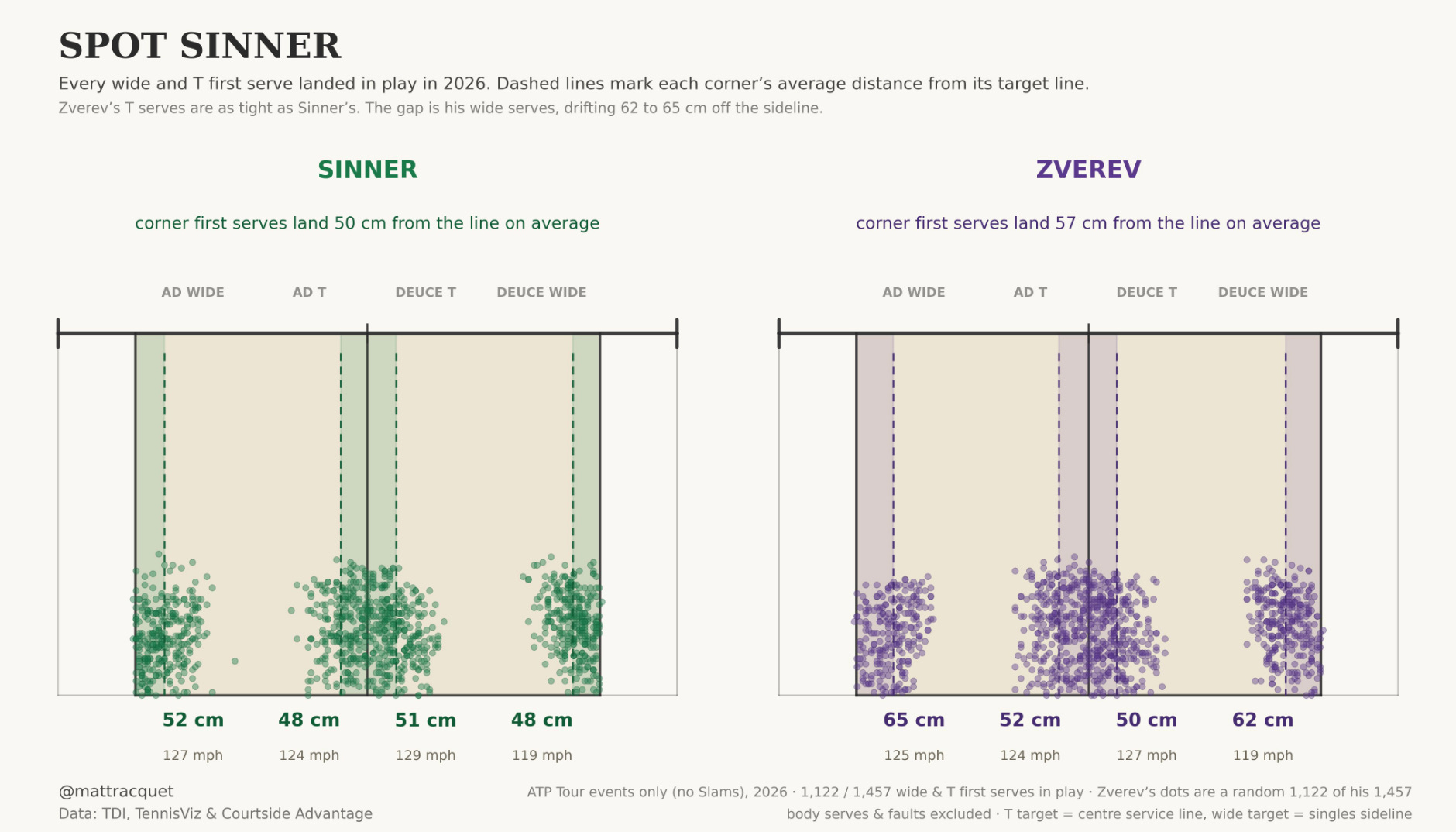
But on grass, in this heat, even the forehands mattered less than the serves. In the first set especially, Zverev hit ~45% of his serves unreturned, Sinner ~40%. Yet, their strategies to achieve that number differ quite markedly. Zverev hits the second-serve meaningfully faster and makes a higher percentage of his first, but his first-serve locations are less precise. Sinner, on the other hand, has been riding a step-change in accuracy on his first-serve that has seen him earn ‘bot’ labelling in 2026.1
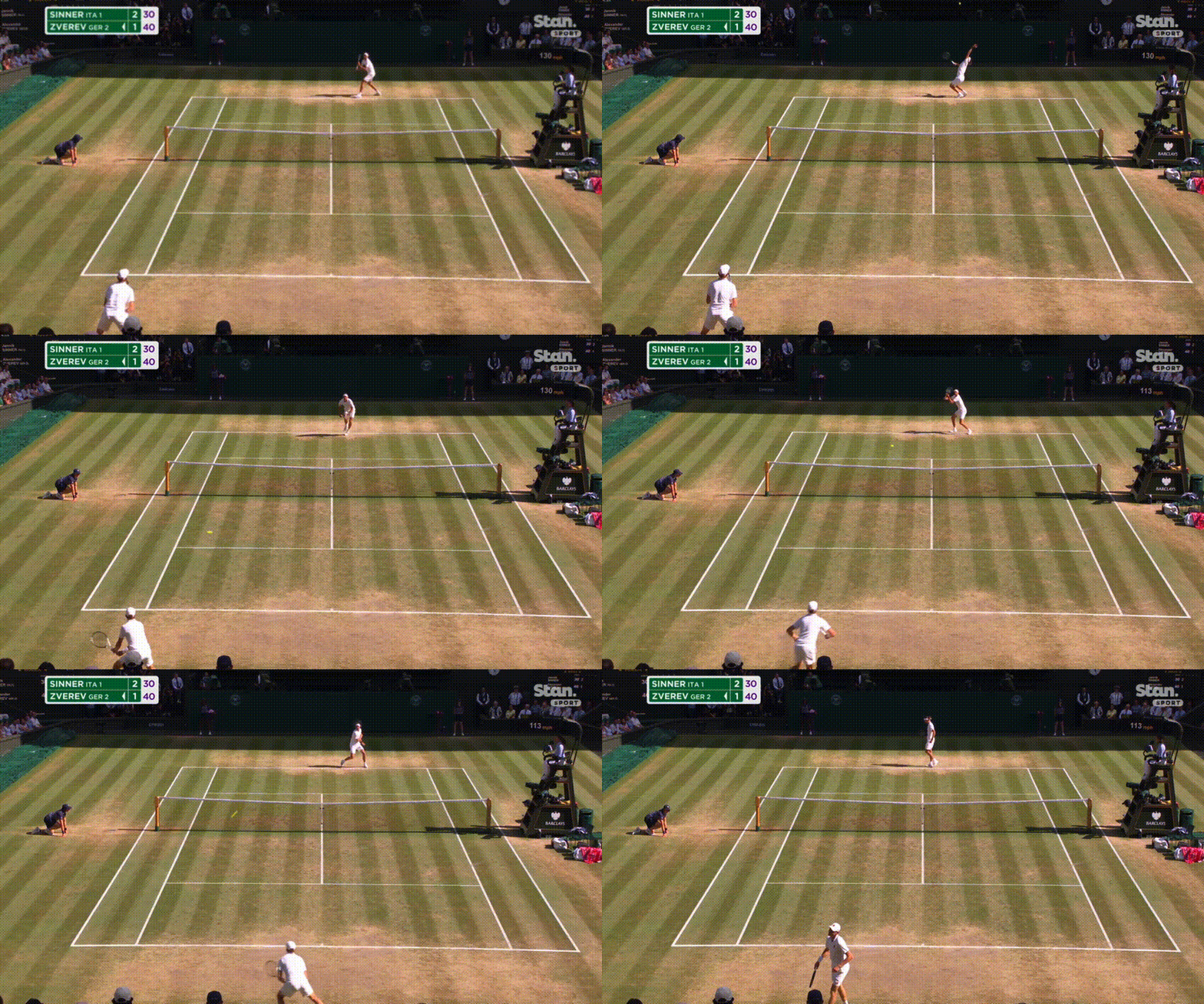
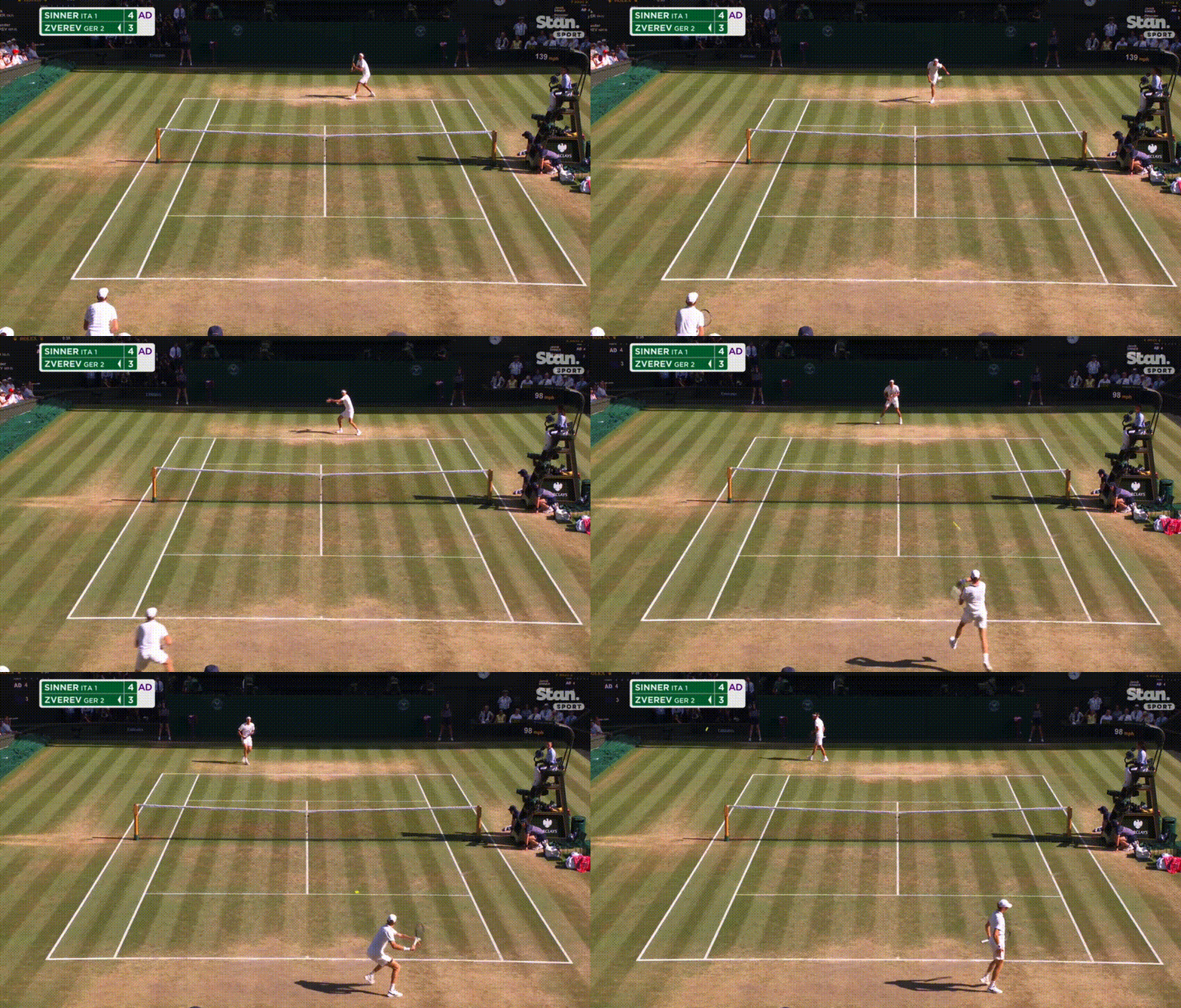
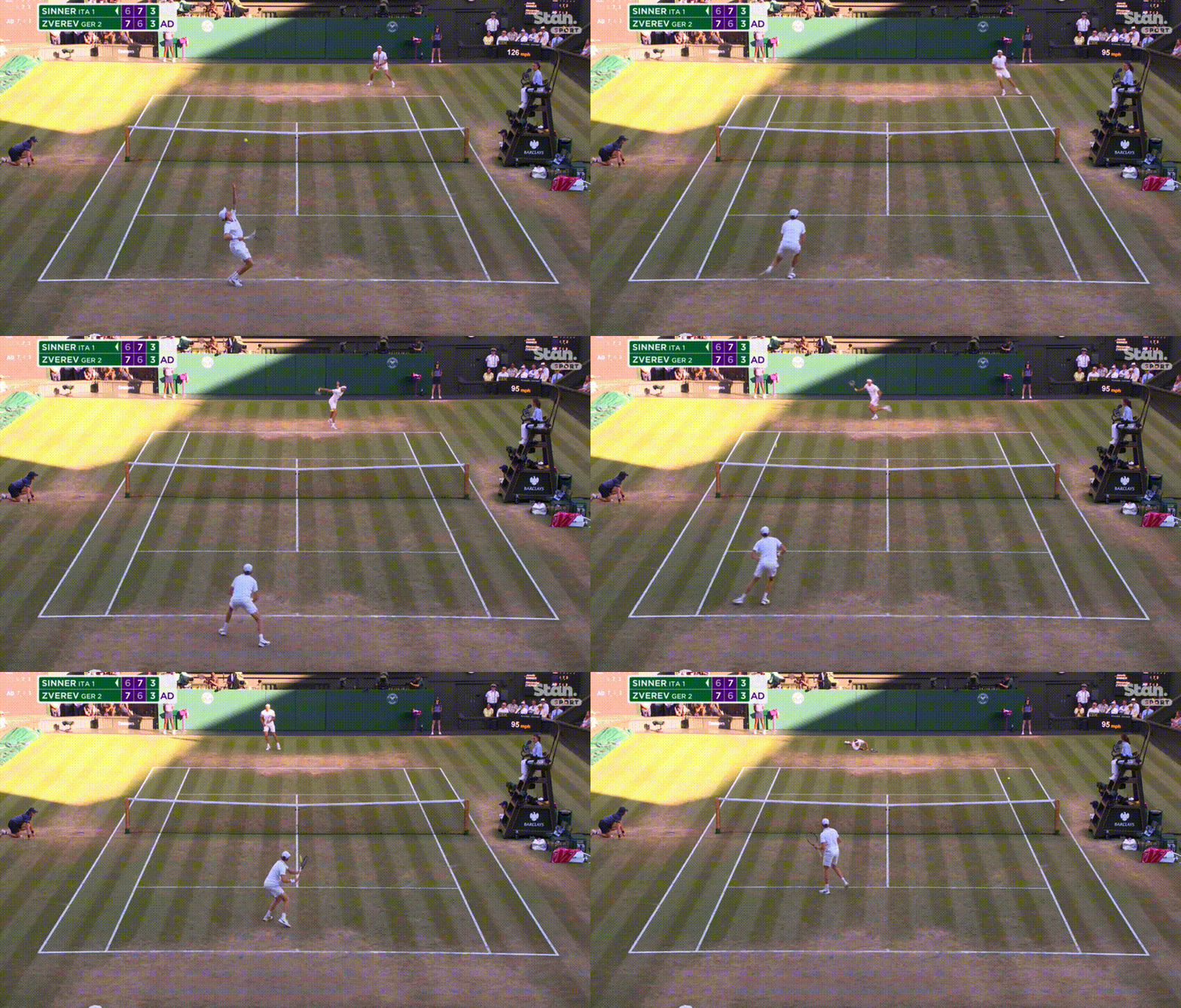
The first real danger on serve happened with Zverev serving at 3-4. Sinner hit an average backhand drop shot at 40-15 to help get back to deuce:
And then Zverev gifted him a break point with his first double-fault of the match. The break point was cagey. Zverev’s second serve was slow-balled at 98, and his initial +1 forehand broke character and was more familiar; flat-footed and backing up. You could almost forgive Sinner for rolling in his next forehand given their history, but Zverev found his courage on the next swing, before Sinner made a poorly-timed shank. It was the only break point opportunity of the set.
The tie-breaker was a classic grass shootout of the highest quality: eight unreturned serves in the 16 points, no mini-breaks, only two errors. The entertainment factor becomes less about rallies and more about admiring two players holding their nerve when each swing of the racquet carries so much importance. Sinner blinked first at 7-8. The longest rally of the breaker, some might forgive Sinner for daring Zverev with the mid-court forehand here, who met the moment on the front foot:
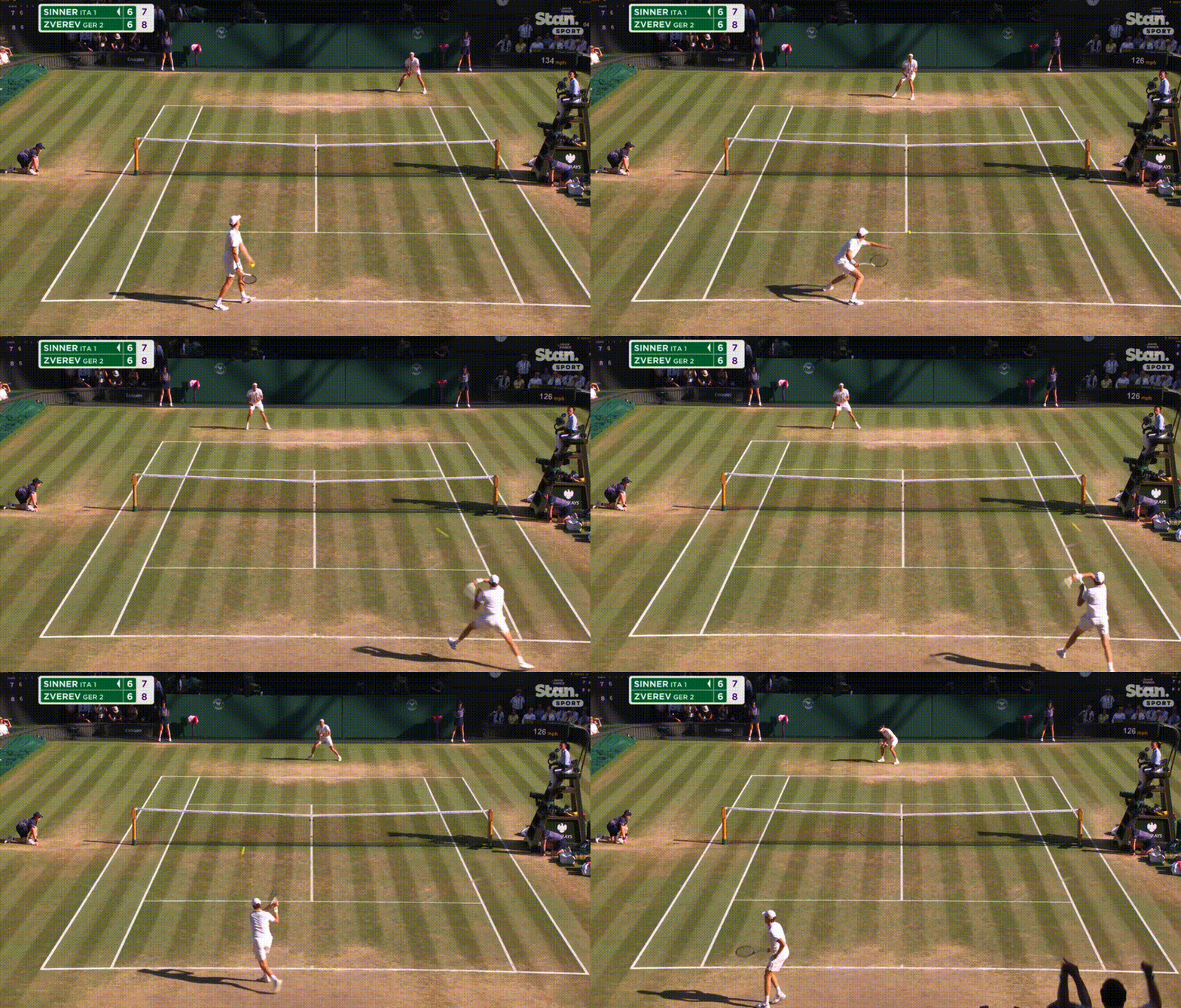
That was the first set Sinner had lost to Zverev in six meetings, and the way it happened made one think that perhaps Sinner’s 2026 grand slam season was cursed in a particularly cruel way; here was a man who had won everything except the tournaments he really wanted, and who was now losing to his once-passive bunny in a very non-passive manner.
Whatever the case, it made for a particularly gruelling mental challenge.
There is an underrated psychological burden that comes with being the better player in a game of fine margins. As the underdog, Zverev could devote his attention to the simple strategy of hitting the crap out of the ball. But as the heavy favourite and now absorber of said aggression, Sinner had a more complicated task. Every point became a decision: stand further back? chip the return? more slice? more drop shots? match the aggression, or try to absorb it? In the first set Sinner seemed less concerned with imposing his game than measuring Zverev’s.
But midway through the second we started to get some answers, perhaps. This truly was the first forehand you felt Sinner connect with, after nearly 90 minutes of play.
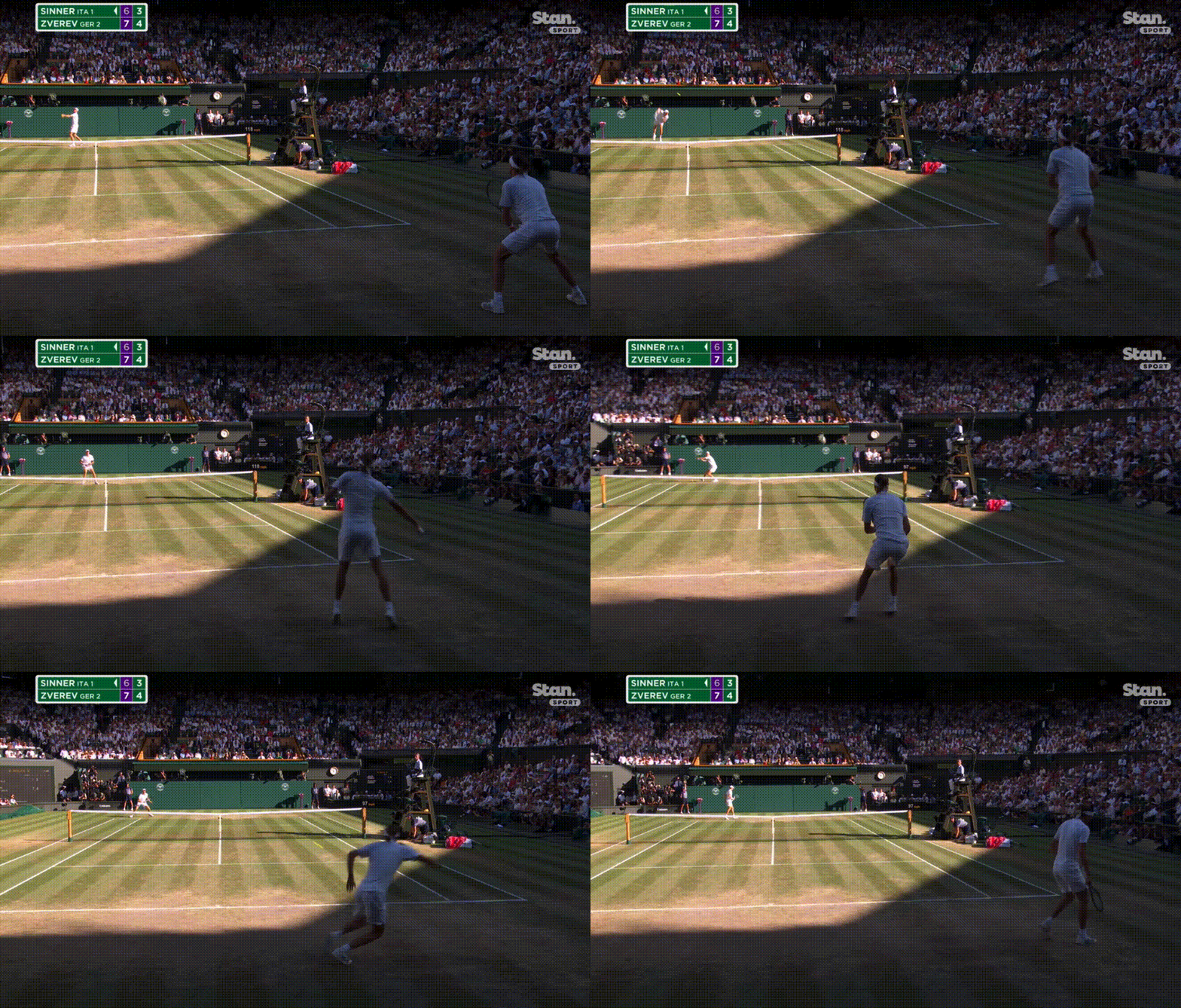
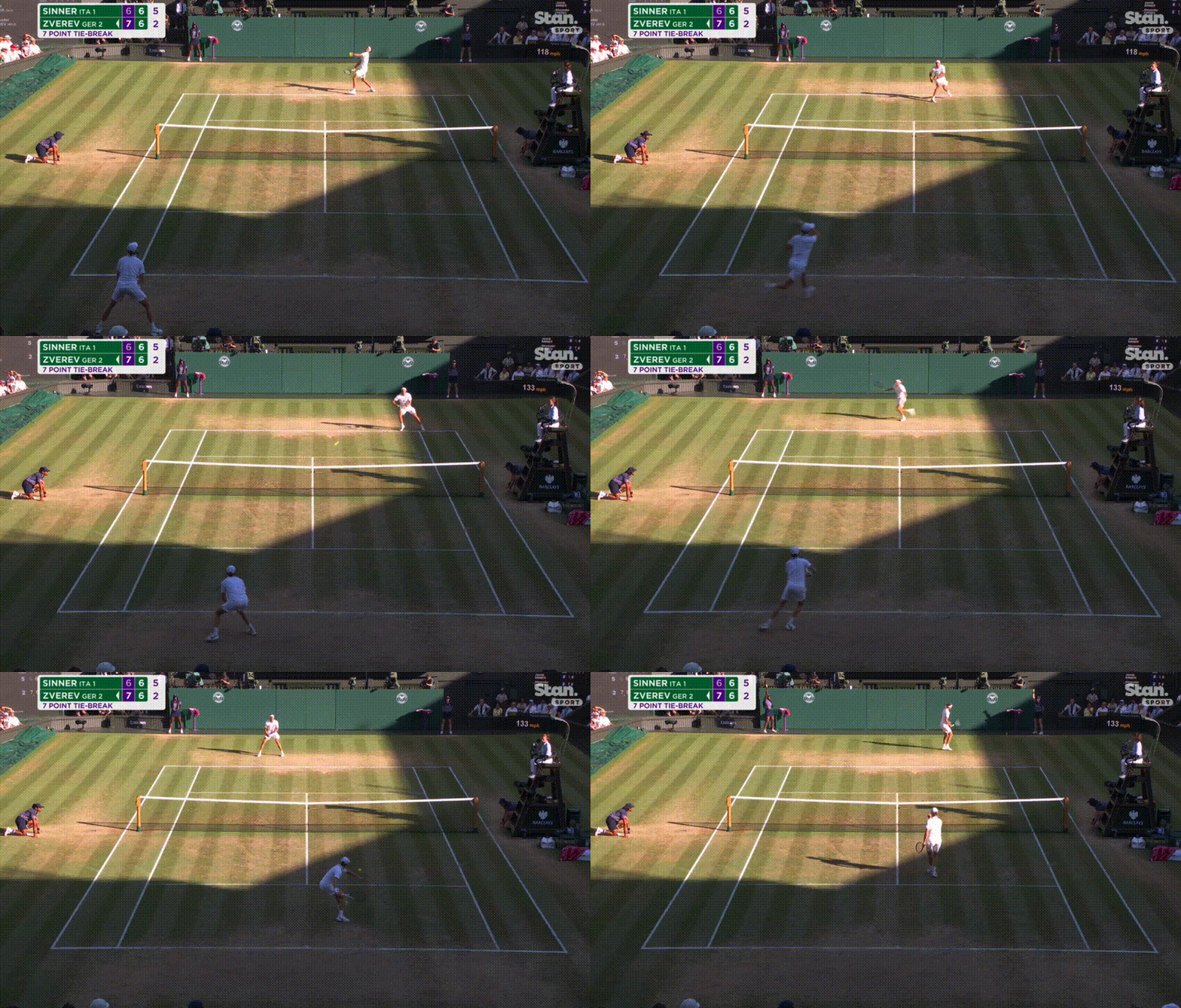
It wasn’t enough to earn a break, however, and we entered another tiebreaker. This time Sinner was able to open up an early lead, and the weaknesses in Zverev’s serve (a lack of precision) were exposed by the tour’s most ruthless first-serve returner:
In the early games of the third Sinner was getting his teeth into Zverev serve points and tried three drop shots, losing the point on two of them. One of them is particularly egregious because he had 0-30 and could have smacked the forehand in either corner such was his positioning:
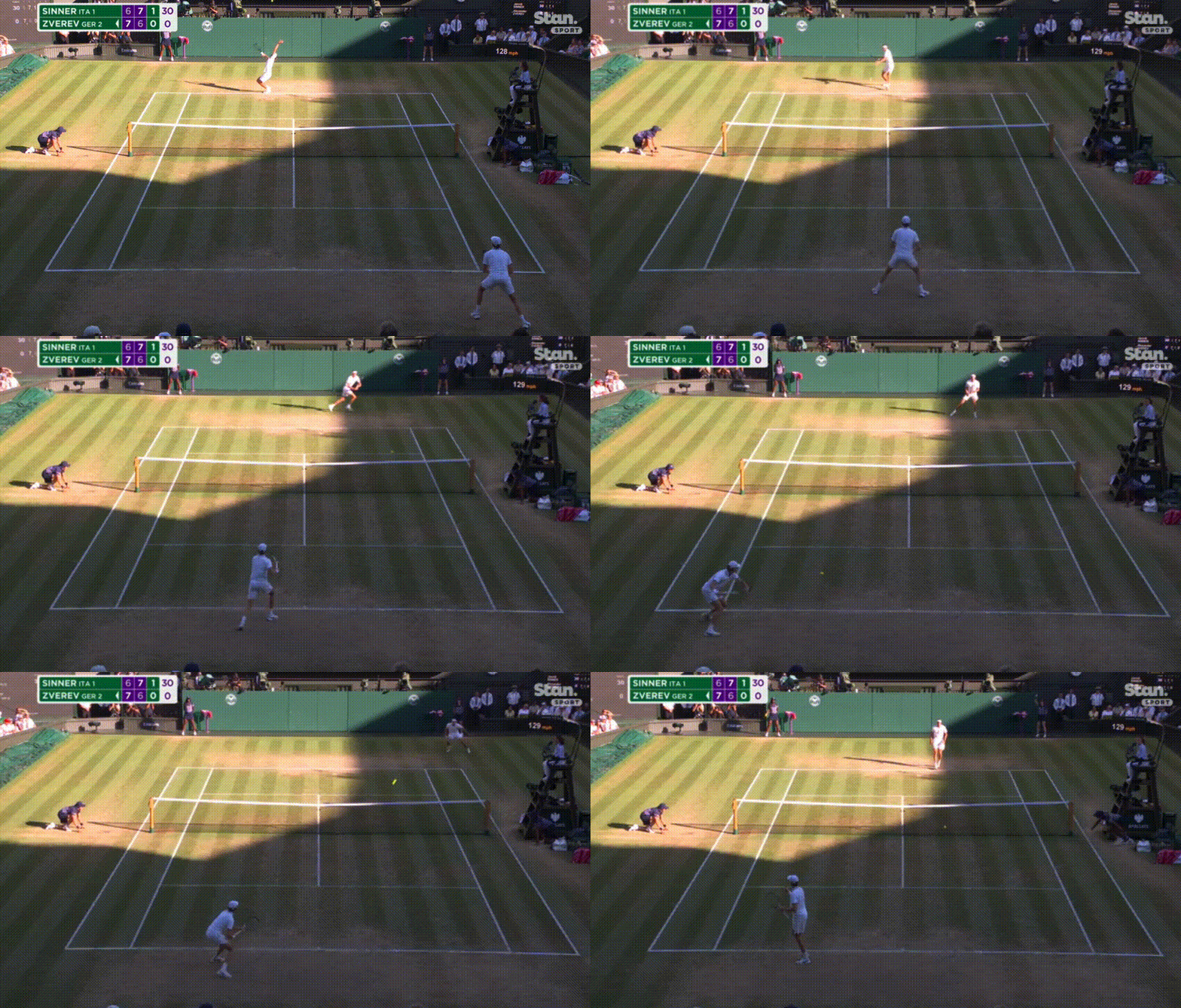
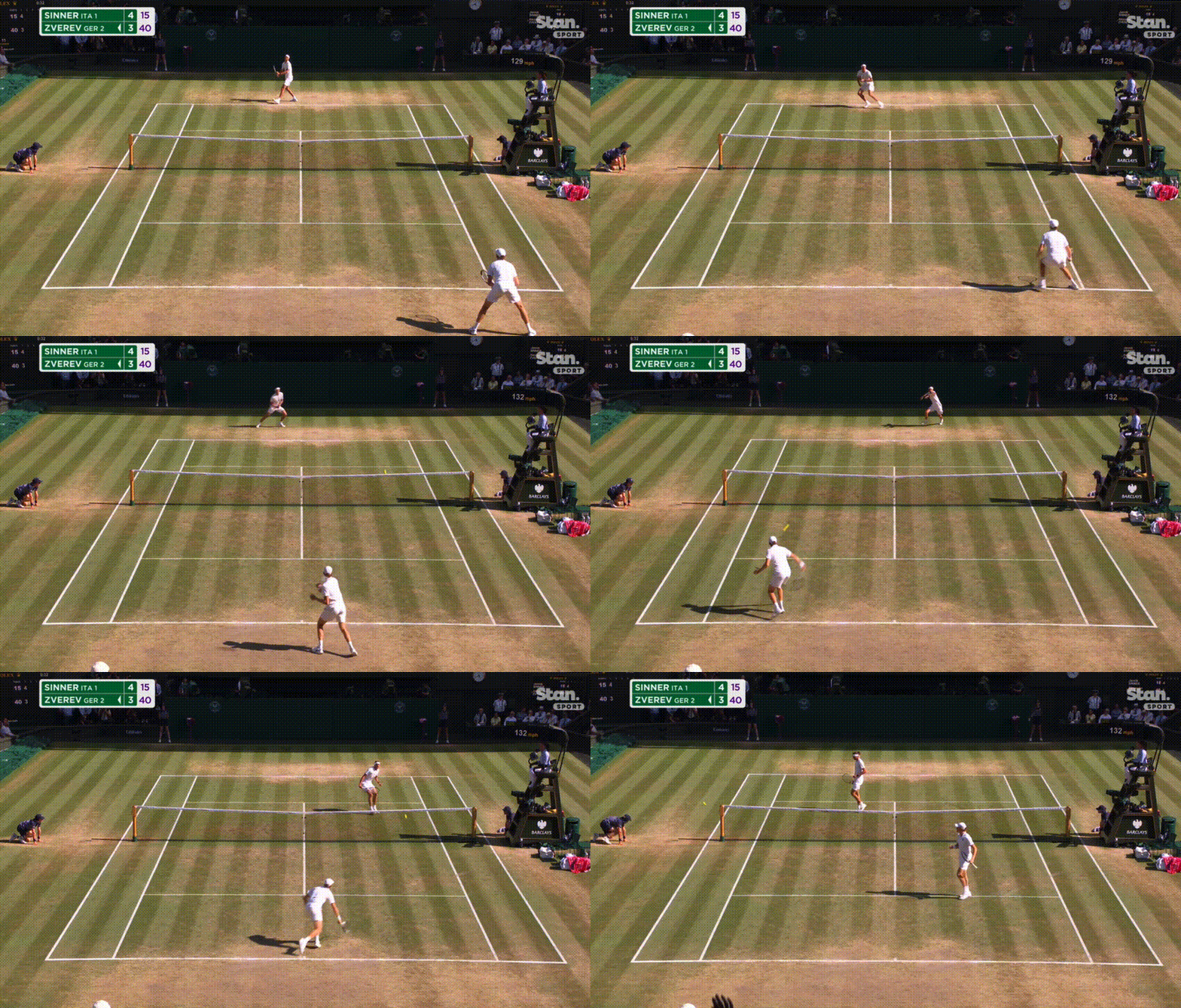
But it has been a part of the Sinner game ever since he vowed to be less predictable following his US Open Final loss to Alcaraz last summer, and the Italian has been true to his word, because he has made a habit of deploying the dropper in big moments. Perhaps none were bigger in this match than when Sinner faced break point at 3-3 in the third set:
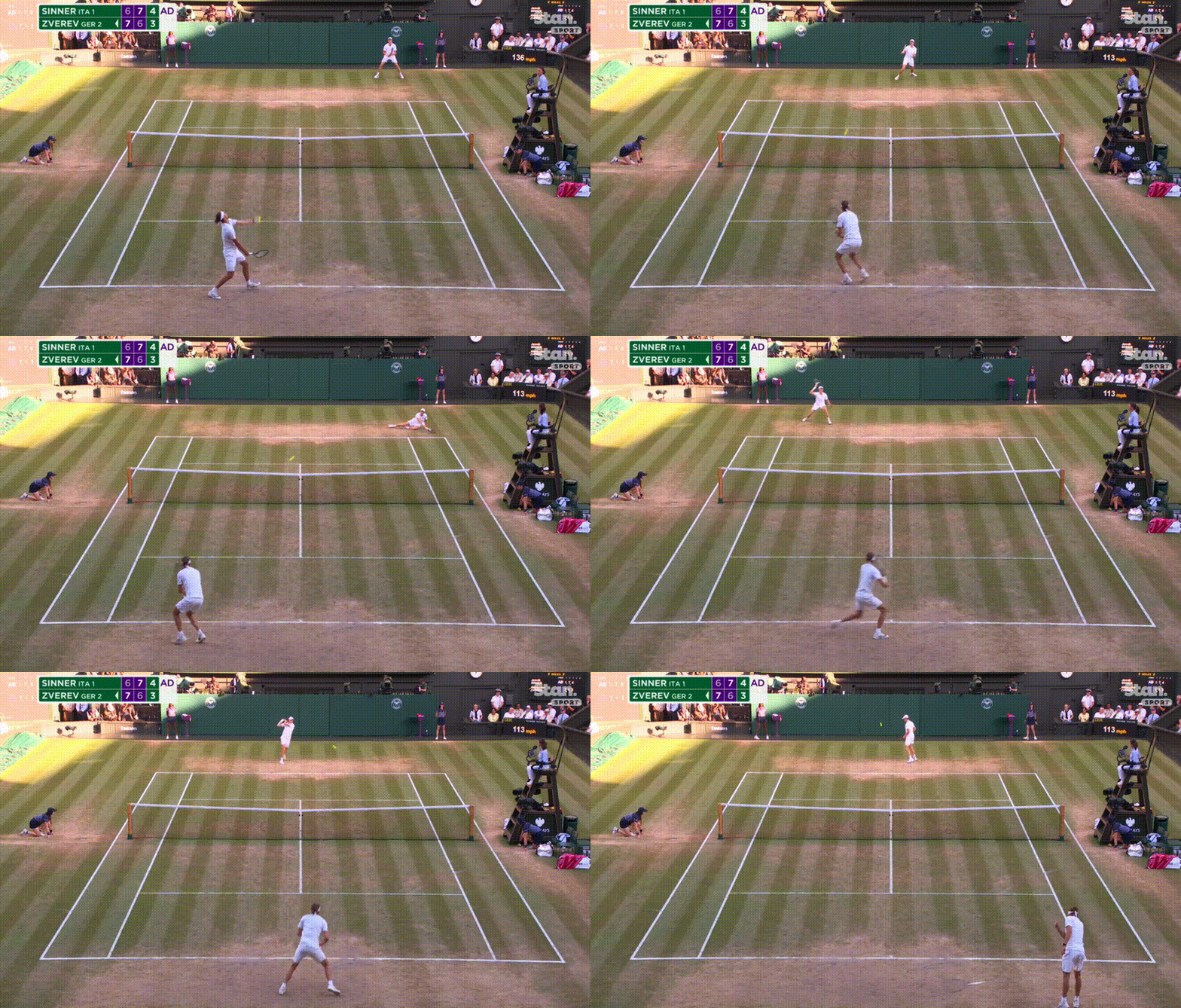
The tactic itself may have paid dividends in more ways than one, because in press Zverev mentioned that he hyperextended his knee and that it only affected his serve after; he couldn’t push off as forcefully. The quote has some credence, because while Sinner had been getting looks on the Zverev serve in recent games, it was the very next game where the Italian finally broke, recovering after his own slip and profiting off one of Zverev’s more errant forehand drives:
The Zverev forehand was admirable in intent today — and often found the mark — but I was always skeptical of this shot aggressively threading the needle in BO5 against an all-time great. Gill Gross gave the numbers on his recap: Zverev made 27 forehand unforced errors to Sinner’s 13, and while I don’t have the official numbers I have him at 17 winners off that wing from my own notes. It reminds me of Zverev’s yo-yo performance chart that Matt Willis recently tweeted:
The fourth set felt the most inevitable. I must admit that once the result felt likely, I couldn’t appreciate the match for what it was on an aesthetic level; classic grass shootouts — even of the high-quality variety — are definitely not the sweetspot for tennis in 2026. Servebotting is a weed to be managed, no matter how many analysts praise it.
But this final set is also where Sinner’s other other elite skillset shone (yes, besides the serve, the groundstrokes, the drop shots…). Sinner’s end-range capabilities were rolled out across the scorched turf on several occasions. Here in the first point; a game he eventually broke in:
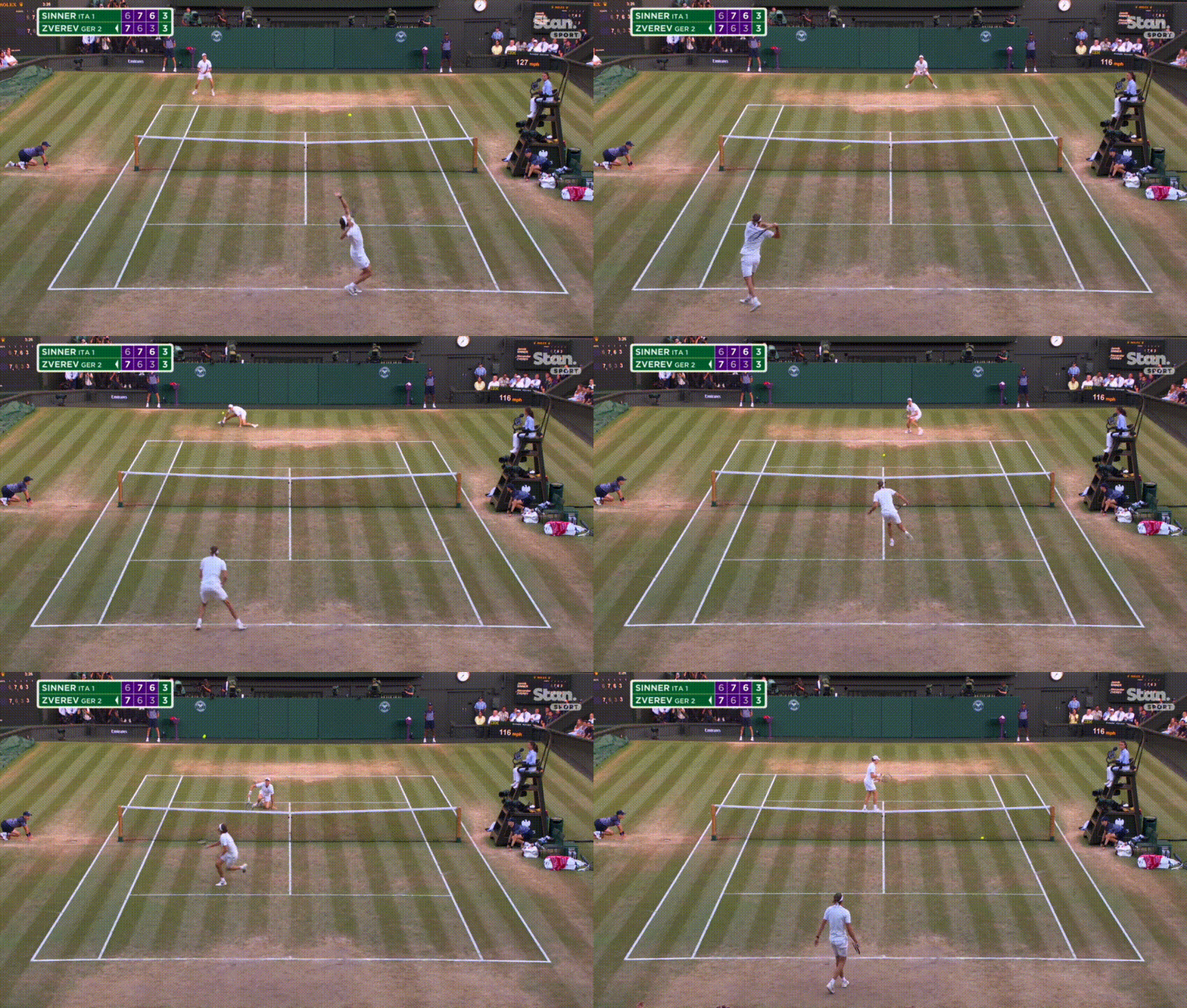
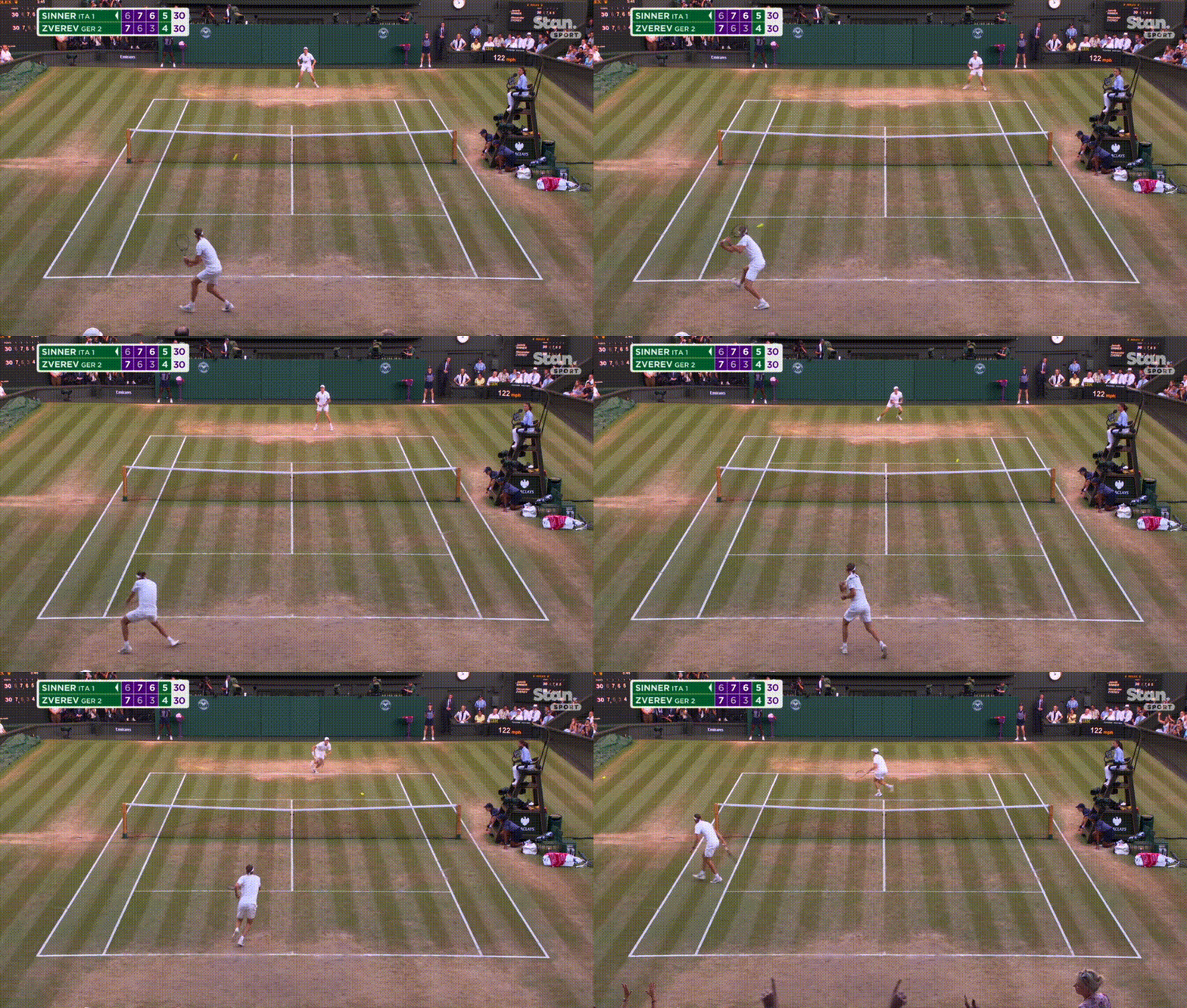
And when serving for the match, with Zverev making a big push to get back in the set:
The takeaways swirling through my head, without much structure:
It made you realise again that there are levels to this game. That while Zverev clearly is the best player in the world behind Sincaraz and Djoker, capable of pushing them in ideal mental states with an A game firing, Sincaraz are always adding and operating with elite B, C, and D games when all the pressure is on their shoulders. Sasha finally took a step forward in aggression after more than ten years of passive play, and I applaud him for that, but this was essentially a free swing at a second major (and who knows, maybe he does carry that mentality for the rest of his career). Sinner lost one match last year after winning two slams and decided he’d add drop shots and elite serve accuracy like it was some online Amazon order. No biggie. He won in four sets and still didn’t get broken all match. I always say I’m bullish on guys who show me adaptations, so of course I’m bullish Zverev after this tactical performance, but it’s tamed by the fact that I don’t think his forehand technique can reliably produce that level of aggression for five sets the way Sinner and Alcaraz and Djokovic can. He will miss too much. He will continue to go deep, but where is the signature win? Is an injured Fritz enough signal?
Anyway, I should finish on Sinner and note that the year is very much salvageable now, as crazy as that sounds. Sinner is his own monster; he set the bar this high. That he continues to jump over it in the face of Roland Garros adversity (last year’s epic loss, this year’s disastrous one) is testament to his other, other, other big strength: his mentality:
“Honestly I just tried to accept the situation and be as present as possible with the right attitude, and I think today this was the biggest key.”
That’s all I got. I’ll see you back on the North American hardcourts. While we’re at it, if you’ve read this far, I’ll do a Mailbag in the coming weeks, so drop a question, and upvote others you like as well. HC
Sinner is ranked 11th on TennisViz’s serve shot quality rating for 2026. Zverev is ranked 6th.
No posts
Comments
Nothing yet. Say the first thing.
Sign in to join the conversation.