
Dear friends,
What do you remember from your childhood as the best thing you had? Not had as in ‘own’. Had as in ‘formed a key part of your childhood, helped you make fond memories and formed part of who you are’.
I ask because I’ve been thinking a lot recently about the non-negotiable things I want my children to have. (Disclaimer: This might well have something to do with the fact that my due date is now under a month away, and things feel Real.)
This morning, my partner and I were trying to figure out how to make more space for the co-sleeper by the bed, so I suggested moving the keyboard into another room. It’s currently squished between a window and my side of the bed, which let me tell you makes getting up to use the bathroom multiple times a night while eight-months pregnant lots of fun.
To this, he asked, “Do we really need the piano?”
“The piano is a non-negotiable,” I replied.
“Is it? I would say the bed is a non-negotiable.”
I admit, it does sound like he’s the reasonable one here. But I genuinely thought “No, it’s not. We can put the mattress on the floor and sleep just fine if needs be. We cannot throw out a keyboard and still play the piano.”
And so I got to thinking what the actual non-negotiables are, for me, yes, but crucially for the little wriggler inside me who is currently angling to get going and meet the world. For both myself and my partner, top of this list is a garden.
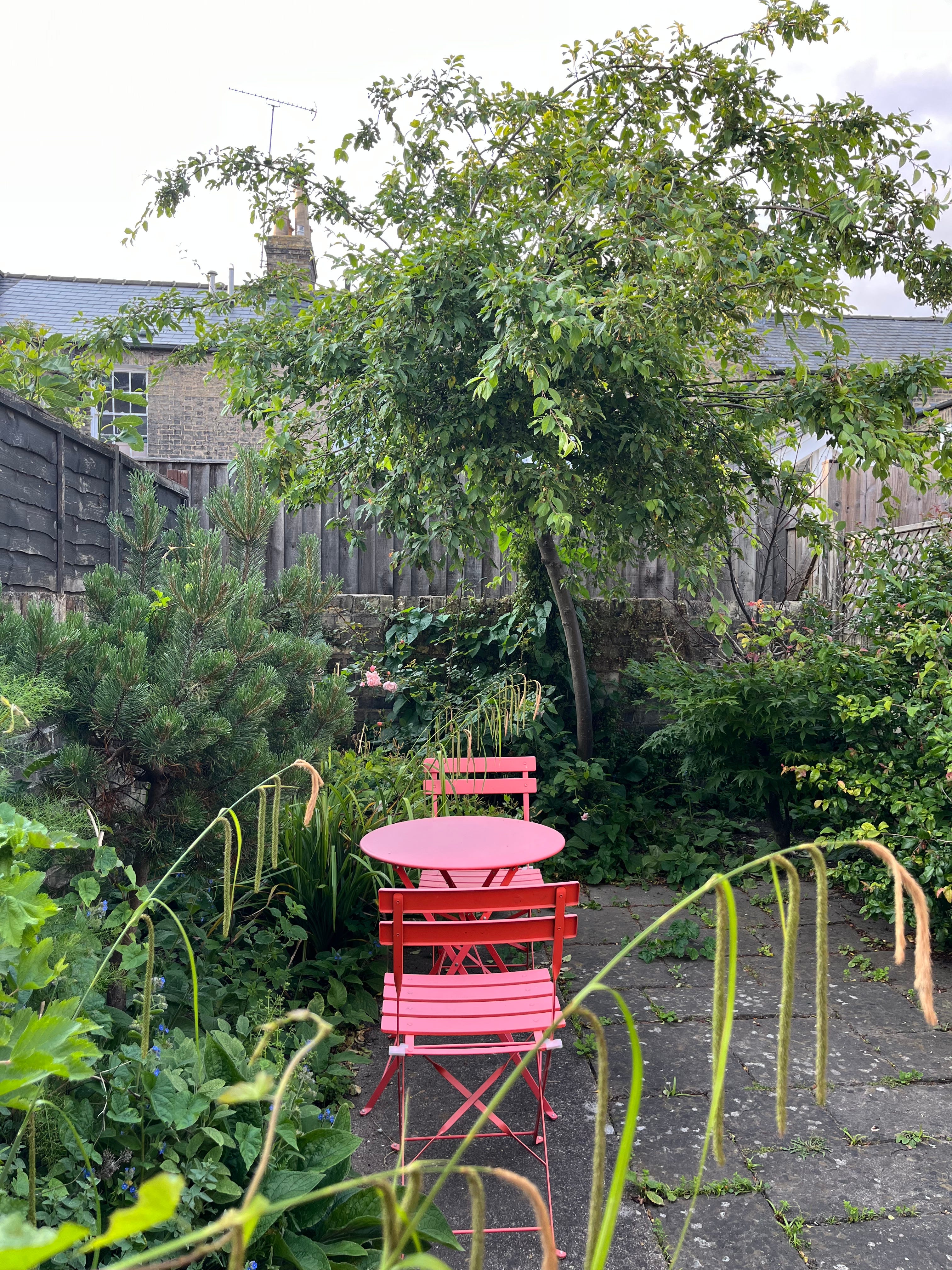
I grew up as an only child in a house with a garden, so I had one all to myself. My partner grew up in a terraced house on a London high road with no garden at all. We have both always felt like something was badly missing from both of these scenarios. For me, I was lonely. I wanted company, other children and play in that garden. For my partner, who played inside with his sister, he just wanted the outside space.
All of this has left me reflecting on what it was about my childhood garden that felt so magical. There was a time when I was a teenager that I couldn’t fathom how I could ever leave it. I felt so strongly attached to it, as if I had become myself in that space, as if it knew me and held me.
What was it about my childhood garden that made me feel so safe, that makes me feel like having access to a garden is of the utmost importance for all kids? As always, the best way I know to unknot a question is to write it out—to paint a picture of child me in that garden.
I grew up in a leafy green, suburban garden in north London, with an apple tree, a choisya and a rotten shed. I say I grew up in the garden because I did. It provided me with a release from the house in which I never felt quite right.
I would lay on my back on the grass, staring up at the blue sky and watching the clouds drift in and out of my view for hours. I watched the shapes they made as they became the background behind the trees’ spindly branches, like the 2D backdrops that are slid in and out of puppet shows. I would run blades of grass delicately through my fingertips as I lay there, gazing, feeling the ground hold me softly and so firmly.
This garden made me feel like the world was kind, that there was a space for me within in it, because there I felt calm. I felt accepted lying among the overpowering, thick scent of the linen-white choisya and the sickening, fermenting smell of the apples as they dropped around me. Sporadically, the tail of my childhood cat would snake into view above me as she sat with me for hours on end.

The garden was entirely bare when my parents bought the house, way back in the early 1980s—just a bare lawn and non-descript brown fencing on three sides. Weekend after weekend, they carted greenery back from their local garden centre, planting every bush until it was a green oasis among the loud, traffic-fume-laden concrete sprawl of Wembley.
The only trees that existed on their arrival were three towering fir trees, right at the bottom of the garden, standing proudly against the brick wall of the neighbour’s garage. I loved those fir trees. My mum hated them. It was a south-facing garden, so they never cast their long shadow over us, but their dark, deep conifer green provided a cool sucking of light that balanced out the bright, neon green of the rest of garden.
One day, when I was fifteen, I came home from school, and those majestic fir trees had been cut down. I stared out of my bedroom window at the bare brick wall that now glared back at me, at the three small stumps nestled sadly at its base. That was the first time I felt myself pull away from that garden. It felt like a warning—that I needed to find myself outside that garden in another refuge, that I couldn’t stay lying on my back gazing up at that small patch of sky above that suffocating London house forever.
That garden was the peaceful buffer that held our small family, just my parents and I, together, when we otherwise would have fallen apart. I was born when they were in their mid- to late-forties, and I always felt like I was growing up with grandparents. The three of us did not fit, but we fit together in that garden. It provided the space and calm for us to co-exist with each other, and that was enough.
When my father died, I collected the flowers from the crematorium a few days after the funeral—white lilies, tulips, carnations and roses. I laid them out gently on one of the flowerbeds in the garden on a sunny June afternoon. While the rest of the world was skipping out of COVID lockdown and waking up to laughter, I sat on the grass in front of those flowers. I was still sitting out there as it got dark, nearing 10pm, with those white petals glowing eerily but soothingly in the fading, muted light.
All the long evenings of past summers were receding away from me into a past life—a past life that had begun the day my dad died, as if my whole life could now be sorted into ‘Before’ and ‘After’. I cradled those gentle memories of standing with him, looking at that same flowerbed and our long, lanky shadows cast by the low evening sun.
This is the last memory I have of finding any kind of peace in that Wembley garden. Now, I have fled it. The delicate balance that made our family work has been uprooted, and I cannot face that garden anymore—the one my mother is now neatening up, pruning, homogenising, when before it was so full of life and secret crevices and new growth.
One evening when my father was ill, I turned to go upstairs to bed, after I had sat with him dozing in his chair. He asked if I could turn his chair to face the garden. He wanted to watch the sun come up in the morning over the lilac bush—that same lilac bush he had planted 40 years ago. It was his favourite.
He was over six-foot tall, monosyllabic and entirely comfortable with sitting in silence rather than saying something trivial—an intimidating stature and demeanour. But he was so very kind and gentle. The neon purple of that lilac bush, as it bloomed every summer—so understated and unassuming—brought him the greatest joy and peace.
How cruel, then, that it was not yet blooming in April when I turned his chair to face it. But by the time his funeral flowers were laid in front of it in June, its flowers had finished shining.
I used to think my sense of self and tethering to this world were enmeshed with that north London garden, that if I could choose to be anywhere in the world for eternity, it would be in that garden with my childhood cat. But since my roots were ripped out from under me, just like those felled fir trees over fifteen summers ago, I have been planting new roots in new gardens.
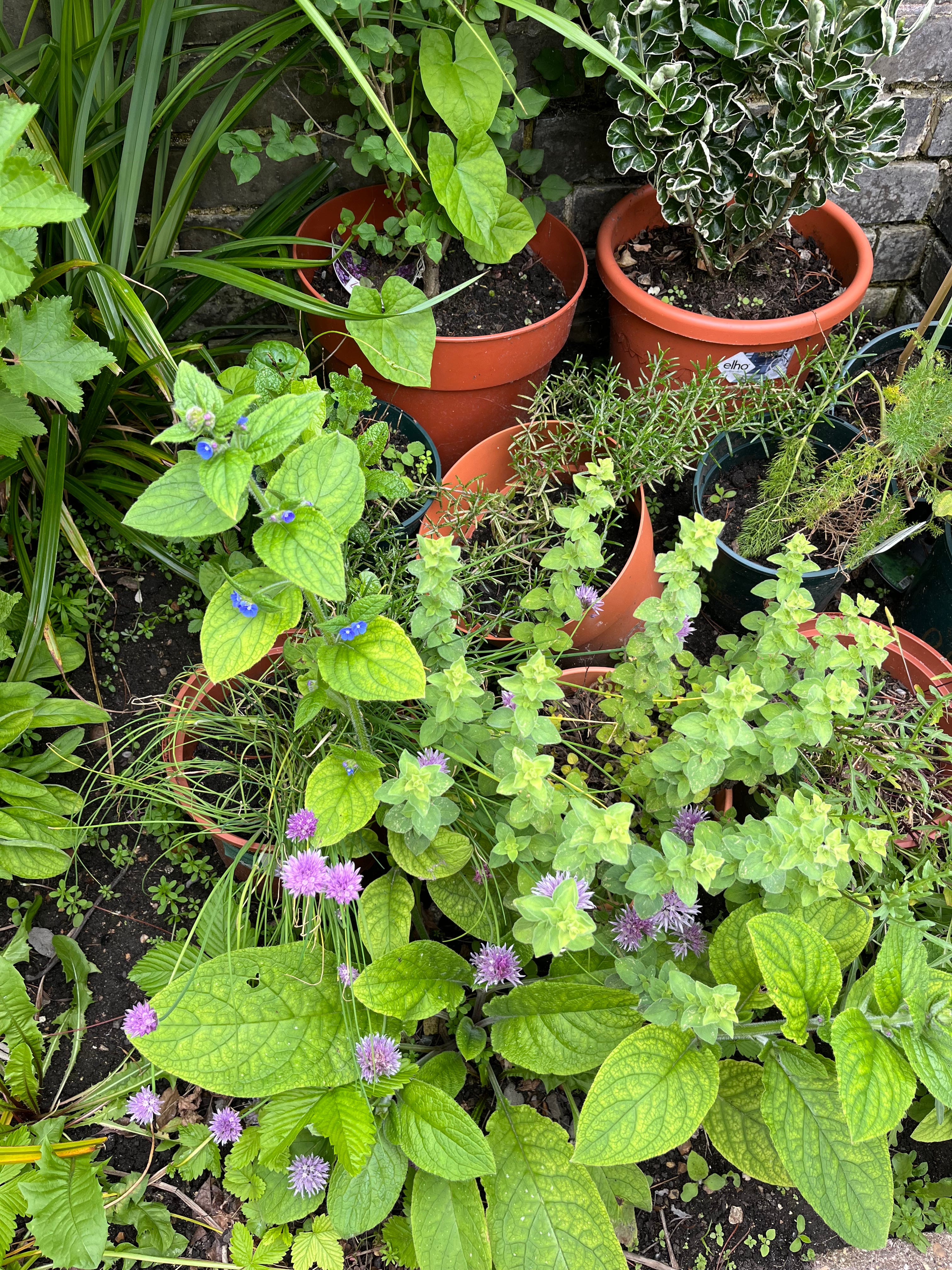
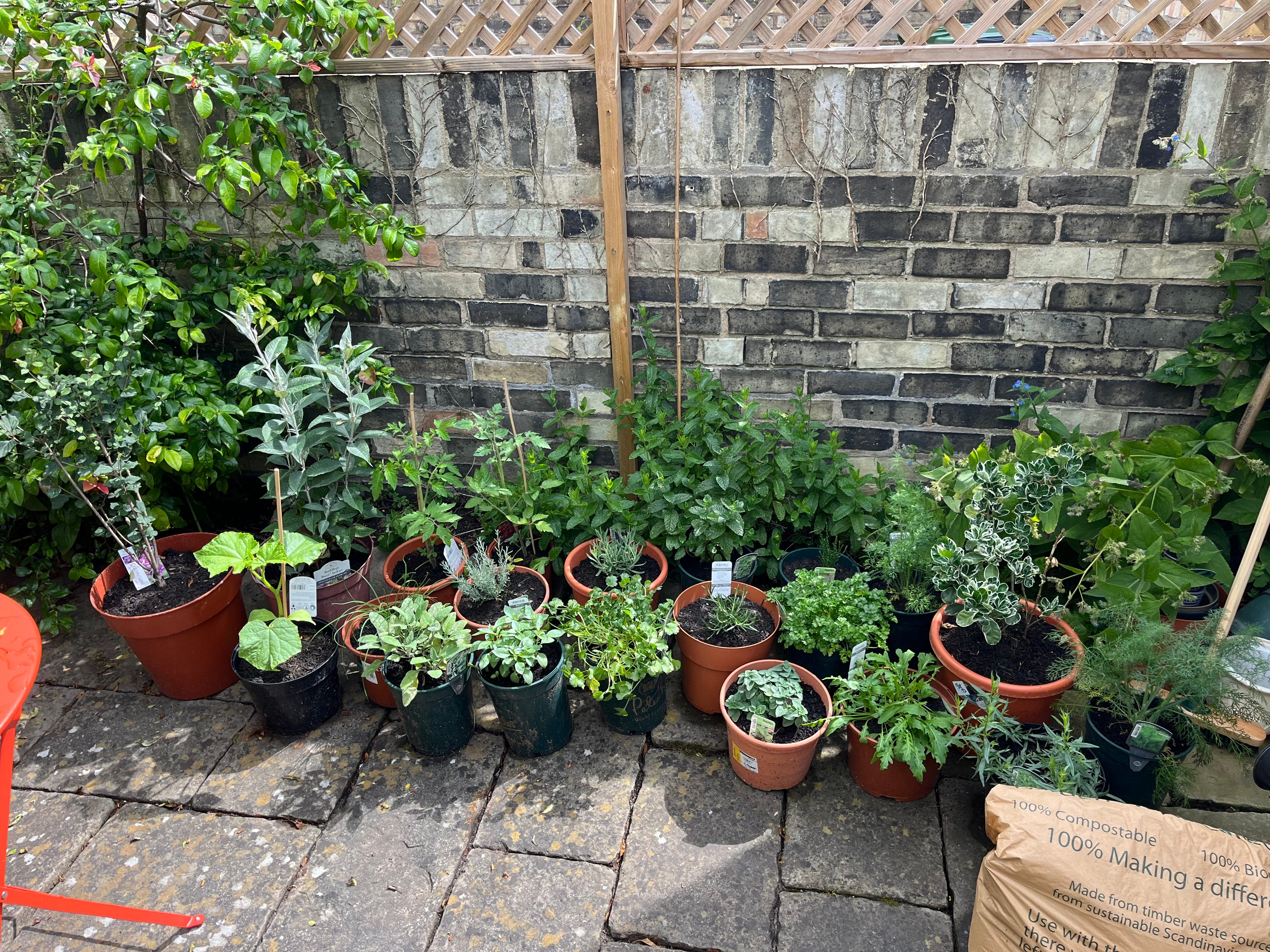
I have been carving out my own oases in Cambridge. The garden of our previous rental house was full of life, chaotic and buzzing—just some small shrubs and trees around the edges of a patio. I tried my hand at a herb garden, but it seems I am the kind of gardener who likes overgrown chaos much more than neatening. My chives flowered every year—tall and straggly—inedible little globes of purple, and this is just how I liked them.
One summer, I bought a lilac bush. I nestled it in a pot against a brick wall, where it could bathe in the sunshine. I was so very busy with my own life, though, that I was an awful lilac guardian. After its glorious summer, it entered winter looking very sad indeed—twiggy, bare and thirsty. True to form, I let it be, convinced and devastated that I had killed it.
The following spring though, I caught my breath. While outside enjoying a rare patch of sun and gazing up at the new patch of sky over my head, watching as the clouds formed shapes behind the many-shaped roofs of the terraced houses of Cambridge, I cried. There were the lilac’s neon flowers, shining out from the brickwork with bright green hearts for leaves. It was blooming at me, as if it had been doing so all winter.
Now, my partner and I have moved to a small flat with communal gardens. This is the best oasis of all because it is not just ours; it is shared. It fits right at the nexus of what we both needed all those years ago, and what we need now. My partner has access to grass and trees, and I have access to people. And our little one will be able to watch other children playing outside, and, once he’s old enough, join in.
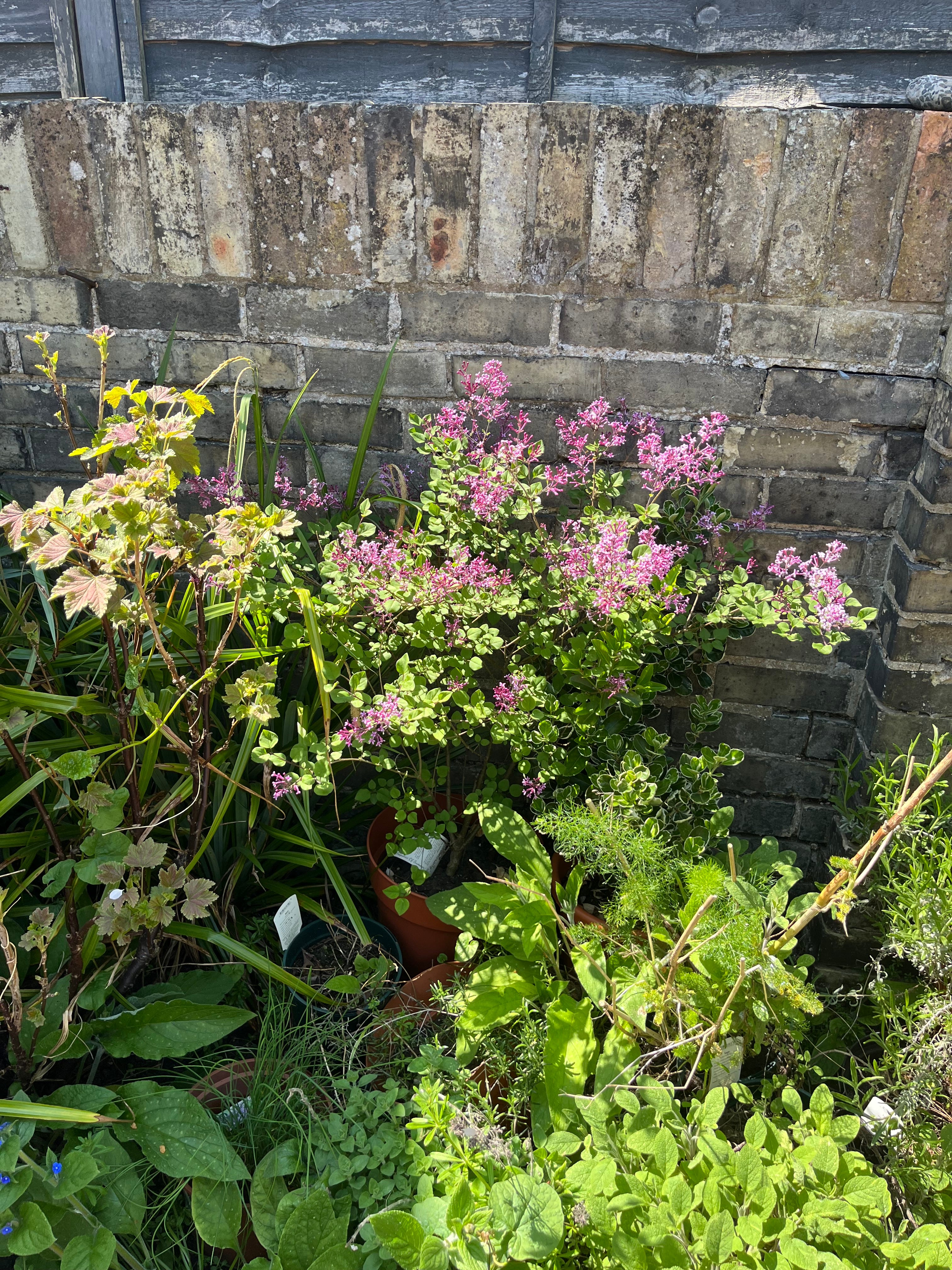
I no longer have my lilac bush. I packaged it off safely to friends, who have their own baby and their own garden. Despite sheepishly handing them what looked like some twigs poking out of a large pot back in December, it is now blooming cheerfully in their garden, and I couldn’t be happier. This lilac bush too, just like our communal garden, is not owned but shared. And this is exactly what was missing from my childhood garden. I might have felt safe and held there, but not to being able to share it with anyone started to make it feel less like a safety net and more like a trap.
So our non-negotiable for our kid is not just a garden. It’s a home that is open to people, to the outside, to life. It’s a place of freedom and safety, of warmth and nature. It’s a shared space of belonging, safety, nature and community.
And all of this only seems possible when you have windows that open onto trees, grass to lie back on and watch the sky, and soft ground to run barefoot across with friends.
If you enjoy this newsletter each week, would you consider upgrading to paid or buying me a coffee? It allows me to keep writing.
Comments
Nothing yet. Say the first thing.
Sign in to join the conversation.