
Dear friends,
This week’s newsletter is a little different. It’s jointly written with Dr Priya Raj, a consultant child and adolescent psychiatrist and clinical research fellow at UCL, who also writes the excellent Substack Think Soup.
Priya is a psychiatrist interested in how children (and their parents) think, while I am a social ecologist interested in how children’s physical environments affect their wellbeing and mental health—so this collaboration seemed like a natural, necessary fit.
You might think that the psychology and environmental literature talk to each other and complement each other nicely, since they have much to learn from each other. Sadly, this is not the case.
As often happens in academia, similar topics are researched quite separately in different disciplines, sometimes using different words to talk about the same thing. This makes truly interdisciplinary work difficult despite it being necessary.
So Priya and I have come together to talk to each other via a Substack article in an attempt at building some much-needed bridges.
Credit where credit is due: this was very much Priya’s idea, who got in touch with me to see what we might be able to come up with. That was a good while ago, and what with my moving house and being pregnant, and Priya mothering a toddler and handing in her PhD thesis, we are only now making it happen, which makes this long overdue and even more exciting!
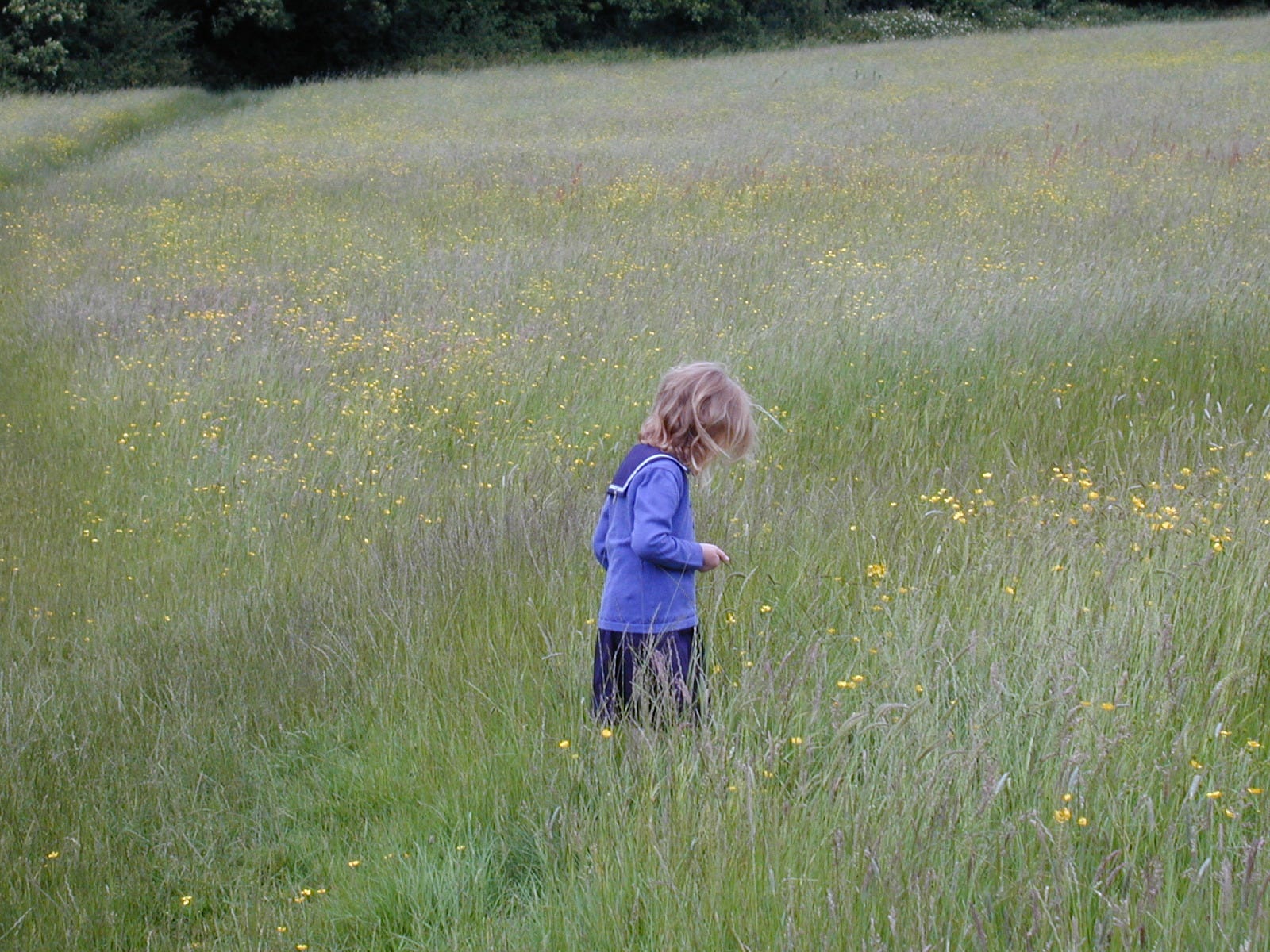
Firstly, let me sketch out what I mean by the psychology and environmental literature not talking to each other.
Research done by environmental researchers on the benefits of nature to health and wellbeing tends to use words like ‘biodiversity’, ‘species richness’ and ‘vegetation’ to talk about ‘nature’. Studies on the same topic conducted by psychology researchers, on the other hand, tend to opt for words like ‘restorative’, ‘green’ and ‘natural’.
This might seem like a semantic point. But when researchers from different disciplines sit down to work out what research has already been done and what needs doing, they generally put the words they are familiar with into search engines. As a result, work that comes from another discipline altogether tends not to be found.
So although various areas, like psychology, conservation, medicine and education, might all be researching the benefits of nature for wellbeing, they are often working like ships passing in the night. This obviously limits progress.
From my perspective as a social ecologist, there isn’t much psychology research properly integrated into environmental research.

How much environmental research gets integrated into the psychology literature, Priya? And how often does a child’s physical environment, particularly exposure to nature, get considered?
Thanks, Kate. These are such important questions. From my perspective, children’s environments are frequently considered in mental health research, but usually in a very different way from environmental research.
Researchers have long been interested in how a child’s surroundings shape their development and mental health—including families, schools, neighbourhoods and wider social conditions.
For example, studies on loneliness might look at access to social spaces or how connected a child is to their community. Research on mental health inequalities often considers housing, deprivation or access to services. Other work looks at urban living, overcrowding or access to outdoor space.
When it comes to nature specifically, this is an area that hasn’t always had as much focus in mainstream mental health research, although this is changing. With growing concern about climate change, urbanisation and children’s access to outdoor space, there is increasing interest in the role of the natural environment in children’s wellbeing.
Where nature is included in mental health research, it is usually in relation to a specific question about the potential effects of it on psychological outcomes. And it’s often measured in broad ways—such as distance to green space, amount of nearby greenery or time spent outdoors. These measures are useful for studying large populations, but I fully appreciate they also simplify what is often a much richer experience.
As many know, children don’t experience nature as a single variable. They experience places: a park where they play, a tree they return to, a field they walk through or a green space where they meet friends.
That doesn’t mean the research is wrong. It reflects the challenge of studying complex real-world experiences at scale, which sometimes require simplification.
This is where environmental research really adds something important. It can ask more detailed questions about nature itself—not just whether it is present, but what kind, how much and how it is experienced. These kinds of questions can help shape what gets explored further in mental health research.
Taken together, these approaches feel complementary. Mental health research is often strong on understanding outcomes for children, while environmental research is strong on describing natural environments. Bringing them (and the researchers) together could help us move beyond asking whether nature matters for children, towards understanding how and why it matters.

Thanks, Priya—that’s really interesting. I notice this disconnect in other ways too. For example, the vast majority of work that already exists on the health and wellbeing benefits of nature has focused on adults.
We know that moving to a greener neighbourhood is associated with sustained improvements in mental health, which last for at least three years after the move. In fact, the odds of being diagnosed with depression drop by 4% with each set amount of increase in greenness.
There are also myriad physiological health benefits associated with spending time in nature. For example, the risk of developing stress-related diseases, such as cardiovascular disease, decreases with more access to green space, and those in hospital recovering from surgery with a view of trees, as opposed to a brick wall, have smoother, faster recoveries.
Effects on the immune system are also prevalent. In Japan, the idea of shinrin-yoku, literally translated as ‘forest bathing’, is a common practice, and researchers have found that spending time in woodlands leads to decreased adrenaline levels and increased natural killer cell activity, which is key to our immune response.
But very little of this work has been extrapolated to children, which seems to me like an oversight. This means we can’t say for certain whether children stand to benefit from these same health and wellbeing perks as adults.
Of the 12 papers I’ve looked so far for my Nature Deep Dives series, eight of them are focused on children. Two of these looked at children’s awareness of nature, specifically their awareness of native species and their perceptions of a rainforest, neither of which are measures of wellbeing. Both of these studies come from the conservation literature.
Of the six that did examine some benefit to children akin to wellbeing, most of them merely looked at the effects of ‘natural’, ‘green’ or ‘outdoor’ spaces, without measuring anything specific about them. These examined the effects of ‘natural’ spaces on social behaviour and physical activity, effects on ADHD symptoms, effects on autism symptoms, and impacts on children’s stress and focus. These are all from the psychology or public health literature.
Just two studies actually quantified some aspect of the nature involved and its effects on children. One looked at tree cover and species richness in the neighbourhoods around schools—which is pleasingly precise—and how this affected academic performance, while the other looked at the effects of pot plants in classrooms on students’ feelings towards these spaces. These two papers are from urban planning or urban greening experts.
My point here is that while the psychology literature is doing an excellent job at looking at children’s wellbeing, it is not asking precise questions about how we can improve access to nature or green space to achieve these wellbeing benefits. Conversely, while disciplines like conservation and urban planning might be doing a better job at examining the details of how children are exposed to nature, they are less focused on wellbeing benefits.
This feels frustrating given how much we know nature can bring health and wellbeing benefits to adults.

I agree with you, Kate. I think one of the key issues is that it isn’t just what we know, but what we assume carries across from adults to children.
As you say, there is a growing picture that nature is linked to better mental and physical health in adults so it’s natural to ask whether the same is true for children, but this is where things can become more complex.
Children don’t usually experience ‘nature exposure’ in the same direct or independent way as adults. Their access is shaped by school, parents, safety and everyday routines. So ‘being in nature’ often looks quite different across childhood.
This matters because it changes what we are actually measuring. A walk to school past trees or time in a school playground is a different kind of exposure to an adult choosing to spend time in a park or a woodland, for example.
In the research itself, this complexity shows up clearly. Some studies focus on outcomes like attention, stress or behaviour in more or less natural settings. Others focus on environmental features like tree cover or biodiversity and link these to wellbeing or learning.
This work is valuable, but it is not always measuring the same things in the same way—some studies are precise about environments but broad about outcomes, and others the reverse. So we end up with evidence that suggests there is something about nature that matters for children, but less clarity on what kind of nature matters most and in what contexts, which makes it difficult to draw firm conclusions.
So really, the gap is not just about more research on children. It is also about alignment—different disciplines are looking at the same issue from different angles, each capturing something important, but none hold the full picture on their own.
This is why I think the question isn’t so much who should take ownership for this area, but how mental health and environmental research could work more closely together. Each brings a different kind of precision, and it is only in combination that we can fully understand how nature relates to children’s mental health and wellbeing. We need to connect and collaborate more!

I agree! To this end, I’ve noticed a key theme that emerges from research on kids and nature is attention—the idea that nature helps children to focus their attention better and supports them to pursue their own curiosity, leading to the development of problem-solving and social skills. Does any of this make it into clinical psychiatry practice, Priya?
This is a really interesting question. I think parts of this idea do appear in clinical practice, but usually in an indirect way rather than as a clearly defined ‘nature-based’ intervention.
In some parts of clinical practice and mental health research, there is a focus on how children’s natural environments shape attention, curiosity and self-directed behaviour. This is most visible in work on attention difficulties and ADHD, executive functioning and emotional regulation, where factors like stress, sleep, routine, family life and social context are all known to play a role.
There is also a well-established developmental literature showing that unstructured play and opportunities for exploration support the development of problem-solving and social skills. However, this is usually framed in terms of the importance of play and autonomy, rather than being specifically linked to natural environments.
Where nature comes in more is as a context that may support these processes. There is some research suggesting that time in natural environments may be associated with improvements in attention or cognitive functioning, but this is still an emerging evidence base and is not yet something that is directly built into clinical assessment or treatment in a formal way.
In clinical settings, I do sometimes hear parents describe outdoor time as something that feels helpful for managing their child’s mood, activity levels or emotional regulation. But these are of course personal experiences rather than systematic evidence, though they do often shape how families think about what helps.
So, I would say that these ideas are broadly consistent with how we think about child development clinically, but they sit more in the space of ongoing research than in established clinical practice.
That said, I think this is also an area where things are starting to shift. Nature and outdoor environments are increasingly being talked about not just as ‘nice to have’ settings, but as part of the broader conditions that support children’s mental health, attention and development. It feels like an area where clinical thinking, lived experience and environmental research are beginning to overlap more than they used to—even if we are still in the early stages of understanding exactly how and why these effects might matter.
At present, from a clinical perspective, nature is understood as part of the wider context shaping children’s wellbeing, rather than as a defined clinical tool—but it will become increasingly important as (and if) researchers across disciplines collaborate, and the evidence base grows. I think that’s important, and much needed.

I so agree with you, Priya. I think the research in both disciplines stands to gain a lot from genuine collaboration. It would be wonderful for more nature-based interventions to make it into clinical practice soon, so it’s really encouraging to hear that this conversation is shifting.
I’ve really enjoyed having this back and forth, and I hope it’s helped make these kinds of academic conversations feel more transparent to others too. It can so often seem odd from the outside why research across disciplines isn’t more joined up, and it can feel frustrating from the inside as well! I hope this conversation is the start of more collaborative thinking, discussion and work to come.
Does anyone have experience of other disciplines working in this space? How does this work overlap and where are the gaps? Let us know—we’d love to hear!

Don’t forget to subscribe to Priya’s newsletter, Think Soup, by clicking the button below. Think Soup is a weekly Substack that holds both the parent and the child in mind—and what becomes visible when you do. Priya writes from clinical practice, research and everyday life as a parent:
If you find value in reading Natural Connection each week, would you consider upgrading to paid or buying me a coffee? It allows me to keep writing.
Comments
Nothing yet. Say the first thing.
Sign in to join the conversation.