
(Editor’s note: Those of us who follow national policy on prostate cancer screening have heard a lot about the ongoing debate over national PCa screening programs in the UK. Nearby, Ireland has undergone a “quiet revolution” in its approach. Read on.—HW)
By Howard Wolinsky, Editor, The Active Surveillor
Ireland has quietly become one of Europe’s most ambitious test sites for “smarter, less harmful” prostate cancer care, and its new national Active Surveillance (AS) guideline may be its boldest move yet. “We wanted a pathway that is progressive, practical, and safe,” said urologist David Galvin, MD, who chairs Ireland’s national prostate cancer guideline group. “If you are going to diagnose more men earlier, you have an ethical obligation to avoid overtreating them.”
The April 2025 National Clinical Guideline on Active Surveillance does more than tweak existing practice; it deliberately moves Ireland beyond the old “Gleason 6 only” mindset.
Over the past decade, Irish teams have already rolled out national guidance on who should be biopsied, how to reduce infection risk, and how to deploy pre‑biopsy MRI and PSMA PET‑CT, building on, but not duplicating, the European Association of Urology framework. The new AS document provides a structured national roadmap for supporting men after diagnosis.
“We were very keen that this would not be just another risk‑stratification paper,” noted Galvin, Associate Professor and Conway Fellow, University College Dublin and St. Vincent’s and Mater Hospitals in Dublin. “It had to tell clinicians and patients what to do next, not just what box they sit in.”

(Dr. David Galvin, University College Dublin.)
To achieve this, Ireland has adopted the Cambridge Prognostic Groups and a structured follow‑up tool called STRATified CANcer Surveillance, or StratCANS, developed in Cambridge and now formally incorporated into Irish pathways.
Traditional systems such as CAPRA or NCCN categories are helpful for staging, but they do not prescribe the intensity of follow‑up for each subgroup. CAPRA is short for Cancer of the Prostate Risk Assessment (CAPRA), developed at the University of California, San Francisco (UCSF), as a simple, clinic‑friendly alternative to more complex nomograms, while NCCN (National Comprehensive Cancer Network) issues widely used management guidelines.
StratCANS uses three key elements—Gleason grade (including 3+3 and 3+4), PSA density, and MRI findings—to place each man into a defined prognostic group, and then link that group to a specific surveillance schedule. Instead of simply telling a man that he is “low risk,” the guideline spells out how often to check PSA, how often to bring him to the clinic, and when to repeat an MRI or consider a biopsy.
“We wanted something that a urologist in Cork or Galway could pick up on a Monday morning and apply in clinic,” Galvin said. “Same rules, same language, same expectations for follow‑up wherever you are in the country.”
One of the more striking aspects of the Irish guideline is its routine inclusion of favorable Gleason 3+4 (Grade Group 2) disease on AS, provided the rest of the picture is reassuring. Any amount of pattern 4 can be considered if MRI and PSA density support a lower‑risk profile, but these men are not treated like classic Gleason 6. They are followed more intensively, with six‑monthly clinic visits, PSA checks every three months, and annual MRI if a PI‑RADS 4 or 5 lesion is present.
“The message is not that 3+4 is harmless,” Galvin emphasized. “It’s that there is a subset of 3+4 where careful, structured surveillance is safer than reflex radical treatment.”
In contemporary Irish practice, Gleason 6 and favorable 3+4 together account for roughly two‑thirds of prostate cancers, so this more inclusive approach applies to most newly diagnosed men. Clear red lines remain: if cribriform architecture or intraductal carcinoma appears on biopsy, the AS guideline “does not apply,” and fit men with Gleason 4+3 are generally steered toward treatment because of their higher short‑ to medium‑term risk of progression.
Another “aggressive” feature of the Irish pathway is its determination to do less when less is safer.
If the initial biopsy was a high‑quality MRI‑targeted study, there is no routine confirmatory biopsy; repeat sampling is reserved for cases where MRI or clinical features worsen. Galvin estimates that this shift can cut routine biopsies by roughly 20–25% and MRIs by about 40% compared with older protocols built around confirmatory and serial biopsies on a fixed timetable.
“For men on AS, those avoided procedures translate into less anxiety, fewer complications, fewer days off work, and lower costs,” he said.
In a setting where PSA‑based screening can push incidence up by 30% or more, Galvin argues, such restraint is not an optional extra. “If you are going to find more low‑risk cancers, then doing active surveillance properly is the only ethical way to run an early‑detection program.”
Behind the technical architecture of Ireland’s AS pathway sits a sustained effort to bring patients into the room where decisions are made. Tom Hope, an Active surveillance patient and leading figure in Men Against Cancer (MAC), (recently renamed, Prostate Cancer Ireland, has worked alongside Galvin for more than seven years to ensure that men’s lived experience shapes research and guidelines.

(Tom Hope, Irish prostate cancer patient advocate.)
Hope first joined Galvin’s team as a patient contributor to the Irish Prostate Cancer Outcomes Research (IPCOR) program, which placed quality of life alongside survival as a key outcome.
He now serves as a patient representative on the National Cancer Control
Programme’s Multidisciplinary Guidelines Development Group, helping update
diagnosis and staging guidance (June 2022), develop the 2025 AS guideline on how
best to monitor prostate cancer, and consider revising treatment recommendations
based on evidence-based research. “For years, men felt things were being done to
them, not with them,” Hope said. “Having patients at the guideline table changes the
questions that get asked and the outcomes that matter.”
Under Galvin’s leadership, Ireland’s guidelines now embed shared decision‑making principles—encouraging men to bring a support person to consultations and mandating that clear, written information accompany any discussion of treatment options. Hope and colleagues in MAC support this culture shift through peer‑support meetings, a patient information website, and outreach strategies, such as Google Ads campaigns that promote PSA testing and early detection.
Ireland is now taking this combined technical-and-patient-centered model to a broader stage. Galvin leads the Irish arm of PRAISE‑U, an EU‑funded pilot coordinated from University College Dublin to test risk‑adapted prostate cancer screening across Europe.
The study will invite thousands of men aged 50–69 into a structured PSA screening pathway, linking home sampling and centralized risk assessment to urology services—and, crucially, to robust AS options for low‑risk disease.
If the project succeeds, Ireland’s mix of Cambridge‑style risk tools, reduced intervention burden, and formal patient partnership may become a template for how Europe handles the tension between early detection and overtreatment. As Hope put it, “The science matters, but so does how it feels to live with this disease. The new Irish guidelines are the first time it truly feels like both sides of that story are being heard.”
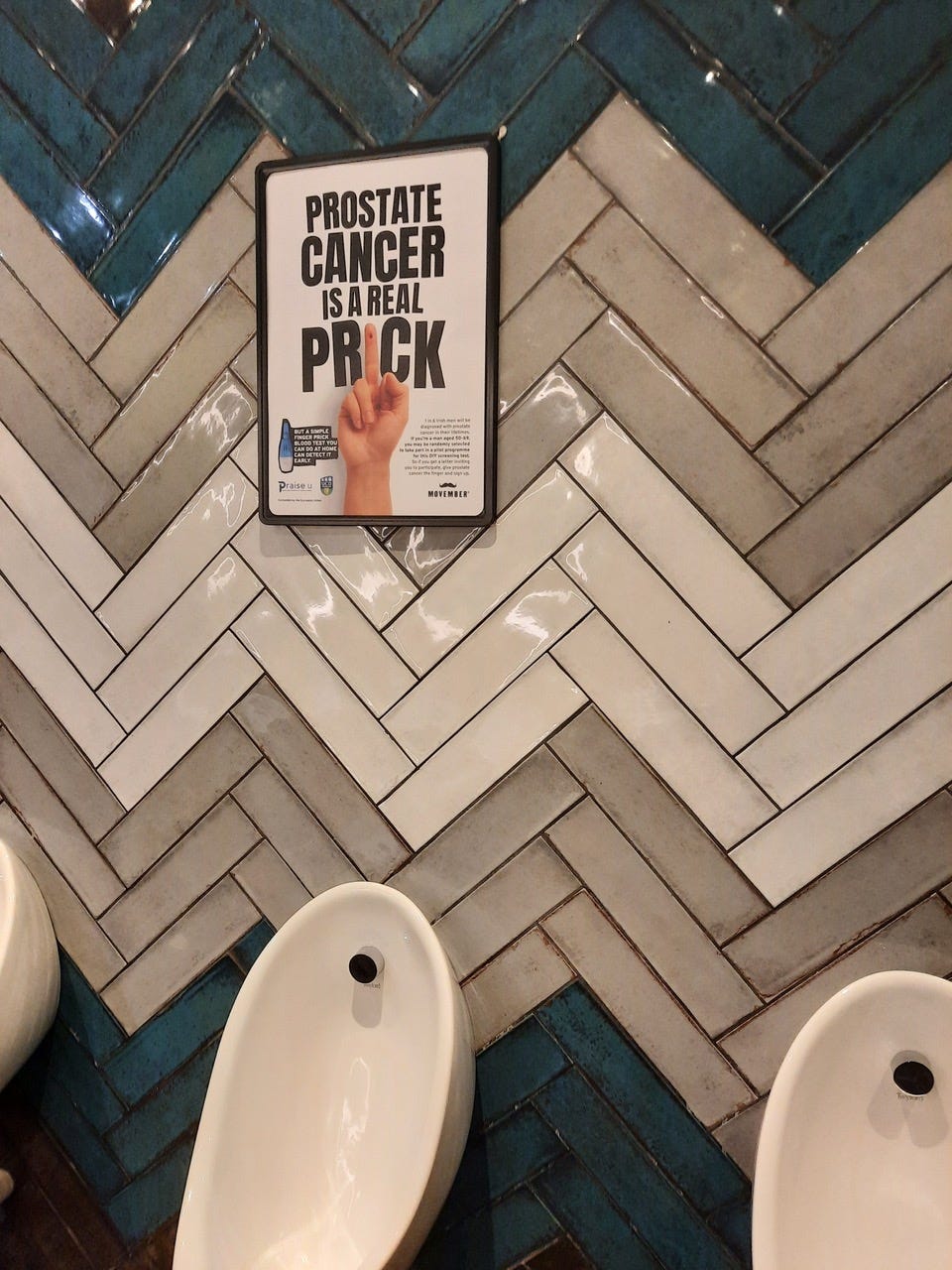
Q. (The Active Surveillor): What is the Praise‑U study, and how are you and Prof. Hein Van Poppel, chair of the European Association of Urology Policy Office, involved, and how is Ireland participating?
A (Dr. David Galvin): Hein and I are working on the Praise‑U study, and we’re one of the five pilot sites in Europe running a prostate cancer screening pilot.
Q: You originally tried to run this pilot through general practitioners. What happened?
A: We met with our GPs and tried to discuss moving forward with a prostate cancer screening program on a pilot basis, but they didn’t think it was a good idea. They talked a lot about resources, and there was a lot of reluctance to embark on further screening because screening had taken a very bad hit here in Ireland.
Q: Why did screening get such a bad reputation in Ireland?
A: We ran a cervical screening program here for many years, and about five years ago they decided to audit patients whose cancers were missed on screening, which is a normal practice. They found that some women’s cancers had been missed, which can happen, but then nobody took responsibility for explaining this to the patients. It hit the headlines, women had bad outcomes, and screening took a very bad rap. So we are naturally nervous in Ireland about embarking on new screening programs.
Q: So how did you get from that situation to home PSA testing?
A: So we looked at other options, and we looked at a home‑testing option. We thought it would be unique, and when we spoke with Hein and Monique, they were very interested in testing it in patients.
[Monique is Prof. Monique Roobol, a Dutch biostatistician and prostate cancer screening researcher who serves as Principal Investigator of the EU‑funded PRAISE‑U project on risk‑adapted prostate cancer screening. She is Professor of Decision Making in Urology at Erasmus University Medical Center in Rotterdam and is also PI of the European Randomized Study of Screening for Prostate Cancer (ERSPC) and co‑PI of the PRIAS active surveillance project.]
Q: How does the home PSA program actually work for men in Ireland?
A: Men aged 50-69 years of age, in three regions receive an invitation letter from our national screening service and are invited to register their interest through our website, which is called ProstateCheck. A man enters his details, completes his consent form, and, two days later, receives a kit in the mail and is asked to return a finger‑prick blood test.He can wash his hands in warm water if he wishes. The kit comes with a small spring‑loaded lancet. You push it against your finger, it makes a little cut, and you need to get about six good drops of blood into a small vial. You close the vial and return it to the laboratory in the mail. An accurate PSA value can be obtained from 0.6 mL of blood.

(Promoting DIY finger prick PSA testing.)
Q: How fast does he get his PSA result?
A: The lab usually receives the sample back within about 24–48 hours and will have a result within about 24 to 48 hours after that. The man gets a text back on his phone and an email with the result. Nine out of ten men are getting results indicating their PSA is normal, and we recommend that they repeat testing in two or five years, depending on their age.
Q: You’ve said this “de‑medicalizes” PSA. What do you mean?
A: It puts a little bit of onus back on the man, and it’s very convenient. When I took the test myself, I sat down to have my breakfast before work at about 6:15 a.m., and my wife popped it in the mail later that morning. I didn’t have to take the morning off or book a GP appointment, and I got a text and an email back with the result two or three days later. It’s convenient and home‑based.
It also aligns with our new philosophy in Ireland called Sláintecare, which is about bringing healthcare closer to patients in the community. If you can bring screening into somebody’s home, like we already do with colorectal home fecal tests and pilot cervical self‑swabs, prostate fits naturally into that model.
Q: Have all men found the finger‑prick test easy to use?
A: In truth, not all men find the test very easy. About a quarter of the tests have some problem: men underfill the tube, or the test doesn’t get to the lab on time. That has pushed us to look at an even simpler option.
Q: What is the Tasso device, and why are you interested in it?
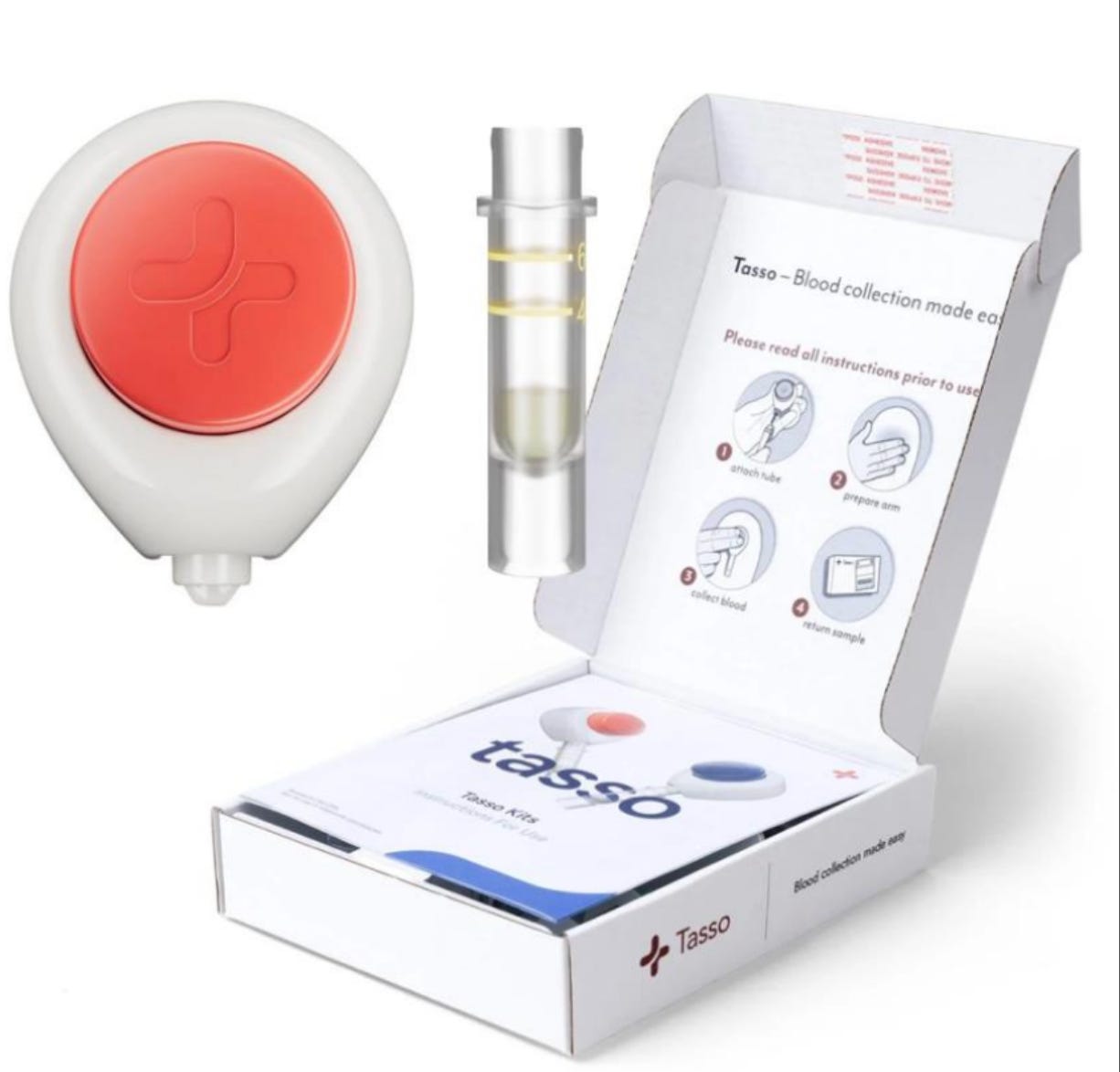
A: There’s a new little kit called a Tasso test. It sticks to your upper arm and is apparently painless. (I have yet to try it myself !!) The vial is attached to the gadget. When you stick it on your arm, you wait about two or three minutes, and the vial fills slowly by sucking the blood from your upper arm, almost like a parasite. We’re going to pilot it here in the next month or two and replace the finger‑prick test with the Tasso test to see if men will do that instead.

(Model checks out new test platform.)
If a man can do that and check his chances of having prostate cancer or not in two or three minutes, I think it’s a game-changer.
(Note: Dr. Galvin et al. presented their research on the finger-prick home test at the American Urological Association meeting in Washington in May. In practice, too many samples were unusable due to underfilling and hemolysis, so the team concluded that the current home PSA kit is not yet reliable enough for organized screening. They are now exploring improved capillary methods and urine-based home tests as next steps. Still, they told the AUA that they believe “a home-based test will provide the best prostate cancer screening platform.”)
No posts
Comments
Nothing yet. Say the first thing.
Sign in to join the conversation.