
Yesterday, OpenAI announced that one of its internal models had disproved a central conjecture in combinatorial geometry. I read the result twice, then a third time, and felt something I rarely feel in science anymore: pure astonishment.
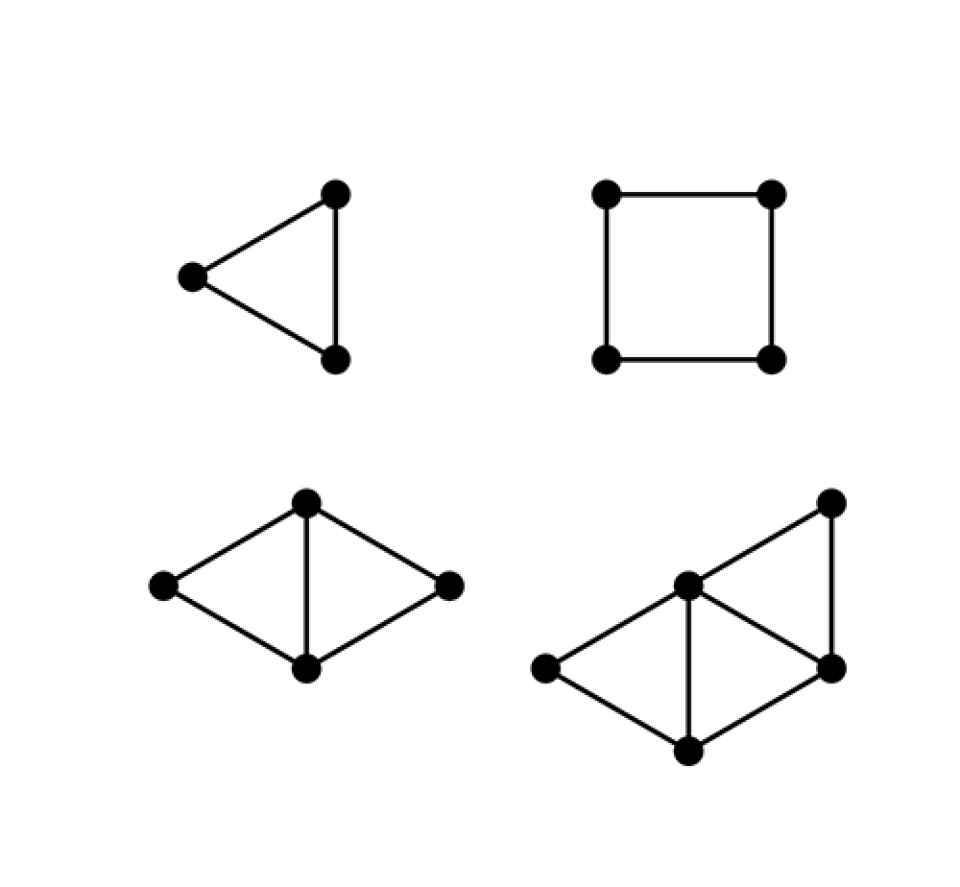
To understand why, let me take you back a little.
It’s the field of mathematics where you explore deceptively simple questions about how points, lines, and shapes can be arranged, and slowly discover that these childlike puzzles hide fractures of deep, almost architectural complexity. Draw a handful of dots on paper, connect those exactly one unit apart, suddenly you’re not doodling, you’re wandering into an 80-year-old mystery that refused to break open.
The conjecture our model disproved is the planar unit distance problem, first posed by Paul Erdős in 1946.
Erdős was a comet of a human — brilliant, eccentric, living out of a suitcase, drifting from home to home, announcing “my brain is open” at his colleagues’ doors. He published more papers than any mathematician in history, and he believed that for every problem, God kept “The Book” : a perfect ledger of the most elegant proofs. Whenever someone found a particularly beautiful idea, he would smile and say, “This one is from The Book.”
This problem was one of his favorites, an innocent puzzle drawn in a few strokes of a pencil, yet maddeningly deep. And for decades, the world agreed with him: it should be impossible to beat the constructions he proposed.
As a grad student, I spent countless hours on this conjecture. Every Wednesday of my second year at Stanford, I’d meet with three friends — Michael, Nikhil, and Logan — in a tiny stats department room that always smelled like dry-erase markers and over-caffeinated ambition. We’d spend nights chasing the monsters of mathematics: the Riemann Hypothesis, the Millennium Problems, and of course, Erdős’s planar unit distance problem.
It almost felt like a rite of passage.
The problem, stated plainly:
Place n points on a sheet of paper. Connect every pair exactly one unit apart. What’s the maximum number of such connections you can make?
Erdős believed the answer was essentially “not much more than a grid.” He guessed the maximum number of unit distances was about proportional to n. For 80 years, mathematicians tried altering grids, nudging them, stretching them — and nothing convincingly beat the intuition behind his conjecture.
Until this week.
Instead of staying near the safe, familiar landscape of grids, as most humans, including me, automatically do, the model explored the wilderness: complex algebraic number fields. It realized that by embracing higher-degree structures (the kind most mathematicians avoid because they’re messy and unwieldy), it could create far more “perfect unit directions” than any grid could offer.
The result was a complete refutation of Erdős’s belief.
When I saw it, I froze. I genuinely felt emotional. I realized I had just lived through a moment I once thought I’d only read about in some future historian’s book: an AI model discovering new mathematics.
This is the beginning of something enormous.
LLMs, at their core, are probability machines. They’re trained to predict the next likely token, to collapse uncertainty into coherence. But scientific creativity lives in the opposite direction: in the willingness to leap into the unlikely.
The beauty is: creativity and intuition are not magical gifts. They’re capacities. They can be cultivated. And if they can be cultivated in humans, they can be cultivated in models too.
Creativity is what happens when the mind jumps its tracks — when it notices a bridge between two ideas that weren’t supposed to touch. Einstein famously claimed he felt his equations as music or sensations before he could articulate them. Kepler’s laws began with him wondering why snowflakes had six sides. Kekulé discovered the benzene ring because he dreamed of a snake swallowing its tail.
Creativity often emerges from cross-pollination: when physics speaks to music, when chemistry speaks to mythology, when mathematics speaks to the chaos of an algebraic field.
Intuition is subtler: it’s the ability to sense the shape of a solution before seeing its details.
A chess grandmaster “knows” a position is winning before calculating anything. A physicist can “smell” an equation that doesn’t belong. Intuition is pattern recognition running below consciousness, built from thousands of experiences compressed into a single silent feeling.
Now imagine a system that can draw from millions of such experiences instead of thousands.
That’s what scaling gives us.
Models aren’t constrained by the biases we accumulate. They don’t carry a lifetime of “here’s how we’ve always done it.” They can entertain absurd ideas calmly. They can explore the entire search space rather than the slivers humans feel comfortable with.
And at scale, they begin to learn the hidden structure behind patterns: a form of mathematical intuition.
So while a human can entertain maybe a dozen promising ideas in a day, a model can entertain millions, and discard the bad ones just as quickly.
Which brings us back to Erdős.
What astonishes me most is that the model deliberately went where humans habitually don’t: into high-degree number fields that feel unwieldy, chaotic, “unnatural.” It trusted complexity where humans crave simplicity and made analogies across algebraic layers that even experts tend to keep mentally separate.
This is what creativity looks like in the age of AI. It is alien and astonishingly effective. (I had previously written about the alien sense of reasoning that Codex does).
There is an old quote from Alexandre Koyré that has guided so much of my scientific life:
“Science is the art of proving the impossible.”
History is full of ideas that were unthinkable before they were obvious.
Time dilation was absurd before Einstein made it trivial. Invisible microbes sounded like superstition before germ theory became hygiene. Continents drifting sounded like madness before plate tectonics became a children’s lesson.
What else feels impossible today, simply because humans can’t yet imagine the path?
There are likely millions of scientific truths out there — beautiful, correct, counter-intuitive — waiting for beings (human or artificial) unafraid to wander into the unlikely.
This is why I am so excited.
Mathematical discovery is just the beginning.
Biology, chemistry, and medicine will require models to learn from the physical world. So we need labs that close the loop: where models generate hypotheses, run experiments automatically, observe outcomes, update themselves, and try again. Reinforcement learning, but with nature as the environment.
This is already starting to happen And once that loop tightens, the rate of discovery will feel like a phase transition.
I cannot wait for the diseases my friends and family suffer from to be cured — not someday, but soon.
I cannot wait for models to care about diseases that the market does not.
I cannot wait for the era when our great-grandchildren look back and ask, amazed:
“Wait… people used to die from these things?”
The same way we now marvel that smallpox once ravaged humanity, or that childbirth was once routinely fatal.
We are standing at the threshold of the most explosive acceleration of knowledge in human history.
And for the first time, I feel — deeply — that I might get to witness cures, breakthroughs, insights, and discoveries that were previously beyond the reach of our species.
We are entering an insane era. And I have never been more grateful to be alive to see it.
No posts
Comments
Nothing yet. Say the first thing.
Sign in to join the conversation.