
I’m teaming up with the good people at hope-based agency Shape Change for a couple of events about the future of social change communications.
Tuesday 7 July 16.00 CEST: LinkedIn Live with Val and Dante about the future of social change communications.
Tuesday 14 July 16.00 CEST: A Possibility Space on Zoom to imagine the future of comms that we want. This session is a space to step back from the daily comms grind and think strategically about the collective future of our work.
→ All are welcome: whether you are “a comms person” or you do a lot of comms in your work.
→ What do you think we should be talking about? Here are some of the things on my mind:
Some are about the ecosystem we have. Others are about the ecosystem we want…
To change narratives, we need to constantly repeat messages and stories that reinforce our beliefs. We all need to be influencers. Around the world, the far-right are pouring money into training and coordinating influencers, on top of all the other stuff they do.
How do we respond?
Work with current influencers and micro-influencers? Should all NGOs have a creator budget?
Train activists/colleagues to make their own video content? Should every activist have their own account?
Create entire new content labs/storytelling orgs? That would work on spreading rehumanising narratives, changing conversations and cultivating empathy at scale?
Even if we solve Q1, can we get influencers to do more than raising awareness?
→ As Val says, the best online content is something that happens offline. To get more attention online, we need to do more exciting things IRL. Especially since the latest brain science suggests experience does more to change minds than debates.
→ How do we create more powerful experiences and moments for supporters? Do we need to get rid of the comms/campaign distinction?
→ What would it look like to engage micro-audiences with more personal, targeted offline engagement while still operating globally? Does being more local also mean less cosmopolitan?
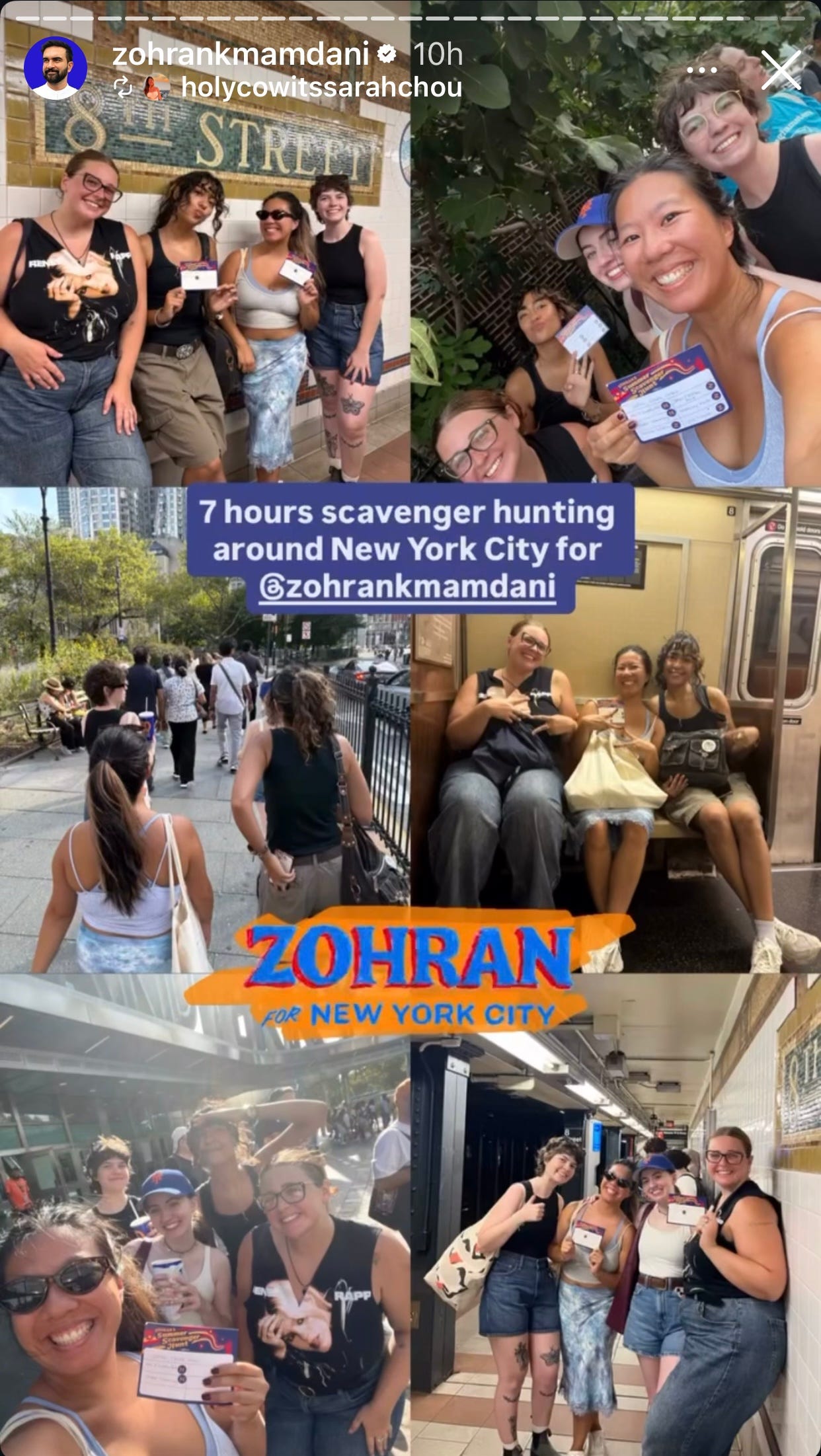
Brain science shows that the story we tell today is the action we take tomorrow. I think this puts communication at the heart of social change.
→ Can we seize the low-hanging fruit of narrative change: elevating and amplifying the stories that bring to life the change we want to see? What Anat calls mobisuasion: mobilising our base to persuade the middle.
→ Can we nurture more reciprocity inside our movements so that our orgs and causes work together to reinforce the shared worldviews that underpin all our work. For example, by systematically sharing and engaging with each other’s content.
→ How can small grassroots movements and orgs do the complicated, sophisticated comms work like listening, testing and mass distribution?
→ What would it look like to apply lessons from deep canvassing to mass social change comms?
More like pre-internet?
Early days of the internet?
Something completely different!
Today’s social media platforms are designed by Silicon Valley for profit and clicks. Someone needs to imagine what media would look like if the starting point was empathy, agency and solidarity. Can we imagine communications where we are system-designers instead of passive users?
I often get asked some variation of this question:
While traditional news says “If it bleeds it leads”, social media algorithms are slaves to scandal and ragebait. How can hope-based stories compete?
There’s this idea that news has to be “man bites dog”. But on social media it’s not just fear that works: it’s also “puppy cuddles kitten”. Joy and awe grab us too.
Think of all the movies we love. They have struggle but also love, connection, resolution. There’s research that shows that seeing awe-inspiring beauty can increase someone’s support for refugees. Or take someone like Jacinda Ardern: people feel admiration when they see leadership that combines empathy with strength.
Personally, what gets me emotional is seeing people help each other. Or seeing two people who were divided come together. That’s what really lands.
Strong “positive” emotions → Make people feel empowered rather than enraged. While anger makes us comment, admiration, joy, awe make us share.
Belonging, affirmation → stories that reinforce our sense of ourselves as good people will make us more likely to act that way.
Novelty → our hunter-gatherer brains are wired to pursue surprise. Pleasant surprise can be as powerful as shock.
“In a media driven by identity and passion… you can arouse that passion through inspiration, as Obama did, or through conflict, as Trump did.
What you can’t do is be boring.”
Ezra Klein, Why We’re Polarized
For example, during Covid a story went around about Irish people crowdfunding to help two Native American nations, because the Choctaw nation had helped Irish people during the 1840s Irish famine. It was a simple story of shared humanity, reciprocity and solidarity across oceans and centuries - it touched something in people.
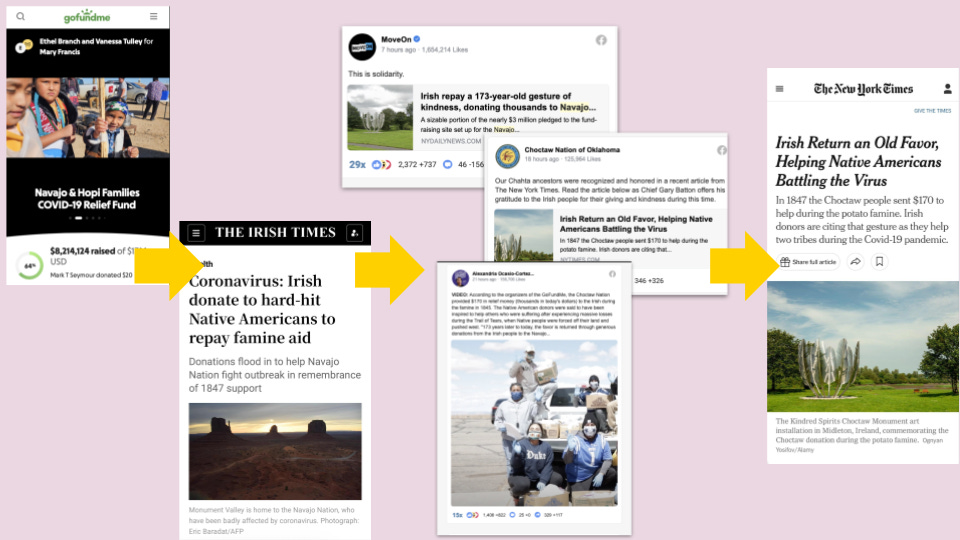
I found this story because through tracking tool CrowdTangle, which I had set up to flag hopeful stories that were triggering a lot of engagement in order to understand what stories activate hope in audiences.
We have spent many years finding ways to sell fear-based stories to the media. Now we have to test and learn ways of selling hope-based stories.
“Newsworthiness” is also a construct tied to dominant power structures. Before t’internet, the news editors who decided did so from a position of privilege. We can change what is worthy of being “news”. First step: if we show media that things are resonating on social media (“people are talking about this”). For example this Ireland/Choctaw story found its way to the New York Times because they saw it was getting traction.
This is integrated communication. We need the social media and the media working together to create social media moments that change our thinking about how the world works.
That's how we organise for narrative change.
The current media ecosystem favours fear-based content, and rewards it with nice, but deceiving metrics.
It can make us feel like we are getting attention, but just how deep into the consciousness of our audience are we getting.
But humanity’s innate curiosity and thirst for surprise means even today’s hyper-commercialised media ecosystem offers some opportunity for spreading empathy and solidarity.
We need to move beyond vanity metrics and pursue qualitative goals for our storytelling: persuasion, curiosity, understanding, affirmation.
Maybe content that changes minds but gets less engagement is better than high-engagement content that reinforces existing divisions and bias.
Could the experience of welcoming and hosting World Cup fans nurture an identity of being a more welcoming community and nation in the USA? Let’s find out. Share World Cup stories of reciprocity, diversity, hospitality and welcome! (thanks to Paula Beegan Haddad for sharing the Boston/Glasgow story).
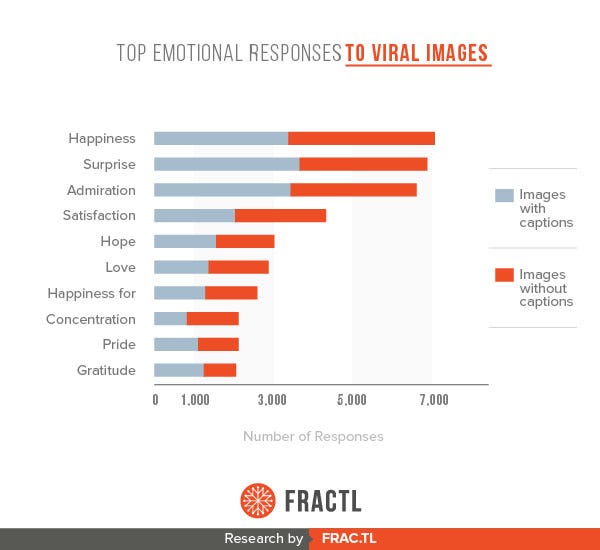
Zeynep Tufekci has written about what drives virality on social media. Yes, anger works. But she says that there are another set of emotions we can draw on: surprise, admiration, generosity, affirmation, joy.
“We are particularly susceptible to glimmers of novelty, messages of affirmation and belonging, and messages of outrage toward perceived enemies.”
This research on emotions and social media virality suggests making people feel inspired and empowered leads to social sharing, and we should avoid making people feel overwhelmed.
Stories do not spread simply because they make people feel something strongly. The particular emotional combination matters.
We can measure the “power” of emotions in three ways:
Valence: positive or negative feeling.
Arousal: how energised or stirred up someone feels.
Dominance: whether they feel in control or powerless.
So it’s not enough to shock people, you need to inspire and energise them too.
→ A story about injustice may generate comments when it produces outrage and helplessness.
→ A story that helps people feel admiration, connection and possibility is more likely to be passed on voluntarily. Sharing it lets us express a hopeful view of ourselves, and the world.
Article: The brave new world of political communication in the age of AI
Love this concept: the spiral of silence. I’m planning a post on a similar topic: greensushing. If we are against “greenwashing” what are we for?
No posts
Comments
Nothing yet. Say the first thing.
Sign in to join the conversation.