
I’m experimenting with a new format: The Hope Dialogues. A series of Socratic conversations exploring the hardest questions about using hope as strategy, where there are rarely simple answers.
After this post, the series will live in its own feed within this Substack. You can sign up here.
I’d love to know what you think.
A hope-based activist talks to a migration campaigner on a messaging app (not necessarily different people!)
Hope-based activist:
Check out this new post from Greenpeace! Migration FTW!
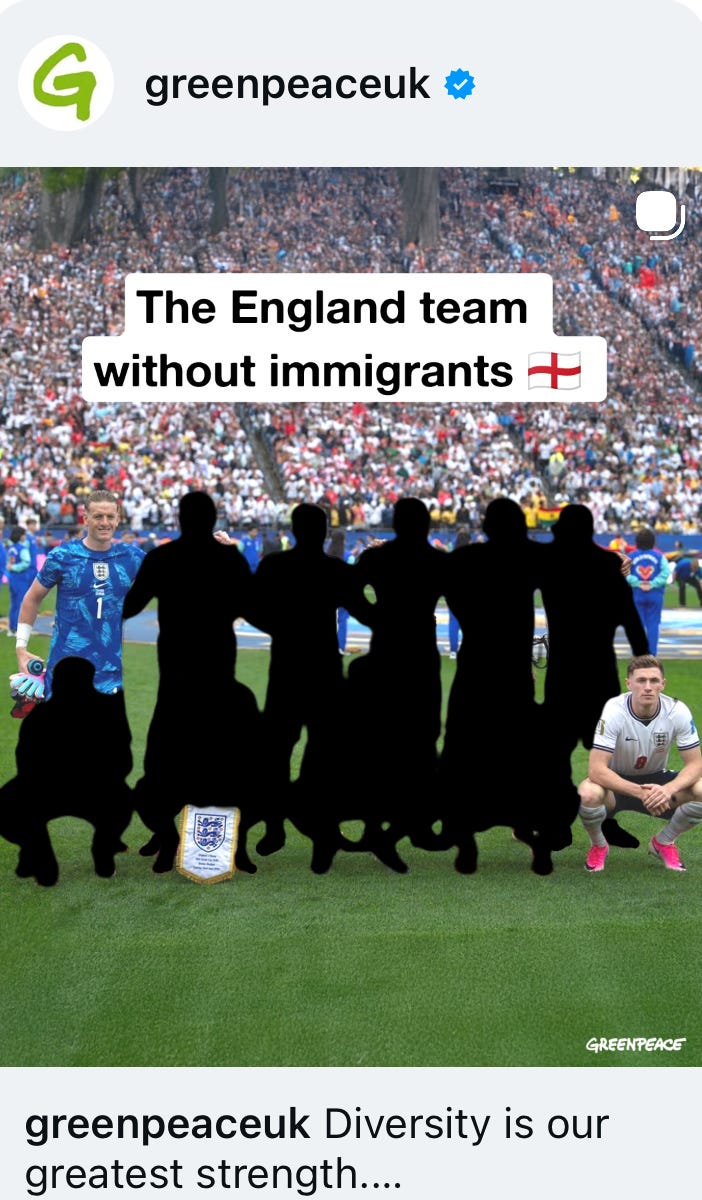
Migration campaigner:
This feels like a “good immigrant” narrative to me.
Oh that’s true. I see that now.
I was just so excited to see someone saying something good about migration! The conversation is so dominated by people saying migration is a problem to be managed. We need more people saying it’s good!
But this kind of content is also harmful.
It perpetuates the idea that we only accept people when they succeed, when they deliver something for us.
Saying, “Look how weak our team would be without immigration” is not so far from saying “Who will pick the fruit and care for old people?”
I hear what you are saying.
Maybe a simple hope-based shift is changing “England without immigration” to “Look how wonderful England is with migration.” Or even better “when we celebrate diversity”.
I guess the question is whether it is possible to say “migration is good” without triggering the “good immigrant” frame. How do we know the difference?
Well, in this case, it’s reducing the players to where they come from.
And as soon as a Black player misses a penalty, they will get racist abuse.
Why should we have to make any case for migration? Rich countries should recognise their role in colonialism and the wars that makes people move. It is their duty to let people in.
I agree with you.
But is that message going to change people’s minds right now?
Are people primed to take it on? I want them to, but that’s a whole other body of work we need to do.
If these football posts were part of that wider story, perhaps they would work better. The problem is those stories are lacking from elsewhere. Meaning we see newcomers thrive in sport more than in daily life.
I think we need to talk about the deeper emotions and ways of thinking that will make communities open and welcoming.
Really, I do not think we should be talking about people on the move at all. This is about everyone else: whether our societies are kind, caring and welcoming. We should tell stories of communities that welcome people in. Both in football and other walks of life.
The problem there is that sounds like a White Savour narrative.
I don’t know if we want to make white people feel good for simply respecting human rights and international law.
That’s understandable. But the challenge is we cannot force people to be welcoming!
We can rely neither on empathy/compassion alone, nor on law alone. We certainly should not expect people simply being kind and caring is a substitute for laws and policies. But it is equally naive to think that we can just legislate for good treatment of all people and expect it to be implemented by human beings and the systems they operate in - especially systems plagued by systematic bias and racism.
Human beings are motivated to act by their beliefs and values.
So we have to make some kind of case for the change we want to see.
We need as many people as possible to be loud and repetitive in expressing pro-migration views, saying they are for open, welcoming, diverse, caring societies. They are more likely to do that if doing it makes them feel good!
If they feel shamed when they get it wrong, they will not only stay quiet, they may even change sides.
Why should I have to make privileged people feel good?
You personally should not have to. But as a movement we need to accept the reality that humans do what feels good to their brain.
I’ll have to think about that.
For now, I will always support the Global South team against colonisers, no matter how diverse the team is, I cannot forget the history.
I can relate. Being Irish I can’t support England, even when they have several Arsenal players.
Who did you support in the last World Cup final: France or Argentina?
Argentina of course!
That’s interesting! France’s team was far more diverse. The Argentina team were all white, and some of their players sang a racist song about France’s Black players after the 2022 final…
Lots of French players are descended from the colonised, or people who fled repression in Spain, Portugal and Poland. Meanwhile, Argentina players descended from people from Europe who colonised the Americas. But since then they have faced many other forms of injustice.
The point is, colonialism is complicated! There is no “good” and “bad” team. Bringing colonial aspects means grappling with subaltern perspectives and agency.
…
Let’s get back to fixing this content.
We don’t want a good immigrant narrative. So what kind of narrative do we want. Can we put a name to it?
It’s too complicated to capture in a few words.
Let’s try. What is bad about a good immigrant narrative?
It makes them “prove their humanity” - suggesting that you have to win acceptance through success.
It’s about economic value, service. And in this case, loyalty to the nation.
What is the opposite of those things?
Not putting people in boxes! Seeing the humanity in everyone, accepting people for who they are, the good and the bad.
Cultural value, kindness for its own sake, care for all.
Above all, the problem good immigrant narrative puts people in boxes. It replaces one stereotype with a more positive stereotype.
“Not putting people in boxes!“ And when we are not doing that, what do we do instead? Name an opposite action! What is a way of thinking that moves beyond stereotypes and boxes altogether?
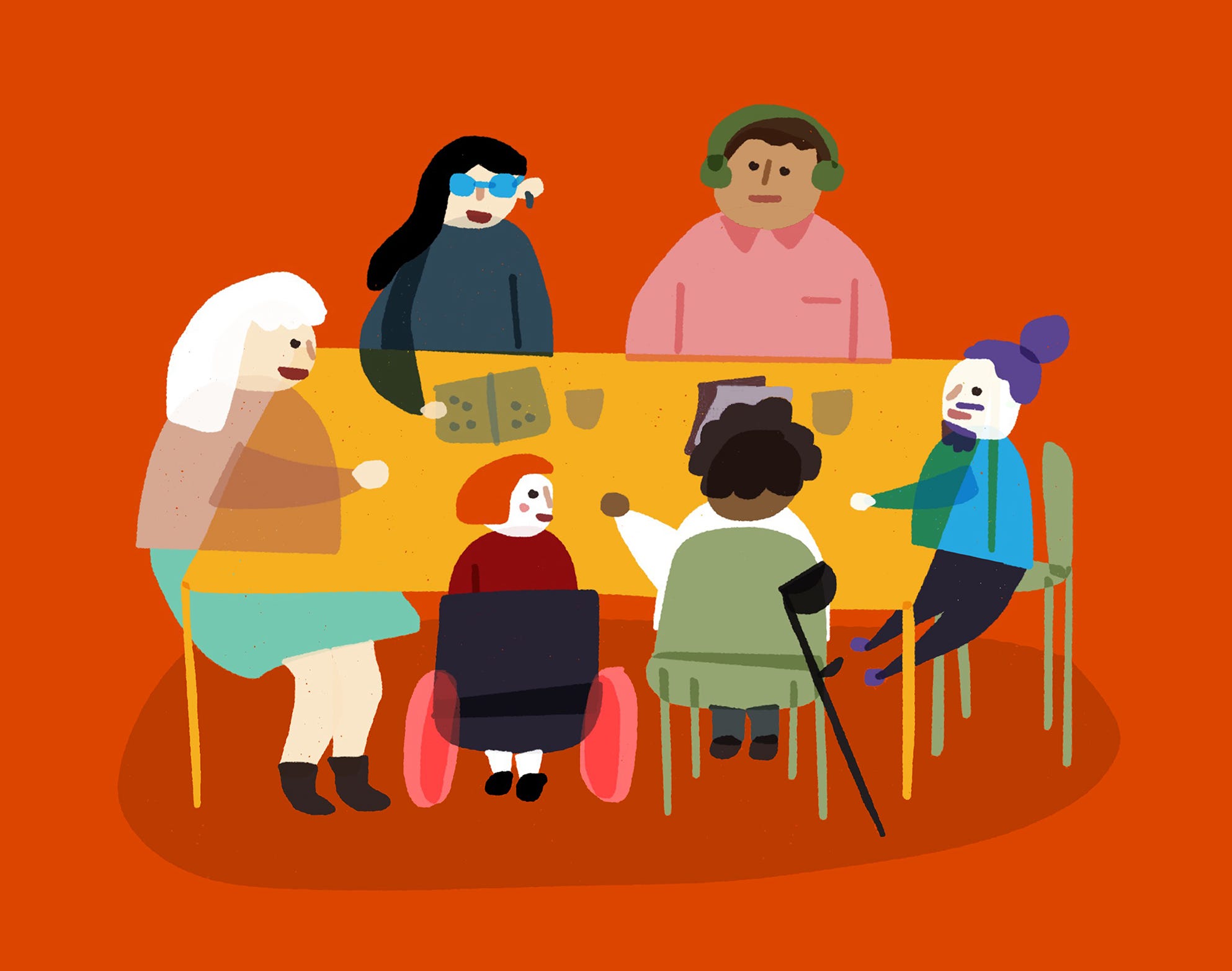
I guess it would be sitting together at a table as equals. Really listening to each other.
These are the concepts we need to connect to migration in our brains. Right now the connection is to crisis, refugee camps, boats, crime and whatever else the far-right pushes. We cannot take those ideas out of the brain. We have to put new ideas into the brain instead and make those connections stronger.
That is why it is important that if we want to avoid “good immigrant” narratives, we explicitly name another kind of narrative we want instead.
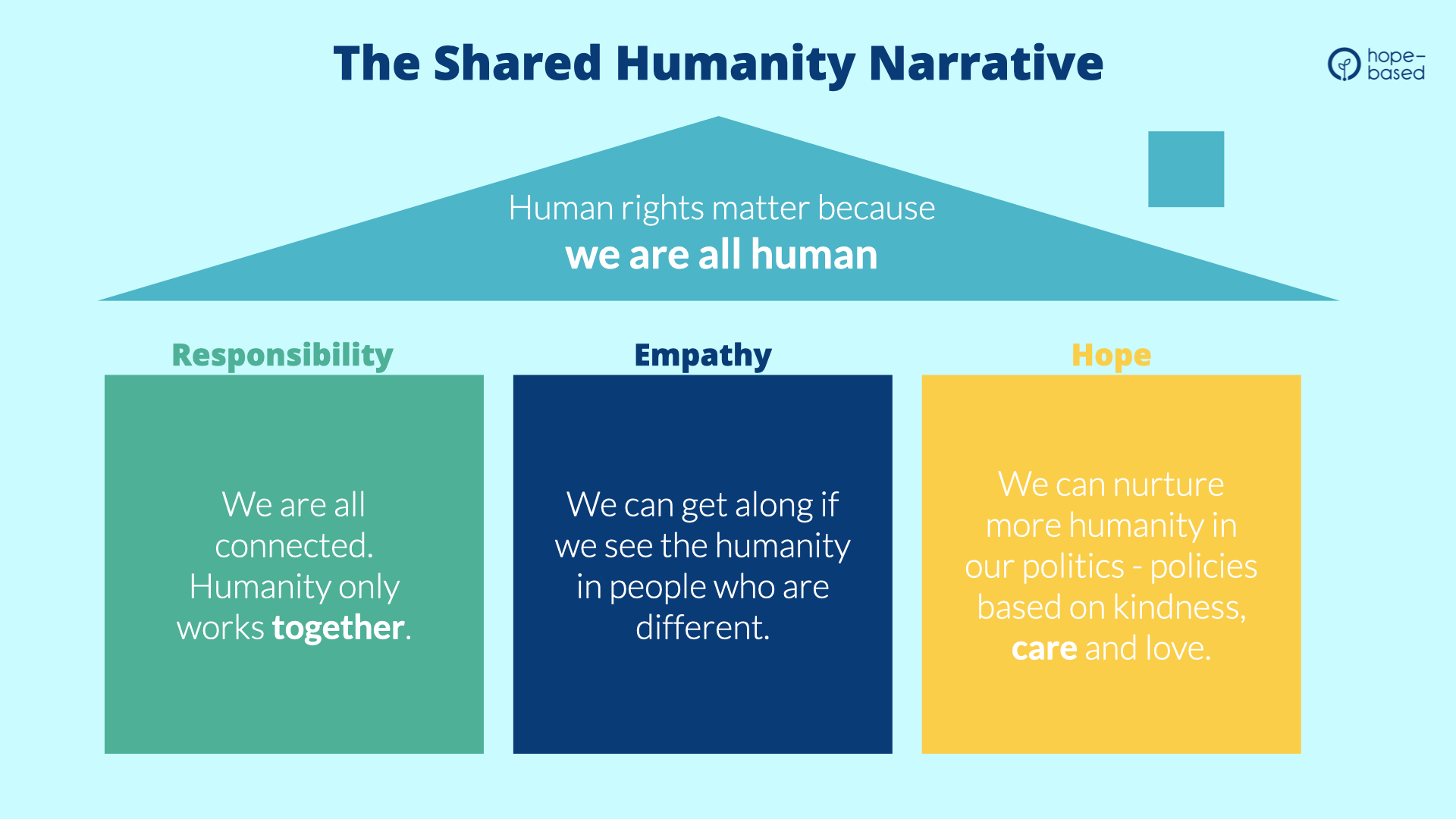
What comes out of hope-based workshops on migration is a shared humanity narrative.
If you were making this content, what else would you do differently?
How would we tell stories in a frame that see the humanity in people unconditionally, accepting all parts of their identity?
For one thing, I would centre the players more. Instead of reducing them to performance, let them talk about their experience and their feelings about their identity.
Let people tell their own story.
That’s a great example of shifting from victim/hero stories to human stories.
I think the Australia team did a great job of this with their pre-World Cup video. What do you think?
Hm. The players are still talking about where they come from. But there is a lot more complexity and depth.
These work because we hear people’s lived experience.
We should not expect a single story to do justice to the lived experience of entire groups of people. But let’s make sure it speaks to the lived experience of someone!
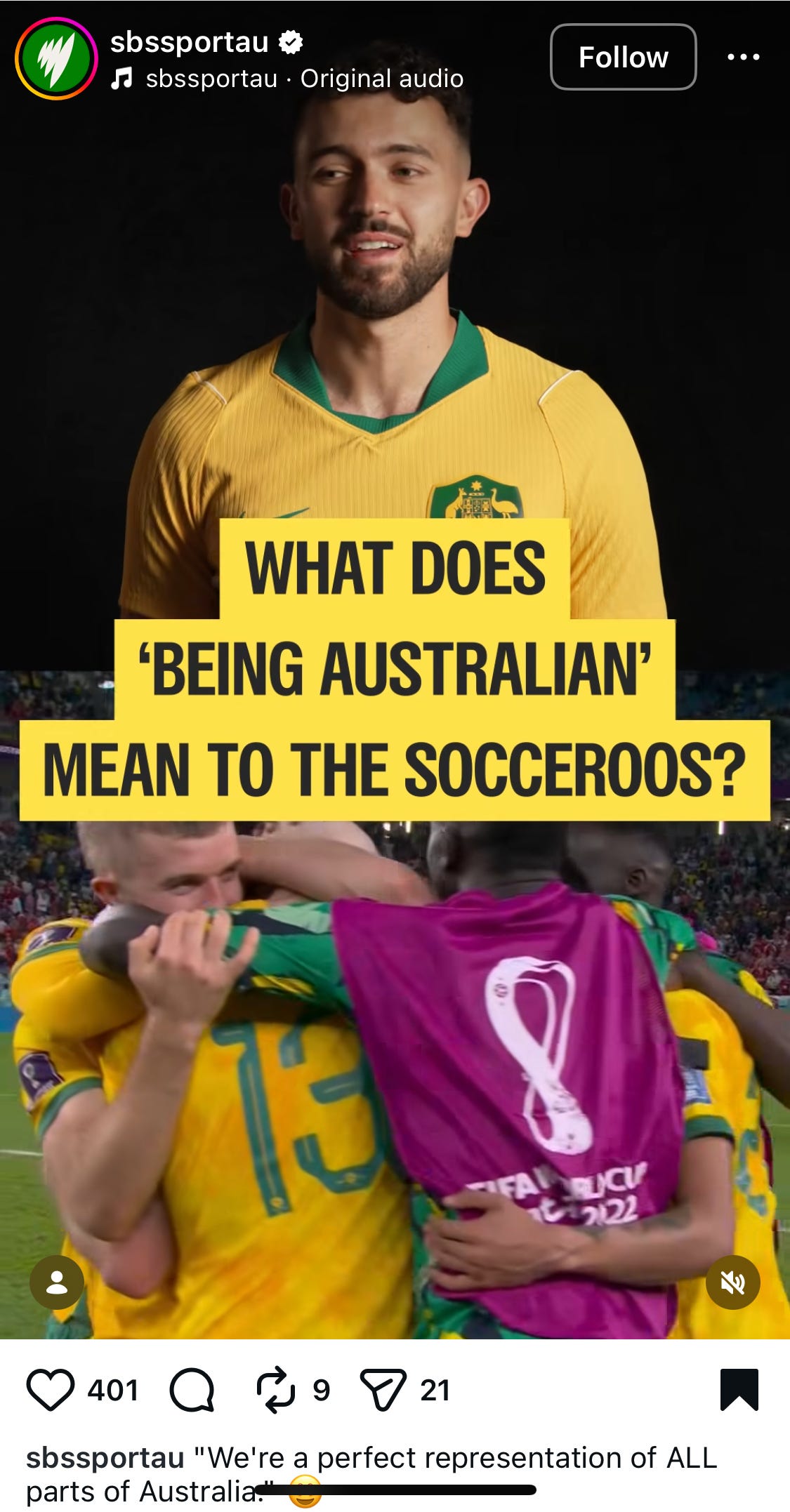
But even this good ad still has some elements of “migration is good”. So the trick is, our instinct when we see content is to criticise what we don’t like about it.
I think we need to pause before criticising our colleagues/partners and articulate what we want the narrative to be instead.
And sometimes, maybe the content is not perfect but it can help drive a conversation that is better than the anti-migration narrative. A bit of controversy can help make the message more salient.
But this content is deeply harmful, it perpetuates racist colonial stereotypes: like those players just exist to serve their countries.
But when we reduce those players to just being from their colonies, we risk reinforcing a far-right narrative “They are not really from here”.
We also need to be careful that we are not reinforcing harmful narratives ourselves. Look at that racist politician from Paraguay calling Mbappé colonised as an insult. Our point has much more nuance and complexity but that risks getting lost.
I like that because it makes space for complexity. I find the pressure from communications is to make my story “simple” so that people understand it.
The answer is not finding the perfect migration story. It is building a mosaic of stories: stories of struggle, joy, belonging, contribution, complexity and everyday life.
We can build up that complexity you are after, one story at a time: like instalments of a TV series.
Does that also mean we can hear from marginalised voices?
Exactly!
If we want people to listen to others, we need to be good at listening ourselves - lead by example!
And knowing this, maybe the key point is changing the way we engage with each other.
With a little less certainty about knowing what the right story is to tell, we can be more patient with others too.
Thanks for the chat. I’m going to go and watch the football now.
Allez les Bleues!
Vamos Argentina!
Step 1.
Name the harmful narrative.
Step 2.
Write down all the elements of this narrative.
What makes them harmful? Why are they bad?
Step 3.
Write down the opposite of each element.
Highlight the three most important ideas.
Step 4.
How would you name these new elements?
What kind of stories would bring them to life?
Join Shape Change and me for Possibility Space on the Future of Social Change Communications next Tuesday, 16.00 CEST. This week did a LinkedIn Live which you can still watch here.
Sports scientists are picking up on Norway’s approach to youth sports: let kids have fun → intrinsic motivation.
The power of conversations to bring about social change from A Larger Us.
Not Built In A Day: How Slavery Made the Roman Empire by Emma Southon. The way Southon approaches history is so refreshing: unearthing new sources, openly using her imagination to hear from women or enslaved people, challenging historical sources that were taken as fact until now.

Just the preface had me scrambling for my notebook: she explains why she talks about “enslaved people” instead of “slaves”. Which reminds me why its so important we say “people on the move” or “people seeking asylum” instead of migrants or refugees.
Indeed, on almost any issue, it’s usually better to use more words to remind audiences that we are talking about human beings.
As mentioned above. Aussie fans reacting to their team's stories.
No posts
Comments
Nothing yet. Say the first thing.
Sign in to join the conversation.