
I don’t have an essay quite yet so below is a collection of things I have loved recently and the jumbled thoughts they have inspired. Enjoy.
Girls: Generation Z and the Commodification of Everything, Freya India.
If you are Gen Z or want to understand the last 15 years (and didn’t read Sophie Gilbert’s Girl on Girl) this is a great place to start. Freya maps the effects of AI, social media, dating apps, beauty influencers, and therapeutic culture on “the most anxious generation.” Whereas Millennials were sold commodities online at rates never before seen, Gen Z has learned how to commodify themselves (and were promised empowerment as a result).
We are insatiable consumers shopping for the perfect person, seeing others people as disposable and advertising ourselves as objects too.
Billion dollar industries depend on us being lonely dispatches, consumers. Liberation is their marketing pitch and we are the lonely unhappy consumers.
[We were] being made to feel broken so we can become a life long consumer… the purpose of our lives is to become better products, not better people. Objectifying ourselves became empowerment.
The part of the book I was most interested in was how in rejecting the girl boss script Millennials threw themselves headlong into, Gen Z has created a parallel world of girl boss online influencer.
Yet as girl boss feminism faded, the pressure to work hard kept growing. Now many young women no longer want to work for corporations but to become the corporation. Success isn’t so much about climbing the corporate ladder as becoming a brand- a product. Even the trad wives on Tik-Tok are busy building audiences, monetizing their private lives, and selling products. The girl boss didn’t die- she became an influencer.
Now success demands even more of us, it means selling ourselves and competing in the market for clicks. Every moment of our lives can be monetized, every ambition commodified. Our ambition today is simply to have an audience.
The result of pursuing all of this, is of course rapid rates of depression, body dysmorphia, anxiety, social paralysis. What’s the alternative? Freya touches a bit on faith (as she has dabbled in on her substack GIRLS) and concludes that a life not focused on self but of “trying to do good and help other people” may be the antidote to existing only online. She recognizes the immense value of family and love, and how pursuing these things, although risky, is worth the vulnerability and self-gift. True empowerment comes in being free to give yourself away.
We have been taught that putting other people first is a weakness, that depending on someone is a deficiency rather than the beautiful thing that it is. You are not needy for having human needs…
The lie we have been told is that we need less commitment, not more, that the problem is other people and the constraints they put on us. But this is a tragic way to think; tragic because it is putting young people on the trajectory to miss out on what really matters. There is no love without vulnerability. There is no life without risk. Loneliness is not empowerment.
A Truce That Is Not Peace, Miriam Toews.
“remember the dead without being haunted by them,
give to our lives a coherence that is not ‘closure,’
and learn to live with our memories, our families, and ourselves
amid a truce that is not peace.” - Christian Wiman
Phew man, this is how you write a memoir. Toews (of Women Talking fame) weaves together past and present in this grief-driven look at the question, “Why do you write?” The subjects she covers range from heavy heavy to musing on the mundane or ordinary graces. Poetry (mostly Christian Wiman) and quotes are sprinkled throughout and interweave with memories to create a Commonplace book on grief and finding joy and healing in the silence.
My friend told me she’d never felt more alone and sealed off in her coffin of grief than when people told her, even lovingly, even with tender hugs, that they couldn’t imagine her sadness. Try! Stay! Stay with me!
“Life must be conceived as tragedy in order to live it.” - Yeats, paraphrased. But what if we don’t conceive of life as a tragedy? Can we live it?
She taught me how to stay alive. Silence and words: both are good, both are failures, both are efforts, and in that effort is where life lies-not lies, or maybe it does-but where it exists. And the fragments in between are the spaces where she and I meet.
But being alive is worth something. Why do you write? Why do you live?
The Revolt Against the Girl Bosses Has Finally Come, Tressie McMillan Cottom. If you read Yesteryear, or my review, and need more, this is the perfect follow-up. The girl boss script has been followed to a tee and it’s blowing up in real time. AI has certainly sped this along, as did COVID, but we stand now at a crossroads for the American working woman. The corporate American dream actually isn’t achievable for most people and there is no real way to climb to the top anymore (as AI threatens to cut out middle managers). Cheers to the end of the world. Or perhaps, we will figure out how to humanize work and turn the ship around.1
So how are you going to climb to the top of the pyramid if there is no middle?
The elusive quest for balance was always a fantasy. Now it is a nightmare.
I wouldn’t ask the influencer. They aren’t paid to solve the riddle, only to make the riddle seem solvable.
Tim Keller: New York’s Pastor, Susannah Black Roberts. It has been three years since Tim Keller left this world. This article was published two years ago around the first year anniversary of Tim Keller’s death. Roberts reflects on Keller’s impact not only in the lives of evangelicals in NYC, but the countless secular folks who came to know Jesus as a result of his ministry at Redeemer and commitment to the city. As my sister, an NYC resident, said recently, “The Kellers came and stuck it out. And people noticed that.”
I loved the juxtaposition here between striving for all New York has to offer, and Keller’s message to his congregants to yes, pursue excellence and beauty (“goodness aimed at something”), but to slow down enough to savor not only the beauty this world has to offer, but the whispers of hope coming in the new City. The Resurrection of Jesus transforms both our hope and our ambitions.
If Christ had not been raised, beauty would be merely a defiant flame in the eternal dark. The end would simply be the end of the song, the end of the Broadway run, the dirty dishes at the end of the meal.
Evangelicals leaving home for New York needed something like Keller’s ministry to prevent them from leaving the faith. Secular New Yorkers needed a word from outside their city – from the New Jerusalem – to give them life.
Strangers: A Memoir of Marriage, Belle Burden. Another viral book making its rounds, Strangers, which started as a Modern Love essay during COVID, tells the story of Burden, her hedge-fund manager husband, and the spectacular unraveling, of what was from her perspective, a normal and healthy elite NYC marriage. Burden has come under fire recently, and has been criticized for whining about the results of her divorce (her husband is worth hundreds of millions, she is the heir to $40 million in trust funds) but I do feel for her emotional turmoil, the betrayal, and heartbreak, not just the financial loss her prenup cut her out of.
This story is modern day Mad Men- two people build overlapping but completely different lives but are both anxiously obsessed with money (although swimming in it). And one day, you finally get the promotion you have worked 20 years for, and are still not happy. You really can have it all, strive your entire life to build something, and it is never enough. And sometimes it takes losing everything to find true freedom and joy.
“Slowly, over many months, as my head came out of the sand, a form of joy set in —joy born of replacing the not knowing with knowing, the nub of worry with clarity, the lack of control with control...I thought, 'this is better than everything I lost. This is better than the life I thought I wanted.”
Liturgies of the Wild: Myths That Make Us, Martin Shaw. I’ve written before about how myth gives me a category, not only to understand the Bible more fully, but as a way of understanding the nature of the world. As I further develop thoughts on sacramental living, enter Martin Shaw, acclaimed British mythologist and former neo-pagan (now Orthodox Church convert). This part faith memoir, part devotional (?) on the nature of Sacred Story and how it brings us into a deeper understanding of the world and our place in it is exactly what I was hoping it would be. A more detailed review coming eventually along with further thoughts on myth/disenchantment. Raise your hand if you want a Commonplace edition devoted entirely to resources surrounding that topic!
Mythic awareness is always moving us from seeing to beholding life, in its multidimensional, irrational, providential, tragic, and glorious dimensions. It is the royal road to the deepest depths of the psyche…Myths hold together heaven and earth, they are crossroads between the timeless and the time bound. Myths are connecting tissue between us and the universe.
On going to the Underworld and coming back: You are going to get stretched, deepened, walloped by the ghastly, redeemed by the holy. There will be moments when it appears all hope is lost, and you have to experience what it feels like to continue to exist within that hopelessness. This is the time of Threshold. It can be baffling, depressing, a wasteland or a sea storm, but you will be rewired in some fashion. And you will likely bring two things back. Things that may seem very different but are completely entwined. A limp and a gift. Threshold marks you, can even seem like a diminishment in the eyes of the world— hence the limp—but only within its deepening can you articulate the gift.
The Devil Wears Prada 2. Ok, this was about what you would expect. A friend described this film as “a beach read, but a movie” and that’s it. But what I loved was the meeting of the 2006 girl boss mindset with the current 2026 girl boss fallout. Towards the end, Miranda encourages Andy to finally write her tell-all book. “And tell it all- tell them that there is a cost. But don’t you love the work?!”
Here we are, twenty years out from the bright eyed corporate girl ambition of 2006, and Miranda admits there was a price to pay for her choice to work at the pace she did. She couldn’t have it all, but had to choose. She chose what she loved and is happy to admit that. This is far from a satisfying solution to our current work/life crisis. But it is a start in admitting Lean In was never going to actually deliver the goods. Bravo, Miranda.
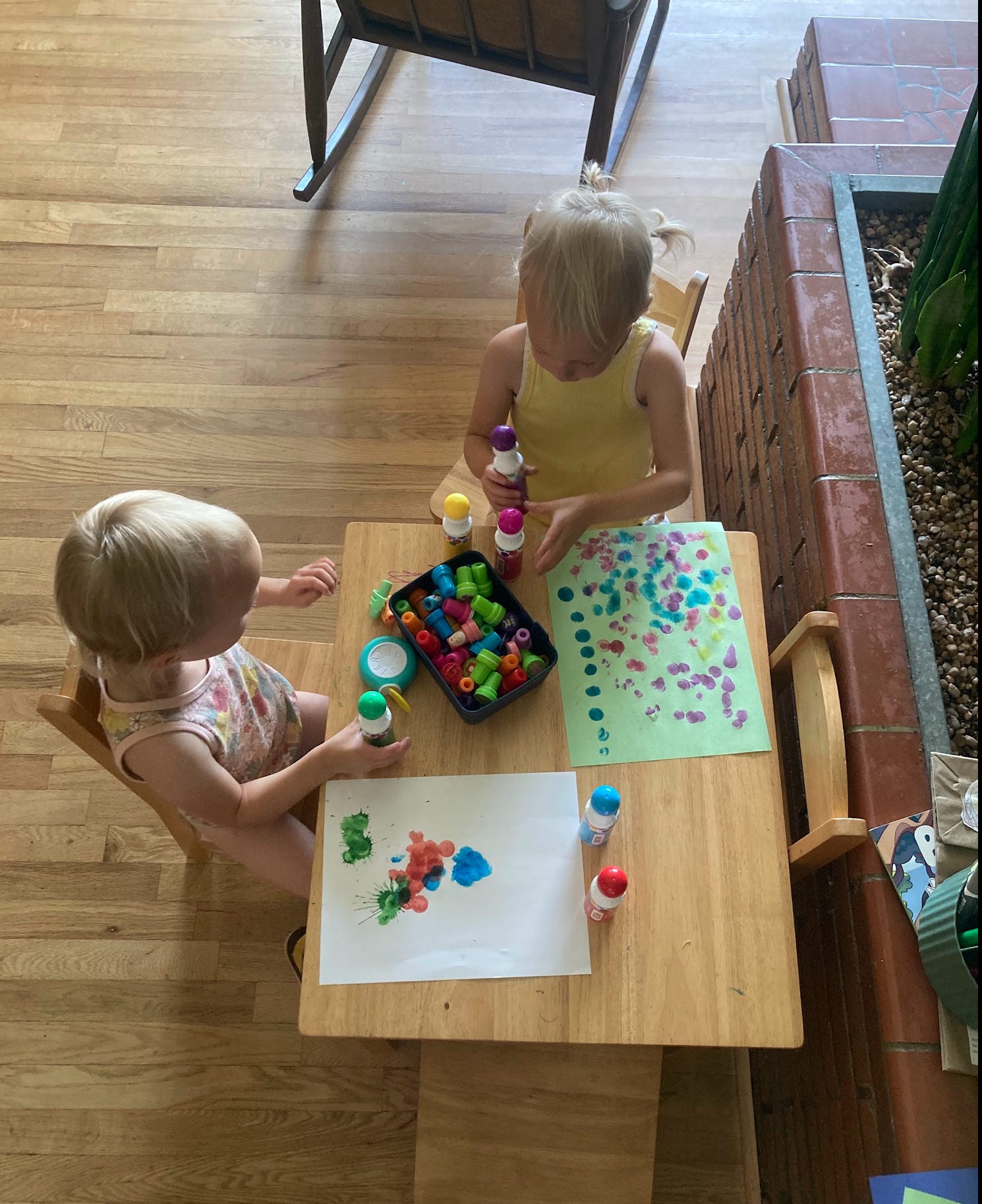
Taking Kids to Art Museums The Bad Moms Homeschool. The key is: just take them. Even if the disgruntled old guards threaten to “take away that Woody doll if I see it get anywhere near that Wyeth!”2 Some great practical tips here on how to cultivate not only an appreciation for in-person art in kids, but for helping them become happy museum goers. Good luck!
So You’re Reading Malcolm Guite… Haley Hodges. A round up of “five contemporary poets of faith” to expand your poetry horizons! Some new to me suggestions here as well as yet another tantalizing MFA program recommendation. “If it helps, I think Malcolm would want you to read these—each an ace of spades in its own right—too. So if you’re re-reading The Voyage of the Dawn Treader for the 28th time, perhaps consider a fresh addition. (You get a pass from me if its Till We Have Faces…lol)” Same.
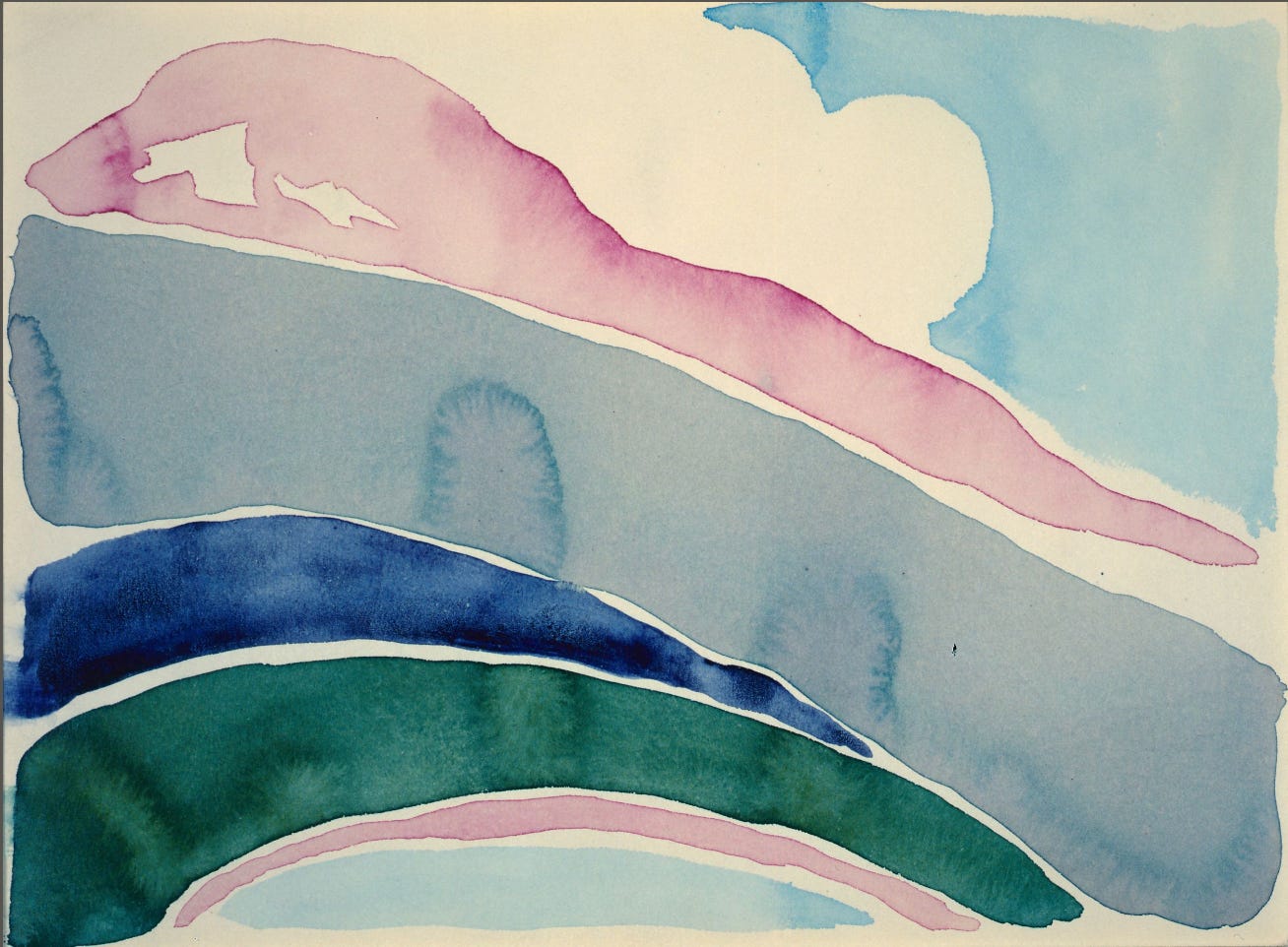
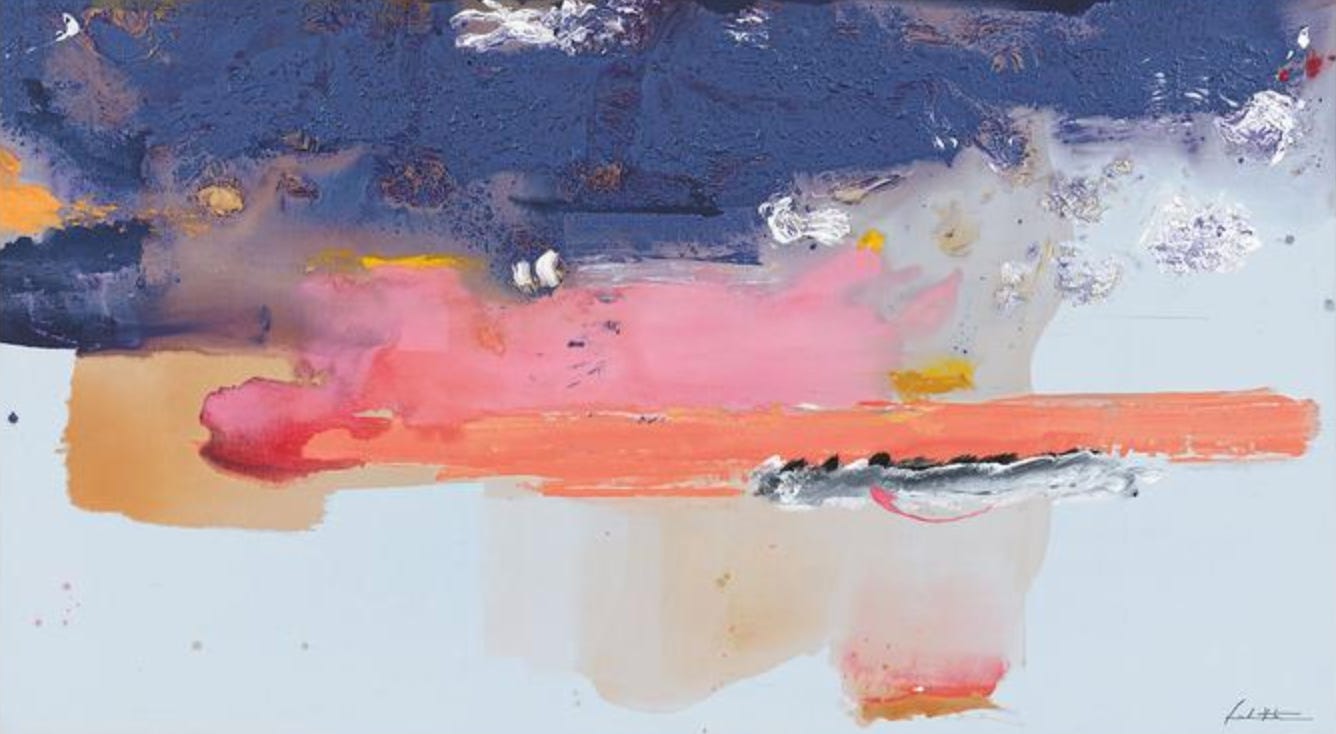
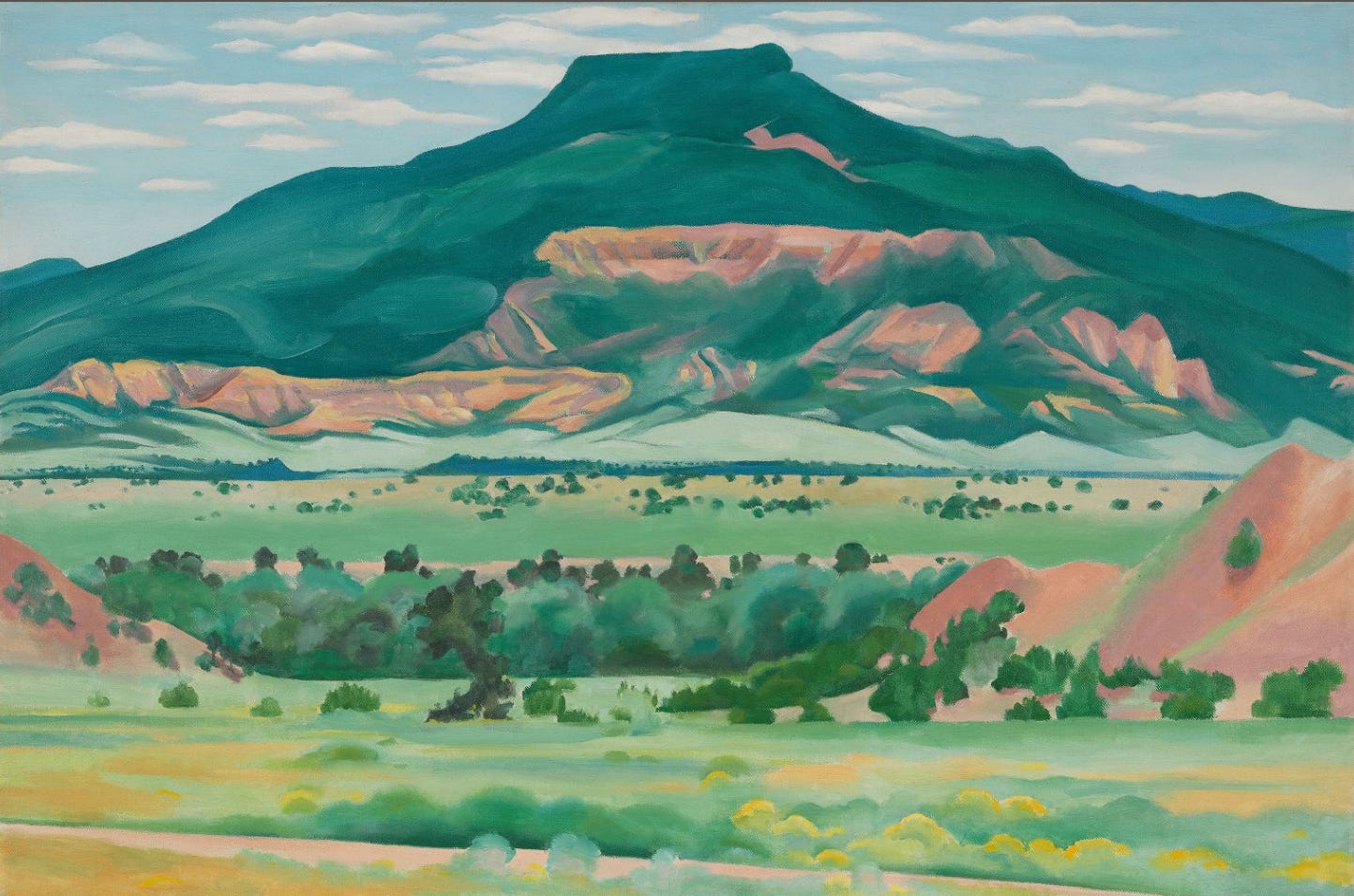
Secret History of Pink, Rose Florence. A new edition in this series (see also, Blue, Red, and Yellow), I love the look here at how a color has influenced art, culture, and fashion throughout history. Some great insights and historical facts, as well as lovely paintings, including some O’Keeffe and the artist who most feels like summer to me, Helen Frankenthaler.3
In Summary:
It’s ok to depend on someone. It’s ok to take a risk to be with someone, to give up some of yourself to belong to something bigger. And that is genuine independence—feeling loved and backed and becoming resilient because of it. It is not a weakness to want to feel at home. We weren’t designed to do this alone. - Freya India
Thanks to Autumn Privett for sharing articles and conversing with me about this topic!
True story from an outing to the Greenville Art Museum, 2023. And yet, we persist!
Sorry if post-war abstract expressionism doesn’t feel like summer to you as well…
No posts
Comments
Nothing yet. Say the first thing.
Sign in to join the conversation.